# Robotics Related Articles

HTX News Center provides the latest articles and in-depth analysis on "Robotics", covering market trends, project updates, tech developments, and regulatory policies in the crypto industry.

As Consensus Accelerates, What Are Young Investors Betting On?

Title: As Consensus Forms Faster, What Are Young Investors Betting On? In the rapid evolution of tech investment, a new generation of young investors is navigating a landscape where AI, robotics, commercial aerospace, and quantum computing are advancing simultaneously. Traditional investment logic based on financial models is giving way to a need for deep technical understanding and the ability to act before industry consensus forms. An analysis of trends from the "WAIC FUTURE TECH" list of young investment leaders reveals key shifts in focus. The first major trend is the movement of AI from the digital screen into the physical world. Investment is shifting from large language models and chatbots towards embodied AI, robotics, AI hardware, and edge computing. While demonstrations generate excitement, the real challenge lies in achieving scalable, reliable, and cost-effective delivery in complex real-world environments like factories and logistics. Success depends not just on algorithms but on the integration of sensors, actuators, and control systems. Second, the competitive focus for large models is moving beyond raw capability toward building an "intelligence flywheel." The goal is to create self-reinforcing systems where user interaction generates data, improving the model, which in turn enhances the user experience and attracts more engagement. Companies that successfully embed AI into workflows to create these closed-loop systems can build lasting value that isn't easily erased by the next model upgrade. Third, facing a potential bottleneck in high-quality human-generated data, investors are looking at new underlying technologies. Reinforcement learning and self-play, as demonstrated by AlphaGo Zero, offer paths for AI to generate its own experience. Scientific foundation models, which aim to build general AI capabilities for fields like life sciences and materials discovery, represent a non-consensus direction that could unlock new frontiers of knowledge and data. Finally, in deep-tech areas like quantum computing, commercial aerospace, and space-based infrastructure, patient capital is essential. These fields have long, uncertain development and validation cycles involving complex engineering, supply chains, and regulations. Investment here requires a long-term view, focusing on foundational team capabilities and the eventual emergence of market demand, even if commercial returns are distant. Collectively, these trends illustrate how young investors are adapting to a new era. They are learning to make earlier, technically-informed judgments, balance hype with real-world viability, and provide the patient capital needed to build the deep-tech foundations of the future.

marsbit07/22 03:34

As Consensus Accelerates, What Are Young Investors Betting On?

marsbit07/22 03:34

Zhongji Innolight Leads Investment in a Tsinghua '90s Postgraduate

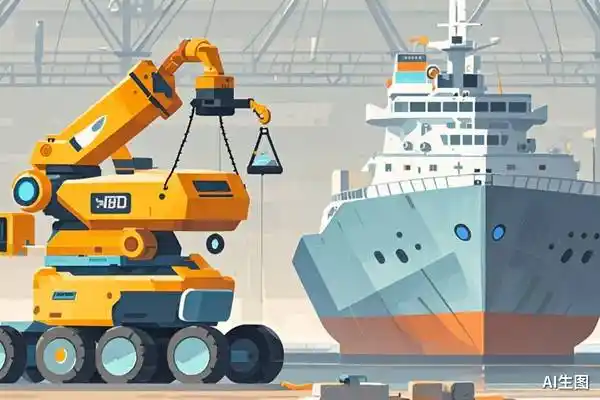
Shihe Robotics, a Chinese intelligent high-altitude robotics company, has completed a Series C financing round worth hundreds of millions of RMB. The round was jointly led by Qianggang Capital and Zhongji InnoLight, with participation from Guangxi Investment Capital, Guohai Securities, Junton Capital, and existing investor Fosun RuiZheng. Founded around 2015 by Xu Huayang, a Tsinghua University Ph.D. graduate, the company has spent nearly a decade focusing on robotics for high-risk, high-altitude maintenance work. Starting from a specific application in ship hull derusting, which has achieved a dominant market share in China, Shihe has expanded into a wider product matrix serving scenarios in petrochemical storage tank maintenance, energy facility inspection, bridge infrastructure, and building façade cleaning. CEO Xu Huayang emphasizes a hardware-first, commercialization-focused philosophy for the robotics industry. The company's strategy revolves around "one machine, multiple uses; complete process closure," aiming to deliver reliable value in real industrial settings rather than pursuing demos. It has served major domestic clients like COSCO, China State Shipbuilding Corporation, Sinopec, and Saudi Aramco. Shihe is building its technological edge by leveraging vast, high-fidelity industrial data collected during operations. It is developing a vertical "Industrial World Model" in collaboration with top university labs. This model is tailored for complex, hazardous industrial environments, enabling robots to progress towards greater autonomy in perception, decision-making, and task execution. In the context of the booming "embodied AI" field, Shihe positions its path as starting from structured, specialized industrial scenarios before moving to more complex environments. Concurrently, the company is accelerating its global expansion, with overseas revenue growing tenfold over two years. Xu aims for international markets to contribute half of the company's revenue within five years. The latest funding will support further technological development, product matrix expansion, and global market penetration.

marsbit07/21 02:42

Zhongji Innolight Leads Investment in a Tsinghua '90s Postgraduate

marsbit07/21 02:42

Funding Weekly | Crypto.com Secures $400M Investment, CeFi and Stablecoin Sectors Continue to Attract Capital

Crypto Weekly Investment Recap: Funds Converge on CeFi, Stablecoins, and AI Last week's crypto and AI investment landscape saw significant capital concentration, with a few large deals dominating. **Crypto/Web3 Highlights (July 13-19):** Total investment exceeded **$812 million** across 17 deals. Key trends: * **Centralized Finance (CeFi) & Stablecoins** remained a major magnet, led by **Crypto.com**'s massive **$400 million** raise from Citadel Securities, valuing the exchange at $20B. * **Infrastructure & Tools** saw 7 deals, including **Cyclops** ($20M for stablecoin payments) and **ADI Chain** ($50M for stablecoin settlement infrastructure). * **DeFi** had 2 deals, such as AI-native DEX **Quote Trade** ($4M). * Other notable raises: API broker **Alpaca** ($135M), cross-border platform **Flex** ($70M), treasury firm **ORANGE JUICE** ($40M), and prediction market **Pascal** ($9M). * **Acquisitions:** Keyrock bought BlockFills' trading unit, SBI Holdings acquired Singapore exchange Coinhako, and MoonPay bought startup Glide. **AI & Robotics Highlights:** Investment momentum in AI remained very strong. * Nvidia-backed AI cloud service **Fireworks** raised a massive **$1.5 billion** at a $17.5B valuation. * In robotics, **Walden Robotics** (spun out from Toyota) secured **$300 million**, and Chinese humanoid firm ****逐际动力** **(Climax Dynamics) raised nearly **$200 million** in a Pre-IPO round. * Other significant AI raises included Indian programming platform **Emergent** ($130M) and drone company **Brinc** ($125M), backed by Sam Altman. Overall, the trend shows capital flowing heavily into established crypto financial services, stablecoin infrastructure, and large-scale AI/robotics commercialization.

marsbit07/20 03:47

Funding Weekly | Crypto.com Secures $400M Investment, CeFi and Stablecoin Sectors Continue to Attract Capital

marsbit07/20 03:47

Wintermute: What Is Left to Build in Crypto?

The article argues that the foundational question for crypto has shifted. Instead of asking "what else can crypto do?", the real question is "why will the real world need crypto next?" The author's answer is the emerging **Machine Economy** – where autonomous agents and robots act as independent economic participants, making decisions, executing transactions, and initiating actions in both digital and physical worlds. Three key recent developments make this shift plausible: 1) AI models are now capable and cheap enough for autonomous, persistent action; 2) Open standards (e.g., stablecoins, Agent payment protocols) allow for composability; 3) Agents can now operate with context over long periods, changing the scale of automated activity. Crypto's core strengths—programmability, permissionlessness, fast settlement, and auditability—align well with the needs of autonomous systems, which don't fit traditional human-centric financial rails. Major platforms like Coinbase and Robinhood are already building infrastructure for Agent-based activity. However, challenges remain, primarily around **Security** (e.g., prompt injection attacks on Agent wallets) and **Attribution/Accountability** when AI-assisted systems fail. The most promising opportunities lie not in crowded foundational layers (L1s, models, exchanges) but in the connective tissue for the Machine Economy: **1) An economic layer for Agents** (handling authorization, risk, identity), **2) Physical AI** (enabling robots in structured environments like warehouses to transact), and **3) Machine-led discovery systems** (e.g., in autonomous scientific research).

marsbit07/20 00:03

Wintermute: What Is Left to Build in Crypto?

marsbit07/20 00:03

Investors Walked 20,000 Steps in Shanghai

Investors logged over 20,000 steps at the Shanghai event as the 2026 World Artificial Intelligence Conference (WAIC) witnessed unprecedented crowds, a record exhibition space exceeding 100,000 square meters, and over 300 global product debuts. The intense FOMO (fear of missing out) among AI investors was palpable, with tickets being scalped at high prices. The conference highlighted a decisive shift from comparing technical parameters to demonstrating real-world applications and commercial deployment. The vast exhibition, spanning four venues, featured specialized zones for industry applications (H1), foundational computing power (H2), robotics (H3), and startups (H4). The robotics hall (H3) was the most popular, packed with over 200 companies showcasing embodied AI and prototypes, including humanoid robots capable of performing industrial tasks. Investors were omnipresent and exceptionally busy, shuttling between meetings, panels, and networking events organized by leading VC firms. The startup zone hosted over 160 young companies, with many investors hoping to spot the next unicorn. This frenzy mirrors the explosive investment in China's AI sector. In H1 2026 alone, the embodied intelligence segment raised over 90 billion yuan, a fivefold year-on-year increase. The broader AI sector attracted over 300 billion yuan in funding, accounting for half of the total venture capital invested in the period. A wave of companies have reached "unicorn" status with valuations exceeding $10 billion, and at least 20 embodied AI firms are now planning IPOs. Market leaders like Zhipu AI and DeepSeek have reached valuations in the hundreds of billions, with industry insiders predicting the imminent emergence of trillion-yuan AI giants in China. Investors are actively scouting the conference to map out and fund the next decade of technological evolution.

marsbit07/19 07:27

Investors Walked 20,000 Steps in Shanghai

marsbit07/19 07:27

WEEX Labs Weekly Observation: The 'Power Restructuring' of AI Infrastructure and the 'Deep Dive Movement' into the Real Economy

WEEX Labs Weekly Review: AI Infrastructure's "Power Restructuring" and the "Deep Dive" into the Real Economy Mid-July 2026 marks a pivotal shift in the global AI industry. The allocation of computing power is transferring from cloud giants to compute resource owners, while the core value of AI is solidifying around its penetration into physical industry, moving beyond the race for model parameters. The era of fragmented model development is over, replaced by a capital-intensive, integrated chain driven by hard tech. Key developments this week include Meta's planned entry into the cloud computing market with "MetaCompute." This move by social media giants with massive GPU clusters challenges traditional cloud providers like AWS, integrating compute, models, and data into one-stop services, which will squeeze smaller rental providers and shift enterprise focus towards underlying model ecosystems. Chinese foundational models like DeepSeek-V4 and Tencent's Hy-3 are pushing towards "utility" status through open-source releases and extreme cost reductions via MoE architectures. This lowers entry barriers for enterprises, allowing them to focus resources on private deployment and deep business integration. Embodied intelligence, particularly humanoid robots, is transitioning from lab demos to real-world factory applications, driven by policies promoting large-scale, practical deployment in logistics and manufacturing. The value focus is shifting from spectacle to stable industrial data and real operational efficiency. Global governance, through forums like WAIC, is evolving from theoretical ethics to practical operational frameworks for "Sovereign AI," raising geopolitical compliance barriers and making auditability and data sovereignty core design requirements from the outset. WEEX Labs Insights: The current transformation shows AI's prosperity is deeply embedding into the fabric of global manufacturing. Strategic recommendations include: 1) leveraging open-source models for private, proprietary knowledge bases; 2) maintaining cloud provider diversity to avoid vendor lock-in from integrated model ecosystems; and 3) seeking opportunities in the "embodied infrastructure" supporting robots, such as data collection, industrial simulation, and factory AI adaptation services.

marsbit07/19 05:15

WEEX Labs Weekly Observation: The 'Power Restructuring' of AI Infrastructure and the 'Deep Dive Movement' into the Real Economy

marsbit07/19 05:15

From Somersaults to Working 24/7: We Saw the ‘Working-Class’ Aura in Robots at WAIC

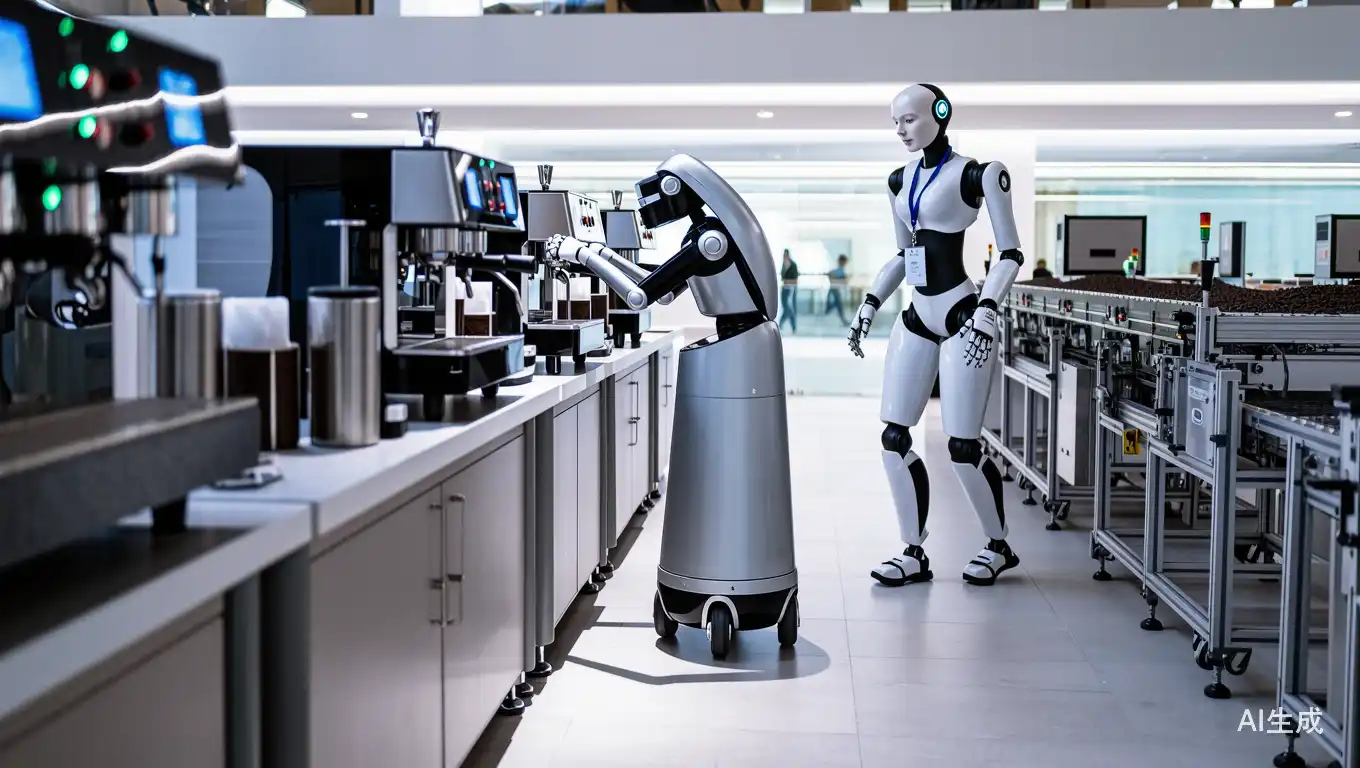
From performing acrobatics to working 24/7: Robots at WAIC are getting down to business. This year's World Artificial Intelligence Conference (WAIC) in Shanghai showcased a significant shift in the robotics industry. While "show-off" robots that dance, play music, or compete in sports are still present, the dominant trend is now practical, task-oriented machines. Hundreds of wheeled and humanoid robots were deployed as guides, baristas, factory workers, and even traffic controllers, moving beyond mere demonstrations to highlight real-world "work capabilities." The focus has pivoted from showcasing technical parameters to pursuing mass production and industrial落地 (landing/implementation). This transition presents major challenges. First, deploying powerful AI models onto robots requires overcoming hardware limitations in computing power and latency. Second, robots demand complex, integrated systems for real-time perception and control. Third, achieving reliable mass production necessitates unprecedented industry-wide collaboration on standards and supply chains. A key bottleneck identified by industry leaders is the robot's "brain"—its AI and cognitive capabilities. While hardware and basic movement ("little brain") have advanced rapidly, the higher-level intelligence for understanding complex instructions and adapting to unstructured environments is progressing more slowly. Companies are investing heavily in developing more advanced "brain" systems, but fully autonomous operation in dynamic settings remains a work in progress. Cost is another critical hurdle. While some consumer-oriented humanoid robots are now priced under $15,000, capable industrial models often cost $50,000 or more. The industry consensus is that bringing robots into unstructured home environments for tasks like comprehensive cleaning is still at least five years away due to technical, safety, and cost barriers. Therefore, 2026 is being called the "first year of mass production," but primarily for industrial and specific commercial applications. WAIC 2026 served less as a stage for spectacular tricks and more as a serious examination of robots' commercial viability, marking their transition from laboratory prototypes to real-world products that must prove their value through stable, repetitive work.

marsbit07/17 14:11

From Somersaults to Working 24/7: We Saw the ‘Working-Class’ Aura in Robots at WAIC

marsbit07/17 14:11

Meituan Leads Investment, New Unicorn in Dexterous Hands Born

Xynova, a full-stack provider of dexterous hand solutions for embodied intelligence, has officially become a unicorn after securing a 500 million yuan Series A+ round led by Meituan. This marks the company's third major funding in 2024, bringing the total raised in four months to approximately 1.5 billion yuan. The investment lineup features a prominent group of industrial and internet giants, including repeat investors like Xiaomi and new backers such as NIO Capital and China Merchants Capital. With total market capitalization of its industrial shareholders exceeding 5 trillion yuan, the backing represents a strategic positioning across the new energy manufacturing, smart logistics, and last-mile delivery sectors. Founded in 2024 by CEO Xia Yuxuan, Xynova focuses on the critical "last centimeter" of robot interaction—the dexterous hand. Moving beyond traditional technical debates, the company adopts a full-stack, self-developed approach, integrating hardware and algorithms. Its flagship product, the Flex 2, is a hybrid tendon-and-direct-drive hand with 23 degrees of freedom, weighing under 400 grams and boasting a key component lifespan of over 1.5 million cycles. The industry narrative is shifting from robot mobility to practical utility, making reliable, mass-producible components crucial. Xynova has established a 5,400-square-meter factory in Hangzhou, with annual capacity expected to reach 10,000 units by year-end. The company believes embodied robots will see large-scale real-world adoption within three years, potentially as soon as 18 months.

marsbit07/17 03:50

Meituan Leads Investment, New Unicorn in Dexterous Hands Born

marsbit07/17 03:50

Jensen Huang Turns Japan into NVIDIA's "Physical AI" Pivot Point: A Life-Saving Favor 30 Years Ago, a Full-Stack Bind 30 Years Later

NVIDIA CEO Jensen Huang’s recent visit to Japan signals a strategic push to make the country a core hub for its global “physical AI” ecosystem. During his trip, NVIDIA announced partnerships with Japanese robotics giants Fanuc and Yaskawa Electric, and expanded its collaboration with Toyota across autonomous driving, factory simulation, and smart city applications. Huang emphasized that AI-driven robotics will become intelligent, adaptable, and accessible. The visit also highlighted a historic reunion with former SEGA president Shoichiro Irimajiri, who helped save NVIDIA from bankruptcy in the 1990s with a critical investment. Now, SEGA plans to support NVIDIA’s RTX Spark platform for future game releases. Behind the scenes, Huang hosted a dinner with key Japanese semiconductor and electronics supply chain leaders, including Kioxia, Shin-Etsu Chemical, Tokyo Electron, and Ajinomoto, underscoring Japan’s role in NVIDIA’s hardware roadmap. Beyond robotics and automotive, NVIDIA is deepening ties across Japanese industries. In healthcare, companies like Eisai and Fujifilm are using NVIDIA’s BioNeMo and Blackwell platforms for AI-driven drug discovery and medical imaging. In finance, Mizuho Bank and SMFG are building AI factories powered by NVIDIA systems. In quantum computing, RIKEN’s supercomputers, equipped with Blackwell GPUs, are advancing research. Market speculation also points to a potential partnership with Japan’s state-backed “physical AI” consortium, Noetra. Huang dismissed concerns about an AI bubble, stating demand remains strong and a decade of infrastructure building is needed. He framed Japan’s manufacturing expertise and automation needs as a natural fit for the physical AI era.

marsbit07/16 11:42

Jensen Huang Turns Japan into NVIDIA's "Physical AI" Pivot Point: A Life-Saving Favor 30 Years Ago, a Full-Stack Bind 30 Years Later

marsbit07/16 11:42

Raising $400 Million in Funding, Shenzhen's Embodied AI Unicorn is Heading for an IPO

LimX Dynamics, a leading Chinese humanoid robotics company based in Shenzhen, has raised nearly $4 billion in total funding following a $2 billion Pre-IPO round. This latest round, backed by prominent global investors including IDG Capital, Lens Technology, GGG Group, and Redstone VC, values the company at approximately 150 billion yuan. Founded in 2022 by Southern University of Science and Technology professor Zhang Wei, the company has developed a full-stack, self-developed "brain system" for humanoid robots. Its three-layer technical architecture (System 0 for locomotion, System 1 for specific skills, and System 2 for cognitive reasoning) powers a diverse product matrix, including the LimX Luna for commercial service and the LimX Oli R&D platform. Often compared to its American counterpart Figure, LimX Dynamics differentiates itself by focusing on "serving people, not processes" and prioritizing commercial service scenarios over factory applications first. The company has secured thousands of pre-orders, with over half coming from overseas markets, and has begun initial deliveries. With a distinctly global investor base and strategy, LimX Dynamics aims to leverage China's manufacturing advantages for worldwide competition. Having completed its shareholding reform in March 2026, the company is now steadily advancing its IPO plans, positioning itself as a key contender in the intensifying race to go public within the humanoid robotics sector.

marsbit07/14 01:44

Raising $400 Million in Funding, Shenzhen's Embodied AI Unicorn is Heading for an IPO

marsbit07/14 01:44

活动图片