Young South Koreans, Making a 'Last-Ditch Effort' in an Epic Bull Market

链捕手Published on 2026-06-11Last updated on 2026-06-11

Abstract

This article explores how an unprecedented stock market boom in South Korea during the first half of 2026, driven by the semiconductor industry, is transforming the lives of ordinary people, particularly the youth. The KOSPI index doubled in six months, fueled by giants Samsung and SK Hynix, leading to a frenzy of retail investing. With over 105 million stock accounts in a population of just over 50 million, a sense of "FOMO" (fear of missing out) is pervasive. Through the perspective of Li Yuning, a Chinese woman living in Seoul, the piece follows several young Koreans who see the market as a last chance to escape stifling economic pressures, high housing costs, and narrow social mobility. Individuals like Minji, a low-paid office worker, and Junho, saving for marriage, invest their limited savings, while experienced traders like Suhu navigate exclusive social circles. The narrative reveals that this speculative fever stems less from greed and more from deep-seated anxiety about being left behind in a society with growing wealth inequality and rigid class structures. However, the boom also exposes stark social divides. It exacerbates wealth gaps, as those with family support or existing capital fare better. The pressure to succeed is immense, with stories of devastating losses leading to personal tragedy. Ultimately, the article suggests the牛市 acts as a pressure valve and a temporary illusion of opportunity in a system where traditional paths to advancement seem increasing...

Original Text: Li Yuning, Meiri Renwu

In the first half of 2026, an epic bull market tied to the chip industry swept through South Korea. The KOSPI index doubled within six months, with Samsung Electronics and SK Hynix at the core of the rally, completely rewriting the life trajectories of countless ordinary South Koreans.

South Korea's total population is just over 50 million, yet the number of securities accounts has surpassed 105 million. On average, each person holds two stock accounts. The fervor for stock trading among the public has reached unprecedented heights, with borrowing to invest hitting new records and the attendant risks intensifying.

People who once focused solely on work and life have now entered the market. Some have quit their jobs to trade full-time, while others monitor the markets obsessively at their desks or during their commutes. Stocks have transformed from mere investments into topics that dictate one's fate, a common subject of conversation. Countless young South Koreans view the stock market as a final chance to break through their current circumstances and turn their lives around, driven by a fear of being left behind by the times.

This article, from the perspective of a Chinese person living in South Korea, interviews ordinary investors of different backgrounds. Looking beyond the frenzied surface of the stock market, it interprets the survival anxieties, class predicaments behind South Korean youth's deep involvement in this bull market, and the latent societal concerns underlying this nationwide speculative fever. Enjoy:

Li Yuning is a Chinese woman living in Seoul. In 2022, she quit her job in China to study Korean in South Korea and pursue a PhD. After graduation, she stayed to work at a research institute. For a long time, her life was far removed from the stock market: checking emails in the morning, writing reports during the day, and having dinner with friends in the evening.

It wasn't until the beginning of this year that she finally opened her first Korean stock trading account. Identity verification, account linking, and trading agreements popped up on her phone screen one after another. The red and blue numbers that followed became the code that has 'dominated' the fate of South Koreans over the past six months.

This rare bull market since the start of this year has been called an epic rally that deeply binds South Korea's national destiny to the semiconductor cycle. The KOSPI (Korea Composite Stock Price Index) completed a doubling leap from the 4000-point range to the 8000-point range within six months, with nearly 80% of the gains contributed by just two companies: Samsung Electronics and SK Hynix.

Especially since this spring, friends have started frequently discussing Samsung Electronics, SK Hynix, and US market closings. Before, they talked about stocks like it was a technical skill; later, they talked about them like they were discussing fate. Some people took leave to watch the markets, others refreshed their accounts in the bathroom, and some even quit their jobs because of KOSPI's rise to become full-time investors at home. They no longer said they were unemployed; instead, they said they had finally 'escaped their salary.'

One of Li Yuning's friends originally worked in project management at a trading company in Gangnam. Last year, she was complaining about a small year-end bonus. A few days ago, she suddenly posted a picture of a sports car's steering wheel in a group chat with just one line: "하닉이 사준 차." (The car Hynix bought for me). A hidden form of comparison was laid bare on the table: Why can someone, working the same hours, pulling the same overtime, leave years of someone else's salary in the dust with just a few purchases?

Yet few seriously discuss the flip side of the bull market. Data shows the number of South Korean securities accounts has reached about 105 million, while the total population is just over 50 million. In today's South Korea, a person might not have a house or children, but on average, they have 2 stock trading accounts.

Thus, the stock market has forcefully entered the lives of ordinary people ahead of schedule. But when the money comes from loans, mortgages, parents' retirement savings, or children's education funds, a loss is no longer just shrinking numbers. It becomes sleepless nights, unanswered phone calls, and a body that sits at the office the next day unable to work.

In December 2025, in Yongin, a man in his 40s died after telling his family he 'lost 200 million won in stocks.' His 9-year-old son was also found dead. This is not just a sensational story. For many ordinary people, stocks were never just numbers on a screen. They are connected to debt, marriage, parents' nest eggs, and determine whether a person can still believe in themselves.

Li Yuning is both an observer and a participant. She was swept into this stock market frenzy and also gained insight into the mental state and generational portrait of South Korean youth behind the market. She specifically met with her South Korean friends to talk about how this bull market is currently repricing the lives of ordinary people.

"Young 'ants' are putting their limited chips on the table, as if this is the last chance to turn their fortunes around. After all, things can't get much worse."

The following is her account:

01 A Nation of Stock Traders

To wake up early to watch the market, South Koreans have further 'evolved' their sleep away. The South Korean morning, which used to start with checking the weather, now begins with opening a stock trading app.

This is a bull market that makes ordinary people stake their 'fate.' As of early June, the KOSPI index's year-to-date gain exceeded 108%, surpassing the Nasdaq 100's gain during the 1999 internet bubble and even South Korea's historical peak during the industrial boom of the late 1980s. The total market capitalization of listed South Korean companies surged by 86% this year to around $5 trillion, making it the world's sixth-largest stock market.

By early May, the number of South Korean securities accounts had already exceeded 105 million, more than double the total population. On May 27th, the Korea Exchange launched its first-ever single-stock leveraged ETFs, initially tracking the two core Korean tech stocks: Samsung Electronics and SK Hynix. These products carry high leverage risks, so regulators mandated that buyers must first complete an online 'risk' education course. On the day the ETFs were launched, the educational website crashed briefly under the traffic. Thus, through Samsung and Hynix, the stock market barged into the commutes, lunch breaks, group chats, and family ledgers of ordinary people.

Minji is one of the young people who opened an account during this frenzy. I met Minji during a part-time job. She is 29, from Gyeongsangbuk-do. That region is somewhat like South Korea's 'old industrial northeast': factories, ports, silent parents, and fewer and fewer young people. After graduation, she came to Seoul to work as a planner at an advertising agency. The job sounds decent, but after insurance and taxes, she takes home only 2.8 million won per month (about 13,000 RMB). After rent, transportation, food, and phone bills, the remaining money is blown away by the wind.

She lives in Sillim-dong, a place reminiscent of Beijing's Tiantongyuan, packed with office workers, civil service exam takers, convenience store night-shift workers, and recent graduates. The cheapest housing in South Korea is called 'banjiha' (semi-basement)—damp, dark, and at risk of flooding during the rainy season. Minji has climbed from a banjiha to above ground, living in a small studio costing around 600,000 won per month (about 3,000 RMB), with a key money deposit (jeonse) of 10 million won (about 50,000 RMB). The room isn't big, but it has a window, light, and the illusion that 'at least I'm still moving up.'

If nothing unexpected happens, Minji would endure a few years at the ad agency, with her salary slowly increasing; then marry an ordinary office worker, pooling savings, parental support, and bank loans to move to an apartment on the outskirts of Seoul or in a new city in Gyeonggi-do. It seems she has finally moved from the provinces to Seoul, from a semi-basement to above ground, from monthly rent to owning an apartment. But in essence, it's just exchanging rent to a landlord when young for mortgage interest to a bank in middle age. The so-called stability is just a more respectable name for insecurity.

It was precisely when this path seemed to be narrowing that the stock market barged into her life. It is dangerous, yet it seems more like an exit than the life dictated by salary and rent. When the Seoul Subway Line 2 pulls into Sillim Station, she gets pushed onto the train by the crowd. Before, on the train, she would first check KakaoTalk (South Korea's 'WeChat'); now, she opens her stock trading app first. When she first bought just two shares, she felt a little embarrassed, as if she was imitating others getting rich. But compared to the fear of losing money, she is more afraid that years from now, when people talk about this semiconductor bull market, she will have to say again, like she did about missing the property boom, the cryptocurrency bubble, or the AI-driven U.S. stock rally led by Nvidia: "I didn't buy back then."

Compared to single white-collar workers with only themselves to worry about, families are often more cautious when it comes to stock trading.

Junho is the boyfriend of a senior I knew from university, aged 33. They have been out of school for three years but still haven't married. He commutes daily from Incheon to Yeouido for work; his salary isn't low. He keeps an Excel spreadsheet with his saved jeonse deposit, wedding budget, and his parents' medical emergency fund. In South Korea, an ordinary wedding, with venue, banquet, wedding dress, and makeup, easily costs around 30 million won (about 150,000 RMB). Add the jeonse deposit for a newlywed home, and marriage immediately becomes a ledger of hundreds of millions of won. Junho wants to get married, but that spreadsheet isn't filled out yet. He used to believe that as long as he filled it in cell by cell, life would move forward. But after this bull market arrived, he felt for the first time that the spreadsheet calculations were too slow. He only dipped his toes in with a small amount because the stock price was already high when he entered.

"Is it too late now?" is the "FOMO" (Fear of Missing Out) sentiment hanging over ordinary South Koreans. Eunju, the receptionist at a dermatology clinic I frequent, quit her job after her child was born. In her moms' chat group, topics that used to be about English academies and pediatricians have recently turned entirely to stocks. Eunju is also itching to get in, but she thinks first of the family ledger. That money seems to be in the account, but its position has long been assigned to the lives of her child, husband, and parents. She hesitates to take the plunge.

Among all my friends, Su-kyu has been the most elated during this bull market. As an experienced investor, he is the type who long ago made the stock market a second life, watching financial news on the treadmill and opening his trading app after finishing his workout. Since this recent semiconductor bull market began, he often semi-jokingly messages me: "Made 20 million won today across three accounts (about 90,000 RMB), I'll treat you to Korean BBQ tonight." Sometimes he says: "Lost a Ferrari today." This sounds exaggerated, but it's like a new language in this bull market: talking about losses in terms of sports cars also means he has regained the right to speak in a certain way.

His father's and sister's funds are also given to him to invest. This is not just Su-kyu's story. In this Korean bull market, more and more young people are not only using their own savings but also borrowing family funds to buy stocks, and even directly taking loans from securities firms to enter the market. Korean media cited statistics from the Korea Financial Investment Association showing that as of April this year, the daily average scale of 'borrowing to invest' had risen to about 33.8 trillion won, hitting a monthly historical high. By May 21st, the overall margin trading balance in South Korea had climbed to 36 trillion won. What's rising is the stock price; what's being staked is ordinary people's prematurely tapped credit and future.

These madly rushing South Korean retail investors are called 'ants,' with young retail investors called 'youth ants.' This term carries a subtle sense of fate. Ants are too small, they can only crawl close to the ground, carrying a bit of capital, judgment, and luck within the huge financial market. Yet, they still surge into this army one after another. Not because they all believe they can beat the market, but because they know staying put is equally dangerous.
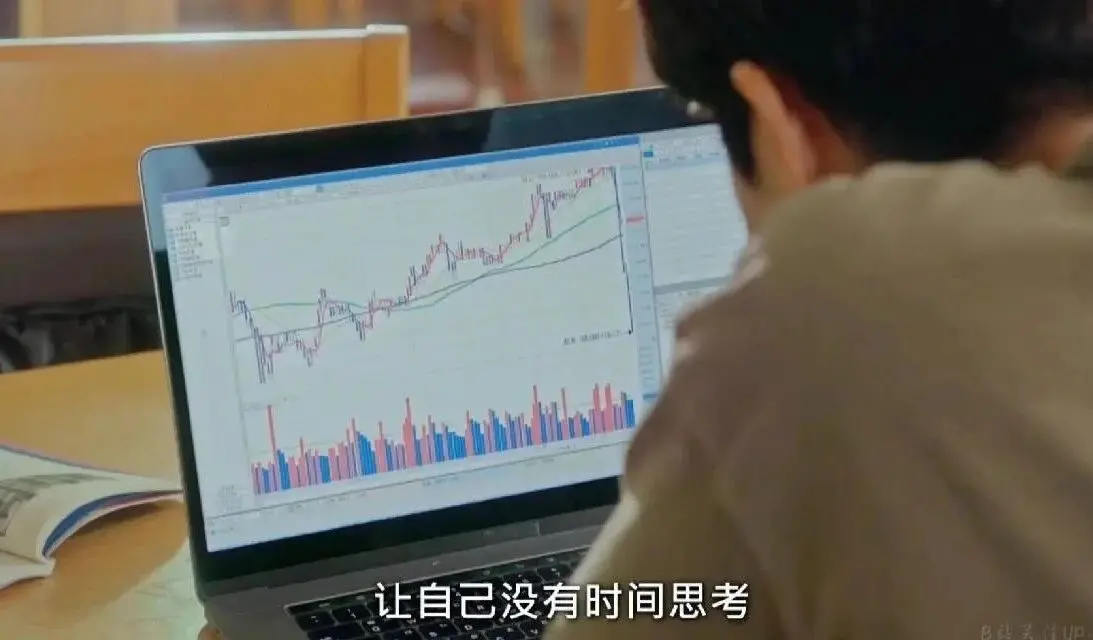
02 The Bull Market is Widening Wealth and Class Gaps in South Korea

No one admits at the outset that they bought stocks because they were afraid of being left behind by the times. They'll say they're just trying a little; they'll say everyone is watching Samsung and Hynix, and it would be strange not to. But in the end, what truly weighs on their minds often isn't greed, but a sense of absence.

This is how Minji started buying stocks. She doesn't understand financial reports or can't clearly explain semiconductor cycles. She just knows HBM (High Bandwidth Memory) is hot, SK Hynix is rising fast, and everyone in the group is saying 'it's not too late.' One night, she met a university friend in Hongdae. As soon as the friend sat down, she opened her stock trading app to show Minji, saying the Hynix stock she bought last year had already risen a lot. The friend said it lightly: "Just bought a little randomly, didn't expect it to go up like this." Minji also smiled and said, "That's great." On the way home that day, she stood by the subway door, looking at her reflection in the glass. She suddenly felt very tired. Not because her friend made money, but because of the tone of that 'bought a little randomly.' For some people, 'random' is another person's 'too late.'

In South Korea's workplaces, 'salary poverty' is becoming a topic. 'Lately, it's not people who are working, it's stocks that are working.' 'Labor income has become a beggar in the bull market.' Even without fantasies of overnight riches, ordinary people saving money step by step from their salaries have also become 'pitiable.'

Junho realizes the life order he's been diligently building is being challenged. He's still trying hard to live, yet suddenly feels poor. This 'suddenly feeling poor' isn't about actually going bankrupt, but the frame of reference has changed. His girlfriend sometimes says: "You should learn about investing too. Others bought Hynix and earned a whole deposit in a few months." Before, Junho compared himself to others based on salary, position, and years of experience; now, he is forced to compare holdings, entry timing, and account returns.

The stay-at-home mom Eunju hasn't truly entered the market, so she hasn't suffered actual losses, yet she gradually feels a gap opening up with others. Once, someone in the moms' chat group said that after making money in stocks, she was planning to switch her child to a more expensive English academy. Eunju's child is still at the current ordinary cram school. The teacher is very responsible, grades homework carefully. But when the moms' group mentions the teacher, they always lightly add: "The person is responsible, it's just their academic background is ordinary." In the South Korean education market, whether a teacher is a graduate of SKY (an acronym for Seoul National University, Korea University, and Yonsei University), has overseas experience, or speaks with a 'native speaker' accent all become price tags in parents' eyes. And the bull market has widened the distance between children who were once at the same starting line.

The stock market itself is a metaphor for social circles. Su-kyu understands better than anyone that in South Korea, trading stocks sometimes isn't just about opening an app and placing an order. It also involves joining groups, reading reports, maintaining relationships, treating to meals, giving gifts, and even learning to discern at the dinner table which words are genuine information and which are just someone wanting you to take over their position.

A few years ago, he was just a small fish in a Kakao Finance group. The group name was 'Market Study Room,' sounding like an ordinary study group, but it was actually more like a small-scale class club: former securities firm employees, asset managers, seasoned investors, and a few people like himself trying to climb up.

Every morning at 8:30, the group would become active. Some posted U.S. market closes, some posted institutional reports, some screenshot foreign investment flows. Whoever made accurate calls, got information quickly, or still had capital had a voice. Whoever kept losing money, whose messages went unanswered, would eventually fade away and 'be' removed from the group. Many such trading groups operate, filter, and narrow in South Korea, much like the continual narrowing of upward social mobility.

Su-kyu being looked after by a 'finance hyung' (older brother/friend) wasn't due to a single call but from long-term relationship maintenance. He would often visit seniors in different cities, book restaurants, ask Chinese friends to bring Maotai liquor. When the market was good, dinners were like information exchanges; when the market was bad, dinners were like relationship insurance. Before, when Su-kyu's Mercedes-Benz was parked in front of a Japanese restaurant, his Rolex peeking out from his cuff, and the finance hyung got into the passenger seat, he would have the illusion: he was finally seen by this circle. In such circles, money isn't just capital; it's also a voice. When an account still has weight, jokes get responses, opinions get heard; when an account lightens, the person also becomes lighter.

The bull market has produced many sensational stories: screenshots of gains, quitting jobs, sports car photos. People seem to finally hold their heads high, boldly announcing they want to sever ties with their formerly humbly managed lives, to transform from 'people who work jobs' to 'people who choose their lives.'

Some South Koreans I know, after making money in the stock market, have indeed quit their jobs, even including some who handed in their civil servant IDs. The basic salary for a junior South Korean civil servant is around 2.13 million won (about 10,000 RMB), even lower than the 2026 standard minimum monthly wage. The so-called 'iron rice bowl,' in the face of Seoul's rent, cost of living, and class anxiety, is often just a bowl that won't shatter but also can't hold enough rice. So, the sudden extra sum in their account isn't just profit for them; it's a ticket to escape their original track. Some trade full-time; some went to Vietnam with money earned from stocks to start a new life.

03 The Class Illusion Exposed by the Bull Market: Opportunity is Not Equal for All

If you only look at the accounts, the South Korean bull market seems like an opportunity; if you look at the lives behind the accounts, it's more like a stress test. Stocks begin to re-examine everyone's life: salary, debt, children, parents, housing, and marriage are all laid back on the table for reassessment.

In 2022, after the previous metaverse bubble in South Korea burst, Su-kyu also sold his Mercedes to repay loans. The day he sold the car, he washed it spotlessly, even beating the floor mats a few times. After the deal was done, he took the subway home alone. That day, he realized for the first time that asset decline isn't an abstract term. It becomes concrete to the point where you can no longer drive to meet friends, can no longer casually treat others to meals.

But even at his lowest point, he didn't sell that Rolex. He locked it in a small safe, next to a few loan documents. "If I sold it, it would mean admitting that that upward-moving life never truly belonged to me."

Fortunately, in this bull market, with his family providing a safety net, Su-kyu turned things around. His father helped settle some high-interest debt and gave him another sum of money. With three family accounts combined, Su-kyu regained the capital to re-enter the market and the confidence to sit back at the dinner table.

The stock market creates an 'illusion' of class mobility for ordinary people. A friend of a friend, Sung-min, works at an auto parts company near Ulsan; his wife is an elementary school teacher. He made some money in this rally. At first, when his wife saw the profit screenshots, she said: "In that case, let's take an overseas trip?" Sung-min immediately replied: "No, I haven't sold yet, and there's tax to consider, plus we need to think about parents' insurance premiums."

In South Korea, even when money is earned, it's hard for it to truly belong to oneself. For a 1 billion won apartment (about 4.47 million RMB), you first pay nearly 30 million won (about 150,000 RMB) in acquisition tax upon purchase; then annual property taxes, loan interest, and maintenance fees follow. Parents' medical insurance, long-term care insurance cost another 400,000-500,000 won per month. So that profit seems to be in the account, but it's already earmarked for housing, parents, and future children. The only indulgence Sung-min dared was upgrading his 10,000 won lunchtime soup (about 45 RMB) to a 12,000 won one (about 54 RMB).

Their vision of when they can finally have children is also constantly being upgraded. Initially, they just wanted to save enough for a decent jeonse apartment (a housing system in South Korea between buying and renting, using a large lump-sum deposit for 'free' occupancy for a period; in Seoul, a small jeonse deposit is roughly 100-300 million won, about 450,000-1.34 million RMB, while an ordinary apartment often starts at 600 million won, about 2.68 million RMB). Later, it became moving to a good neighborhood (dong), a branded apartment complex. Later still, it was about children attending good kindergartens, English academies, ideally entering the elite education track all the way, even studying abroad.

In South Korea, a child's starting point isn't the delivery room, but which neighborhood (dong) and which apartment building their parents live in. Where a child lives often determines from what age they are sent onto which track.

The semiconductor bull market also illuminates an even more detailed social hierarchy.

Tae-hoon is a student I tutor in Chinese. He works in equipment maintenance at a Hynix semiconductor partner company (upstream/downstream cooperative firm) in Cheongju but is not a regular employee of SK Hynix. That dark work uniform, which used to just get dusty daily, recently acquired a different kind of value. On South Korean second-hand platforms, SK Hynix jackets are labeled 'Best Dating Outfit.'

Tae-hoon also attended a matchmaking meeting arranged by his parents. The other party, hearing he worked in a semiconductor-related company, quickly asked: "Is it with Hynix?" He paused and said: "It's a partner company, not a direct employee." The other person smiled and said: "But the semiconductor industry is doing well these days, right?" It seems the South Korean semiconductor bull market has illuminated the entire industry, but the benefits aren't distributed equally. Some are at the center of the chaebols, some are in partner companies; some receive huge performance bonuses, others just work more overtime; some see their company logo appreciate in the marriage market, others are merely brushed by the edge of this frenzy.

This is also the root of why many South Korean young people are feeling increasingly tense: normal upward mobility channels are narrowing, while asset markets seem like one of the few doors not yet completely closed. It's dangerous behind the door, but more and more people are left outside.

The most enchanting aspect of a bull market is that it makes people believe social class can be rewritten with a single purchase. The most brutal aspect of a bull market is that when the downturn comes, it immediately makes class distinctions reappear.

On May 20th, the South Korean market began experiencing severe volatility. The bull market, which just days before felt like a festival, suddenly showed another face. The KOSPI surface only fell 0.86%, but over twenty industry sectors fell across the board, with the number of declining stocks about nine times that of advancing ones; foreign investors net sold about 2.95 trillion won in a single day. During the day, people could still call it a correction, foreigners shaking out weak hands; by late night, the explanations gradually quieted down.

On the night of the market turbulence, Su-kyu had dinner with a finance hyung at a Japanese restaurant in Gangnam. Before meeting such people, he would drive his Mercedes, his Rolex peeking from his cuff. Later, after selling the Mercedes, he drove a second-hand Kia. The old steering wheel, worn seat, paired with that watch felt mismatched, so that day he didn't wear it.

The finance hyung arrived on time. When the wine was poured for the second time, the other asked him: "What's your take on semiconductors lately?" Su-kyu picked up a small piece of sashimi, his chopsticks pausing mid-air. Before, he would have immediately replied, afraid that being half a second late would mean being forgotten by this table. But this time, he wasn't in a hurry. He dipped the fish into wasabi soy sauce, ate it, then put down his chopsticks.

After having money back in his account, even his silence felt different.

He looked up and said: "Hyung, this time I only plan to buy in batches. If I mess around again, I'll die." At the end of the dinner, the finance hyung patted his shoulder and said: "Su-kyu, you seem to be doing well this time."

Those truly hit are the ones who staked everything and can never recover. Su-kyu's friend Dong-hyuk is one of them. He used to be a marketing manager at a large company, living with his wife in a Gangnam apartment, driving an imported car, buying Korean beef at the supermarket on weekends. Back then, he also spoke in Kakao Finance groups; people called him 'Dong-hyuk hyung.' This 'hyung' is common in South Korea but carries weight. It implies experience, money, judgment, and that others are willing to listen to him.

When the metaverse craze took off, he believed he had caught the next generation of the internet. At first, he only bought small amounts, then bought more and more. Each loss made him want to prove even more that his initial choice wasn't wrong. He used credit loans and also stock collateral loans. His wife warned him: "Isn't this too risky?" He said: "If I miss this cycle, I'll regret it for a lifetime."

Later, he truly regretted it. The day he sold the Gangnam apartment, the agent, contract, bank, repayment—everything proceeded like a process. His wife stood in the now-empty living room, looking at the hooks still barely stuck on the wall, and asked him: "How did we end up here?" He couldn't answer. Finally, his wife said: "More than you losing money, what I can't bear is you refusing to face reality."

Now, years later, another bull market has arrived. The person who once explained market trends at the dinner table can now only deliver takeout to those offices discussing trends. In the old trading group, someone semi-jokingly calls him 'delivery hyung.' The 'hyung' suffix remains, but the respect has been hollowed out.

This is the most unequal aspect of a bull market. On the surface, everyone can download a trading app, everyone can open an account. But the people who can truly bear the risk of opportunity have never been everyone.

Sometimes, I also see myself in such contrasts. I ride the same subway, eat similarly priced soup, and have also watched the red and blue jumping numbers in my trading app on similar nights. My anxiety just takes a different shape; it's not a mortgage or debt, but another kind of uncertainty: Where should I stay? Where is my future?

Sometimes, my South Korean friends ask me, isn't it also very competitive over there? When talking about China, they sometimes sound a bit envious, saying your market is big, there are still many opportunities; sometimes they add: "But you must also have it tough, right?" Perhaps they just want to confirm whether their exhaustion is an isolated failure or a common plight this generation has reached.

It's also hard for me to separate myself, because young Chinese people also break down their lives into individual beads: job, rent, parents, marriage, buying a home, children. Each bead alone doesn't seem too heavy, but once placed on that transparent template, you realize the pattern has long been predetermined. You think you are slowly piecing together a life, but you are actually carefully not misplacing a single bead.

I increasingly feel that South Korean young people's 'lying flat' is never about lacking desire. On the contrary, it's that their desires have been disciplined into silence. They no longer appear as bold declarations but are shrunken into bills. And the bull market is glaring because it briefly makes people forget this spreadsheet. It's direct, crude, tempting. Buy today, rise tomorrow; the account immediately tells you: have you been seen by the times?

But behind this spreadsheet is a body that has endured for too long. The sudden resumption of a heartbeat causes a blip on the screen. But that blip isn't recovery. When the market quiets down, South Korean young people must still return to their original lives, continuing to face that medical chart.

That medical chart doesn't bear just one person's name. In 2025, South Korea's household net worth Gini coefficient rose to 0.625, with the wealthiest 10% of households holding nearly half of the national net worth; non-regular workers' wages were only about 65% of regular workers'. South Korean society isn't moving forward together; some move farther away on assets, while others have their labor income pre-divided into grades. The poor feel they can't get in, the middle class fears falling out. But the ceiling formed by the chaebols remains impenetrable.

Later, I understood: the bull market has replaced the weather for South Koreans not because people no longer care about rain. Rain falls on everyone, but a bull market does not.

Subway Line 2 arrives at the station as usual. Some look up at the weather, others look down at Samsung and Hynix. The doors open, then close. Some squeeze in, others are left outside.

(All names in the article are pseudonyms)

Related Questions

QWhat is the main reason for the unprecedented surge in stock market participation among young Koreans described in the article?

AThe primary reason is deep-seated economic anxiety and a sense of desperation for social mobility. Young Koreans, facing a narrow traditional career path, high living costs, immense pressure for housing and education, and stark wealth inequality, view the stock market (particularly the semiconductor-led bull run) as one of the last remaining chances to radically improve their financial situation and escape what they perceive as a predetermined, financially strained life trajectory.

QAccording to the article, what are the two core companies driving the Korean stock market boom, and why are they significant?

AThe two core companies are Samsung Electronics and SK Hynix. They are significant because they are at the heart of the global semiconductor cycle, particularly in high-demand areas like HBM (High Bandwidth Memory). The article states that nearly 80% of the KOSPI index's surge was contributed by these two tech giants, effectively tying the nation's economic fortunes and the stock market's performance to the success of its chip industry.

QWhat does the term 'ant' (or 'youth ant') symbolize in the context of the article?

AThe term 'ant' symbolizes the Korean retail investors, particularly the young ones, who are small in individual capital but vast in number. It reflects their position in the financial ecosystem: they are seen as tiny, hardworking entities carrying their limited savings into the massive market, often moving in swarms driven by collective sentiment. The metaphor underscores their perceived powerlessness against larger market forces and the high-risk, all-in nature of their participation as a 'last resort'.

QHow does the article illustrate that the bull market is actually widening social and wealth gaps in Korea?

AThe article illustrates this in several ways: 1) It creates new hierarchies based on investment success, making salaried workers feel like 'paupers'. 2) It shows that access to profitable information and networks (like exclusive Kakao chat rooms) is itself a form of privilege. 3) It highlights that those with family financial backing (like Sugu) can recover from losses, while those who bet everything (like Donghyuk) can be ruined entirely, losing assets and social status. 4) It points out that even within the celebrated semiconductor industry, benefits are unevenly distributed between direct employees of giants like SK Hynix and workers at subcontractors.

QWhat broader social issues in Korea does the stock market frenzy reveal, beyond just financial speculation?

AThe frenzy reveals chronic issues such as severe wealth inequality (with a high Gini coefficient), a rigid social hierarchy dominated by conglomerates (chaebols), a lack of satisfying upward mobility through traditional work, intense pressure related to housing (especially the 'jeonse' system), marriage costs, and hyper-competitive education for children. The market acts as a pressure valve and a mirror, reflecting a deep-seated 'FOMO' (Fear Of Missing Out) and the anxiety of a generation that feels the normal paths to a stable, dignified life are closing.

Related Reads

The 'Middle Eastern Prince' Swindles a Wealthy Woman: Renting Planes and Rolls-Royces, Scamming 120 Million Over Three Years

Two brothers who posed as "Middle Eastern princes" have been sentenced in the United States to 24 and 23 years in prison, respectively, and ordered to pay over $21.2 million in restitution and back taxes. Over three years, they fraudulently obtained approximately $21 million, primarily by promoting fictitious investment projects, including a non-existent cryptocurrency mining operation in a former General Electric industrial park in East Cleveland. The brothers, aged 42 and 33, created elaborate personas: one claimed to be a wealthy royal family heir and the city's "International Economic Advisor," while the other posed as a hedge fund manager with expertise from watching the TV show *Billions*. They bolstered their image by renting luxury cars and private jets and cultivating a relationship with a local mayor's chief of staff, who provided official-looking documents and government event access. A significant portion of the victims' funds, about $18 million, came from a single Chinese investor, a woman from Sichuan with experience in Bitcoin mining. The brothers also defrauded several women, including one former girlfriend. Their scheme unraveled when the primary investor discovered her $6 million worth of mining equipment had been sold off. The case highlights a trend of impostors using fabricated "Middle Eastern royal" identities to target wealthy individuals. Similar incidents include a "Dubai prince" who recently promoted a $500 million family office in Hong Kong and a Colombian man who impersonated a Saudi prince for decades in the US before being caught and sentenced in 2019.

marsbit5m ago

The 'Middle Eastern Prince' Swindles a Wealthy Woman: Renting Planes and Rolls-Royces, Scamming 120 Million Over Three Years

marsbit5m ago

a16z Partner: Being in the Flow of Capital Is the True Moat

A16z Partner: Standing in the Cash Flow is the True Moat Historically, many of the strongest companies built their moats by positioning themselves within "cash flows"—facilitating value creation and transfer in a network and taking a cut. The more value flows, the larger they grow. Crypto is the first modern technology natively built for this. With open ledgers, programmable settlement, and stablecoins enabling internet-speed global value transfer, it allows startups to inherit network effects from day one. Well-designed tokens align users, developers, and the protocol towards network growth, distributing value to contributors. This model isn't new (e.g., railroads, Visa, Google, AWS) but Crypto democratizes it. It lets entrepreneurs target areas with high inefficiency and profit extraction—like traditional finance's payments, custody, FX, and settlement—to compress costs, increase speed, and redistribute value by standing in the new flow. The opportunity extends beyond finance to emerging markets like GPU/compute, AI training data, energy, and space, where new, programmable infrastructure can be built without legacy constraints. Key questions for founders: Are you already in the cash flow? Does your revenue scale 10x with network activity? Where is profit extraction highest relative to value created in your market? The strategy is clear: compress the old cost structure, position yourself in the new value stream, and let the network compound.

marsbit33m ago

a16z Partner: Being in the Flow of Capital Is the True Moat

marsbit33m ago

Capturing 15 Top-Tier Zero-Day Vulnerabilities: A Consensus Protocol Debug Agent Framework Built by 0G Lab in Collaboration with Teams from NUS, PKU, and BUPT

"Agents Capture 15 Critical Zero-Day Bugs: 0G Lab's Multi-Agent Framework Automates Debugging in Consensus Protocols" Distributed consensus protocols are notoriously difficult to debug due to complex, intertwined states. A novel framework, Agora, developed by 0G Labs with researchers from NUS, Peking University, and Beijing University of Posts and Telecommunications, tackles this by fusing deep domain expertise with a collaborative multi-agent LLM architecture. Agora moves beyond the limitations of single LLMs and traditional testing like fuzzing. It employs three specialized agents: an Orchestrator for global state, a Strategy agent for generating attack scenarios using distributed systems knowledge, and a TestGen agent that creates executable tests. A core innovation is its efficient "Succinct Memory & Communication" mechanism and a dynamic test harness. This allows the system to translate abstract hypotheses into concrete tests across languages like Go and Rust, run them, capture failures, and refine the approach in a closed loop—all with minimal token overhead. In rigorous evaluations on production-level protocols including Raft, EPaxos, and components from etcd and Sui, Agora discovered 15 previously unknown deep logic bugs (e.g., execution divergence, liveness violations). In stark contrast, powerful standalone LLMs like GPT-5.2 and Claude 4.5 found zero such bugs. Agora achieved this with a high precision of 73.9% and at an average cost of only about $40 per bug found. The framework demonstrates high generalizability. Its decoupled design allows the "Multi-Agent + Hypothesis-Driven Testing" paradigm to be applied to other complex domains like database concurrency control, OS kernels, and Web3 smart contract auditing. By enabling efficient, automated detection of deep logic flaws, Agora points the way for AI-powered security in critical infrastructure, aligning with the growing trends of agentic systems and automated quality control.

marsbit36m ago

Capturing 15 Top-Tier Zero-Day Vulnerabilities: A Consensus Protocol Debug Agent Framework Built by 0G Lab in Collaboration with Teams from NUS, PKU, and BUPT

marsbit36m ago

a16z crypto Partner: Cash Flow Is the True Moat

Title: a16z Crypto Partner: Capital Flow is the True Moat In business history, enduringly successful enterprises often share a core logic: capturing value by facilitating its creation and transfer within an ecosystem, taking a share of the proceeds. The scale of value flowing through the ecosystem directly correlates with the company's growth. Cryptography is the first modern technology natively suited to this commercial logic. Startups that don't leverage this framework in product design and business model construction miss significant opportunities. Stablecoins enable internet-speed, 24/7 global settlement of value with end-to-end programmability. With open underlying channels for capital flow and transparent unit economics, every circulating dollar globally represents potential flow in this arena. Blockchain is inherently a network business model. All transactions are recorded on a shared ledger, and each new participant strengthens this foundational system for future developers. More users and applications increase the network's value for all. Crypto entrepreneurs start with built-in network effects, unlike traditional businesses that spend years building them on legacy infrastructure. Network tokens amplify this advantage. A well-designed token system aligns users, developers, service providers, and validators around a common goal—network growth—while distributing rewards based on contribution. All proceeds flow back to ecosystem participants, creating a virtuous cycle of value circulation. This is not a new logic; the crypto industry simply makes it easier for startups to implement and scale. Historic giants like railroads, Standard Oil, AT&T, and modern leaders like Google and AWS succeeded by positioning themselves at critical junctures of value flow. In finance, Visa processed $15.7 trillion in payments (net revenue: $35.9B), and top market makers like Jane Street thrive by being in the path of order flow, benefiting from volume. Combining capital flow with network effects creates one of business's most robust models. As Jeff Bezos noted, "Your margin is my opportunity." This is acutely true in traditional finance, where sectors like payments, custody, and settlements extract significant fees (e.g., 2-3% for card networks, 6-9% for cross-border transfers). These profits represent opportunities for disruption by reducing costs and increasing efficiency, as proven by Stripe and Square in payments. Crypto founders can build the next-generation infrastructure: programmable, instant, global, and inherently embedded in capital flow paths. Opportunities extend beyond finance to markets like compute/GPU trading, AI training data, energy, robotics, and critical minerals—areas poised for massive global value movement that existing channels cannot handle. These are blue oceans for new, programmable infrastructure centered on capital flow, free from entrenched platforms and intermediaries. Founders should ask: Is your business at the heart of a value flow? Does your revenue scale 10x with ecosystem transaction growth? Where are the highest margins relative to value created in your target market? The answers point to the opportunity: cut existing costs, enter new value flow arenas, and grow through network effects.

Foresight News37m ago

a16z crypto Partner: Cash Flow Is the True Moat

Foresight News37m ago

Unveiling the 'White-haired Stock God' Serenity: A Spiritual Remedy for Anxious Retail Investors

The article details the rise of Serenity, dubbed the "White-Haired Stock God," whose social media posts have recently caused significant volatility in China's A-share market. Previously gaining fame in international retail investor communities, Serenity is known for his "Chokepoint Investment" strategy targeting small monopolies in the AI supply chain, reportedly achieving returns over 3612% this year. His influence stems from his background as a former AI research scientist, detailed analysis, and a massive following on X, where his subscriber count has surpassed Elon Musk's. In early June, Serenity's Chinese-language posts mentioning A-shares like LeaderDrive (Lide Xiebo), Easun, and Innolight triggered immediate 20% surges in their stock prices. He later clarified that some recommendations were crowdsourced from followers and claimed he did not hold positions in these stocks, stating his actions were "just for fun" to offer a foreign perspective on Chinese markets. This activity drew scrutiny from Chinese financial media, which warned of potential "pump-and-dump" schemes and legal risks. While anonymous, clues suggest Serenity is likely a Chinese-speaking individual living in Japan. He maintains his anonymity due to past harassment but enjoys substantial monthly income from his paid subscriptions. The article posits that Serenity embodies the market's current appetite for a charismatic, successful figure during the AI bull run, serving as an "outward projection" of bullish sentiment. It concludes by noting the cyclical nature of such market icons, warning that the same crowds that elevate them often seek scapegoats when trends reverse.

Odaily星球日报42m ago

Unveiling the 'White-haired Stock God' Serenity: A Spiritual Remedy for Anxious Retail Investors

Odaily星球日报42m ago

Trading

Spot
Futures

Hot Articles

What is LINON

Linde plc Tokenized Stock (Ondo): Revolutionizing Traditional Equity Access Through Blockchain Innovation The emergence of Linde plc Tokenized Stock (Ondo), represented by the ticker $LINON, signifies a monumental shift in the fusion of traditional financial structures and decentralized finance (DeFi). This innovative financial instrument showcases the tremendous potential of blockchain technology to democratize access to traditional equity markets while ensuring the security and regulatory compliance necessary for institutional-grade financial products. Through Ondo Finance's pioneering tokenization platform, $LINON provides a seamless pathway for global investors to engage with one of the world's leading industrial gas companies, Linde plc, creating a blockchain-native representation of the underlying equity. Introduction to Linde plc Tokenized Stock The landscape of financial markets is witnessing a groundbreaking transformation through the tokenization of real-world assets. Linde plc Tokenized Stock (Ondo) epitomizes this revolutionary approach by bridging the gap between conventional stock ownership and blockchain-enabled financial infrastructure. The $LINON token allows investors to gain exposure to one of the prominent industrial companies worldwide through decentralized technology. Operating within Ondo Finance's comprehensive ecosystem, $LINON symbolizes a practical application of tokenization technology that enhances accessibility, efficiency, and global connectivity in traditional financial markets. By leveraging blockchain infrastructure, this tokenized stock enables international investors to participate in U.S. equity markets, overcoming traditional barriers associated with cross-border investing. The significance of $LINON goes beyond technological innovation; it represents a fundamental shift in asset structuring, distribution, and trading in the digital age. This tokenized stock maintains all the economic benefits associated with traditional Linde plc shares while offering improved liquidity, programmable compliance features, and seamless integration with decentralized finance protocols. The development of $LINON indicates a growing acceptance of blockchain technology as a viable means for traditional finance, exemplifying how even well-established assets like Linde plc can integrate into blockchain systems. This approach preserves the core attributes that appeal to investors while introducing advanced capabilities that enhance the overall investment proposition. Project Overview and Objectives Linde plc Tokenized Stock (Ondo) encapsulates a strategic effort to democratize access to traditional equity markets through advanced blockchain technologies. The primary objective of $LINON is to provide approved global investors seamless access to the economic exposure associated with Linde plc shares, furthering an effort to create a more inclusive financial ecosystem. Beyond the digital representation of traditional assets, $LINON endeavors to eliminate barriers of geography and time zones that limit investor participation. Its design ensures that blockchain technology can elevate traditional investment vehicles without undermining the security or compliance requirements expected by investors. Key goals of the project include enhanced liquidity provision, programmable compliance mechanisms, and interoperability with other blockchain networks. Each $LINON token is fortified by actual Linde plc securities housed at U.S.-registered broker-dealers, allowing holders to reap economic advantages akin to traditional stockholders, such as dividend reinvestment. Furthermore, $LINON aims to establish new industry standards for institutional-grade tokenized securities, paving the way for traditional assets to embrace blockchain technology while remaining compliant with regulatory frameworks. By associating itself with a company as reputable as Linde plc, the project opens avenues for exploring tokenized equities catering to both conservative institutional players and daring retail investors. Project Creator and Development Team The vision for Linde plc Tokenized Stock (Ondo) comes from Nathan Allman, founder and CEO of Ondo Finance. His background in traditional finance coupled with expertise in blockchain technology positions him uniquely to navigate the complexities of asset tokenization. Allman's academic journey began at Brown University, focusing on Economics and Biology, equipping him with valuable analytical skills. His time at Goldman Sachs in the Digital Assets division strengthened his understanding of the interplay between financial institutions and emerging technologies, laying the groundwork for his later endeavors in alternative investment strategies. Under Allman's guidance, Ondo Finance has emerged as a leader in asset tokenization, launching $LINON as a flagship example of the company's larger mission towards revolutionizing traditional financial systems using blockchain technology. His commitment to leveraging blockchain for creating institutional-grade financial products has shaped the landscape of real-world asset tokenization. Investment and Funding Structure The growth of Ondo Finance, the platform powering Linde plc Tokenized Stock (Ondo), is bolstered by robust financial backing from prestigious venture capital firms and strategic investors. This strong investment foundation underpins the development of the key infrastructure essential for compliant tokenized securities like $LINON. In August 2021, Ondo Finance secured $4 million in seed funding led by a major venture capital firm, which enabled the company to commence platform development and establish the necessary regulatory processes for tokenizing real-world assets. This early investment cemented Ondo Finance's credibility within the industry. The Series A funding round followed, garnering $20 million with participation from renowned firms committed to transformative technology companies. This backing demonstrated substantial institutional confidence in Ondo Finance's vision, allowing it to hone its approach to asset tokenization through mechanisms that ensure compliance and accessibility. Noteworthy contributors, including institutional investors and experienced partners, have added significant value to Ondo Finance’s development efforts. Their involvement underscores the confidence across sectors in Ondo Finance's approach to bridging traditional finance with blockchain innovations. Technical Infrastructure and Innovation The technical architecture that underpins Linde plc Tokenized Stock (Ondo) represents a sophisticated melding of traditional finance systems and cutting-edge blockchain technology. The architecture's foundation is built on the Ethereum network, renowned for its security and programmability—both critical for intricate financial instruments. The $LINON tokenization process comprises creating a blockchain-native representation of Linde plc shares that preserves economic benefits while augmenting investor capabilities. Each token corresponds to actual shares held at U.S.-registered broker-dealers, creating a compliant custody structure that legitimizes the asset's existence and value. Automated compliance systems are integrated into the tokenization process, managing critical components such as know-your-customer (KYC) verification and anti-money laundering (AML) protocols. This incorporation of programmable compliance empowers $LINON to uphold regulatory standards essential for institutional proliferation. Cross-chain interoperability characterizes the advanced technical features of $LINON. While initially deployed on Ethereum, the framework is designed for expansion to other networks such as Solana and BNB Chain. This adaptability enhances liquidity and accessibility, allowing investors to select their preferred blockchain ecosystems. Historical Timeline and Development Crafting the history of Linde plc Tokenized Stock (Ondo) unfolds in parallel with the evolution of Ondo Finance's tokenization platform. The timeline's inception dates back to March 2021 when Nathan Allman laid the foundations for creating institutional-grade financial products on blockchain infrastructure. The initial funding round in August 2021 provided crucial resources for developing the platform and establishing partnerships necessary for effective tokenization. By January 2023, Ondo Finance launched its tokenized treasury products, establishing mechanisms that would facilitate future tokenized equities such as $LINON. A pivotal milestone arose in February 2025 when Ondo Chain—a Layer 1 blockchain designed specifically for asset tokenization—was introduced. This infrastructure enhances capabilities vital for institutional markets, demonstrating Ondo Finance's long-term commitment to tokenization. Subsequently, the launch of Ondo Global Markets in September 2025 marked the official debut of $LINON. This milestone showcased the successful transition from development to active trading, enabling investors around the world to access American financial markets seamlessly. Ongoing development plans include a targeted expansion of available tokenized assets to over 1,000 by the end of 2025, pointing to a bright future for Ondo Finance's ecosystem and its mission to broaden tokenized equity accessibility. Regulatory Compliance and Legal Framework The legal architecture governing Linde plc Tokenized Stock (Ondo) emphasizes a sophisticated approach to regulatory compliance, allowing tokenized securities to be implemented within a blockchain-based framework. The legal structure governing $LINON spans multiple jurisdictions while maintaining a robust legal footing. Compliance systems ensure that only eligible investors can access the token, enforced through automated verification that aligns with international regulations. This innovative regulatory technology promises real-time enforcement of complex requirements, considerably enhancing efficiency in operating within the regulatory landscape. The custody framework undergirding $LINON ensures that the underlying shares are securely held at U.S.-registered broker-dealers, complying with necessary regulations while delivering blockchain-driven access to investors. The token maintains its economic equivalency and security through this carefully structured custody arrangement. KYC and AML compliance systems are embedded within the smart contract architecture, ensuring integrity and adherence to regulatory practices while fostering transparency for investors. The jurisdictional restrictions mark a commitment to navigating the evolving landscape of international securities laws. Market Impact and Industry Significance The advent of Linde plc Tokenized Stock (Ondo) holds profound implications for the broader financial landscape, symbolizing a clear shift towards blockchain-enabled markets. $LINON serves as a proof-of-concept for integrating traditional companies into blockchain ecosystems, showcasing the potential benefits such as broader accessibility and improved efficiency. The market's response to $LINON indicates a growing acceptance of tokenization among institutional investors, contributing to the emergence of an expanding sector wherein traditional assets can be interconnected with blockchain innovations. The success of $LINON further solidifies market confidence, indicating an overarching shift towards recognizing asset tokenization as a transformative force in finance. Future Development and Expansion Plans The future trajectory for Linde plc Tokenized Stock (Ondo) centers around the expansion of the tokenization ecosystem and enhanced infrastructure supporting blockchain-enabled financial services. Plans for cross-chain integration usher in new opportunities for liquidity and flexibility within the investment framework, with existing capabilities poised for continuous enhancement. With the introduction of Ondo Chain, Ondo Finance aims to transition $LINON to an optimized blockchain environment specifically designed for asset tokenization. This new infrastructure heralds exciting prospects for the development of institutional-grade financial products, ensuring ongoing compatibility with contemporary investment strategies. Further integration with decentralized finance protocols signifies a commitment to empowering $LINON holders through advanced financial strategies. The anticipated expansion of available tokenized assets promises to broaden investor access, enhancing the utility and appeal of the platform. In alignment with ambitions for regulatory expansion, ongoing efforts to secure approvals for new jurisdictions will enhance investor access, further positioning $LINON at the forefront of the burgeoning tokenization market. Conclusion Linde plc Tokenized Stock (Ondo), as represented by the $LINON token, stands at the intersection of traditional finance and blockchain innovation. It embodies a transformative milestone in how financial assets are structured, distributed, and engaged within modern investment ecosystems. The technical sophistication behind $LINON, combined with its regulatory compliance framework, illustrates that asset tokenization can improve financial infrastructure rather than simply digitizing existing products. This pioneering effort not only enhances investor access to U.S. equity markets but also signifies an evolution of how traditional financial services can integrate blockchain technology. As the asset tokenization market grows exponentially, with prospects suggesting significant valuation increases, $LINON paves the way for a future where tokenized securities become standard fixtures in the financial landscape. The trajectory of $LINON will undoubtedly influence how traditional finance adapts to a transformed, blockchain-powered world.

3.1k Total ViewsPublished 2025.12.05Updated 2025.12.05

What is LINON

What is CRMON

Salesforce Tokenized Stock (Ondo): Revolutionising Traditional Equity Access Through Blockchain Innovation The emergence of Salesforce Tokenized Stock (CRMON) marks a pivotal advancement in integrating traditional financial markets with blockchain technology. This innovative approach offers investors unprecedented access to equity exposure through tokenisation. Developed by Ondo Finance, CRMON provides tokenholders with economic exposure equivalent to holding Salesforce stock (CRM) while automatically reinvesting dividends. This effectively bridges the gap between conventional equity markets and decentralised finance (DeFi). Introduction and Comprehensive Overview of Salesforce Tokenized Stock In recent years, the financial landscape has dramatically transformed due to blockchain technology, fundamentally altering how investors access and interact with traditional assets. The development of Salesforce Tokenized Stock (CRMON) is a prime example of this evolution, representing a sophisticated fusion of conventional equity markets with cutting-edge distributed ledger technology. CRMON is a tokenised version of Salesforce stock, emerging from the innovative work of Ondo Finance, a leading platform in the real-world asset tokenisation sector that positions itself as a bridge between traditional finance and decentralised systems. Designed to provide tokenholders with economic exposure that mirrors the performance of the underlying Salesforce stock, CRMON incorporates automatic dividend reinvestment mechanisms. This eliminates many traditional barriers associated with international equity investment, such as complex brokerage relationships, currency conversion challenges, and restricted trading hours. The tokenisation process reimagines stock ownership as a blockchain-native asset while maintaining its economic equivalence with the underlying security, offering enhanced portability and integration capabilities within decentralised finance ecosystems. CRMON transcends its individual utility as an investment instrument to represent a fundamental shift in how financial markets can operate in an increasingly digital world. By maintaining full backing through U.S.-registered broker-dealers and implementing robust compliance frameworks, CRMON demonstrates that tokenised securities can achieve the regulatory standards necessary for institutional adoption while delivering the technological advantages of blockchain infrastructure. Understanding Tokenized Real-World Assets and CRMON's Strategic Position Tokenised real-world assets signify one of the most significant innovations in modern finance, fundamentally reimagining how traditional securities are represented, traded, and utilised within digital ecosystems. CRMON operates as a tokenised equity instrument correlating directly with Salesforce stock while optimising accessibility and efficiency. This aligns with Ondo Finance's broader mission to democratise access to institutional-grade financial products through innovative tokenisation strategies. The tokenisation process guarantees complete economic equivalence with the underlying Salesforce equity. Each CRMON token represents a proportional claim on Salesforce stock held by qualified custodians, with dividend payments automatically reinvested to maintain continuous exposure to total return performance. This structure simplifies dividend management and ensures that tokenholders receive the full economic benefit of their equity exposure, encompassing both capital appreciation and income generation. Ondo Finance's strategy in tokenising Salesforce stock demonstrates its expertise in creating compliant, institutional-grade products that meet traditional financial markets' stringent requirements. The platform’s focus on merging regulatory compliance with blockchain benefits positions it at the forefront of decentralised finance, captivating both institutional and retail investors seeking blockchain-native solutions. The Technology and Innovation Framework Behind CRMON The technological infrastructure supporting CRMON integrates blockchain technology with traditional financial mechanisms, delivering institutional-grade security and compliance while maintaining the operational advantages of decentralised systems. Built on the Ethereum blockchain, CRMON utilises robust smart contract capabilities to ensure transparent, secure operations. The smart contract architecture incorporates layered security and compliance mechanisms, enabling automated compliance checks and real-time asset backing verification. Integration with oracle services maintains accurate pricing and dividend information, ensuring CRMON reflects the underlying Salesforce stock's accurate performance. This architecture delivers automated dividend reinvestments and other corporate actions, eliminating manual processing requirements and directly enhancing tokenholder benefits. Ondo Finance ensures CRMON's security structure includes daily third-party verification of holdings, independent collateral agents, and a multiple-layer custody system through partnerships with established financial institutions. This framework safeguards tokenholder interests against operational risks while providing robust asset backing. The user interface enhances integration capabilities, allowing seamless interaction between CRMON and various decentralised finance protocols, as well as cryptocurrency exchanges. This interoperability enables users to leverage their tokenised equity across multiple platforms, creating sophisticated investment strategies that marry traditional equity characteristics with blockchain-native innovation. Leadership and Corporate Structure of Ondo Finance The leadership team behind CRMON and Ondo Finance blends expertise from traditional finance and blockchain technology, presenting a robust combination of skills essential for successfully bridging conventional markets with decentralised finance. Nathan Allman, the founder and CEO, emerged from a distinguished financial background before establishing Ondo Finance in 2021. Allman's experience includes notable roles at major financial institutions, including significant contributions to developing cryptocurrency market services. His insights into regulatory compliance were paramount in developing products like CRMON that successfully unify traditional securities with blockchain technology. With a team of professionals boasting substantial experience in both conventional finance and blockchain sectors, Ondo Finance's leadership comprises diverse expertise that covers every aspect of tokenised asset development. Justin Schmidt serves as President and COO, contributing unique operational expertise, while Chris Tyrell brings essential compliance knowledge. Investment Landscape and Funding History The investment landscape surrounding Ondo Finance reflects significant institutional confidence in its mission to tokenise real-world assets. The company has raised substantial funds through various investment rounds, attracting leading venture capital firms and strategic investors that recognise the transformative potential of tokenised securities like CRMON. Notably, Ondo Finance completed a successful Series A funding round in 2022, led by well-known venture capital firms. This funding success validates Ondo Finance's innovative approach to creating compliant, institutional-grade tokenised products. In total, Ondo Finance has successfully secured substantial funding, raising significant capital for product development and market expansion, including a noteworthy token sale that reinforced its governance structure through the establishment of the ONDO token. The diverse composition of investors reflects broad market confidence in Ondo Finance's business model, demonstrating support from both traditional and blockchain-native organisations. Operational Mechanics and Technical Implementation The operational framework supporting CRMON exemplifies sophisticated integration of traditional financial mechanisms with blockchain technology. The technical implementation introduces multiple layers of security, compliance, and operational efficiency to meet institutional standards while enhancing accessibility. The tokenisation process begins by acquiring actual Salesforce stock through U.S.-registered broker-dealers, ensuring each CRMON token maintains direct correlation with the underlying equity performance. Smart contracts automate operational processes, including dividend reinvestment and corporate action processing, facilitating a streamlined user experience. The Minting and redemption processes allow authorised participants to manage CRMON tokens effectively. During U.S. trading hours, institutions can mint new tokens by depositing stablecoins that are used to purchase corresponding Salesforce equity. This structure maintains a tight correlation with underlying assets, enhancing liquidity and price discovery. Additionally, the infrastructure supports twenty-four-hour token transfer capabilities, providing CRMON holders with operations outside traditional market hours. This represents a significant advantage over conventional securities ownership, thus promoting integration with decentralised finance applications. Plans for cross-chain compatibility through partnerships signal further ambitions for CRMON's market reach. By expanding to other blockchain networks, Ondo Finance aims to enhance accessibility and user engagement with tokenised equity products. Timeline and Historical Development of Tokenized Equity Innovation The timeline of CRMON's development and Ondo Finance's broader tokenised capabilities demonstrates a systematic innovation process beginning with the company's founding in 2021. 2021: Ondo Finance is founded by Nathan Allman and co-founders, launching initial products focused on structured vault offerings on the Ethereum blockchain. 2022: The company completes substantial funding rounds—both equity and token sales—totaling significant capital and launching initial tokenised U.S. Treasury products. 2023-2024: Ondo Finance experiences substantial growth, establishing partnerships with major financial institutions while expanding its product offerings beyond fixed-income securities. February 2025: Ondo Global Markets is announced, marking the transition into equity tokenisation with plans for accessing over one hundred U.S. stocks and ETFs. September 2025: The official launch of Ondo Global Markets includes CRMON alongside other tokenised equity offerings, marking a significant evolution in Ondo Finance's product ecosystem. This timeline highlights the organisation's rapid growth and its capability to adapt its technological and compliance frameworks to accommodate different asset classes effectively while maintaining security and regulatory integrity. Regulatory Framework and Compliance Approach Ondo Finance's regulatory framework showcases a sophisticated compliance strategy, essential for achieving institutional adoption in the tokenised securities market. The company's strong partnerships with U.S.-registered broker-dealers promote adherence to Securities and Exchange Commission regulations and apply robust investor protections. Acquisitions, such as Oasis Pro—a registered broker-dealer—significantly enhance Ondo Finance's compliance capabilities, ensuring thorough alignment with existing regulatory structures. The company employs independent verification procedures that foster transparency, aiming for a solid performance standards reputation. Furthermore, Ondo Finance's commitment extends to international regulatory compliance, ensuring token access remains restricted to eligible investors while adhering to pertinent cross-border securities regulations. Comprehensive attention to tax implications and reporting requirements fortifies the security and compliance landscape of CRMON, ensuring that investor obligations remain manageable. Future Prospects and Market Positioning The forward-looking landscape for CRMON and Ondo Finance illustrates substantial growth opportunities driven by institutional adoption of blockchain technology and escalating demand for efficient alternatives to conventional securities ownership. Market projections indicate the tokenised asset sector could value multiple trillion dollars by 2030. With plans to scale CRMON offerings significantly and integrate it with a dedicated blockchain infrastructure—Ondo Chain—Ondo Finance aims to elevate its institutional-grade tokenised asset operations. Additionally, the development of strategic partnerships enhances distribution capabilities while establishing the company's credibility in the financial market. Furthermore, the integration of tokenised equity with decentralised finance protocols offers new potential for innovative financial products and strategies previously impossible with traditional securities. These factors underscore CRMON's positioning to effectively capture increased market share and deliver innovative solutions for international investment exposure. Conclusion Salesforce Tokenized Stock (CRMON) symbolises a transformative development within financial markets, successfully bridging traditional equity ownership with blockchain technology to create unprecedented accessibility for global investors. Through Ondo Finance's sophisticated tokenisation framework, CRMON provides complete economic exposure to Salesforce equity performance while enhancing operational advantages that exceed traditional ownership. The launch of CRMON reflects the broader evolution of financial markets towards blockchain infrastructures that maintain regulatory compliance while delivering increased efficiency. Ondo Finance's extensive approach to regulatory adherence, institutional-grade security, and technological innovation solidifies CRMON as a model for future tokenised securities, delivering access previously unattainable in conventional brokerage structures. As the tokenised asset sector continues to develop, CRMON is well-positioned to address historical inefficiencies in capital markets while providing investors with innovative solutions for accessing traditional securities. The outlook for CRMON looks exceptionally promising, supported by ambitious expansion plans, technological innovations, and strategic partnerships, thereby representing a pioneering model of modern financial infrastructure evolving through blockchain integration.

3.2k Total ViewsPublished 2025.12.05Updated 2025.12.05

What is CRMON

What is SHOPON

Shopify Tokenized Stock (Ondo): A Comprehensive Analysis of Real-World Asset Tokenization in Web3 This article delves into the Shopify Tokenized Stock (Ondo), recognised by its ticker symbol $SHOPON, exploring its implications at the intersection of traditional finance and blockchain technology. As a part of Ondo Finance's tokenized securities platform, Shopify’s tokenized stock exemplifies advancements in democratizing access to global capital markets through innovative digital assets. Introduction and Overview of Shopify Tokenized Stock (Ondo) Shopify Tokenized Stock (Ondo), or $SHOPON, portrays a pivotal innovation in the realm of tokenized securities, allowing investors to gain economic exposure akin to directly owning shares of Shopify Inc. This token, developed under the umbrella of Ondo Finance, not only provides investors with the ability to hold digital representations of the company’s stock but also integrates features such as automatic reinvestment of dividends. This advancement represents a substantial shift in the landscape of decentralized finance (DeFi), linking conventional equity markets with blockchain solutions designed to enhance accessibility, transparency, and liquidity. By eliminating geographical barriers and enabling 24/7 trading capabilities, $SHOPON is positioned as a bridge connecting traditional financial instruments and the emerging Web3 ecosystem. What is Shopify Tokenized Stock (Ondo), $SHOPON? The $SHOPON token serves as a digital manifestation of Shopify Inc.'s shares, engineered to provide a direct correlation to the underlying asset's performance. Through the utilization of blockchain technology, the token gives holders a mechanism to participate in the economic benefits associated with equity ownership, including capital appreciation and dividend distribution. The unique aspect of $SHOPON lies in its automatic dividend reinvestment mechanism, which allows returns to compound without necessitating active management by the investor. This feature inherently enhances its attractiveness as an investment vehicle, particularly for individuals seeking passive income growth alongside exposure to high-performing equities. The tokenization process is facilitated by the custody of actual Shopify shares through regulated intermediaries, ensuring that every $SHOPON token is verifiably backed by real equity. This structure empowers investors with the dual advantages of both traditional financial characteristics and the innovative benefits tied to blockchain technology. Who is the Creator of Shopify Tokenized Stock (Ondo)? The creator of Shopify Tokenized Stock (Ondo), Nathan Allman, is an experienced figure in the finance sector, formerly associated with Goldman Sachs. His rich background includes significant expertise in digital asset development, bridging the gap between traditional finance and cryptocurrencies. Allman’s educational journey, marked by studies at Brown University, provided him with a deep understanding of economics and biology, equipping him with analytical skills that inform his strategic vision. In 2021, he founded Ondo Finance, committing to developing tokenized securities that meet institutional-grade standards while leveraging blockchain's transformative capabilities. Under Allman's leadership, Ondo Finance has focused on creating compliant and innovative financial products that empower a diverse investor base. Who are the Investors of Shopify Tokenized Stock (Ondo)? The investment landscape surrounding Shopify Tokenized Stock (Ondo) is notably robust, underpinned by significant institutional support. Primarily, Pantera Capital stands out as a strategic partner through the Ondo Catalyst initiative, a $250 million commitment aimed at accelerating the development of on-chain capital markets. This partnership not only signifies institutional confidence in the potential of tokenized assets but also reinforces Ondo Finance's operational capabilities and market positioning. The funding pathways have included earlier rounds that amassed millions in seed funding and further structural investments, solidifying relationships with both venture capital firms and private investors. Moreover, the financial framework is complemented by strategic partnerships with established financial institutions and technology companies, enhancing Ondo’s infrastructure and operational expertise. How Does Shopify Tokenized Stock (Ondo), $SHOPON Work? At the core of $SHOPON's operational framework is a sophisticated system integrating traditional finance mechanisms with blockchain technology. The custody of actual Shopify shares ensures that token holders retain authentic economic exposure, safeguarding their investments in line with recognized legal structures. The smart contracts employed in managing $SHOPON handle various functions, including automatic dividend reinvestment and ownership transfer, offering instant settlement and increased liquidity, marking a significant departure from conventional trading systems plagued by multi-day settlement delays. By providing interoperability with other decentralized finance applications, $SHOPON empowers holders with potentially lucrative opportunities for advanced investment strategies, including lending and automated market making. This complex integration presents a unique value proposition, catering to both traditional and crypto-native investors. The innovative structure of $SHOPON also allows for real-time settlements and transactions documented on the blockchain, delivering unparalleled transparency and security—a major advancement over standard equity trading practices. Timeline of Shopify Tokenized Stock (Ondo) March 2021: Nathan Allman establishes Ondo Finance, initially focusing on decentralized finance yield optimization. August 2021: Completion of a $4 million seed funding round led by Pantera Capital. January 2023: Launch of initial tokenized treasury security products, laying the groundwork for future equity tokenization. July 2025: Announcement of the Ondo Catalyst initiative, a strategic investment program valued at $250 million, aimed at propelling the development of tokenization in capital markets. September 3, 2025: Launch of Ondo Global Markets featuring over 100 tokenized U.S. stocks and ETFs, including $SHOPON. Technical Implementation and Blockchain Infrastructure Shopify Tokenized Stock (Ondo) operates on a technical architectural framework that marries blockchain protocols with traditional financial custody arrangements. The ecosystem leverages Ethereum's smart contract capabilities, providing seamless transaction management while ensuring compliance with regulatory standards through established financial custodians. Central to this architecture are security measures and transparent transaction records that affirm the legitimacy of each tokenholder's economic stake. With automated features managed by intricate smart contracts, $SHOPON not only streamlines ownership transfers but also allows for the tactical reinvestment of dividends—a hallmark of modern investment strategies. Moreover, the incorporation of LayerZero technology facilitates cross-chain interoperability, making $SHOPON accessible across multiple blockchain environments while preserving its functional robustness. This forward-thinking technical design positions $SHOPON as an adaptable asset within the larger DeFi milieu. Regulatory Framework and Compliance Architecture $SHOPON's regulatory framework is built upon the meticulous navigation of existing financial regulations that govern securities. The custody arrangements for the underlying Shopify shares are managed by U.S.-regulated broker-dealers, ensuring compliance and protection for investors. By maintaining a separation between the blockchain tokenization process and traditional custody, $SHOPON adheres to legal requirements while offering innovative functionalities that challenge conventional constraints. This dual-layered compliance approach enhances investor confidence and underscores Ondo Finance's commitment to regulatory integrity. Notably, the availability of $SHOPON is tailored to international investors from regions such as Asia-Pacific, Europe, and Africa, as regulatory parameters in the U.S. and U.K. present challenges in accessing tokenized securities. Market Access and Global Distribution Strategy The distribution strategy of $SHOPON is keenly designed to optimize global access while conforming to regulatory standards. The platform aims to establish comprehensive coverage for eligible investors across multiple regions, effectively dismantling traditional barriers through the implementation of blockchain technology. Integration with various cryptocurrency wallets and exchanges also promotes user-friendliness and accessibility, establishing a streamlined experience for investors to manage their holdings. Moreover, the 24/7 trading capabilities afforded by the tokenized model allow participants to react promptly to market shifts, fundamentally transforming how global equities are accessed and traded. Technology Integration and Cross-Chain Functionality The remarkable technological underpinnings of $SHOPON propagate its multi-chain functionality, set to expand its reach beyond Ethereum to networks such as Solana and BNB Chain. Such cross-chain capabilities allow users flexibility when navigating between blockchains, concurrently leveraging distinct network attributes to optimize their trading experience. LayerZero serves as the backbone for ensuring decentralized transfers between networks while providing the requisite security and speed, quintessential for maintaining investor trust. This comprehensive interoperability illustrates $SHOPON's commitment to being a versatile, user-centric asset in the evolving investment landscape. Ecosystem Integration and DeFi Compatibility Incorporating $SHOPON into broader DeFi protocols signifies its potential beyond traditional stock ownership. Token holders can leverage their holdings for various sophisticated strategies and applications, enhancing investment returns and liquidity management. By establishing a presence in lending protocols and automated trading systems, $SHOPON effectively democratizes access to advanced financial strategies previously limited to institutional investors. Such integration contributes to a more competitive and dynamic financial landscape, where individual investors can capitalize on tools typically reserved for larger entities. Risk Management and Security Framework Security remains paramount in the operational infrastructure of $SHOPON. The tokenization framework employs multiple layers of protection—beginning with regulated custody of the underlying Shopify shares. The operational protocols establish rigorous auditing, key management, and transaction monitoring standards, thus safeguarding against potential vulnerabilities. Moreover, meticulous adherence to evolving regulatory requirements provides an extra layer of security, fortifying investor protections and institutional compliance. Market Impact and Industry Implications The introduction of Shopify Tokenized Stock (Ondo) heralds a transformative shift in how financial markets operate, emphasizing the potential of tokenized securities to reshape traditional investment paradigms. The successful integration of $SHOPON encapsulates the efficiencies inherent in blockchain technology and opens avenues for new user demographics previously barred from extensive market participation. The impact extends beyond the immediate benefits to token holders, indicating broader trends that may challenge the status quo of investment services, particularly in addressing geographic restrictions and operational costs typically associated with traditional brokerage platforms. Undeniably, $SHOPON encapsulates the potential for traditional institutions to innovate further, leveraging the increasing demand for seamless blockchain access to complement existing financial infrastructure. Future Development Roadmap and Strategic Vision As Ondo Finance looks forward, the trajectory of $SHOPON rests on ambitious goals aimed at broadening the spectrum of available tokenized assets significantly. Over the next few years, plans are in place to expand to more than 1,000 tokenized securities, further enhancing market participation and investment options for individuals worldwide. Continued integration with traditional financial actors, development of specialized institutional products, and enhancements in automated trading capabilities will ensure that $SHOPON maintains its position at the forefront of financial innovation. Regulatory collaboration will also remain a focal point, establishing a framework that not only supports the compliance requirements but also promotes a healthy environment for tokenized asset proliferation. Conclusion and Market Significance In summary, Shopify Tokenized Stock (Ondo), represented by the ticker $SHOPON, is more than merely a tokenized equity offering; it embodies the innovation possible when traditional finance collides with modern blockchain applications. With a robust technical architecture, a commitment to compliance, and a clear strategic vision, $SHOPON exemplifies the potential for tokenized assets to enhance liquidity, accessibility, and functionality in capital markets. As the global investment landscape evolves, the transformative implications of $SHOPON extend beyond individual investors to revolutionize how financial instruments are perceived, traded, and utilized within both traditional and decentralized frameworks.

3.2k Total ViewsPublished 2025.12.05Updated 2025.12.05

What is SHOPON

Discussions

Welcome to the HTX Community. Here, you can stay informed about the latest platform developments and gain access to professional market insights. Users' opinions on the price of EPIC (EPIC) are presented below.

活动图片













