Wikipedia Implements New Editing Rules: Vote Passes, Strictly Prohibits Using AI to Generate or Rewrite Article Content

marsbitPublished on 2026-03-27Last updated on 2026-03-27

Abstract

On March 26, Wikipedia officially passed a new policy through a community vote that explicitly prohibits users from directly using AI to generate or rewrite article content. This decision reinforces the platform's commitment to content accuracy and human editorial control. The updated policy strengthens previous guidelines by moving from a recommendation against generating articles from scratch to a strict ban on using large language models (LLMs) for content creation or rewriting. The policy was approved overwhelmingly by volunteer editors, with a vote of 40 to 2, reflecting deep concerns within the community about AI-generated misinformation and inaccuracies. While AI tools are still permitted for suggesting basic edits, they must not introduce any unverified content. All AI-assisted contributions must undergo human review to prevent factual errors or hallucinations. This move highlights Wikipedia’s effort to balance technological efficiency with content integrity amid the growing use of generative AI across digital platforms. By clearly distinguishing between AI-assisted editing and AI-generated content, Wikipedia aims to preserve human-driven knowledge curation and prevent trust issues caused by automated content production. The decision sets a significant precedent for ethical knowledge management in the age of artificial intelligence.

On March 26, Wikipedia officially passed a vote to implement new editing policies targeting large language models (LLMs), explicitly prohibiting users from directly using AI to generate or rewrite article content. This move marks a critical step for the world's largest open-source encyclopedia in safeguarding content accuracy and human editorial sovereignty.

According to the latest policy changes, Wikipedia has made key upgrades to previously vague statements, strengthening the rule from "should not generate new articles from scratch" to "strictly prohibit the use of LLMs to generate or rewrite content."
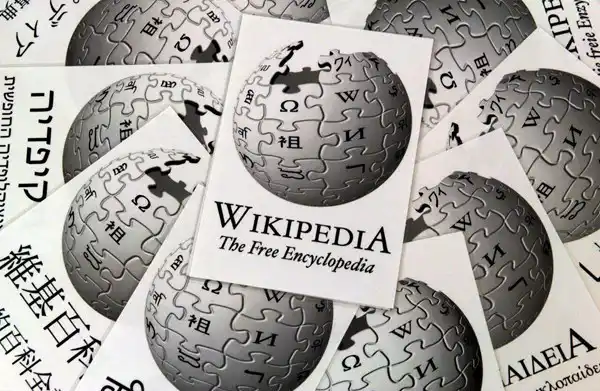
As reported by 404Media, the policy passed with an overwhelming majority of 40 to 2 among volunteer editors, reflecting the community's deep concern about the potential for AI-generated misinformation to erode the knowledge base. Nevertheless, the new rules do not completely discard AI technology but position it as an auxiliary tool: editors are still allowed to use LLMs to propose basic editing suggestions, but during manual review and adoption, the tool is strictly prohibited from introducing any unverified "new content" to prevent model hallucinations from causing articles to deviate from cited sources.

Against the backdrop of generative AI deeply penetrating the content creation field, Wikipedia's choice reflects a cautious balance between efficiency and authenticity in traditional knowledge communities. As major media platforms race to establish AI usage guidelines, Wikipedia, by defining the boundary between "assistance" and "creation," aims to protect the human editorial ecosystem while guarding against the trust crisis triggered by the proliferation of automated content. This decision will not only reshape the collaborative logic of the encyclopedia community but also provide an important reference for the ethical governance of public knowledge repositories in the AI era.


Related Questions

QWhat new editing policy did Wikipedia officially adopt regarding AI-generated content?

AWikipedia has officially adopted a policy that strictly prohibits users from directly using AI to generate or rewrite article content.

QWhat was the result of the vote among volunteer editors for this new policy?

AThe policy was passed by an overwhelming majority of 40 to 2 among the volunteer editor community.

QAccording to the new policy, in what specific way is the use of AI still permitted on Wikipedia?

AEditors are still allowed to use LLMs to propose basic editing suggestions, but they are strictly prohibited from introducing any unverified 'new content' during the manual review and adoption process.

QWhat was the key upgrade made to the previous, more ambiguous policy wording?

AThe policy was upgraded from the previous 'should not generate new articles from scratch' to a stricter 'strictly prohibits the use of LLMs to generate or rewrite content'.

QWhat is the primary concern that motivated Wikipedia's community to implement this ban?

AThe primary concern is the deep worry about AI's potential for misinformation eroding the knowledge base, specifically to prevent model hallucinations from causing articles to deviate from their cited sources.

Related Reads

Polymarket's "2028 Presidential Election" Volume King Is... LeBron James???

An article from Odaily Planet Daily, authored by Azuma, discusses a peculiar phenomenon observed on the prediction market platform Polymarket regarding the "2028 US Presidential Election" event. Despite having a real-time probability of less than 1%, unlikely candidates such as NBA star LeBron James (with $48.41 million in trading volume), celebrity Kim Kardashian ($33.84 million), and even ineligible figures like Elon Musk ($23.14 million) and New York City Mayor Zohran Mamdani ($18.39 million) account for approximately 70% of the total trading volume. In contrast, high-probability candidates like Vice President JD Vance ($10.58 million), California Governor Gavin Newsom ($15.71 million), and Secretary of State Marco Rubio ($9.32 million) have significantly lower trading activity. The article explains that this counterintuitive trend is not driven by irrational speculation but by rational strategies. Polymarket offers a 4% annualized holding reward for certain markets, including the 2028 election, to maintain long-term pricing accuracy. This yield exceeds the current 5-year US Treasury rate (3.98%), attracting large investors ("whales") to hold "NO" shares on low-probability candidates for risk-free returns. Additionally, some users utilize a platform feature that allows converting a set of "NO" shares into corresponding "YES" shares for better liquidity or pricing efficiency, rather than directly buying "YES" shares for their preferred candidates. Thus, the seemingly absurd trading activity is strategically motivated.

marsbit47m ago

Polymarket's "2028 Presidential Election" Volume King Is... LeBron James???

marsbit47m ago

Dialogue with ViaBTC CEO Yang Haipo: Is the Essence of Blockchain a Libertarian Experiment?

"ViaBTC CEO Yang Haipo: Blockchain as a Hardcore Libertarian Experiment" In a deep-dive interview, ViaBTC CEO Yang Haipo reframes the essence of blockchain, arguing it is not merely a new technology or infrastructure but a hardcore libertarian experiment. This experiment, born from the 2008 financial crisis and decades of cypherpunk ideology, tests a fundamental question: to what extent can freedom and self-organization exist without centralized trust? The discussion highlights the experiment's verified outcomes. On one hand, it has proven its core value of censorship resistance, providing critical financial lifelines for entities like WikiLeaks and individuals in hyperinflationary or sanctioned countries via tools like stablecoins. However, Yang points out a key paradox: the most successful product, USDT, is itself a centralized compromise, showing users prioritize a less-controlled pipeline over pure decentralization. On the other hand, the experiment has exposed the severe costs of this freedom—a "dark forest" without safeguards. Events like the collapses of LUNA, Celsius, and FTX, resulting in massive wealth destruction and prison sentences for founders, underscore the system's fragility and the inherent risks of an unregulated environment. Yang observes that despite decentralized protocols, human nature inevitably recreates centralized power structures, speculative frenzies, and narrative-driven cycles (from ICOs to Meme coins), where emotion and belonging often trump technological substance. Looking forward, he believes blockchain's future is significant but niche. Its real value lies in serving specific, real-world needs for financial sovereignty and bypassing traditional controls, not as a universal infrastructure replacing all centralized systems. For the average participant, Yang's crucial advice is to cultivate independent judgment. True freedom is not holding a crypto wallet, but possessing a mind resilient to groupthink and narrative hype in a high-risk, often irrational market.

marsbit1h ago

Dialogue with ViaBTC CEO Yang Haipo: Is the Essence of Blockchain a Libertarian Experiment?

marsbit1h ago

Trading

Spot
Futures

Hot Articles

Discussions

Welcome to the HTX Community. Here, you can stay informed about the latest platform developments and gain access to professional market insights. Users' opinions on the price of AI (AI) are presented below.

活动图片