Author: Ada, Deep Tide TechFlow
Recently, Google announced its first equity financing since 2005. Connecting Google's three actions over the past 90 days, the purpose of this $80 billion is not just to solve capacity problems; it targets the very dominance of Nvidia GPUs over the entire AI computing market. The most directly impacted are the Neocloud trio who have bet their valuations on the "uniqueness of Nvidia": CoreWeave, Nebius, and IREN.
The Complete Picture from Three Connected Actions
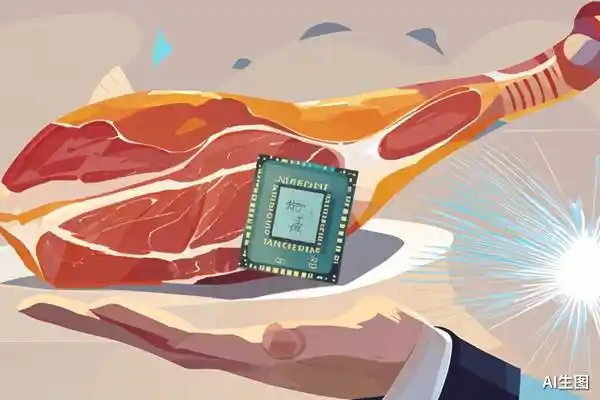
On April 22, at the Google Cloud Next '26 conference, Google released the eighth-generation TPU, split into two chips: TPU 8t dedicated to training and TPU 8i dedicated to inference. In the same product announcement, Google for the first time explicitly stated that it will sell TPUs externally to selected third-party data center operators. This marks the first official departure of TPUs from Google Cloud in a decade, since their mass production began in 2015.
On May 24, Google and Blackstone announced the formation of a joint venture. Blackstone made an initial equity investment of $5 billion, which, with leverage, could reach a total scale of $25 billion. Blackstone serves as the majority shareholder, while Google contributes TPUs and software. The new company is positioned as a compute-as-a-service provider, precisely the standard business model of Neocloud. Its goal is to deploy 500 megawatts of capacity by 2027, led by former Google executive Benjamin Treynor Sloss. On the day of the announcement, CoreWeave's stock fell 3.8%, and Nebius's fell 1%.
On June 1, Google announced an $80 billion equity financing. It fully utilized equity instruments untouched since 2005 all at once: $15 billion in convertible preferred shares, $15 billion in underwritten offerings of Class A/C common stock, a $40 billion at-the-market (ATM) equity offering program, and a $10 billion private placement with Buffett.
Looking at these three actions together, Google is simultaneously paving three paths: in-house data center construction, chip sales, and operating a Neocloud. These are essentially three outward penetration forms of the same TPU computing stack. To describe this merely as a giant expanding capacity vastly underestimates Google's ambition. It is attempting to remake the Nvidia GPU-dominated computing market with TPUs.
The Real Reasons Behind the $80 Billion Equity Financing
Media releases attributing this entire financing to AI infrastructure is a misreading. Google itself states clearly in its SEC filing that of the $40 billion ATM program, approximately $30 billion is intended to cover tax obligations related to employee equity incentives for 2026—a kind of "administrative arrangement" rather than new capital expenditure.
Excluding this portion, the "new money" truly allocated for AI infrastructure is around $50 billion: $30 billion from the underwritten offerings, plus $10 billion from the Buffett private placement, plus $10 billion from the remaining ATM program.
Viewed against another number: Google's full-year 2026 capital expenditure guidance is $180 to $190 billion, with a "significant increase" expected in 2027. The $50 billion equity financing can only cover a little over a quarter of the annual capital expenditure. The remaining funds must be filled by operating cash flow, debt, and follow-up financing.
This, in turn, explains why Google had to resort to equity. Google Cloud's Q1 2026 revenue increased by 63% year-over-year, and its backlog more than doubled from $230 billion last quarter to over $460 billion. The demand already committed in contracts from customers far exceeds the expansion speed of Google's own build-out capacity. In other words, even for a cash cow like Google, AI capital expenditure has grown so large that it must begin diluting equity.
The $10 billion private placement with Berkshire Hathaway is another detail in this financing that needs separate examination. In Buffett's nearly 60-year public record, he almost never participates in primary markets, let alone capital expenditure financing for "new economy" companies. This deal, where he acquired shares at fixed prices of $351.81 for Class A and $348.20 for Class C, is closer to an endorsement—essentially putting a stamp of approval on "AI computing as an infrastructure asset class."
The Diverging Paths of Microsoft vs. Google
To understand the true meaning of this financing, it's necessary to compare the two largest buyers of computing power.
Microsoft is taking the "in-house build plus Neocloud outsourcing" route. Its in-house Maia chip development is behind schedule, while OpenAI's computing demands for training and inference are growing exponentially. Since the end of 2025, Microsoft's contractual commitments to the Neocloud system have exceeded $60 billion: $23 billion to Nscale (for deploying 200K GB300 chips), with the rest divided among CoreWeave, Nebius, IREN, and Lambda Labs. These contracts uniformly use Nvidia GPUs. Microsoft has to rely heavily on Neocloud because its own build-out capacity can't keep up with demand, and its in-house chips can't match Nvidia.
Google is taking another path. It develops TPUs in-house, builds data centers itself (not relying on Neocloud), now plans to sell TPUs to others, and uses the Blackstone JV to compete in the Neocloud market. Google doesn't need Neocloud; it aims to become Neocloud's competitor.
This divergence is the real strategic pivot of this financing. The deeper Microsoft binds with Neocloud, the more Google wants to disrupt Neocloud. The two companies' choices differ because their underlying assets differ: Microsoft lacks its own high-end AI chip, while Google has the TPU.
What supports the viability of Google's path is the actual progress of the TPU. Anthropic moved large-scale training workloads to TPUs in 2025. Meta, SSI, and xAI are reportedly in talks for TPU orders. Google's internal claim is that TPU's cost-performance ratio for specific inference workflows is 3 to 5 times that of Nvidia GPUs—a figure verified by multiple independent analysts.
The Asymmetric Fates of the Trio
Looking back at the Neocloud trio: CoreWeave, Nebius, and IREN.
In terms of short-term cash flow, Google poses no threat. CoreWeave's Q1 backlog has reached nearly $100 billion, including the newly signed $21 billion contract with Meta in March and a multi-year contract with Anthropic. Nebius's Q1 revenue was $390 million, up 841% year-over-year, with full-year 2026 guidance of $3.0 to $3.4 billion in revenue and an annualized run rate of $7.0 to $9.0 billion, plus a signed $27 billion five-year contract with Meta. IREN holds contracts with Microsoft for $9.7 billion and Nvidia for $5.5 billion. These are all locked-in Nvidia GPU contracts that Google TPUs cannot replace.
What's being shattered is the valuation narrative. The logic behind the trio's high valuations is built on three premises: AI computing power is in extreme short supply, Nvidia GPUs are the only option, and Hyperscalers' own builds cannot keep up with demand. Google's combination punch is loosening each of these premises one by one. TPUs are a real alternative, new capacity is catching up, and if in-house builds can't keep up, they use JVs to accelerate.
However, the situations of the three are completely different.
CoreWeave's high valuation risk has been partially released, but its debt leverage hasn't been cleared. Its market positioning is "AWS for the GPU era," which is its biggest ambition and also commands the highest valuation premium. Nvidia already holds about 11% of CoreWeave's equity, worth nearly $4.9 billion, and doubled its stake in January 2026 at $87.20/share. This deep entanglement leaves CoreWeave with no room to pivot to TPUs, as in customer perception, it is Nvidia GPU's agent. As long as Google's approach convinces the market that TPUs are truly a first-tier option, CoreWeave's valuation premium will shrink.
Nebius is in the middle. Its tech stack is relatively open (Soperator is already open-source, following the same SUNK path as CoreWeave), and although its client structure leans towards Nvidia GPUs, it has higher flexibility. Nebius's debt and cash are nearly hedged. The hedge fund Situational Awareness, led by former OpenAI researcher Leopold Aschenbrenner, took a position in Nebius at the end of May—he entered *after* Google's move, essentially betting on whether growth or valuation multiples will run faster.
IREN is the most anomalous. The company transitioned from a Bitcoin miner and is the most asset-heavy and least valuation-premium member of the trio. The cash flow from its $9.7 billion Microsoft and $5.5 billion Nvidia contracts is enough to support its fundamentals. It doesn't face pressure from a "high valuation narrative" being shattered. In the new landscape, IREN transforms from the "weakest" to the "most stable," but it is also no longer cheap.
Transitioning from Supply Shortage to Customer Stratification in the Compute Market
The second-order implication of this is a structural shift in the computing market.
Over the past 18 months, the AI compute market was a typical seller's market, with Nvidia dictating the supply pace and all buyers queuing up. Now, three layers of stratification are occurring simultaneously.
First, frontier model labs are beginning to multi-stack. Anthropic already publicly uses Google TPUs, AWS Trainium, and Nvidia GPUs. OpenAI is also reportedly evaluating TPUs. Once multi-stack becomes standard for leading labs, the "exclusive Nvidia GPU" Neocloud label becomes a limitation from the client's perspective.
Second, Hyperscaler paths are diverging. Microsoft (deeply tied to Neocloud), Google (in-house build plus chip sales plus operating Neocloud), and Amazon (primarily reliant on in-house Trainium) are heading in completely different directions. This divergence directly determines Neocloud's customer structure. Currently, Neocloud's key customers are Microsoft and Meta, with Google completely absent. If Microsoft reduces outsourcing due to Maia improvements or adjustments in its relationship with OpenAI, Neocloud faces structural risks on the revenue side.
Third, cost of capital stratification. Google finances with equity plus Buffett's endorsement plus operating cash flow, making its cost of capital close to zero. CoreWeave's latest loan pricing is SOFR (Secured Overnight Financing Rate) + 4.5%. In a capital-intensive business where GPU depreciation cycles are only 5 to 7 years, this cost of capital gap will compound into a fatal disparity. Neocloud exists now because Nvidia GPUs are still in high demand. Once GPUs transition from scarce goods to relatively abundant commodities, the player with the lowest cost of capital will regain market dominance. This is the direction Google is betting on.
Three Metrics to Watch Next
Returning to that $80 billion equity financing, the real signal it sends to the market is that Google is already treating the AI compute market as one that needs to be redivided. CoreWeave, Nebius, and IREN have short-term contracts that can run for another two to three years, but the "Nvidia uniqueness theory" upon which their high valuations were built has been cracked open from the outside by Google's combination punch.
From here on, watching three things is sufficient: whether the Google-Blackstone JV can light up its promised 500 megawatts of capacity by 2027 on time; whether the TPU customer list can expand from Anthropic to Meta and xAI; and whether Microsoft, amid tensions with OpenAI, will turn back to discuss TPUs. If two of these three things materialize, the story of the trio will need to be rewritten.