VVV Surges Over 10x This Year, Is the Base Ecosystem the Last Hope for Crypto AI?

marsbitPublished on 2026-05-29Last updated on 2026-05-29

Abstract

The article highlights the surge of AI concepts within the Base blockchain ecosystem, positioning it as a focal point for crypto-AI activity. It spotlights several key projects driving this trend. Venice AI's token VVV is noted as a leader, having surged over 10x year-to-date, supported by its dual-token model with DIEM and real business revenue for buybacks. Other significant projects include Virtual, a major AI agent launchpad; Clanker, an AI token launch platform originating from Farcaster; Freysa AI, experimenting with sovereign AI agents; Elsa, an AI-powered DeFi execution layer; and Warden Protocol, a modular L1 for an "agent internet." The piece observes that Base has become a rare active hub for crypto-AI, fueled by the growth of AI agents and related payment ecosystems. While mentioning the volatility of AI-themed meme coins on Base, the article concludes that the ecosystem's potential to realize a fully "on-chain AI world" remains an open question.

Original|Odaily Planet Daily(@OdailyChina)

Author|Wenser(@wenser 2010 )
The AI boom continues to surge, and in the crypto field, the Base ecosystem has become the "last hope for the village" for AI concepts.

Aside from VVV rising 1076% this year, Virtual and Clanker are also steadily building; the x402 protocol related to AI Agent payments is still developing steadily; L1s, operating systems, wallets, social platforms, and others based on real business related to AI Agents are constantly emerging.

Odaily Planet Daily has compiled information on several AI-related tokens in the Base ecosystem, including VVV, for readers' reference.

VVV: The Unquestionable AI King of the Base Ecosystem

Odaily Planet Daily has previously conducted multiple follow-up introductions to VVV, including the article "What is VVV (Venice), Which Quickly Reached a $2 Billion Market Cap Upon Listing on Coinbase?" released when the token launched in January, and the article "OpenClaw Backs Venice.ai, VVV Token Surges Over 500% in a Month" when the price surged over 500% in March.

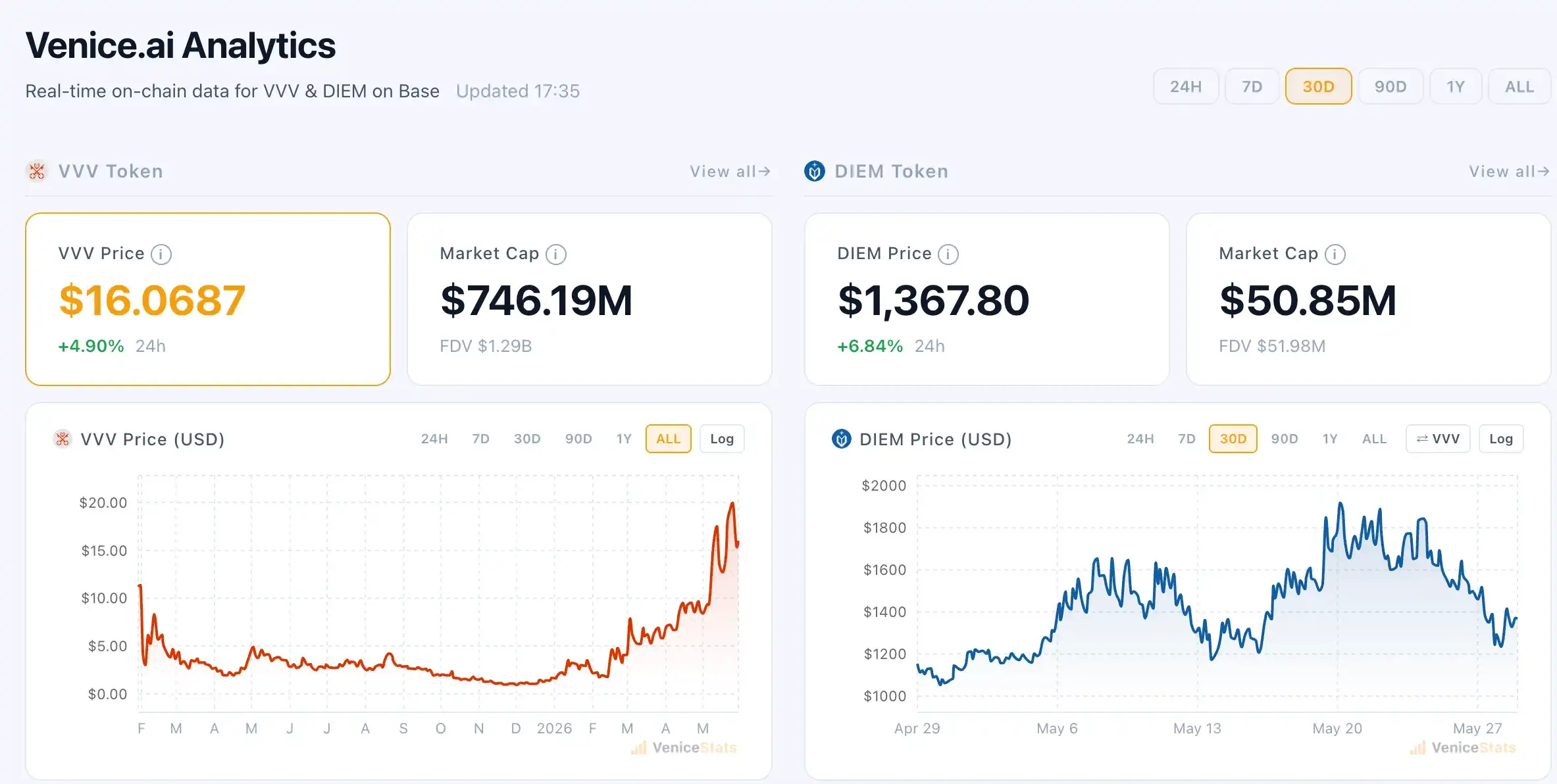
Since then, the dual-token asset model composed of "VVV & computing power token DIEM" paired with the real business revenue of Venice AI (used for token buyback and burn), which focuses on the "privacy AI" concept, has propelled the VVV token to continue rising, reaching around $18. Previously, Venice.ai officially updated the Agentic Chat feature on the 22nd; it also synchronized and launched an update after the Claude 4.8 opus model was released.

According to GMGN data, VVV is currently trading around $16.

According to Venice data website information, VVV's current circulating market cap is approximately $740 million, with an FDV of about $1.3 billion; DIEM is currently priced around $1367, with a circulating market cap of about $50 million and an FDV of approximately $52 million.
VIRTUAL: A Top Launchpad in the Base Ecosystem

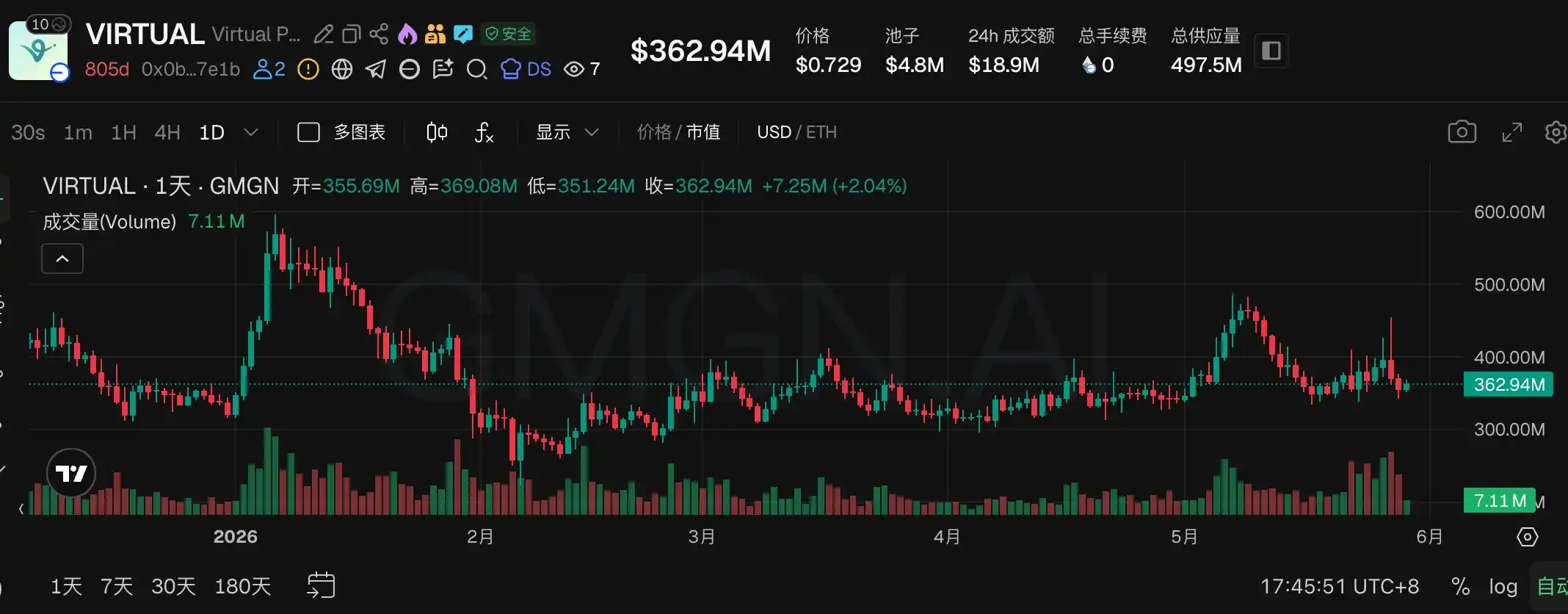
As a top launchpad in the Base ecosystem, Virtual's platform token VIRTUAL remains one of the leading projects in the AI track. Currently, the main positioning of the Virtual platform is an "AI Agent Co-ownership Layer + Launchpad," supporting token creation, asset tokenization, and monetization of autonomous AI Agents. Each Agent has its own independent token, trades in pools like Uniswap V3, and generates real revenue through inference calls and social/gaming/DeFi activities. Currently, the platform supports over 15,800 AI projects, with an aGDP (AI Agent economic output) scale of $477 million.

According to GMGN data, VIRTUAL is currently priced around $0.7, with a market cap of about $360 million.
Clanker: An AI Launchpad Originating from Farcaster

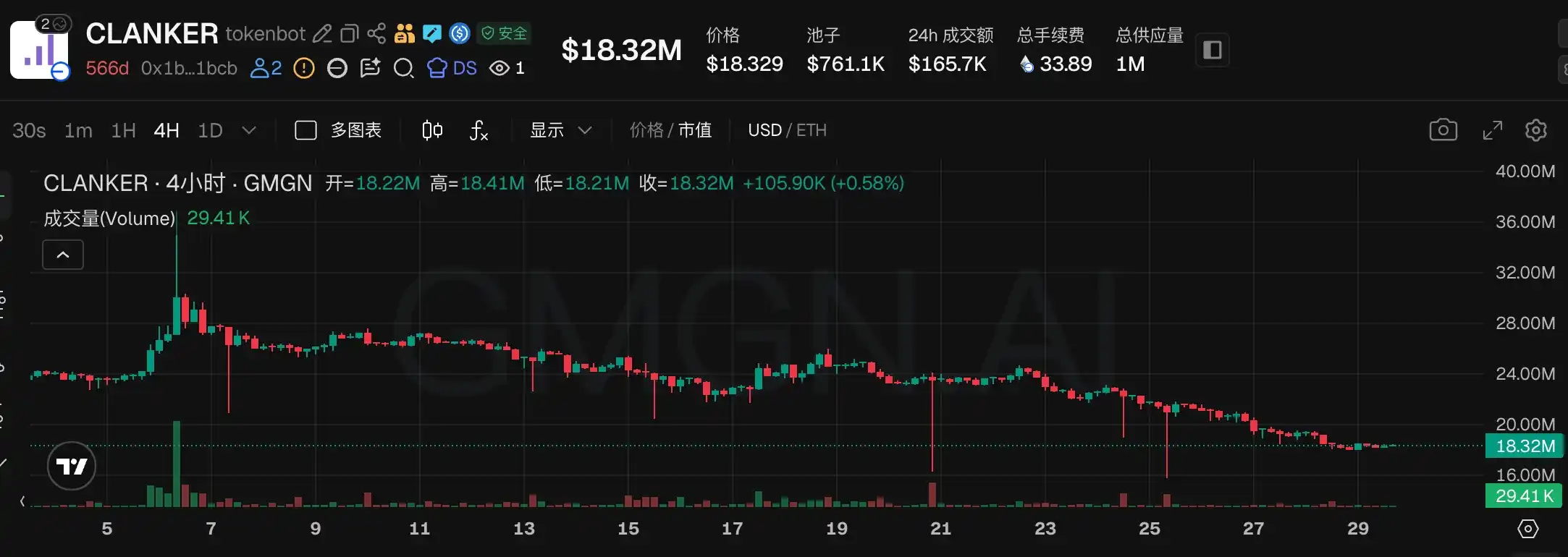
This AI launch platform initially emerged from the Farcaster ecosystem and later expanded to the Base ecosystem. Its main mechanism is AI Agent token launches, where just one Farcaster/X message can prompt Clanker to deploy a new token directly on Uniswap V3, with permanently locked token liquidity; 60% of the 1% trading fee is used for automatic buyback and burning of CLANKER tokens.

The platform previously achieved a record of launching 21,870 new tokens in a single day, after which activity declined somewhat.

Official account: https://x.com/clanker_world

According to GMGN data, the CLANKER token is currently priced around $18, with its market cap falling to around $18 million.
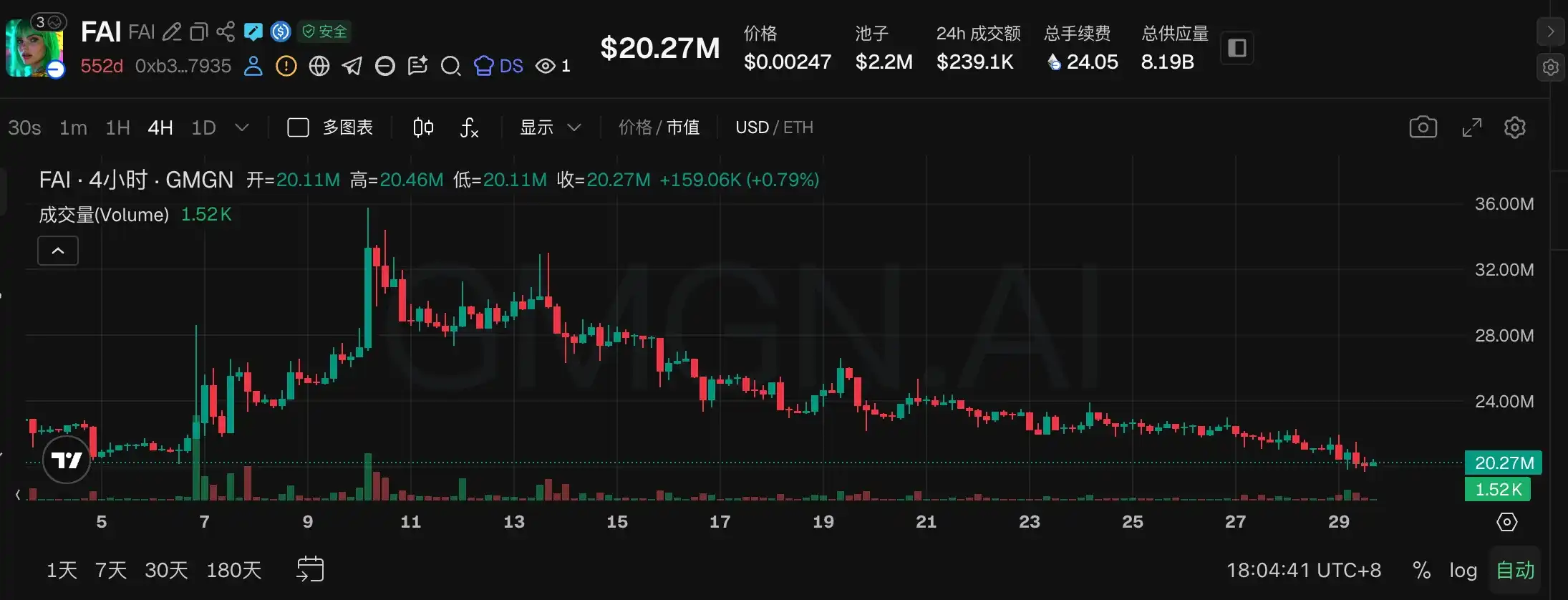
FAI: Sovereign AI Agent Concept Project

Freysa AI, the first experimental project for an "evolving Sovereign AI Agent" on the Base chain. The core idea is to create a truly autonomous AI agent without human-controlled keys and memory: the AI autonomously controls crypto wallets, assets, and decisions, constantly evolving through interaction with global users via the Sovereign Agent Framework (SAF). The project is positioned as a personal AI product suite, emphasizing human agency, liquid democracy, and decentralized ownership. Previously, the project's market cap once soared past $660 million and even received a reply tweet from Musk, but it is now in a quiet phase.

Official account: https://x.com/freysa_ai

According to GMGN data, FAI is currently priced around $0.002, with a market cap of approximately $20 million.
ELSA: AI Agent Execution Layer in the Base Ecosystem

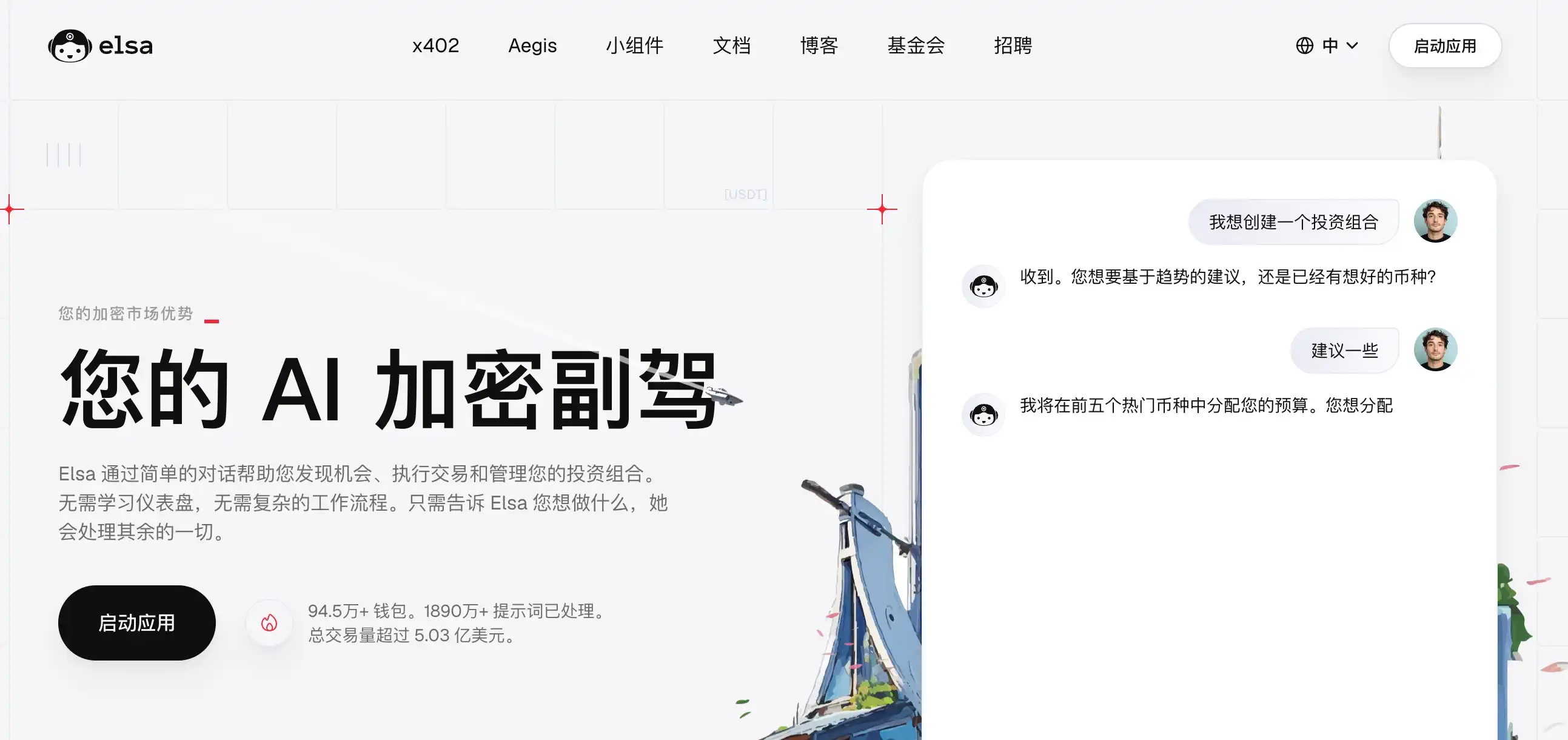
The project is positioned as an "AI-powered DeFi Super Assistant + On-chain Agent Infrastructure." Its core function is to directly convert natural language instructions into secure, autonomous on-chain operations, allowing users to implement various DeFi management and application operations without needing to understand complex on-chain concepts. In June last year, the project completed a $3 million seed funding round led by M31 Capital, with participation from Coinbase Ventures' Base ecosystem fund. Currently, according to official data, the Elsa ecosystem covers nearly 95 wallets, with a total transaction volume exceeding $500 million.

Official account: https://x.com/HeyElsaAI

According to GMGN data, ELSA is currently priced around $0.06; its market cap is about $63 million.
WARD: Modular L1/OS for the Agentic Internet

Warden Protocol, primarily focusing on decentralized AI, supports functions such as Warden Studio (creating an Agent in <60 seconds), SPEx verifiable AI execution, cross-chain intent execution, and AI Agent wallets. According to official statements, it has served 20 million users and processed over 60 million tasks. It previously received $4 million in strategic funding from projects like Messari and Venice.AI.

Official account: https://x.com/wardenprotocol

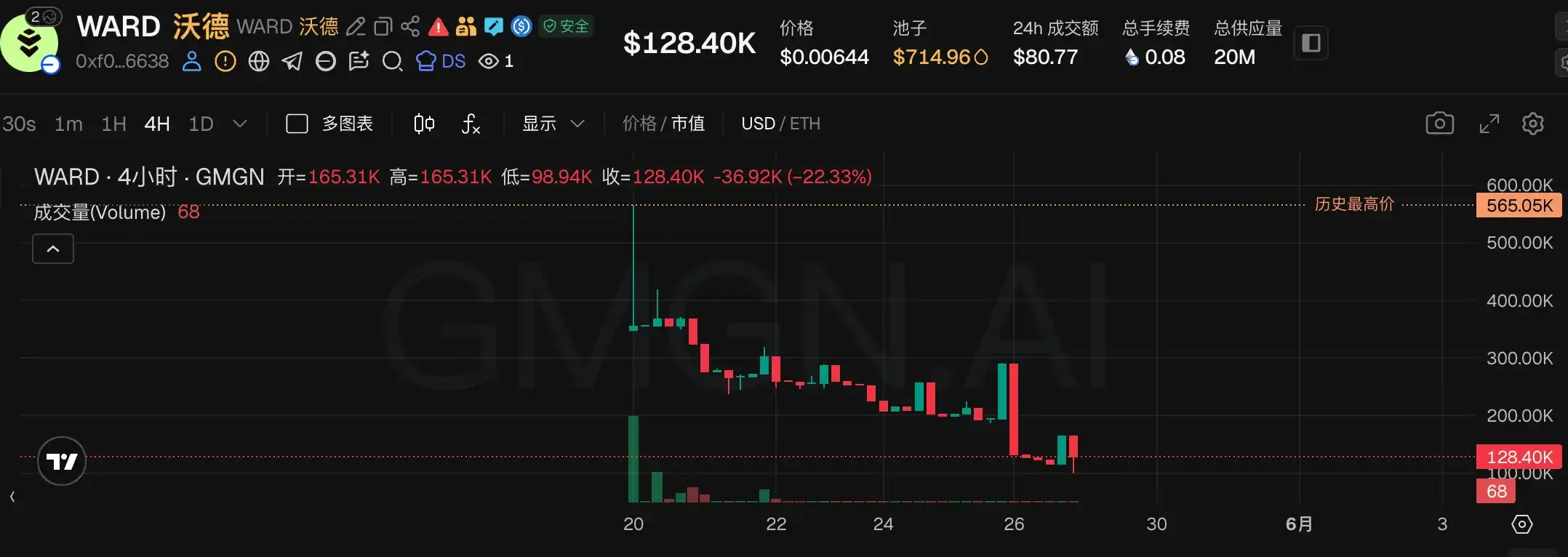
According to GMGN data, the WARD token price has fallen to around $0.006, with the Base ecosystem token market cap only about $128,000; the BSC ecosystem token market cap is approximately $2.4 million.
In addition to the above projects, AI concept meme coins in the Base ecosystem are also quite hot. Recently, Base ecosystem tokens like KellyClaude and GITLAWB saw their market caps surge several times in a short period, but as the hype shifted or celebrity effects faded, they quickly fell into a death spiral again, so they will not be elaborated on here.

In summary, thanks to the development of AI Agents and the prosperity of the AI Agent payment ecosystem, the Base ecosystem has become one of the few active ecosystems for crypto AI. However, whether it can truly achieve the "on-chain AI world" mentioned by the Base team remains an unknown.


Trending Cryptos

Related Questions

QAccording to the article, why is the Base ecosystem considered the 'last hope' for the AI concept in crypto?

AThe article states that due to the development of AI Agents and the prosperity of the AI Agent payment ecosystem, the Base ecosystem has become one of the few active ecosystems for crypto AI, making it a focal point or 'last hope' for the concept.

QWhat is the primary function or role of the VIRTUAL platform as described in the article?

AThe VIRTUAL platform is described as a top launchpad on Base, with its main positioning being an 'AI agent co-ownership layer + launch platform'. It supports token creation, asset tokenization, and monetizing autonomous AI Agents, where each Agent has its own token.

QWhat are the two tokens mentioned that constitute Venice AI's dual-token asset model, and what is the real-world business concept for Venice AI?

AThe two tokens are VVV and the computing power token DIEM. Venice AI's real-world business concept focuses on 'privacy AI', and the revenue from this business is used for token buybacks and burns.

QWhich Base ecosystem AI project received a $300 million seed round funding led by M31 Capital and backed by Coinbase Ventures, and what is its core function?

AThe project is ELSA. It completed a $300 million seed round led by M31 Capital with Coinbase Ventures' Base Ecosystem Fund participating. Its core function is transforming natural language instructions directly into secure, autonomous on-chain operations, acting as an AI-driven DeFi super assistant and on-chain Agent infrastructure.

QWhat was the main reason mentioned in the article for the brief surge and subsequent decline of AI meme coins like KellyClaude and GITLAWB in the Base ecosystem?

AThe article suggests these meme coins saw rapid price surges primarily due to hype or celebrity effects. However, they quickly declined into a 'death spiral' once the hype faded or the celebrity influence waned.

Related Reads

As Consensus Accelerates, What Are Young Investors Betting On?

Title: As Consensus Forms Faster, What Are Young Investors Betting On? In the rapid evolution of tech investment, a new generation of young investors is navigating a landscape where AI, robotics, commercial aerospace, and quantum computing are advancing simultaneously. Traditional investment logic based on financial models is giving way to a need for deep technical understanding and the ability to act before industry consensus forms. An analysis of trends from the "WAIC FUTURE TECH" list of young investment leaders reveals key shifts in focus. The first major trend is the movement of AI from the digital screen into the physical world. Investment is shifting from large language models and chatbots towards embodied AI, robotics, AI hardware, and edge computing. While demonstrations generate excitement, the real challenge lies in achieving scalable, reliable, and cost-effective delivery in complex real-world environments like factories and logistics. Success depends not just on algorithms but on the integration of sensors, actuators, and control systems. Second, the competitive focus for large models is moving beyond raw capability toward building an "intelligence flywheel." The goal is to create self-reinforcing systems where user interaction generates data, improving the model, which in turn enhances the user experience and attracts more engagement. Companies that successfully embed AI into workflows to create these closed-loop systems can build lasting value that isn't easily erased by the next model upgrade. Third, facing a potential bottleneck in high-quality human-generated data, investors are looking at new underlying technologies. Reinforcement learning and self-play, as demonstrated by AlphaGo Zero, offer paths for AI to generate its own experience. Scientific foundation models, which aim to build general AI capabilities for fields like life sciences and materials discovery, represent a non-consensus direction that could unlock new frontiers of knowledge and data. Finally, in deep-tech areas like quantum computing, commercial aerospace, and space-based infrastructure, patient capital is essential. These fields have long, uncertain development and validation cycles involving complex engineering, supply chains, and regulations. Investment here requires a long-term view, focusing on foundational team capabilities and the eventual emergence of market demand, even if commercial returns are distant. Collectively, these trends illustrate how young investors are adapting to a new era. They are learning to make earlier, technically-informed judgments, balance hype with real-world viability, and provide the patient capital needed to build the deep-tech foundations of the future.

marsbit15m ago

As Consensus Accelerates, What Are Young Investors Betting On?

marsbit15m ago

Can Japan Buy Growth with AI? Will the Bond Market Believe It?

Japan's cabinet has introduced the 2026 Basic Policy on Economic and Fiscal Management and Reform, shifting its primary fiscal target. The new framework moves away from the traditional annual primary balance goal and instead prioritizes a stable reduction of the debt-to-GDP ratio. This change is tied to a strategy of increased "responsible proactive fiscal" spending, aiming to boost long-term growth through investments in strategic sectors like AI, semiconductors, energy, and robotics. The government estimates total public and private investment in 62 key technologies could exceed 370 trillion yen by 2040. The market reaction has been mixed and cautious. While equity markets may respond to policy signals, bond markets are focused on fiscal credibility. Concerns center on whether the weakening of the clear primary balance anchor could lead to looser fiscal discipline. If investors doubt that these strategic investments will generate sufficient productivity gains, tax revenue, and nominal growth to outpace rising interest costs, they may demand higher yields on Japanese Government Bonds (JGBs). Recent volatility in the yen and JGB yields, with the 10-year yield briefly reaching 2.9%, reflects this skepticism. The success of this new framework hinges on two factors: whether Japan can achieve a nominal growth rate consistently higher than its long-term interest rates, and whether future budgets demonstrate disciplined control over bond issuance. The government's narrative is that strategic investment is essential to break Japan's cycle of low growth, aging, and labor shortages. However, the bond market will continuously assess the credibility of this plan, pricing the risk that it may represent fiscal expansion rather than a viable growth strategy.

marsbit52m ago

Can Japan Buy Growth with AI? Will the Bond Market Believe It?

marsbit52m ago

Misjudged A-Shares: Resilience, Expectations, and Confidence

China's A-share market recently faced selling pressure, especially in tech sectors, initially triggered by a global tech sell-off that began in South Korea. However, the article argues this is a case of "mistaken injury" and highlights the market's underlying resilience. This resilience stems from three main pillars: **1) Tech Sector Fundamentals:** Unlike Korea's market dominated by a few memory chip stocks, China's tech sector is diversified across computing, communications, electronics, and semiconductors, supported by dual narratives of global AI supply chains and domestic substitution. Core areas like optical modules and fiber optics continue to show strong earnings growth. **2) "National Team" Support:** State-backed institutions and large corporations have made significant market purchases and announced buybacks, providing liquidity and signaling confidence. This is seen as a stabilizing policy signal, often associated with market bottoms. **3) Broader Market Pillars:** Other major sectors are showing endogenous recovery momentum. Consumer stocks benefit from stabilizing CPI and signs of sector recovery (e.g., liquor price hikes). Cyclical sectors like aluminum have high earnings, potential price increases due to tight supply, and low valuations. The financial sector offers stable dividends and low valuations. The conclusion is that the sell-off was driven by external contagion, not a collapse in fundamentals. With strong policy support and recovering momentum across key sectors, the A-share market possesses the toughness to regain stability.

marsbit1h ago

Misjudged A-Shares: Resilience, Expectations, and Confidence

marsbit1h ago

Trading

Spot

Hot Articles

Discussions

Welcome to the HTX Community. Here, you can stay informed about the latest platform developments and gain access to professional market insights. Users' opinions on the price of AI (AI) are presented below.

活动图片














