Understanding Jensen Huang's Physical AI: Why Is Crypto's Opportunity Also Hidden in the 'Nooks and Crannies'?

marsbitPublished on 2026-01-23Last updated on 2026-01-23

Abstract

Jensen Huang's recent speech at Davos signals a pivotal shift in AI: the transition from the training-focused "brute force" era of AI 1.0 to the new paradigm of "Physical AI" and inference. This marks the next phase after Generative AI, focusing on real-world application and embodiment. Physical AI aims to solve the "last-mile" problem of AI: moving from digital intelligence to physical action. While LLMs have consumed vast digital data, they lack understanding of the physical world—like how to twist open a bottle cap. Physical AI requires three core capabilities: 1. Spatial Intelligence: AI must perceive and interpret 3D environments in real-time, understanding object properties, depth, and interaction dynamics. 2. Virtual Training Grounds: Systems like NVIDIA’s Omniverse enable simulation-to-real (Sim-to-Real) training, allowing robots to learn through vast virtual iterations without costly physical failures. 3. Electronic Skin and Touch Data: Sensors that capture tactile feedback—temperature, pressure, texture—are critical. This data is a new, untapped asset class. This shift opens significant opportunities for Crypto and Web3 ecosystems. DePIN networks can crowdsource hyperlocal spatial data from "every corner" of the world through token incentives. Distributed computing networks can provide edge-based rendering and inference power for low-latency physical responses. Tokenized data ownership and privacy-preserving sharing mechanisms can enable the scalable, ethical col...

What did Jensen Huang actually say at the Davos Forum?

On the surface, he was promoting robotics, but in reality, he was initiating a bold 'self-revolution.' With one speech, he ended the old era of 'stacking GPUs,' yet unexpectedly handed the Crypto sector a once-in-a-lifetime opportunity?

Yesterday, at the Davos Forum, Huang pointed out that the application layer of AI is exploding, and the demand for computing power will shift entirely from the 'training side' to the 'inference side' and the 'Physical AI side.'

This is very interesting.

As the biggest winner in the 'computing arms race' of the AI 1.0 era, NVIDIA is now actively advocating for a shift toward 'inference' and 'Physical AI,' sending a very clear signal: the era of 'brute force miracles' by stacking GPUs to train large models is over. From now on, AI competition will revolve around the 'application-first' principle for real-world implementation.

In other words, Physical AI is the second half of Generative AI.

Because LLMs have already read all the data accumulated by humans on the internet over decades, but they still don’t know how to twist open a bottle cap like a human. Physical AI aims to solve the problem of 'unity of knowledge and action' beyond AI’s intellectual capabilities.

The reason is simple: Physical AI cannot rely on the 'long reflex arc' of remote cloud servers. If ChatGPT is one second slower in generating text, you might just feel a lag. But if a bipedal robot is one second slower due to network latency, it might fall down the stairs.

However, while Physical AI seems like a continuation of generative AI, it actually faces three entirely new challenges:

1) Spatial Intelligence: Enabling AI to understand the three-dimensional world.
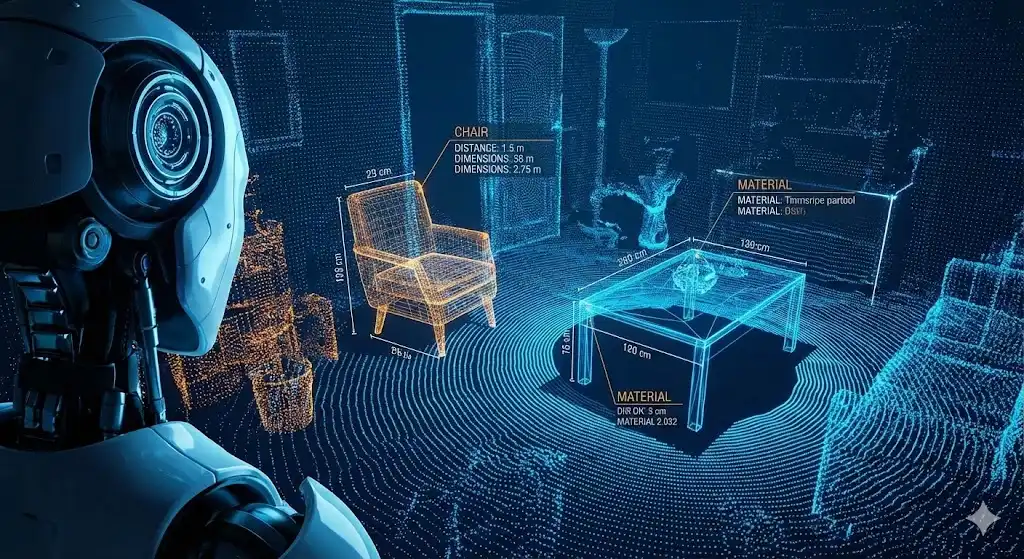
Professor Fei-Fei Li once proposed that spatial intelligence is the next North Star for AI evolution. For robots to move, they must first 'see' the environment. This isn’t just about recognizing 'this is a chair,' but understanding 'the chair’s position in 3D space, its structure, and how much force I should use to move it.'

This requires massive, real-time, 3D environmental data covering every corner, both indoors and outdoors;

2) Virtual Training Grounds: Allowing AI to train through trial and error in simulated worlds.
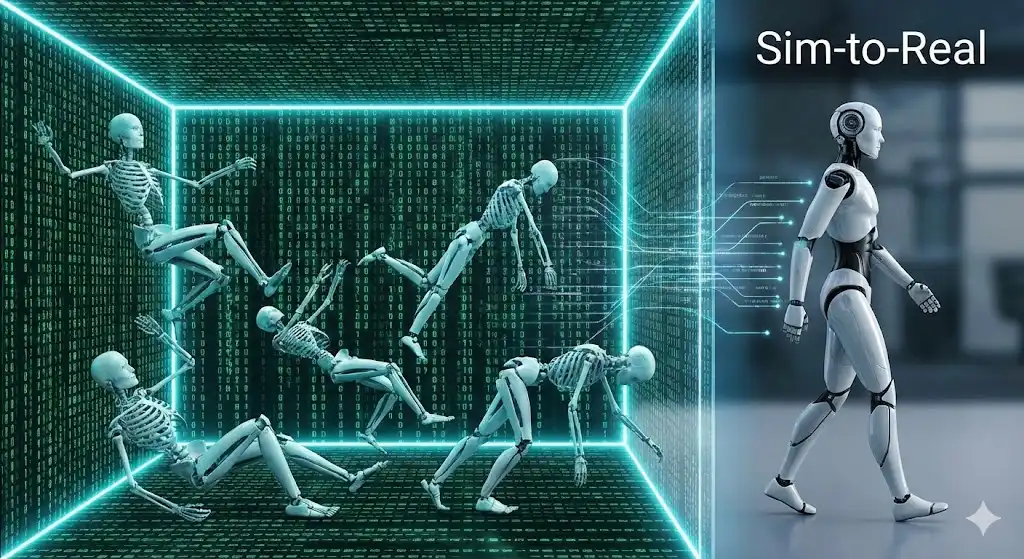
The Omniverse mentioned by Jensen Huang is essentially a 'virtual training ground.' Before entering the real physical world, robots need to train 'falling ten thousand times' in a virtual environment to learn how to walk. This process is called Sim-to-Real, or simulation to reality. If robots were to trial-and-error directly in the real world, the hardware wear-and-tear costs would be astronomically high.

This process demands an exponential increase in the throughput requirements for physics engine simulation and rendering computing power;

3) Electronic Skin: 'Tactile Data'—A Gold Mine Waiting to Be Mined.
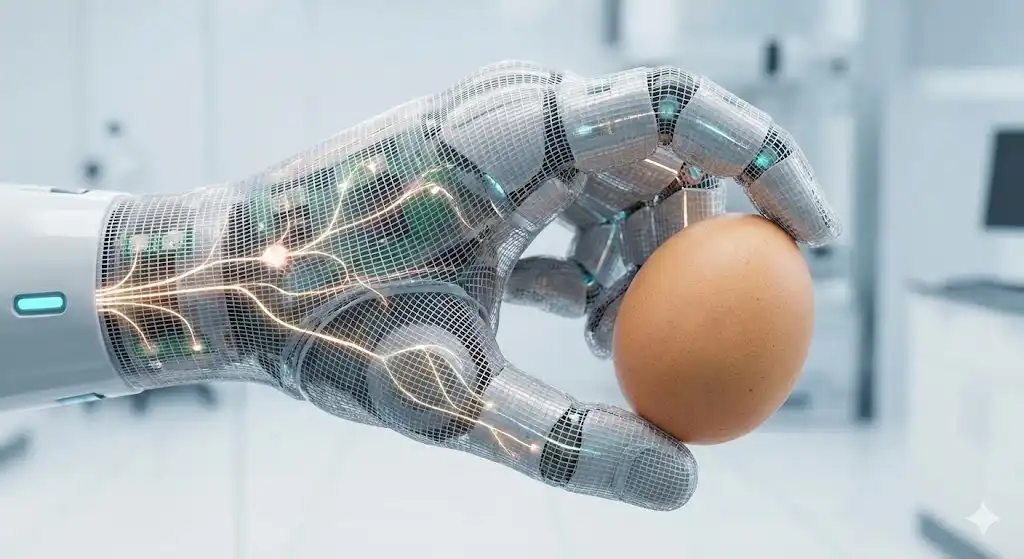
For Physical AI to have a 'sense of touch,' it needs electronic skin to perceive temperature, pressure, and texture. This 'tactile data' is a brand-new type of asset that has never been collected on a large scale before. This may require large-scale sensor deployment. At CES, Ensuring company demonstrated 'mass-produced skin' with a single densely packed hand integrating 1,956 sensors, enabling the robot to perform miracles like peeling an egg.

This 'tactile data' is a brand-new type of asset that has never been collected on a large scale before.

After reading this, you might feel that the emergence of the Physical AI narrative gives a significant opportunity for wearable devices, humanoid robots, and other hardware devices to shine—要知道, these were largely dismissed as 'big toys' just a few years ago.

Actually, I want to say that in the new landscape of Physical AI, the Crypto sector also has an excellent opportunity to fill ecological gaps. Let me give a few examples:

1. AI giants can deploy street-view cars to scan every main street in the world, but they can’t collect data from the nooks and crannies of streets, residential complexes, and basements. By using Token incentives provided by DePIN network devices to mobilize global users to supplement this data with their personal devices, it’s possible to fill these gaps;

2. As mentioned earlier, robots cannot rely on cloud computing power, but to utilize edge computing and distributed rendering capabilities on a large scale in the short term, especially for Sim-to-Real data processing. By leveraging distributed computing networks to pool and schedule idle consumer-grade hardware, it can be put to good use;

3. 'Tactile data,' besides requiring large-scale sensor applications, by its very name, will be extremely private. How to incentivize the public to share this privacy-sensitive data with AI giants? A feasible path is to allow data providers to obtain data ownership and profit-sharing rights.

To sum up:

Physical AI is the second half of the web2 AI赛道 that Huang has called for. For the web3 AI + Crypto sectors, such as DePIN, DeAI, DeData, isn’t it the same? What do you think?


Trending Cryptos

Related Questions

QWhat is Physical AI according to Jensen Huang's speech at the Davos Forum?

APhysical AI is the next phase of Generative AI, focusing on enabling AI to interact with and operate in the physical world. It addresses the 'integration of knowledge and action' by allowing AI to understand 3D environments, simulate actions in virtual training grounds, and process tactile data through electronic skin, moving beyond pure data training to real-world application.

QWhy does Physical AI require a shift from cloud-based computing to edge or distributed systems?

APhysical AI cannot rely on distant cloud servers due to latency issues. For example, a delay of one second might be acceptable for text generation by ChatGPT, but it could cause a bipedal robot to fall down stairs. Real-time responsiveness is critical, necessitating edge computing or distributed networks to reduce latency and ensure reliable operation in physical tasks.

QHow can Crypto and DePIN networks contribute to Physical AI development?

ACrypto and DePIN (Decentralized Physical Infrastructure Networks) can help by incentivizing global users to collect spatial data from hard-to-reach areas (e.g., alleys, basements) using token rewards. They can also leverage distributed computing resources for simulation training and rendering, and enable privacy-preserving data sharing through tokenized incentives for tactile data contribution and ownership.

QWhat are the three key challenges mentioned for Physical AI?

AThe three key challenges are: 1) Spatial Intelligence - AI must understand 3D environments, including object positions and physical interactions; 2) Virtual Training Grounds - AI requires simulated environments (e.g., Omniverse) for cost-effective trial-and-error training; 3) Electronic Skin - AI needs sensors to collect tactile data (e.g., pressure, temperature) for fine motor skills, which is a new type of data asset.

QWhy is tactile data important for Physical AI, and how can it be collected ethically?

ATactile data (e.g., pressure, texture, temperature) is crucial for Physical AI to achieve 'hand-eye coordination' and perform delicate tasks like handling objects. It can be collected ethically using token-based incentives in Crypto ecosystems, where contributors are rewarded for sharing data while maintaining privacy and data ownership rights, ensuring fair compensation and control over personal information.

Related Reads

CPU Makes a Comeback to the Table, A $170 Billion "Power Seizure" Drama Begins

A new era is dawning for the server CPU (Central Processing Unit), driven by the shift from AI model training to large-scale reasoning and the rise of Agentic AI. This article explores how the CPU is reclaiming a central role in the AI data center. For years, the focus has been on the GPU (Graphics Processing Unit) for AI training. However, as AI moves to the inference and Agent phase—where tasks involve complex, multi-step reasoning, tool calls, and data management—the workload balance is flipping. Studies show CPUs now handle over 70% of the workload in Agentic AI, up from 10-30% in training. This is because Agent tasks generate massive intermediate data (KV Cache) that exceeds GPU memory, forcing it to be offloaded to the CPU's larger, more scalable memory pools. This increased importance is translating into market changes. Major players are taking note: NVIDIA launched its first standalone CPU line, Vera, based on ARM architecture and optimized for Agent performance. AMD doubled its server CPU market forecast to over $1200 billion by 2030. Analyst reports project the total server CPU market could reach $1700 billion by 2030, with AI-driven demand being a primary driver. Furthermore, the classic ratio of CPUs to GPUs in AI servers is rapidly changing, converging from 1:8 toward 1:1 for Agent deployments. This surge in demand has led to a rare industry-wide price increase of 10-15% for server CPUs from Intel and AMD, breaking a decade-long trend of "more performance for the same price." Demand is bifurcating into high-core-count CPUs for in-rack GPU support and moderate-core CPUs for standalone Agent task orchestration. In China, this global trend presents an opportunity for domestic CPU manufacturers like Hygon (海光信息) and Huawei Kunpeng, who are bolstered by both growing AI infrastructure needs and national policies promoting technological self-reliance ("xin chuang"). The maturity of their software ecosystems is also accelerating, evidenced by faster adaptation to new AI models. In conclusion, the narrative is shifting from a GPU-centric view to one where CPU-GPU synergy is critical. The CPU is no longer a peripheral component but a performance-defining bottleneck and a key growth driver in the AI hardware stack, opening a massive new market estimated in the hundreds of billions of dollars.

marsbit6h ago

CPU Makes a Comeback to the Table, A $170 Billion "Power Seizure" Drama Begins

marsbit6h ago

TechFlow Intelligence: AMD AI Director Publicly Criticizes Claude Code for "Becoming Dumber and Lazier", Trump Claims Full Ceasefire in Hormuz But Strait Still Has 80 Unexploded Mines

TechFlow Intelligence Report: This daily digest covers key developments in AI, crypto, hardware, and geopolitics. In AI, SK Telecom faces US export control scrutiny over its partnership with Anthropic, while a Gemini user reports being misled in a scam scenario, sparking safety debates. China's Z.AI launches the GLM-5.2 model, rivaling Claude Opus without NVIDIA chips. In crypto, Bithumb lists ReProtocol, and Upbit delists KernelDAO. On the hardware front, MIT researchers build a custom OS to study chips, ASML denies US claims its advanced lithography machines are in China, and Amazon considers selling its in-house AI chips. Apple's future A21 Pro chip may use TSMC's latest N2P process. Major tech issues include 10,000 GitHub repositories distributing malware and Apple patching a critical eavesdropping flaw in Beats earbuds. US stocks rise, led by semiconductors, with Intel surging 10.6%, while SpaceX falls 3.5%. Geopolitically, despite a US-Iran deal, the Strait of Hormuz remains risky with ~80 uncleared mines, stalling 80M barrels of oil on standby tankers. Iran postpones Switzerland talks, and Trump calls the agreement an "unconditional surrender." The report highlights a contrast: temporary geopolitical calm versus the ongoing, fundamental restructuring of tech supply chains and chip independence.

marsbit6h ago

TechFlow Intelligence: AMD AI Director Publicly Criticizes Claude Code for "Becoming Dumber and Lazier", Trump Claims Full Ceasefire in Hormuz But Strait Still Has 80 Unexploded Mines

marsbit6h ago

Trading

Spot
Futures

Hot Articles

Discussions

Welcome to the HTX Community. Here, you can stay informed about the latest platform developments and gain access to professional market insights. Users' opinions on the price of AI (AI) are presented below.

活动图片