‘The question is how, not if’ – Reserve Bank of Australia’s 24/7 trading roadmap

ambcryptoPublished on 2026-03-27Last updated on 2026-03-27

Abstract

The Reserve Bank of Australia (RBA) has shifted its focus from questioning "if" to "how" tokenization will be implemented in the financial system. Assistant Governor Brad Jones announced this change, highlighting that tokenization is now considered an inevitable future. The RBA's Project Acacia projects $16.7 billion in annual efficiency gains and supports the coexistence of stablecoins and bank deposits. Currently, the Australian dollar stablecoin market cap is relatively low at $10.5 million, with AUDD dominating at 98.73%. However, new regulations and the push for 24/7 trading are expected to spur growth. Tokenization pilot programs covered assets like government bonds and carbon credits, using both central bank and private tokenized money. The RBA will collaborate with regulatory bodies to support implementation, which could accelerate Australia's digital economy and stablecoin market.

Australia moved closer to tokenization, with the Reserve Bank of Australia (RBA) outlining its next phase.

At the ‘Beyond Tomorrow’ forum on the 25th of March, Assistant Governor Brad Jones said the focus had shifted from “if” to “how” tokenization would be implemented.

He stated,

First, we no longer see the main question as whether tokenisation has a future in Australia’s financial system, but rather, how.

How tokenization will be implemented

Australia appeared positioned to advance tokenization across asset classes, with a focus on enabling 24/7 trading.

On the RBA website, Jones detailed findings from Project Acacia, which projected $16.7 billion in annual efficiency gains.

The central bank noted that stablecoins and bank deposits could coexist within the system.

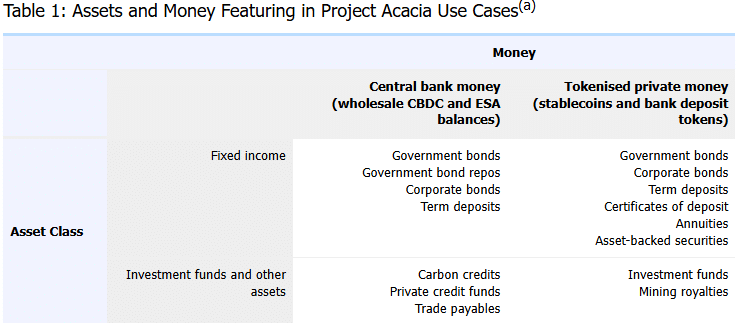
The pilot covered fixed income and investment funds, with transactions flowing through both central bank money and tokenized private money.

These included government bonds, corporate bonds, carbon credits, and private credit funds.

However, the RBA confirmed it would work with the Council of Financial Regulators (CFR) and DFCRC to support implementation.

That coordination could accelerate Australia’s stablecoin market and broader digital economy.
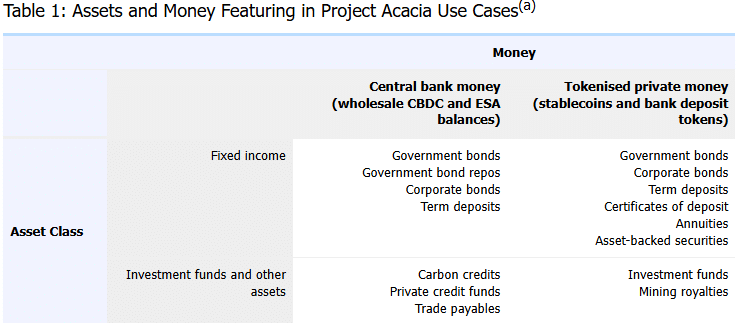
Source: rba.gov.au

Australia dollar [AUD] stablecoins market cap

Speaking of the market cap for Australian dollar stablecoins, it is relatively low, probably due to regulatory hurdles before the RBA move.

As per DeFiLlama, their total market cap was at $10.5 million, a growth of 1.86% this week. In this lot, AUDD led with a dominance of 98.73%, equivalent to $10.35 million.

Others in the list were AUDm and AUDM, accounting for 0.93% and 0.34% of the total cap, respectively. The joint had a cap of about $133K.
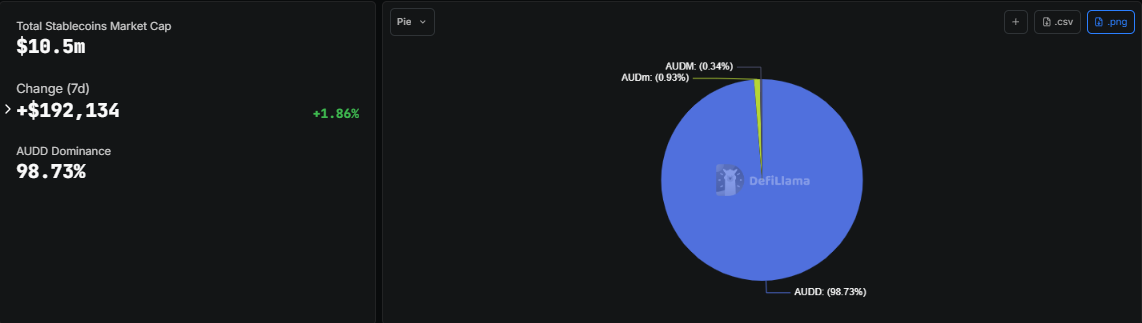
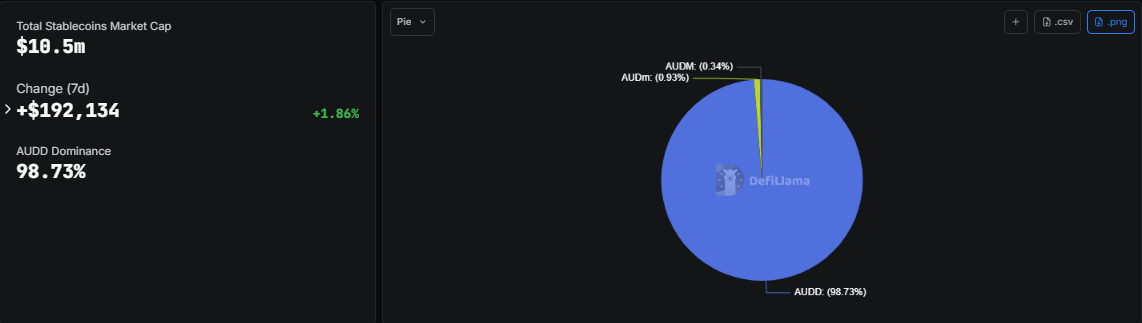
Source: DeFiLlama

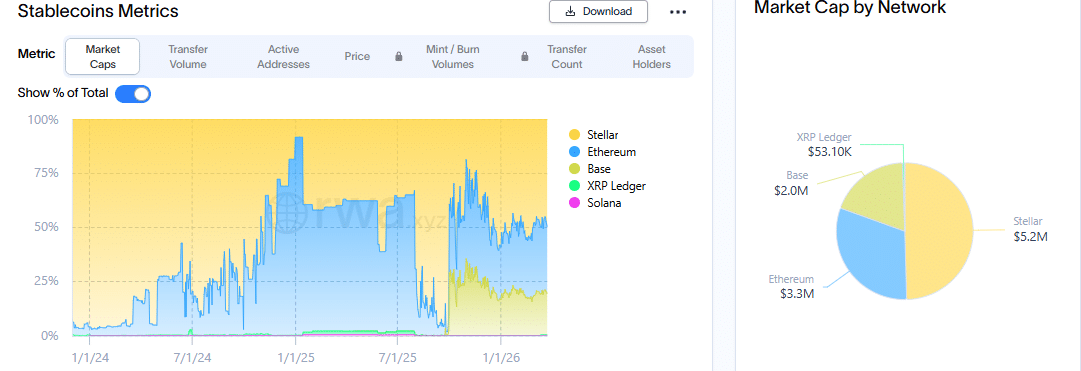
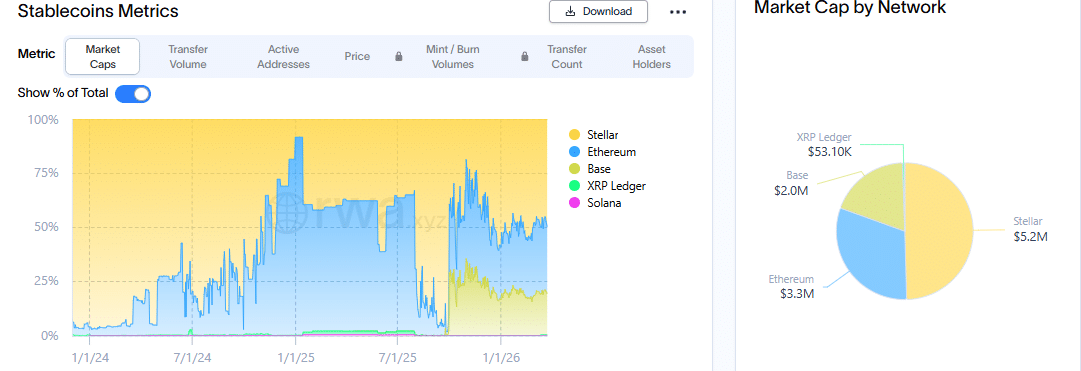
Narrowing down the analysis to AUDD, it was spread across five major blockchains.

The largest share of its cap, about 48%, was on Stellar [XLM], equal to $5.2 million, as Ethereum [ETH] came second with 31% of the total.

Base Chain held 19%, which represented $2 million. Meanwhile, less than 1% of its total share was on Solana [SOL] and XRP Ledger.
Source: RWA.xyz

The projection from Project Acacia, together with the implementation, was a precedent for the growth of tokenization in the Australian market.

Daily transactions surge

Tokenization was heavily reliant on stablecoins.

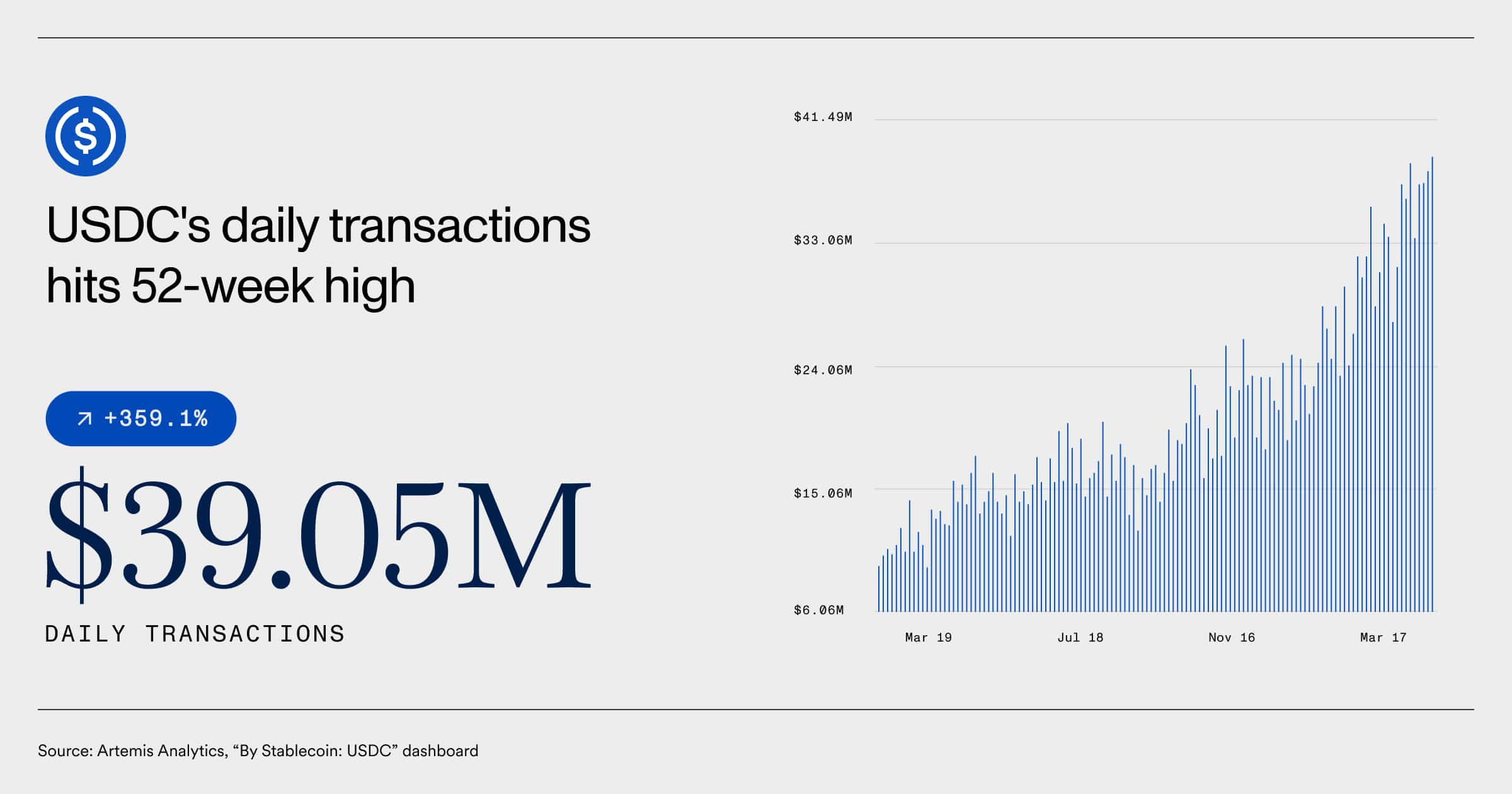
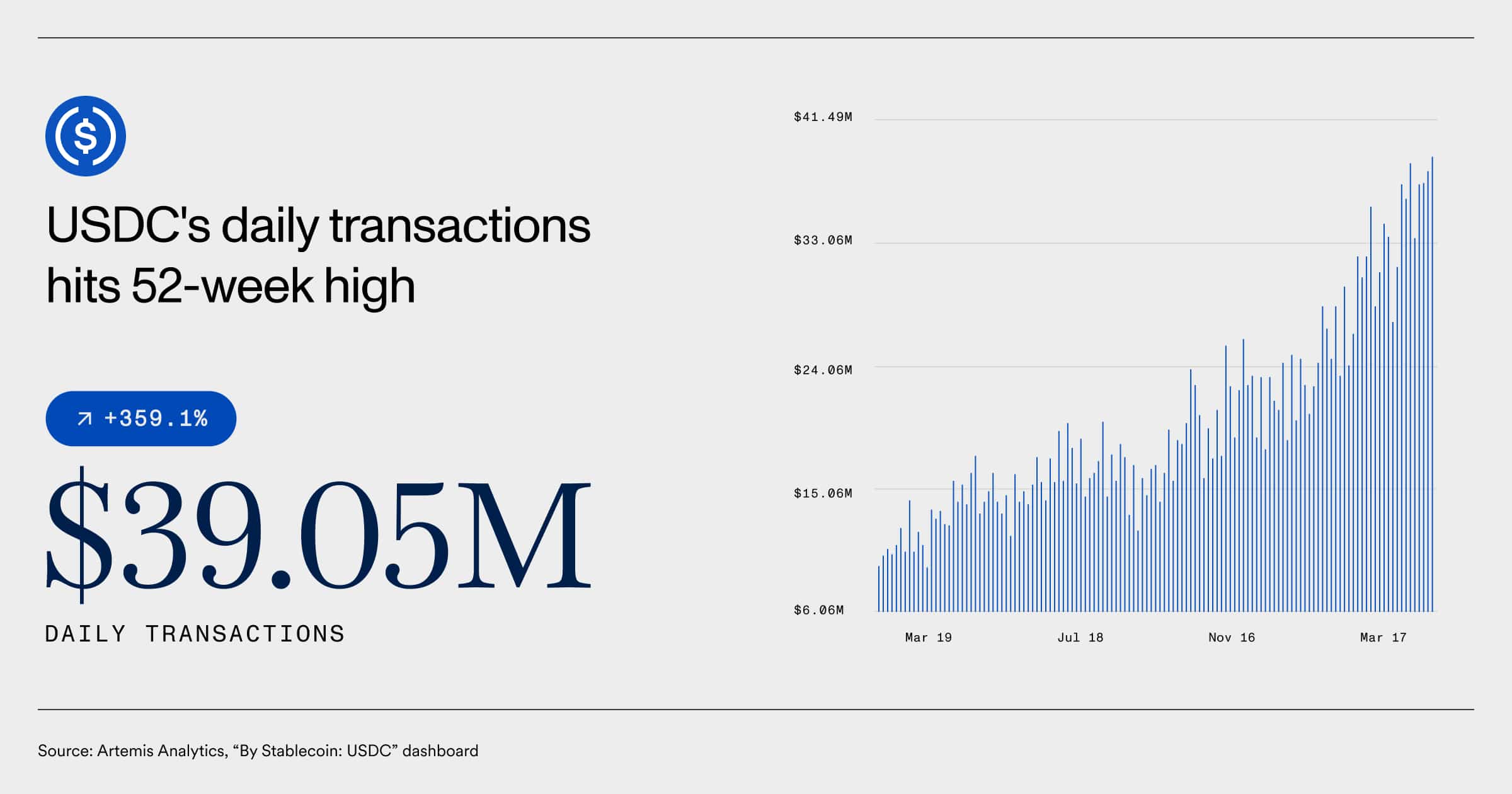
For context, daily transactions for USD Coin [USDC] had hit a 52-week high of $39.05 million. This equated to a 359% growth since March 2019.
Source: Artemis Analytics

However, the growth of the Australian dollar stablecoin market was nowhere near that of the USD-backed ones. Therefore, tokenization could spur growth in AUD-backed stablecoins and real-world assets (RWAs) in the country.


Final Summary

  • RBA shifts from asking whether tokenization was happening to how to implement it.
  • The market cap of AUD-backed stablecoins has stayed relatively low, but the regulations could shift this trend.


Trending Cryptos

Related Questions

QWhat is the main shift in the Reserve Bank of Australia's (RBA) stance on tokenization, as stated by Assistant Governor Brad Jones?

AThe main shift is that the RBA no longer sees the question as 'if' tokenization has a future in Australia's financial system, but rather 'how' it will be implemented.

QWhat was the name of the RBA project that projected significant annual efficiency gains from tokenization, and what was the projected amount?

AThe project was called Project Acacia, and it projected $16.7 billion in annual efficiency gains.

QWhat is the current total market cap of Australian dollar (AUD) stablecoins, and which stablecoin dominates this market?

AThe total market cap is $10.5 million, and the AUDD stablecoin dominates the market with a 98.73% share, equivalent to $10.35 million.

QWhich two types of assets were used in the RBA's pilot for tokenization, and what two forms of money did the pilot use for transactions?

AThe pilot covered fixed income and investment funds, and transactions flowed through both central bank money and tokenized private money.

QAccording to the article, what could the RBA's coordination with other regulators accelerate the growth of in Australia?

AThis coordination could accelerate the growth of Australia's stablecoin market and its broader digital economy.

Related Reads

From South Korea to the United States: Blue-Collar Jobs Are Becoming Increasingly Popular, Thanks to AI

AI is reshaping the labor market's value proposition. The traditional four-year college degree is losing its appeal as a guaranteed career path, while skilled blue-collar trades like electricians, welders, and plumbers are experiencing historic demand and wage premiums. This shift is driven by dual pressures: AI's displacement of certain white-collar roles and a booming need for physical infrastructure and data center construction. Data confirms the trend. In the U.S., vocational school revenue surged, and a significant portion of recent layoffs are AI-related. Surveys show a majority of Gen Z adults plan to pursue blue-collar work, citing better job security against AI automation. Vocational education interest has exploded recently. Experts cite a psychological shift as younger generations seek tangible, AI-resistant careers and avoid high student debt. In many cases, salaries for skilled trades now match or exceed those requiring a bachelor's degree. In South Korea, semiconductor vocational high schools boast near-total employment, with graduates securing high-paying roles at companies like Samsung. The shortage is structural, exacerbated by a retiring baby boomer workforce and massive infrastructure projects. Companies like JPMorgan Chase, Meta, and Lowe's are investing heavily in training programs. However, overcoming historical stigma and a "perception gap" around trade careers remains a key challenge to closing the talent gap.

marsbit1h ago

From South Korea to the United States: Blue-Collar Jobs Are Becoming Increasingly Popular, Thanks to AI

marsbit1h ago

Qualcomm: AI Hype Subsides, When Will Smartphones Emerge from the Gloom?

Qualcomm reported its Q3 FY2026 results (ending June 2026), with revenue of $9.95B, down 4% YoY but above expectations. Gross margin declined to 53.1%, pressured by rising costs across manufacturing and memory. Key business segments showed mixed performance: Handset revenue fell 19.6% YoY to $5.09B, dragged by an 11% decline in non-Apple Android shipments and weaker high-end mix. Conversely, Automotive revenue surged 61% to $1.59B, and IoT grew 9% to $1.83B. Core operating profit dropped 41% YoY due to margin compression and higher expenses. Management's Q4 FY2026 guidance projects revenue of $9.7B-$10.5B, in line with consensus, but Non-GAAP EPS guidance of $2.05-$2.25 fell short of expectations. Amidst persistent weakness in its core handset market, Qualcomm is pursuing growth in AI, focusing on Edge AI (smartphones, PCs, automotive) and Data Center AI. Its data center strategy includes four pillars: AI accelerators (e.g., AI200), commercial CPUs (Dragonfly C1000), custom silicon, and connectivity solutions. While these initiatives initially boosted its stock, concerns over AI capital expenditure sustainability have since erased those gains. The company targets $5B in data center revenue for FY2027 and $15B for FY2029. The report concludes that with the traditional handset business still under pressure, the data center opportunity is currently viewed as a longer-term option, and a more conservative valuation based on core operations may be warranted until AI contributions materialize.

marsbit1h ago

Qualcomm: AI Hype Subsides, When Will Smartphones Emerge from the Gloom?

marsbit1h ago

From TPU to Self-Evolving Agents: How Jeff Dean Predicts the Next Step in AI

At the 2026 YC Startup School, Jeff Dean outlined his vision for AI's next phase, shifting focus from simply scaling models to building intelligent, autonomous systems. He believes AI's progress is no longer just about creating smarter models, but about integrating them into systems capable of long-term, iterative work, automated experimentation, and continuous learning. This evolution moves the competition from "who has the bigger model" to "who can best organize intelligence." Dean suggests AI capabilities are now comparable to a junior engineer, enabling the automation of complex workflows. However, the true challenge and opportunity lie in managing these AI "workers" at scale. He emphasizes the importance of **context engineering**—structuring tools, memory, and feedback loops—over raw model power. For startups, this means building deep expertise in niche domains where general models currently fail (near 0-1% success rates), leveraging proprietary data, specialized tools, and domain-specific evaluators. A recurring theme is re-examining fundamental constraints. Dean's past work, like moving Google's search index to memory or creating the TPU, stemmed from questioning outdated assumptions about hardware and cost. He sees similar inflection points today, particularly in **specialized inference hardware** to drastically reduce latency and energy consumption for real-time Agent operation. Notably, he points out that in modern AI systems, the dominant cost is often not computation but **data movement**. Reliable, long-running Agents require robust system design, borrowing concepts from distributed computing like checkpointing, state management, and parallel exploration to handle failures and maintain progress over days or weeks. As AI automates execution, the scarcest human skills will shift to **defining clear specifications**, **judging what problems are worth solving** (taste), and designing effective feedback loops. Ultimately, Dean's framework prioritizes understanding the problem deeply, identifying the true bottlenecks, and systematically building closed-loop systems where AI can not only perform tasks but also improve AI itself.

marsbit1h ago

From TPU to Self-Evolving Agents: How Jeff Dean Predicts the Next Step in AI

marsbit1h ago

Trading

Spot

Hot Articles

What is $BANK

Bank AI: A Revolutionary Step in the Future of Banking Introduction In an era marked by rapid advancements in technology, Bank AI stands at the intersection of artificial intelligence (AI) and banking services. This innovative project seeks to redefine the financial landscape, enhancing operational efficiency, security measures, and customer experiences through the power of AI. As we embark on this exploration of Bank AI, we will delve into what the project entails, its operational dynamics, its historical context, and significant milestones. What is Bank AI? At its core, Bank AI represents a transformative initiative aimed at integrating artificial intelligence into various banking operations. This project harnesses the capabilities of AI to automate processes, improve risk management protocols, and enhance customer interaction through personalised services. The primary objectives of Bank AI include: Automation of Banking Functions: By leveraging AI technologies, Bank AI aims to automate routine tasks, reducing the burden on human resources and enhancing efficiency. Enhanced Risk Management: The project utilises AI algorithms to predict and identify risks, thereby fortifying security measures against fraud and other threats. Personalisation of Banking Services: Bank AI focuses on offering tailored financial products and services by analysing customer data and behaviours. Improving Customer Experience: The implementation of AI-driven solutions, such as chatbots and virtual assistants, aims to provide users with more human-like interactions, revolutionising the way customers engage with banks. With these goals, Bank AI positions itself as a crucial player in rendering banking more efficient, secure, and user-centric. Who is the Creator of Bank AI? Details regarding the creator of Bank AI remain unknown. As such, no specific individual or organisation has been identified in the available information. The anonymity surrounding the project's inception raises questions but does not detract from its ambitious vision and objectives. Who are the Investors of Bank AI? Similar to the project's creator, specific information regarding the investors or supporting organisations of Bank AI has not been disclosed. Without this information, it is challenging to outline the financial backing and institutional support that might be propelling the project forward. Nevertheless, the importance of having a robust investment foundation is pivotal for sustaining development in such an innovative field. How Does Bank AI Work? Bank AI operates on several innovative fronts, focusing on unique factors that differentiate it from traditional banking frameworks. Below are key operational features: Automation: By applying machine learning algorithms, Bank AI automates various manual processes within banks. This results in reduced operational costs and allows human workers to redirect their efforts towards more strategic activities. Advanced Risk Management: The integration of AI into risk management practices equips banks with tools to accurately predict potential threats such as fraud, ensuring that customer information and assets remain secure. Tailored Financial Recommendations: Through continuous learning from customer interactions, the AI systems develop a nuanced understanding of user needs, enabling them to offer tailored advice on financial decisions. Enhanced Customer Interactions: Utilizing chatbots and virtual assistants powered by AI, Bank AI enables a more engaging customer experience, allowing users to have their queries resolved quickly, thus reducing wait times and improving satisfaction levels. Together, these operational features position Bank AI as a pioneer in the banking sector, establishing new benchmarks for service delivery and operational excellence. Timeline of Bank AI Understanding the trajectory of Bank AI requires a look at its historical context. Below is a timeline highlighting important milestones and developments: Early 2010s: The conceptualisation of AI integration into banking services began to gain attention as banking institutions recognised the potential benefits. 2018: A marked increase in the implementation of AI technologies occurred when banks started using AI tools like chatbots for basic customer service and risk management systems for improved security handling. 2023: The sophistication of AI continued to advance, with generative AI being introduced for more complex tasks such as document processing and real-time investment analysis. This year marked a significant leap in the capabilities afforded to banks by AI technology. 2024-Current Status: As of this year, Bank AI is on an upward trajectory, with ongoing research and developments poised to further enhance capabilities in banking operations. Continued exploration of AI applications hints at exciting developments yet to come. Key Points About Bank AI Integration of AI in Banking: Bank AI focuses on adopting artificial intelligence to streamline banking processes and improve user experiences. Automation and Risk Management Focus: The project strongly emphasises these areas, aiming to shift the burden of routine tasks while enhancing security frameworks through predictive analytics. Personalised Banking Solutions: By harnessing customer data, Bank AI enables tailored banking services that cater to individual user needs. Commitment to Development: Bank AI remains committed to ongoing research and development efforts, ensuring its adaptability and ongoing relevance as technology continues to evolve. Conclusion In summary, Bank AI exemplifies a crucial step forward in the banking industry, leveraging artificial intelligence to reshape operational paradigms, enhance security, and promote customer satisfaction. Despite gaps in information surrounding the creator and investors, the clear objectives and functional mechanisms of Bank AI provide a strong foundation for its ongoing evolution. As AI technology continues to advance and merge with the banking sector, Bank AI is well-positioned to significantly impact the future of financial services, enhancing the way we understand and interact with banking.

262 Total ViewsPublished 2024.04.06Updated 2024.12.03

What is $BANK

Discussions

Welcome to the HTX Community. Here, you can stay informed about the latest platform developments and gain access to professional market insights. Users' opinions on the price of BANK (BANK) are presented below.

活动图片