The Future Of Tech: How Blockchain AI And Will Converge By Late 2026

bitcoinistPublished on 2025-12-31Last updated on 2025-12-31

Abstract

In a recent article, Sandeep Nailwal, co-founder of Polygon, predicts a major convergence of blockchain, AI, and payment technologies by late 2026 that could "reshape the internet completely." In this vision, AI acts as the decision-maker, blockchain ensures transparency and verifies decisions, and payment systems enable instant value transfer. This integration aims to address AI's opacity by using blockchain as a public, secure ledger and zero-knowledge proofs to maintain privacy. Nailwal also highlights the shift toward proof-based systems, the efficiency of digital currencies for cross-border payments, and the future role of digital wallets in identity and asset management. He concludes that this seamless, trust-integrated convergence will redefine digital experiences, making the internet function more efficiently and reliably.

In a recent piece penned for Entrepreneur, Sandeep Nailwal, the co-founder and CEO of Layer 2 (L2) blockchain Polygon (POL), has made a bold prediction for the technological landscape of 2026.

Nailwal envisions a major convergence of blockchain, artificial intelligence (AI), and payment technologies that could potentially “reshape the internet completely.”

Blockchain’s Transparency Solution

In Nailwal’s vision, AI would assume the role of decision-maker within this cohesive structure. Blockchains would then verify these decisions, ensuring their authenticity, while the payment infrastructure would facilitate the seamless transfer of value to enforce these decisions instantaneously.

The fusion of these technologies is poised to have far-reaching implications. Nailwal highlights the role of AI in shaping various aspects of daily life and business operations, from content curation to supply chain logistics and financial decision-making.

However, the opacity surrounding artificial intelligence systems poses a challenge, with limited transparency into the decision-making process and data integrity.

Blockchains emerge as a solution to this transparency issue, offering a public ledger that provides visibility into transactions, models, and decisions. The security protocols inherent in blockchain technology not only safeguard digital signatures but also verify algorithmic outputs, instilling trust in the decision-making process.

Nailwal emphasizes the importance of zero-knowledge proofs (ZKPs) protocols in ensuring transparency without compromising data privacy, allowing for the verification of rules and decisions without revealing sensitive underlying information.

Future Of Digital Wallets

According to Nailwal’s thesis, the transition from trust-based systems to proof-based systems has already begun, with governments using blockchain platforms to anchor public records and maintain transparency and accountability.

Additionally, blockchain payment systems are being trialed by cities worldwide for various applications, from tax collection to cross-border transfers, ushering in a new era of efficiency and security in financial transactions.

The evolution of payment systems is another area of focus, with digital currencies poised to streamline cross-border transactions by eliminating intermediaries.

Nailwal noted platforms like Polygon, which are currently facilitating seamless stablecoin payments, offering swift and cost-effective transfers for individuals and businesses globally.

Furthermore, Nailwal anticipates a future where digital wallets consolidate identity, data, and financial assets, simplifying everyday tasks like payments and document signings.

The convergence of AI, blockchain, and payment technologies is expected to redefine user experiences, seamlessly integrating trust mechanisms into daily interactions. Nailwal concluded:

The greatest technology shift of 2026 won’t be a new chain or a new model but the unceremonious formation of the converged internet, an infrastructure that can think, verify and pay on its own. Most people won’t notice the change. They’ll just find that the digital world suddenly works as it should — seamlessly.

The 1-D chart shows POL’s price trending downwards. Source: POLUSDT on TradingView.com

At the time of writing, Polygon’s native token, POL, was trading at $0.1025. This represents year-to-date losses of almost 80%, and 92% compared to the all-time high of $1.29.

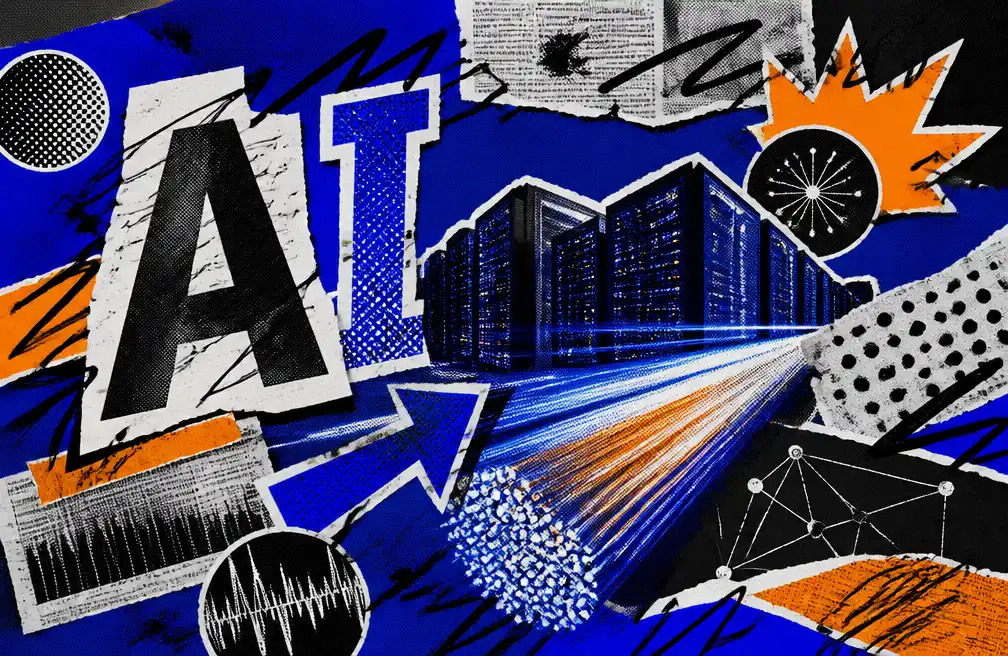
Featured image from DALL-E, chart from TradingView.com

Trending Cryptos

Related Questions

QWhat major technological convergence does Sandeep Nailwal predict will reshape the internet by late 2026?

ASandeep Nailwal predicts a major convergence of blockchain, artificial intelligence (AI), and payment technologies that could potentially reshape the internet completely.

QAccording to Nailwal, what role will blockchain play in the converged system with AI?

ABlockchains will verify the decisions made by AI, ensuring their authenticity and providing transparency through a public ledger that offers visibility into transactions, models, and decisions.

QWhat specific cryptographic protocol does Nailwal highlight as crucial for ensuring transparency without compromising data privacy?

ANailwal emphasizes the importance of zero-knowledge proofs (ZKPs) protocols, which allow for the verification of rules and decisions without revealing sensitive underlying information.

QHow does Nailwal envision the future of digital wallets in this converged technological landscape?

ANailwal anticipates a future where digital wallets consolidate identity, data, and financial assets, simplifying everyday tasks like payments and document signings and seamlessly integrating trust mechanisms into daily interactions.

QWhat is the current trading price and performance of Polygon's native token POL as mentioned in the article?

AAt the time of writing, Polygon's native token POL was trading at $0.1025, representing year-to-date losses of almost 80% and a 92% decline from its all-time high of $1.29.

Related Reads

If It's Not a Clear Yes, It's a No: A Nine-Year Retrospective by a VC Who Survived Four Cycles

**"Invest Only When Certain": A Nine-Year Retrospective from a VC Across Four Cycles** IOSG founder Jocy shares hard-earned lessons from nine years and over a hundred investments in Web3. The core challenge isn't identifying successful founders, but understanding why talented founders with solid ideas still fail. Through building a "failed founder database," IOSG identified six recurring failure patterns. **Founder Trait Red Flags:** 1. **Emotionally Unstable:** Founders who react defensively to criticism or publicly lash out under pressure (e.g., 80% drawdowns) often fail. Resilience is key. 2. **Lacking Hunger / Having a Fallback:** Founders with significant safety nets (family wealth, cushy fallback jobs) may lack the "do-or-die" commitment needed to survive crypto's brutal cycles. 3. **Unchecked Ego:** Includes "polished execution machines" who excel in known frameworks but struggle when paradigms shift, and "professor-types" who are technically brilliant but resistant to commercial feedback or coaching. **Project Structure Red Flags:** 4. **Token-First, Not Product-First:** Treating the token solely as a fundraising tool with no real utility or connection to product value is a major warning sign. The project should have value even if the token goes to zero. 5. **No Day-1 Exit Thesis:** Founders must have a clear, staged capital strategy from the start, understanding what each funding round needs to prove to unlock the next. "Exit before entry" is crucial. 6. **No Full-Cycle Experience:** Founders who haven't lived through a complete crypto bull/bear cycle (e.g., 2018, 2022) often underestimate their vulnerability. IOSG limits initial checks for such teams to $250k, sizing for risk. **The Positive Flipside: Desirable Founder Traits** The ideal candidate exhibits: obsessive problem-depth, being a second-time founder with a non-consensus vision, strong communication skills with *controlled* ego, relentless perseverance, and a global perspective with agency and taste (increasingly vital in the AI era). **Three Survival Tips for Founders:** 1. **Cash Flow Over Narrative:** Real revenue is what sustains projects, not vanity metrics. 2. **Tokens Are a Liability:** Avoid issuing a token unless absolutely necessary. The hidden costs (market making, liquidity, compliance) are immense, often a multi-million-dollar burden. 3. **Respect Liquidity:** Sell during peaks to build treasury, buy back to support the protocol during troughs. Be realistic about valuations and your ability to deliver for the next round. The final principle is simple yet paramount: **"If it's a borderline 'yes' or 'no,' don't invest."** In an industry that reinvents itself every few years, the discipline to consistently say "no" is the ultimate secret to longevity.

Foresight News24m ago

If It's Not a Clear Yes, It's a No: A Nine-Year Retrospective by a VC Who Survived Four Cycles

Foresight News24m ago

SemiAnalysis Deep Dive into CXMT: $50 Billion Revenue, An IPO Amidst a Supercycle

SemiAnalysis' in-depth report on ChangXin Memory Technologies (CXMT) details its rapid rise as China's largest upcoming semiconductor IPO. Founded in 2016 by Zhu Yiming, CXMT built its DRAM foundation on acquired patents and talent from the bankrupt German firm Qimonda. It achieved its first annual profit in 2025 after nearly a decade of significant capital support, primarily from patient Hefei municipal investors who fostered a local supply chain. The company is now capitalizing on a strong DRAM supercycle. Its revenue soared from ~$3.3B in 2024 to ~$8.6B in 2025, with Q1 2026 alone reaching ~$7.3B. SemiAnalysis projects full-year 2026 revenue could exceed $50B, driven by soaring ASPs rather than massive market share gains. While CXMT is closing the capacity gap with Micron, its product mix remains heavily focused on commodity DDR/LPDDR, which currently offers higher margins than its nascent HBM business. CXMT faces significant challenges in HBM, struggling with yield and stability for HBM3 8-Hi stacks while lagging behind the big three (Samsung, SK Hynix, Micron) in advanced nodes. However, strategic national priorities for AI self-sufficiency may push it to accelerate HBM capacity. Its complex IPO structure reveals heavy state-backed ownership and voting control over its fabs, with Alibaba appearing as both a key cloud customer and a minority shareholder. The IPO aims to raise ~$4.1B, primarily to strengthen its core DRAM manufacturing base.

marsbit44m ago

SemiAnalysis Deep Dive into CXMT: $50 Billion Revenue, An IPO Amidst a Supercycle

marsbit44m ago

From Corning to Ciena: The 10x Opportunity in the AI Optical Communication Chain

The transition from copper to optical communication in AI data centers is creating significant investment opportunities beyond just chipmakers. The entire photonics supply chain, from glass and fiber to connectors and test equipment, is critical. Corning, a key fiber supplier, has locked in multi-billion dollar, multi-year contracts with major cloud providers (Meta, Amazon, Google, Microsoft, OpenAI, NVIDIA), demonstrating pricing power and scale. Its profit growth is outpacing revenue growth. In the interconnect layer, Amphenol benefits from high growth in AI data centers, driven by strategic acquisitions and operational efficiency, while Credo Technology acts as a bridge between copper and optical solutions, though with high customer concentration risk. At the systems level, Ciena enables higher data capacity on existing fiber lines, with a strong backlog and cloud customer adoption. Further upstream, AXT is a bottleneck supplier of key indium phosphide wafers for lasers but faces geopolitical supply chain risks. VEO Solutions provides essential testing equipment for the entire photonics industry. A new pure-play photonics ETF (FOTO) offers a consolidated investment approach. The core thesis is that the physical limits of copper are driving an inevitable shift to optical technologies, with wealth flowing to essential, often overlooked, suppliers across the photonics value chain.

marsbit56m ago

From Corning to Ciena: The 10x Opportunity in the AI Optical Communication Chain

marsbit56m ago

Trading

Spot
Futures

Hot Articles

Discussions

Welcome to the HTX Community. Here, you can stay informed about the latest platform developments and gain access to professional market insights. Users' opinions on the price of AI (AI) are presented below.

活动图片