The Day CZ Missed the Best Investment of His Life, Crypto Missed AI

marsbitPublished on 2026-02-09Last updated on 2026-02-09

Abstract

In 2014, CZ sold his Shanghai apartment to buy 1,500 BTC—a legendary investment in crypto history. But years later, he missed an even bigger opportunity: acquiring FTX in 2021. During FTX liquidity crisis negotiations, Binance signed a non-binding LOI to acquire the exchange but backed out within a day, citing issues “beyond control.” Unbeknownst to many, FTX held a hidden gem: a $500 million investment in AI startup Anthropic, acquired in 2021 for a 13.56% stake (later diluted to 7.84%). Post-ChatGPT, Anthropic’s valuation soared. It’s nearing a new funding round at a potential $350 billion valuation. FTX’s stake would now be worth ~$27.4 billion—enough to cover its collapse losses multiple times. Instead, FTX’s bankruptcy estate sold the shares for over $1.3 billion to traditional investors like Jane Street and Fidelity—not crypto firms. This missed chance represents what could have been a powerful intersection of Crypto and AI, with potential innovations lost as the opportunity moved entirely into traditional finance hands.

Original | Odaily Planet Daily (@OdailyChina)

Author | Azuma (@azuma_eth)

In 2014, just one year after being introduced to the concept of cryptocurrency, CZ made the most daring investment of his life — he sold his apartment in Shanghai and "all-in" bought about 1,500 BTC at a three-digit price. 12 years later, if CZ had never sold, this investment could have yielded hundreds of millions of dollars in profits (peak return about $189 million).

Compared to his subsequent achievements of founding Binance and becoming an industry leader, the returns from this investment are insignificant to CZ. But from an external perspective, this idealistic "all-in" move remains CZ's most talked-about operation.

Yet, it is lamentable that even someone as resolute and decisive as CZ once missed an investment with potential profits a hundred times greater than "selling a house to buy coins" in a highly dramatic way.

Rewind 1555 Days: That Aborted Acquisition

November 9, 2021, was a sleepless night for the cryptocurrency industry.

Just the day before, the then high-flying FTX suspended withdrawals due to a liquidity crisis, causing panic to spread rapidly through the community. The musty smell before a storm was already permeating the market... The rest of the story is well-known: FTX collapsed, triggering a domino effect that plunged the market into a prolonged winter lasting years.

In a parallel universe, the story could have taken a different turn. In the early hours of November 9, SBF and CZ had issued statements indicating that FTX had preliminarily reached an acquisition agreement with Binance.
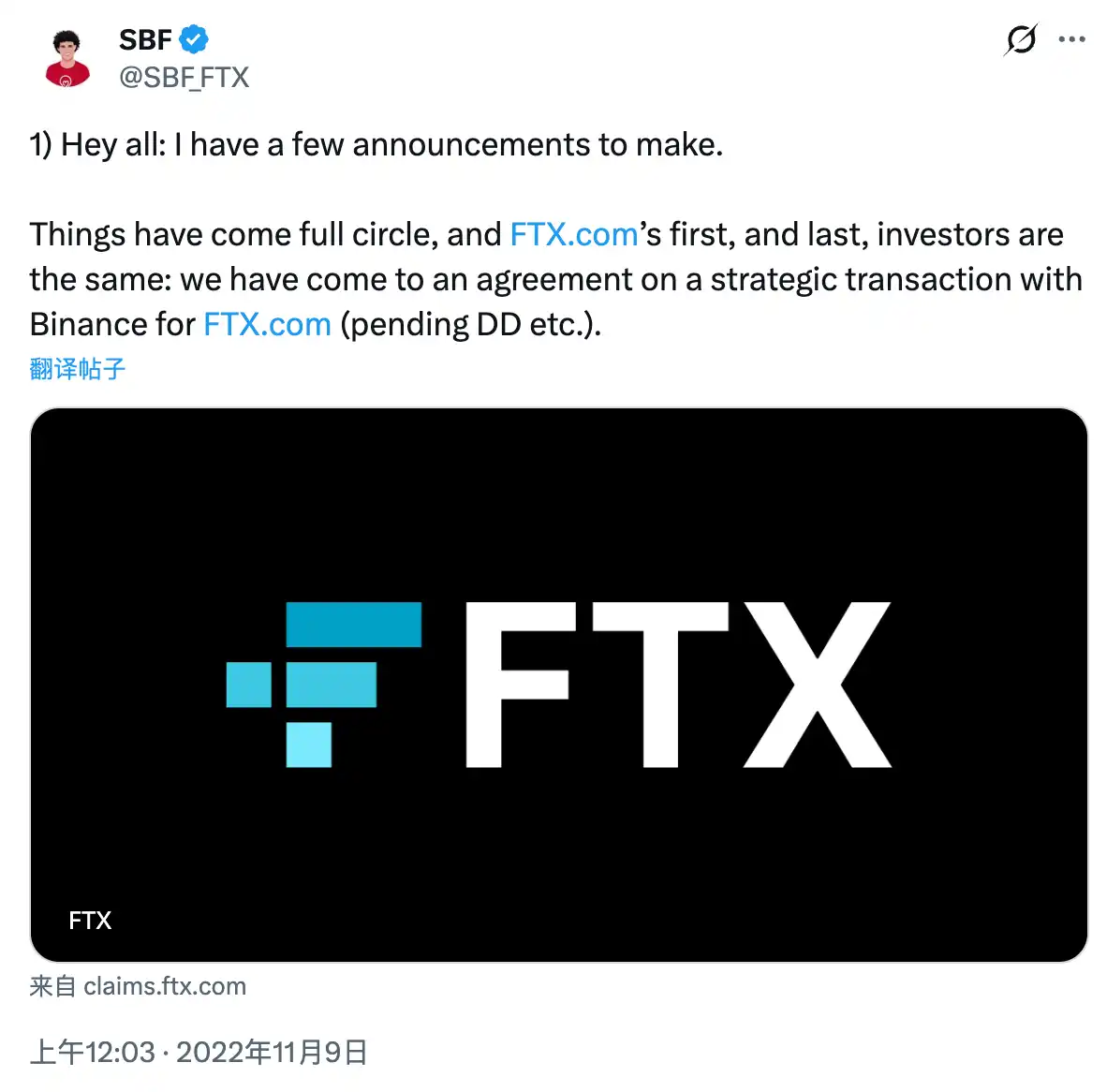
SBF: Hey everyone, I have an announcement. Things have come full circle. FTX's first and last investors are the same — we have reached a strategic transaction agreement with Binance (pending due diligence).
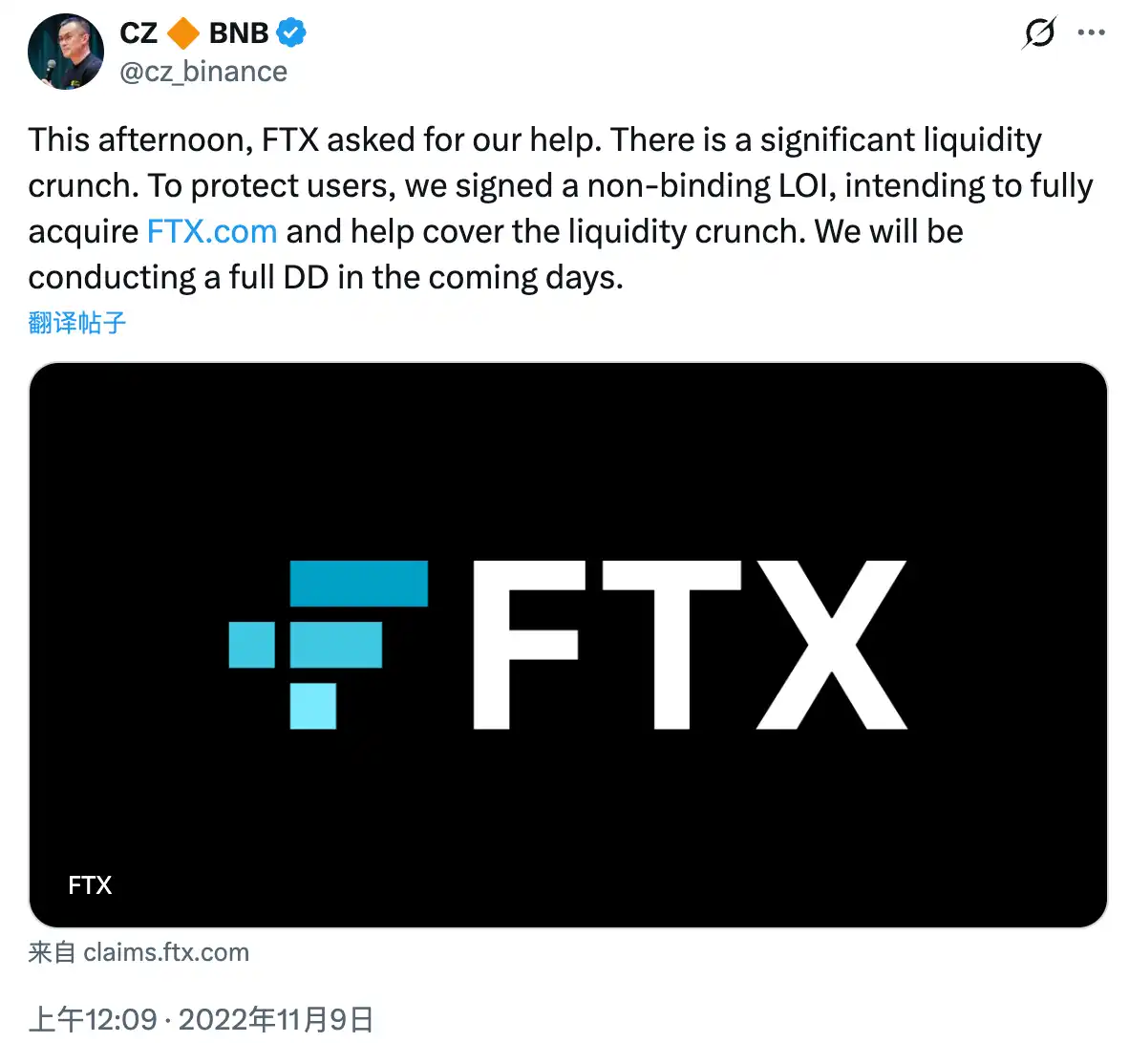
CZ: This afternoon, FTX asked us for help. The exchange is currently facing a severe liquidity crunch. To protect users, we signed a non-binding Letter of Intent, intending to fully acquire FTX to help alleviate the liquidity crisis. We will conduct full due diligence in the coming days.

However, the acquisition ultimately fell through. Just one day later, Binance officially announced the abandonment of the acquisition, citing "issues beyond our control", which became the final straw that broke FTX's back.

Did CZ ever seriously consider acquiring FTX? Was the hastily concluded acquisition farce a genuine attempt to help or merely a ploy to gauge the opponent's "health bar"? This may forever remain a mystery. From the outcome, CZ personally defeated his biggest competitor at the time, consolidating Binance's position as the industry's top dog.

But no one could have predicted that a seemingly insignificant "side bet" in FTX's asset portfolio at the time would rapidly appreciate in value over the next few years, its worth now even far exceeding the total value of the remaining assets involved in that unfinished acquisition.

Once a "Side Bet", Now an AI Focus

In April 2022 (this is the official announcement date; the deal was actually completed in 2021), FTX made its most important investment in the AI field — leading a $580 million funding round for AI startup Anthropic with a $500 million investment, initially acquiring a 13.56% equity stake, which was later diluted to 7.84% as Anthropic completed subsequent funding rounds.
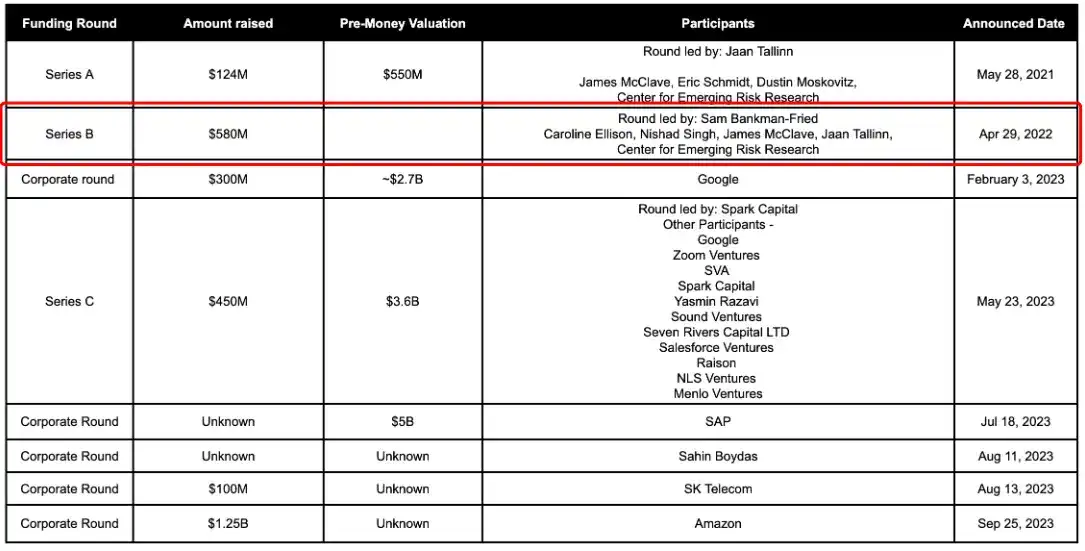
That was an era when AI's potential had not yet exploded. Just half a year later (late November 2022, the month FTX collapsed), OpenAI's ChatGPT burst onto the scene, irreversibly ushering the world into the "Age of Exploration" for AI. Anthropic, with its Claude series of products (especially the programming-oriented Claude Code), repeatedly amazed the world, gradually becoming one of the most dazzling star companies.

As Claude continuously iterated, Anthropic's valuation also kept rising. Capital frantically waved banknotes, desperate to secure a berth on Anthropic's ship sailing towards IPO. The latest market rumor is that Anthropic is in the final stages of a new massive funding round, expected to exceed $20 billion (originally planned to raise $10 billion, but investor demand far exceeded expectations, potentially doubling the final amount), with a valuation possibly as high as $350 billion. The deal could be completed as early as this week.

Calculated at the latest valuation of $350 billion, the value of the Anthropic equity once held by FTX would be approximately $27.44 billion, enough to cover the reserve shortfall that led to its bankruptcy several times over... But history has happened, and the outcome is settled.

It's hard not to marvel at SBF being a rare venture capital genius (besides Anthropic, he also invested in the now-hot Cursor in its seed round), but clearly he was not a qualified business operator, especially lacking in risk control. CZ's profile is the complete opposite; he is an absolute master at operating a business. Binance's dominance is inseparable from his多次正确的战略决策 (many correct strategic decisions). But CZ also often positions himself not as a traditional investor solely pursuing returns; he doesn't trade coins and prefers to be a builder of the industry.

A Messy Ending: This Should Have Been the Best Intersection of Crypto and AI

You might wonder, what happened to those FTX equity shares?

The ending is not complicated. After FTX's bankruptcy, all assets, including the Anthropic equity, were handled by the FTX bankruptcy estate management team. In February 2024, the court approved the team's request to sell these shares; in March and June of the same year, the FTX bankruptcy team sold 29.5 million shares for $884 million and 15 million shares for $450 million respectively, totaling over $1.3 billion sold.
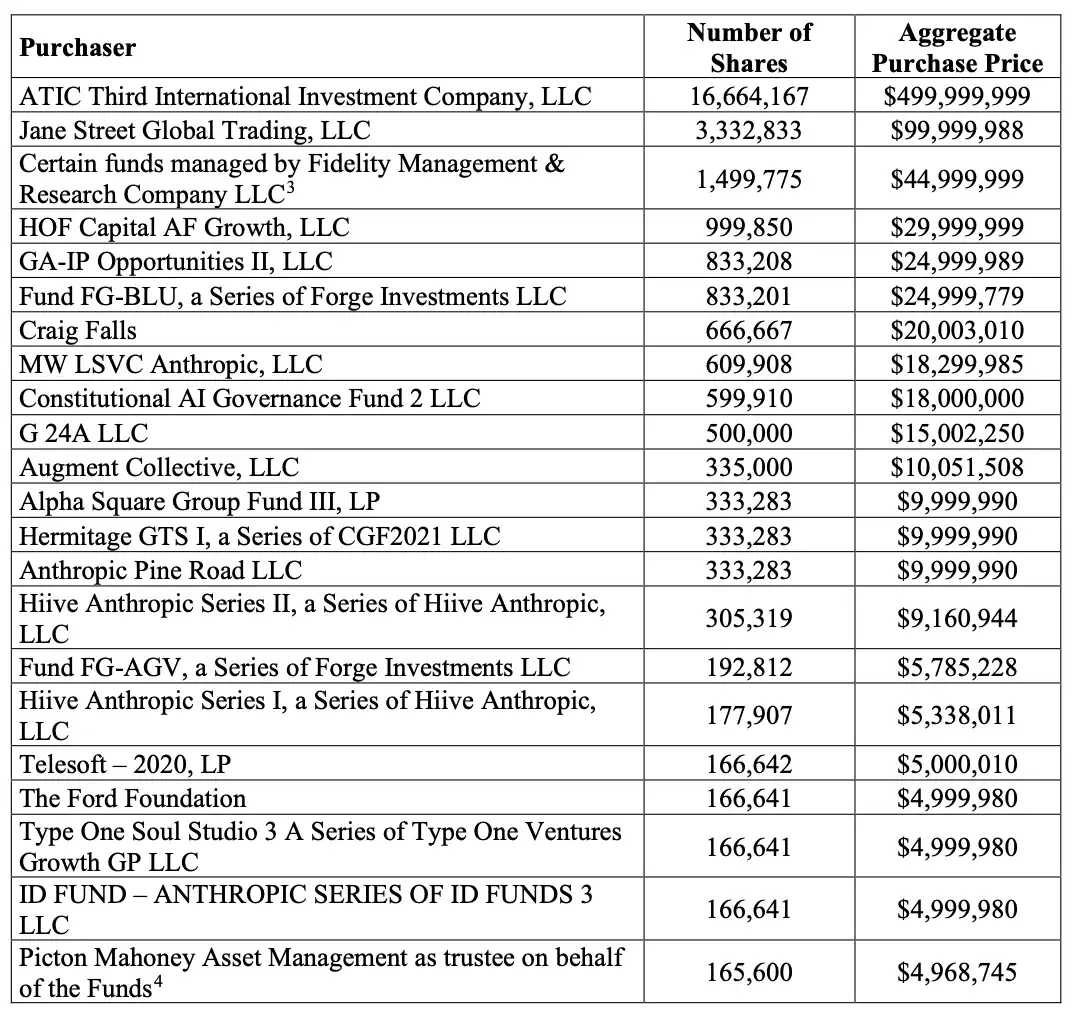
As for the buyers of these shares, they were primarily ATIC Third International Investment from Abu Dhabi, and traditional financial institutions from Wall Street like Jane Street and Fidelity. In other words, no crypto companies got a share of the pie.

Whether these shares were deliberately sold cheaply, or whether there was利益输送 (benefit transfer) under the guise of bankruptcy liquidation, is no longer important for the crypto industry.

This should have been the best intersection of Crypto and AI. In another worldline, whether these shares were in the hands of SBF or CZ, if leading companies in the crypto world had some say in the development of one of AI's most successful companies, there could have been more innovative attempts around Crypto + AI, potentially yielding unexpected fruits.

It's not just CZ who is slapping his thigh in regret.

Trending Cryptos

Related Questions

QWhat was the potential return on CZ's investment in BTC if he had not sold his apartment in Shanghai?

AIf CZ had not sold his BTC, the peak return on his investment would have been approximately $189 million.

QWhy did Binance ultimately decide not to acquire FTX in November 2021?

ABinance announced it was abandoning the acquisition because the issues at FTX were 'beyond their control or ability to help' after conducting initial due diligence.

QWhat was the significance of FTX's investment in Anthropic, and how much was it worth at its peak potential valuation?

AFTX invested $500 million in Anthropic, acquiring a 13.56% stake, which was later diluted to 7.84%. At a rumored $350 billion valuation, this stake would be worth approximately $27.44 billion.

QHow did the FTX bankruptcy estate handle its Anthropic shares, and who were the main buyers?

AThe FTX bankruptcy estate sold its Anthropic shares in two batches for a total of over $1.3 billion. The main buyers were ATIC Third International Investment from Abu Dhabi and traditional financial institutions like Jane Street and Fidelity.

QAccording to the article, what was the missed opportunity for the Crypto industry with the sale of FTX's Anthropic stake?

AThe missed opportunity was that no crypto companies acquired the Anthropic stake. If a crypto leader like SBF or CZ had retained influence over this leading AI company, it could have fostered more innovation at the intersection of Crypto and AI.

Related Reads

Agent Race Ends, Super Workbench Takes Over

The era of fragmented AI agents is ending. Over the past month, China's tech giants—Tencent, Alibaba, and ByteDance—have simultaneously shifted strategy: instead of launching new, standalone AI agents, they are consolidating their various agent projects into unified "super workbenches." Tencent integrated its QClaw teams into WorkBuddy, a strategic product hailed as a potential third flagship after QQ and WeChat. Alibaba is merging its QoderWork, Wukong, and MuleRun agents into a new "Qianwen Office" platform under DingTalk's leadership. ByteDance rebranded its TRAE SOLO coding agent to TRAE Work, signaling a broader focus on workflow collaboration. This convergence marks a pivotal industry consensus. The initial exploration phase, where companies rapidly built numerous overlapping agents for different scenarios, proved costly and inefficient. With open-source tools eroding technical barriers, competition has shifted from agent creation to resource consolidation and cost control. Historically, platform wars are won not by creating more products, but by simplifying them—as seen with browsers unifying web access and super-apps consolidating services. Now, the "super workbench" aims to become the unified AI entry point for work. This reflects a deeper market realization: the primary audience for AI is no longer just programmers (a market in the tens of millions) but all knowledge workers (a market of billions). The real opportunity lies in augmenting everyday tasks—managing emails, documents, data, and meetings—across the entire workday. The core battleground is becoming control over the primary AI entry point that employees use daily. Tencent's WorkBuddy leverages WeChat and Tencent Docs; Alibaba's Qianwen Office taps into DingTalk's organizational data; ByteDance's TRAE Work integrates with Feishu's workflows. Whoever owns this "super workbench" gains strategic control over orchestrating enterprise data and APIs. This shift is redefining enterprise software. Traditional SaaS applications, valued for their user interfaces, will recede into the background. Their core functionalities will be exposed as standardized "Skills" or APIs for the super workbench's agents to invoke. Software value will shift from selling user seats to charging based on API calls and outcomes delivered. The evolution of agents is moving through clear stages: first as novel standalone products, then as consolidated primary work entry points, and finally as pervasive, invisible capabilities embedded into the digital fabric. The recent moves by major tech firms signal the transition from the first stage into the second, accelerating toward the third. In the end, the most successful agent technology may become invisible—like electricity or the HTTP protocol—a fundamental, unnamed infrastructure powering work itself.

marsbit19m ago

Agent Race Ends, Super Workbench Takes Over

marsbit19m ago

Michael Saylor: 110 Reasons to Oppose BIP-110

Michael Saylor presents 110 arguments against Bitcoin Improvement Proposal (BIP) 110, a soft fork aimed at restricting certain non-monetary data storage uses (like inscriptions) on the Bitcoin blockchain. He acknowledges the proponents' valid concerns—such as node costs, fee pressure, and preserving Bitcoin's monetary focus—but fundamentally disagrees with the proposed solution. Saylor argues that BIP 110 represents a dangerous precedent of using consensus rules to enforce value judgments on transaction validity, moving away from Bitcoin's core principles of neutrality and permissionless innovation. His key objections are organized into eleven categories: 1) It violates neutrality and hard consensus by banning currently valid transactions. 2) It fails to meet the high burden of proof required for a consensus change, lacking concrete data on the alleged crisis. 3) Its seven bundled technical restrictions are overly broad, targeting generic script functionalities and blocking future upgrade paths. 4) It sacrifices compatibility and future optionality by closing off designed upgrade hooks. 5) Its temporary rules add significant complexity (grandfathering, expiry states) without sufficient justification. 6) The economic and security impacts, particularly on miner revenue and fee markets, are uncertain and unmodeled. 7) Superior, market-based tools (fee markets, relay/mining policies) already exist to manage blockchain load. 8) It stifles innovation by creating a chilling effect for developers. 9) Its modified activation mechanism (55% threshold, forced signaling) is aggressive and risks network splits. 10) The precedent it sets—using consensus to suppress disliked but legal uses—is more dangerous than the problem it aims to solve. 11) A better path exists: improving measurements, refining resource-based policies, and allowing market forces to work. Saylor concludes that Bitcoin's strength lies in its neutral rules, open markets, and hard consensus. Changing these foundational elements to target specific use cases is an unnecessary and risky "iatrogenic" intervention. He advocates for guarding Bitcoin's neutrality rather than acting as its redeemer.

marsbit34m ago

Michael Saylor: 110 Reasons to Oppose BIP-110

marsbit34m ago

Trading

Spot

Hot Articles

Discussions

Welcome to the HTX Community. Here, you can stay informed about the latest platform developments and gain access to professional market insights. Users' opinions on the price of AI (AI) are presented below.

活动图片