Tether launches privacy-focused health platform with on-device AI

cointelegraphPublished on 2025-12-10Last updated on 2025-12-10

Abstract

T Summary Tether has launched QVAC Health, a privacy-focused health platform that aggregates data from various wearables and wellness apps into a single, encrypted dashboard. The platform processes all data locally on the user's device using on-device AI and peer-to-peer model downloads, eliminating the need for external servers. It includes experimental computer-vision tools to estimate calories from meal photos and correlates this data with wearable information to identify patterns in activity, recovery, and sleep. Tether CEO Paolo Ardoino emphasized the platform's role as a "neutral ground for wellness data," reflecting the company's commitment to privacy. Future updates will enable direct Bluetooth Low Energy connections to certain wearables, bypassing manufacturer APIs and cloud services. This development aligns with growing privacy concerns in the crypto and tech sectors, as highlighted by comments from Ardoino and former White House adviser David Holtzman regarding the vulnerabilities of centralized data repositories. The move is part of a broader trend towards decentralized, privacy-preserving technologies, including initiatives from Ethereum's Vitalik Buterin and Circle's development of a privacy-enhanced stablecoin.

Tether has launched a new platform that aggregates data from multiple wearables and wellness apps into a single, locally processed dashboard, aiming to give users control over their biometric information.

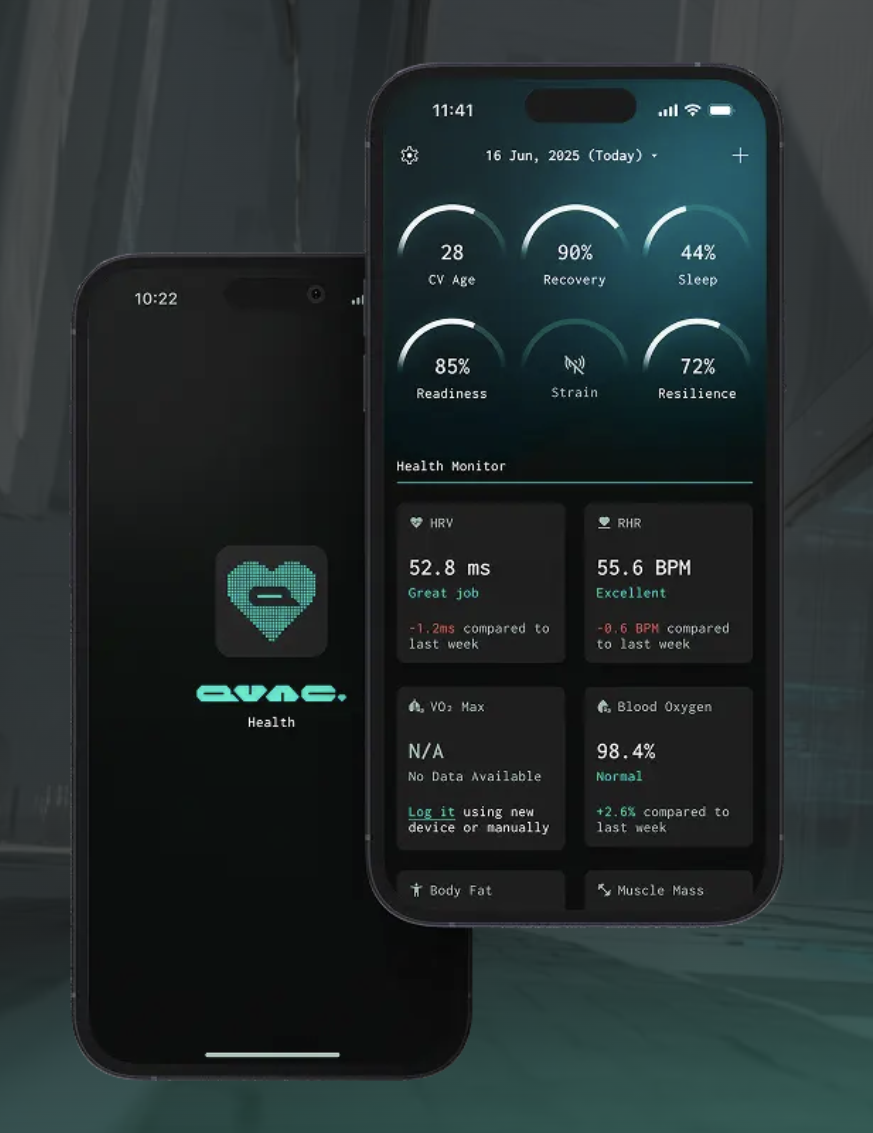
The platform, called QVAC Health, aggregates data from fitness trackers, nutrition apps and other wearables into an encrypted dashboard that works offline, using on-device AI and peer-to-peer model downloads to analyze activity, meals, symptoms and medication logs without relying on external servers.

The app includes experimental computer-vision tools that can estimate calories and macronutrients from meal photos and can correlate those logs with data from multiple wearables to identify patterns in activity, recovery or sleep, all processed locally on the user’s device, according to a Wednesday announcement.
Source: QVAC

Tether CEO Paolo Ardoino called the platform a “neutral ground for wellness data” that reflects the “company’s commitment to privacy-preserving local intelligence.”

Tether, the world’s largest stablecoin issuer, says future updates will include direct Bluetooth Low Energy connections that will let the app read data from certain wearables without routing information through manufacturer APIs or cloud services.

The platform is part of Tether Data’s QVAC project, which builds peer-to-peer, device-based AI systems designed to operate without relying on centralized platforms.

The global fitness-tracker market was valued at $52.29 billion in 2024 and is projected to grow to $189.98 billion by 2032, according to a Verified Market Research report. Major fitness-tracker manufacturers include Apple, Fitbit, Samsung, and Huawei.

Related: Australian fitness firm tanks 21% on Solana treasury gamble

Privacy concerns drive new developments across crypto

Tether’s new platform aligns with comments Ardoino made in 2024, when he argued that running local AI models directly on user devices was the only reliable way to prevent data from being harvested or exposed through centralized servers.

Former White House adviser David Holtzman told Cointelegraph in December 2024 that AI-driven data aggregation and future quantum threats make large data repositories especially vulnerable.

Holtzman noted that AI can rapidly assemble behavioral and transactional data to identify targets more precisely, while future quantum attacks could break today’s encryption standards across sectors. He said decentralized systems can help reduce these risks by avoiding large, centralized data stores.
The evolution of the internet. Source: Dock/Cointelegraph

The various threats to privacy have spurred some action in the crypto community. In June, Ethereum co-founder Vitalik Buterin proposed a “pluralistic identity” model — a digital ID approach that lets people prove who they are or qualify for services without exposing all of their personal information.

In December, Fortune reported that Circle is developing a privacy-enhanced stablecoin called USDCx with Aleo, designed to give institutional users banking-level transaction privacy while preserving the ability to furnish compliance records when necessary.

Growing concerns over data exposure and surveillance have also fueled renewed interest in privacy-focused cryptocurrencies, with the Zcash protocol emerging as one of the beneficiaries.

Magazine: Meet the onchain crypto detectives fighting crime better than the cops

Trending Cryptos

Related Reads

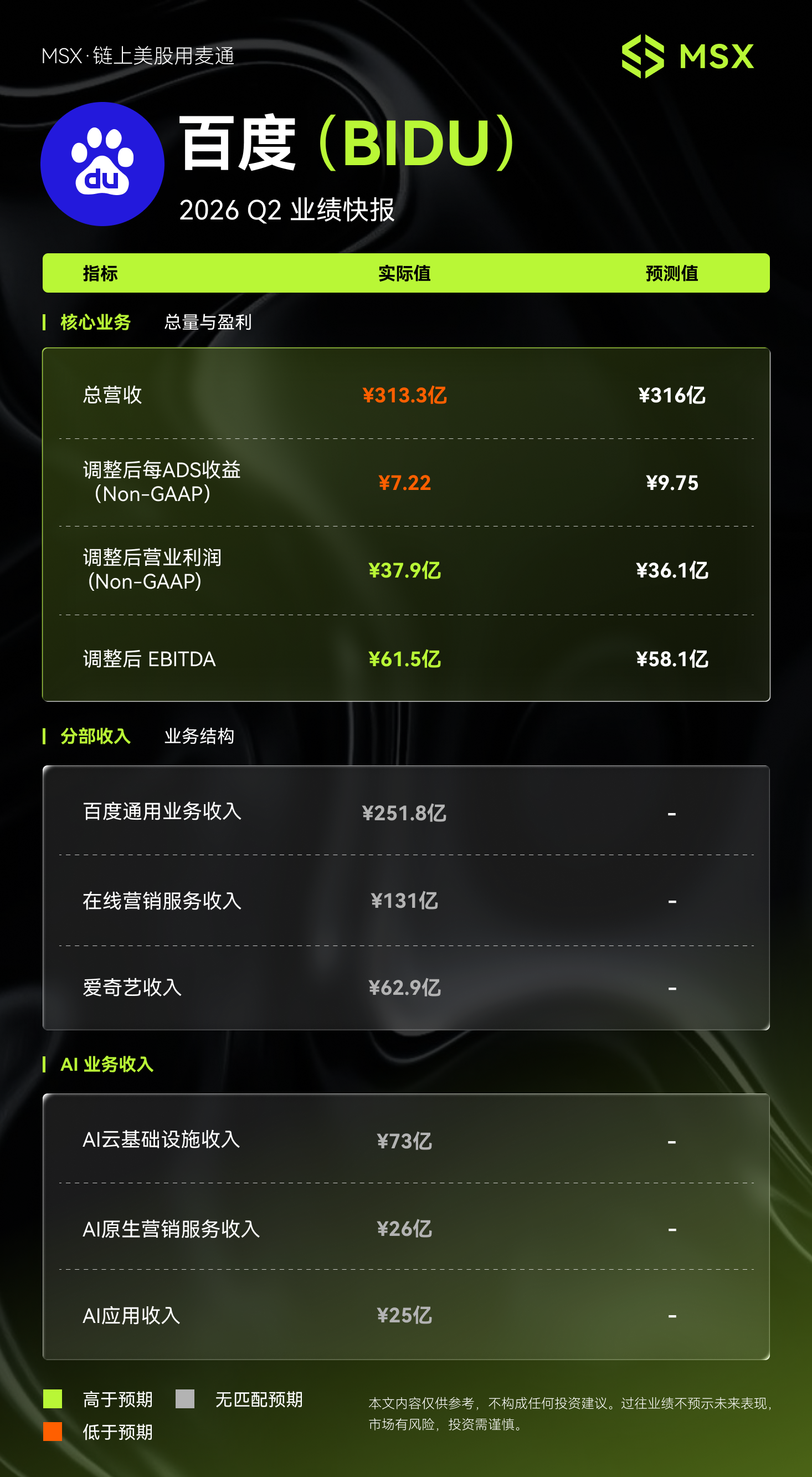
MSX US Stock Daily Observation: Baidu 2026 Q2 Earnings: AI Revenue Accounts for Half of Core Business for Two Consecutive Quarters, 283% GPU Cloud Growth Boosts Business Transformation

**MSX Daily US Stock Observation: Baidu 2026 Q2 Earnings Report** Baidu's Q2 2026 earnings present a clear picture of a company in transition. Total revenue declined slightly to RMB 313.25 billion, missing market expectations. This was driven by a continued double-digit contraction (-19%) in its core online marketing (advertising) business. The key highlight is the structural shift within the company's operations. AI-related revenue reached RMB 125 billion, accounting for approximately half of Baidu's core business income for the second consecutive quarter. Within AI, growth is heavily skewed towards infrastructure: AI cloud infrastructure revenue grew 50% year-over-year to RMB 73 billion, with GPU cloud revenue surging 283%. In contrast, AI application and AI-native marketing services revenue grew only 3% and remained flat, respectively, indicating slower commercialization on the application side. Profitability metrics were mixed. While adjusted operating profit and EBITDA exceeded expectations, demonstrating cost control, adjusted earnings per ADS of RMB 7.22 fell short by about 26%. This gap is largely attributed to depreciation and amortization costs linked to significant AI infrastructure investments, which continue to pressure bottom-line profit realization. The company holds a substantial cash position of RMB 2831 billion, providing runway for continued investment. The critical challenge ahead is translating the explosive growth in AI infrastructure (like GPU cloud) into stronger monetization from AI applications to bridge the gap between operational profit and per-share earnings.

Odaily星球日报1m ago

MSX US Stock Daily Observation: Baidu 2026 Q2 Earnings: AI Revenue Accounts for Half of Core Business for Two Consecutive Quarters, 283% GPU Cloud Growth Boosts Business Transformation

Odaily星球日报1m ago

Bitwise CIO: Three Major Cognitive Errors Common Among Crypto Investors Today

Bitwise CIO Matt Hougan highlights three key misconceptions he believes many crypto investors currently hold, presenting them as opportunities for those who see beyond them. First, investors significantly underestimate the total addressable market for crypto applications. While many view platforms like Uniswap only as tools for trading crypto assets (a ~$2 trillion market), their true potential lies in tokenizing and trading *all* asset classes—such as stocks and bonds—which represent markets hundreds of trillions of dollars in size. Second, there's a persistent overestimation of traditional financial institutions' ability to dominate crypto-native sectors. Examples like PayPal's stable币 (with ~1% market share vs. Tether/Circle's 88%) and Fidelity's custody business (trailing Coinbase) show that crypto-native firms often win due to faster iteration, focused expertise, and established user trust within the crypto ecosystem. Third, investors linearly extrapolate future on-chain transaction volumes from today's data, severely underestimating potential growth. The shift to 24/7 trading for tokenized assets could multiply trading hours by 5x. When combined with AI agents that may execute trades far more frequently than humans, transaction volumes could grow by 10x to 100x, massively boosting revenue for underlying blockchains and applications. Hougan concludes that the gap between the rapid pace of industry change and slower mainstream perception updates creates significant investment opportunities.

marsbit4m ago

Bitwise CIO: Three Major Cognitive Errors Common Among Crypto Investors Today

marsbit4m ago

Two IPOs in Half a Month: Hefei Becomes China's Fourth City

Hefei, China's "Capital of Venture Capital," Ascends to Fourth Place in A-P-Share Market Value with Two Recent IPOs Within two weeks, two major IPOs propelled Hefei's A-share market capitalization from 1.27 trillion yuan to over 4.55 trillion yuan, ranking the city fourth nationwide, behind only Beijing, Shenzhen, and Shanghai. This surge is led by Changxin's massive listing, creating over 1 trillion yuan in paper gains for state-owned investors. Simultaneously, Hefei's GDP growth leads among Chinese cities exceeding 1 trillion yuan GDP. This success stems not from gambling on single companies, but from a decades-long, systematic "industrial investment" strategy. Hefei targets critical gaps in its industrial chain, providing patient capital. It invested in BOE in 2008 to secure display panels for its appliance hub, in Changxin in 2016 for semiconductors, and in NIO in 2020 to anchor a new energy vehicle cluster. Each investment was calculated based on long-term industrial necessity. Another IPO, Guoyi Quantum, originates from Hefei's ecosystem. Founded by a prodigy inspired by his professor's experience with overpriced foreign instruments, it symbolizes high-end scientific instrument localization. Behind the trillion-yuan paper gains is remarkable political continuity and a self-reinforcing cycle. Proceeds from earlier successful exits (e.g., BOE, NIO) were reinvested into newer projects like Changxin. The strategy withstands individual project failures and transcends typical government terms, focusing on decade-long industrial cultivation. Hefei's system integrates the University of Science and Technology of China for tech talent, state capital for long-term funding, and an unwavering focus on building complete industrial chains. While risks remain—market volatility, intense EV competition, quantum's commercialization timeline—Hefei demonstrates that when a government calculates returns over decades, the outcome differs fundamentally from short-term bets.

marsbit8m ago

Two IPOs in Half a Month: Hefei Becomes China's Fourth City

marsbit8m ago

Trading

Spot

Hot Articles

Discussions

Welcome to the HTX Community. Here, you can stay informed about the latest platform developments and gain access to professional market insights. Users' opinions on the price of AI (AI) are presented below.

活动图片