# Social Related Articles

HTX News Center provides the latest articles and in-depth analysis on "Social", covering market trends, project updates, tech developments, and regulatory policies in the crypto industry.


A Critical Review of Base Co-founder's "Letter of Self-Criticism"

Yesterday, Base co-founder Jesse Pollak published a self-critical post on X, reflecting on Base's successes and failures over the past two years. While his candor is commendable, the author argues his analysis still misses key points. Jesse admitted his primary mistake was heavily betting that onchain social platforms (like Farcaster) and creator tokens would drive mainstream crypto adoption. The author harshly criticizes this strategy, giving it a "0/100" score. They argue onchain social offers no superior user experience, and creator tokens, like Jesse's own $JESSE, fail to solve fundamental issues about value and creator adoption, unlike successful memecoins on other chains. The author is more forgiving regarding Base lagging in areas like perpetual DEXs and prediction markets, giving this an "80/100". They note strong competitors like Hyperliquid had unique advantages, and Base has found significant success in other narratives like AI and RWA. The author gives Jesse's overall reflection a "60/100" or passing grade. While Jesse now correctly sees multiple paths to adoption (stablecoins, payments, AI Agents) beyond just social, he, along with other industry leaders like Toly and Vitalik, still underestimates the powerful role of memecoins in driving mainstream awareness and adoption. The critique concludes that leaders often leverage memes for user acquisition but fail to genuinely embrace or thoughtfully develop the space, revealing a retreat from idealism and a disconnect from grassroots, viral growth mechanisms.

marsbit07/17 02:36

A Critical Review of Base Co-founder's "Letter of Self-Criticism"

marsbit07/17 02:36

Fully Entering the AI Era: Alipay Bets on Conversation, WeChat Holds Fast to Social

In May 2026, Alipay announced over 300 million AI payment transactions. Shortly after, WeChat opened its mini-programs for AI integration, sparking controversy by requiring developer source code access. This highlights their diverging approaches to AI integration. Alipay is testing "Project Treasure," an optional AI-native interface replacing traditional app grids with a conversational window. Users can command complex tasks (e.g., "book a ride and order coffee") handled end-to-end by AI. This shift follows an abandoned standalone AI app, focusing instead on enhancing its existing user base. For unmodified mini-programs, Alipay's AI uses "screen-reading" to simulate user interactions, bypassing the need for developer overhaul. It also introduced "Token Pay" for micro-transactions and "AI Wallets" for autonomous agent spending. WeChat, prioritizing its core social function, is taking an embedded approach. Its AI agent will operate within existing contexts like group chats and official accounts, assisting without a separate interface. To enable this, WeChat offers developers two paths: granting source code access for direct AI control ("Automatic Mode") or manually encapsulating services into standardized "Skills." Both place significant burden on developers. Key differences emerge in handling legacy services: WeChat demands developer cooperation (code or labor), while Alipay's screen-reading offers immediate, if potentially less stable, compatibility. Alipay's 3 billion AI transactions demonstrate user acceptance of AI-driven commercial actions. The divergent strategies may reshape mini-program ecosystems—Alipay passively "AI-fying" services, WeChat potentially favoring resource-rich developers—and set competing technical standards. Ultimately, the competition centers on where users entrust the command to "help me get things done."

marsbit06/15 12:00

Fully Entering the AI Era: Alipay Bets on Conversation, WeChat Holds Fast to Social

marsbit06/15 12:00

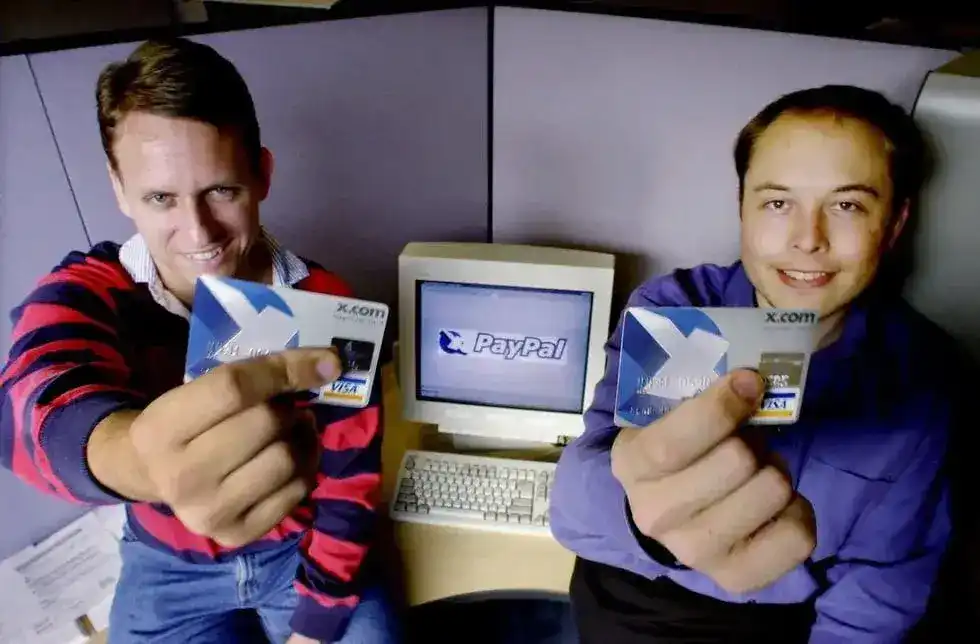
Kicked Out of PayPal, Musk Aims for a Comeback in the Crypto Market

Elon Musk's X (formerly Twitter) has launched its "Smart Cashtags" feature, generating approximately $1 billion in trading volume within days of its April 2026 pilot launch. The feature allows users to click on stock or crypto tickers (or even full Solana token contract addresses) in posts to view real-time price charts and discussions without leaving the app. Initially available to iPhone users in the US and Canada, with a partnership in Canada enabling direct trading via the Wealthsimple app. This move is part of Musk's broader "Everything App" vision, spearheaded by the upcoming X Money platform. Analysts, such as Mizuho's Dan Dolev, see this as a potential disruptor to the US payments market, even prompting a downgrade of PayPal's stock. X Money's beta offers services like 6% APY on deposits, cashback, and P2P transfers, with speculation it may later incorporate crypto trading and stablecoin settlements for faster transactions. However, the ambitious plan faces significant regulatory scrutiny. Senator Elizabeth Warren has questioned the sustainability of the high 6% yield and raised concerns over X's banking partner, Cross River Bank, which has a history of regulatory violations. Additional risks involve the "GENIUS Act," which may create loopholes for stablecoin issuance without full FDIC insurance coverage, potentially leaving users unprotected. The integration of social trading on a platform with over 500 million users could inject new liquidity and retail interest into the crypto market. Yet, it also amplifies risks like herd mentality and the blurring of lines between entertainment and financial speculation. Musk's return to finance, after his ouster from PayPal, hinges on balancing innovation with regulatory compliance.

marsbit04/24 09:11

Kicked Out of PayPal, Musk Aims for a Comeback in the Crypto Market

marsbit04/24 09:11

Interview with Jeff Hoffman: How Web3 and AI Are Reshaping the Trillion-Dollar Social Travel Market

Interview with Jeff Hoffman: Web3 and AI Reshaping the Trillion-Dollar Social Travel Market Jeff Hoffman, co-founder of Priceline, discusses how Web3 and AI are transforming the social travel industry. He highlights that the current travel market is fragmented and inefficient, dominated by traditional online travel agencies (OTAs) that act as intermediaries with opaque models. Web3 introduces direct connections, transparency, and faster settlements, shifting value back to travelers. Key trends driving this change include demand for flexible rewards, digital payments, and trust in communities over ads. Hoffman joined Staynex not for its Web3 label, but because it addresses industry inefficiencies by integrating booking, payments, AI-driven itineraries, and rewards into a single ecosystem. This Web2.5 model combines Web2 scale with Web3 incentives. He emphasizes the team’s focus on execution over hype as a key reason for his involvement. Looking ahead, blockchain will enable transparent rewards and seamless cross-border payments, while AI provides personalization. Together, they will turn travel into a continuous relationship rather than a transaction. Hoffman predicts traditional OTAs will persist, but value will shift to platforms that own payment, loyalty, and community networks. Social travel represents a significant, underestimated opportunity in Web3.

marsbit04/21 12:11

Interview with Jeff Hoffman: How Web3 and AI Are Reshaping the Trillion-Dollar Social Travel Market

marsbit04/21 12:11

活动图片