Solana AI token Ava hit by launch sniping tied to deployer: Bubblemaps

cointelegraphPublished on 2025-12-19Last updated on 2025-12-19

Abstract

Blockchain analytics firm Bubblemaps reported that 23 wallets linked to the deployer of the Solana-based AI token Ava accumulated around 40% of the token’s supply at launch, indicating potential insider coordination. These wallets, funded via Binance and Bitget in a short timeframe, showed no prior blockchain activity before purchasing AVA. The activity, described as "sniping," involved coordinated buying at launch, leading to significant supply concentration—a red flag for potential market manipulation like rug pulls. Since its November 2024 launch, AVA’s price has fallen 79%, and it is down 96% from its January 2025 all-time high of $0.33.

Blockchain analytics firm Bubblemaps said a cluster of 23 wallets linked to the deployer of the Solana-based AI token Ava accumulated around 40% of the token’s supply at launch, raising new questions about insider coordination around the project’s debut.

The sybil wallet cluster related to the deployer shared similar patterns, including being funded in a tight time window through Bitget and Binance, receiving similar amounts of Solana (SOL) and having no blockchain activity before buying up the Ava AI (AVA) token supply at launch, Bubblemaps claimed in a Thursday X post.

“Connected to these snipers are other wallets that also bought $AVA early. Similar funding sources, sizes, and timing strongly suggest coordination across these clusters,” they said.

In crypto slang, sniping refers to employing crypto trading bots to automatically purchase new token supply as soon as the tokens become publicly available, aiming to buy at lower prices before the general public.

While the token was launched on memecoin launch platform Pump.fun, aiming for a decentralized, community-driven debut, the wallet cluster’s activity suggests acquisitions that led to a single entity holding 40% of the token’s supply.
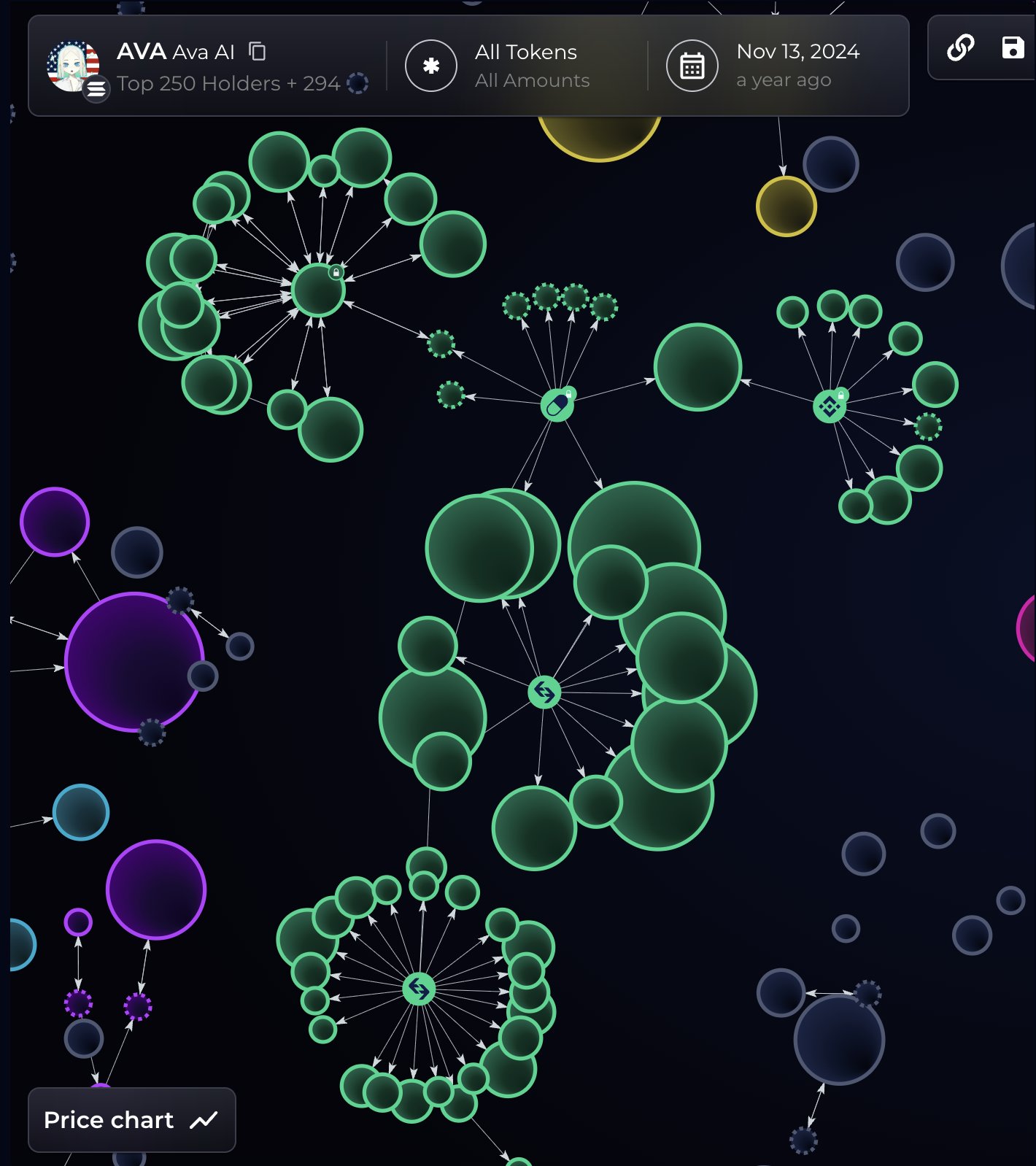
Source: Bubblemaps

Related: Crypto nears its ‘Netscape moment’ as industry approaches inflection point

A large token supply concentrated across a few wallets can help investors detect scams such as rug pulls, where insiders remove liquidity or stage a mass sell-off, resulting in a steep price collapse that leaves investors with worthless tokens.

The coordinated activity was uncovered through Bubblemaps’ Time Travel feature, a forensic-grade analytics tool launched in May that enables Web3 users to reconstruct the historical distribution of tokens, aiming to detect early insider activity.

Related: Bubblemaps challenges PEPE’s fair launch, alleges 30% of genesis supply bundled

AVA AI token falls 96% from all-time high

The coordinated buying activity was revealed over a year after the AVA token’s launch on Nov. 13, 2024. The token reached a fully diluted valuation (FDV) of $300 million by January 2025, making it a popular autonomous AI agent utility token native to Solana.

The AVA token is down over 79% since launch and over 96% from its all-time high of $0.33 breached on Jan. 15, 2025, CoinGecko data shows.
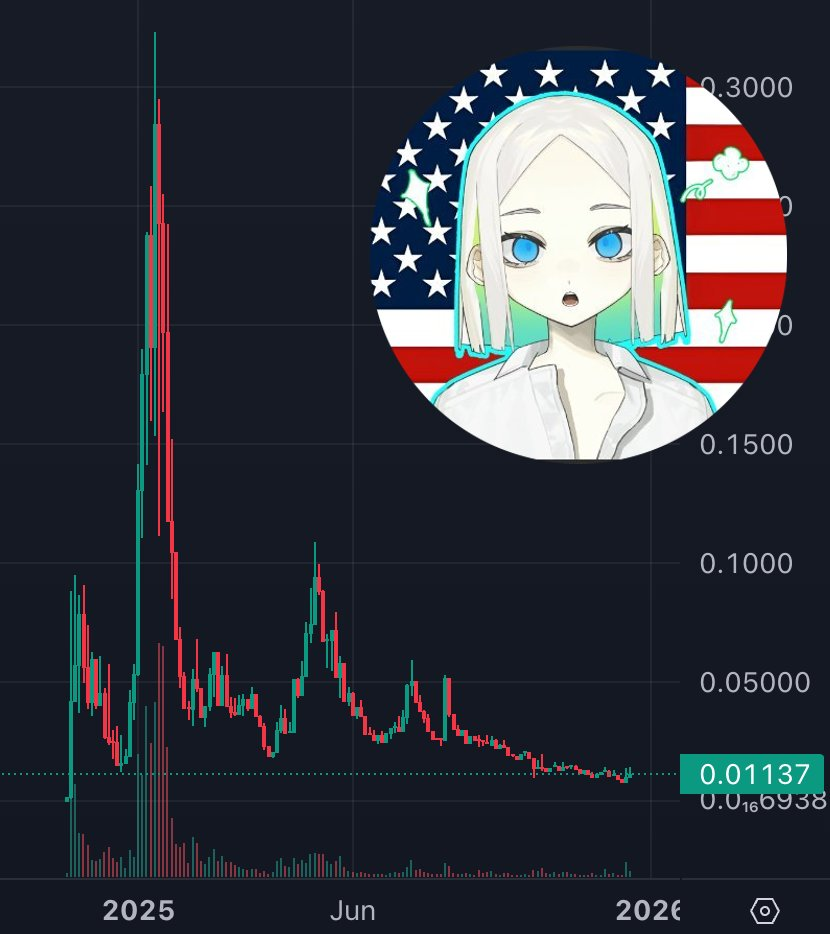
Source: Bubblemaps

Ava, also known as “the HOLO AI intern,” was the first AI agent built on the decentralized AI launchpad Holoworld AI. The platform allows users to create, play, or raise funds for agentic AI applications.

Holoworld claims to have over 1 million users and 700,000 AI “creations” to date.

Cointelegraph has approached Holoworld for comment on the sybil wallet cluster’s activity during the token launch.

Magazine: Memecoin degeneracy is funding groundbreaking anti-aging research

Trending Cryptos

Related Questions

QWhat did blockchain analytics firm Bubblemaps discover about the Solana-based AI token Ava's launch?

ABubblemaps discovered that a cluster of 23 wallets linked to the token's deployer accumulated around 40% of the token's supply at launch, indicating potential insider coordination.

QWhat are the common patterns identified in the sybil wallet cluster related to the AVA token deployer?

AThe wallets were funded in a tight time window through Bitget and Binance, received similar amounts of Solana (SOL), and had no prior blockchain activity before buying the AVA tokens.

QWhat is 'sniping' in the context of crypto token launches?

ASniping refers to using crypto trading bots to automatically purchase a new token supply as soon as it becomes available, aiming to buy at lower prices before the general public.

QHow much has the AVA token fallen from its all-time high, according to CoinGecko data?

AThe AVA token is down over 96% from its all-time high of $0.33, which was reached on January 15, 2025.

QWhat is the potential risk associated with a large token supply being concentrated in a few wallets?

AIt can indicate potential scams like rug pulls, where insiders remove liquidity or stage a mass sell-off, causing a steep price collapse and leaving investors with worthless tokens.

Related Reads

The Clarity Act's Journey Through Congress: The Thorny Path of Bipartisan Compromise in the U.S.

The U.S. Congress is struggling to advance the crypto market structure bill known as the Clarity Act, with bipartisan compromise proving difficult. Key hurdles include unresolved disputes over "yield" products and, more critically, the inclusion of strong ethics provisions for elected officials—a non-negotiable demand for many Democrats. While a compromise on yield was reached in May, securing only limited Democratic support in committee, the separate Senate Agriculture Committee version later passed with no Democratic votes due to the ethics impasse. As Republicans push for a full Senate vote in July, demands for ethics rules have expanded, and other contentious issues like developer protections and concerns from law enforcement and large banks further complicate negotiations. Despite consensus on the need for legislation, the path forward is unclear. Recent discussions between senators and White House officials aim to find acceptable ethics language. Some lawmakers question whether a compromise text can garner enough bipartisan support, with one Democrat stating the current proposal lacks the strong ethics provisions required for their vote. Potential short-term goals for the crypto community include symbolic Senate action before the August recess, a longer-term aim for passage by 2026, or establishing a detailed framework that addresses ethics and other compromises. The process remains arduous, relying on the traditional, vote-by-vote effort to build bipartisan support.

marsbit18m ago

The Clarity Act's Journey Through Congress: The Thorny Path of Bipartisan Compromise in the U.S.

marsbit18m ago

Are Kalshi and Polymarket Founders at Odds? This Business Rivalry Is More Brutal Than You Think

"The Rivalry Between Kalshi and Polymarket Founders Turns Bitter and Litigious" The intense feud between Tarek Mansour, CEO of Kalshi, and Shayne Coplan, founder of Polymarket, has escalated far beyond typical business competition into personal animosity and regulatory battles. Both lead billion-dollar prediction market platforms, but their approaches differ sharply. Kalshi positions itself as the compliant operator, securing U.S. regulatory approval before launching. In contrast, Polymarket initially operated offshore, allowing U.S. users to access its platform via VPN, which drew regulatory scrutiny. The conflict reached a peak in November 2024 when FBI agents raided Coplan's New York apartment. While Coplan publicly blamed political motives, his team privately suspected Kalshi was involved. According to sources, Kalshi's lawyers had previously reported Polymarket's operations to federal prosecutors, highlighting its accessibility to U.S. users despite a ban. This incident fueled mutual accusations and underhanded tactics, including social media smear campaigns and attempts to sabotage each other's major business deals. Their rivalry also played out in Washington, influencing regulatory debates. Kalshi actively lobbied against Polymarket's practices, framing them as illegal and unethical. Polymarket, after facing a CFTC fine and investigation, later acquired a licensed U.S. firm to launch a domestic app, regaining a foothold. Despite the hostility, both companies have seen massive growth, with combined trading volumes soaring. However, increased regulatory scrutiny, particularly around insider trading on Polymarket's platform, continues to pose challenges. The founders' deep-seated mutual disdain ensures their battle for market dominance remains as much a personal vendetta as a commercial one.

marsbit27m ago

Are Kalshi and Polymarket Founders at Odds? This Business Rivalry Is More Brutal Than You Think

marsbit27m ago

Trading

Spot

Hot Articles

Discussions

Welcome to the HTX Community. Here, you can stay informed about the latest platform developments and gain access to professional market insights. Users' opinions on the price of AI (AI) are presented below.

活动图片