Revealed as Soon as Today: The Entire Internet Awaits the 'Version Answer' from the 24-Year-Old 'AI Stock Prodigy'

Odaily星球日报Published on 2026-05-18Last updated on 2026-05-18

Abstract

The online investment community is eagerly awaiting the Q1 2026 13F filing from the "Situational Awareness" fund, led by 24-year-old Leopold Aschenbrenner, known as an "AI stock-picking prodigy." His fund's assets reportedly exploded from $225 million in Q4 2024 to $5.5 billion by Q4 2025, making its quarterly disclosures a major market signal. The filing, due by May 15th, is now three days late. Analysts suggest three possibilities: 1) A routine delay with SEC processing, meaning the report could be published imminently. 2) The fund has applied for "confidential treatment" from the SEC, allowing it to hide new, large positions it is still accumulating—a move that would spark intense speculation. 3) The fund's holdings fell below the $100 million reporting threshold, though this is considered highly unlikely given its recent size. The reason for the delay will become clear within days. If it's a standard delay, the portfolio will be revealed shortly. If it's confidential treatment, the hunt will be on to decipher what major AI-related asset Aschenbrenner is secretly building a position in.

Original | Odaily Planet Daily (@OdailyChina)

Author | Azuma (@azuma_eth)
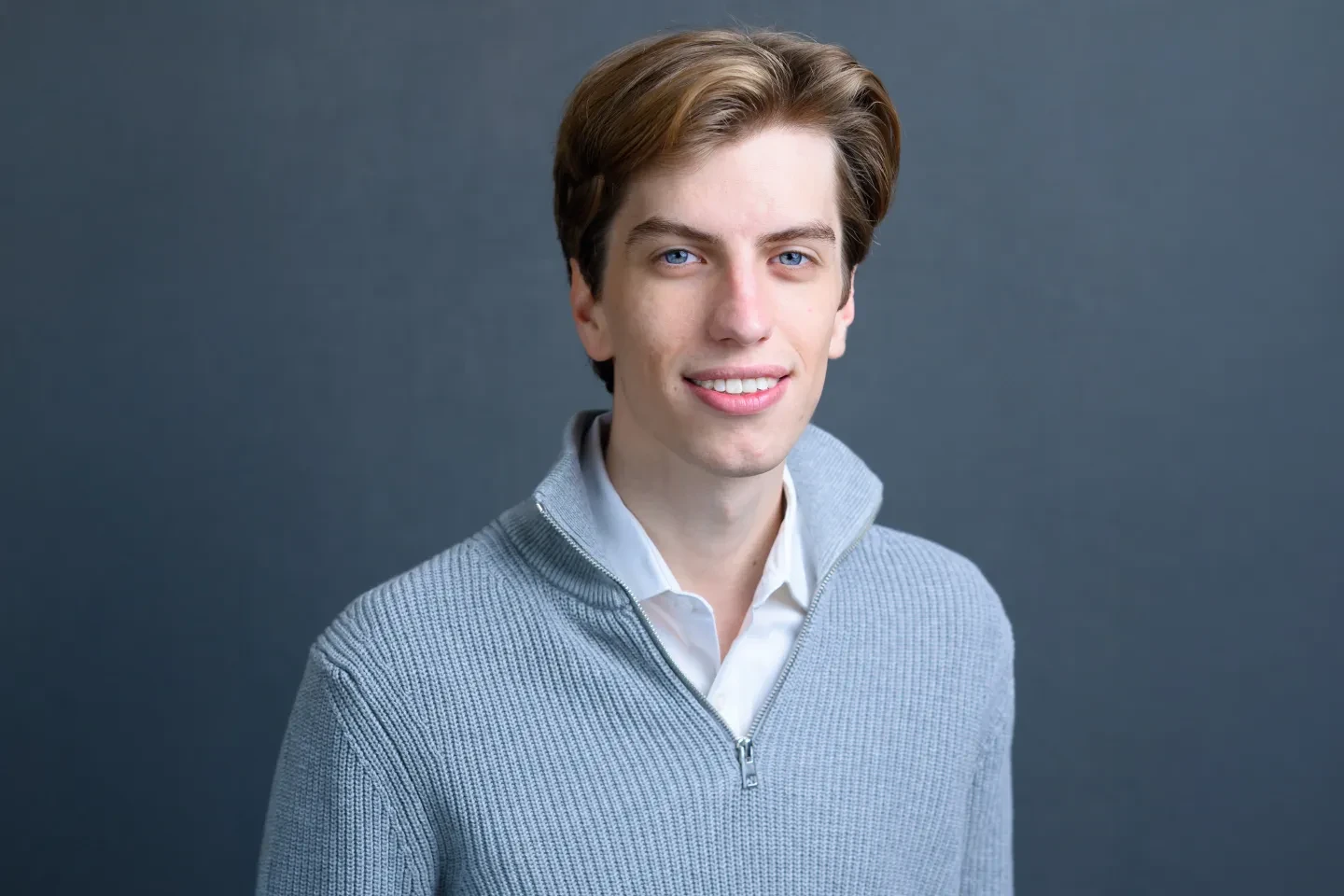
Remember Leopold Aschenbrenner? The 24-year-old 'AI prodigy' we introduced in the article "SBF's Junior, Who Turned $225 Million into $5.5 Billion in One Year".

Leopold Aschenbrenner worked at FTX's Future Fund in 2022 and stayed with the team until FTX's collapse. In 2024, Leopold Aschenbrenner wrote a 165-page mega-paper titled "Situational Awareness: The Decade Ahead" and in the same year founded a fund of the same name, Situational Awareness LP, where he serves as Chief Investment Officer.

Situational Awareness LP focuses on investment opportunities in the AI industry chain. The fund's publicly disclosed holdings were 'only' $225 million in Q4 2024, but in the Q4 2025 holdings disclosure released this February, this figure had skyrocketed to $5.5 billion. This explosive investment return performance has also made Leopold Aschenbrenner and Situational Awareness LP highly renowned, becoming one of the most watched AI investment trends on the internet.
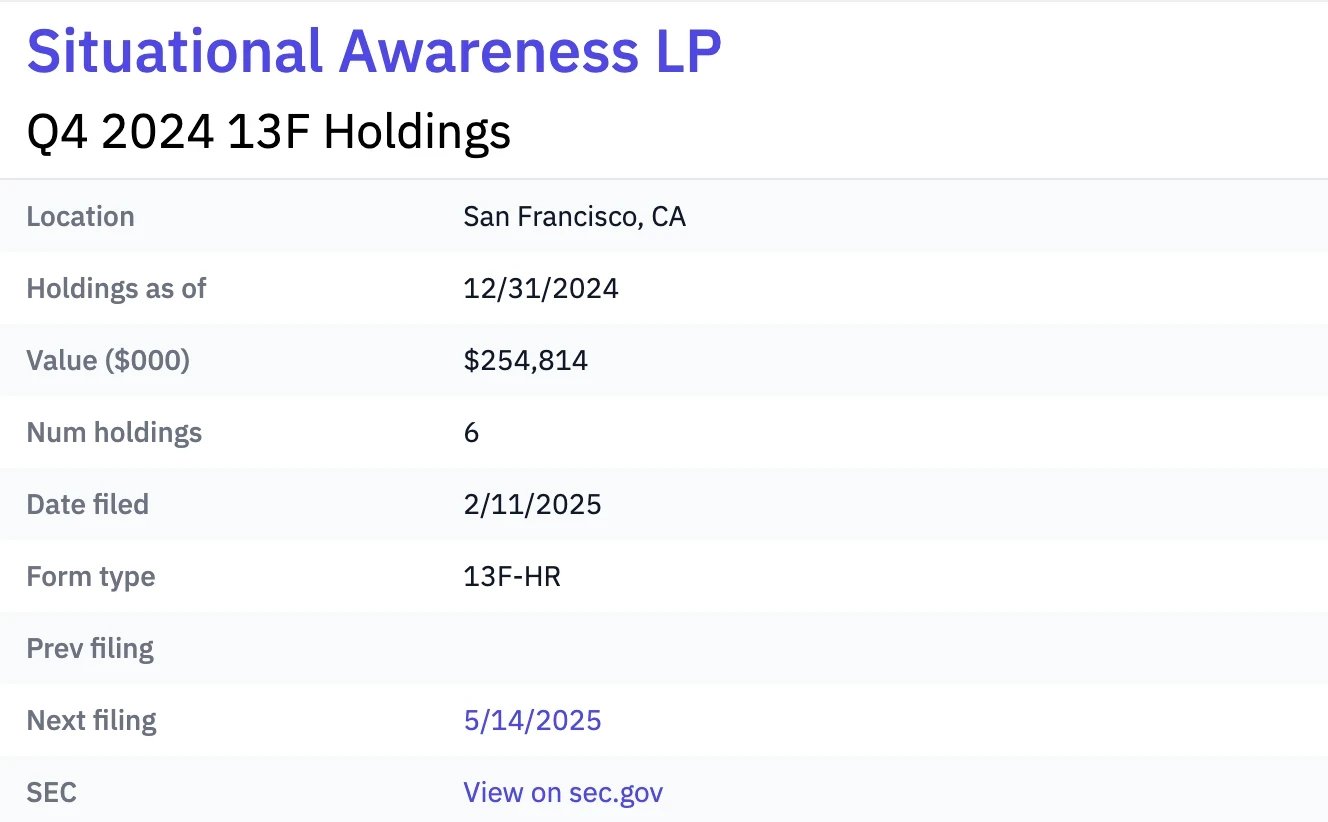
Now, Situational Awareness LP is approaching the critical window for a new round of holdings disclosure (13F). Since last week, the entire internet has been collectively waiting, anticipating the fund's 'version answer' on how to position for AI at present, but as of this writing, Situational Awareness LP's disclosure has still not arrived.

13F refers to the quarterly disclosure documents mandated by the U.S. Securities and Exchange Commission (SEC) for funds with assets under management exceeding $100 million. SEC requires that funds meeting the disclosure threshold must submit this document within 45 days after the end of each calendar quarter. The fund must focus on disclosing its holdings in U.S. listed stocks, call/put options, convertible bonds, and specific ETF positions at the end of the previous quarter.

It is already May 18th, three days past the Q1 2026 disclosure deadline of May 15th. Over the past few days, several sovereign wealth funds, university endowments, and traditional financial institutions have disclosed their Q1 13F holdings reports, but the market is still waiting for Situational Awareness LP's disclosure.

Based on various market analyses, the following three situations may have affected Situational Awareness LP's 13F disclosure progress.

The first possibility is that Situational Awareness LP may have submitted the file to the SEC after 5:30 PM on May 15th itself. Since that day was a Friday, the SEC did not have time to process it, so the document would need to be published on the SEC's website the following Monday before the public can see it.

This is the mainstream view in the market. If this is the case, we are expected to see Situational Awareness LP's 13F filing later today (or tomorrow at the latest).

The second possibility is that Situational Awareness LP applied for confidential treatment from the SEC. This is a legal mechanism provided by the SEC, allowing large funds to delay the public disclosure of their holdings information that is still being accumulated, with delays lasting up to a year in some cases.

Generally, funds apply for confidential treatment for only one reason — they are building a position large enough that if the market learns about it prematurely, it would move the price against them before they finish accumulating. If this is the reason this time, it means Leopold Aschenbrenner is quietly accumulating a significant asset and temporarily does not want the market to know. This would undoubtedly warrant more attention from the market.

The third possibility is almost impossible, which is that Situational Awareness LP significantly reduced its holdings in the past quarter and has dropped its holding size below the 13F disclosure threshold ($100 million). However, considering the fund held $5.5 billion last quarter, this scenario is extremely unlikely.

In summary, we just need to wait patiently for another 1 to 2 days to learn the real reason for Situational Awareness LP's delayed disclosure this time.

If it's the first case, we will bring you an analysis of the changes in holdings as soon as the 13F is released. If it's the second reason, the entire internet will truly be on edge — what exactly is Leopold Aschenbrenner hoarding? That will be the moment for all kinds of investigative experts to shine.


Related Questions

QWho is the main subject of the article and what is his fund called?

AThe main subject is Leopold Aschenbrenner. He is the 24-year-old 'AI stock god' who founded and serves as the Chief Investment Officer of the Situational Awareness LP fund.

QWhat was the growth in Situational Awareness LP's publicly disclosed holdings from Q4 2024 to Q4 2025?

AThe fund's publicly disclosed holdings grew explosively from $225 million in Q4 2024 to $5.5 billion in Q4 2025.

QWhat is a 13F filing, and what triggers the requirement to file it?

AA 13F filing is a mandatory quarterly report required by the U.S. SEC for investment managers with over $100 million in assets under management. It discloses their holdings of U.S. exchange-traded stocks, options, convertible notes, and certain ETFs.

QWhat are the three possible reasons discussed in the article for the delay in Situational Awareness LP's Q1 2026 13F filing?

A1. Late submission on the Friday deadline (May 15th), with SEC processing expected on the following Monday. 2. The fund applied for confidential treatment to hide a large, ongoing position. 3. The fund's holdings fell below the $100 million reporting threshold, which is considered highly unlikely.

QWhy would a fund apply for confidential treatment on a 13F filing, according to the article?

AA fund would apply for confidential treatment to delay public disclosure of a large position they are still accumulating. This prevents the market from moving the price against them before they finish building the position.

Related Reads

Under the squeeze between giants Tether and Circle, how can foreign exchange stablecoins break through?

In the face of dominance by Tether (USDT) and Circle (USDC), new entrants in the stablecoin space face significant challenges competing directly, especially in the foreign exchange (FX) market. A more viable and efficient path forward is the adoption of synthetic foreign exchange (Forex) built atop existing USD stablecoin rails. The rise of stablecoin neo-banks represents the next major growth area for mass crypto adoption, with FX becoming a core component. However, replicating the vast liquidity, distribution channels, and network effects of USDT/USDC is extremely difficult for new FX stablecoin issuers. The total market cap of all FX stablecoins is a fraction (roughly 1/700th) of USD stablecoins, leading to issues like poor liquidity, peg instability, limited acceptance, and complex compliance hurdles. Instead of issuing spot FX stablecoins, the article advocates for a model inspired by traditional finance's non-deliverable forwards (NDFs). Users would continue to hold underlying USDT/USDC, while their account balances are displayed and economically settled in their preferred local currency through MtM (Mark-to-Market) NDF structures. This approach leverages the deep liquidity and infrastructure of USD stablecoins while providing synthetic forex exposure. Key advantages include strong peg stability via oracles, retained access to USD stablecoin yields and liquidity, high capital efficiency, and easy scalability to new currencies. Primary use cases for this on-chain NDF forex include: 1. Neo-banks, custodians, and wallets offering multi-currency accounts to attract international users and increase deposits. 2. Forex carry trade strategies, potentially offering more stable and scalable yields compared to crypto-native products like Ethena. 3. Global corporate payments, allowing businesses to receive payments in local currencies while hedging forex risk on-chain, similar to services offered by Stripe in traditional finance. This synthetic forex model presents a pragmatic solution to overcome the network effects of incumbents and unlock the next wave of stablecoin utility for global consumers and businesses.

marsbit3h ago

Under the squeeze between giants Tether and Circle, how can foreign exchange stablecoins break through?

marsbit3h ago

Trading

Spot
Futures

Hot Articles

Discussions

Welcome to the HTX Community. Here, you can stay informed about the latest platform developments and gain access to professional market insights. Users' opinions on the price of AI (AI) are presented below.

活动图片