Ray Dalio: AI Bubble Reminds of 1929 and 2000

cryptonews.ruPublished on 2026-08-04Last updated on 2026-08-04

Abstract

Ray Dalio, founder of Bridgewater Associates, warns that the current AI-fueled market boom resembles the bubbles of 1929 and 2000. He cites classic signs: stock prices detached from earnings, easy access to capital for new share offerings, and inexperienced retail investors using leverage to trade ETFs. Dalio highlights the critical distinction between wealth (paper valuations) and money (liquid cash), noting the U.S. wealth-to-money ratio is at an extreme 8.5 to 1. He explains that when money is needed—due to rising rates or taxes—the bubble bursts as assets are sold, prices collapse, and debt servicing becomes untenable. Furthermore, he frames this within an 80-year "Big Cycle" where excessive debt, wealth inequality, and geopolitical tensions converge. The collapse of the AI bubble, he warns, could trigger not just a financial crisis but also intense political and macroeconomic conflicts.

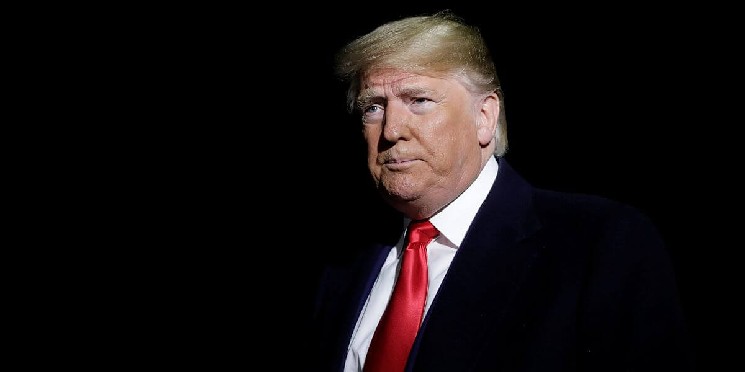
Bridgewater Associates founder Ray Dalio has warned about the shaky state of markets. In an interview on The Diary of a CEO podcast, he stated that the enthusiasm around artificial intelligence has inflated a bubble comparable to 1929 and 2000 — and named the specific mechanisms that will lead to its collapse.

Classic Signs

When host Steven Bartlett asked if Dalio sees signs of a bubble, he did not dodge the question:

"There is almost nothing easier than issuing shares".

The investor expressed doubts about the system of capital circulation within companies: how can a firm raise $50 million, get a valuation twenty times that, and create a paper billionaire without actually transferring a single dollar.

Dalio's thesis is simple — the euphoria around AI is real. The technology will indeed change productivity, but the price being paid for it today carries all the hallmarks of 1929 and 2000.

The billionaire especially highlighted the behavior of retail investors, who, without the necessary experience, are entering leveraged trades en masse, including ETFs on indices.

According to him, we are observing the classic anatomy of a financial bubble — prices detached from profits, retail speculation with borrowed capital, and a flow of new share placements:

"It looks more like a dice game", — added Dalio.

Bitcoin Supporter Ray Dalio Leaves Bridgewater Associates

Wealth is Not Money

Dalio reminded about a key difference in financial terms:

"Wealth is not the same as money. Many get rich, but to get money, you need to sell the wealth."

The mechanics of a reversal, he said, are always the same. When people need money — due to tax changes or rising rates — they have to service their debt. The bubble bursts, prices fall, people lose funds. The process goes in reverse: on the way up, rising assets served as collateral for new loans — on the way down it works in the opposite direction.

Dalio has repeatedly pointed out that the "wealth/money" ratio in the US is now about 8.5 to 1 — roughly 750% more financial wealth than real money. In his opinion, this is comparable to the peaks before the 1929 crash and the dot-com crash in 2000.

The investor gave a real-life example: his acquaintance, managing an AI company, is raising hundreds of millions of dollars right now — because he expects a downturn and wants to use the money to buy up competitors when the market turns.

Shift of the Economic Axis and "Superbitcoinization" of the Dollar

The "Big Cycle" and What Comes After

Dalio views the market situation in the context of the "Big Cycle" — an 80-year model combining debt dynamics, rising inequality, and internal political conflicts. The convergence of these three forces has historically ended in systemic crisis: debt-laden governments, extreme wealth stratification, and escalating rivalry with China.

The billionaire highlighted two factors that usually "puncture" a bubble: rising interest rates, which make debt servicing more expensive, and a surge in share issuance as companies rush to take advantage of investor enthusiasm.

His main warning is not about the market, but about what comes after. In Dalio's interpretation, the collapse of the AI bubble is not just a financial event, but a trigger for political and macroeconomic conflicts that have historically accompanied the end of the 80-year cycle.

"When the bubble bursts, people go for each other's throats. Governments are left without money, and voters clash over where to get it," explained the expert.

Recall that in July 2025, Ray Dalio advised keeping 15% of savings in Bitcoin.

end-content

Trending Cryptos

Related Questions

QWhat major historical financial bubbles does Ray Dalio compare the current AI market enthusiasm to?

ARay Dalio compares the current AI market bubble to the 1929 stock market crash and the 2000 dot-com bubble.

QWhat are the classic signs of a financial bubble that Dalio identifies in the current AI market?

ADalio identifies classic bubble signs including prices disconnected from profits, retail investors speculating with borrowed money (leverage), and a flood of new stock offerings.

QWhat key distinction does Ray Dalio make between 'wealth' and 'money', and what is the concerning ratio he cites for the US?

ADalio distinguishes that 'wealth' is not the same as 'money'; wealth must be sold to become money. He states the US wealth-to-money ratio is about 8.5 to 1, similar to peaks before the 1929 and 2000 crashes.

QWhat two factors does Dalio highlight as typically 'popping' a financial bubble?

ADalio highlights rising interest rates, which make debt servicing more expensive, and a surge in stock issuance as companies rush to capitalize on investor enthusiasm.

QAccording to Dalio, what broader consequences could follow the bursting of the AI bubble beyond just financial losses?

ADalio warns that the bursting of the AI bubble could act as a trigger for political and macroeconomic conflicts, as governments run out of money and voters clash over resources, marking the end of an 80-year 'Big Cycle'.

Related Reads

Crypto Bull Is Back, Which Assets Bounced the Hardest?

The cryptocurrency market experienced a significant surge last week, with Bitcoin rallying over 26% to nearly $79,500, its strongest weekly gain since March 2023, fueling discussions of a renewed bull market. This rebound highlighted several key market dynamics. First, short-term directional shifts are increasingly tied to U.S. policy cycles. The rally was driven by two major catalysts: the U.S. Treasury's announcement to increase long-term bond buybacks, easing macro liquidity pressures, and former President Trump's push for clearer crypto legislation, boosting regulatory certainty and risk appetite. Second, Bitcoin spot ETFs solidified their role as a leading market indicator. In the week ending August 21, U.S. Bitcoin and Ethereum spot ETFs saw a combined net inflow of $2.6 billion, the highest since October 2025, signaling strong institutional re-entry. Third, the rally followed a clear capital rotation pattern: Bitcoin's breakout ignited broader gains, with Ethereum (up nearly 30%), major altcoins, and meme coins sequentially posting larger percentage increases. Analysis of the top performers among the top 50 altcoins by market cap revealed the week's biggest gainers: ENA (Ethena) led with a 100.75% surge, fueled by a Coinbase partnership. It was followed by PUMP (Pump.fun, up 88-99%), STX (Stacks, up 82-94%), TRUMP (Official Trump, up 79-91%), and ZEC (Zcash, up 75.15%), which uniquely reached a new all-time high. Meme coins like BOME on Solana also saw explosive gains, exemplifying the high-risk, high-reward sentiment. The rally illustrated a clear path: Bitcoin set the stage, major coins like Ethereum led the charge, and altcoins/meme coins delivered the most explosive returns, mapping the gradient of returning market enthusiasm.

marsbit11m ago

Crypto Bull Is Back, Which Assets Bounced the Hardest?

marsbit11m ago

Wuhan is About to Witness Its Largest IPO in History

Wuhan is poised for its largest-ever IPO as Yangtze Memory Technologies Co., Ltd. (YMTC) has officially applied for a listing on the Shanghai Stock Exchange's STAR Market, seeking to raise 33 billion yuan. The domestic leader in 3D NAND flash memory chips completed its IPO辅导 (tutoring) process in a record three months, with market expectations valuing the company at 300 billion yuan or higher. YMTC's roots trace back to 2006 with the founding of Wuhan Xinxin. After surviving the global financial crisis and periods of operational difficulty, the company was formally established in 2016 through a joint investment involving Tsinghua Unigroup, the National Integrated Circuit Industry Investment Fund (the "Big Fund"), and local Hubei government funds. With a distinct "national team" background, its major shareholders include provincial and municipal state-owned assets committees and the Big Fund. Based in Wuhan's Optics Valley (East Lake High-tech Development Zone), YMTC's potential listing highlights the region's rise as a tech hub. Optics Valley is already home to 72 listed companies and has ambitious plans to exceed 100 by 2030. The zone recently established four industry-focused母基金 (mother funds) totaling 18 billion yuan to further boost sectors like integrated circuits and optoelectronics. YMTC's IPO would complete the "Optics Valley Seven Stars," a group of leading local optoelectronic and communication giants.

marsbit11m ago

Wuhan is About to Witness Its Largest IPO in History

marsbit11m ago

Banks and Regulators Join Pilot Project to Test Quantum-Resistant Crypto Transfers

Banks and financial regulators from Europe, the Middle East, and Asia have joined a pilot project to test quantum-resistant crypto infrastructure for digital asset wallets and on-chain transactions. The initiative, announced by the Responsible Fintech Institute and infrastructure provider Safeheron, will use NEAR's quantum-resistant testnet. It will employ the ML-DSA-65 post-quantum digital signature standard, recently finalized by the U.S. National Institute of Standards and Technology (NIST). Participating regulators include the Abu Dhabi Global Market, Bhutan's Gelphu Financial Services Authority, and Malta's Financial Services Authority. Financial institutions involved are Bison Bank and DK Bank. In the pilot, banks will test wallet creation and transactions in a unified application environment, while regulators will initially observe and later contribute to governance mechanisms. The organizers plan to publish a technical paper detailing the research, protocol design, and test results, eventually open-sourcing the core technology. This effort comes as financial authorities prepare for the advent of quantum computers, which threaten current public-key cryptography. For instance, the Hong Kong Monetary Authority aims for the territory's banking sector to be fully prepared for quantum-related security risks by 2030. The Bank for International Settlements (BIS) also recommended in a 2025 document that financial institutions begin a coordinated, phased transition to post-quantum systems.

cryptonews.ru13m ago

Banks and Regulators Join Pilot Project to Test Quantum-Resistant Crypto Transfers

cryptonews.ru13m ago

Trading

Spot

Hot Articles

Discussions

Welcome to the HTX Community. Here, you can stay informed about the latest platform developments and gain access to professional market insights. Users' opinions on the price of AI (AI) are presented below.

活动图片