The biggest success of the Hyperliquid HIP-4 prediction market so far came from World Cup-related trading.
I did not anticipate this outcome initially. When HIP-4 first launched, I suggested the viewpoint that Hyperliquid was not actually aiming to compete head-on with Polymarket or Kalshi. These types of outcome prediction markets seemed more like an extension of its trading ecosystem: providing daily crypto binary contracts to hedge perpetual positions, build option-like exposures, and allow traders to keep all their positions unified within the Hyperliquid platform.
But subsequent developments were unexpected. Hyperliquid successively launched trading markets for the NBA Finals, individual World Cup matches, and the tournament champion. These three categories (with the latter two contributing the vast majority of trading volume) together account for approximately 48% of HIP-4’s total trading volume to date.
After the peak of World Cup trading, the related open interest dropped by over 90%. Objectively speaking, this doesn’t mean HIP-4 has failed; it merely reflects the current lack of event-specific targets with high trading appeal.
The system currently remains in a permissioned mode, where all trading markets require manual creation and listing by validators. Most of the remaining markets on the platform are related to cryptocurrency price movements, with dismal trading volumes that are completely incomparable to the activity driven by sports events.
Now, Hyperliquid wants to break this limitation. On July 31st, the permissionless HIP-4 deployment feature went live on the testnet, paving the way for third-party teams to independently create and operate outcome prediction markets, while also clarifying the conditions required for live operation.
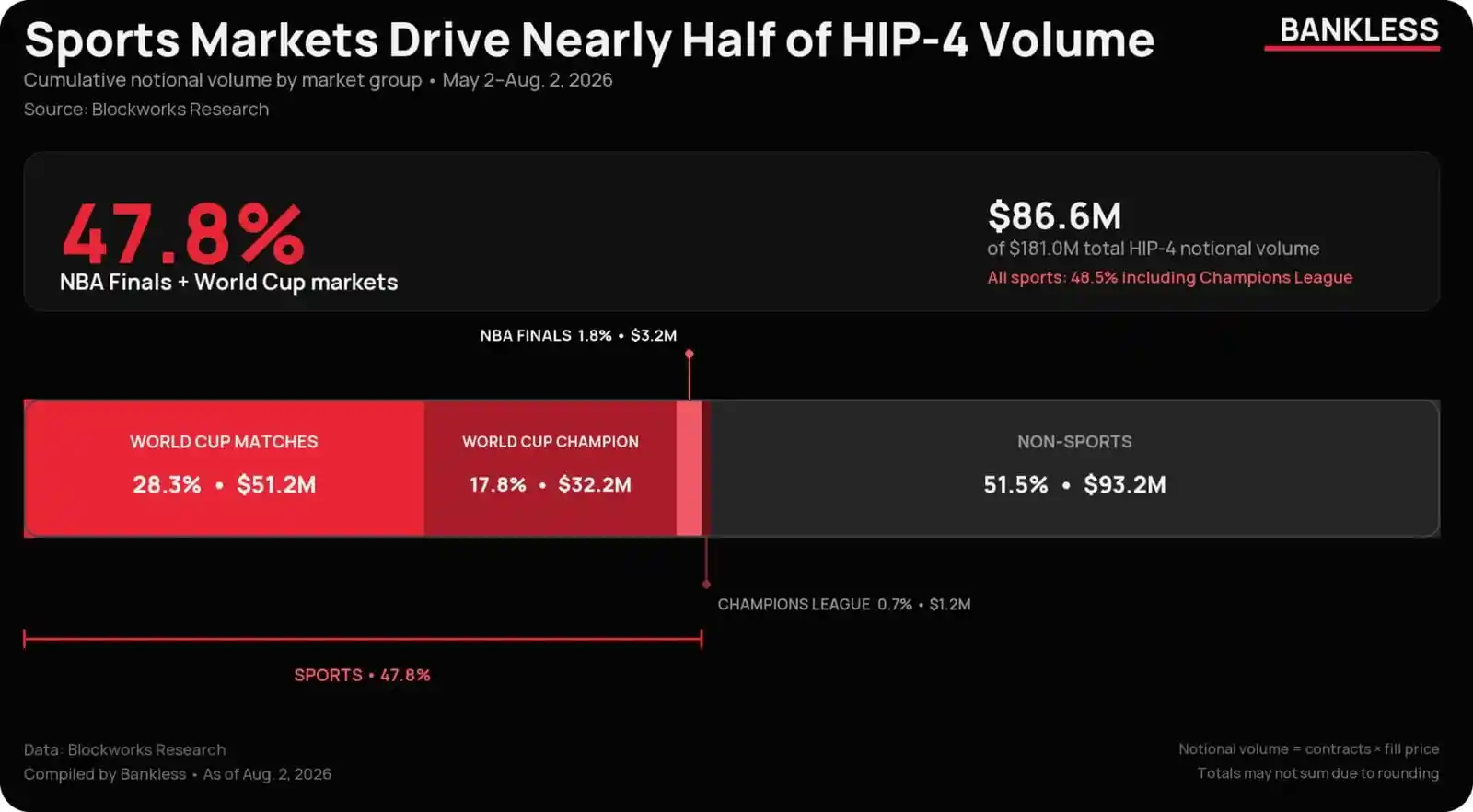
From May–August 2026, 47.8% of HIP-4’s trading volume came from sports markets, with the World Cup contributing the vast majority of sports volume, highlighting the platform’s high dependence on major hot-topic events to attract trading flow.
The Operation Mechanism of HIP-4 in Permissionless Mode
Important note: Permissionless deployment ≠ unrestricted, arbitrary market creation.
According to the initial mainnet proposal: Validators first approve market templates, which are reusable standard frameworks defining market creation rules and settlement methods. Deployers then select an approved template to create a specific trading market, filling in details like the trading topic, possible outcomes, expiry time, and settlement criteria.
One thing is clear: Deployers only need to use a validator-approved template to generate a market; they do not need to apply for separate approval for each individual market.
Consistent with the HIP-3 mechanism, deployers must precisely define market rules and properly execute settlements. In case of significant errors, validators have the right to slash their staked assets.
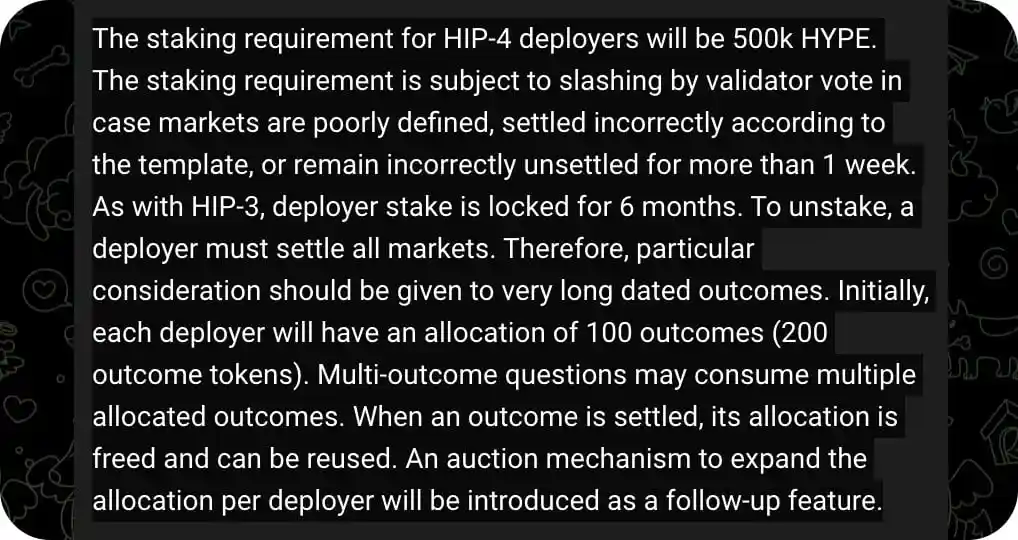
The proposal requires deployers to stake 500,000 HYPE (same standard as HIP-3), with the stake locked for 6 months; a deployer can only withdraw staked assets after all markets under their name have been fully settled. Initially, each deployer has a quota to create a maximum of 100 outcome targets; this quota can be reused after markets are settled. The platform plans to expand additional quotas via auctions later. Deployers can ultimately earn up to 50% of the trading fees generated by their created markets.
After the World Cup Frenzy, Where is the Next Core Opportunity?
The most obvious target: The US midterm elections.
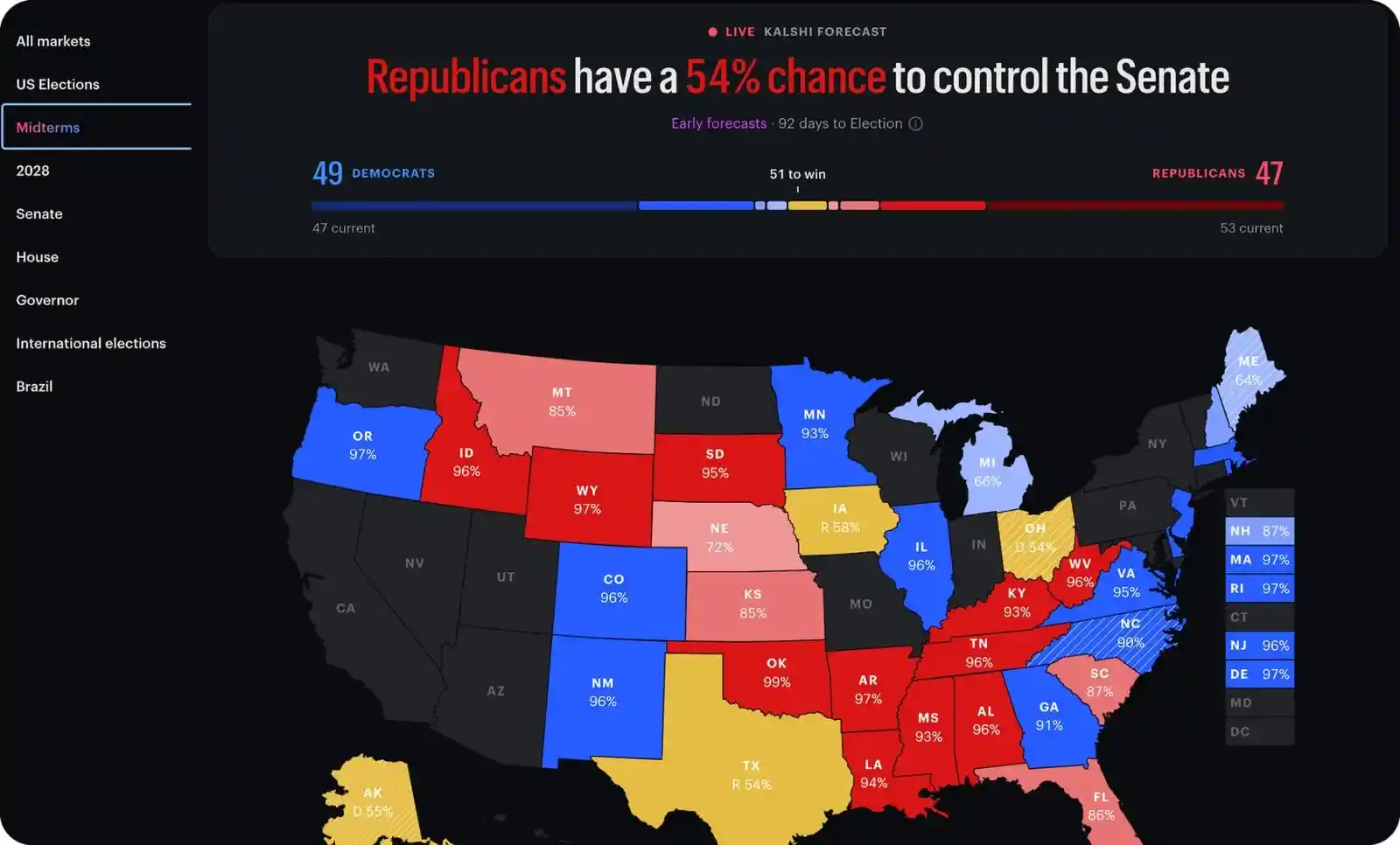
Prediction markets initially gained mainstream visibility through political topics. Kalshi and Polymarket have long-established comprehensive election trading dashboards, covering various markets like control of Congress, individual district races, seat totals, etc., while HIP-4 currently has not listed any related targets.
Whether third-party deployers can fill this gap depends on when the permissionless HIP-4 goes live on mainnet. For reference: HIP-3 took 164 days from the launch of the first minimal permissionless testnet version to mainnet launch. However, from releasing the mainnet initial specification and opening the mainnet bug bounty program to the official launch, it was only 18 days.
HIP-4’s current progress lies somewhere between: The mainnet preliminary architecture has been made public, the testnet deployment feature is open, but a mainnet-level bug bounty program has not yet been launched; the overall progress remains in an uncertain phase.
If this system can go live on schedule, deployers could build a comprehensive election trading section around the midterms, rather than sporadically launching individual campaign topic markets—provided validators simultaneously approve trading templates that support election scenarios.
If the permissionless deployment misses the midterm election window, validators can still manually list various midterm election markets. Even so, HIP-4 could still capture trading flow, but it would miss its first major real-world proving opportunity: failing to demonstrate to the market that external third-party deployers can consistently supply the platform with timely, popular trading markets.
The World Cup proved: Hyperliquid users are willing to trade major real-world events. At the same time, the rapid decline in trading volume post-World Cup exposed a pain point: the platform struggles to maintain activity in the absence of blockbuster events.
With high anticipation surrounding this round of midterm elections, it presents an excellent opportunity for HIP-4. The platform can both use this to sustain market heat and advance the launch of permissionless deployment. The coming weeks are crucial to track related progress.