Ozak AI x Openledger xSpaces Dives Into Trustworthy Data Infrastructure for Autonomous AI

TheNewsCryptoPublished on 2026-01-15Last updated on 2026-01-15

Abstract

Ozak AI and Openledger are co-hosting an xSpaces session on January 13th to explore the critical role of trustworthy data infrastructure for the future of autonomous AI. As AI systems take on greater responsibilities, the need for verifiable, transparent, and tamper-proof data has become essential. The discussion will focus on how reliable data enables scalable, profitable, and accountable AI agents, with Openledger providing the verifiable data frameworks. Key speakers include Ozak AI's CEO Pax Reid and Openledger's Ram Kumar. The context is strengthened by Ozak AI's recent momentum, including over $5.6M in funding, exchange listings, and the live launch of its EON platform, which has undergone security audits. This session highlights how data integrity is the foundational layer for the next generation of AI.

Artificial intelligence is rapidly evolving toward autonomous execution, but its future depends closely on one vital issue: data trust. As AI retailers take on greater responsibility across decentralized structures, the need for verifiable, transparent, and tamper-proof data infrastructure has become impossible to ignore.

Addressing this shift, Ozak AI is hosting a high-effect xSpaces session that brings infrastructure to the forefront, specializing in how dependable statistics permit scalable, worthwhile, and straightforward AI agents. The discussion aims to attach real-world execution with long-term AI sustainability, providing timely perception into how the next technology of shrewd structures is being built from the ground up.

Ozak AI x Openledger xSpaces Focuses on the Future of Trustworthy AI

Rapid advances in artificial intelligence have pushed data reliability into the spotlight, making verifiable infrastructure an important requirement instead of a secondary feature.

Ozak AI is hosting a high-impact xSpaces session designed to explore this shift, bringing attention to the structures that enable AI agents to operate securely, transparently, and profitably. Scheduled for 13th January at 2 PM UTC, the session aims to unpack how the next technology of AI is being built from the ground up, with trust and execution at its core.

A central theme of the discussion will be the role of Openledger in strengthening AI systems through verifiable data frameworks. As AI agents increasingly interact with decentralized networks and real-world data sources, ensuring data integrity becomes essential for accuracy and accountability.

The xSpaces will explore how reliable data inputs flow through the AI stack, supporting everything from intelligent decision-making to autonomous execution. This infrastructure-first approach reflects a broader industry transition toward AI systems that can operate independently while remaining auditable and trustworthy.

Leadership Insights Driving the Conversation

The session brings together key voices from both projects to provide a well-rounded perspective. Pax Reid, CEO of Ozak AI, will share how verifiable data underpins the performance and scalability of AI agents within the Ozak AI ecosystem. His perspective will focus on why trust at the data level directly translates into long-term value creation.

Ram Kumar, Core Contributor at Openledger, will add technical depth by explaining how verifiable data protocols are designed and why they are becoming foundational for decentralized AI. Rick Thompson, Community Lead at Ozak AI, will highlight how transparent infrastructure and clear communication help align builders, users, and investors around a shared vision.

Ozak AI’s Growth Strengthens the Narrative

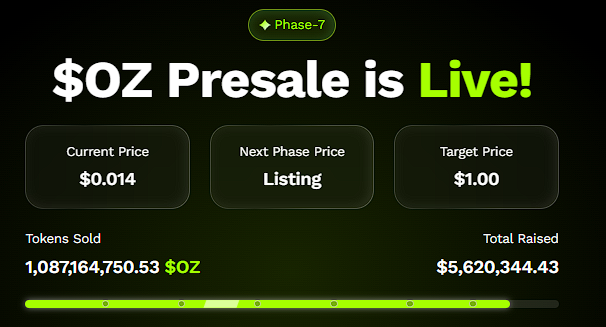
Momentum behind Ozak AI provides strong context for the discussion. The project has raised over $5.6 million in total funding, signaling growing confidence in its execution-focused roadmap.
Broader market visibility has been achieved through listings on CoinMarketCap and CoinGecko, positioning Ozak AI among closely watched AI-driven blockchain initiatives. These milestones reinforce the idea that infrastructure-led AI platforms are increasingly attracting serious attention from the wider crypto and technology communities.

EON Live and Security Foundations in Place

Execution has moved beyond planning with Ozak AI’s EON platform now live, marking a major step toward real-world deployment of autonomous AI capabilities. This launch demonstrates how theoretical discussions around AI agents are translating into functional systems. Security has also been prioritized through audits conducted by CertiK and Sherlock, reinforcing confidence in the platform’s reliability and long-term sustainability.

As AI agents take on increasingly complex roles across analytics, finance, and decentralized operations, the importance of verifiable data continues to grow. This xSpaces offers timely insight into how Ozak AI and Openledger are addressing one of the most pressing challenges in AI infrastructure today. For participants and listeners, the session provides a clear view into how trustworthy, autonomous AI systems are being built and why data integrity is becoming the defining layer of the next AI wave.

About Ozak AI

Ozak AI is a blockchain-based crypto project that gives an innovative platform that specializes in predictive AI and advanced data analytics for financial markets. Through machine learning algorithms and decentralized network technology, Ozak AI allows real-time, correct, and actionable insights to help crypto enthusiasts make the correct decisions.

For more, visit:

  • Website: https://ozak.ai/
  • Telegram: https://t.me/OzakAGI
  • Twitter: https://x.com/ozakagi

Disclaimer: TheNewsCrypto does not endorse any content on this page. The content depicted in this Press Release does not represent any investment advice. TheNewsCrypto recommends our readers to make decisions based on their own research. TheNewsCrypto is not accountable for any damage or loss related to content, products, or services stated in this Press Release.


TagsBlockchainCryptocurrencyOzak AI

Trending Cryptos

Related Questions

QWhat is the main focus of the xSpaces session hosted by Ozak AI and Openledger?

AThe xSpaces session focuses on trustworthy data infrastructure for autonomous AI, specifically exploring how verifiable, transparent, and tamper-proof data enables scalable, profitable, and straightforward AI agents.

QWhen is the Ozak AI x Openledger xSpaces session scheduled to take place?

AThe session is scheduled for January 13th at 2 PM UTC.

QWhat role does Openledger play in the context of AI systems according to the article?

AOpenledger strengthens AI systems by providing verifiable data frameworks, which are essential for ensuring data integrity, accuracy, and accountability as AI agents interact with decentralized networks and real-world data sources.

QWhat recent milestone demonstrates Ozak AI's progress toward real-world deployment?

AThe launch of Ozak AI's EON platform, which is now live, marks a major step toward the real-world deployment of autonomous AI capabilities.

QHow much funding has Ozak AI raised and what does this signal?

AOzak AI has raised over $5.6 million in total funding, which signals growing confidence in its execution-focused roadmap and positions it as a serious AI-driven blockchain initiative.

Related Reads

Dialogue with Jia Hang | Looking Back at Two Decades of Chinese Payment Going Global

**Summary: A Conversation with Jia Hang on Two Decades of China's Payment Globalization** Jia Hang, a veteran with over twenty years in payments, reflects on China's attempts to build a global payment network through three key phases: UnionPay (card networks), Alipay+ (digital wallets), and now, stablecoins. His journey began at UnionPay International, aiming to establish China's card network abroad. While successful in following Chinese tourists ("where Chinese go, UnionPay goes"), it struggled to achieve true global scale. The core lesson: card networks like Visa/Mastercard's unassailable advantage isn't just technical standards, but their deeply entrenched **governance and profit-sharing models** that create powerful network effects. Competing as the "same species" is nearly impossible. At Ant Group, he led Alipay+, a strategy to bypass card networks by interconnecting local e-wallets worldwide. While innovative, it faced a similar ceiling. Mobile QR payments and card swipes were essentially **the same species competing for the same pie**, lacking a disruptive value proposition for users or a sustainable new incentive model to replace the card networks' established flywheel. Today, at Singapore's DCS, Jia focuses on stablecoin-based payments. He argues stablecoins represent a fundamental shift. They are not competing with Visa for consumer payments but challenging the **traditional banking and account system for value movement**. Products like "U Cards" (stablecoin-linked payment cards) are transitional, leveraging existing card networks for acceptance while building new rails. The real potential lies in stablecoins enabling seamless, low-cost global value transfer, potentially reorganizing the financial infrastructure around **accounts rather than cards**. Jia believes stablecoin adoption for local retail payments, cross-border transactions, and as high-yield savings vehicles is becoming irreversible. This could gradually reduce reliance on traditional fiat channels, especially in regions with weak currencies or capital controls. The quest for the "next global payment network" continues, now centered on whether stablecoins can successfully bridge Web2 and Web3, establish new governance, and create compelling user value beyond mere cost reduction.

marsbit17m ago

Dialogue with Jia Hang | Looking Back at Two Decades of Chinese Payment Going Global

marsbit17m ago

Circle's Stock Price Plunges 76%, Hong Kong Dollar Stablecoin Set to Launch Within Two Weeks

Circle's stock price has plunged approximately 76% from its 2023 peak, reflecting a major market revaluation. Despite this, Circle President Heath Tarbert emphasized the company's focus on long-term execution and its dominant position with USDC's $73 billion circulation across 34 blockchains. The competitive landscape is intensifying. A new consortium-backed stablecoin, Open USD, is attempting to challenge incumbents by sharing reserve yields with partners. More significantly, Visa's new stablecoin platform, initially supporting Open USD while also being compatible with USDC, could erode Circle's network effects. In response, Circle is expanding into real-world payments through partnerships like the one with Japan's JCB. Separately, Tether (USDT) faces a two-year compliance window under new U.S. regulations, requiring it to adjust its reserve composition away from assets like Bitcoin and loans towards cash and U.S. Treasuries. Meanwhile, in Hong Kong, Standard Chartered-backed fintech firm Dian Dian is poised to launch a licensed HKD-pegged stablecoin (HKDAP), moving the industry into a phase where the real test is integrating licensed stablecoins into actual payment flows and corporate treasury systems. The sharp decline in Circle's stock underscores a broader shift: the stablecoin market is moving from a winner-takes-all dynamic to a multi-player competitive arena where execution, compliance, and real-world utility are becoming paramount.

marsbit17m ago

Circle's Stock Price Plunges 76%, Hong Kong Dollar Stablecoin Set to Launch Within Two Weeks

marsbit17m ago

Amidst Capital's Encirclement, Decentralization is the Sole Defense for Public Blockchains

In a landscape dominated by power and profit motives, the author argues that decentralization is not merely one desirable feature among many in blockchain design—it is the singular, non-negotiable defense against corporate and capital capture. The article adopts a Machiavellian, realist perspective on human institutions, positing that businesses will inevitably attempt to co-opt any valuable network to protect their profits and dominance. While external attacks like 51% forks are often discussed, the greater existential risk is internal capture—the gradual erosion of a protocol’s neutrality by vested interests, as seen historically with platforms like Visa and Google. The piece critiques permissioned chains, highly centralized “permissionless” layer-1s, and layer-2s without sufficient decentralization (e.g., single sequencers) as inherently vulnerable. These compromised systems, promoted by established financial players, are framed as delaying tactics to stifle truly open networks that threaten existing high-fee, inefficient business models. Real-world examples, such as closed enterprise consortiums that exclude competitors, illustrate how such systems cement oligopolies rather than foster innovation. The author concludes that while decentralized protocols like Ethereum are imperfect and costly to operate, they represent the only viable long-term equilibrium. In a market where value naturally flows to the most secure and neutral settlement layer, only maximally decentralized public blockchains can resist being subsumed by capital and powerful incumbents.

Foresight News28m ago

Amidst Capital's Encirclement, Decentralization is the Sole Defense for Public Blockchains

Foresight News28m ago

Trading

Spot

Hot Articles

Discussions

Welcome to the HTX Community. Here, you can stay informed about the latest platform developments and gain access to professional market insights. Users' opinions on the price of AI (AI) are presented below.

活动图片