Open-Source Plugin Ignites Underlying AI Model Warfare: Behind Claude-mem's Explosive Popularity Lies Big AI Companies' Best-Kept Profit Secret

marsbitPublished on 2026-04-20Last updated on 2026-04-20

Abstract

The open-source plugin "Claude-mem" has ignited a hidden war in the AI industry by tackling a critical weakness in large language models: their lack of memory. This tool, which exploded in popularity on GitHub, works by locally storing and compressing conversation history, slashing redundant token usage by up to 95%. This directly undercuts the "context tax"—the costly practice of repeatedly sending historical data to the cloud with each new interaction. Its integration with another tool, OpenClaw, enabled users to exploit a pricing loophole, using low-cost personal subscriptions to run high-frequency automated tasks meant for expensive enterprise API plans. In response, Anthropic banned third-party OAuth access, triggering a backlash and even a major service outage. Despite the crackdown, Claude-mem’s founder circumvented traditional monetization by launching a cryptocurrency, $CMEM, on the Solana network. The episode highlights key tensions in the AI industry: the fight over pricing models, the value of local memory control, and the risks of building on proprietary platforms. The battle over AI’s future is being waged in the code.

If you think it's just a small tool to cure AI's "amnesia," you're being naive. An underlying battle involving API arbitrage, third-party bans, tech giant outages, and even cryptocurrency monetization has completely erupted.

As early as September 1, 2025, a terminal installation command named npx claude-mem install quietly appeared on GitHub.
This single line of code nearly shattered the business plans of major AI model giants.

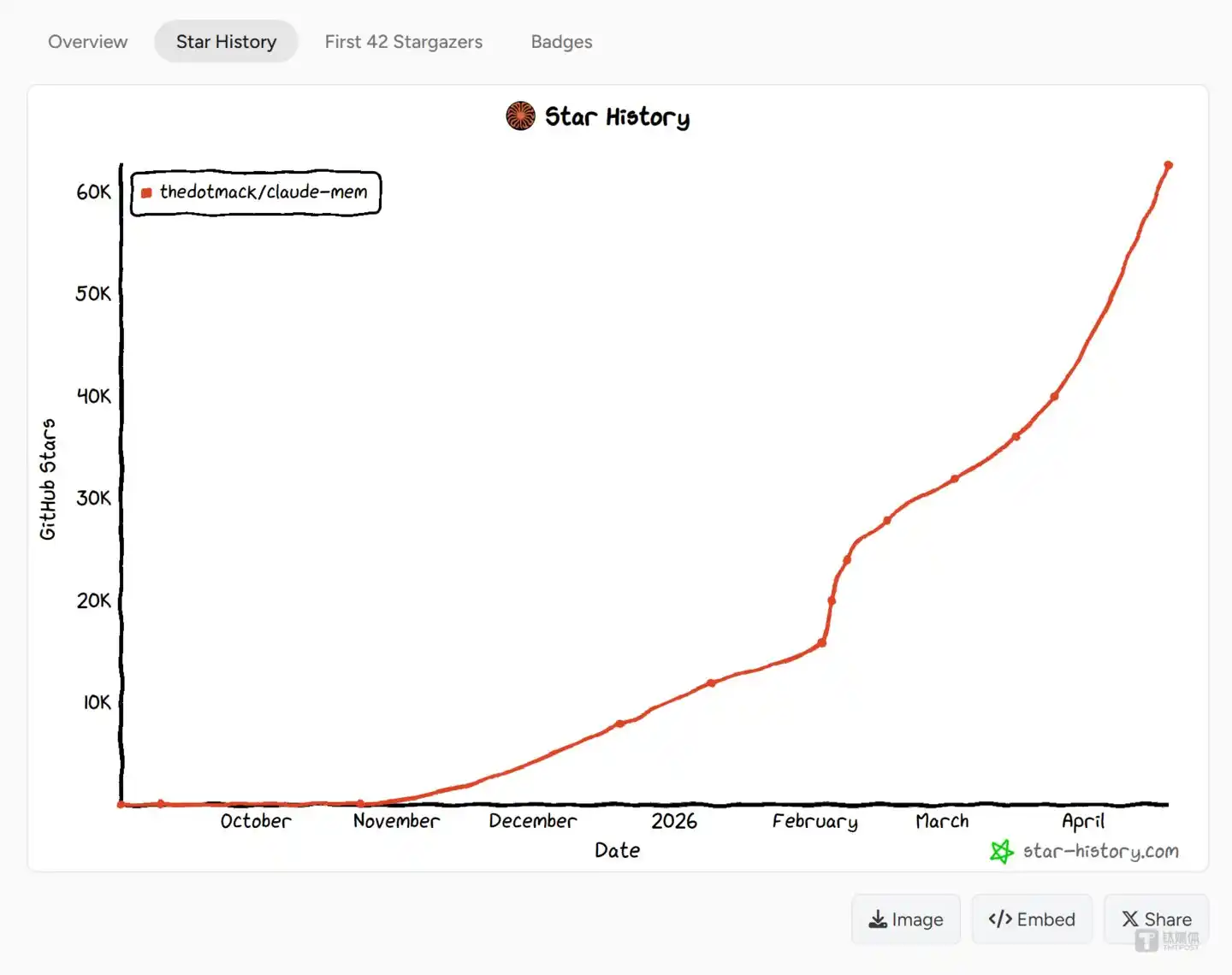
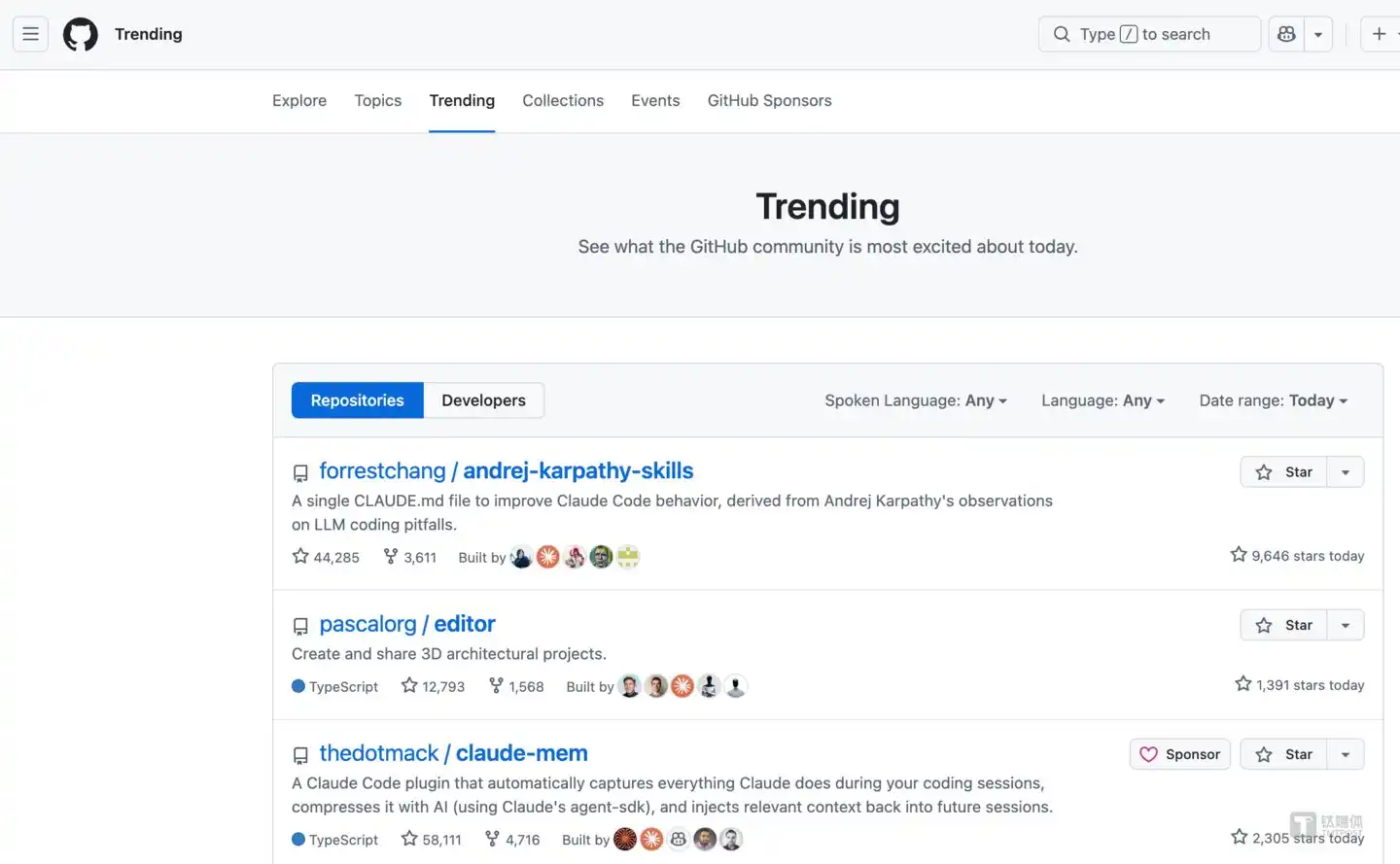
After simmering for months, it experienced a massive traffic explosion in April 2026. How explosive was the data? This open-source plugin amassed 62.6k stars, even setting astonishing records with a single-week surge of 9,012 stars and a single-day spike of 2,588 stars.
Is this merely a small tool to cure AI's "amnesia"?

Too naive.

In reality, it directly attaches a local memory bank to the physical terminal, brutally severing the revenue pipeline that big companies rely on from "repeated computation."

Subsequently, an underlying battle intertwined with API arbitrage, third-party bans, tech giant outages, and even cryptocurrency monetization, erupted completely.

The Costly "Context Tax" and the Amnesia Trap

To understand this geek rebellion, one must first puncture the industry's most hidden profit engine—the "context tax."

Current large AI models have a fatal flaw: they are stateless. Simply put, they "forget as soon as they turn around."

The moment you close the chat window, its memory is instantly wiped clean.

This creates a major problem: To make the AI understand what you're doing, every time you start a new session, you have to resend the entire history of conversation and thousands of lines of code as context to the cloud.

An analogy: You hire an expensive, photographic-memory, super-intelligent strategic consultant, but he "blacks out" every morning. You have to make him reread ten years of company financial reports every day just to ask him "what to do today."

The worst part? This consultant charges by the "total number of words read each day."

The massive cost generated by this repeated reading of historical data is the big companies' "context tax."

The data speaks for itself: Running projects in the official Claude Code terminal, over 48.3% of token transmission is purely wasted effort.

Every time you try to jog the AI's memory, you're疯狂 paying tax for无效 computation spinning its wheels.

Intercepting the "Digital Dam": Brutally Cutting 95% of无效 Token Consumption

Where there's exploitation, there's resistance.

Developer Alex Newman (@thedotmack) directly threw out Claude-mem.
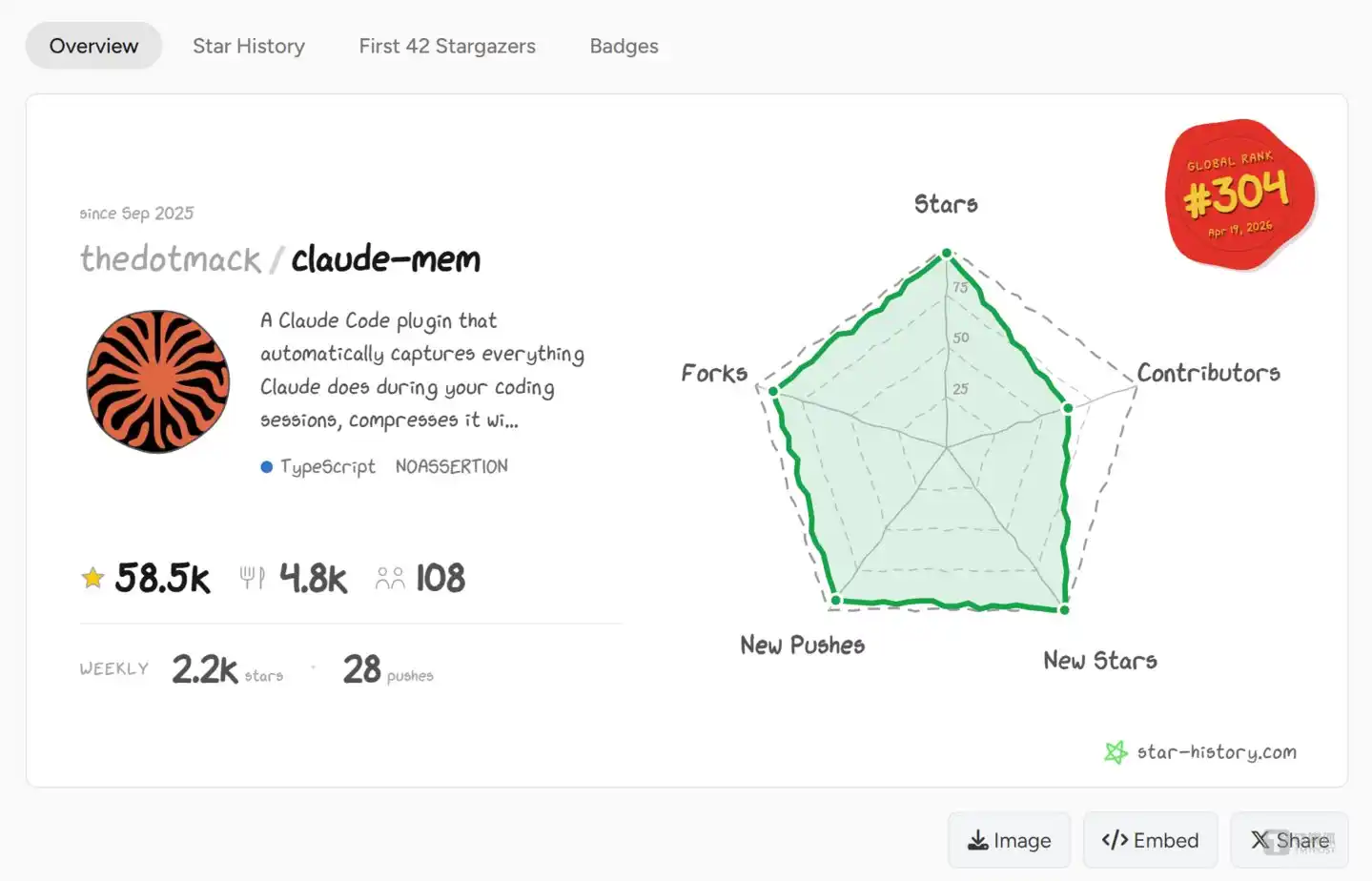
This thing is like a "digital dam" built illegally by the open-source community on the big tech's information highway.

It doesn't write code; it only does two things: "listens" and compresses.
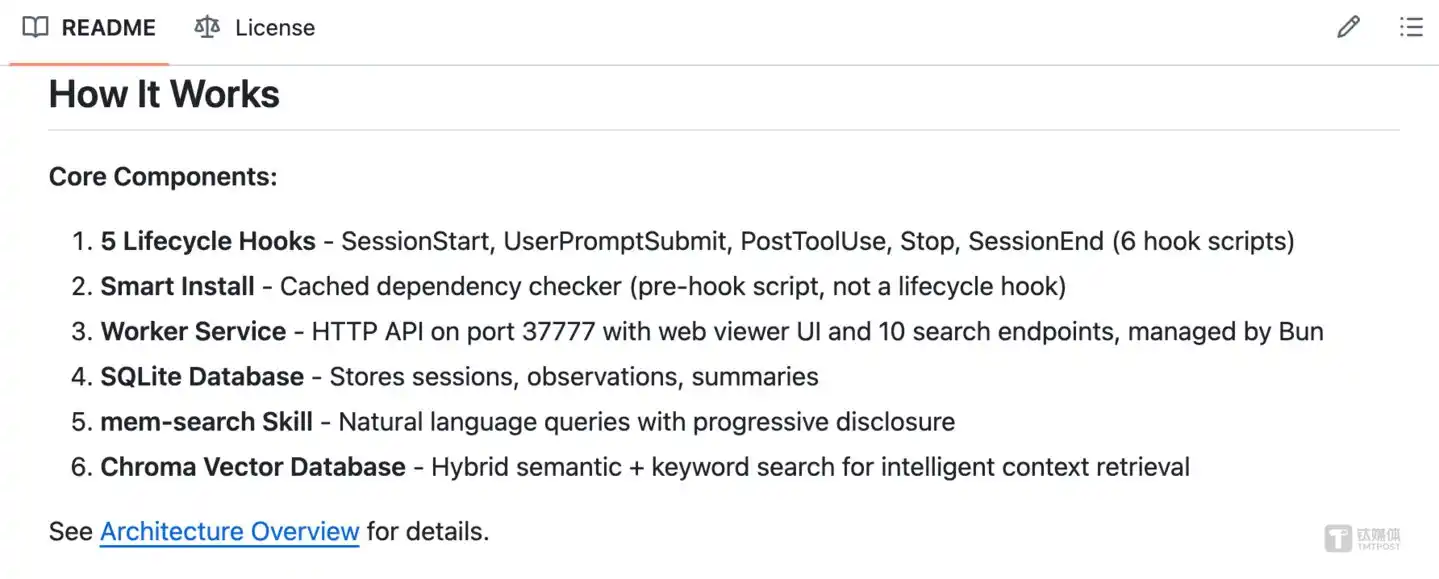
As you read files and type code locally, it quietly watches in the background. Then it automatically calls the large model to squeeze the水分 out of冗长 logs spanning thousands of tokens, compressing them into extremely short core memory summaries, and stuffing them into your local SQLite database.

Next time you start a new conversation? No need to暴力 transmit the full codebase. Retrieve on demand, feed precisely.

The effect is remarkable. Absolute operational data shows that with this method, token consumption for a single business session is slashed by up to 95%.

What does this mean? It directly guards the user's wallet zipper! It physically curbs the billing model where big companies吸血 by "repeatedly reading context." The computational cash-printing machine of big companies had its gears jammed.

API Arbitrage, OpenClaw Alliance, and the Big Tech Ban Hammer

What truly crossed the line for the giants was the underlying integration of Claude-mem with another open-source tool, which彻底击穿了 the vendors' billing fences.

According to Anthropic's pricing, high-tier users pay about $200 per month for "unlimited" computational buffet in the official terminal.

But if enterprises run similarly high-frequency automated tasks through the official API channel, the monthly bill easily surpasses $1000.

This huge computational cost difference gave rise to a third-party open-source AI gateway—OpenClaw.

OpenClaw is essentially a backend scheduler脱离 the official interface. It can connect to chat software like Telegram and Slack, driving the AI to perform 24/7 continuous retries and tool calls. However, high-frequency循环 operation originally极易 caused context collapse and massive computational overhead.

Thus, Claude-mem specifically released an OpenClaw bridge plugin. The technical link between the two formed an extremely hardcore computational threat: OpenClaw provides the infinite loop, official-interface-bypassing automated Agent execution environment; Claude-mem, by listening to the underlying data stream and compressing memory in real-time, directly erases the originally high cost of repeated token reading.
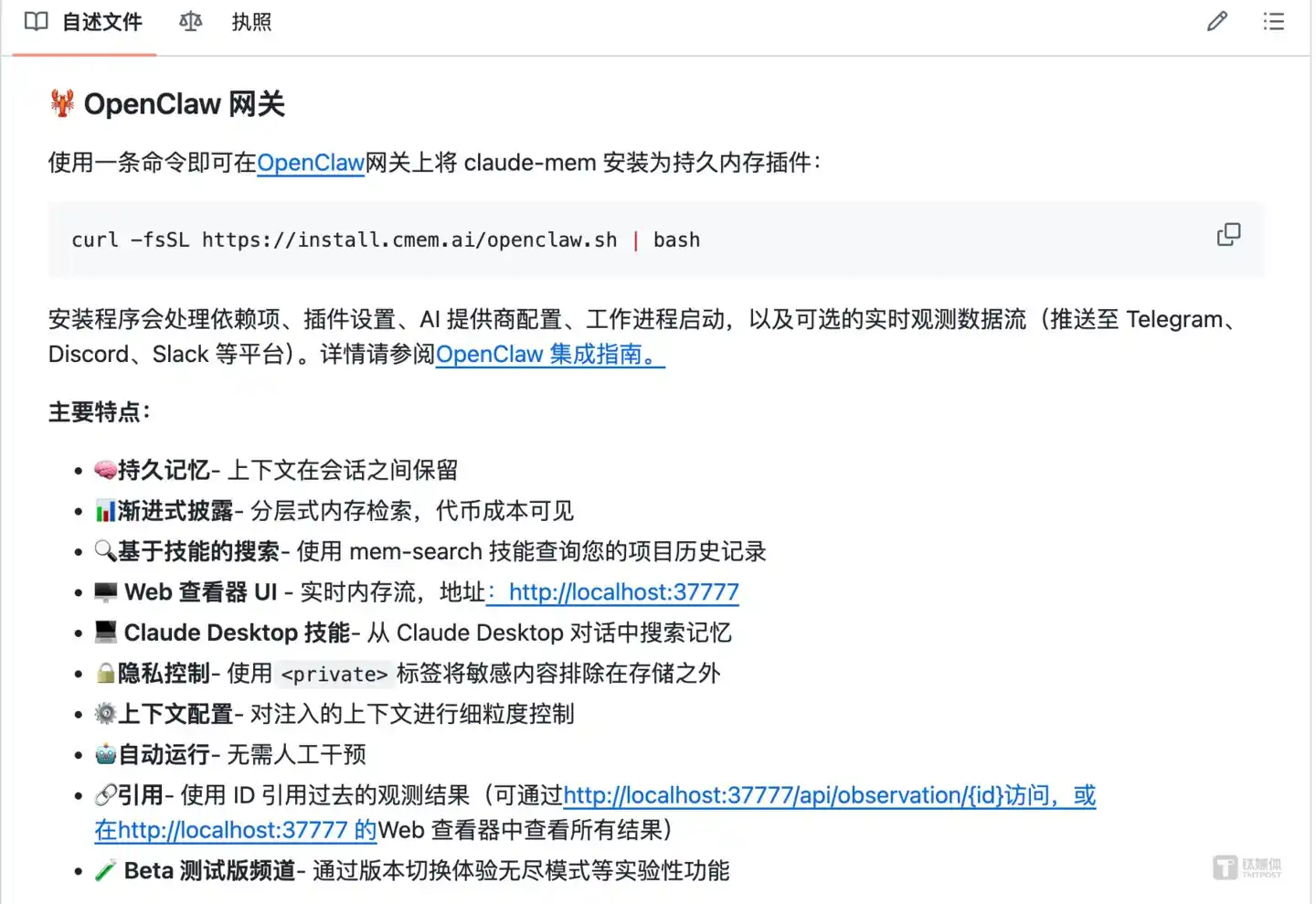
Countless developers used this golden combination,套上 the legal cloak of personal subscription accounts (OAuth). They used the low monthly subscription cost of $200 to drive high-frequency Agent clusters locally,肆无忌惮地抽干 the computational resources that should have cost thousands of dollars through enterprise API word-count billing.

Facing servers being疯狂薅秃 of redundancy, the giants finally couldn't sit still and drew the ban hammer.

In April 2026, Anthropic forcibly severed third-party OAuth authorization access channels.

The official stance was hard with no room for negotiation: Want to do automation? Go back to the enterprise channel and pay per token, word by word.

This被迫转向的昂贵过路费 was angrily called the "Claw Tax" by the tech community.

To make an example, Anthropic even briefly banned the personal main account of OpenClaw founder Peter Steinberger on a Friday.

Most戏剧性的是, right at the peak of this ban (April 15th), Anthropic's own backyard caught fire, suffering a rare system-level major outage on both its web端 and API interfaces.

The giant would rather pull the plug than protect its billing foundation.

Protocol Trap and the Magic of Tokenization

Amid the heavy siege by big companies, did Claude-mem, at the center of the storm, die?

No, it instead made an极其魔幻的资本跳跃.

Because the project's底层 used the extremely strict AGPL-3.0 open-source license, this "infectious" contract directly blocked the founder's path to making money by selling closed-source commercial software.

Traditional SaaS road blocked? The founder directly bypassed all VCs and threw the technical consensus into the cryptocurrency market.

They issued a crypto token on the highly liquid Solana mainnet—$CMEM—with a maximum supply of 1 billion coins.
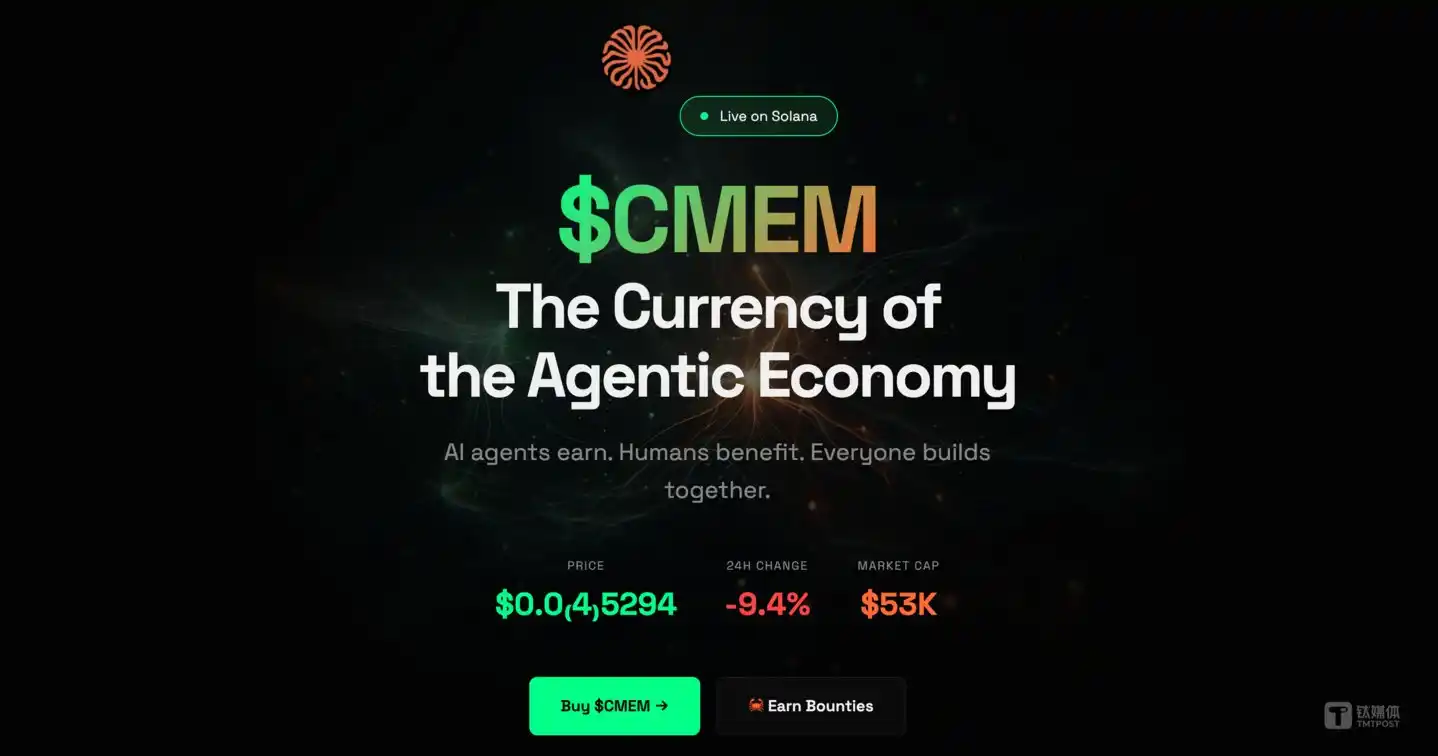
Officially, the token is meant to establish a decentralized AI memory trading market.

But frankly, in the current climate where the geek community is full of anger towards big tech's computational hegemony, this is a precise "consensus monetizer."

The massive star流量, the developers' resentment towards the giants, instantly turned into real monetary liquidity premium on the exchange.

Initially, the geeks just wanted to resist capital exploitation with free open-source; in the end, they completed their own利益闭环 in an even more magical way within the casino named cryptocurrency tokens.

The Bloody Endgame of Large Models' Second Half

Looking beyond this soaring growth curve, one can already smell the残酷的商业法则 of the second half:

First: Computational红利 is an illusion; saving money is the moat.

Don't迷信 million-token context windows. The smarter the AI, the deeper the computational budget it consumes. Those who truly make money in the future might not be the developers writing fancy applications, but the underlying "fixers" who can use "external dams" to help companies slash massive无效 token consumption.

Second: Memory sovereignty is a non-negotiable底线.

Entrusting the technical decisions and iteration history of core projects entirely to cloud API processing? That's like handing the company's throat to someone else. Whoever can solve localized, high-fidelity memory holds the key to the next generation of AI terminals.

Third: Beware of the "open-source dependency trap."

Never build your castle on a foundation where others have absolute control. Business models deeply reliant on exploiting loopholes in giant APIs can be completely wiped out at any moment by a change in the terms of service. When the platform霸主 decides to收网, you won't even find the address to appeal.

The underlying computational war of large language models has just begun. Deciding the ownership of the future computing platform are these deep-web ghosts隐匿 in the depths of the code, fighting desperately for pricing power and data sovereignty.(This article was first published on Titanium Media App, author | Silicon Valley Technews, editor | Linshen)

Disclaimer: This article is based on public reports and open-source community data integration and deduction. The involved cryptocurrency ($CMEM) carries extremely high volatility and risk of归零, and does not constitute any investment advice.


Trending Cryptos

Related Questions

QWhat is the core function of the Claude-mem open-source plugin, and why did it become so popular project on GitHub?

AClaude-mem is an open-source plugin that functions as a 'digital dam' by monitoring and compressing local data. It intercepts lengthy logs and code, uses a large model to create a compressed summary (core memory), and stores it in a local SQLite database. This drastically reduces the need to repeatedly send the same historical data (context) to the cloud AI for every new conversation, cutting token consumption by up to 95%. It became massively popular (gaining over 62.6k stars) because it directly challenges major AI companies' lucrative 'context tax' business model, saving users significant money on compute costs.

QWhat is the 'context tax' mentioned in the article, and how do AI companies profit from it?

AThe 'context tax' refers to the substantial fees users pay when AI large language models (LLMs), which are stateless and 'forget' everything after a session ends, are forced to re-read massive amounts of historical data (context) at the beginning of every new interaction. This repetitive transmission of tokens, often constituting over 48.3% of the total usage in official clients, generates immense, recurring revenue for AI companies like Anthropic based on their per-token pricing, even though it represents inefficient, redundant computation.

QHow did the combination of Claude-mem and OpenClaw create a 'compute arbitrage' threat, and how did Anthropic respond?

AThe combination created a powerful 'compute arbitrage' loop. OpenClaw was an open-source AI gateway that enabled high-frequency, automated agent tasks outside the official Anthropic interface. Claude-mem's bridge plugin for OpenClaw drastically reduced the token cost of these automated loops by compressing memory. This allowed users to leverage a much cheaper personal subscription plan (~$200/month for 'unlimited' usage) to run automated workloads that would normally cost over $1000/month via the expensive enterprise API. In response, Anthropic forcefully severed third-party OAuth access in April 2026, banning this practice and forcing automation users onto the costly enterprise billing model, an action the community dubbed the 'Claw Tax'.

QWhat unconventional method did the Claude-mem project use for monetization after its success, and why was this path chosen?

AInstead of pursuing a traditional SaaS monetization model, the Claude-mem project launched a cryptocurrency token called $CMEM on the Solana blockchain. This path was chosen because the project's strict AGPL-3.0 open-source license prevented the creators from building a profitable closed-source commercial software product. The token was pitched as a means to create a decentralized market for AI memory, but it effectively acted as a 'consensus cash-out' mechanism, converting the project's massive popularity and the community's frustration with big AI companies into real financial liquidity and speculation.

QAccording to the article, what are the three key lessons or brutal commercial rules for the next phase ('second half') of large language models?

AThe three key lessons for the LLM下半场 (second half) are: 1. Compute power红利 (dividend) is an illusion; cost-saving is the real moat. The future winners may not be developers who build flashy apps, but those who can create tools ('external dams') to slash massive无效 (invalid) token consumption for enterprises. 2. Memory sovereignty is a non-negotiable底线 (bottom line). Companies must not entrust their core project history and technical decisions solely to cloud APIs. Control over local, high-fidelity memory is key to the next-generation AI terminal. 3. Beware of the 'open-source dependency trap'. Building a business deeply reliant on exploiting loopholes in a giant's API is extremely risky, as the platform owner can change the rules at any time and wipe out the entire model, leaving developers with no recourse.

Related Reads

Only 153 Venture Capital Firms Invested in July: Is the Crypto VC Industry Experiencing a 'Mass Extinction'?

In July 2026, only 153 unique venture capital firms participated in disclosed crypto funding rounds, marking the lowest monthly count since November 2020. This figure represents an 87% decline from the peak of 1,177 firms in 2022. Overall, the first seven months of 2026 saw crypto projects raise approximately $11.78 billion across 481 rounds. This crypto VC contraction contrasts sharply with the broader venture capital landscape, where global VC investment reached a record $560.4 billion in H1 2026, heavily fueled by major AI company financings. This shift in capital allocation has drawn funds away from the crypto sector. Within crypto, funding is highly concentrated. Trading platforms, prediction markets, and payment sectors absorbed 53% of the total capital. While early-stage deals remain frequent, the largest sums flow to a few late-stage rounds and mergers & acquisitions, which surged to $7.23 billion in Q2 2026. The market is consolidating around top funds like a16z crypto and Dragonfly, which successfully raised new multi-billion dollar funds, while many smaller firms have retreated. Analysts describe this as a "great extinction" for crypto VCs, where capital is becoming more selective, favoring proven business models and assets over early-stage speculation. This raises the bar for project quality, funding efficiency, and viable exit paths.

marsbit16m ago

Only 153 Venture Capital Firms Invested in July: Is the Crypto VC Industry Experiencing a 'Mass Extinction'?

marsbit16m ago

Strategy's Loss in the Second Quarter Reaches $8.22 Billion Amid Bitcoin Decline

Strategy, the largest corporate holder of Bitcoin, reported a net loss of $8.22 billion for the second quarter. This loss was primarily driven by an $8.32 billion unrealized loss on its Bitcoin holdings due to a decline in the asset's price during the period. Despite these paper losses, the company increased its Bitcoin holdings to 843,775 BTC, a 25% growth since the start of the year. As part of a new monetization strategy, Strategy sold approximately $218.4 million worth of Bitcoin, mainly to fund dividends for preferred shareholders, with $216 million of that sold after Q2 ended. The company also built a $3.75 billion cash reserve, which it claims is sufficient to cover over two years of dividend and interest payments, aiming to insulate itself from Bitcoin's volatility while meeting obligations. Following the earnings release, Strategy's stock (MSTR) rose 4.7% in regular trading but corrected slightly after-hours. This pattern reflects how the company's accounting results are heavily tied to Bitcoin's price swings, even as its long-term strategy remains unchanged. The report indicates that Strategy is maintaining its core strategy of accumulating Bitcoin while building a financial buffer. This quarterly loss follows a recognizable pattern, with the company posting significant unrealized losses in previous quarters (e.g., $12.4 billion in Q4 2025 and ~$12.5 billion in Q1 2026) due to fair-value accounting. A key technical shift is its new monetization program, which introduces periodic selling pressure on the market, transitioning Strategy from a pure accumulator to a participant that occasionally adds supply. A critical question remains: how long can the cash reserve cover dividend obligations if a Bitcoin price downturn persists beyond two years?

cryptonews.ru36m ago

Strategy's Loss in the Second Quarter Reaches $8.22 Billion Amid Bitcoin Decline

cryptonews.ru36m ago

Will Terrorist Durov Ban Russian Officials?

Telegram founder Pavel Durov publicly reacted to being labeled a "terrorist" by Russian authorities, stating the designation came after he refused demands for mass surveillance and censorship on the platform. In a Telegram post, he highlighted that this status formally bans him from "publishing information online." Durov concluded with a statement widely circulated: Russian officials "clearly don't understand who can ban whom on the internet." This remark suggests Durov could potentially restrict official Russian government and officials' channels on Telegram, which continue to operate on the platform despite its formal blocking in Russia. The situation parallels previous, slow-moving state directives, like switching officials to domestic cars, contrasted with the current push to migrate all government communication to the Russian-made messenger MAX by 2030. However, reports indicate many officials still use Telegram via workarounds, fearing surveillance on MAX, while alternatives like BiP and KakaoTalk recently became inaccessible in Russia without a VPN. Durov has not specified any immediate actions against state channels. His statement is an initial response, with further developments depending on the authorities' reaction. The dynamic differs from 2020 when Russian regulators lifted a block on Telegram; now, Durov implies control from within the platform itself over the official accounts that persisted through that earlier blockade.

cryptonews.ru36m ago

Will Terrorist Durov Ban Russian Officials?

cryptonews.ru36m ago

DeepSeek V4 Official Version Arrives, New Capabilities Emerge, Value-for-Money King Enters the Fray

On July 31st, DeepSeek officially launched the public API beta for its DeepSeek-V4-Flash model. A key highlight is its performance on multiple Agent benchmark tests, reportedly nearing or even surpassing the level of the V4-Pro preview version from three months ago. Notably, the Flash model achieves this with significantly smaller scale (130B active parameters vs. Pro's 490B), suggesting that post-training optimization and data quality may be as crucial as raw model size. DeepSeek emphasized that the V4-Flash-0731 uses the same model architecture and size as its preview version, with improvements attributed solely to "re-trained post-training." The update also marks the official debut of DeepSeek's self-developed Agent framework, "Harness." The move signals DeepSeek's strategic push to position its cost-effective Flash model as a competitive base for Agent applications—scenarios requiring autonomous planning, tool usage, and complex task execution—where inference speed and cost are critical. By natively supporting OpenAI's Responses API format and adapting for code-generation scenarios, DeepSeek aims not just to be a cheaper alternative but to establish its own ecosystem in the Agent era. This release follows DeepSeek's record-breaking ~$50 billion fundraising round roughly two months prior, underscoring market confidence in its technology and commercialization prospects. The company is reportedly preparing for another funding round at a valuation of approximately $71 billion. The Flash model's advancement represents a step in fulfilling the high expectations that come with this valuation, setting the stage for the impending release of the V4-Pro official version and intensifying competition in the global Agent landscape.

marsbit41m ago

DeepSeek V4 Official Version Arrives, New Capabilities Emerge, Value-for-Money King Enters the Fray

marsbit41m ago

Trading

Spot

Hot Articles

Discussions

Welcome to the HTX Community. Here, you can stay informed about the latest platform developments and gain access to professional market insights. Users' opinions on the price of AI (AI) are presented below.

活动图片