Missed the AI Stock Surge, What to Do Now?

marsbitPublished on 2026-06-03Last updated on 2026-06-03

Abstract

The article addresses investor anxiety over having missed the explosive, multi-year rally in AI stocks (e.g., NVIDIA, Micron, SK Hynix) across global markets. It notes that despite the broad bull run, data shows most retail investors lost money in 2025, and even major institutions like Bridgewater and Berkshire Hathaway significantly reduced holdings or held excessive cash, thereby missing substantial gains. The piece highlights common pitfalls: panic selling during corrections, misdirected investments into underperforming AI verticals, and premature profit-taking. It argues that AI represents a foundational, long-term technological shift comparable to electricity or the internet, implying the opportunity is not over. Citing figures like Jack Ma and Ma Huateng, the article suggests the AI wave is just beginning, with vast potential across the entire产业链, from infrastructure to applications. The conclusion advises against chasing trends blindly. Instead, it recommends a disciplined, long-term approach—focusing on one's own strengths within the expansive AI ecosystem to prepare for the next structural opportunities.

Author: Think AI, Aaron

The surge in artificial intelligence stocks has been going on for three and a half years now, with no signs of stopping;

Those who started predicting a US stock market crash and an AI bubble last year have fallen into deep thought.

South Korea's stock index has triggered circuit breakers 19 times this year. The main board index has quadrupled since last year. SK Hynix is up 260% year-to-date, either hitting new highs or on the way to new highs;

US memory giant Micron broke the trillion-dollar market cap, joining the top 10 US companies by market value, with gains of over 200% year-to-date and more than 10x in a year;

In Japan, SoftBank, which previously invested in Alibaba, is seeing its stock price rise continuously due to its heavy bets on AI, and it has already become Japan's highest-valued company.

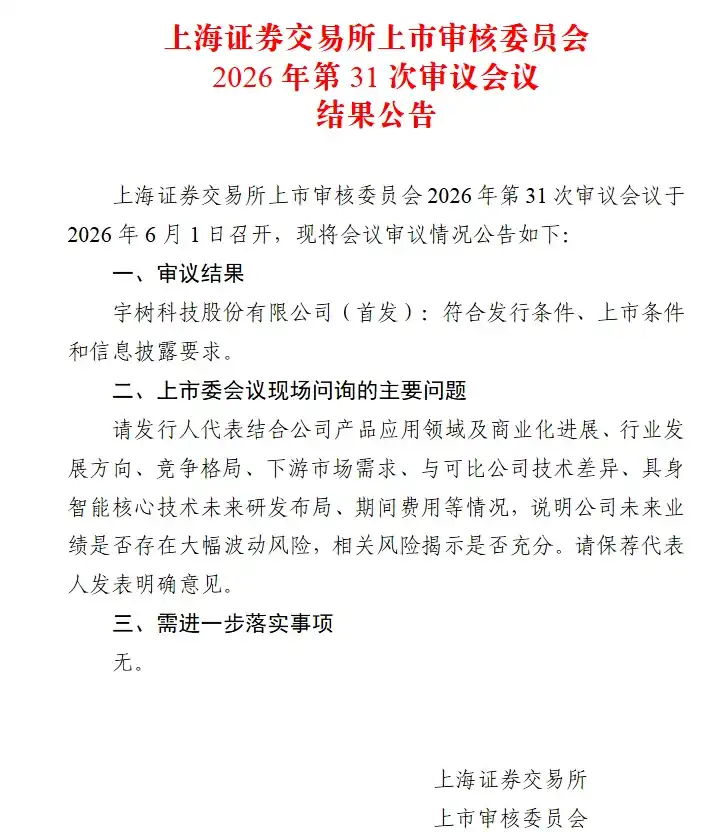
Domestically, Yushu and ChangXin have already passed listing reviews. ChangXin's market cap starts at 1.5-2 trillion yuan, directly placing it in the top 5 of A-shares;
Meanwhile, AI companies like Nvidia and Google are always rising amidst fear; there's even news that housing prices in Shenzhen and other Chinese cities are warming up, as executives from semiconductor and AI companies, buoyed by超预期收益, are starting a batch property-buying spree.

But there is another scene: those who took out loans to buy gold at the beginning of the year are still underwater, domestic consumer stocks continue to slide quietly, and many netizens say they have completely missed this AI bull market, feeling anxious every day. What should they do now?

Profits Are Always for the Minority

First, look at the data. In 2025, only about 18.9% of A-share retail investors made a profit, while a staggering 81.1% incurred losses, with an average loss of about 21,000 yuan. For small散户 with less than 100,000 yuan, the loss ratio was close to 98.7%.

This happened in 2025 when the大盘指数 closed up nearly 20%, the STAR 50 index saw a maximum intra-year gain of 80%, and the market overall rose last year. Wind data shows 500 stocks doubled in 2025, with over 120 rising more than threefold.

When the大盘 corrected from January to April 2026, faith in AI collapsed, and institutions cut their losses at the lows.

During the decline, AI stocks saw a wave of减持. Ingenic's (optical module) controlling shareholder and executives减持 4.914 billion yuan, after which the stock price rose another 35%; Kunlun Tech's major shareholder Li Qiong planned to减持 35.86 million shares. After the减持 announcement, the stock price fell 20%, but then rebounded 40% within a month, with some减持 shareholders "selling at the bottom."

A专题报告 by Securities Times on the AI sector减持 pointed out that in the AI computing power板块 in 2026, potential收益损失 caused by institutions减持ing too early exceeded 200 billion yuan (calculated based on average gains post-减持).

Meanwhile, institutions that firmly held onto AI often bet on the wrong方向.

At the end of 2025, institutions bet on vertical applications like AI education and AI healthcare. These vertical applications failed to爆发, and in 2026, these板块平均跌幅 over 20%, while the computing power板块 rose over 50%;

Looking abroad, missed opportunities and premature selling are everywhere.

The globally renowned fund Bridgewater大幅减持ed Nvidia (nearly two-thirds), Alphabet (over half), Amazon (9.6%), and Microsoft (35%) in Q3 2025. Subsequently, from Q4 2025 to Q1 2026, these stocks平均涨幅 over 80%;

There are even many short sellers. Short interest in the US stock market recently hit its highest level since 2012.
Data shows hedge fund total leverage has risen to about 293%. Short exposure and the Days-to-Cover indicator for the S&P 500 both hit records.

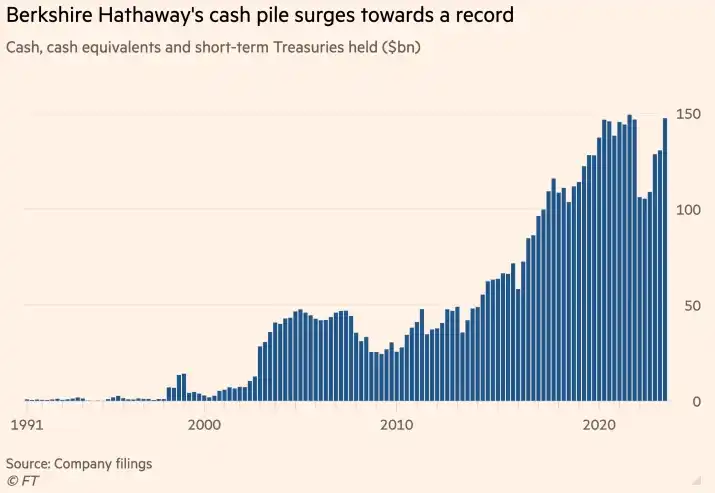
Even the mighty Warren Buffett started减仓 early. His cash reserves reached a record $397.38 billion in Q1 2026, completely missing the AI行情 and the surge in US tech stocks.

Multiple Waves Rising Simultaneously

But it's undeniable that AI remains the most certain and revolutionary opportunity in the current market.

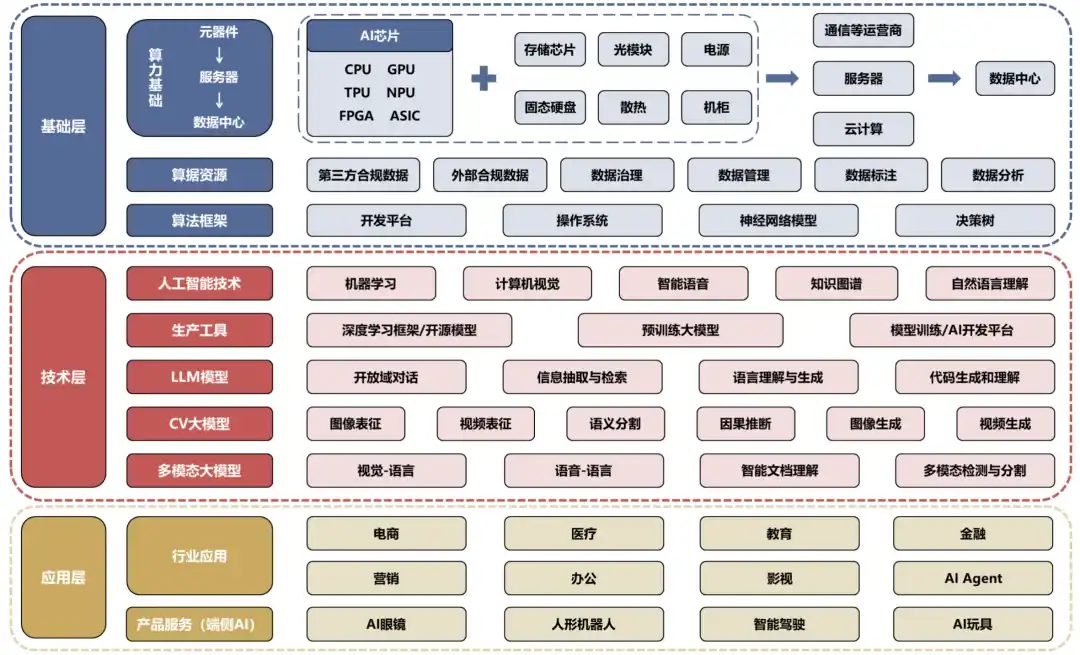
AI is not a short-term concept, but a底层基础设施革命 akin to electricity and the internet. Historical experience shows that many who missed the first wave of tech stocks found opportunities in the application layer or the next round of infrastructure upgrades.

China also has unique空间 in AI self-research, application落地, and补短板ing the industrial chain.
When we feel迷茫 and anxious, perhaps we should look at how the best in the industry see it. This might give us some guidance and启示.

Ma Huateng of Tencent, long considered lagging in the AI era, has been catching up fiercely since last year. His remarks at this year's May shareholders' meeting sparked heated讨论.

Regarding AI, he said, "A year ago, we thought we had boarded the ship, but later found it was leaking. Now it feels like we're standing on it, but can't sit down yet. We still hope the ship can go faster."

Regarding "how to proceed next," he pointed out, "We can't just跨过去 and抢 others'地盘 because we see them doing it there. We've抢ed before but mostly failed later."

Indeed, the AI era offers vast opportunities. Combining one's own strengths and characteristics to find the most suitable opportunity is the best choice.

Now retired from the front lines but having had deep洞见 into AI 10 years ago, Jack Ma said AI is a once-in-centuries, industrial revolution-level opportunity comparable to the invention of electricity. The AI era has just begun, and now is the time to布局; there's no such thing as missing out;

From computing power infrastructure and large model platforms to industry-specific AI applications, the entire产业链持续释放s long-term investment opportunities.

From this perspective, the entire产业链 offers无限 opportunities. Whether in work, investment, or entrepreneurship, digging deep along the产业链, coupled with段永平's long-termism and本分思想, will eventually yield results.

Large models are now smart enough, but only Claude has率先 achieved profitability in the coding agent赛道. AI+ is still on the way.

The next round of structural opportunities will definitely be留给 those who are well-prepared and maintain a stable心态.


Trending Cryptos

Related Questions

QAccording to the article, what was the profitability situation for retail investors in the A-share market in 2025?

AAccording to the article, in 2025, the profit ratio for retail investors in the A-share market was only about 18.9%, with a loss ratio as high as 81.1%. The average loss per person was about 21,000 yuan. For small retail investors with less than 100,000 yuan, the loss ratio was close to 98.7%.

QWhat is the core argument made about the nature of AI's opportunity compared to previous technological shifts?

AThe core argument is that AI is not a short-term concept but a foundational infrastructure revolution comparable to electricity or the internet. Historical experience suggests that those who missed the first wave of a technology can often find opportunities in the application layer or the next round of infrastructure upgrades.

QWhat key point did Pony Ma (Ma Huateng) make about how companies should approach the AI era?

APony Ma emphasized that companies should not simply jump into areas where others are already active or try to take over others' territory. He noted past failures from such attempts. The best approach is to combine one's own strengths and characteristics to find the most suitable opportunities within the vast AI landscape.

QHow did Jack Ma (Ma Yun) characterize the AI opportunity and the current timing for involvement?

AJack Ma characterized AI as a once-in-centuries, industrial revolution-level opportunity comparable to the invention of electricity. He stated that the AI era has just begun, making the present the right time for布局 (layout/positioning), and therefore the concept of 'having missed it' does not exist.

QWhat contrasting outcomes are presented regarding institutional investors' actions in the AI sector during market volatility?

AThe article presents two contrasting outcomes for institutional investors. First, some institutions sold ('cut meat') at lows during the early 2026 market correction, missing subsequent rebounds (e.g., stocks rebounding 35%-40% after减持/sell-offs). Second, other institutions that held firm nevertheless押错了方向/bet on the wrong direction, such as focusing on AI vertical applications (education, healthcare) which underperformed compared to the算力/computing power板块/sector.

Related Reads

After Three Consecutive Quarters of Decline, Can the Crypto Market Find a Window for Stabilization in Q3?

The cryptocurrency market has just concluded its worst-performing quarter since 2022, with total capitalization dropping 12.6% to $2.1 trillion. All core metrics indicate capital is leaving the sector, not just rotating within it. Bitcoin fell 14.2% and Ethereum dropped 25.4% in Q2, breaking their previous correlation with US tech stocks. A key driver is the reversal in US spot Bitcoin ETF flows, which saw a net outflow of approximately $4.67 billion in Q2, including a record monthly outflow near $4.5 billion in June. While recent data suggests long-term holders are accumulating again, sustained ETF outflows mean continued selling pressure. Market focus is now singularly on the Federal Reserve. The upcoming July FOMC meeting is seen as the most critical event for Q3. A dovish signal could support Bitcoin reclaiming a $68,000-$84,000 range, while a hawkish stance might establish a new trading band around $50,000-$56,000. Additionally, regulatory uncertainty persists, with the progress of the crucial *CLARITY Act* stalling in the Senate, reducing its perceived 2026 passage probability to 40-45%. Despite the broad downturn, a few sectors showed growth. Prediction markets saw nominal volume surge 48.7% year-over-year to $113.8 billion, and tokenized collectibles transaction volume rose 143% quarterly to $1.4 billion. The Real-World Asset (RWA) tokenization sector also continued steady growth, now representing ~$28.1 billion in on-chain value. The market's foundation for an extreme crash appears limited, with Bitcoin price hovering near its 200-week moving average. However, the trading paradigm has shifted from narrative-driven speculation to decisions based on price action, policy developments, and interest rate expectations, making a broad sentiment-driven rally unlikely in the near term.

marsbit7h ago

After Three Consecutive Quarters of Decline, Can the Crypto Market Find a Window for Stabilization in Q3?

marsbit7h ago

BIT Trading Moment: BTC Still Suppressed by Weekly 200 EMA, Rejection May Restart Decline; Storage and Semiconductors that Surged Last Night Begin Falling in Evening Trading

**Crypto & Stock Market Wrap: Bitcoin Tests Resistance, Stocks Retreat After AI Surge** Bitcoin consolidates around $66,000, facing key resistance near $68,000—an area seen as a major psychological and technical hurdle where previous rallies have failed. Analysts note the cryptocurrency is caught between its 200-week moving average (~$63,333) and 200-week EMA (~$68,328). A clear break above $68k is needed to signal a stronger bullish trend, while a rejection could lead to a retest of $63k support. Market sentiment remains cautious, with low futures open interest pointing to a low-liquidity rebound rather than a full bull market. Bitcoin spot ETFs saw another $203 million inflow. US stock futures pointed lower after a strong Tuesday session led by a massive rebound in semiconductors and memory stocks. The rally was fueled by renewed optimism about AI-driven hardware demand, with Micron, SanDisk, and SK Hynix surging. However, those gains reversed in pre-market trading. Super Micro Computer (SMCI) soared over 20% after hours on strong guidance and a record backlog. Other standouts included Rocket Lab and nuclear energy plays Oklo and X-Energy. Rising oil prices (Brent above $91) and climbing Treasury yields (10-year near 4.64%), however, are reigniting inflation concerns and acting as a headwind for equities. In Asia, markets were mixed. South Korea's KOSPI pared early gains to close slightly higher as semiconductor stocks like SK Hynix gave back initial surges. Japan's Nikkei edged lower as the yen hit a fresh 38-year low against the dollar, raising fears of potential market intervention. Key events to watch include the Samsung Galaxy launch, AMD's AI event, and a slew of major tech earnings from Alphabet, Tesla, and IBM after the close on Wednesday, followed by the ECB meeting and Intel's earnings on Thursday.

marsbit7h ago

BIT Trading Moment: BTC Still Suppressed by Weekly 200 EMA, Rejection May Restart Decline; Storage and Semiconductors that Surged Last Night Begin Falling in Evening Trading

marsbit7h ago

Former CFTC Chairman, Circle President Tarbert: Preaching Long-Termism While Cashing Out $30 Million Himself

Former CFTC Chairman and Circle President Heath Tarbert has consistently advocated for a long-term vision in public, urging patience from investors as Circle’s stock price has fallen significantly from its peak. However, it has been revealed that since Circle’s IPO, Tarbert has continuously sold his CRCL shares through pre-arranged trading plans, cashing out approximately $30 million, without making any public market purchases. This contrast between his public messaging and personal actions has drawn criticism. Tarbert joined Circle in July 2023 as Chief Legal Officer, leveraging his regulatory experience to help guide the company through its IPO and expansion. Despite promoting stablecoins as long-term infrastructure, he established a 10b5-1 trading plan just before Circle went public, leading to substantial stock sales over the following year. In March 2026, he initiated another plan to sell more shares. His career trajectory highlights a pattern of moving between high-level regulatory roles and influential positions in the financial sector. After resigning as CFTC Chairman in early 2021, he joined Citadel Securities as Chief Legal Officer just 27 days later, during a period of intense regulatory scrutiny for the firm. He later joined Circle, aiding its efforts to navigate regulatory challenges for its public listing. While Tarbert's expertise in policy and compliance is valuable to companies like Circle, his actions—advocating long-term confidence while personally divesting—raise questions about the alignment between his public statements and his private financial decisions, leaving investors who followed his advice to bear the market risks.

marsbit7h ago

Former CFTC Chairman, Circle President Tarbert: Preaching Long-Termism While Cashing Out $30 Million Himself

marsbit7h ago

Gate Research Institute: The 'Wall Street-ization' Wave of Crypto Financial Products – Competition or Integration?

The article titled "Gate Research Institute: Are Crypto Financial Products Sparking a 'Wall Street' Wave—Competition or Convergence?" explores the evolving relationship between the crypto ecosystem and traditional finance (TradFi). The piece begins by reflecting on Bitcoin's original 2009 vision of decentralization, disintermediation, and moving away from banks. It then contrasts this with the 2024 landscape, where key crypto assets like Bitcoin are increasingly held through Wall Street products like ETFs issued by giants like BlackRock. The article questions whether this signifies that TradFi is systematically taking over the rights to issue, price, custody, and distribute crypto financial assets. The core argument is that this is not a zero-sum takeover but rather a bidirectional convergence where each side addresses the other's weaknesses. Crypto offers 24/7 global markets, programmable settlement, and open access but lacks compliant channels, institutional-grade custody, deep fiat liquidity, and mainstream distribution. TradFi possesses these but is constrained by legacy systems, limited operating hours, and slow settlement. Two primary convergence paths are highlighted: * **Path A (CEX to TradFi):** Exemplified by Gate, which has progressed from offering tokenized stocks and CFDs to providing direct, real stock trading (US, Hong Kong, South Korea) within its platform, using USDT. * **Path B (TradFi to Crypto):** Exemplified by Robinhood, which has integrated crypto trading, acquired exchanges like Bitstamp, and is moving traditional assets like stocks onto the blockchain via tokenization and its own Layer 2. Both paths are ultimately competing to become the next-generation, unified financial account—a "super account" where users can seamlessly trade cryptocurrencies, stocks, ETFs, RWA (Real World Assets), and tokenized treasury products in one interface. The growth of RWA and tokenized treasuries (e.g., BlackRock's BUIDL) is presented as the asset-layer fusion, providing stable, yield-bearing assets on-chain and acting as a bridge between the two worlds. In conclusion, the "Wall Street-ization" of crypto is framed as a mutual transformation. Decentralized ideals persist in the protocol layer, while at the application layer, a more efficient, global, and accessible unified capital market is emerging from this convergence. The future competition lies not between crypto exchanges and stockbrokers, but between platforms vying to offer the most comprehensive asset coverage, liquidity, and user experience within a single account.

marsbit7h ago

Gate Research Institute: The 'Wall Street-ization' Wave of Crypto Financial Products – Competition or Integration?

marsbit7h ago

Trading

Spot

Hot Articles

Discussions

Welcome to the HTX Community. Here, you can stay informed about the latest platform developments and gain access to professional market insights. Users' opinions on the price of AI (AI) are presented below.

活动图片














