$CATE, one of the most talked-about meme coins on Solana lately, skyrocketed from a market cap of just over $2,000 to over $80 million in a little over a week, only to crash 65% in one minute early yesterday morning:
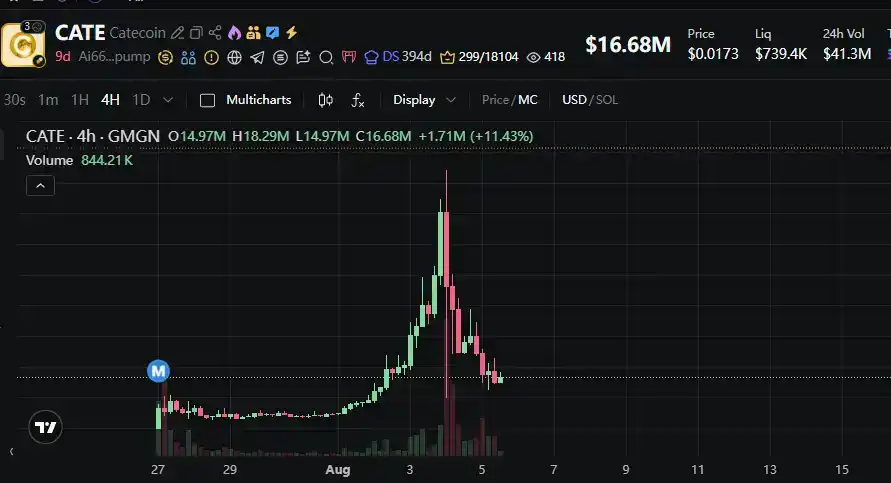
For seasoned on-chain veterans, such a price movement in a meme coin isn't surprising. However, witnessing it happen to a high-profile token like this is quite dramatic and serves as another stark reminder of some harsh realities in the current market.
Harsh Realities
Let's start by examining why this coin crashed. The community has identified several potential reasons:
- $CATE's X (Twitter) account was suddenly suspended.
- FOMO experienced downtime, preventing users from trading during the outage.
The account suspension is self-explanatory, but why would FOMO's downtime cause such a crash?
Because, much like $ANSEM rode on Ansem's clout and explicit support, $CATE's rise was largely fueled by the influence and open backing of "mini-Ansem" Poorgoat.
Poorgoat, a member of the FOMO Hall of Fame (recognized by FOMO for achieving significant profits on the platform) and currently topping FOMO's 7-day profit leaderboard while ranking 2nd on the 30-day board, entered $CATE at an average market cap of around $1.4 million, with a total investment of approximately $44,700. At the coin's peak, this single trade alone netted him over $2 million in profit.
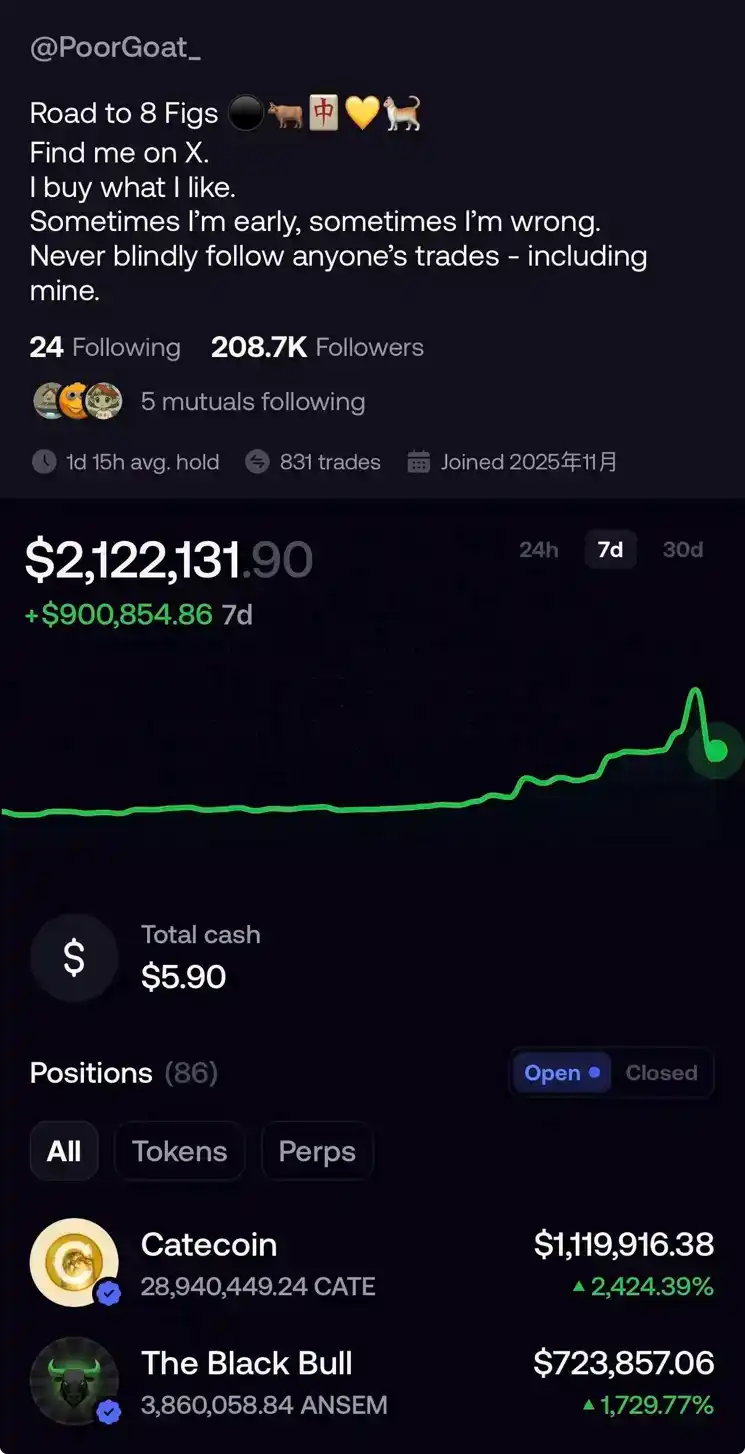
He gained fame by holding onto a $30,000 $ANSEM airdrop, which ballooned to nearly $1.75 million at its peak. Now, he has amassed over 208,000 followers on FOMO.
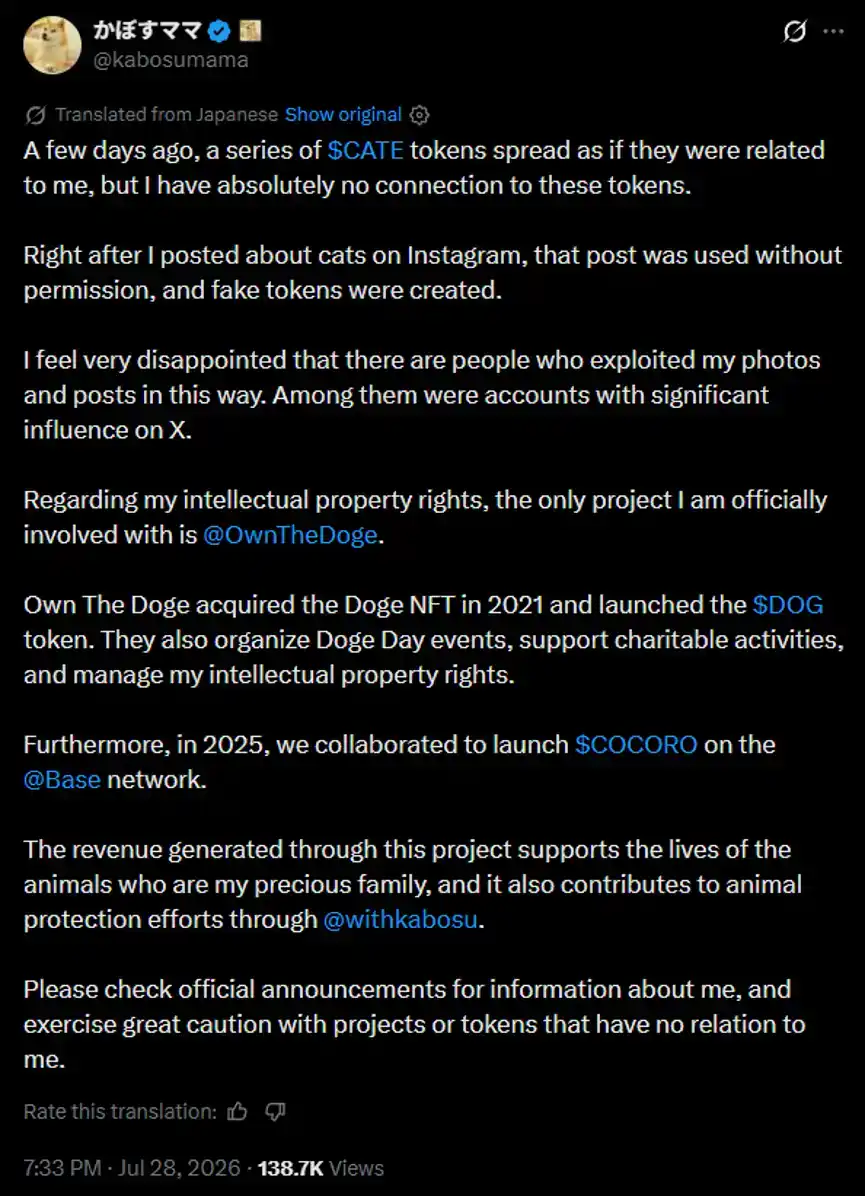
Given this context, it becomes clear why FOMO's downtime is seen as a major catalyst for the crash—fundamentally, the coin's narrative was nothing new, positioning itself as the "cat sister" to Doge. In fact, Doge's creator even publicly denied any association with the token:
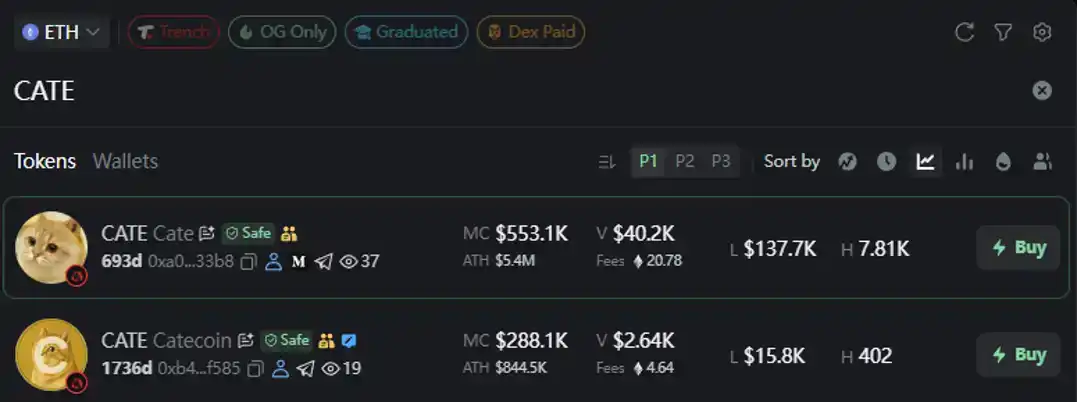
Moreover, a token with the same narrative has existed on the Ethereum mainnet for quite some time, showing no signs of revival:
Adding to the controversy surrounding this crash is the fact that Poorgoat, FOMO's current top influencer, effectively became the Chief Token Officer (CTO) for this coin, publishing a lengthy post on X arguing that the token's growth was "organic":
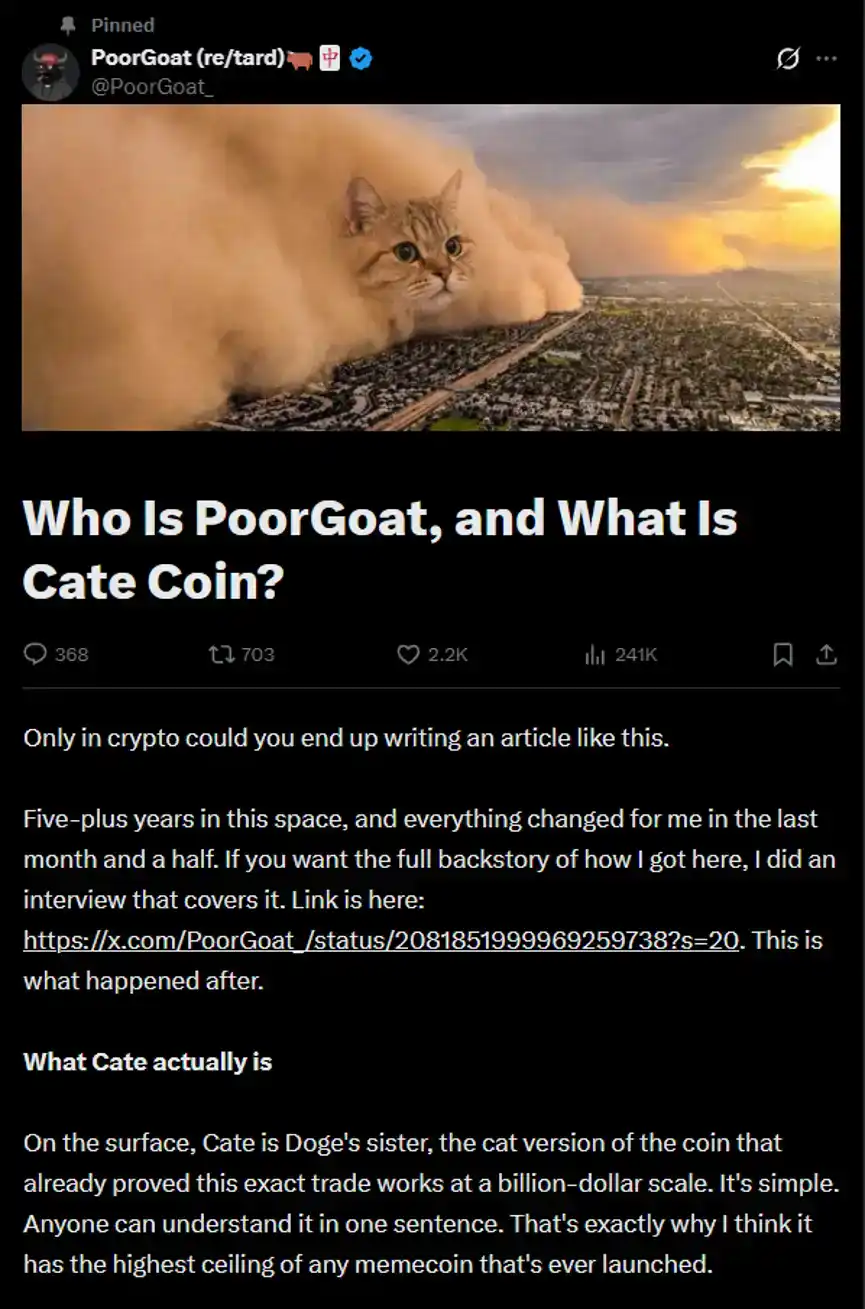
Yet, this supposedly "organic" coin, still boasting over 60,000 holder addresses, plunged more than 60% in one minute due to selling pressure of less than $1.5 million:

This brings us to the harsh reality we mentioned. In the current market, the ceiling for any token that follows the traditional "organic" community-building path (excluding past successes like $SPX, $MOG that left a strong impression) might be limited to around $17 million, similar to $neet's current market cap. We won't delve too deep into why $neet is considered organic; its price action over the past 460+ days speaks for itself:

Next, let's discuss why FOMO is facing such significant backlash this time.
Fame Brings Scrutiny
Earlier this year, when the 6000x-in-a-week "Nietzsche Penguin" $PENGUIN propelled trader logjam (now with ~138k followers on FOMO) to fame, the community largely admired and celebrated his success. At that time, logjam profited around $564,000 from $PENGUIN, and no one doubted his achievement; it was met with recognition and well-wishes.
However, controversies began to swirl around FOMO following the rise of $UNC, the pioneer of the "airdrop wealth creation" playbook later used by $ANSEM, where airdrops were distributed within a small circle to pump the price. Many recipients of these airdrops were active KOLs on FOMO. Their resulting profits, prominently displayed on FOMO's leaderboards (dominating weekly and monthly charts), essentially turned them into walking billboards for these airdropped tokens. Consequently, some users started suspecting that FOMO's data might be manipulated, suggesting collusion among KOLs to create "pump-and-dump" schemes aimed at attracting more users to the app, only to let the KOLs exit and leave others holding the bag.
Regardless of whether such insider dealings actually exist, the mere possibility fuels user resentment, a sentiment also vividly reflected in the BSC ecosystem. Moreover, the most fitting explanation found for $CATE's crash is "FOMO was down." It's not just that users felt a FOMO-related token being untradable was a major negative. The timing was simply too coincidental, leading many to believe it was a pretext to trap and liquidate users who primarily trade via FOMO.
Currently, $CATE still has over 60,000 holder addresses. FOMO's data shows over 38,400 of these holder addresses, meaning more than 60% of holders are from FOMO. If a significant portion of these addresses were mass-created by FOMO itself, it becomes hard to dismiss allegations of manipulation. If not, then the hardest hit are still the retail investors on FOMO.
Another highly contentious point is that trader MarcellxMarcell (with nearly 40k followers on FOMO) "exited at the top" when $CATE's market cap was around $45 million. Although it was still possible to trade on-chain by exporting the wallet address during FOMO's downtime, the community questions: if you publicly bought in around a $30 million market cap, showing considerable confidence, why would you consider FOMO's downtime such a massive negative catalyst?
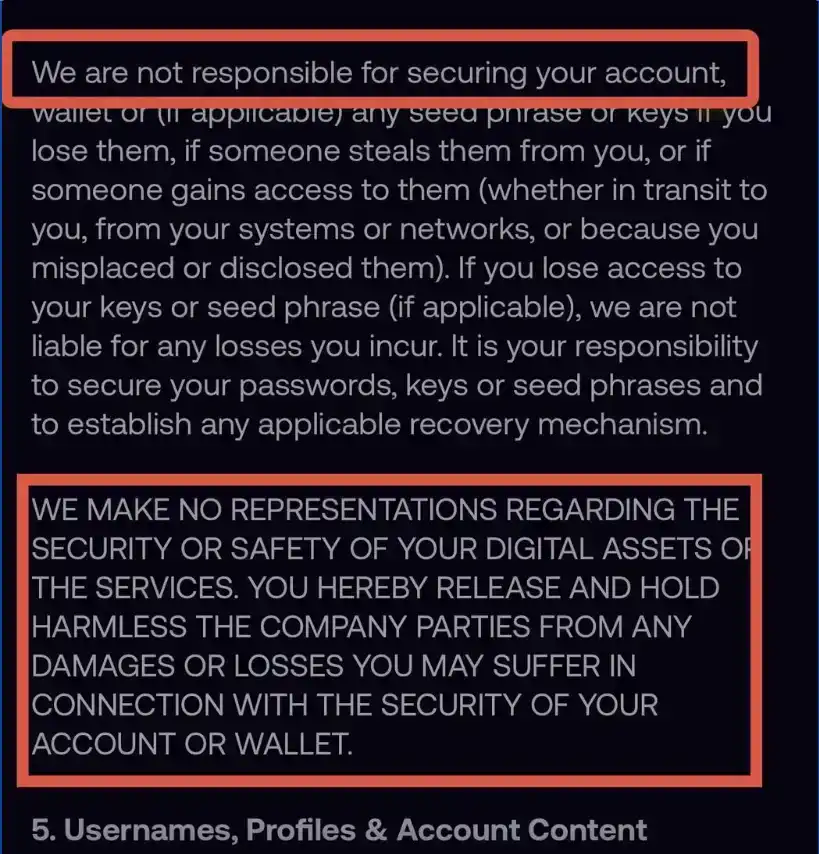
Recently, FOMO's updated terms of service explicitly state they do not guarantee the security of user assets. However, the process of exporting an address from FOMO—requiring logging into the FOMO page to obtain the private key—has also raised security concerns. Critics question whether FOMO transmits the private key to the webpage with sufficient encryption.
FOMO's official explanation points to overload due to a sudden surge in user volume, a reason many players find hard to accept. After all, the trading volume during that one-minute crash wasn't exceptionally high. "Come on, you raised $75 million in funding, and you get paralyzed by less than $5 million in volume over 5 minutes?"
Had users consistently used on-chain trading terminals like gmgn, they might have avoided this sudden, trapped liquidation.
Fame brings scrutiny, and the criticisms leveled at FOMO during its rapid growth are not entirely without merit.