Left Hand to Right Hand? Unveiling the Financial Leverage Loop Behind the AI Boom and Wall Street's Ultimate Gamble

marsbitPublished on 2026-01-30Last updated on 2026-01-30

Abstract

The AI boom is largely fueled by circular financial deals where capital flows between a handful of unprofitable tech giants, creating a high-risk interdependence that some fear could lead to a system-wide collapse if demand falters. For instance, Nvidia plans to invest up to $100 billion in OpenAI, which is also a major buyer of Nvidia chips, while OpenAI relies on Oracle’s cloud services—which itself uses Nvidia hardware. This closed-loop funding cycle supports massive infrastructure expansion, with an estimated $3 trillion expected to be spent on AI data centers. However, key players like OpenAI and Anthropic are still losing money with each ChatGPT query, and profitability is not anticipated until 2029–2030. Drawing parallels to the dot-com bubble—which wiped out $5 trillion in value—analysts warn that an AI downturn could have even broader economic repercussions, given its role in GDP growth and widespread exposure through retirement funds. Despite these risks, optimists compare current data center overbuilds to the unused fiber optics of the 1990s, which later became critical infrastructure. The AI investment surge is described as Wall Street’s "ultimate bet": a high-stakes gamble on transformative technology that already has real-world applications but remains financially precarious.

Compiled & Translated: Deep Tide TechFlow

Podcast Source: Bloomberg Originals

Original Title: How Circular Deals Are Driving the AI Boom

Broadcast Date: January 23, 2026

Key Points Summary

The AI boom is everywhere, but a large part of it is just a surface phenomenon. Funds are circulating among a few unprofitable companies. If this is a bubble and it eventually bursts, its impact could affect everyone, and the consequences cannot be ignored.

Many warn that if it ultimately proves to be a bubble and bursts, it could have far-reaching effects on the entire economy. Bloomberg Originals explores the circular investment deals among AI companies and how these deals constitute the so-called "ultimate gamble."

Highlights Summary

Specific Chain of Circular Investments

  • Nvidia plans to invest up to $100 billion in OpenAI, while OpenAI is also a major customer of Nvidia's chips
  • OpenAI leases computing services from Oracle, which is itself a customer of Nvidia—funds form a closed loop among several companies

Profitability Dilemma

  • Major AI projects like OpenAI and Anthropic are currently unprofitable; every time a user uses ChatGPT, OpenAI may be losing money
  • Sam Altman stated that the company expects to break even around 2029 to 2030

Infrastructure Race

  • Morgan Stanley estimates total corporate investment in AI data centers is projected to reach $3 trillion
  • A 1 million square foot textile factory was converted into a data center; retrofitting existing facilities takes 6 months to start up, while building from scratch takes 2 years

Precedent of the Dot-com Bubble

  • The 2000 dot-com bubble burst wiped out about $5 trillion globally
  • Amazon's stock took 8 years to recover to pre-bubble levels, Cisco took 25 years

Concerns of "Too Big to Fail"

  • The AI investment boom has become a significant driver of GDP growth
  • Ordinary Americans' retirement accounts indirectly hold shares in these tech companies, creating broader exposure than imagined
  • Some worry this could be like the 2008 financial crisis—where large institutions needed massive financial support to prevent a total economic collapse
  • It could be argued that AI is Wall Street's biggest gamble ever, and Wall Street itself is known for taking risks, making this investment the "ultimate gamble."

The AI Boom and Circular Investments

Artificial Intelligence (AI) is expanding from Wall Street to rural America, becoming a core driver of economic development. The market is confident in AI's potential, viewing it as an infallible miracle. Investors have very high growth expectations for AI. Tech giants like Microsoft, Meta, and Alphabet have already invested tens of billions of dollars in capital expenditures for related areas and plan to increase investments further in the future.

The AI boom is not limited to software development; it also drives infrastructure construction. For example, supporting AI development requires building more data centers and ensuring energy and water supply. However, this rapidly growing industry also presents some risks, particularly in how funds flow. A new investment strategy is emerging—circular investments amounting to tens of billions of dollars. For instance, Nvidia plans to invest up to $100 billion in OpenAI, and these huge sums circulate among tech giants, forming a fund chain akin to a "merry-go-round."

Nevertheless, AI's potential remains enormous. Currently, about 80% of U.S. companies have started using AI, signaling a structural revolution similar to electricity or the internet.

On the Bubble Issue and Complex Fund Flows

Although Artificial Intelligence (AI) has huge potential, its profitability has not yet been fully proven. Today, the biggest question in San Francisco's tech world is: Are we in an AI investment bubble? If so, how big is this bubble? What would be the consequences if it bursts? This is an important question. We might be in a new era of AI-driven growth, or we might be facing an unprecedented investment bubble.

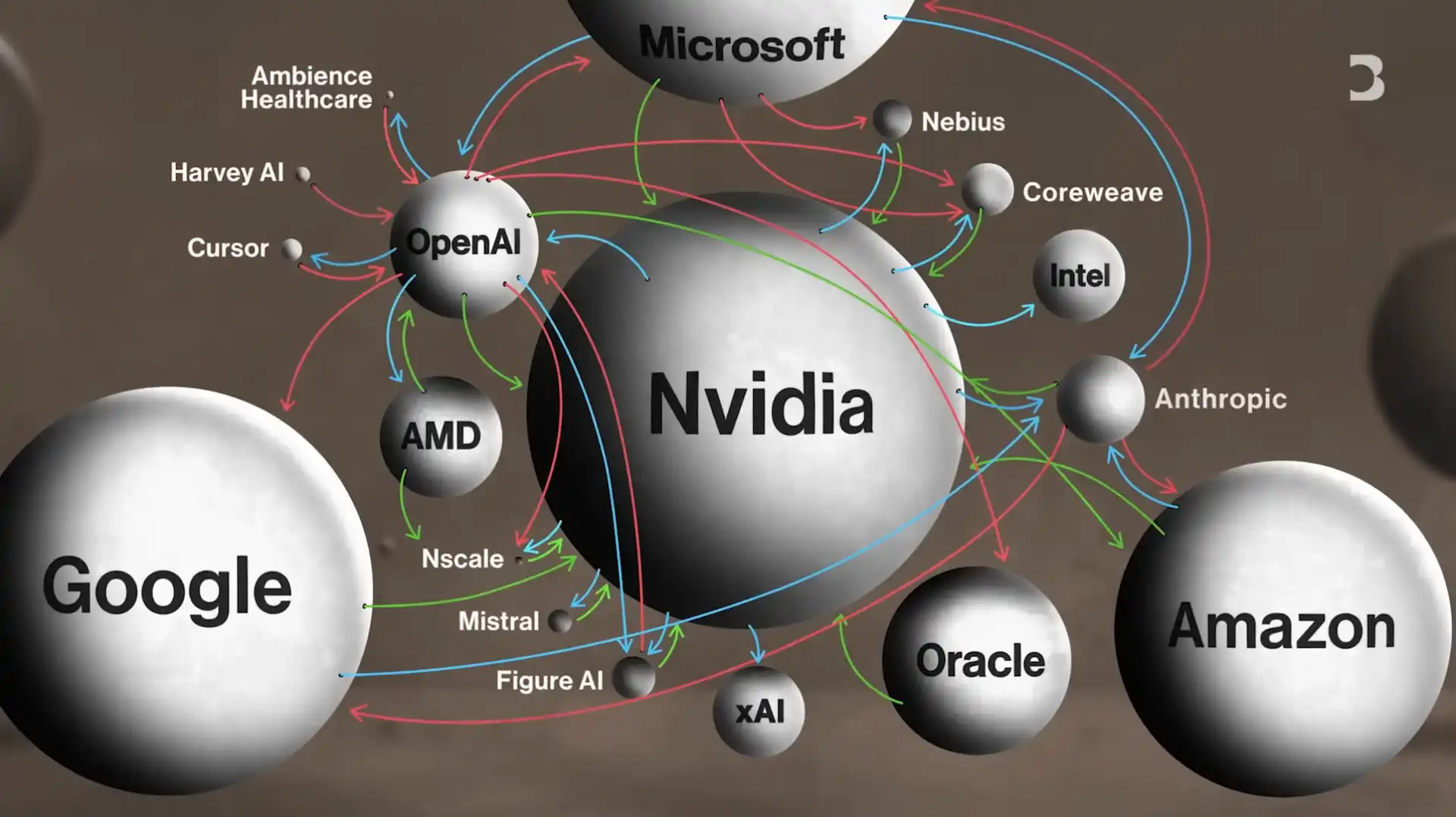
So-called "circular investments" refer to the flow of funds, products, and services between companies. For example, Nvidia plans to invest up to $100 billion in OpenAI, while OpenAI is also a major customer of Nvidia's chips. This fund flow also involves other intermediaries, such as Oracle. OpenAI sometimes leases computing services from Oracle, and Oracle itself is also a customer of Nvidia. This complex web of fund flows makes the entire industry an interconnected network involving many well-known companies.
Concerns About Industry Interdependence and Infrastructure Construction Race

Funds frequently circulate among these companies. While there's nothing inherently wrong with this model, when transaction amounts become too large, it can lead to overexpansion. The current concern is, could this symbiotic relationship make the entire system fragile? If one of these companies underperforms or encounters problems, could it affect the stability of the entire industry?

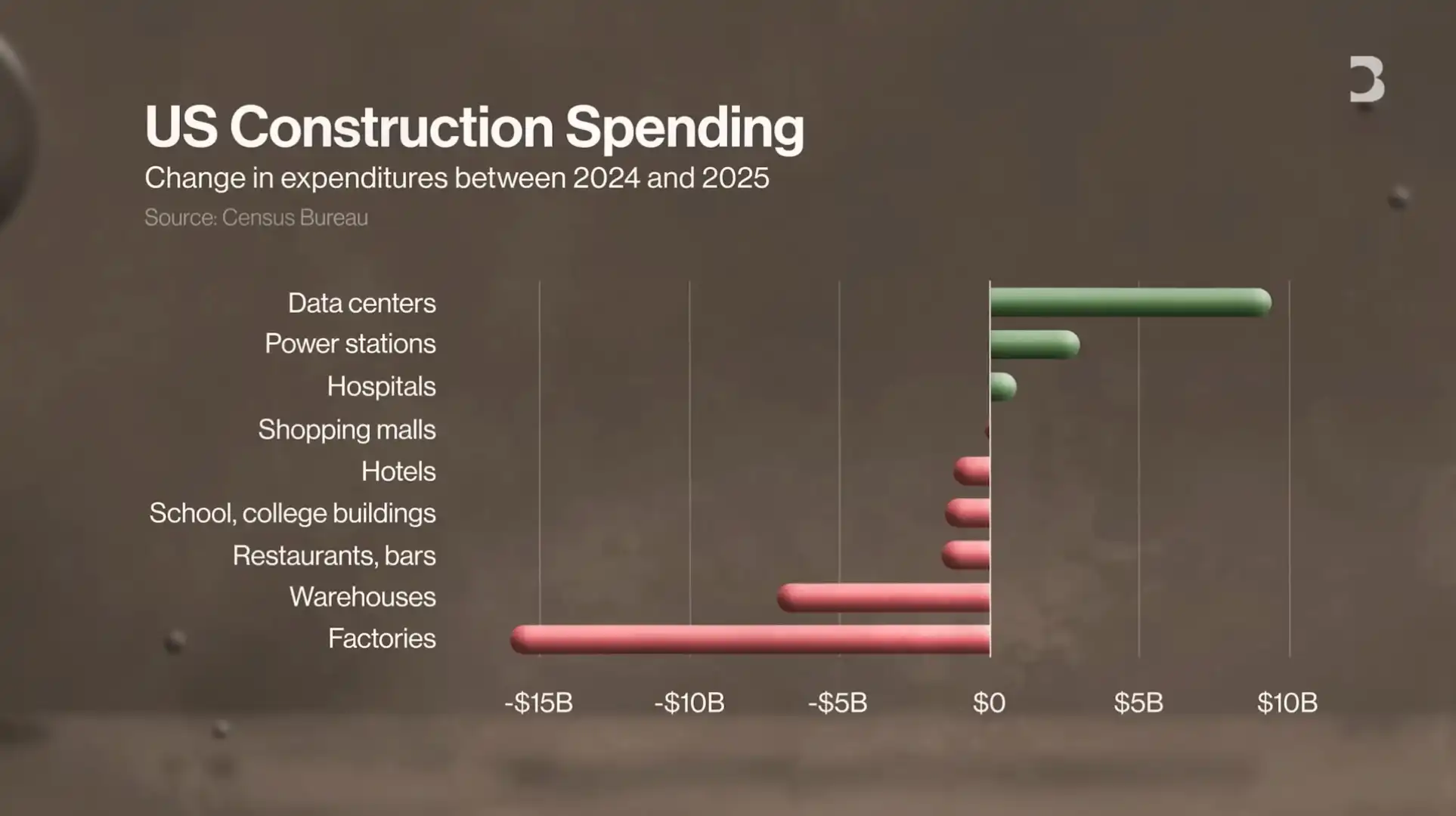
Meanwhile, massive investments are pouring into data center construction, driving infrastructure expansion nationwide. We are experiencing an infrastructure "arms race." For example, construction spending in most industries was declining in 2025, but spending on data centers and power plants was increasing. Many companies are acting as "foundation builders" for the AI industry, actively investing in these projects. According to Morgan Stanley's latest estimates, total corporate investment in AI data centers is projected to reach $3 trillion.
The Data Center Construction Boom: The "Picks and Shovels" of Infrastructure

Currently, data center construction is in a phase of rapid development. If your business provides infrastructure and services for data centers, you are in a very favorable position. Market demand far exceeds supply capacity, funding support is ample, and the industry outlook is positive. For example, the facility we are currently in was once a roughly 1 million square foot textile factory but was later converted into a data center.

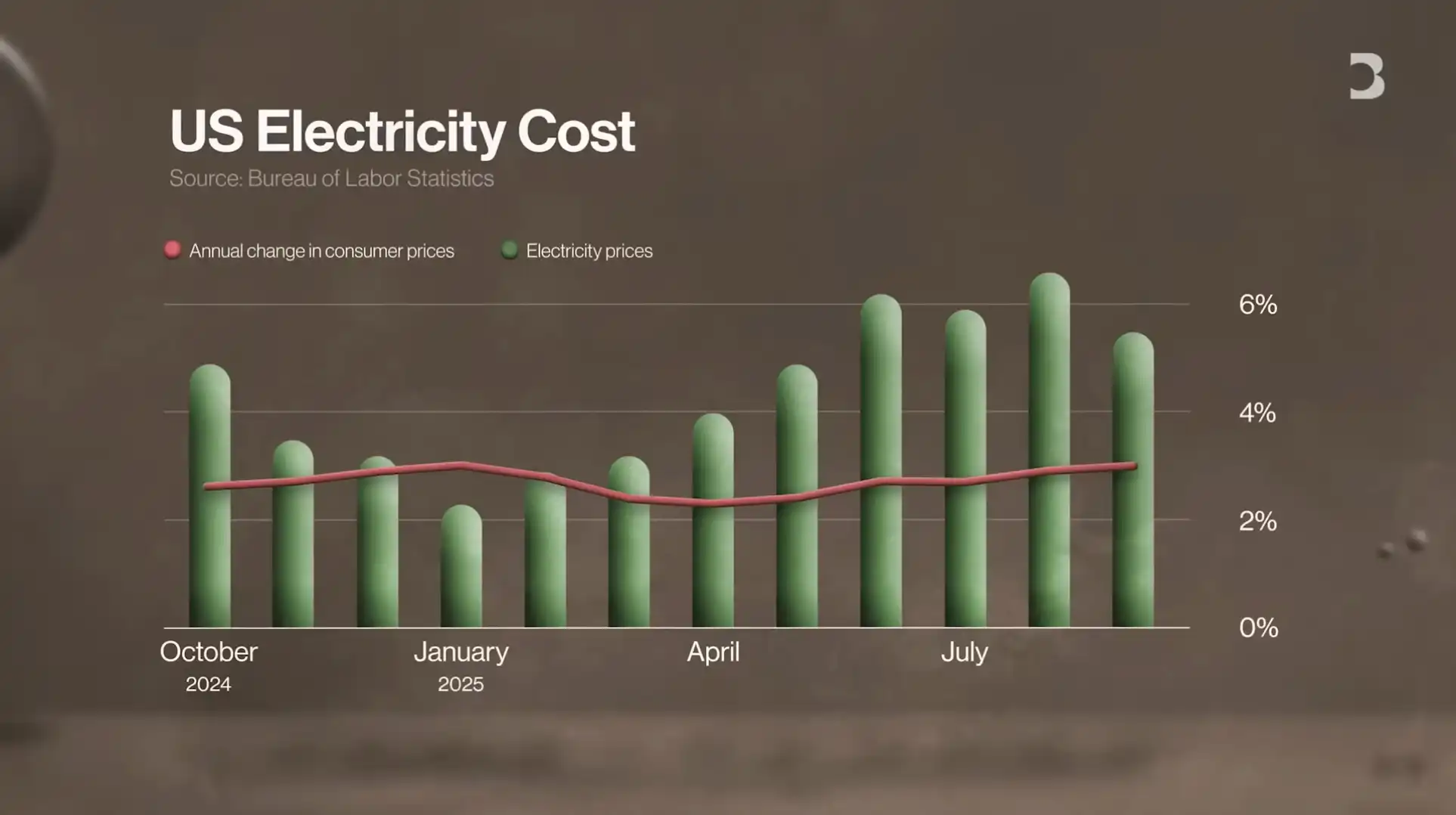
The demand for data centers is almost insatiable, encompassing power supply, infrastructure construction, and specialized technical support, among other aspects. This demand will not slow down in the short term. For the AI industry, time is critical. If operations can start within 6 months by retrofitting existing facilities, rather than taking 2 years to build new ones from scratch, it is undoubtedly a better choice. Meanwhile, the power demand from data centers is also driving rapid growth in utility costs, even exceeding inflation rates. Utility companies and construction-related businesses that specifically serve data centers are performing particularly well.
The Profitability Puzzle: Challenges and Risks of AI Projects

However, building data centers quickly does not mean easy profitability. Data centers require continuous investment to maintain normal technological operations; otherwise, they quickly lose appeal to customers. So far, major AI projects are still operating at a loss. Taking OpenAI as an example, every time a user uses ChatGPT, OpenAI may face losses; companies like OpenAI and Anthropic are currently not profitable.

OpenAI's CEO Sam Altman stated that the company expects to break even around 2029 to 2030, but considering the current massive cash burn and the need for even more funds to build data centers and purchase computing resources in the future, this goal seems challenging. People worry whether these AI startups can bear such high costs, especially when they commit huge investments to build data centers. These data center companies can be seen as "early warning signals" for changes in industry demand. If demand for AI products suddenly weakens, the entire industry could be affected. Although all companies currently claim that demand for AI products is very strong, once demand drops, problems will emerge.

Historical Parallels: Dot-com Bubble vs. AI Boom

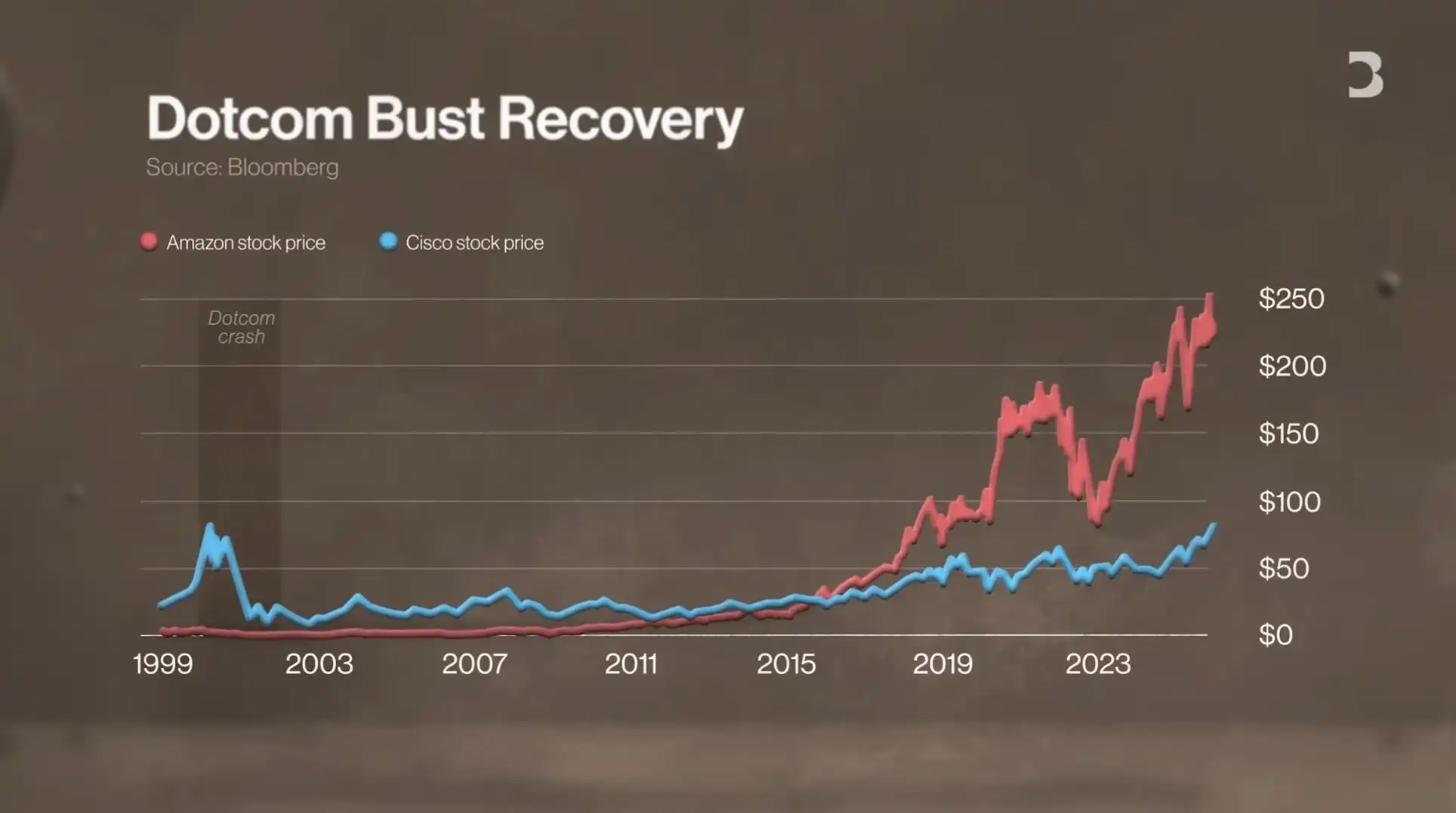
To understand the potential risks of today's AI boom, one only needs to look back at the 2000 dot-com bubble. At that time, internet companies promised a hopeful new era but ultimately led to huge losses. Savings were wiped out, office parks stood empty, and about $5 trillion in value evaporated globally. Tech stocks were hit the hardest, including many internet companies. Even the strongest companies took years to recover. For example, Amazon, a famous survivor, saw its stock take 8 years to return to pre-bubble levels. Cisco, a company providing infrastructure, took a full 25 years to recover its stock price.

There are indeed some similarities between the two booms, such as the phenomenon of circular investment deals. The question is, will the AI boom transcend the normal fluctuations of the tech industry and have a profound impact on the entire economy?
Economic Impact and "Too Big to Fail" Concerns

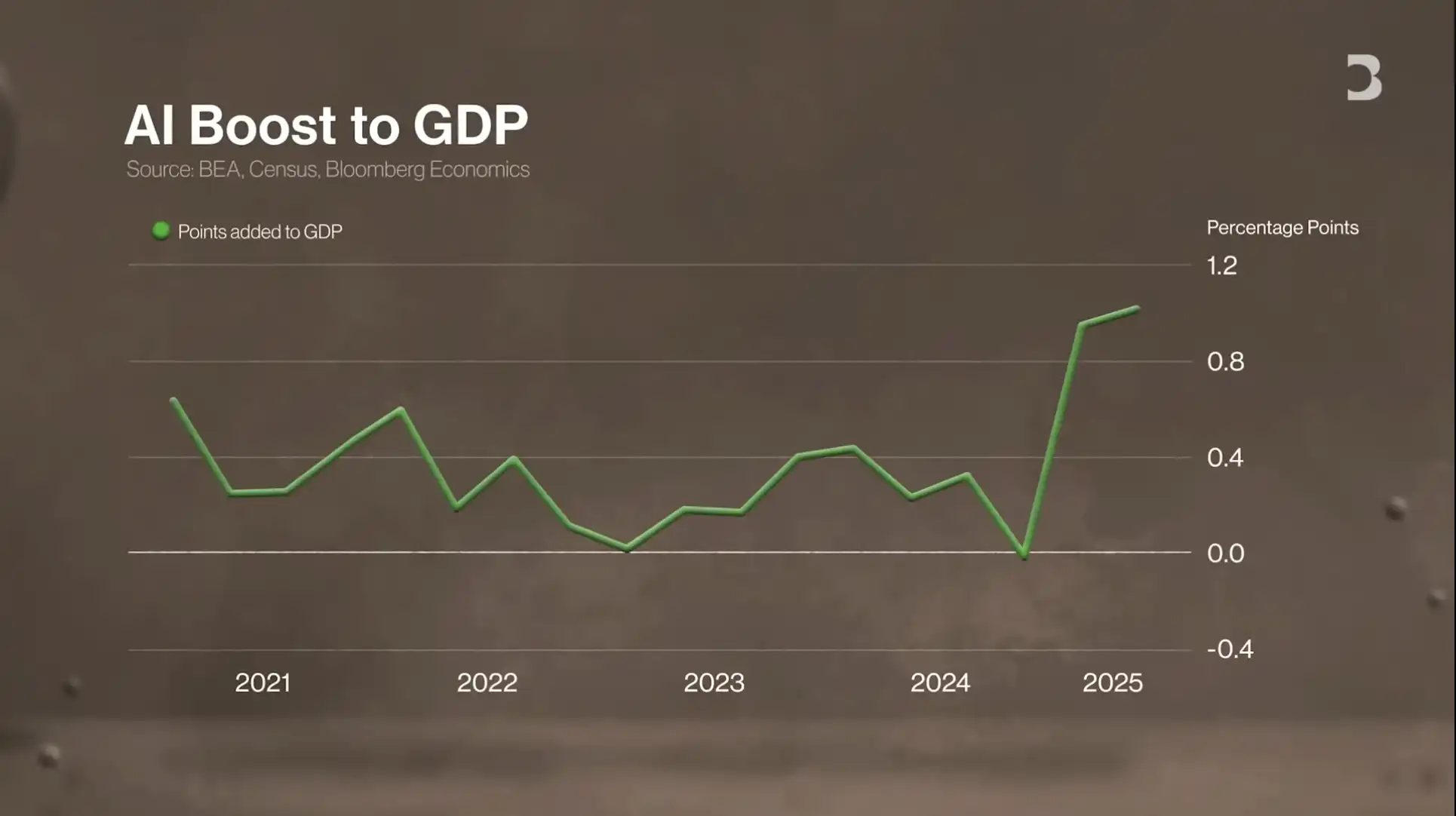
The dot-com bubble severely hurt the economy, but if the AI boom collapses, its impact could be even more far-reaching. The AI investment boom has become a significant driver of GDP growth, boosting the U.S. economy amid tariffs and inflation pressures. However, this also exposes ordinary Americans indirectly to risk, as many people's retirement accounts and other investment accounts hold shares in the big tech companies participating in AI investments.

Does this mean the AI boom has become "too big to fail"? The current concern is whether these companies have become "too big to fail." If they fail, it would not only cause economic problems but could also have broader impacts. Some even worry that this situation could be like the 2008 global financial crisis, where large financial institutions needed massive financial support to prevent a total economic collapse. If the AI boom truly collapses, the U.S. economy could face even greater challenges.
Long-Term Outlook: AI's Future Remains Optimistic

Despite the risks brought by the AI boom, many remain confident in its future because technology is constantly advancing. During the dot-com bubble, many companies invested in laying fiber optic cables. At the time, these investments seemed excessive and wasteful, but ultimately, this fiber became the foundation of internet broadband. The unused fiber built in the 90s later became crucial to internet development. Similarly, the data centers being built today, even if they result in temporary overcapacity, could potentially be fully utilized in the future.

Of course, AI development might take longer than expected. In this process, although some well-capitalized companies may survive, their valuations could experience significant fluctuations. However, AI technology itself will not burst like a bubble. Even though some companies might not withstand market tests, the AI industry is not an illusory bubble. It has developed actual products and demonstrated enormous potential. It could be argued that AI is Wall Street's biggest gamble ever, and Wall Street itself is known for taking risks, making this investment the "ultimate gamble."


Trending Cryptos

Related Questions

QWhat is the concept of 'circular deals' in the context of the AI boom, as described in the article?

AThe 'circular deals' refer to a flow of capital, products, and services between a small group of major, yet unprofitable, AI companies. A prime example is Nvidia's plan to invest up to $100 billion in OpenAI, while OpenAI is simultaneously a major customer of Nvidia's chips. This circular flow of money also involves other intermediaries like Oracle, creating an interdependent financial loop.

QAccording to the article, what is the current profitability status of major AI projects like OpenAI and Anthropic?

AMajor AI projects like OpenAI and Anthropic are currently not profitable. The article states that every time a user uses ChatGPT, OpenAI is likely losing money. OpenAI's CEO, Sam Altman, has indicated that the company does not expect to reach breakeven until 2029 or 2030.

QWhat historical event does the article compare the potential risks of the AI boom to, and what was one major consequence of that event?

AThe article compares the potential risks of the AI boom to the dot-com bubble of 2000. A major consequence of that event was the evaporation of approximately $5 trillion in value globally. It took companies like Amazon 8 years and Cisco 25 years for their stock prices to recover to pre-bubble levels.

QWhat is the estimated total investment in AI data centers, as cited from Morgan Stanley in the article?

AAccording to Morgan Stanley's latest estimates cited in the article, the total investment by enterprises in AI data centers is projected to reach $3 trillion.

QWhy does the article suggest that the AI investment frenzy could be considered a 'ultimate bet' for Wall Street?

AThe article suggests it is the 'ultimate bet' because the AI investment热潮 has become a significant driver of GDP growth, with massive capital flowing in circular deals between tech giants. The risk is widespread as ordinary Americans are exposed through retirement accounts. There is a concern that these companies have become 'too big to fail,' and a potential bust could have severe, widespread economic consequences, making it Wall Street's biggest gamble yet.

Related Reads

STAR 50 Soars 10.73%, Why Did A-Shares Stage a "V-Shaped Reversal"?

After a prolonged decline, the Chinese A-share market staged a strong rally on July 21. The STAR 50 index surged 10.73%, its largest single-day gain in nearly a year, leading a broad-based "V-shaped" reversal. The Shanghai Composite Index rose 1.79%, the Shenzhen Component Index gained 4.81%, and the ChiNext Index jumped 7.05%. Total market turnover reached 2.97 trillion yuan, an increase of 256.1 billion yuan from the previous session, with over 3,100 stocks advancing. The semiconductor sector spearheaded the rebound, with related ETFs posting significant gains. Analysts attribute the surge to three converging factors. First, coordinated capital inflows from "national team" institutions, insurance funds, listed company buybacks, and fund house self-purchases have bolstered market liquidity and confidence. Second, supportive policy signals, including commitments from regulators to ensure stable market operations, provided a favorable backdrop. Third, a stabilization and recovery in overseas markets, notably South Korea, created a positive external environment. Institutions suggest the most severe panic selling phase for the tech sector has likely passed, following a significant digestion of crowded positions and leveraged funds. While short-term volatility may persist, the medium to long-term outlook remains underpinned by enduring trends like AI computing demand expansion and semiconductor localization. The market's focus now shifts to the sustainability of supportive fund flows, earnings reports, and upcoming catalysts from the global AI industry chain.

marsbit3m ago

STAR 50 Soars 10.73%, Why Did A-Shares Stage a "V-Shaped Reversal"?

marsbit3m ago

U.S. Tech Momentum Stocks Post Largest Single-Day Gain Ever, But Is the Plunge Over?

US tech momentum stocks staged a sharp rebound on Tuesday (July 21st). Morgan Stanley's TMT Momentum Factor surged over 12%, marking its largest single-day gain on record, exceeding even peaks from the 2000 dot-com bubble. Key momentum indices from Goldman Sachs also posted their strongest daily performances in years. The rally was led by semiconductors, with the Philadelphia Semiconductor Index jumping 4.6%. This rebound followed three consecutive down days and a cumulative 33% plunge in momentum stocks, one of the steepest drawdowns since the dot-com era. Analysts attribute the surge largely to a short squeeze. Heavy selling had pushed high-beta momentum stocks into deeply oversold territory, forcing many short sellers, particularly in Asia, to cover their positions, creating a self-reinforcing buying spiral. However, the rebound's internals appear weak. Trading volume was notably low, and advancing stocks still lagged decliners on the S&P 500, indicating a narrow, concentrated rally rather than broad market participation. Diverging views emerge on the outlook. BTIG warns the bounce has hit key resistance and recommends selling into strength, citing extreme volatility and historical parallels to past market tops. Conversely, Goldman Sachs and UBS believe the momentum unwind is nearing its end, suggesting it may be time to gradually add exposure, as positioning has been significantly reduced. They caution, however, that high volatility warrants a measured approach, potentially using defined-risk strategies. The upcoming earnings season, particularly reports from major tech firms like Alphabet, is seen as a critical test for the rally's sustainability. Simultaneously, bond markets flashed a warning, with yields rising partly due to spiking oil prices. Analysts note that if long-term Treasury yields break decisively higher, it could pose a significant headwind for equities, especially growth stocks.

marsbit10m ago

U.S. Tech Momentum Stocks Post Largest Single-Day Gain Ever, But Is the Plunge Over?

marsbit10m ago

U.S. Tech Momentum Stocks Record Largest Single-Day Gain Ever, but Has the Rout Ended?

U.S. tech momentum stocks staged a dramatic rebound on Tuesday, July 21st. Key momentum indices like the Morgan Stanley TMT Momentum Factor and Goldman Sachs' High Beta Momentum Long Index posted historic or near-historic single-day gains, fueled largely by semiconductor stocks. This sharp rally followed a severe three-day sell-off that saw momentum stocks plunge 33%, marking one of the steepest pullbacks since the dot-com bubble. Analysts attribute the bounce primarily to a short squeeze, as forced covering from over-leveraged traders, particularly in Asia, created a buying spiral. However, the rally's health is questioned due to weak market breadth—overall trading volume was low, and decliners outnumbered advancers in the S&P 500 despite the index's gain—suggesting a narrow, concentrated surge rather than broad recovery. Opinions on the sustainability diverge. BTIG strategists warn the rebound has hit key resistance levels, citing extreme volatility and historic stock dispersion as signs of an ongoing broader correction, and recommend selling into strength. Conversely, Goldman Sachs and UBS view the aggressive momentum unwinding as nearing its end, noting reduced positioning and a lack of new fundamental catalysts. They suggest the sell-off presents a selective opportunity to add exposure, albeit cautiously and gradually using defined-risk strategies. The immediate trajectory hinges on the ongoing earnings season, with market focus on Alphabet's capital expenditure guidance for AI investment clarity. Meanwhile, bond markets present a risk, with rising Treasury yields—potentially heading toward 5.5%—and widening credit spreads for mega-cap tech companies posing a threat to equity valuations. The combination of technical factors, earnings results, and macro conditions leaves the durability of the rebound in doubt.

链捕手13m ago

U.S. Tech Momentum Stocks Record Largest Single-Day Gain Ever, but Has the Rout Ended?

链捕手13m ago

Long-Divided Must Unite, Long-United Must Divide: When L1 Becomes Its Own Rollup, What Is Ethereum's Endgame?

"The Inevitable Cycle: When L1 Becomes Its Own Rollup – What is Ethereum's Endgame?" For years, the Ethereum community grappled with concerns that L2s were fragmenting the ecosystem and eroding L1's value. While L2s provided cheaper execution, they also splintered liquidity and the unified user experience of a single chain. This has prompted a fundamental reassessment of the relationship between L1 and L2. Ethereum's roadmap is evolving. The "Scale" initiative merges L1 and L2 expansion into a holistic framework. L1 itself is advancing with higher gas limits, statelessness, and zkEVM verification, no longer content to be just a low-throughput settlement layer. Consequently, the primary value proposition of L2s is shifting from merely providing cheap blockspace to offering L1 cannot easily provide: application-specific optimizations, privacy features, and flexible governance models. L2s are becoming a spectrum of execution environments with varying degrees of security inheritance from Ethereum. A critical challenge in this multi-chain future is interoperability. The vision is to make Ethereum "feel like one chain again." This relies on advancements in native account abstraction (like EIP-7702) and intent-based architectures (Open Intents Framework), where users declare desired outcomes, and solvers handle the complex cross-chain execution. Furthermore, shortening Ethereum's finality time from minutes to seconds is crucial, as it underpins trust between chains for bridges, stablecoins, and cross-chain applications. Perhaps the most provocative idea is that Ethereum L1 itself could become a form of "its own Rollup." As zkEVM and proof systems mature, high-performance nodes could execute transactions and generate validity proofs. Regular validators would then verify these proofs instead of re-executing all transactions. This blurs the traditional L1/L2 hierarchy, making "Rollup" more of a general execution-verification architecture. Native Rollup aims to integrate L2 validation more directly into the Ethereum protocol, allowing L2s to inherit L1's security more fully and move away from reliance on security councils. In the end, L2s are not destined to replace L1 or be made obsolete by it. The likely future is a unified system where diverse execution environments—each optimized for specific use cases like DeFi, gaming, or privacy—coexist. They will share a common foundation of security, liquidity, and verifiable state, seamlessly connected to restore a cohesive user experience. The next phase for Ethereum is not just about scaling through separation, but about intelligently reintegrating what was separated back into a coherent whole.

链捕手29m ago

Long-Divided Must Unite, Long-United Must Divide: When L1 Becomes Its Own Rollup, What Is Ethereum's Endgame?

链捕手29m ago

Trading

Spot

Hot Articles

Discussions

Welcome to the HTX Community. Here, you can stay informed about the latest platform developments and gain access to professional market insights. Users' opinions on the price of AI (AI) are presented below.

活动图片














