Jensen Huang Joins Tsinghua, But Did Musk Actually Arrive Ten Years Ago?

marsbitPublished on 2026-05-29Last updated on 2026-05-29

Abstract

Jensen Huang, founder of NVIDIA, is set to join the Advisory Board of Tsinghua University's School of Economics and Management. This marks his first appointment to an advisory body at a mainland Chinese university, following similar roles at institutions like National Taiwan University, Stanford, and Harvard. The article explores why his entry comes now, a decade after Elon Musk joined the same prestigious committee in 2015. The Tsinghua advisory board, established in 2000, is a high-level strategic body comprising global business elites like Apple's Tim Cook (Chair), Tesla's Elon Musk, Microsoft's Satya Nadella, and Meta's Mark Zuckerberg, alongside financial giants and leading Chinese entrepreneurs. The timing is attributed to a confluence of factors: Huang's current eligibility driven by NVIDIA's dominant role in AI, a recent vacancy on the board, the rising challenge from domestic Chinese chips necessitating stronger local ties, and a recent thaw in U.S.-China relations following high-level diplomatic visits. In contrast, Musk's 2015 entry occurred during a period of warmer bilateral ties, where his disruptive innovation profile aligned well with the board's needs without significant political friction. Huang is noted for his active engagement with academia, holding several honorary doctorates and advisory roles at other universities. His appointment is framed as a reflection of shifting geopolitics, market dynamics, and strategic recalculations over the past decade, u...

Author: Think AI, Aaron

Recently, NVIDIA founder Jensen Huang has been stealing the spotlight. Just after dominating the trending charts for treating a whole night market in Taipei to supper, he is again reported by the Financial Times today:

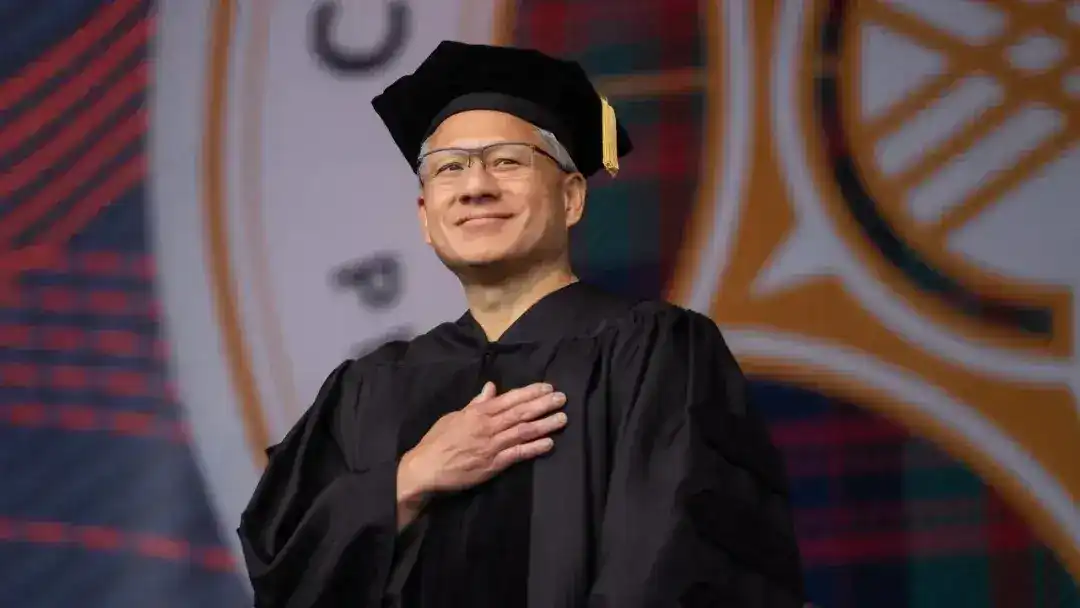
Jensen Huang will join the Advisory Committee of the School of Economics and Management at Tsinghua University, welcoming a new "teacher" to Tsinghua.

This also marks Huang's first appointment to an advisory body at a mainland Chinese university. Previously, he has served in similar institutions at National Taiwan University, Stanford University, and Harvard University in the US, but entry into mainland China had been delayed until now.
What are the "unspoken difficulties" in between?

It's important to know that this committee currently has 65 members, including major figures from the US financial and tech sectors. Our familiar friend Elon Musk joined as early as ten years ago. Why has Jensen Huang been unable to join until now?

Firstly, of course, is the exceptionally high caliber of Tsinghua's SEM Advisory Committee.

The "Weight" of "Joining"

The Tsinghua SEM Advisory Committee was established in 2000, with then Dean Premier Zhu Rongji actively promoting the formation of this top-tier think tank.

The committee's core mission is to provide high-level guidance on the school's development strategy, international cooperation, faculty building, etc., while also building a dialogue bridge between China and global business elites.

Not only are the members top-tier talents from various industries, but during the annual meetings, state leaders also cordially meet with the attending members. President Xi Jinping has met with them in person twice and delivered a video address once.

The current committee chairman is former Apple CEO Tim Cook, who currently serves as chairman.

With Huang's addition, the five major US tech giants are now formally assembled. The other three are Tesla's Elon Musk, Microsoft's Satya Nadella, and Meta's Mark Zuckerberg.
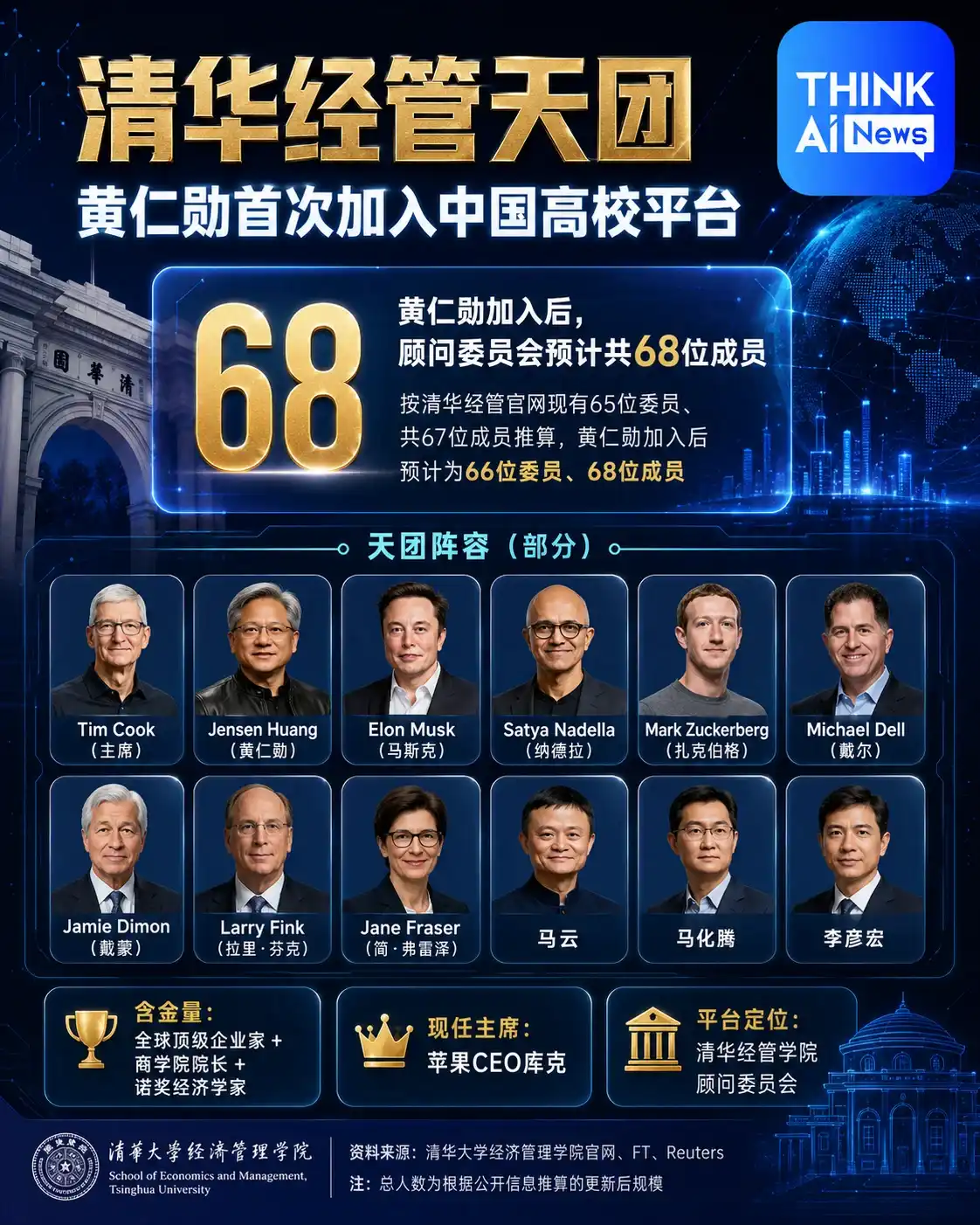
The finance sector is represented by Wall Street's top giants: Jamie Dimon of JPMorgan Chase, Stephen Schwarzman of Blackstone, Larry Fink of BlackRock, and Ray Dalio, founder of Bridgewater Associates.

There are also leaders from other globally renowned leading companies, such as BMW, Siemens, Coca-Cola, and so on.

Domestic heavyweights include Jack Ma, Pony Ma (Ma Huateng), Robin Li (Li Yanhong), Terry Gou (Guo Taiming), and others.

As can be seen from the list above, this is not an ordinary academic advisory panel but one of the highest-caliber and most influential circles of global business elites.

Why Now?

Both are tech giant CEOs. Why could Musk join in 2015, while Huang had to wait until now?

There were indeed many twists and turns in between, but now Huang's entry feels like a natural progression.

Looking back to 2015, US-China relations were relatively relaxed, and technological cooperation was in a honeymoon phase. Musk's entry had the right timing, location, and conditions.

At that time, the committee's tech sector already had Cook and Ballmer (former Microsoft CEO), but it lacked leaders in new energy and aerospace. Musk's Tesla and SpaceX正好 filled that gap;

Furthermore, in 2015, Tesla had not yet built a factory in China, but Musk was actively optimistic about the Chinese market, frequently expressing goodwill publicly, with no policy friction;

Coinciding with the committee's 2015-2016 academic year membership renewal, two new seats were added, and Musk became the sole new addition from the tech field;

Musk's "innovative disruptor" persona highly aligned with Tsinghua's goal of cultivating top talent, posing no political risk.

However, NVIDIA's strategic importance was not as pivotal as it is today, and the AI field had not yet demonstrated disruptive potential. In other words, Huang simply did not have the qualifications at that time.
Following 2018, US-China relations gradually became tense. Even as NVIDIA developed rapidly and Huang's wealth surged, it became more difficult to find a good opportunity amidst the climate.

US sanctions against China targeted NVIDIA as a core entity, forcing both Tsinghua and NVIDIA to be swayed by the broader environment.

Additionally, spots on the Tsinghua SEM Committee are highly limited. The tech circle has long been full, with only minor adjustments made annually. A vacancy恰好opened up earlier this year.

Market-wise, even without exporting high-end chips previously, NVIDIA maintained a monopoly position in China's AI chip sector until domestic chips强势崛起 in recent years, prompting Huang to seek new connections and circles to reopen the Chinese market.

Shortly after Trump's recent visit to China, US-China relations saw an easing. Huang accompanied the visit, partially mitigating political risks, allowing him to send more friendly signals towards China.

Huang's "Academic" Moves

It must be said that within the current tech circle, Jensen Huang is one of the tech founders most keen on joining university academic circles, which also makes his committee appointment feel一点也不违和.

It should be noted that while Huang本人已经确认 this news about joining Tsinghua, NVIDIA and Tsinghua have not officially announced it yet. Further official updates can be followed.

Huang himself holds a Master's degree in Electrical Engineering from Stanford University.

He has also received a total of 7 honorary doctorates to date, from universities across the globe including Taiwan, the US, Hong Kong, and Sweden, awarded in recognition of his industry achievements.

Regarding university advisory roles similar to Tsinghua's SEM Committee, Huang has also joined the Harvard Business School Dean's Advisory Board, the Stanford University Advisory Council, and the National Taiwan University College of Management Advisory Board, among others.
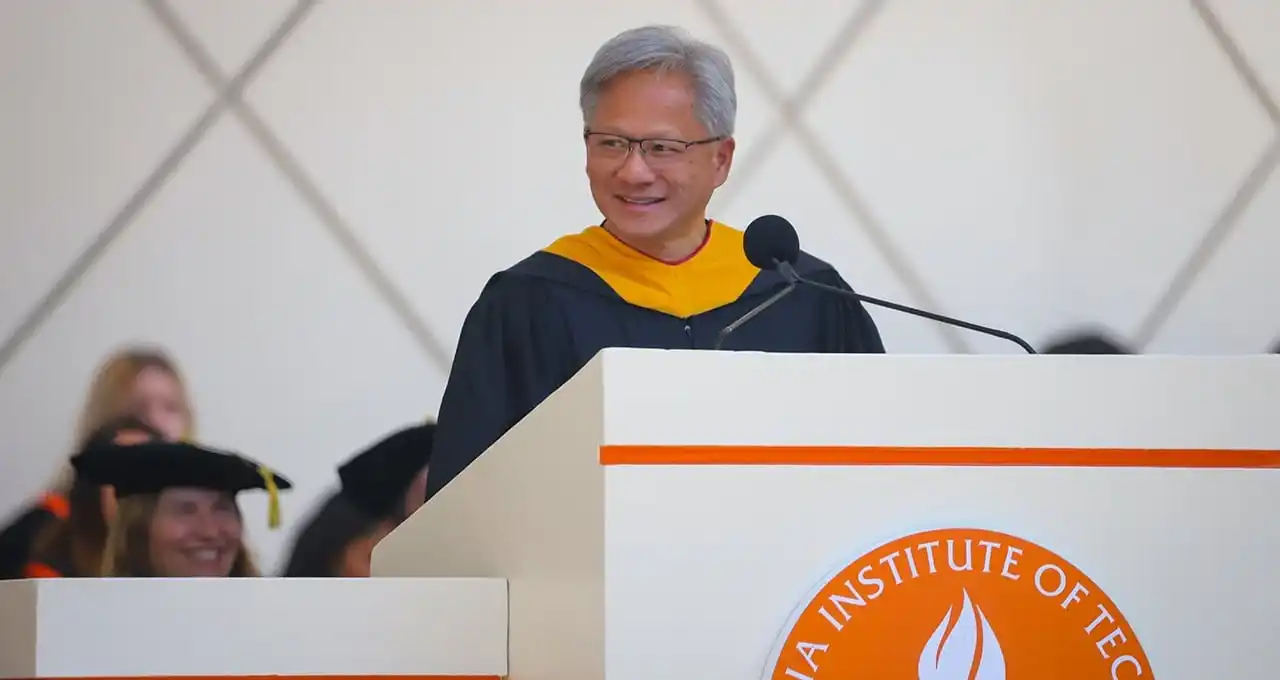
Huang's university speeches in recent years have also been full of quotable lines.

He pointed out, "You are not replaced by AI, but by those who use AI." He also strongly驳斥 the notion that AI leads to job cuts.

He stated, "AI only started to have an impact six months ago, yet they were laying people off because of AI two years ago? How is that possible? It makes no sense."

Overall, Huang's加入委员会 is a microcosm of a decade of geopolitical博弈, market变迁, and利益重构.

The Chinese market remains the重中之重 that Jensen Huang is迫切想要打开.

Related Questions

QWhy has Huang Renxun joined Tsinghua University's School of Economics and Management Advisory Committee now, compared to Elon Musk who joined a decade ago?

AHuang Renxun's recent entry is a result of evolving circumstances. In 2015, when Musk joined, US-China relations were warmer, and his innovative profile in new energy and aerospace filled a gap in the committee. Nvidia's strategic importance in AI was not as dominant then. Post-2018, US-China tensions and US sanctions on Nvidia, a key target, made the timing unfavorable. Recently, a committee seat opened up, US-China relations showed signs of easing after Trump's visit, and with the rise of domestic chips in China, Huang seeks to strengthen his network and access to the Chinese market.

QWhat is the significance and mission of the Tsinghua School of Economics and Management Advisory Committee?

AThe Tsinghua School of Economics and Management Advisory Committee, established in 2000 under then-Dean Premier Zhu Rongji, is a top-tier advisory body. Its core mission is to provide high-level strategic guidance on the school's development, international cooperation, and faculty development. It also serves as a bridge for dialogue between China and global business leaders. The committee is notable for its high-profile members, including top CEOs, and its annual meetings are sometimes attended by Chinese national leaders, including President Xi Jinping.

QWhich other prominent global business leaders are members of this Tsinghua committee alongside Huang Renxun?

AThe committee features a 'who's who' of global business elites. In tech, it includes Apple's Tim Cook (Chair), Tesla's Elon Musk, Microsoft's Satya Nadella, and Meta's Mark Zuckerberg. The finance sector is represented by figures like Jamie Dimon (JPMorgan Chase), Stephen Schwarzman (Blackstone), Larry Fink (BlackRock), and Ray Dalio (Bridgewater). Other members lead major corporations like BMW, Siemens, and Coca-Cola, alongside Chinese leaders such as Jack Ma, Pony Ma, Robin Li, and Terry Gou.

QAccording to the article, what was Huang Renxun's main motivation for seeking to join this committee at this time?

AHuang Renxun's primary motivation is to strengthen his ties and network within the Chinese market. The article states that despite Nvidia's previous dominance in China's AI chip sector, domestic chips have recently seen a strong rise. Therefore, joining this prestigious committee provides Huang with a crucial platform to build new relationships and 'open the Chinese market,' which remains a 'top priority' for him.

QWhat are some of Huang Renxun's views on AI and employment, as mentioned in his university speeches?

AIn his recent university speeches, Huang Renxun emphasized that 'You are not replaced by AI, but by people who use AI.' He also strongly refuted claims that AI leads to job losses, arguing it's illogical: 'AI only started to work six months ago, and they were laying off people because of AI two years ago? How is that possible? That doesn't make any sense at all.'

Related Reads

A Nation Blocks Chips, a Giant Buys a Nuclear Power Plant: Why It's Time to Seriously Consider DeAI

**Title: Great Powers Blockade Chips, Giants Buy Nuclear Plants: Why It's Time to Seriously Consider DeAI** In May 2026, the US closed loopholes for Chinese firms to acquire advanced NVIDIA chips via overseas subsidiaries. That same month, Kenya halted a $1B geothermal data center project involving Microsoft, fearing its immense energy consumption. Meanwhile, Huawei announced mass production of its Ascend AI chip. These disparate events underscore a new reality: the competition for computing power ("compute") has escalated beyond the tech industry, becoming a geopolitical and infrastructural battleground. A new era of oligopoly is forming, with control over the AI stack—from GPU chips (NVIDIA) and cloud platforms (AWS, Azure, Google Cloud) to foundational models (OpenAI, Anthropic)—concentrating in a few Western "AI Octopus" corporations. This centralization creates systemic risks: pricing power and platform lock-in for users, infrastructure fragility, and a widening "compute divide" that threatens to marginalize nations without independent AI capacity. An "AI Iron Curtain" is deepening through export controls. In response, some nations like Saudi Arabia and the UAE are investing heavily to buy compute power, aiming to transition from oil to AI economies. The EU seeks to triple its compute capacity by 2030 to reduce dependency. However, the spending gap is vast, with four US tech giants alone planning ~$750B in AI capex for 2026. The race is increasingly constrained by energy, with AI tasks consuming up to 1000x more power than web searches, pushing firms to even acquire nuclear plants. This landscape is fueling interest in Decentralized AI (DeAI). It proposes a third way: using open protocols to coordinate a global network of idle GPUs, independent developers, and data centers, creating an AI infrastructure without a single controlling entity. Leveraging blockchain and cryptographic verification, DeAI aims to break market concentration, disperse energy demands, reduce geopolitical dependencies, and enhance transparency. While still nascent in performance and stability, DeAI's core promise is not immediate superiority but providing a crucial alternative architecture to resist monopoly, censorship, and centralized power. As specialized AI hardware costs fall and open-source models flourish, the window to build this foundation is open. The very existence of such competition serves as a vital check against the inevitable abuse of concentrated power.

marsbit52m ago

A Nation Blocks Chips, a Giant Buys a Nuclear Power Plant: Why It's Time to Seriously Consider DeAI

marsbit52m ago

Outpoll Review: A Prediction Market Platform Built for Active Traders

Outpoll Review: A Prediction Market Platform Built for Active Traders In recent years, prediction markets have grown from a niche sector to a mainstream arena, attracting billions in trading volume and institutional capital. However, the user experience and tools for traders have not kept pace. Outpoll, a new global prediction market platform, aims to fill this gap by providing enhanced trading infrastructure for active and professional traders. Built on standard prediction market principles, Outpoll allows users to trade on the outcome of specific events. It uses fully collateralized contracts with USDC settlement, charges a competitive 0.1% fee per trade, and provides clear settlement rules upfront to minimize disputes. A key focus for Outpoll is its professional-grade trading tools. The platform supports limit and market orders, as well as take-profit and stop-loss orders for open positions—features uncommon in prediction markets. For automated trading, Outpoll offers comprehensive REST and WebSocket APIs, enabling portfolio management, price arbitrage, and integration with existing tools. The platform also features a creator-led market model, where approved experts and community leaders can create and manage markets for niche topics under platform supervision. Its integrated interface combines news feeds directly with trading functions, allowing users to monitor events and manage positions seamlessly. Outpoll launched with a native Android app (available on Google Play) and plans an iOS version later this year. In summary, Outpoll distinguishes itself with trader-focused tools, practical APIs, transparent and collateralized markets, integrated news, and an expanding creator program. For active traders, its advanced order types and API access alone make it a platform worth watching. Outpoll is now globally accessible via outpoll.com and Google Play.

marsbit1h ago

Outpoll Review: A Prediction Market Platform Built for Active Traders

marsbit1h ago

Bitwise: Crypto Becomes a Contrarian Investment, Three Logics to Understand the Current Market

**Summary** Matt Hougan, Bitwise's CIO, analyzes the current crypto market through three key lenses, arguing it has shifted from a momentum-driven to a contrarian investment. **1) Crypto Becomes a Contrarian Play:** The market is weak, with major assets like Bitcoin and Ethereum down significantly. Capital has moved to hot sectors like AI, leaving crypto as an "unloved" asset class. This transforms crypto investing from trend-following to a test of patience and fundamental analysis. Investors now favor projects with solid fundamentals (e.g., Hyperliquid) over speculative ones. **2) Regulatory Overhang:** The uncertain fate of the U.S. CLARITY Act, a major crypto regulatory framework, is a key headwind. With its passage in 2024 seen as far from guaranteed (estimates range from 30-55%), institutional capital remains on the sidelines, choosing less risky alternatives like AI stocks. The market needs clarity—whether the bill passes or fails—more than any specific outcome to move decisively. **3) Capital Rotates to New Fundamentals:** This cycle differs from past bear markets where money fled to Bitcoin. Now, capital seeks smaller assets with strong use cases. While major cryptos fell in May 2024, tokens like Hyperliquid (+72%), Zcash (+50%), and XLM (+44%) rallied on their specific fundamentals. This rotation confirms the new contrarian, fundamentals-driven logic and signals the bear market may be in its later stages. **Conclusion:** Short-term pressure persists due to regulatory uncertainty and competition from AI narratives. Investing in crypto now requires a contrarian mindset—acting against the crowd and focusing on fundamental value. Patience and targeting high-quality projects based on their merits are essential for capturing long-term gains.

marsbit1h ago

Bitwise: Crypto Becomes a Contrarian Investment, Three Logics to Understand the Current Market

marsbit1h ago

Trading

Spot
Futures

Hot Articles

Discussions

Welcome to the HTX Community. Here, you can stay informed about the latest platform developments and gain access to professional market insights. Users' opinions on the price of AI (AI) are presented below.

活动图片















