Hackers Targeting Your Crypto Just Got An AI Upgrade — Google’s Report Is A Wake-Up Call

bitcoinistPublished on 2026-05-12Last updated on 2026-05-12

Abstract

Google's Threat Intelligence Group warns that AI is now being weaponized by hackers at an industrial scale, posing a direct threat to cryptocurrency users. The report details a major escalation: threat actors, including state-linked groups, are using AI to develop zero-day exploits and polymorphic malware that evades detection. A key threat is PROMPTSPY, AI-enabled malware capable of autonomous, real-time attacks that can bypass standard two-factor authentication (2FA) by observing and manipulating live authentication sessions. The findings indicate that conventional security measures like 2FA are becoming insufficient against these AI-driven tools. The report recommends advanced protections like hardware security keys and multi-signature wallets as essential for crypto users facing this new threat landscape.

Google’s Threat Intelligence Group (GTIG) has published a major security report warning that artificial intelligence is now being weaponized by state-linked hackers and criminal threat actors at industrial scale — with autonomous malware, AI-generated zero-day exploits, and credential-targeting operations posing a direct and escalating threat to crypto users relying on standard security measures.

The May 11 report, published on the Google Cloud blog by GTIG and drawing on Mandiant incident response engagements, marks a significant escalation from the group’s February 2026 findings. Where that earlier report identified AI-assisted adversarial activity as nascent and experimental, the latest assessment describes a mature transition — one where generative models are now embedded in offensive workflows at scale, not as a curiosity but as operational infrastructure.
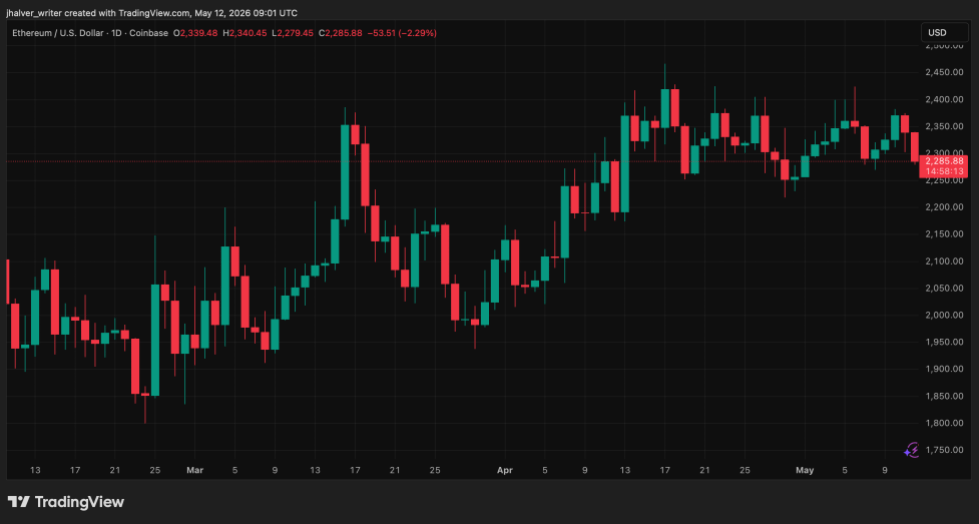
ETH's price records some losses on the daily chart. Source: ETHUSD on Tradingview 

AI Writes Its First Zero-Day Exploit

The most significant disclosure in the report is unprecedented. For the first time, GTIG has identified a threat actor using a zero-day exploit believed to have been developed with AI assistance. According to the report, a criminal threat actor had planned to deploy the exploit in a mass exploitation event — a scenario that GTIG’s proactive counter-discovery may have prevented.

The report notes that state-linked actors associated with China and North Korea have separately demonstrated significant interest in using AI for vulnerability discovery. The implications for crypto users are direct: wallet interfaces, exchange login portals, and browser extension-based authentication tools all depend on the same underlying software layers that zero-day exploits target.

Polymorphic Malware And The Limits Of 2FA For Crypto Users

Beyond zero-day development, the report documents AI-accelerated development of polymorphic malware — code that rewrites its own structure to evade detection — linked to suspected Russia-nexus threat actors, per GTIG’s analysis. AI-generated decoy logic is being embedded in malware payloads to defeat signature-based security systems.

The most direct threat to crypto users, however, comes through a capability GTIG calls PROMPTSPY — an AI-enabled malware that signals a shift toward autonomous attack orchestration. According to the report, PROMPTSPY interprets system states dynamically and generates commands in real time to manipulate victim environments. Applied to credential theft, this class of malware can observe and respond to authentication flows in ways that static attack tools cannot — including timing attacks against SMS-based and app-based two-factor authentication systems during live sessions.

Standard 2FA, long considered a reliable security baseline for exchange and wallet access, operates on the assumption that an attacker cannot observe and respond to the authentication window in real time. Autonomous, AI-driven malware capable of interpreting system states changes that assumption materially.

A Threat Environment That Has Shifted

GTIG’s report frames the current moment as a dual-use inflection point — AI is simultaneously becoming a high-value target for attacks and a sophisticated engine driving them. For participants in the nascent digital asset sector, where a single compromised seed phrase or session token represents an irreversible loss, the implications are substantial.

The security practices that adequately protected crypto users two years ago are increasingly insufficient against an adversarial toolkit that now includes AI-generated exploits, self-modifying malware, and autonomous credential-harvesting operations operating faster than human defenders can respond.

Hardware security keys, air-gapped signing devices, and multi-signature wallet architectures represent the current frontier of meaningful protection — and the distance between those measures and standard 2FA has never been wider.

Cover image from Grok, ETHUSD chart from Tradingview

Related Questions

QAccording to Google's report, what major shift has occurred in how AI is being used by threat actors targeting crypto?

AThe report states that AI has transitioned from being used in nascent and experimental ways to being embedded at scale in offensive workflows as operational infrastructure, with generative models now used for autonomous malware, AI-generated zero-day exploits, and credential-targeting operations.

QWhat is the significance of the zero-day exploit mentioned in the GTIG report?

AThe report discloses, for the first time, a threat actor using a zero-day exploit believed to have been developed with AI assistance. This exploit was intended for a mass exploitation event, a scenario potentially prevented by GTIG's proactive discovery.

QHow does the AI-enabled malware PROMPTSPY specifically threaten crypto users' standard 2FA security?

APROMPTSPY is an autonomous malware that interprets system states and generates commands in real-time. It can observe and respond to authentication flows, enabling timing attacks against SMS-based and app-based two-factor authentication (2FA) during live sessions, which static tools cannot do.

QWhat are the primary defensive measures recommended for crypto users in light of the AI-upgraded threats described in the report?

AThe report suggests that hardware security keys, air-gapped signing devices, and multi-signature wallet architectures represent the current frontier of meaningful protection, as the gap between these measures and standard 2FA has widened significantly.

QWhich state-linked actors does the report mention as showing significant interest in using AI for vulnerability discovery?

AThe report notes that state-linked actors associated with China and North Korea have demonstrated significant interest in using AI for vulnerability discovery.

Related Reads

CRCL 暴涨暴跌,COIN 跟着跳水:CLARITY Act 背后真正的利益战争

A recent draft of the CLARITY Act sparked market volatility, with Circle (CRCL) and Coinbase (COIN) stocks plunging. The core issue is Section 404 of the draft, which proposes prohibiting digital asset service providers from paying interest or rewards *solely* for holding payment stablecoins. The article argues this is not merely a technical debate over rewards, but a fundamental battle over the future role of stablecoins: Will they remain purely payment/transaction tools, or evolve into on-chain savings accounts that compete with bank deposits? US banks, fearing deposit outflow, have lobbied heavily for such restrictions. While Circle and Coinbase were both hit, their exposures differ. Circle's direct revenue primarily comes from reserve earnings, so the draft impacts its future growth narrative. Coinbase, however, relies heavily on USDC rewards and balances as part of its "Everything Exchange" platform strategy, making its growth engine more directly vulnerable. The analysis identifies three deeper layers often missed: 1) The political economy of preventing stablecoins from becoming savings substitutes. 2) The distinct impact on issuers (Circle) versus distributors/platforms (Coinbase). 3) The migration of yield demand to other tokenized securities (like MMFs) regulated under existing frameworks, as hinted in Section 505 of the same draft. In essence, three major battles are underway: banks defending their deposit base, Coinbase fighting for user entry and distribution rights, and Wall Street aiming to control the compliant path for tokenization. While a short-term headwind for crypto-native platforms, the article suggests this regulatory push could force the industry to build more sustainable value in real payment and B2B infrastructure.

marsbit33m ago

CRCL 暴涨暴跌,COIN 跟着跳水:CLARITY Act 背后真正的利益战争

marsbit33m ago

Tom Lee充值信仰:加密春天已至,ETH会涨到25万美元

Tom Lee, Chairman of BitMine (NYSE: BMNR), asserts that "Crypto Spring" has arrived and predicts ETH could reach $250,000. In his speech at "Proof of Talk 2026," he outlines five macro catalysts: the end of the Iran war reducing oil-price inflation, the likely passing of pro-crypto US legislation (the Clarity Act), a supportive White House, a crypto-friendly new Fed Chair (Kevin Warsh), and strong demographic-driven equity market growth. Lee argues that two key trends will drive ETH's value: Agentic AI/robotics, which will require blockchain for control and payments, and the massive tokenization of real-world assets (potentially a $300 trillion market). He believes Ethereum is poised to become a future monetary unit, with its price closely linked to software stocks that are already benefiting from AI. He notes the evolving role of the Ethereum Foundation, whose ETH holdings have shrunk to 0.1% of supply. He positions public treasury companies like BitMine—which holds 4.47% of ETH's circulating supply—as the new key ecosystem funders and validators. Finally, Lee promotes BitMine as a leveraged play on ETH's rise. He highlights BitMine's investments in AI/identity (via Eightco/ORBS), its massive ETH staking operation generating ~$1M daily, its stake in content creator MrBeast, and its upcoming inclusion in the Russell 1000 index, which could drive significant institutional buying. He concludes that if ETH reaches $25,000, BitMine's stock could rise dramatically from its current ~$18 price.

Odaily星球日报50m ago

Tom Lee充值信仰:加密春天已至,ETH会涨到25万美元

Odaily星球日报50m ago

Trading

Spot
Futures

Hot Articles

Discussions

Welcome to the HTX Community. Here, you can stay informed about the latest platform developments and gain access to professional market insights. Users' opinions on the price of AI (AI) are presented below.

活动图片















