Hackers Targeting Your Crypto Just Got An AI Upgrade — Google’s Report Is A Wake-Up Call

bitcoinistPublished on 2026-05-12Last updated on 2026-05-12

Abstract

Google's Threat Intelligence Group warns that AI is now being weaponized by hackers at an industrial scale, posing a direct threat to cryptocurrency users. The report details a major escalation: threat actors, including state-linked groups, are using AI to develop zero-day exploits and polymorphic malware that evades detection. A key threat is PROMPTSPY, AI-enabled malware capable of autonomous, real-time attacks that can bypass standard two-factor authentication (2FA) by observing and manipulating live authentication sessions. The findings indicate that conventional security measures like 2FA are becoming insufficient against these AI-driven tools. The report recommends advanced protections like hardware security keys and multi-signature wallets as essential for crypto users facing this new threat landscape.

Google’s Threat Intelligence Group (GTIG) has published a major security report warning that artificial intelligence is now being weaponized by state-linked hackers and criminal threat actors at industrial scale — with autonomous malware, AI-generated zero-day exploits, and credential-targeting operations posing a direct and escalating threat to crypto users relying on standard security measures.

The May 11 report, published on the Google Cloud blog by GTIG and drawing on Mandiant incident response engagements, marks a significant escalation from the group’s February 2026 findings. Where that earlier report identified AI-assisted adversarial activity as nascent and experimental, the latest assessment describes a mature transition — one where generative models are now embedded in offensive workflows at scale, not as a curiosity but as operational infrastructure.
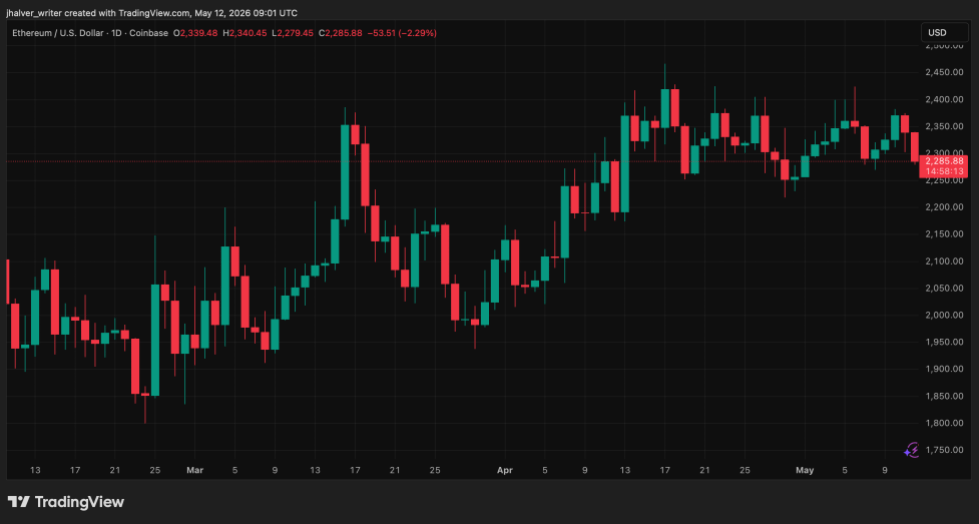
ETH's price records some losses on the daily chart. Source: ETHUSD on Tradingview 

AI Writes Its First Zero-Day Exploit

The most significant disclosure in the report is unprecedented. For the first time, GTIG has identified a threat actor using a zero-day exploit believed to have been developed with AI assistance. According to the report, a criminal threat actor had planned to deploy the exploit in a mass exploitation event — a scenario that GTIG’s proactive counter-discovery may have prevented.

The report notes that state-linked actors associated with China and North Korea have separately demonstrated significant interest in using AI for vulnerability discovery. The implications for crypto users are direct: wallet interfaces, exchange login portals, and browser extension-based authentication tools all depend on the same underlying software layers that zero-day exploits target.

Polymorphic Malware And The Limits Of 2FA For Crypto Users

Beyond zero-day development, the report documents AI-accelerated development of polymorphic malware — code that rewrites its own structure to evade detection — linked to suspected Russia-nexus threat actors, per GTIG’s analysis. AI-generated decoy logic is being embedded in malware payloads to defeat signature-based security systems.

The most direct threat to crypto users, however, comes through a capability GTIG calls PROMPTSPY — an AI-enabled malware that signals a shift toward autonomous attack orchestration. According to the report, PROMPTSPY interprets system states dynamically and generates commands in real time to manipulate victim environments. Applied to credential theft, this class of malware can observe and respond to authentication flows in ways that static attack tools cannot — including timing attacks against SMS-based and app-based two-factor authentication systems during live sessions.

Standard 2FA, long considered a reliable security baseline for exchange and wallet access, operates on the assumption that an attacker cannot observe and respond to the authentication window in real time. Autonomous, AI-driven malware capable of interpreting system states changes that assumption materially.

A Threat Environment That Has Shifted

GTIG’s report frames the current moment as a dual-use inflection point — AI is simultaneously becoming a high-value target for attacks and a sophisticated engine driving them. For participants in the nascent digital asset sector, where a single compromised seed phrase or session token represents an irreversible loss, the implications are substantial.

The security practices that adequately protected crypto users two years ago are increasingly insufficient against an adversarial toolkit that now includes AI-generated exploits, self-modifying malware, and autonomous credential-harvesting operations operating faster than human defenders can respond.

Hardware security keys, air-gapped signing devices, and multi-signature wallet architectures represent the current frontier of meaningful protection — and the distance between those measures and standard 2FA has never been wider.

Cover image from Grok, ETHUSD chart from Tradingview

Related Questions

QAccording to Google's report, what major shift has occurred in how AI is being used by threat actors targeting crypto?

AThe report states that AI has transitioned from being used in nascent and experimental ways to being embedded at scale in offensive workflows as operational infrastructure, with generative models now used for autonomous malware, AI-generated zero-day exploits, and credential-targeting operations.

QWhat is the significance of the zero-day exploit mentioned in the GTIG report?

AThe report discloses, for the first time, a threat actor using a zero-day exploit believed to have been developed with AI assistance. This exploit was intended for a mass exploitation event, a scenario potentially prevented by GTIG's proactive discovery.

QHow does the AI-enabled malware PROMPTSPY specifically threaten crypto users' standard 2FA security?

APROMPTSPY is an autonomous malware that interprets system states and generates commands in real-time. It can observe and respond to authentication flows, enabling timing attacks against SMS-based and app-based two-factor authentication (2FA) during live sessions, which static tools cannot do.

QWhat are the primary defensive measures recommended for crypto users in light of the AI-upgraded threats described in the report?

AThe report suggests that hardware security keys, air-gapped signing devices, and multi-signature wallet architectures represent the current frontier of meaningful protection, as the gap between these measures and standard 2FA has widened significantly.

QWhich state-linked actors does the report mention as showing significant interest in using AI for vulnerability discovery?

AThe report notes that state-linked actors associated with China and North Korea have demonstrated significant interest in using AI for vulnerability discovery.

Related Reads

On-Chain Figures on the Eve of Kickoff: 1.6 Billion Traded Before the World Cup Even Begins

"On-Chain Numbers on the Eve of the World Cup: $1.6 Billion Traded Before Kick-off" Analysis of on-chain markets before the 2026 FIFA World Cup reveals significant crypto integration into football. The most striking figure is the approximately **$1.6 billion** in total trading volume on the single "World Cup Winner" contract on the Polymarket prediction market platform, accumulated before a single match was played. This represents explosive growth for a sector whose annual volume surged from ~$16B in 2024 to ~$64B in 2025. The ecosystem is maturing beyond speculation. Key developments include: 1) **Infrastructure upgrades** like Polymarket's migration to native, regulated USDC stablecoin for settlements; 2) **Reliable data oracles**, such as Chainlink, being used to resolve real-world match outcomes on-chain; and 3) **Official recognition**, with FIFA appointing its first-ever "Prediction Markets" partner. Over 100 contracts now cover everything from the outright winner to individual match results and even non-sporting risks like venue relocation. This evolution marks a fundamental shift. While crypto firms are absent from FIFA's top-tier sponsor list, the technology has deeply penetrated the tournament's financial and predictive infrastructure through regulated stablecoin settlements, decentralized oracles, and new official partnership categories. The regulatory landscape remains complex and varies by jurisdiction, but on-chain markets for the World Cup are already a multi-billion-dollar reality.

marsbit23m ago

On-Chain Figures on the Eve of Kickoff: 1.6 Billion Traded Before the World Cup Even Begins

marsbit23m ago

From SpaceX's IPO to the Future of Crypto: Which Crypto Sectors Will Host the Trillion-Dollar Narrative?

From the SpaceX IPO, which targets a $750 billion raise at a $1.77 trillion valuation, we can extrapolate capital flow trends relevant to crypto. The focus shifts from speculative narratives to foundational infrastructure and real-world asset (RWA) integration. Key crypto sectors poised to benefit include: 1. **AI Infrastructure**: The narrative is moving from consumer-facing AI applications to underlying, scarce resources like compute power and decentralized GPU networks (e.g., TAO, RENDER, AKT, IO). These protocols are positioning as the essential "picks and shovels" providers for the AI economy. 2. **Real-World Assets (RWA)**: Beyond tokenized treasury bonds, RWA's future lies in on-chain equity and pre-IPO assets like SpaceX. This could democratize access to high-growth assets and reshape global capital flows, benefiting infrastructure projects like ONDO, LINK, and Plume that facilitate issuance, data, and liquidity. 3. **Core Financial Infrastructure**: Stablecoins, payment networks, and DePIN (Decentralized Physical Infrastructure Networks) are critical for settling the future on-chain economy. Their role expands from internal trading tools to foundational layers for global finance, AI systems, and real-world asset networks, leading to potential value reassessment. In summary, the next cycle may prioritize long-term infrastructure value—AI compute, asset tokenization networks, and settlement layers—over short-lived application hype, mirroring the broader market's shift towards funding the foundational systems of the future.

marsbit44m ago

From SpaceX's IPO to the Future of Crypto: Which Crypto Sectors Will Host the Trillion-Dollar Narrative?

marsbit44m ago

Tech Stocks Plunge and Bitcoin Slumps, Retail Investors Face Ultimate Test Ahead of SpaceX IPO

Technology stocks suffered their biggest drop in months, and Bitcoin fell below the $60,000 mark, coinciding with the eve of SpaceX's massive IPO plans. The sell-off was triggered by strong U.S. jobs data, dashing hopes for Fed rate cuts and reviving fears of further hikes. High-valuation sectors like AI and semiconductors led the declines, with the Nasdaq plunging over 4%. Cryptocurrencies, sensitive to higher interest rates and a strong dollar, also tumbled sharply. This market stress test raises critical questions about the limits of retail investor capital and its next destination. SpaceX's upcoming IPO, which plans to allocate an unusually high 30% of shares to retail investors, now faces a more uncertain landscape. Analysts warn that to buy SpaceX,散户 may need to sell existing holdings, with Tesla seen as a potential source of funds. The market is saturated with speculative options—from crypto and meme stocks to zero-day options and AI-themed ETFs—all competing for the same pool of retail attention and capital. While SpaceX's listing could inject fresh excitement, it also enters a fiercely competitive environment where investor loyalty is fleeting. The ease of zero-commission trading and lower barriers to margin trading accelerate capital rotation between narratives, making it difficult for any single story, even a historic IPO like SpaceX's, to dominate for long.

华尔街日报1h ago

Tech Stocks Plunge and Bitcoin Slumps, Retail Investors Face Ultimate Test Ahead of SpaceX IPO

华尔街日报1h ago

Trading

Spot
Futures

Hot Articles

Discussions

Welcome to the HTX Community. Here, you can stay informed about the latest platform developments and gain access to professional market insights. Users' opinions on the price of AI (AI) are presented below.

活动图片















