Gilded Idols and Zeroed Memes: The Absurd Crypto Drama Behind Trump's Giant Statue

比推Published on 2026-02-05Last updated on 2026-02-05

Abstract

A group of cryptocurrency investors spent $300,000 to commission a 15-foot-tall, gold-plated bronze statue of former President Donald Trump, dubbed "Don Colossus," as part of a promotional effort for a meme token called PATRIOT. The statue, intended to honor Trump’s support for cryptocurrency, was planned to be displayed at his Doral golf resort in Florida, with organizers claiming Trump himself expressed interest in attending its unveiling. However, the project faced multiple setbacks, including delays, internal disputes, and a sharp decline in the value of PATRIOT token—which plummeted over 90% after Trump launched his own official meme coin. The sculptor, Alan Cottrill, accused the investors of using his copyrighted work without fully paying for intellectual property rights, stating they still owed him approximately $90,000. Despite these issues, promoters continued marketing the token through conservative media and influencers. Although the statue’s base was installed at Trump’s resort, the project’s future remains uncertain after Trump’s son Eric, denied any involvement with the token. The episode highlights the speculative and often chaotic nature of meme coin ventures.

Original Title: "Don Colossus" a Golden Statue of President Trump, Waits for Its Home

Original Author: David Yaffe-Bellany, The New York Times

Original Compilation: Luffy, Foresight News

Original Title: Gilded Idols and Zeroed Memes: The Absurd Crypto Drama Behind Trump's Giant Statue


This statue of President Trump is called "Don Colossus." It stands 15 feet tall, mounted on a base weighing 7,000 pounds, making its total height comparable to a two-story building. The colossal statue is cast in bronze and coated with a thick layer of gold leaf. (Note: Don Colossus translates directly to "Giant Don," referring to Trump as a giant.)

For over a year, this gilded statue has been at the heart of one of the strangest money-making schemes of the Trump era. A group of cryptocurrency investors spent $300,000 to commission a sculptor to create this statue as a tribute to Trump, who has been outspoken in his support for cryptocurrency.

Subsequently, they used the statue to promote a Meme coin named PATRIOT.

Now, unexpectedly, this plan seems to be coming to fruition. Last month, a base made of concrete and stainless steel was completed at Trump's Doral golf resort complex in Florida. According to message records reviewed by The New York Times, Mark Burns, one of the project's organizers and a friend of Trump, told collaborators that the President plans to attend the statue's unveiling ceremony there.

"The statue looks great," Trump wrote in a letter to Burns last December.
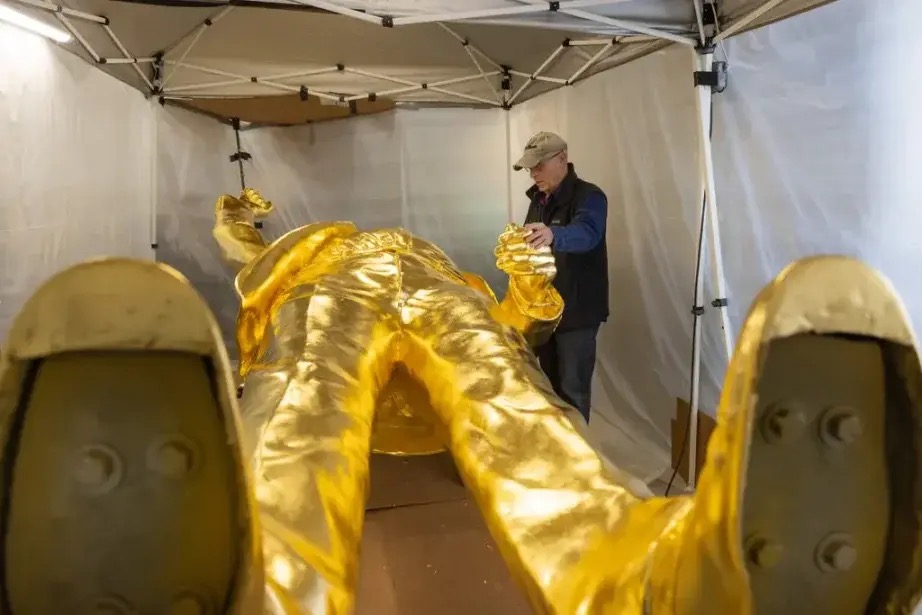
Alan Cottrill inspects his designed gilded statue of President Trump in Zanesville, Ohio

Almost everyone in the cryptocurrency space has tried to profit from Trump's presidency: either by striking business deals with his family or seeking regulatory leniency from his administration. But few have been as bold as the backers of PATRIOT.

Meme coins are a type of cryptocurrency with almost no practical function beyond speculation, typically built around viral internet jokes or celebrity images. Their value depends entirely on the price that online fans are willing to pay. The key to creating a Meme coin is generating enough online buzz to make potential buyers believe its price will continue to rise.

Building a giant statue is an expensive way to create social media hype, but it's also a potentially profitable plan. According to one of the project's organizers, the investors who funded the statue received large quantities of the token, the price of which sometimes skyrocketed. For months, the supporters of "Don Colossus" posted progress pictures of the statue's creation on platform X and forged alliances within the "Make America Great Again" camp, aiming for a marketing coup: placing the statue on Trump's official property.

In late 2024, the PATRIOT Meme coin was officially launched, coinciding with Trump's promise to make the U.S. the "cryptocurrency capital of the world." The token's price surged initially. During an event in Washington on the presidential inauguration weekend, the token's supporters presented a miniature bronze statue to Trump's former advisor Steve Bannon and interacted with other conservative figures.

However, repeated project delays and internal disputes cast a shadow over this money-making scheme and offered a glimpse into the volatility of the Meme coin market: a market rife with scams where investors often end up losing everything. Last year, PATRIOT's price plummeted, nearly reaching zero. To rush the statue's completion to boost the token, the investors also clashed with the sculptor Alan Cottrill, based in Ohio.

In text messages reviewed by The New York Times, Cottrill stated that the investors still owed him $75,000 for the statue's intellectual property rights.

"You are using my copyrighted statue image to market your token!" he wrote in a message to one of the token supporters last month.

"Yeah, lol, we planned to do that from day one," replied Ashley Sansalone. Sansalone is a cryptocurrency developer involved in another token project called Elon GOAT, besides PATRIOT.
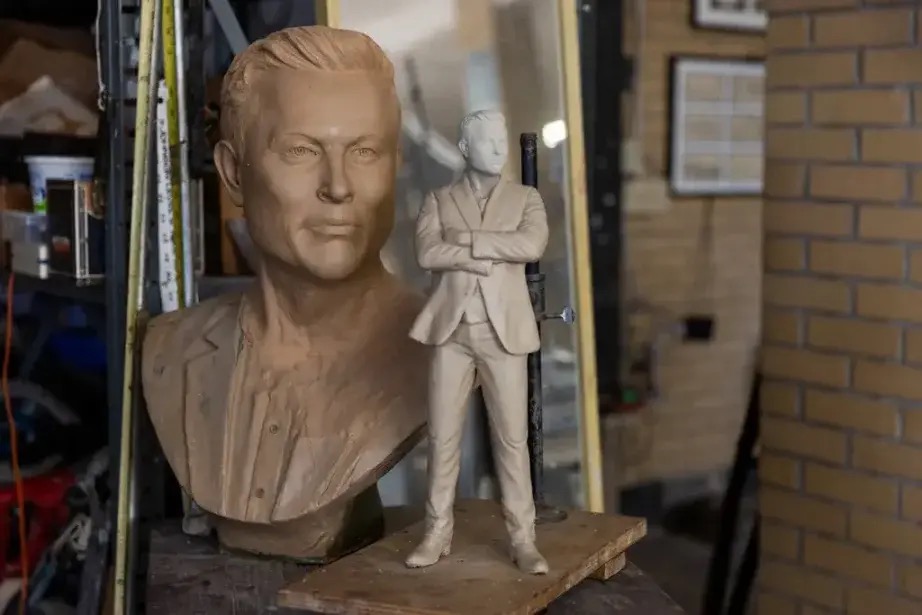
A sculpture of Elon Musk commissioned from Alan Cottrill

Sansalone said in a statement that Cottrill would be paid in full before the statue's unveiling. "In any business agreement, a portion of the payment is withheld until the final product is delivered," he said.

But it remains unclear when the statue will actually be displayed.

On Monday, after The New York Times inquired with the White House and the Trump Organization about the PATRIOT token, the President's son Eric Trump issued a statement on platform X.

"We appreciate everyone's support and enthusiasm," he said, "but it must be clear that we are not involved in any matters related to this token."

Creating "Don Colossus"

The plan to create "Don Colossus" was born in a group chat on the instant messaging app Telegram, a platform where cryptocurrency enthusiasts often exchange investment tips and promote tokens. It was July 2024, just after Trump had narrowly survived an assassination attempt in Butler, Pennsylvania, where he raised his fist with a determined expression.

Sansalone wanted to make this defiant image the core of a Meme coin. He collaborated with right-wing activist Dustin Stockton, and the well-connected cryptocurrency investor Brock Pierce also joined, though Pierce has long been embroiled in various legal and financial disputes.

Shortly after the bullet grazed Trump's ear, Sansalone contacted the 73-year-old Cottrill, whose bronze statue of Edison is now displayed in the U.S. Capitol. Over the years, Cottrill has created statues of more than a dozen U.S. presidents, including 10-foot-tall memorial statues of George Washington and Thomas Jefferson.

Cottrill standing in a room filled with sculptures

This group of cryptocurrency investors wanted Trump's statue to be taller than his previous works and also requested some aesthetic modifications.

"My initial sculpture was very realistic," Cottrill said in an interview last month. "Those crypto guys asked me to trim some of the fat from his neck and slim down his figure a bit."

By the time of Trump's inauguration, Cottrill had completed the statue. The giant bronze figure, not yet gilded at the time, was the tallest of all his works. Last December, Trump reposted a Breitbart News article about the project on social media, which stated that Stockton was communicating with the presidential inaugural committee to plan an unveiling ceremony for the statue during the inauguration weekend.

The timing of this repost was perfect: the PATRIOT token had just gone on sale.

The official website read: "The people's crypto token, a statue that no one can erase."

But then, the project suffered two major setbacks. Freezing weather in Washington caused a series of logistical problems, forcing the statue unveiling plan to be shelved; and shortly before the inauguration, Trump launched his own Meme coin, TRUMP.

As cryptocurrency traders scrambled to buy the official token, Stockton and Pierce held a "Patriot Awards" event at the National Press Club in Washington, handing out miniature statue models.

"The atmosphere suddenly cooled because Trump's token price suddenly skyrocketed," Cottrill said.

By the end of January, PATRIOT's price had plummeted by over 90%.

"A Prime Location"

Despite this setback, the cryptocurrency investors continued their marketing push. In February last year, the infamous former congressman George Santos displayed a miniature Trump statue on Fox News, specifically mentioning the PATRIOT token.

A small gilded statue of Trump with a raised fist, surrounded by several darker versions of the same statue

Stockton reposted the video on platform X, proclaiming: "This kind of exposure is priceless!" In a brief phone interview, Santos said: "I was paid to advertise it, and I'm always upfront about that."

The investors were also courting another influential ally: Burns. The prominent pastor is a confidant of Trump and is sometimes referred to as the President's informal "spiritual advisor."

After Pierce introduced him to the project team, Burns began participating in the statue-related work. He quickly became a key figure in reviving the project, suggesting that the bronze statue be gilded with gold leaf.

"The President just asked me for photos of the statue after it's gilded," Burns wrote in a message to collaborators last November.

Trump's wish eventually came true. Sansalone told the team he had consulted a gold leaf supplier in New York that had previously provided decorations for Trump Tower. Cottrill also shared the latest finished photos of the statue.

"So shiny, so beautiful," Sansalone replied.

"Wow...... sending this to the President now," Burns wrote.

Clearly, Trump was impressed by the statue. Last month, Cottrill traveled to Florida to install the 7,000-pound base at Trump's Doral golf resort complex. Stockton boasted on social media that it was a "prime location." Burns said in a text message to collaborators in January that White House schedulers were currently "actively finalizing" a date for the President to attend the official unveiling ceremony of the statue.

Trump National Doral Golf Course in Florida

This should have been Cottrill's moment of glory, but he says he has had enough of the cryptocurrency investors behind it.

Cottrill stated that it wasn't until the fall of 2022024 that he discovered these cryptocurrency investors were using images of his work to market a digital currency, which he believes infringes on his intellectual property.

Eventually, he reached an agreement with the investors: they would pay a $150,000 copyright fee for the statue. But he claims he has not received the remaining payment, and with other outstanding fees, they still owe him approximately $90,000 in total.

Cryptocurrency investors demanded that Trump's statue be sufficiently tall and requested some appearance modifications

"In my view, they never actually purchased this intellectual property and are now using it illegally," he said. "Unless all debts are settled, this statue will never leave my foundry."

But the project's organizers argue that this project hasn't actually made much money.

Burns said he never requested or received any payment. Stockton, in an interview, stated that the PATRIOT token was merely a fundraising tool intended to "provide financial support for various matters related to the statue."

"I haven't seen anyone make big money from this," Stockton said.

Kimberly Benza, a spokesperson for the Trump Organization, said the company was unaware of the existence of this Meme coin until The New York Times inquired about it this week. She did not respond to questions about whether the statue unveiling ceremony would proceed as planned.

This farce has not stopped the project's promotion on social media. An X account associated with the token recently posted photos of the statue base in Doral and pinned a message detailing how to purchase the Meme coin.

"The dream is still alive," Sansalone said during a live stream with Burns on January 16th.

In addition to the giant statue, the team also hopes to present Trump with a gilded miniature version of the same statue. "We hope to have a piece displayed in the Oval Office," Sansalone said.



Original link:https://www.bitpush.news/articles/7608937

Related Questions

QWhat is the name of the key feature of the cryptocurrency project described in the article, and what is it made of?

AThe key feature is a giant statue called 'Don Colossus'. It is a 15-foot-tall bronze statue covered in a thick layer of gold leaf, mounted on a 7,000-pound base.

QWhat was the primary purpose of creating the 'Don Colossus' statue for the cryptocurrency investors?

AThe primary purpose was to serve as a marketing tool to promote a meme coin called PATRIOT, which was created to honor Donald Trump's vocal support for cryptocurrency.

QWho is the sculptor who created the 'Don Colossus' statue, and what major conflict did he have with the project's investors?

AThe sculptor is Alan Cottrill. The major conflict was that the investors used the image of his copyrighted statue to market their PATRIOT meme coin without fully paying him the agreed-upon intellectual property fees, leaving a debt of approximately $90,000.

QAccording to the article, what significant event caused the value of the PATRIOT meme coin to plummet by over 90%?

AThe value of the PATRIOT meme coin plummeted shortly after Donald Trump launched his own official meme coin, called TRUMP, which cryptocurrency traders rushed to buy instead.

QWhat was the response from the Trump organization when asked about their involvement with the PATRIOT meme coin?

AEric Trump, the president's son, stated on X that while they appreciated the support, the Trump organization was 'not involved with this token in any way' and had no participation in the matter.

Related Reads

Can a Hair Dryer Earn $34,000? Deciphering the Reflexivity Paradox in Prediction Markets

An individual manipulated a weather sensor at Paris Charles de Gaulle Airport with a portable heat source, causing a Polymarket weather market to settle at 22°C and earning $34,000. This incident highlights a fundamental issue in prediction markets: when a market aims to reflect reality, it also incentivizes participants to influence that reality. Prediction markets operate on two layers: platform rules (what outcome counts as a win) and data sources (what actually happened). While most focus on rules, the real vulnerability lies in the data source. If reality is recorded through a specific source, influencing that source directly affects market settlement. The article categorizes markets by their vulnerability: 1. **Single-point physical data sources** (e.g., weather stations): Easily manipulated through physical interference. 2. **Insider information markets** (e.g., MrBeast video details): Insiders like team members use non-public information to trade. Kalshi fined a剪辑师 $20,000 for insider trading. 3. **Actor-manipulated markets** (e.g., Andrew Tate’s tweet counts): The subject of the market can control the outcome. Evidence suggests Tate’sociated accounts coordinated to profit. 4. **Individual-action markets** (e.g., WNBA disruptions): A single person can execute an event to profit from their pre-placed bets. Kalshi and Polymarket handle these issues differently. Kalshi enforces strict KYC, publicly penalizes insider trading, and reports to regulators. Polymarket, with its anonymous wallet-based system, has historically been more permissive, arguing that insider information improves market accuracy. However, it cooperated with authorities in the "Van Dyke case," where a user traded on classified government information. The core paradox is reflexivity: prediction markets are designed to discover truth, but their financial incentives can distort reality. The more valuable a prediction becomes, the more likely participants are to influence the event itself. The market ceases to be a mirror of reality and instead shapes it.

marsbit12m ago

Can a Hair Dryer Earn $34,000? Deciphering the Reflexivity Paradox in Prediction Markets

marsbit12m ago

First Day Review of "Musk's WeChat" XChat: Even Worse Than Expected

Elon Musk's much-anticipated "WeChat-like" app, XChat, has officially launched after multiple delays. The initial review reveals a product that falls short of expectations, offering an experience largely similar to X Platform's (formerly Twitter) direct messages, despite being marketed as an encrypted communication tool. Key observations from the first-day test include: 1. The app's promoted "end-to-end encryption" and its claimed relation to Bitcoin's architecture were criticized by experts as a superficial attempt to capitalize on crypto buzz, with no real technical connection. 2. Musk's vision of an ad-free "secure communication system" is technically met, but only because the app is currently extremely basic, featuring only a single chat interface. 3. A promised anti-screenshot feature appears inconsistent; it works in X Platform group chats but fails within the XChat app itself, where screenshots still capture avatars. 4. The app supports 45 languages and has a 16+ age rating, indicating a broader tolerance for content compared to WeChat's 13+ rating. 5. A puzzling login process requires users to verify the email associated with their X account. 6. The touted encryption" feels minimal in practice, with its presence only indicated by a simple "Encrypted - Yes" label on messages. 7. Disappearing message timers for groups can be set from 5 minutes to 4 weeks, with the timer starting upon being read by a user. 8. Group invite links are shared with X Platform groups. 9. Group size limits are planned to be increased, aiming for 1000 members, a move that has drawn user criticism. 10. The app offers 8 different colored icons, and its chat bubbles are notably similar to WeChat's. Message deletion options mimic Telegram's. Crucially, many pre-announced features like importing X contacts, integrating Grok AI, X Money payments, and Cashtags are not yet available. The initial release is seen as a bare-bones and underwhelming first step.

Odaily星球日报1h ago

First Day Review of "Musk's WeChat" XChat: Even Worse Than Expected

Odaily星球日报1h ago

Trading

Spot
Futures

Hot Articles

What is SONIC

Sonic: Pioneering the Future of Gaming in Web3 Introduction to Sonic In the ever-evolving landscape of Web3, the gaming industry stands out as one of the most dynamic and promising sectors. At the forefront of this revolution is Sonic, a project designed to amplify the gaming ecosystem on the Solana blockchain. Leveraging cutting-edge technology, Sonic aims to deliver an unparalleled gaming experience by efficiently processing millions of requests per second, ensuring that players enjoy seamless gameplay while maintaining low transaction costs. This article delves into the intricate details of Sonic, exploring its creators, funding sources, operational mechanics, and the timeline of significant events that have shaped its journey. What is Sonic? Sonic is an innovative layer-2 network that operates atop the Solana blockchain, specifically tailored to enhance the existing Solana gaming ecosystem. It accomplishes this through a customised, VM-agnostic game engine paired with a HyperGrid interpreter, facilitating sovereign game economies that roll up back to the Solana platform. The primary goals of Sonic include: Enhanced Gaming Experiences: Sonic is committed to offering lightning-fast on-chain gameplay, allowing players and developers to engage with games at previously unattainable speeds. Atomic Interoperability: This feature enables transactions to be executed within Sonic without the need to redeploy Solana programmes and accounts. This makes the process more efficient and directly benefits from Solana Layer1 services and liquidity. Seamless Deployment: Sonic allows developers to write for Ethereum Virtual Machine (EVM) based systems and execute them on Solana’s SVM infrastructure. This interoperability is crucial for attracting a broader range of dApps and decentralised applications to the platform. Support for Developers: By offering native composable gaming primitives and extensible data types - dining within the Entity-Component-System (ECS) framework - game creators can craft intricate business logic with ease. Overall, Sonic's unique approach not only caters to players but also provides an accessible and low-cost environment for developers to innovate and thrive. Creator of Sonic The information regarding the creator of Sonic is somewhat ambiguous. However, it is known that Sonic's SVM is owned by the company Mirror World. The absence of detailed information about the individuals behind Sonic reflects a common trend in several Web3 projects, where collective efforts and partnerships often overshadow individual contributions. Investors of Sonic Sonic has garnered considerable attention and support from various investors within the crypto and gaming sectors. Notably, the project raised an impressive $12 million during its Series A funding round. The round was led by BITKRAFT Ventures, with other notable investors including Galaxy, Okx Ventures, Interactive, Big Brain Holdings, and Mirana. This financial backing signifies the confidence that investment foundations have in Sonic’s potential to revolutionise the Web3 gaming landscape, further validating its innovative approaches and technologies. How Does Sonic Work? Sonic utilises the HyperGrid framework, a sophisticated parallel processing mechanism that enhances its scalability and customisability. Here are the core features that set Sonic apart: Lightning Speed at Low Costs: Sonic offers one of the fastest on-chain gaming experiences compared to other Layer-1 solutions, powered by the scalability of Solana’s virtual machine (SVM). Atomic Interoperability: Sonic enables transaction execution without redeployment of Solana programmes and accounts, effectively streamlining the interaction between users and the blockchain. EVM Compatibility: Developers can effortlessly migrate decentralised applications from EVM chains to the Solana environment using Sonic’s HyperGrid interpreter, increasing the accessibility and integration of various dApps. Ecosystem Support for Developers: By exposing native composable gaming primitives, Sonic facilitates a sandbox-like environment where developers can experiment and implement business logic, greatly enhancing the overall development experience. Monetisation Infrastructure: Sonic natively supports growth and monetisation efforts, providing frameworks for traffic generation, payments, and settlements, thereby ensuring that gaming projects are not only viable but also sustainable financially. Timeline of Sonic The evolution of Sonic has been marked by several key milestones. Below is a brief timeline highlighting critical events in the project's history: 2022: The Sonic cryptocurrency was officially launched, marking the beginning of its journey in the Web3 gaming arena. 2024: June: Sonic SVM successfully raised $12 million in a Series A funding round. This investment allowed Sonic to further develop its platform and expand its offerings. August: The launch of the Sonic Odyssey testnet provided users with the first opportunity to engage with the platform, offering interactive activities such as collecting rings—a nod to gaming nostalgia. October: SonicX, an innovative crypto game integrated with Solana, made its debut on TikTok, capturing the attention of over 120,000 users within a short span. This integration illustrated Sonic’s commitment to reaching a broader, global audience and showcased the potential of blockchain gaming. Key Points Sonic SVM is a revolutionary layer-2 network on Solana explicitly designed to enhance the GameFi landscape, demonstrating great potential for future development. HyperGrid Framework empowers Sonic by introducing horizontal scaling capabilities, ensuring that the network can handle the demands of Web3 gaming. Integration with Social Platforms: The successful launch of SonicX on TikTok displays Sonic’s strategy to leverage social media platforms to engage users, exponentially increasing the exposure and reach of its projects. Investment Confidence: The substantial funding from BITKRAFT Ventures, among others, emphasizes the robust backing Sonic has, paving the way for its ambitious future. In conclusion, Sonic encapsulates the essence of Web3 gaming innovation, striking a balance between cutting-edge technology, developer-centric tools, and community engagement. As the project continues to evolve, it is poised to redefine the gaming landscape, making it a notable entity for gamers and developers alike. As Sonic moves forward, it will undoubtedly attract greater interest and participation, solidifying its place within the broader narrative of blockchain gaming.

1.1k Total ViewsPublished 2024.04.04Updated 2024.12.03

What is SONIC

What is $S$

Understanding SPERO: A Comprehensive Overview Introduction to SPERO As the landscape of innovation continues to evolve, the emergence of web3 technologies and cryptocurrency projects plays a pivotal role in shaping the digital future. One project that has garnered attention in this dynamic field is SPERO, denoted as SPERO,$$s$. This article aims to gather and present detailed information about SPERO, to help enthusiasts and investors understand its foundations, objectives, and innovations within the web3 and crypto domains. What is SPERO,$$s$? SPERO,$$s$ is a unique project within the crypto space that seeks to leverage the principles of decentralisation and blockchain technology to create an ecosystem that promotes engagement, utility, and financial inclusion. The project is tailored to facilitate peer-to-peer interactions in new ways, providing users with innovative financial solutions and services. At its core, SPERO,$$s$ aims to empower individuals by providing tools and platforms that enhance user experience in the cryptocurrency space. This includes enabling more flexible transaction methods, fostering community-driven initiatives, and creating pathways for financial opportunities through decentralised applications (dApps). The underlying vision of SPERO,$$s$ revolves around inclusiveness, aiming to bridge gaps within traditional finance while harnessing the benefits of blockchain technology. Who is the Creator of SPERO,$$s$? The identity of the creator of SPERO,$$s$ remains somewhat obscure, as there are limited publicly available resources providing detailed background information on its founder(s). This lack of transparency can stem from the project's commitment to decentralisation—an ethos that many web3 projects share, prioritising collective contributions over individual recognition. By centring discussions around the community and its collective goals, SPERO,$$s$ embodies the essence of empowerment without singling out specific individuals. As such, understanding the ethos and mission of SPERO remains more important than identifying a singular creator. Who are the Investors of SPERO,$$s$? SPERO,$$s$ is supported by a diverse array of investors ranging from venture capitalists to angel investors dedicated to fostering innovation in the crypto sector. The focus of these investors generally aligns with SPERO's mission—prioritising projects that promise societal technological advancement, financial inclusivity, and decentralised governance. These investor foundations are typically interested in projects that not only offer innovative products but also contribute positively to the blockchain community and its ecosystems. The backing from these investors reinforces SPERO,$$s$ as a noteworthy contender in the rapidly evolving domain of crypto projects. How Does SPERO,$$s$ Work? SPERO,$$s$ employs a multi-faceted framework that distinguishes it from conventional cryptocurrency projects. Here are some of the key features that underline its uniqueness and innovation: Decentralised Governance: SPERO,$$s$ integrates decentralised governance models, empowering users to participate actively in decision-making processes regarding the project’s future. This approach fosters a sense of ownership and accountability among community members. Token Utility: SPERO,$$s$ utilises its own cryptocurrency token, designed to serve various functions within the ecosystem. These tokens enable transactions, rewards, and the facilitation of services offered on the platform, enhancing overall engagement and utility. Layered Architecture: The technical architecture of SPERO,$$s$ supports modularity and scalability, allowing for seamless integration of additional features and applications as the project evolves. This adaptability is paramount for sustaining relevance in the ever-changing crypto landscape. Community Engagement: The project emphasises community-driven initiatives, employing mechanisms that incentivise collaboration and feedback. By nurturing a strong community, SPERO,$$s$ can better address user needs and adapt to market trends. Focus on Inclusion: By offering low transaction fees and user-friendly interfaces, SPERO,$$s$ aims to attract a diverse user base, including individuals who may not previously have engaged in the crypto space. This commitment to inclusion aligns with its overarching mission of empowerment through accessibility. Timeline of SPERO,$$s$ Understanding a project's history provides crucial insights into its development trajectory and milestones. Below is a suggested timeline mapping significant events in the evolution of SPERO,$$s$: Conceptualisation and Ideation Phase: The initial ideas forming the basis of SPERO,$$s$ were conceived, aligning closely with the principles of decentralisation and community focus within the blockchain industry. Launch of Project Whitepaper: Following the conceptual phase, a comprehensive whitepaper detailing the vision, goals, and technological infrastructure of SPERO,$$s$ was released to garner community interest and feedback. Community Building and Early Engagements: Active outreach efforts were made to build a community of early adopters and potential investors, facilitating discussions around the project’s goals and garnering support. Token Generation Event: SPERO,$$s$ conducted a token generation event (TGE) to distribute its native tokens to early supporters and establish initial liquidity within the ecosystem. Launch of Initial dApp: The first decentralised application (dApp) associated with SPERO,$$s$ went live, allowing users to engage with the platform's core functionalities. Ongoing Development and Partnerships: Continuous updates and enhancements to the project's offerings, including strategic partnerships with other players in the blockchain space, have shaped SPERO,$$s$ into a competitive and evolving player in the crypto market. Conclusion SPERO,$$s$ stands as a testament to the potential of web3 and cryptocurrency to revolutionise financial systems and empower individuals. With a commitment to decentralised governance, community engagement, and innovatively designed functionalities, it paves the way toward a more inclusive financial landscape. As with any investment in the rapidly evolving crypto space, potential investors and users are encouraged to research thoroughly and engage thoughtfully with the ongoing developments within SPERO,$$s$. The project showcases the innovative spirit of the crypto industry, inviting further exploration into its myriad possibilities. While the journey of SPERO,$$s$ is still unfolding, its foundational principles may indeed influence the future of how we interact with technology, finance, and each other in interconnected digital ecosystems.

54 Total ViewsPublished 2024.12.17Updated 2024.12.17

What is $S$

What is AGENT S

Agent S: The Future of Autonomous Interaction in Web3 Introduction In the ever-evolving landscape of Web3 and cryptocurrency, innovations are constantly redefining how individuals interact with digital platforms. One such pioneering project, Agent S, promises to revolutionise human-computer interaction through its open agentic framework. By paving the way for autonomous interactions, Agent S aims to simplify complex tasks, offering transformative applications in artificial intelligence (AI). This detailed exploration will delve into the project's intricacies, its unique features, and the implications for the cryptocurrency domain. What is Agent S? Agent S stands as a groundbreaking open agentic framework, specifically designed to tackle three fundamental challenges in the automation of computer tasks: Acquiring Domain-Specific Knowledge: The framework intelligently learns from various external knowledge sources and internal experiences. This dual approach empowers it to build a rich repository of domain-specific knowledge, enhancing its performance in task execution. Planning Over Long Task Horizons: Agent S employs experience-augmented hierarchical planning, a strategic approach that facilitates efficient breakdown and execution of intricate tasks. This feature significantly enhances its ability to manage multiple subtasks efficiently and effectively. Handling Dynamic, Non-Uniform Interfaces: The project introduces the Agent-Computer Interface (ACI), an innovative solution that enhances the interaction between agents and users. Utilizing Multimodal Large Language Models (MLLMs), Agent S can navigate and manipulate diverse graphical user interfaces seamlessly. Through these pioneering features, Agent S provides a robust framework that addresses the complexities involved in automating human interaction with machines, setting the stage for myriad applications in AI and beyond. Who is the Creator of Agent S? While the concept of Agent S is fundamentally innovative, specific information about its creator remains elusive. The creator is currently unknown, which highlights either the nascent stage of the project or the strategic choice to keep founding members under wraps. Regardless of anonymity, the focus remains on the framework's capabilities and potential. Who are the Investors of Agent S? As Agent S is relatively new in the cryptographic ecosystem, detailed information regarding its investors and financial backers is not explicitly documented. The lack of publicly available insights into the investment foundations or organisations supporting the project raises questions about its funding structure and development roadmap. Understanding the backing is crucial for gauging the project's sustainability and potential market impact. How Does Agent S Work? At the core of Agent S lies cutting-edge technology that enables it to function effectively in diverse settings. Its operational model is built around several key features: Human-like Computer Interaction: The framework offers advanced AI planning, striving to make interactions with computers more intuitive. By mimicking human behaviour in tasks execution, it promises to elevate user experiences. Narrative Memory: Employed to leverage high-level experiences, Agent S utilises narrative memory to keep track of task histories, thereby enhancing its decision-making processes. Episodic Memory: This feature provides users with step-by-step guidance, allowing the framework to offer contextual support as tasks unfold. Support for OpenACI: With the ability to run locally, Agent S allows users to maintain control over their interactions and workflows, aligning with the decentralised ethos of Web3. Easy Integration with External APIs: Its versatility and compatibility with various AI platforms ensure that Agent S can fit seamlessly into existing technological ecosystems, making it an appealing choice for developers and organisations. These functionalities collectively contribute to Agent S's unique position within the crypto space, as it automates complex, multi-step tasks with minimal human intervention. As the project evolves, its potential applications in Web3 could redefine how digital interactions unfold. Timeline of Agent S The development and milestones of Agent S can be encapsulated in a timeline that highlights its significant events: September 27, 2024: The concept of Agent S was launched in a comprehensive research paper titled “An Open Agentic Framework that Uses Computers Like a Human,” showcasing the groundwork for the project. October 10, 2024: The research paper was made publicly available on arXiv, offering an in-depth exploration of the framework and its performance evaluation based on the OSWorld benchmark. October 12, 2024: A video presentation was released, providing a visual insight into the capabilities and features of Agent S, further engaging potential users and investors. These markers in the timeline not only illustrate the progress of Agent S but also indicate its commitment to transparency and community engagement. Key Points About Agent S As the Agent S framework continues to evolve, several key attributes stand out, underscoring its innovative nature and potential: Innovative Framework: Designed to provide an intuitive use of computers akin to human interaction, Agent S brings a novel approach to task automation. Autonomous Interaction: The ability to interact autonomously with computers through GUI signifies a leap towards more intelligent and efficient computing solutions. Complex Task Automation: With its robust methodology, it can automate complex, multi-step tasks, making processes faster and less error-prone. Continuous Improvement: The learning mechanisms enable Agent S to improve from past experiences, continually enhancing its performance and efficacy. Versatility: Its adaptability across different operating environments like OSWorld and WindowsAgentArena ensures that it can serve a broad range of applications. As Agent S positions itself in the Web3 and crypto landscape, its potential to enhance interaction capabilities and automate processes signifies a significant advancement in AI technologies. Through its innovative framework, Agent S exemplifies the future of digital interactions, promising a more seamless and efficient experience for users across various industries. Conclusion Agent S represents a bold leap forward in the marriage of AI and Web3, with the capacity to redefine how we interact with technology. While still in its early stages, the possibilities for its application are vast and compelling. Through its comprehensive framework addressing critical challenges, Agent S aims to bring autonomous interactions to the forefront of the digital experience. As we move deeper into the realms of cryptocurrency and decentralisation, projects like Agent S will undoubtedly play a crucial role in shaping the future of technology and human-computer collaboration.

552 Total ViewsPublished 2025.01.14Updated 2025.01.14

What is AGENT S

Discussions

Welcome to the HTX Community. Here, you can stay informed about the latest platform developments and gain access to professional market insights. Users' opinions on the price of S (S) are presented below.

活动图片











