German Central Bank Chief Backs Stablecoins, CBDCs For Europe’s Payment Independence

bitcoinistPublished on 2026-02-18Last updated on 2026-02-18

Abstract

The President of the German central bank, Joachim Nagel, advocates for the adoption of euro-pegged stablecoins and a retail CBDC (digital euro) to enhance Europe's payment independence and reduce reliance on the US dollar. He emphasized that these digital assets could lower cross-border payment costs and support programmable transactions. However, he also warned of risks to European monetary sovereignty if foreign currency-denominated stablecoins, particularly those pegged to the US dollar, become widely used. Nagel noted that while the threat of economic "dollarization" is currently low, proactive measures—including the development of a wholesale CBDC and support for euro-denominated stablecoins—are essential to safeguard monetary policy effectiveness and strengthen European sovereignty in an increasingly fragmented geopolitical landscape.

The President of the German central bank has supported the use of euro-pegged stablecoins and Central Bank Digital Currencies (CBDCs) to protect the bloc’s payments independence.

Bundesbank Chief Pushes For Stablecoins, CBDCs

On Monday, Joachim Nagel, President of the Deutsche Bundesbank, touted euro-pegged stablecoins and CBDCs as strategic tools for reducing the European Union’s (EU) reliance on the US dollar (USD).

In a speech at the New Year’s Reception of the American Chamber of Commerce in Frankfurt, Nagel highlighted that Europe has been affected by geoeconomic fragmentation, which has slowed the bloc’s economic growth and decreased competitiveness over the last couple of years.

As a result, the German Central Bank’s chief affirmed that Europe must take “decisive” measures to boost its economic dynamic, focusing on supporting the international role of the euro and making the EU “more independent in terms of payment systems and solutions.”

He highlighted the bloc’s efforts with CBDCs, noting that “Currently, the Eurosystem is working hard on the introduction of the digital euro – a retail central bank digital currency, or CBDC. This will be the first pan-European retail digital payment solution, based solely on European infrastructures.”

Additionally, Nagel emphasized the role of stablecoins, reaffirming that he sees merit in euro-denominated stablecoins for cross-border payments by both individuals and firms at a lower cost.

Last week, he outlined the benefits of the fiat-pegged tokens at a dinner speech at the Euro50 Group meeting. The Bundesbank president noted that stablecoins open the door for programmable transactions and could facilitate cross-border payments by reducing the transaction costs and duration.

However, he also discussed the potential European monetary policy challenges in the new geopolitical environment, including central bank independence and the rise of US-denominated stablecoins.

European Sovereignty At Risk

According to Nagel, the rise of stablecoins could pose risks for the EU if the digital assets, particularly those denominated in a foreign currency, become widely used as means of payment and store of value in the euro area.

He noted that the US, under the Trump administration, has been promoting the development of the crypto industry by working on establishing a clear regulatory framework that protects customers and fosters innovation.

Notably, US President Donald Trump signed into law the Guiding and Establishing National Innovation for U.S. Stablecoins Act, also known as the GENIUS Act, last July, offering a legal framework for issuers to operate within the US.

Since then, the sector has seen strong growth, with its market capitalization rising nearly 50% last year from $205 billion at the start of the year to over $300 billion in late 2025. Nonetheless, most of the market is dominated by USD-denominated stablecoins, while the share of euro-pegged tokens accounts for less than 1%.

“Thus, if this market composition persists, a hypothetical replacement of a domestic currency with stablecoins would be equivalent to a dollarization of the corresponding economy,” the Bundesbank Chief explained. “In this scenario, the effectiveness of domestic monetary policy could be severely impaired, not to mention that European sovereignty could be weakened.”

Nagel asserted that the risk of this scenario materializing is small, but added that authorities are exploring ways to leverage new technological opportunities to reduce its likelihood.

He advocated for a wholesale CBDC to allow institutional actors on financial markets to execute programmable transactions in central bank money. In addition, they could support DLT-based payment instruments not directly related to central bank money, such as tokenized deposits and euro-denominated stablecoins.

To him, “these measures will allow us to utilise cutting-edge digital technologies to maintain our monetary policy effectiveness in an uncertain geopolitical future. Additionally, they will increase our sovereignty.”
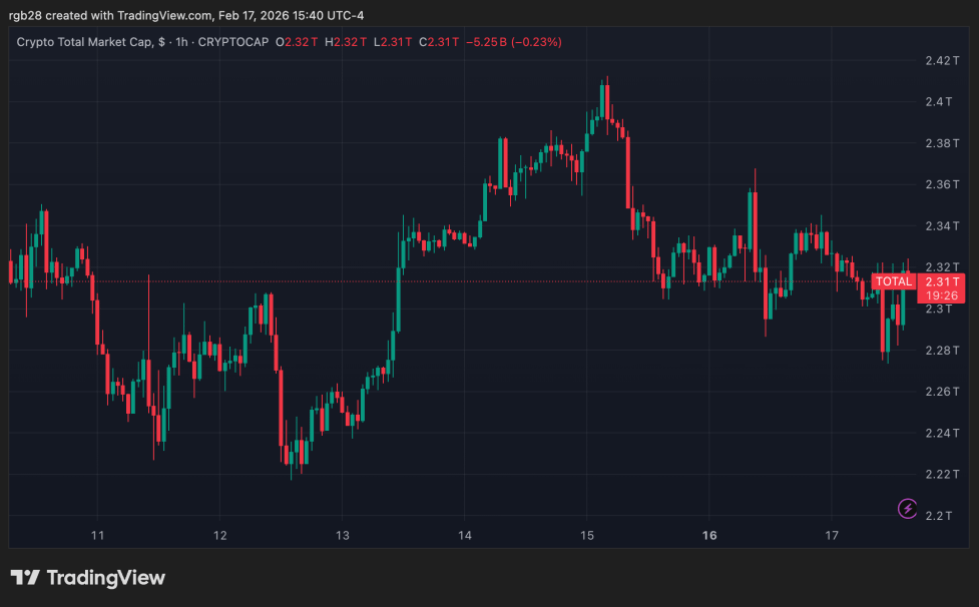
The total crypto market capitalization is at $2.31 trillion in the one-week chart. Source: TOTAL on Tradingview


Trending Cryptos

Related Questions

QWhat did the President of the German central bank support to protect Europe's payment independence?

AThe President of the German central bank, Joachim Nagel, supported the use of euro-pegged stablecoins and Central Bank Digital Currencies (CBDCs) to protect the bloc's payment independence.

QAccording to Nagel, what are the potential risks of stablecoins for the European Union?

ANagel stated that if stablecoins, particularly those denominated in a foreign currency like the US dollar, become widely used as a means of payment and store of value in the euro area, it could lead to a 'dollarization' of the economy, severely impair the effectiveness of domestic monetary policy, and weaken European sovereignty.

QWhat is the current market share of euro-pegged stablecoins compared to USD-denominated ones?

AThe market is dominated by USD-denominated stablecoins, while the share of euro-pegged tokens accounts for less than 1% of the total stablecoin market capitalization.

QWhat specific digital payment solution is the Eurosystem working on, as mentioned by Nagel?

AThe Eurosystem is working on the introduction of the digital euro, which Nagel described as 'the first pan-European retail digital payment solution, based solely on European infrastructures.'

QWhat US law did Nagel mention that provides a regulatory framework for stablecoin issuers?

ANagel mentioned that former US President Donald Trump signed the Guiding and Establishing National Innovation for U.S. Stablecoins Act, also known as the GENIUS Act, into law, which offers a legal framework for stablecoin issuers to operate within the US.

Related Reads

Manus Buyback Plan Emerges: Chinese Investors Plan to Repurchase Equity with $2 Billion, Path to Hong Kong IPO Becomes Clearer

According to a report by The Information, early Chinese investors of Manus, including Tencent, Sequoia Capital China, and ZhenFund, are planning to repurchase the company from Meta for $2 billion—the same price Meta paid in its acquisition last December. This move is a direct response to the Chinese government's prohibition of the foreign acquisition in April. As part of the repurchase plan, Manus is considering establishing a Sino-foreign joint venture within China. This structure is seen as a way to ensure regulatory compliance for its Chinese investors and to pave the way for a future IPO in Hong Kong. Notably, U.S. investor Benchmark will not participate in the buyback, which will concentrate ownership even more among Chinese capital. Since its acquisition by Meta, Manus's business has grown rapidly, with its annualized revenue run rate reportedly increasing four-to-fivefold to $400-$500 million in roughly six months. This strong growth underpins the investors' willingness to repurchase at the original price. Financially, the forced unwinding of the deal may benefit the early investors, allowing them to regain equity at a cost far below the company's current implied valuation, with the added prospect of an independent future listing. However, specific terms of the repurchase, including funding proportions and the joint venture's equity structure, are still under negotiation. This "repurchase-joint venture-Hong Kong IPO" approach could serve as a reference model for other Chinese AI startups navigating cross-border M&A regulations.

marsbit10m ago

Manus Buyback Plan Emerges: Chinese Investors Plan to Repurchase Equity with $2 Billion, Path to Hong Kong IPO Becomes Clearer

marsbit10m ago

STRC Loses Peg by 11%, Can Strategy's Perpetual Motion Machine Keep Running?

The article discusses the significant and concerning depegging of MicroStrategy's (MSTR) preferred stock, STRC. Designed to trade near its $100 target par value, STRC has recently fallen sharply, reaching a low of $83.26 and closing at $88.59, representing an over 11% discount. STRC is a core component of MicroStrategy's financial strategy. As a perpetual preferred stock, it allows the company to raise capital through an "at-the-market" (ATM) issuance program without diluting common shareholders (MSTR). This capital is primarily used to purchase Bitcoin, creating a "capital flywheel": issuing STRC → raising cash → buying BTC → increasing net assets → supporting STRC's value. The flywheel's operation depends on STRC maintaining its $100 price. To enforce this, MicroStrategy employs a dynamic dividend mechanism, recently raising the rate to 11.5% and increasing payout frequency. However, this has failed to halt the depegging, indicating market concerns extend beyond yield. Analysts cite two main reasons. First, technical factors like forced liquidations from leveraged arbitrage trades may have exacerbated the sell-off. Second, and more fundamentally, is waning confidence in MicroStrategy's financial resilience. A JPMorgan report highlighted the company's limited cash relative to its ~$1.7 billion annual dividend obligation, raising liquidity concerns. While MicroStrategy counters that its massive Bitcoin holdings provide decades of coverage, this argument relies on the potential need to sell BTC—a departure from its long-standing "never sell" narrative. The company's recent sale of a small amount of Bitcoin for "testing," despite being framed as minor, has intensified these fears. The persistent depegging threatens to cripple MicroStrategy's primary funding channel. If STRC remains discounted, the company's ability to fund further Bitcoin purchases weakens. Should cash reserves dwindle while financing is constrained, the market may increasingly price in the risk of MicroStrategy becoming a forced seller of Bitcoin to meet obligations. This shift from a major marginal buyer to a potential seller could pose significant downside risk to the broader Bitcoin market.

链捕手19m ago

STRC Loses Peg by 11%, Can Strategy's Perpetual Motion Machine Keep Running?

链捕手19m ago

Behind the AI Scorecards Lies a Chinese 'Question Setter'

Behind the AI scorecards that dominate industry discussions—benchmarks like MMLU-Pro, MMMU, and MMMU-Pro—stands a Chinese-Canadian researcher: Wenhu Chen. As an assistant professor at the University of Waterloo and founder of the TIGER Lab, Chen has become a key "exam-setter" for evaluating large language and multimodal models. Chen first gained broader recognition with MMLU-Pro, a more challenging and stable update to the popular MMLU benchmark. As top models like OpenAI’s o3 began achieving near-perfect scores on the original MMLU, it became difficult to distinguish their true capabilities. MMLU-Pro introduced more complex reasoning questions, expanded answer choices, and filtered out ambiguous or simple items, effectively reintroducing differentiation among state-of-the-art models. His work on MMMU addressed the evaluation of multimodal models, requiring them to integrate visual information (like charts, diagrams, or tables) with textual knowledge across diverse academic subjects. Even the strongest models initially scored only around 56-59%, highlighting significant room for improvement in genuine multimodal reasoning. MMMU-Pro further refined this by preventing models from bypassing visual cues. Chen’s research focus has long been on complex information understanding and reasoning. His background—including a PhD at UC Santa Barbara, research at Google/DeepMind on Gemini, and now a role in Meta’s superintelligence lab—provides deep insight into model development and their potential weaknesses. His TIGER Lab also builds models (e.g., for video understanding and generation), ensuring his evaluation benchmarks are grounded in practical challenges. While AI headlines often spotlight company leaders and product launches, Chen’s work exemplifies the critical, behind-the-scenes contributions of researchers crafting the rigorous standards that define and drive progress in AI capabilities.

marsbit1h ago

Behind the AI Scorecards Lies a Chinese 'Question Setter'

marsbit1h ago

STRC Unpegged by 11%, Can Strategy's Perpetual Motion Machine Keep Turning?

STRC, the perpetual preferred stock of MicroStrategy, is experiencing a persistent de-pegging from its target par value of $100, with the discount recently widening to over 11%. This de-anchoring challenges the core design of STRC, which was intended as a stable, income-oriented security operating near $100. As a crucial funding engine for MicroStrategy's Bitcoin acquisition strategy, STRC's price reflects market confidence in the company's entire capital model. The company's "capital flywheel" relies on issuing STRC at or above $100 via an At-the-Market (ATM) program to raise cash for buying Bitcoin, thereby boosting company equity and theoretically supporting STRC's value. A monthly adjustable dividend mechanism was designed to maintain this peg. Despite raising the dividend to 11.5% and increasing payment frequency, the de-pegging persists. Market concerns extend beyond technical factors like leveraged arbitrage unwinding. Analysts point to MicroStrategy's limited cash reserves relative to its ~$1.7 billion annual dividend obligation for preferred shares. While the company counters that its vast Bitcoin holdings could cover decades of payments, this argument hinges on the potential need to sell Bitcoin—a shift from its longstanding "hodl" narrative. The company's recent sale of a small amount of BTC, framed as a test, amplified these liquidity and strategy concerns. If STRC remains discounted, impairing MicroStrategy's ability to raise cheap capital, fears may grow that the company could sell more Bitcoin to meet obligations. This scenario could transform MicroStrategy from a major market buyer into a potential seller, posing significant downside risk for Bitcoin. The re-pegging of STRC is thus a key indicator for the health of MicroStrategy's capital structure and its market impact.

Odaily星球日报1h ago

STRC Unpegged by 11%, Can Strategy's Perpetual Motion Machine Keep Turning?

Odaily星球日报1h ago

Trading

Spot
Futures

Hot Articles

What is $BANK

Bank AI: A Revolutionary Step in the Future of Banking Introduction In an era marked by rapid advancements in technology, Bank AI stands at the intersection of artificial intelligence (AI) and banking services. This innovative project seeks to redefine the financial landscape, enhancing operational efficiency, security measures, and customer experiences through the power of AI. As we embark on this exploration of Bank AI, we will delve into what the project entails, its operational dynamics, its historical context, and significant milestones. What is Bank AI? At its core, Bank AI represents a transformative initiative aimed at integrating artificial intelligence into various banking operations. This project harnesses the capabilities of AI to automate processes, improve risk management protocols, and enhance customer interaction through personalised services. The primary objectives of Bank AI include: Automation of Banking Functions: By leveraging AI technologies, Bank AI aims to automate routine tasks, reducing the burden on human resources and enhancing efficiency. Enhanced Risk Management: The project utilises AI algorithms to predict and identify risks, thereby fortifying security measures against fraud and other threats. Personalisation of Banking Services: Bank AI focuses on offering tailored financial products and services by analysing customer data and behaviours. Improving Customer Experience: The implementation of AI-driven solutions, such as chatbots and virtual assistants, aims to provide users with more human-like interactions, revolutionising the way customers engage with banks. With these goals, Bank AI positions itself as a crucial player in rendering banking more efficient, secure, and user-centric. Who is the Creator of Bank AI? Details regarding the creator of Bank AI remain unknown. As such, no specific individual or organisation has been identified in the available information. The anonymity surrounding the project's inception raises questions but does not detract from its ambitious vision and objectives. Who are the Investors of Bank AI? Similar to the project's creator, specific information regarding the investors or supporting organisations of Bank AI has not been disclosed. Without this information, it is challenging to outline the financial backing and institutional support that might be propelling the project forward. Nevertheless, the importance of having a robust investment foundation is pivotal for sustaining development in such an innovative field. How Does Bank AI Work? Bank AI operates on several innovative fronts, focusing on unique factors that differentiate it from traditional banking frameworks. Below are key operational features: Automation: By applying machine learning algorithms, Bank AI automates various manual processes within banks. This results in reduced operational costs and allows human workers to redirect their efforts towards more strategic activities. Advanced Risk Management: The integration of AI into risk management practices equips banks with tools to accurately predict potential threats such as fraud, ensuring that customer information and assets remain secure. Tailored Financial Recommendations: Through continuous learning from customer interactions, the AI systems develop a nuanced understanding of user needs, enabling them to offer tailored advice on financial decisions. Enhanced Customer Interactions: Utilizing chatbots and virtual assistants powered by AI, Bank AI enables a more engaging customer experience, allowing users to have their queries resolved quickly, thus reducing wait times and improving satisfaction levels. Together, these operational features position Bank AI as a pioneer in the banking sector, establishing new benchmarks for service delivery and operational excellence. Timeline of Bank AI Understanding the trajectory of Bank AI requires a look at its historical context. Below is a timeline highlighting important milestones and developments: Early 2010s: The conceptualisation of AI integration into banking services began to gain attention as banking institutions recognised the potential benefits. 2018: A marked increase in the implementation of AI technologies occurred when banks started using AI tools like chatbots for basic customer service and risk management systems for improved security handling. 2023: The sophistication of AI continued to advance, with generative AI being introduced for more complex tasks such as document processing and real-time investment analysis. This year marked a significant leap in the capabilities afforded to banks by AI technology. 2024-Current Status: As of this year, Bank AI is on an upward trajectory, with ongoing research and developments poised to further enhance capabilities in banking operations. Continued exploration of AI applications hints at exciting developments yet to come. Key Points About Bank AI Integration of AI in Banking: Bank AI focuses on adopting artificial intelligence to streamline banking processes and improve user experiences. Automation and Risk Management Focus: The project strongly emphasises these areas, aiming to shift the burden of routine tasks while enhancing security frameworks through predictive analytics. Personalised Banking Solutions: By harnessing customer data, Bank AI enables tailored banking services that cater to individual user needs. Commitment to Development: Bank AI remains committed to ongoing research and development efforts, ensuring its adaptability and ongoing relevance as technology continues to evolve. Conclusion In summary, Bank AI exemplifies a crucial step forward in the banking industry, leveraging artificial intelligence to reshape operational paradigms, enhance security, and promote customer satisfaction. Despite gaps in information surrounding the creator and investors, the clear objectives and functional mechanisms of Bank AI provide a strong foundation for its ongoing evolution. As AI technology continues to advance and merge with the banking sector, Bank AI is well-positioned to significantly impact the future of financial services, enhancing the way we understand and interact with banking.

159 Total ViewsPublished 2024.04.06Updated 2024.12.03

What is $BANK

Discussions

Welcome to the HTX Community. Here, you can stay informed about the latest platform developments and gain access to professional market insights. Users' opinions on the price of BANK (BANK) are presented below.

活动图片