DeepSeek's Next Battlefield: The War Quietly Begins in This Fifth-Tier City

marsbitPublished on 2026-08-11Last updated on 2026-08-11

Abstract

DeepSeek and other major AI players are quietly shifting their battle for supremacy to the infrastructure front, with Wulanchabu, a small city in Inner Mongolia, emerging as a key battleground. The article details a visit to the massive data center clusters there, highlighting the industry's pivot from a light-asset model of renting computing power to a strategic race to build and control foundational AI infrastructure. Wulanchabu's advantages—low electricity costs (around ¥0.32-0.35 per kWh, 90% green energy), cool climate, and proximity to Beijing—have made it China's largest AI computing cluster. Companies like Alibaba Cloud are deploying modular, prefabricated data center "cabins" that can be assembled on-site in as little as 100 days, dramatically accelerating deployment compared to traditional multi-year construction. This "new Foxconn" model standardizes components for mass production. The drive for efficiency is paramount. Alibaba’s latest architecture flattens design, integrating power distribution, backup batteries, and liquid-cooled server racks into single modules. The ultimate bottleneck is power. As AI training and, increasingly, inference demand skyrocket, electricity cost and availability become decisive competitive factors. The industry faces the challenge of aligning fast-paced computing demand with slower power grid planning. DeepSeek's significant investment in building its own computing center in Wulanchabu underscores this trend: securing large-scale,...

After passing through multiple security checks and having phone camera lenses covered with privacy film, Phoenix Network Technology entered this data center located in Ulanqab, Inner Mongolia. This facility supports the large-scale intelligent computing operations of cloud providers and AI companies, serving as a microcosm of China's AI industry's struggle for computing infrastructure.

Contrary to expectations of dusty scenes, a low, deep hum filled the air—the sound of chilled air roaring through the containerized modules. Orange-and-white massive box-like structures stood in orderly rows, awaiting the insertion of computing cards.

"It can be said that today, not a single card is idle. Delivery translates directly to productivity; faster delivery enables greater customer value," explained Wang Chaoyang, General Manager of Alibaba Cloud Global Data Centers, to us.

Since the beginning of this year, as AI newcomers like DeepSeek have announced plans to build or co-build their own data centers, the industry has been quietly shifting from the light-asset model of "renting space, buying computing power" towards gaining deeper control over the computing power foundation. The corporate logic has also evolved from simply purchasing cards to stockpiling strategic assets, with ten thousand or even a hundred thousand cards becoming the starting threshold.

Ulanqab has thus become a key battleground for AI giants vying for computing power dominance. From self-built data centers with self-developed equipment to modular "containerized" solutions achieving rapid 100-day delivery in leased facilities, a "new Foxconn" model for the AI era is emerging.

Visiting Ulanqab: What's Inside an Intelligent Computing Center?

Ulanqab, a grassland city in central Inner Mongolia with an annual average temperature of just 4.3 degrees Celsius, entered the AI industry's spotlight in mid-year following a recruitment notice from DeepSeek.

Historically known as the "Potato Capital of China," Ulanqab introduced Huawei in 2013 to build its first cloud data center as the mobile internet era dawned, officially kicking off the big data epoch. In the subsequent years, the rise and fall of the internet unfolded here silently in symbols unreadable by humans, with Huawei, Alibaba, Apple, Kuaishou, 21Vianet, and GDS successively establishing a presence.

According to local government data, by the end of 2025, Ulanqab had signed 84 data center projects, 81 of which are intelligent computing centers, with total investments exceeding 500 billion yuan.

In 2026, a new protagonist arrived. DeepSeek began large-scale recruitment for its intelligent computing center in Ulanqab, planning to build an ultra-large intelligent computing center with a total power capacity of 1 Gigawatt (GW) there, simultaneously hiring IDC design and planning engineers.

Following the industry's collective gaze, the veil was lifted on a massive intelligent computing center cluster originally hidden on the grasslands. Phoenix Network Technology also arrived in Ulanqab this August.

"One step west from Beijing, and you're in Ulanqab." Exiting the high-speed rail station, besides the refreshing cool air, eye-catching red promotional banners were visible.

Situated 350 km from Beijing, reachable by high-speed rail in under two hours, with network latency as low as 4 milliseconds, a cool climate year-round, strong winds, dry air, and located away from seismic zones... Most importantly, it's a "price trough" for electricity, with green power accounting for 90% of its supply and electricity prices at 0.32-0.35 yuan per kWh—hosting the same data center in Ulanqab could save 5 billion yuan in annual electricity costs compared to a neighboring city.

With these combined advantages, Ulanqab has become the nation's largest intelligent computing cluster, surpassing all Eastern Data to Western Computing nodes, transforming into a true "City of Tokens."

Alibaba Cloud's data center campus is also in Ulanqab. Here, there is not only a data center Alibaba built years ago but also a newly constructed 5.0 containerized data center delivered in just 100 days using modular design—the latter now handles 80% of Alibaba Cloud's intelligent computing business.

Left: The top of the Alibaba data center office building, featuring a 'Mongolian yurt'-style structure for insulation; Right: Exterior view of the data center.

Here, we discovered that data center construction isn't just about "building houses." Like DeepSeek hiring IDC design and planning engineers, it's full of intricacies. For instance, Alibaba's self-built 2.0 architecture data center in Ulanqab represents the pinnacle of the previous generation's technology. To save power, Alibaba trialed its self-developed Panama Power Supply here, drastically compressing the power transformation process. To conserve water, the data center employs a closed-loop system, even utilizing server-generated heat to warm equipment rooms in winter.

In the power distribution room, our guide explained, "In traditional data centers, the first floor is all infrastructure, with servers on the second. But in our new 5.0 architecture, everything has been 'flattened.'"

This "flattening" essentially means "transforming construction into manufacturing, replacing projects with products," Wang Chaoyang clarified. Everything from the 10kV medium-voltage power distribution and the self-developed Panama Power Supply to lithium battery backup and liquid-cooled IT cabinets is prefabricated inside the containers. On-site, it's merely about positioning the containers like Lego blocks and connecting the cables.

"In the past, building a data center required thousands of workers on site. Now, it's a team of cranes positioning the containers. Our record is from breaking ground on a new building to delivery in four and a half months." The guide revealed that while currently constrained by pulsed shortages of upstream raw materials and components—making the ideal 100-day timeline with "30 days of prefabrication" sometimes difficult to hit perfectly—the assembly phase has been optimized to the extreme.

DeepSeek Joins the Fray, Competing for Computing Infrastructure

In recent years, competition among large model companies has focused on algorithms, data, and model parameters.

But entering the era of ten-thousand or even hundred-thousand-card training, computing power has transformed from a "procured resource" into a strategic asset determining a company's survival.

DeepSeek's heavy investment is a microcosm of this trend. A harsh reality faces all AI race contenders: readily available computing power facilities on the market have long been snapped up. Traditional construction cycles of 12 months or more simply cannot keep pace with the exponential explosion in Token demand. In the context of an AI demand boom, whoever can more quickly secure a large-scale, high-density, low-cost, dedicated computing power foundation holds the ticket to the next round of competition.

Moreover, the rise of Agents has led to an explosive growth in inference demand as well. According to China's National Bureau of Statistics, the national daily Token call volume surpassed 140 trillion in March 2026. This necessitates an even larger scale of data center construction.

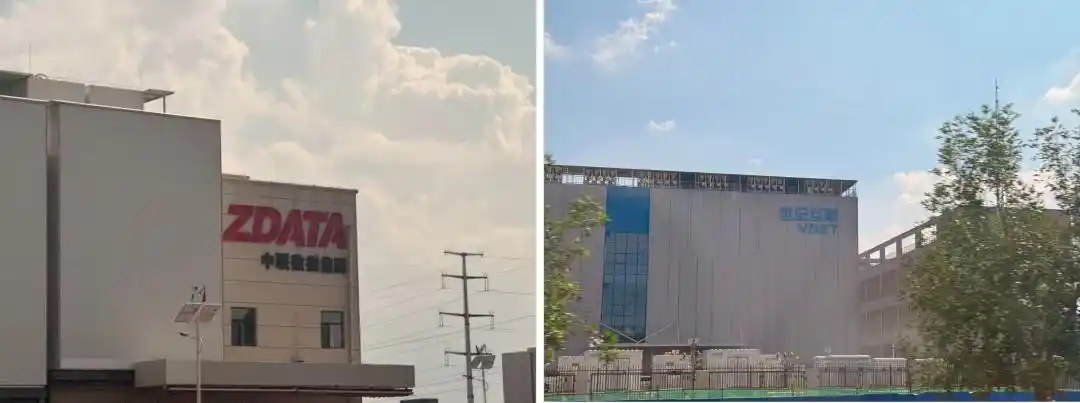
The massive Token demand has led to data centers springing up everywhere. Phoenix Network Technology witnessed numerous projects under construction in Ulanqab. In areas like Yiwutang, Bayin, and Chayou Qianqi, besides internet companies like Huawei, Kuaishou, and Alibaba, third-party data service providers like 21Vianet and Zhongjin Data occupy even larger plots.
How to make Tokens operate more efficiently has become a new competitive focus in the AI era.

Wang Chaoyang recalled significant internal opposition when the modular solution was first proposed, deemed too costly. "But once a product iterates and optimizes, costs will inevitably come down." Resistance persisted when seeking partners. "One partner disagreed, saying the cost was too high. Upon review, we found they had overestimated the cost per kilowatt by more than one-third. They later regretted it deeply; they had miscalculated." Wang stated that many partners have now fully accepted the approach.

What made him more aware of the industry shift was the reaction from competitors. "One of our biggest competitors spent three months internally learning it. Hearing we were developing the next architecture made them very nervous. Other partners are also asking when our new standard will be released." Not just domestically; overseas operators are following suit. In his view, this solution has evolved from Alibaba's own exploration into a path the industry is collectively adopting.

Alibaba Cloud has even more ambitious plans for data center construction—"to become the Foxconn of this industry." Through an ODM model, they aim for the supply chain to engage in large-scale manufacturing according to Alibaba's self-developed standards.

Inside the containers, even a power supply module is highly standardized. The guide used the on-site air conditioning as an example: "The market predominantly offers AC air conditioning, but AC to DC conversion incurs losses. Alibaba specifically commissioned a smaller manufacturer to customize DC air conditioning for this architecture." Wang Chaoyang later added that within this modular solution, "each module has undergone optimal debugging," and China's supply chain can fully keep up. "Wherever we want to build in a major base, these manufacturers are willing to follow us and set up local factories."

Wang Chaoyang emphasized that modularization is useless if not achieving over 90%. "If only 30% or 20% is modularized, it only solves part of the product issue. First, it doesn't address overall cost problems; second, it certainly doesn't solve overall delivery timeline issues." He also acknowledged the practical challenge of modularization: "once internally finalized, it's hard to change. Fortunately, we can now continuously iterate. Behind modularization must be versioning and standardization."

This capability to turn data centers into "standard products" could also stir the landscape of the US-China AI race. Wang Chaoyang further mentioned that China's manufacturing capacity is "frightening"; finding a few enterprises in Zhejiang can produce these containerized data centers. In contrast, facing widespread shortages of skilled labor overseas and delivery cycles stretching to 30 months, leveraging modular products from China's supply chain would present a crushing advantage. "When performance catches up with competitors, our Token cost will undoubtedly be at a killer level."

The Ultimate Limit of AI is Electricity

The ultimate limit of computing power is electricity. All efforts toward extreme efficiency and cost control ultimately point to electricity.

"For the same data center, locating it in Ulanqab versus a neighboring city can result in a 50 billion yuan difference in annual electricity costs," said Wang Chaoyang. When data center scales are over ten times larger than before, with single cabinet power heading towards 1000 kilowatts (equivalent to the heat emitted by over ten thousand people), electricity price becomes the sole critical factor besides chips.

However, cheap electricity isn't simply waited for. As AI enters the era of inference explosion, computing power demand presents a "two-way flow"—training workloads head west in a "three-level depth" pursuit of low-cost green power, while inference workloads move east in a "three-level下沉" (sinking) to be closer to economic hubs.

This encounters the current biggest pain point: computing-power-electricity coordination. Wang Chaoyang observed that many current so-called source-grid-load-storage initiatives are essentially for new energy consumption, not genuine computing power coordination. "Electricity delivery takes three to five years, but our computing power delivery is compressed to 100 days. When Tokens are experiencing quasi-exponential explosion, planning coordination is crucial."

Caption: Construction sites are everywhere.

He judges that the gap between current planned scale and actual demand is so significant that it will force the industry to develop explosive solutions within two years. "Power companies are excited but unsure how to participate. Future data centers cannot be rigid loads; they must become flexible, self-regulating systems, allowing computing power to adapt to electricity supply, achieving dynamic balance."

To find balance in water-scarce Inner Mongolia, Alibaba is also relentlessly tackling water usage. In Ulanqab, data centers exclusively use reclaimed water, with benchmark projects achieving a Water Usage Effectiveness (WUE) as low as 0.088, almost negligible water consumption. Wang Chaoyang admitted: "Using more water can save electricity, and low water pricing leads manufacturers to prefer water cooling. But when building ultra-large clusters, social costs must be considered, finding that微妙 (subtle)临界点 (critical point) between optimal cost and greenness."

From the "Potato Capital" to "China's Computing Power Capital," Ulanqab is witnessing a frenzied advance in computing infrastructure. As Alibaba Cloud and others transform data centers from "civil engineering projects" into "products" mass-producible on factory assembly lines, and as new players like DeepSeek also begin building their own computing power foundations along this path, a new paradigm for AI infrastructure, supported by Chinese manufacturing, is emerging.

Inside those orange-and-white containers on the grasslands, Tokens are being produced 24/7. The next chapter of this computing power surge may well be the true arrival of AI普惠 (inclusiveness/accessibility) when these "Chinese solutions" flow globally along the supply chain.

This article is from the WeChat public account "Phoenix Network Technology," author: Phoenix Network Technology.


Trending Cryptos

Related Questions

QAccording to the article, why has Ulanqab become a key battleground for AI giants competing in computing power infrastructure?

AUlanqab has become a key battleground due to its combination of advantages: proximity to Beijing (350 km, ~2 hours by high-speed rail with 4ms latency), low average annual temperature (4.3°C), high green electricity ratio (90%), and extremely low electricity prices (0.32-0.35 RMB/kWh), saving up to 5 billion RMB in annual electricity costs compared to neighboring cities for similar data centers.

QWhat is the core innovation behind Alibaba Cloud's new 5.0 data center architecture described in the article?

AThe core innovation is the 'flattened' modular 'cabin' design. It transforms data center construction from an on-site engineering project into a factory-produced product. Prefabricated cabins containing medium-voltage power distribution, self-developed Panama power supplies, lithium battery backup, and liquid-cooled IT cabinets are delivered to the site. They are then simply hoisted into place and connected, drastically reducing construction time from years to a target of 100 days.

QWhat major shift in strategy for AI companies does the article highlight, using DeepSeek as an example?

AThe article highlights a strategic shift from a light-asset model of 'renting data center space and buying computing power' to deeply controlling the computing power infrastructure itself. Companies like DeepSeek are moving towards building or co-building their own large-scale data centers, treating computing power as a strategic asset to be stockpiled, with thresholds starting at tens of thousands or even hundreds of thousands of GPUs.

QWhat challenge related to power supply does Alibaba Cloud's Wang Zhaoyang identify for the future of large-scale AI computing clusters?

AHe identifies the challenge of 'computing-power coordination.' The delivery timeline for new power infrastructure is often 3-5 years, while modular data center delivery can be compressed to 100 days. This creates a significant planning gap as token demand grows explosively. He argues future data centers must evolve from being rigid power loads to becoming flexible, self-adaptive systems that dynamically balance computing tasks with the available power supply.

QWhat broader industry role does Alibaba Cloud envision for itself through its modular data center approach, according to the article?

AAlibaba Cloud envisions itself becoming the 'Foxconn of the industry.' It aims to use an ODM (Original Design Manufacturer) model, where the supply chain mass-produces data center modules according to Alibaba's self-developed standards. This 'productization' and standardization of data centers could leverage China's manufacturing capacity for a competitive advantage, potentially influencing the global AI infrastructure landscape.

Related Reads

New Claude models will embed invisible watermarks in generated text

Anthropic has announced that starting from August 2, 2026, new Claude models deployed in the European Union will incorporate machine-readable invisible watermarks into generated text. This measure will apply globally wherever Claude is offered, including via its API, applications, and through partners like AWS, Google Cloud, and Microsoft Foundry. The watermarking mechanism for text is distinct from file provenance. For text, invisible watermarks will be woven directly into the model's responses without altering meaning, quality, or readability, and are designed to persist through copying and pasting and partially through editing. This system is separate from the C2PA standard. For files (e.g., .png, .jpg), Claude already attaches C2PA-compliant metadata signatures to indicate AI origin. Models released before August 2, 2026 (including the current Claude Opus 5) are in a transitional period and do not embed text watermarks, though Anthropic is working to add support. Currently, there are no public tools to detect these text watermarks; Anthropic states it is developing such tools and will release technical details later. The timing aligns with the EU AI Act's Article 50, which from August 2, 2026, mandates labeling of AI-generated content, with potential fines for non-compliance. A key technical question remains regarding the watermark's resilience to paraphrasing or translation by other AI models, which in other industry experiments has significantly reduced detection accuracy.

cryptonews.ru24m ago

New Claude models will embed invisible watermarks in generated text

cryptonews.ru24m ago

Trading

Spot

Hot Articles

What is SONIC

Sonic: Pioneering the Future of Gaming in Web3 Introduction to Sonic In the ever-evolving landscape of Web3, the gaming industry stands out as one of the most dynamic and promising sectors. At the forefront of this revolution is Sonic, a project designed to amplify the gaming ecosystem on the Solana blockchain. Leveraging cutting-edge technology, Sonic aims to deliver an unparalleled gaming experience by efficiently processing millions of requests per second, ensuring that players enjoy seamless gameplay while maintaining low transaction costs. This article delves into the intricate details of Sonic, exploring its creators, funding sources, operational mechanics, and the timeline of significant events that have shaped its journey. What is Sonic? Sonic is an innovative layer-2 network that operates atop the Solana blockchain, specifically tailored to enhance the existing Solana gaming ecosystem. It accomplishes this through a customised, VM-agnostic game engine paired with a HyperGrid interpreter, facilitating sovereign game economies that roll up back to the Solana platform. The primary goals of Sonic include: Enhanced Gaming Experiences: Sonic is committed to offering lightning-fast on-chain gameplay, allowing players and developers to engage with games at previously unattainable speeds. Atomic Interoperability: This feature enables transactions to be executed within Sonic without the need to redeploy Solana programmes and accounts. This makes the process more efficient and directly benefits from Solana Layer1 services and liquidity. Seamless Deployment: Sonic allows developers to write for Ethereum Virtual Machine (EVM) based systems and execute them on Solana’s SVM infrastructure. This interoperability is crucial for attracting a broader range of dApps and decentralised applications to the platform. Support for Developers: By offering native composable gaming primitives and extensible data types - dining within the Entity-Component-System (ECS) framework - game creators can craft intricate business logic with ease. Overall, Sonic's unique approach not only caters to players but also provides an accessible and low-cost environment for developers to innovate and thrive. Creator of Sonic The information regarding the creator of Sonic is somewhat ambiguous. However, it is known that Sonic's SVM is owned by the company Mirror World. The absence of detailed information about the individuals behind Sonic reflects a common trend in several Web3 projects, where collective efforts and partnerships often overshadow individual contributions. Investors of Sonic Sonic has garnered considerable attention and support from various investors within the crypto and gaming sectors. Notably, the project raised an impressive $12 million during its Series A funding round. The round was led by BITKRAFT Ventures, with other notable investors including Galaxy, Okx Ventures, Interactive, Big Brain Holdings, and Mirana. This financial backing signifies the confidence that investment foundations have in Sonic’s potential to revolutionise the Web3 gaming landscape, further validating its innovative approaches and technologies. How Does Sonic Work? Sonic utilises the HyperGrid framework, a sophisticated parallel processing mechanism that enhances its scalability and customisability. Here are the core features that set Sonic apart: Lightning Speed at Low Costs: Sonic offers one of the fastest on-chain gaming experiences compared to other Layer-1 solutions, powered by the scalability of Solana’s virtual machine (SVM). Atomic Interoperability: Sonic enables transaction execution without redeployment of Solana programmes and accounts, effectively streamlining the interaction between users and the blockchain. EVM Compatibility: Developers can effortlessly migrate decentralised applications from EVM chains to the Solana environment using Sonic’s HyperGrid interpreter, increasing the accessibility and integration of various dApps. Ecosystem Support for Developers: By exposing native composable gaming primitives, Sonic facilitates a sandbox-like environment where developers can experiment and implement business logic, greatly enhancing the overall development experience. Monetisation Infrastructure: Sonic natively supports growth and monetisation efforts, providing frameworks for traffic generation, payments, and settlements, thereby ensuring that gaming projects are not only viable but also sustainable financially. Timeline of Sonic The evolution of Sonic has been marked by several key milestones. Below is a brief timeline highlighting critical events in the project's history: 2022: The Sonic cryptocurrency was officially launched, marking the beginning of its journey in the Web3 gaming arena. 2024: June: Sonic SVM successfully raised $12 million in a Series A funding round. This investment allowed Sonic to further develop its platform and expand its offerings. August: The launch of the Sonic Odyssey testnet provided users with the first opportunity to engage with the platform, offering interactive activities such as collecting rings—a nod to gaming nostalgia. October: SonicX, an innovative crypto game integrated with Solana, made its debut on TikTok, capturing the attention of over 120,000 users within a short span. This integration illustrated Sonic’s commitment to reaching a broader, global audience and showcased the potential of blockchain gaming. Key Points Sonic SVM is a revolutionary layer-2 network on Solana explicitly designed to enhance the GameFi landscape, demonstrating great potential for future development. HyperGrid Framework empowers Sonic by introducing horizontal scaling capabilities, ensuring that the network can handle the demands of Web3 gaming. Integration with Social Platforms: The successful launch of SonicX on TikTok displays Sonic’s strategy to leverage social media platforms to engage users, exponentially increasing the exposure and reach of its projects. Investment Confidence: The substantial funding from BITKRAFT Ventures, among others, emphasizes the robust backing Sonic has, paving the way for its ambitious future. In conclusion, Sonic encapsulates the essence of Web3 gaming innovation, striking a balance between cutting-edge technology, developer-centric tools, and community engagement. As the project continues to evolve, it is poised to redefine the gaming landscape, making it a notable entity for gamers and developers alike. As Sonic moves forward, it will undoubtedly attract greater interest and participation, solidifying its place within the broader narrative of blockchain gaming.

2.3k Total ViewsPublished 2024.04.04Updated 2024.12.03

What is SONIC

What is $S$

Understanding SPERO: A Comprehensive Overview Introduction to SPERO As the landscape of innovation continues to evolve, the emergence of web3 technologies and cryptocurrency projects plays a pivotal role in shaping the digital future. One project that has garnered attention in this dynamic field is SPERO, denoted as SPERO,$$s$. This article aims to gather and present detailed information about SPERO, to help enthusiasts and investors understand its foundations, objectives, and innovations within the web3 and crypto domains. What is SPERO,$$s$? SPERO,$$s$ is a unique project within the crypto space that seeks to leverage the principles of decentralisation and blockchain technology to create an ecosystem that promotes engagement, utility, and financial inclusion. The project is tailored to facilitate peer-to-peer interactions in new ways, providing users with innovative financial solutions and services. At its core, SPERO,$$s$ aims to empower individuals by providing tools and platforms that enhance user experience in the cryptocurrency space. This includes enabling more flexible transaction methods, fostering community-driven initiatives, and creating pathways for financial opportunities through decentralised applications (dApps). The underlying vision of SPERO,$$s$ revolves around inclusiveness, aiming to bridge gaps within traditional finance while harnessing the benefits of blockchain technology. Who is the Creator of SPERO,$$s$? The identity of the creator of SPERO,$$s$ remains somewhat obscure, as there are limited publicly available resources providing detailed background information on its founder(s). This lack of transparency can stem from the project's commitment to decentralisation—an ethos that many web3 projects share, prioritising collective contributions over individual recognition. By centring discussions around the community and its collective goals, SPERO,$$s$ embodies the essence of empowerment without singling out specific individuals. As such, understanding the ethos and mission of SPERO remains more important than identifying a singular creator. Who are the Investors of SPERO,$$s$? SPERO,$$s$ is supported by a diverse array of investors ranging from venture capitalists to angel investors dedicated to fostering innovation in the crypto sector. The focus of these investors generally aligns with SPERO's mission—prioritising projects that promise societal technological advancement, financial inclusivity, and decentralised governance. These investor foundations are typically interested in projects that not only offer innovative products but also contribute positively to the blockchain community and its ecosystems. The backing from these investors reinforces SPERO,$$s$ as a noteworthy contender in the rapidly evolving domain of crypto projects. How Does SPERO,$$s$ Work? SPERO,$$s$ employs a multi-faceted framework that distinguishes it from conventional cryptocurrency projects. Here are some of the key features that underline its uniqueness and innovation: Decentralised Governance: SPERO,$$s$ integrates decentralised governance models, empowering users to participate actively in decision-making processes regarding the project’s future. This approach fosters a sense of ownership and accountability among community members. Token Utility: SPERO,$$s$ utilises its own cryptocurrency token, designed to serve various functions within the ecosystem. These tokens enable transactions, rewards, and the facilitation of services offered on the platform, enhancing overall engagement and utility. Layered Architecture: The technical architecture of SPERO,$$s$ supports modularity and scalability, allowing for seamless integration of additional features and applications as the project evolves. This adaptability is paramount for sustaining relevance in the ever-changing crypto landscape. Community Engagement: The project emphasises community-driven initiatives, employing mechanisms that incentivise collaboration and feedback. By nurturing a strong community, SPERO,$$s$ can better address user needs and adapt to market trends. Focus on Inclusion: By offering low transaction fees and user-friendly interfaces, SPERO,$$s$ aims to attract a diverse user base, including individuals who may not previously have engaged in the crypto space. This commitment to inclusion aligns with its overarching mission of empowerment through accessibility. Timeline of SPERO,$$s$ Understanding a project's history provides crucial insights into its development trajectory and milestones. Below is a suggested timeline mapping significant events in the evolution of SPERO,$$s$: Conceptualisation and Ideation Phase: The initial ideas forming the basis of SPERO,$$s$ were conceived, aligning closely with the principles of decentralisation and community focus within the blockchain industry. Launch of Project Whitepaper: Following the conceptual phase, a comprehensive whitepaper detailing the vision, goals, and technological infrastructure of SPERO,$$s$ was released to garner community interest and feedback. Community Building and Early Engagements: Active outreach efforts were made to build a community of early adopters and potential investors, facilitating discussions around the project’s goals and garnering support. Token Generation Event: SPERO,$$s$ conducted a token generation event (TGE) to distribute its native tokens to early supporters and establish initial liquidity within the ecosystem. Launch of Initial dApp: The first decentralised application (dApp) associated with SPERO,$$s$ went live, allowing users to engage with the platform's core functionalities. Ongoing Development and Partnerships: Continuous updates and enhancements to the project's offerings, including strategic partnerships with other players in the blockchain space, have shaped SPERO,$$s$ into a competitive and evolving player in the crypto market. Conclusion SPERO,$$s$ stands as a testament to the potential of web3 and cryptocurrency to revolutionise financial systems and empower individuals. With a commitment to decentralised governance, community engagement, and innovatively designed functionalities, it paves the way toward a more inclusive financial landscape. As with any investment in the rapidly evolving crypto space, potential investors and users are encouraged to research thoroughly and engage thoughtfully with the ongoing developments within SPERO,$$s$. The project showcases the innovative spirit of the crypto industry, inviting further exploration into its myriad possibilities. While the journey of SPERO,$$s$ is still unfolding, its foundational principles may indeed influence the future of how we interact with technology, finance, and each other in interconnected digital ecosystems.

353 Total ViewsPublished 2024.12.17Updated 2024.12.17

What is $S$

What is AGENT S

Agent S: The Future of Autonomous Interaction in Web3 Introduction In the ever-evolving landscape of Web3 and cryptocurrency, innovations are constantly redefining how individuals interact with digital platforms. One such pioneering project, Agent S, promises to revolutionise human-computer interaction through its open agentic framework. By paving the way for autonomous interactions, Agent S aims to simplify complex tasks, offering transformative applications in artificial intelligence (AI). This detailed exploration will delve into the project's intricacies, its unique features, and the implications for the cryptocurrency domain. What is Agent S? Agent S stands as a groundbreaking open agentic framework, specifically designed to tackle three fundamental challenges in the automation of computer tasks: Acquiring Domain-Specific Knowledge: The framework intelligently learns from various external knowledge sources and internal experiences. This dual approach empowers it to build a rich repository of domain-specific knowledge, enhancing its performance in task execution. Planning Over Long Task Horizons: Agent S employs experience-augmented hierarchical planning, a strategic approach that facilitates efficient breakdown and execution of intricate tasks. This feature significantly enhances its ability to manage multiple subtasks efficiently and effectively. Handling Dynamic, Non-Uniform Interfaces: The project introduces the Agent-Computer Interface (ACI), an innovative solution that enhances the interaction between agents and users. Utilizing Multimodal Large Language Models (MLLMs), Agent S can navigate and manipulate diverse graphical user interfaces seamlessly. Through these pioneering features, Agent S provides a robust framework that addresses the complexities involved in automating human interaction with machines, setting the stage for myriad applications in AI and beyond. Who is the Creator of Agent S? While the concept of Agent S is fundamentally innovative, specific information about its creator remains elusive. The creator is currently unknown, which highlights either the nascent stage of the project or the strategic choice to keep founding members under wraps. Regardless of anonymity, the focus remains on the framework's capabilities and potential. Who are the Investors of Agent S? As Agent S is relatively new in the cryptographic ecosystem, detailed information regarding its investors and financial backers is not explicitly documented. The lack of publicly available insights into the investment foundations or organisations supporting the project raises questions about its funding structure and development roadmap. Understanding the backing is crucial for gauging the project's sustainability and potential market impact. How Does Agent S Work? At the core of Agent S lies cutting-edge technology that enables it to function effectively in diverse settings. Its operational model is built around several key features: Human-like Computer Interaction: The framework offers advanced AI planning, striving to make interactions with computers more intuitive. By mimicking human behaviour in tasks execution, it promises to elevate user experiences. Narrative Memory: Employed to leverage high-level experiences, Agent S utilises narrative memory to keep track of task histories, thereby enhancing its decision-making processes. Episodic Memory: This feature provides users with step-by-step guidance, allowing the framework to offer contextual support as tasks unfold. Support for OpenACI: With the ability to run locally, Agent S allows users to maintain control over their interactions and workflows, aligning with the decentralised ethos of Web3. Easy Integration with External APIs: Its versatility and compatibility with various AI platforms ensure that Agent S can fit seamlessly into existing technological ecosystems, making it an appealing choice for developers and organisations. These functionalities collectively contribute to Agent S's unique position within the crypto space, as it automates complex, multi-step tasks with minimal human intervention. As the project evolves, its potential applications in Web3 could redefine how digital interactions unfold. Timeline of Agent S The development and milestones of Agent S can be encapsulated in a timeline that highlights its significant events: September 27, 2024: The concept of Agent S was launched in a comprehensive research paper titled “An Open Agentic Framework that Uses Computers Like a Human,” showcasing the groundwork for the project. October 10, 2024: The research paper was made publicly available on arXiv, offering an in-depth exploration of the framework and its performance evaluation based on the OSWorld benchmark. October 12, 2024: A video presentation was released, providing a visual insight into the capabilities and features of Agent S, further engaging potential users and investors. These markers in the timeline not only illustrate the progress of Agent S but also indicate its commitment to transparency and community engagement. Key Points About Agent S As the Agent S framework continues to evolve, several key attributes stand out, underscoring its innovative nature and potential: Innovative Framework: Designed to provide an intuitive use of computers akin to human interaction, Agent S brings a novel approach to task automation. Autonomous Interaction: The ability to interact autonomously with computers through GUI signifies a leap towards more intelligent and efficient computing solutions. Complex Task Automation: With its robust methodology, it can automate complex, multi-step tasks, making processes faster and less error-prone. Continuous Improvement: The learning mechanisms enable Agent S to improve from past experiences, continually enhancing its performance and efficacy. Versatility: Its adaptability across different operating environments like OSWorld and WindowsAgentArena ensures that it can serve a broad range of applications. As Agent S positions itself in the Web3 and crypto landscape, its potential to enhance interaction capabilities and automate processes signifies a significant advancement in AI technologies. Through its innovative framework, Agent S exemplifies the future of digital interactions, promising a more seamless and efficient experience for users across various industries. Conclusion Agent S represents a bold leap forward in the marriage of AI and Web3, with the capacity to redefine how we interact with technology. While still in its early stages, the possibilities for its application are vast and compelling. Through its comprehensive framework addressing critical challenges, Agent S aims to bring autonomous interactions to the forefront of the digital experience. As we move deeper into the realms of cryptocurrency and decentralisation, projects like Agent S will undoubtedly play a crucial role in shaping the future of technology and human-computer collaboration.

1.0k Total ViewsPublished 2025.01.14Updated 2025.01.14

What is AGENT S

Discussions

Welcome to the HTX Community. Here, you can stay informed about the latest platform developments and gain access to professional market insights. Users' opinions on the price of S (S) are presented below.

活动图片