This Thursday, UC Berkeley computer science professor Dawn Song announced that she is joining Meta's Superintelligence Labs (MSL) as Vice President of AI Research.
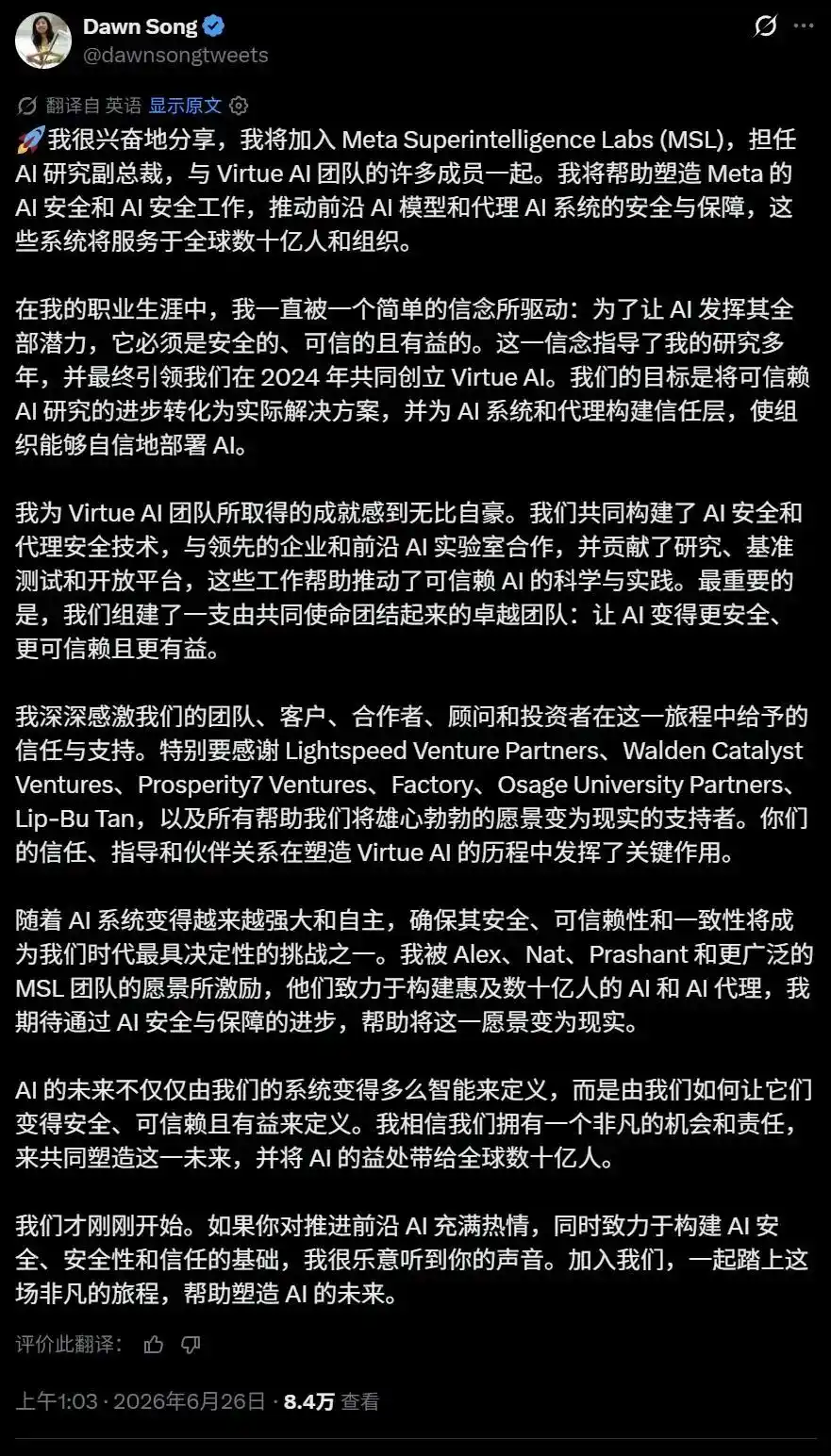
Song will report directly to MSL head Nat Friedman.
Dawn Song enjoys a high reputation in both academia and industry. She is one of the most influential scholars globally in the fields of computer security and AI safety, and is currently a professor in the Department of Electrical Engineering and Computer Sciences (EECS) at the University of California, Berkeley (UC Berkeley).

Song earned her undergraduate degree from the Department of Physics at Tsinghua University. She received her Master's degree from Carnegie Mellon University's Computer Science Department in 1999 and her Ph.D. from UC Berkeley in 2002. During her tenure at Berkeley, she also served as Co-Director of the Center for Decentralized Intelligence (Berkeley RDI). She is a recipient of the MacArthur Fellowship ("Genius Grant") and is also an ACM Fellow, IEEE Fellow, and a member of the American Academy of Arts and Sciences (AAAS), having won numerous top honors in computer science.
Her 2005 paper proposing "Dynamic Taint Analysis" is a classic in the field of computer security.
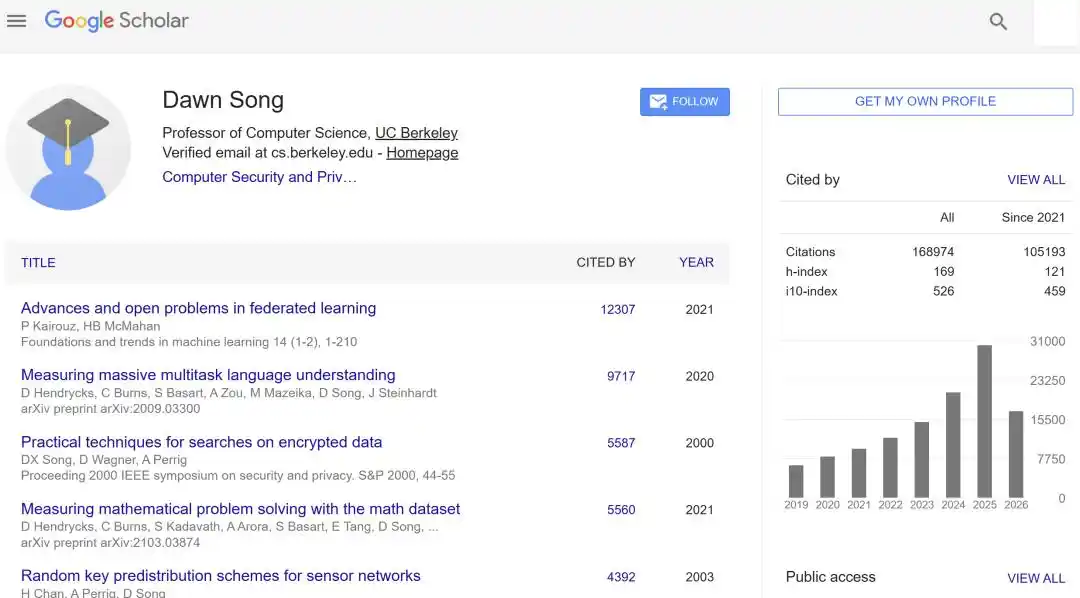
Song's research not only covers traditional software and network security but also pioneers in adversarial machine learning and agent safety. She has been deeply involved in establishing safety benchmarks for the generative AI era.
In AMiner's rankings, she is the most cited scholar globally in computer security. Her lab at Berkeley is hailed as the "West Point" of computer security.
Two weeks ago, we reported on her team's development of ALE (Agents' Last Exam), designed to measure whether AI agents can truly perform economically valuable work across a wide range of real-world domains.
In ALE, the Berkeley team evaluated Fable 5, GPT-5.5, Composer 2.5, and other cutting-edge agent systems, with impressive results.
Dawn Song is also the founder of Oasis Labs and Virtue AI. Virtue AI focuses on enterprise-level AI security infrastructure, particularly automated red-teaming and runtime guardrails for AI agents.
According to foreign media reports, in this move, along with Song, the other two founders of Virtue AI, Bo Li and Sanmi Koyejo, as well as more team members, have also joined Meta. Since the release and subsequent restriction of Anthropic's new safety-focused large model, Mythos, AI safety issues have drawn widespread attention in the tech industry, and Meta is seeking to strengthen its safety measures for agents.
As frontier models face growing security challenges, top AI labs worldwide are under unprecedented pressure. Meta's goal is to deploy AI across its social product matrix used by billions, while continuing its open-source strategy. To achieve this, it must demonstrate to regulators and the public that its models possess robust capabilities to resist malicious abuse. The addition of the Virtue AI team is expected to provide significant assistance.
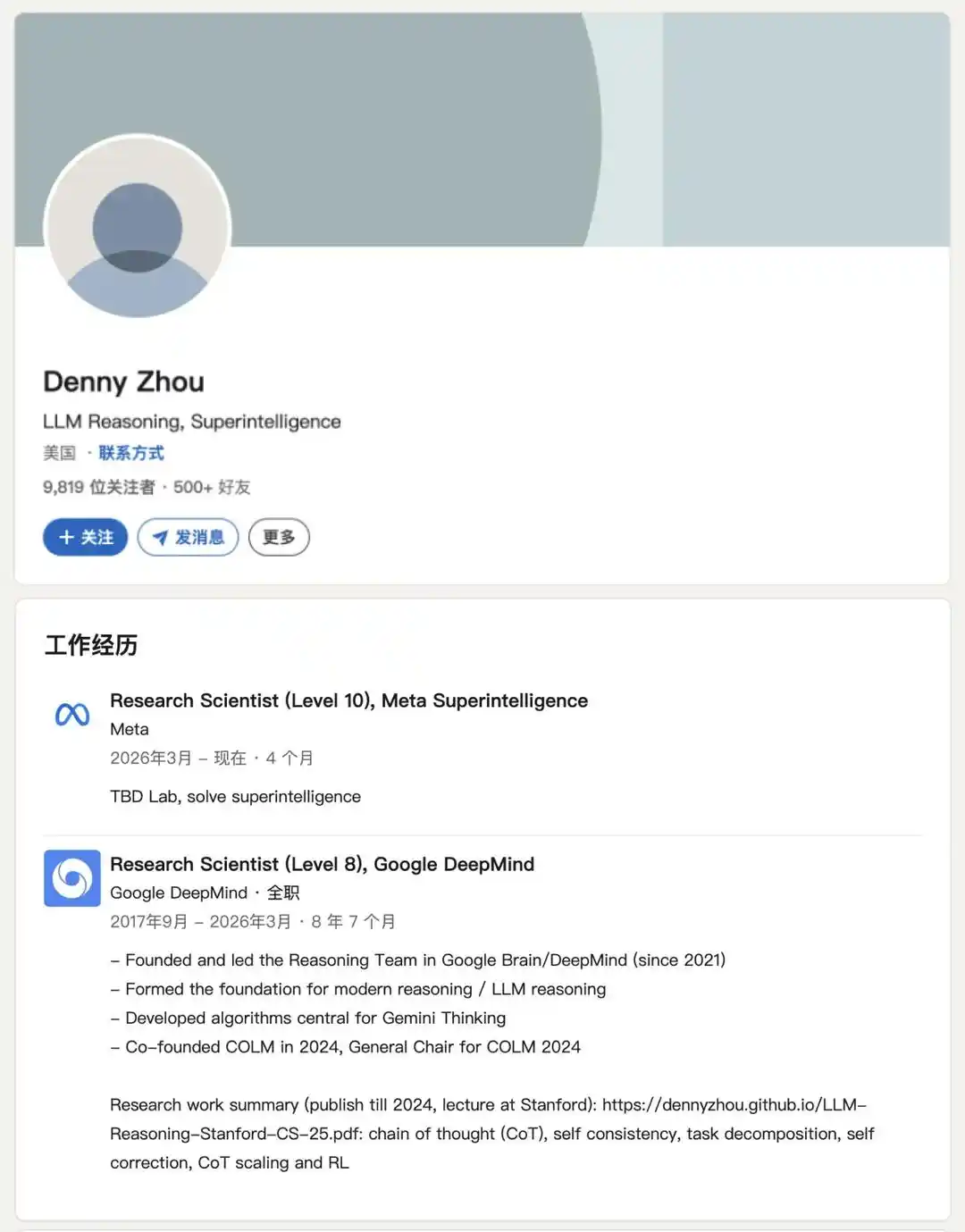
Meanwhile, Denny Zhou, founder of the Gemini Reasoning Team, is rumored to have left Google months ago to join Meta's TBD Lab (his LinkedIn already shows he joined Meta several months ago with a Level 10 position).
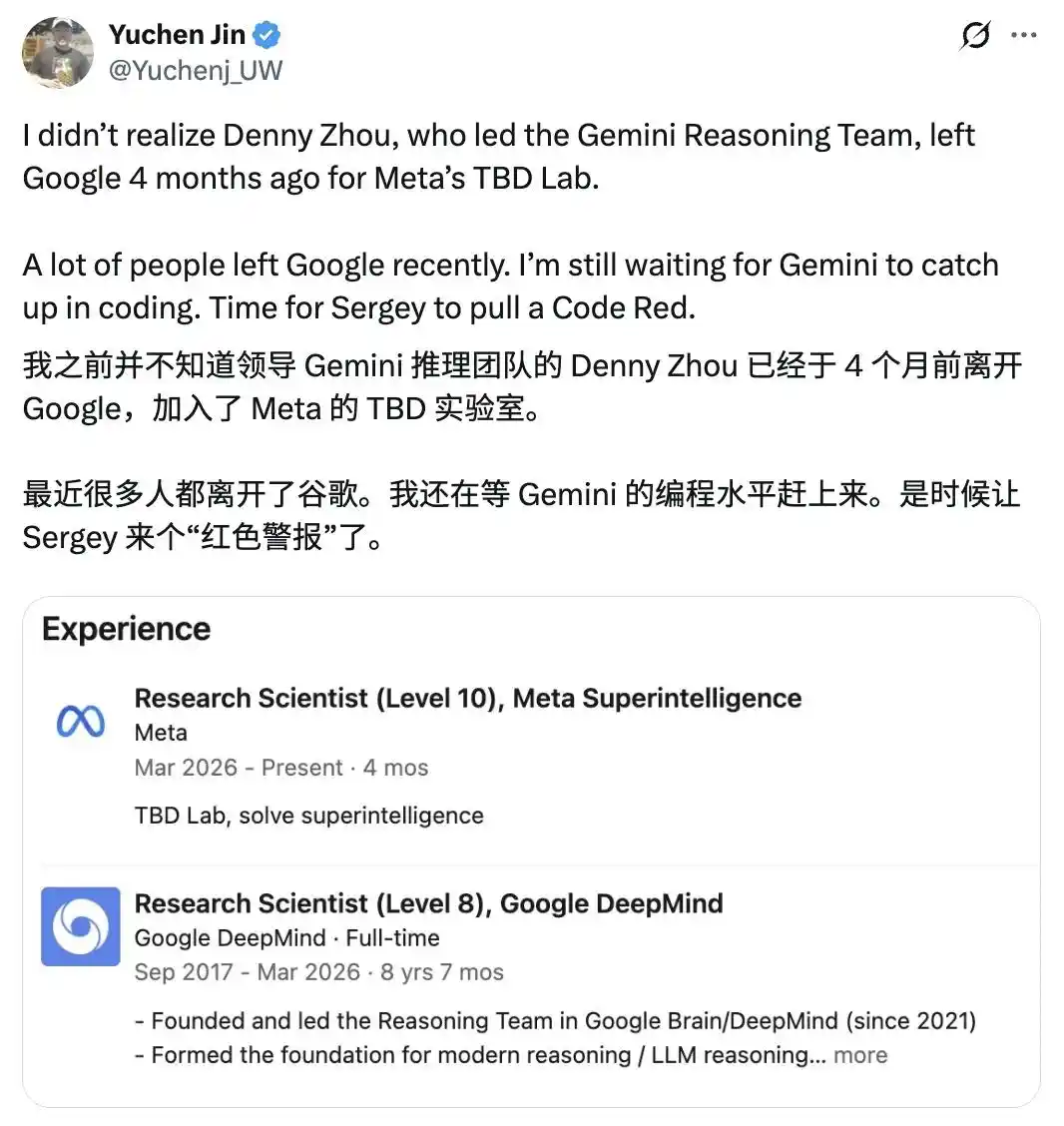
Denny Zhou is an absolute top expert in the field of AI reasoning, credited as a key figure in "teaching LLMs how to reason."
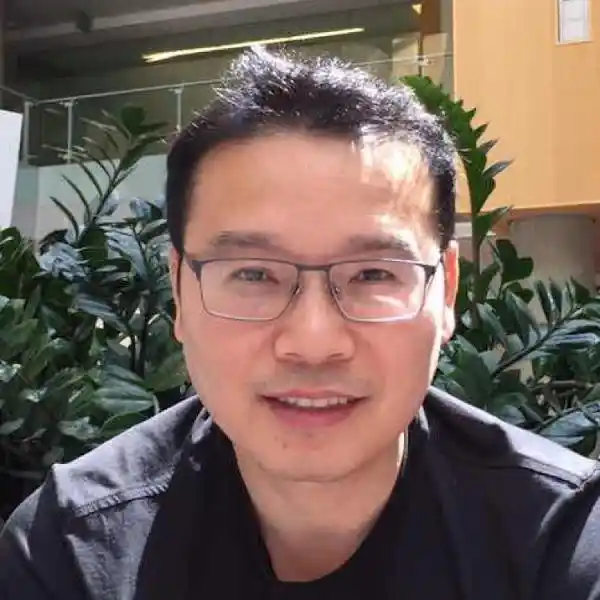
Over the past few years, Denny Zhou has been instrumental in advancing key methods such as Chain-of-Thought, Self-Consistency, and Least-to-Most Prompting, transforming large model reasoning from "prompt engineering tricks" into a researchable, scalable, and engineerable technical roadmap. In a sense, Gemini's ongoing advancements in complex math, coding, and long-range reasoning tasks are built upon this foundational research lineage established early by the Reasoning Team.
References:
https://x.com/dawnsongtweets/status/2070191051873345910
https://www.axios.com/2026/06/25/meta-hires-virtue-ai-founders-security
This article is from the WeChat public account "Almost Human" (ID: almosthuman2014), edited by Zenan.