Bitcoin Withstood 10 Bearish Blows in 2026, Yet Experienced Its Mildest Bear Market

cryptonews.ruPublished on 2026-08-10Last updated on 2026-08-10

Abstract

Bitcoin, the leading cryptocurrency by market cap, peaked above $126,000 in early October before entering a prolonged decline. By August, it was mainly trading between $63,000 and $65,400, inflicting losses on late buyers but resulting in what is, historically for Bitcoin, an unusually shallow bear market—down about 49% from its peak, compared to typical 75-80% plunges. Throughout 2026, Bitcoin faced multiple headwinds yet demonstrated notable resilience. Geopolitical tensions in the Middle East and volatile oil prices revived inflation concerns but failed to trigger the panic-driven sell-offs seen in prior cycles. A significant psychological blow came from corporate seller MicroStrategy, a longtime accumulator, which began strategic sales to bolster its cash position, reducing its holdings. U.S. spot Bitcoin ETFs also faced sustained outflows, though a late-week inflow hinted at potential relief. Pressure also came from within the ecosystem. A contentious blockchain proposal, BIP-110, failed after a minority chain stalled. Miners, facing tighter economics, sold reserves and pivoted infrastructure toward AI. A major security breach involving Coldcard hardware wallets saw an estimated 2,000 BTC stolen, shaking confidence in self-custody. Long-term threats like quantum computing resurfaced in discussions. Despite this confluence of corporate selling, ETF outflows, miner capitulation, geopolitical shocks, internal conflict, and security issues—any one of which could historica...

Bitcoin ($BTC), the leading crypto asset by market capitalization, surpassed the $126,000 mark in early October before beginning a prolonged decline. By August, it was primarily trading in the range of $63,000 to $65,400, inflicting significant losses on buyers who entered the market near the peak, yet resulting in a bear market that, by Bitcoin's historical standards, remains unusually shallow.

Previous major declines typically led to losses of more than 75–80% of Bitcoin's value compared to its all-time high (ATH). For many market veterans, this bear market still seems like a lightweight.

War and Oil Could Not Break Bitcoin

In 2026, few assets found themselves in favorable macroeconomic conditions. From late February, tensions escalated between the US and Iran, and attacks on vessels in the Strait of Hormuz repeatedly shook energy markets. Oil price spikes revived inflation fears and increased the likelihood that central banks might maintain tighter monetary policies for longer.

Bitcoin reacted to these events but rarely with the panic characteristic of previous cycles. Geopolitical news triggered sell-offs, yet declines generally stabilized, not escalating into uncontrolled liquidation cascades. This is significant as it indicates the market is becoming increasingly capable of absorbing shocks, and not every negative headline turns into a crisis.

Strategy Shifts: From Buyer to Seller

Another significant psychological blow was delivered by Strategy. Michael Saylor's company had built its reputation over years on relentless Bitcoin accumulation, making its balance sheet one of the most noticeable sources of corporate demand in the market.

The situation changed in 2026. Strategy began selectively selling Bitcoin to strengthen its cash reserves and meet obligations related to preferred shares, as well as to repurchase them. Last week, the company sold an additional 1,690 $BTC at an average price of $64,262, reducing its holdings to approximately 840,447 $BTC.

Institutional demand also weakened. US spot Bitcoin Exchange-Traded Funds (ETFs) experienced a prolonged period of share redemptions, including eight consecutive weeks of outflows exceeding $8 billion. However, by the end of last week's trading session, approximately $853 million returned to these products, marking the first sign of a potential easing in institutional selling pressure.

Bitcoin Faced Internal Shocks As Well

Not all pressure came from Wall Street or geopolitics. For weeks, Bitcoin grappled with BIP-110 — a controversial proposal concerning non-financial blockchain data. When the voting period arrived, the alternative chain, supported by a minority, managed to generate only two blocks before falling significantly behind the dominant Bitcoin network. The alternative chain stalled, and its supporters are now planning an algorithm change. Meanwhile, the Bitcoin community has already moved on from this uneventful occurrence to other matters.
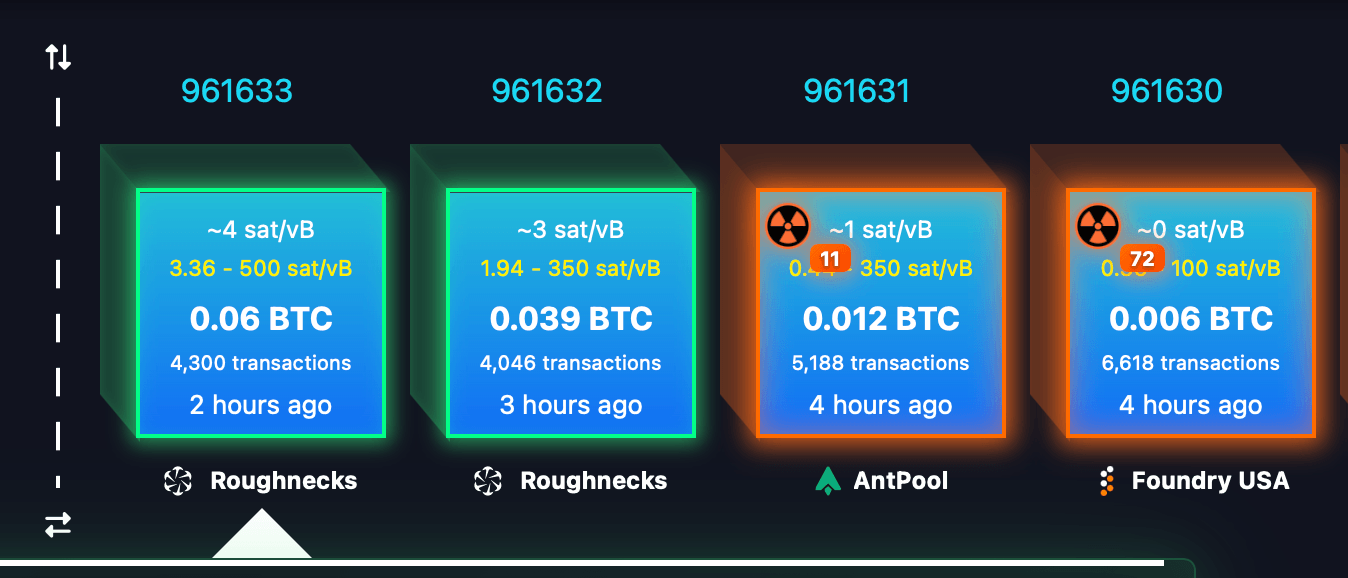
A small, relatively unknown mining company called Roughnecks mined the first two blocks of the BIP-110 chain, but the crushing weight of Bitcoin's existing mining difficulty, imposed on the new blockchain network, quickly brought the alternative network to a complete halt.

Miners had another reason to sell. Falling Bitcoin prices, deteriorating mining economics, and pressure from the energy sector pushed publicly traded companies to sell part of their holdings while simultaneously refocusing infrastructure on artificial intelligence (AI) and high-performance computing (HPC). This shift weakened one of the traditional sources of Bitcoin accumulation while providing miners with another way to monetize expensive electricity and data center infrastructure.

Security issues delivered perhaps the heaviest blow. According to a source report, a hack of the Coldcard hardware wallet led to the theft of an estimated over 2,000 $BTC from thousands of addresses after attackers exploited a firmware vulnerability dating back to 2021. This incident undermined confidence in self-custody, while the crypto industry as a whole continued to battle hundreds of hacks and vulnerabilities.

Even longer-term threats entered the discussion. Advances in quantum computing revived questions about whether future machines could eventually threaten the cryptography protecting some Bitcoins. Such computers are currently incapable of breaking Bitcoin, but shortened timelines regarding when this risk might materialize intensified pressure for long-term technical preparation.

The $60,000 "Wall" Refuses to Fall

Considered individually, none of these events constitutes a substantial threat. However, together they represent a harsh stress test for a market that had already lost nearly 50%. And this is perhaps the more important news. Bitcoin continues to trade above the $60,000 mark despite corporate selling, ETF outflows, mining company liquidations, geopolitical shocks, internal community conflicts, and security breaches.
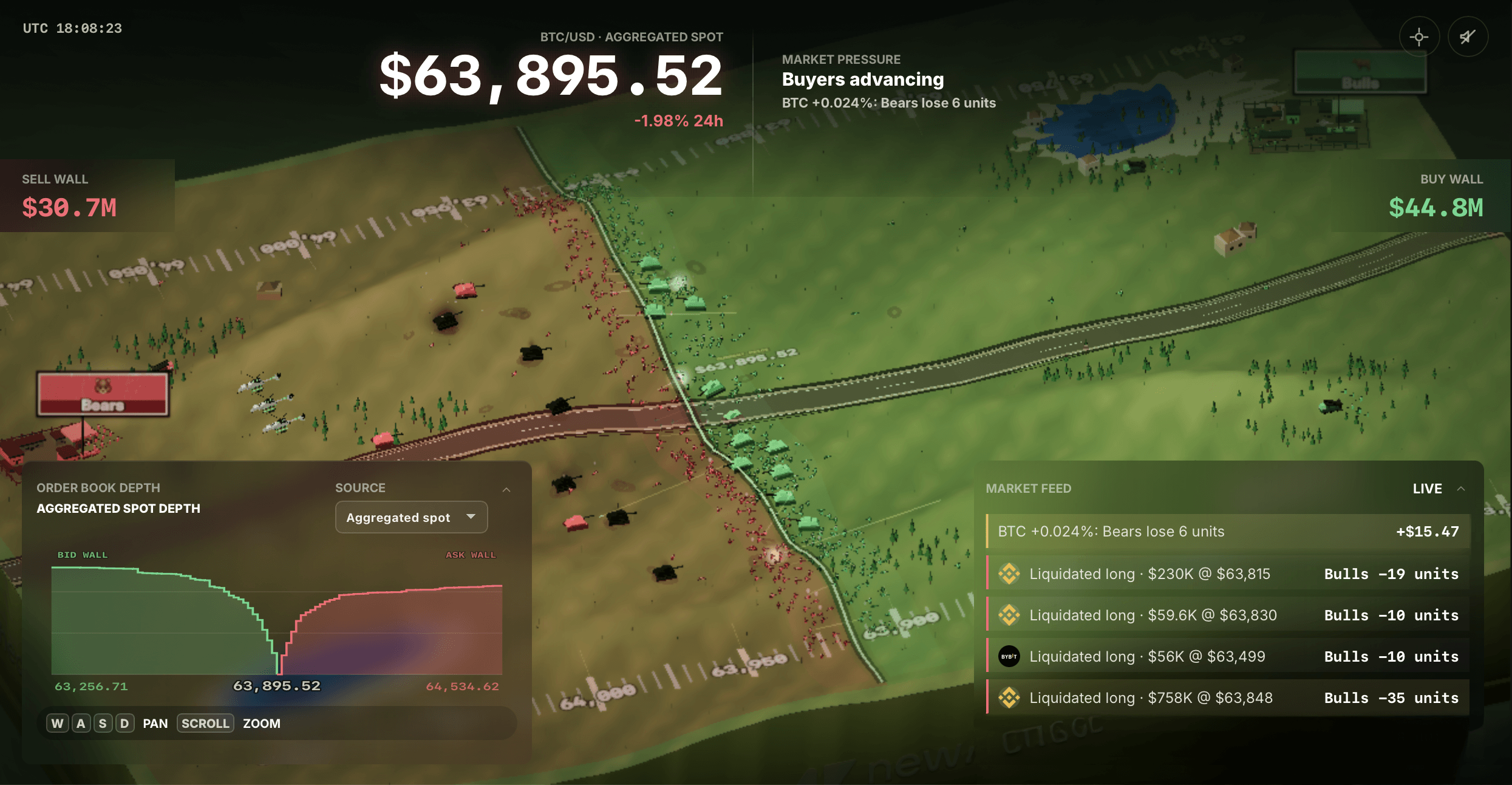
A real-time visualization of Bitcoin's demand and supply wall, order book, liquidations, and price pressure presented as a 3D market battlefield by Newhedge.io demonstrates how resilient this "wall" at $60,000 is today. Screenshot taken on Monday, August 10, 2026.

Deeper liquidity, regulated investment products, long-term holders, and a more developed market structure seem to be helping absorb supply that once might have triggered a much sharper crash. This resilience does not mean a bottom is in. Another oil shock, deteriorating economic conditions, a resumption of institutional outflows, or the emergence of new major sellers could send Bitcoin into the $50,000 range.

For now, however, a 49% decline, which on most markets would be considered sharp, looks relatively restrained against Bitcoin's own market history. The remaining months of 2026 will show whether the $60,000 mark is a durable bottom or just the market's next important line of defense.

end-content

Trending Cryptos

Related Questions

QWhat is the main reason why the 2026 Bitcoin bear market is considered unusually mild compared to historical patterns?

AThe main reason is that the price decline from its all-time high (ATH) is shallower than in previous major downturns, which typically saw losses of over 75-80%. This time, the market demonstrated greater resilience despite multiple pressures.

QHow did the change in Strategy's corporate behavior in 2026 impact the Bitcoin market?

AStrategy, a company known for relentlessly accumulating Bitcoin, began selectively selling its holdings in 2026 to strengthen cash reserves, meet preferred share obligations, and buy back shares. This shift from a major corporate buyer to a seller was a significant psychological blow and contributed to selling pressure.

QWhat internal event related to the Bitcoin protocol put pressure on the market in 2026?

AThe Bitcoin network faced pressure from BIP-110, a controversial proposal concerning non-financial blockchain data. A minority-supported alternative chain was launched but quickly stalled and fell behind the dominant network, creating community division and uncertainty, though the event was ultimately described as uneventful.

QDespite facing numerous challenges in 2026, what key price level did Bitcoin manage to hold above?

ADespite corporate sales, ETF outflows, miner liquidations, geopolitical shocks, internal conflicts, and security breaches, Bitcoin continued to trade above the $60,000 mark.

QAccording to the article, what factors are helping Bitcoin's market absorb shocks better than in the past?

AThe article suggests that deeper liquidity, regulated investment products, long-term holders, and a more mature market structure are helping to absorb selling pressure that would have previously caused much steeper declines, contributing to the market's relative resilience.

Related Reads

Korean Financial Supervisory Service to Revise Compensation System for Phishing Losses Involving Crypto Transfer

The South Korean Financial Supervisory Service (FSS) is overhauling its system for reimbursing victims of voice phishing scams. Starting in October, the new system will be able to calculate and compensate losses held in cryptocurrency, not just in Korean won. Previously, the reimbursement system assumed stolen funds were in won, failing to fully compensate victims whose money was converted into digital assets. The upgraded software will apply a recovery ratio to determine the specific type and quantity of tokens owed to each victim, based on the token's value at the time the payment was frozen. It will also better track cases where fraud proceeds are split across multiple accounts and later consolidated. These changes follow March 31st amendments to the Act on Reimbursement of Losses from Telecommunications Fraud, which now classify virtual assets as both damaged and recoverable property. Major Korean crypto exchanges like Upbit and Bithumb must now comply with the same anti-phishing obligations as banks, including verifying transaction purposes and tracking suspicious funds. The revised law takes effect October 1st, with the FSS allocating a three-month period and a budget of 118.53 million won for system implementation and troubleshooting. The update addresses schemes where stolen money is intentionally laundered through cryptocurrency for overseas transfer. Notably, telecom fraud losses in South Korea rose 14.1% to 433.8 billion won in 2025, a five-year high.

cryptonews.ru55m ago

Korean Financial Supervisory Service to Revise Compensation System for Phishing Losses Involving Crypto Transfer

cryptonews.ru55m ago

Trading

Spot

Hot Articles

What is $BITCOIN

DIGITAL GOLD ($BITCOIN): A Comprehensive Analysis Introduction to DIGITAL GOLD ($BITCOIN) DIGITAL GOLD ($BITCOIN) is a blockchain-based project operating on the Solana network, which aims to combine the characteristics of traditional precious metals with the innovation of decentralized technologies. While it shares a name with Bitcoin, often referred to as “digital gold” due to its perception as a store of value, DIGITAL GOLD is a separate token designed to create a unique ecosystem within the Web3 landscape. Its goal is to position itself as a viable alternative digital asset, although specifics regarding its applications and functionalities are still developing. What is DIGITAL GOLD ($BITCOIN)? DIGITAL GOLD ($BITCOIN) is a cryptocurrency token explicitly designed for use on the Solana blockchain. In contrast to Bitcoin, which provides a widely recognized value storage role, this token appears to focus on broader applications and characteristics. Notable aspects include: Blockchain Infrastructure: The token is built on the Solana blockchain, known for its capacity to handle high-speed and low-cost transactions. Supply Dynamics: DIGITAL GOLD has a maximum supply capped at 100 quadrillion tokens (100P $BITCOIN), although details regarding its circulating supply are currently undisclosed. Utility: While precise functionalities are not explicitly outlined, there are indications that the token could be utilized for various applications, potentially involving decentralized applications (dApps) or asset tokenization strategies. Who is the Creator of DIGITAL GOLD ($BITCOIN)? At present, the identity of the creators and development team behind DIGITAL GOLD ($BITCOIN) remains unknown. This situation is typical among many innovative projects within the blockchain space, particularly those aligning with decentralized finance and meme coin phenomena. While such anonymity may foster a community-driven culture, it intensifies concerns about governance and accountability. Who are the Investors of DIGITAL GOLD ($BITCOIN)? The available information indicates that DIGITAL GOLD ($BITCOIN) does not have any known institutional backers or prominent venture capital investments. The project seems to operate on a peer-to-peer model focused on community support and adoption rather than traditional funding routes. Its activity and liquidity are primarily situated on decentralized exchanges (DEXs), such as PumpSwap, rather than established centralized trading platforms, further highlighting its grassroots approach. How DIGITAL GOLD ($BITCOIN) Works The operational mechanics of DIGITAL GOLD ($BITCOIN) can be elaborated on based on its blockchain design and network attributes: Consensus Mechanism: By leveraging Solana’s unique proof-of-history (PoH) combined with a proof-of-stake (PoS) model, the project ensures efficient transaction validation contributing to the network's high performance. Tokenomics: While specific deflationary mechanisms have not been extensively detailed, the vast maximum token supply implies that it may cater to microtransactions or niche use cases that are still to be defined. Interoperability: There exists the potential for integration with Solana’s broader ecosystem, including various decentralized finance (DeFi) platforms. However, the details regarding specific integrations remain unspecified. Timeline of Key Events Here is a timeline that highlights significant milestones concerning DIGITAL GOLD ($BITCOIN): 2023: The initial deployment of the token occurs on the Solana blockchain, marked by its contract address. 2024: DIGITAL GOLD gains visibility as it becomes available for trading on decentralized exchanges like PumpSwap, allowing users to trade it against SOL. 2025: The project witnesses sporadic trading activity and potential interest in community-led engagements, although no noteworthy partnerships or technical advancements have been documented as of yet. Critical Analysis Strengths Scalability: The underlying Solana infrastructure supports high transaction volumes, which could enhance the utility of $BITCOIN in various transaction scenarios. Accessibility: The potential low trading price per token could attract retail investors, facilitating wider participation due to fractional ownership opportunities. Risks Lack of Transparency: The absence of publicly known backers, developers, or an audit process may yield skepticism regarding the project's sustainability and trustworthiness. Market Volatility: The trading activity is heavily reliant on speculative behavior, which can result in significant price volatility and uncertainty for investors. Conclusion DIGITAL GOLD ($BITCOIN) emerges as an intriguing yet ambiguous project within the rapidly evolving Solana ecosystem. While it attempts to leverage the “digital gold” narrative, its departure from Bitcoin's established role as a store of value underscores the need for a clearer differentiation of its intended utility and governance structure. Future acceptance and adoption will likely depend on addressing the current opacity and defining its operational and economic strategies more explicitly. Note: This report encompasses synthesised information available as of October 2023, and developments may have transpired beyond the research period.

1.7k Total ViewsPublished 2025.05.13Updated 2025.05.13

What is $BITCOIN

Discussions

Welcome to the HTX Community. Here, you can stay informed about the latest platform developments and gain access to professional market insights. Users' opinions on the price of BTC (BTC) are presented below.

活动图片