Cardano Founder Blasts Ripple For Playing Dirty With New CLARITY Act, Here’s What He Said

bitcoinistPublished on 2026-04-01Last updated on 2026-04-01

Abstract

Cardano founder Charles Hoskinson has launched a direct attack against Ripple and its CEO Brad Garlinghouse, accusing them of engineering the CLARITY Act to shield Ripple’s interests while harming the broader crypto ecosystem. Hoskinson claims the bill, in its current form, would classify most digital assets as securities by default, forcing projects into a difficult regulatory process. He warns this could expose open-source developers to legal risks and remove protections for DeFi builders. He also criticized the XRP community, alleging years of propaganda have eroded critical thinking. Hoskinson has consistently opposed the bill, suggesting it unfairly benefits XRP. The probability of the CLARITY Act being signed into law has fallen to 51%, down from 78% in early March.

Cardano founder Charles Hoskinson has launched one of his most direct attacks yet on Ripple and its CEO Brad Garlinghouse, accusing the payments company of engineering the CLARITY Act to eliminate competition while shielding its own interests.

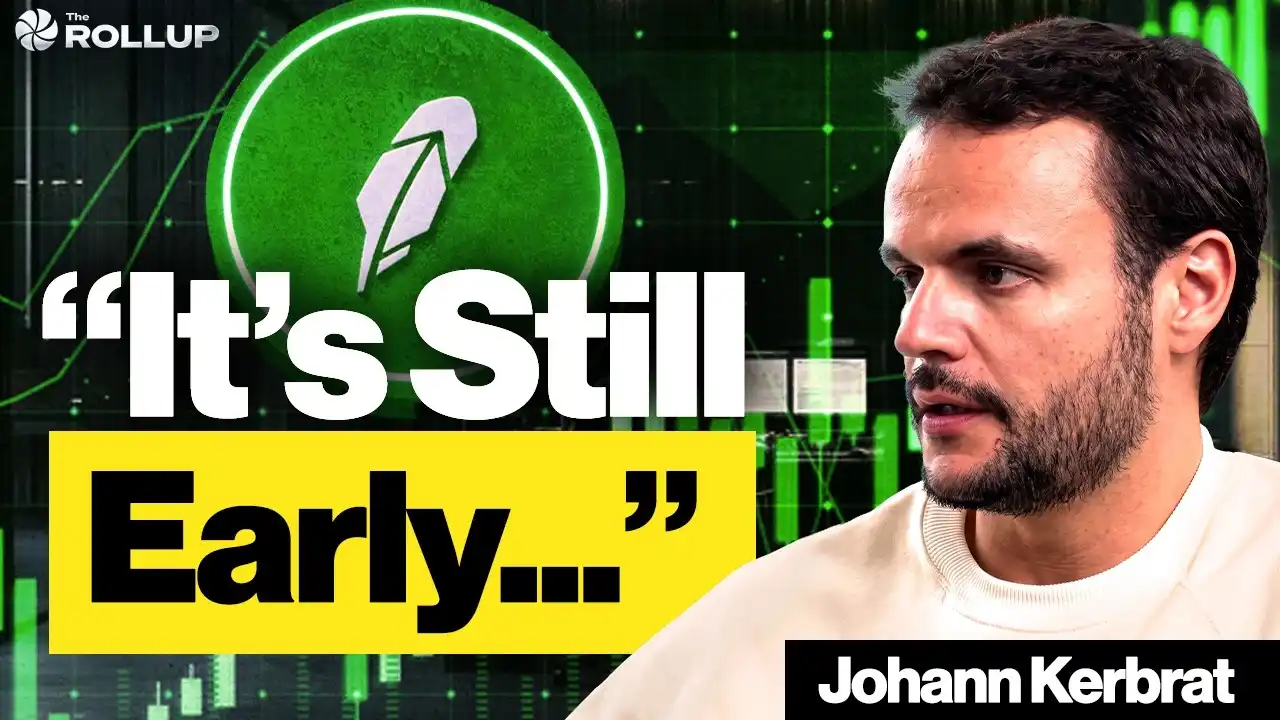
The remarks were delivered during Hoskinson’s most recent weekly rollup on YouTube, where he laid out what he believes is a deeper issue surrounding the bill and how it could change competition across the crypto sector.

Hoskinson Accuses Ripple Of Playing Dirty

According to Charles Hoskinson, the CLARITY Act, in its current form, was crafted with Ripple’s fingerprints on it. He is of the notion that the bill’s structure would classify most digital assets as securities by default, forcing projects to fight their way out of that designation through a regulatory process he warned the SEC could easily weaponize. “They’re trying to pass a bill that hurts the entire ecosystem while they get protected,” he said.

As noted by Hoskinson, if the CLARITY Act is passed, projects would need to prove otherwise, effectively placing the burden of defense on developers and startups from the outset.

Open-source contributors could face legal risks even when they are not directly responsible for how their code is used. He pointed to the legal exposure faced by developers connected to Tornado Cash as an example of what could become standard practice if the CLARITY Act passes in its current form.

He also flagged the removal of existing protections for DeFi developers as a provision that would send a chilling signal across the entire community of crypto developers.

Cardano Founder Says XRP Community Is Incapable Of Critical Thinking

Hoskinson also reserved some of his remarks for members of the XRP community. He accused Ripple directly of conducting a sustained campaign of layer after layer of marketing and propaganda. Furthermore, years of social media consumption, cable news, and yellow journalism have left segments of the XRP community with an inability to think critically.

Hoskinson has been building this argument over several months, and his recent statements tie into a broader pattern of criticism against Ripple and the CLARITY Act.

Back in early March, he noted that the CLARITY Act’s structure effectively labels everything as a security first, creating a system where only a few projects will be spared. He suggested that XRP could be among the assets that receive more favorable treatment under the framework proposed by the CLARITY Act.

His criticism against Brad Garlinghouse has also been very persistent. A notable example is during a January 2026 livestream where he questioned why the Ripple CEO is supportive of advancing the bill despite its perceived flaws.

Polymarket odds of the CLARITY Act being signed into law in 2026 have now fallen to 51%, down from above 78% in early March, following Coinbase’s opposition to a stablecoin yield compromise and the departure of crypto czar David Sacks from his role.

ADA trading at $0.24 on the 1D chart | Source: ADAUSDT on Tradingview.com

Related Questions

QWhat is the main accusation Charles Hoskinson makes against Ripple regarding the CLARITY Act?

ACharles Hoskinson accuses Ripple of engineering the CLARITY Act to eliminate competition while shielding its own interests, claiming the bill is crafted with Ripple's fingerprints on it.

QAccording to Hoskinson, what would be the default classification for most digital assets under the CLARITY Act?

AAccording to Hoskinson, the CLARITY Act's structure would classify most digital assets as securities by default.

QWhat potential legal risk does Hoskinson highlight for open-source contributors if the CLARITY Act passes?

AHoskinson warns that open-source contributors could face legal risks even when not directly responsible for how their code is used, citing the legal exposure faced by Tornado Cash developers as an example.

QWhat does Hoskinson claim about the XRP community's ability to think critically?

AHoskinson claims that years of marketing, propaganda, and media consumption have left segments of the XRP community with an inability to think critically.

QWhat has happened to the Polymarket odds of the CLARITY Act being signed into law in 2026, and what are the cited reasons?

AThe Polymarket odds of the CLARITY Act being signed into law in 2026 have fallen to 51% from above 78% in early March, following Coinbase's opposition to a stablecoin yield compromise and the departure of crypto czar David Sacks.

Related Reads

AI Agent Completely Transforms Web3 Gaming: From the Rugpull Bakery Bot Controversy to the New 2026 Agent Paradigm

This article explores how the AI Agent paradigm is fundamentally transforming Web3 gaming, moving from a disruptive force to a core, legitimized element. It begins with the controversy in the competitive baking game Rugpull Bakery, where automated scripts caused fairness issues. Instead of banning them, the developers integrated AI Agents into the official gameplay by providing technical documentation (skill.md, agent.json), marking a shift towards "Agentic Gaming." The piece outlines three primary implementation models for AI Agents in Web3 games by 2026: 1. **Autonomous Competitors & Economic Entities:** AI Agents act as independent players with unique strategies. Examples include TEN Protocol's poker agents, AI Arena's trainable NFT fighters, and Satoshi Strike Force's "Digital Athletes" trained on player data. The Somnia blockchain is highlighted as a dedicated "Agentic L1" infrastructure supporting this model at scale. 2. **Modular Infrastructure & Programmable Environments:** This model, exemplified by EVE Frontier, allows AI Agents to program game world logic itself. Using "Smart Assemblies" (e.g., Smart Turrets, Smart Gates), Agents can modify shared economic and physical rules on-chain, creating dynamic, player/AI-built worlds. The ERC-8183 standard further enables these automated entities to hire other AI services for complex tasks. 3. **Hybrid Companions & Dynamic Adaptation:** Here, AI serves as a collaborative partner. In Parallel Colony, highly autonomous AI Avatars work alongside human players who provide high-level guidance. Illuvium plans to use AI to make NPCs dynamic and responsive, creating personalized, emergent narratives for each player. The conclusion posits that Web3 gaming has reached a "post-human" inflection point. Blockchains' transparency and programmability, combined with new standards and infrastructure like Somnia, make integrating and governing AI Agents not just viable but essential. The future lies in a symbiotic digital order where players transition from manual laborers to commanders and partners of algorithmic intelligence.

marsbit42m ago

AI Agent Completely Transforms Web3 Gaming: From the Rugpull Bakery Bot Controversy to the New 2026 Agent Paradigm

marsbit42m ago

Saylor's Purchase of 1550 Bitcoin Is a Bad Trade

**Title: Saylor's Purchase of 1,550 Bitcoins Was a Bad Trade** The article critically analyzes Strategy's recent move of selling 32 bitcoins followed by a much larger purchase of 1,550 bitcoins. While appearing bullish, the author argues this trade is detrimental to MSTR shareholders. The core argument revolves around the concept of "breakeven modified Net Asset Value (mNAV)," a key metric for Strategy. To increase Bitcoin per share (BPS) for MSTR holders, Strategy must issue new shares at a premium high enough that the funds raised can buy more bitcoin than the bitcoin backing each existing share. Currently, this breakeven mNAV is estimated at 1.30. The recent trade failed on two counts: 1. The shares for the $181 million raise were issued at an mNAV *below* the 1.30 breakeven point. Selling "cheap" shares to buy bitcoin actually *reduces* BPS. 2. Only $101.3 million of the raised funds were used to buy bitcoin; the rest went to boost the company's dollar reserves. The breakeven mNAV calculation assumes *100%* of proceeds are used for bitcoin purchases. Diverting funds, even if mNAV were high, dilutes BPS. The result is an estimated 0.19% decrease in Bitcoin per share for MSTR holders. In exchange, Strategy merely extended its operational runway for its dollar reserves from ~6.3 months to 7 months. The author interprets this as Strategy prioritizing the survival and development of its STRC business over its stated core goal of increasing MSTR's BPS. This constitutes a gamble: if sacrificing MSTR value leads to improved market sentiment and a recovery in STRC's price (and thus mNAV), the whole system could work. If not, Strategy may be forced into a cycle of further diluting MSTR to stay afloat, potentially leading to deferred STRC dividends or corporate decline. The article concludes with a hope for price recovery for Bitcoin, MSTR, and STRC.

Foresight News52m ago

Saylor's Purchase of 1550 Bitcoin Is a Bad Trade

Foresight News52m ago

The AI Bear Market Lasting Two Days Is Over; Why Did Funds Buy Back Storage Stocks First?

After a severe two-day selloff in early June that erased over $1 trillion from U.S. chip stock market value, capital is flowing back first to the memory sector. The correction was not driven by a collapse in AI demand but rather a market reassessment of high expectations. Stocks like Broadcom faced selling pressure despite strong AI revenue guidance, signaling a shift in focus from who has an "AI story" to who can most rapidly translate AI demand into verifiable profits and earnings per share (EPS). Memory companies, such as Micron and SK Hynix, are leading the recovery because their EPS growth is more immediately verifiable. The AI server boom directly increases demand for high-bandwidth memory (HBM) and high-capacity server DRAM, tightening supply and driving up contract prices for conventional DRAM and NAND Flash. This price increase, coupled with a shift to higher-margin products, flows directly into near-term revenue and profitability, as evidenced in recent earnings reports. In contrast, other AI semiconductor segments like GPUs, ASICs, and optical modules, while central to the long-term AI infrastructure story, face longer and less certain paths to EPS validation. Their growth depends more on future product cycles, customer adoption timelines, and capital expenditure plans. The rebound in memory stocks highlights a market preference for assets with shorter, more transparent EPS conversion cycles following the recent de-risking phase. However, this does not negate the potential of other AI hardware segments should they provide clearer near-term order visibility. The episode has raised the validation bar for all AI-related investments.

marsbit52m ago

The AI Bear Market Lasting Two Days Is Over; Why Did Funds Buy Back Storage Stocks First?

marsbit52m ago

Trading

Spot
Futures

Hot Articles

Discussions

Welcome to the HTX Community. Here, you can stay informed about the latest platform developments and gain access to professional market insights. Users' opinions on the price of ADA (ADA) are presented below.

活动图片