Arthur Hayes' Latest In-Depth Article: Forget Wars and Inflation, the AI Bubble Is the Biggest Opportunity

marsbitPublished on 2026-05-12Last updated on 2026-05-12

Abstract

In his latest article "The Butterfly Touch," Arthur Hayes argues that the massive capital expenditure (CAPEX) fueling the global AI race, driven by US-China technological competition and nationalism, is creating unprecedented dollar and renminbi liquidity. This monetary expansion, combined with inflationary pressures from geopolitical conflicts like the US-Iran war, is creating a perfect environment for Bitcoin and cryptocurrencies. Hayes believes foreign nations, threatened by supply chain disruptions, will increasingly shift savings from dollar assets to real infrastructure and commodities, forcing the US to maintain loose financial conditions to support its markets. He predicts Bitcoin, backed by "trillions of dollars and yuan that have yet to be printed," is poised for a significant rally, potentially back to $126,000, with the bullish trend accelerating past $90,000. While acknowledging a potential shift in US political sentiment against AI and inflation around the 2028 election, Hayes remains aggressively bullish for now. He advocates investing in cryptocurrencies, specifically mentioning his allocations to Hyperliquid ($HYPE), Zcash ($ZEC), and an upcoming focus on $NEAR due to its "privacy narrative" and potential for a major rally.

Original Author: Arthur Hayes, Co-founder of BitMEX

Original Translation: BitpushNews

Editor's Note: In Arthur Hayes' latest article "The Butterfly Touch," it is anticipated that US dollar and Renminbi liquidity will continue to rise, benefiting Bitcoin and cryptocurrencies.

AI Optimism
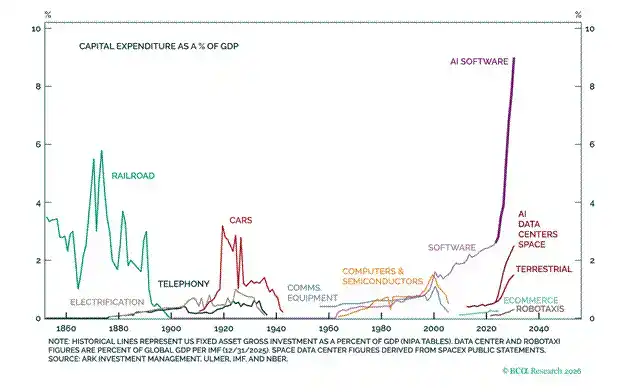
The capital expenditure (CAPEX) supporting AI model training and inference is unprecedented in human civilization. Many believe that this investment in intelligence will create value for humanity unlike any previous technological construction. I agree; however, as humans, we always tend to overdo things. In this universe, positive infinity and perfection are unattainable. Therefore, in anticipating a machine intelligence-driven future, we are likely to overbuild.

AI advocates cite nationalism as a reason for lavish spending, but patriotism should not have a price tag... Both the US and China believe that AI and technological hegemony are crucial to the survival of their domains.

Tech giants are also very happy to sell them horror stories: what will happen to this country if the other side gains hegemony in machine intelligence first. Objectively speaking, both leaders have witnessed firsthand how the proliferation of AI and drones can lead to victory and are convinced of it. Therefore, they will ensure that the primary economic and military objective is to further build the most efficient machine intelligence within their borders.
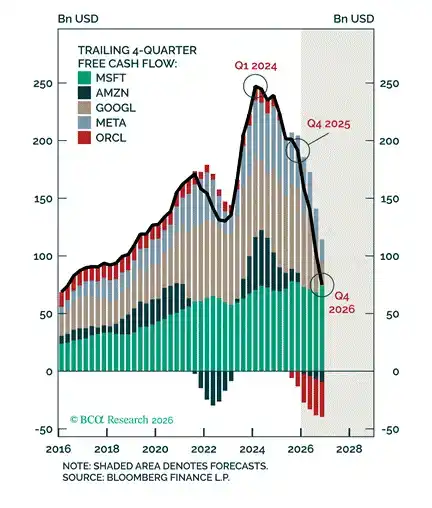
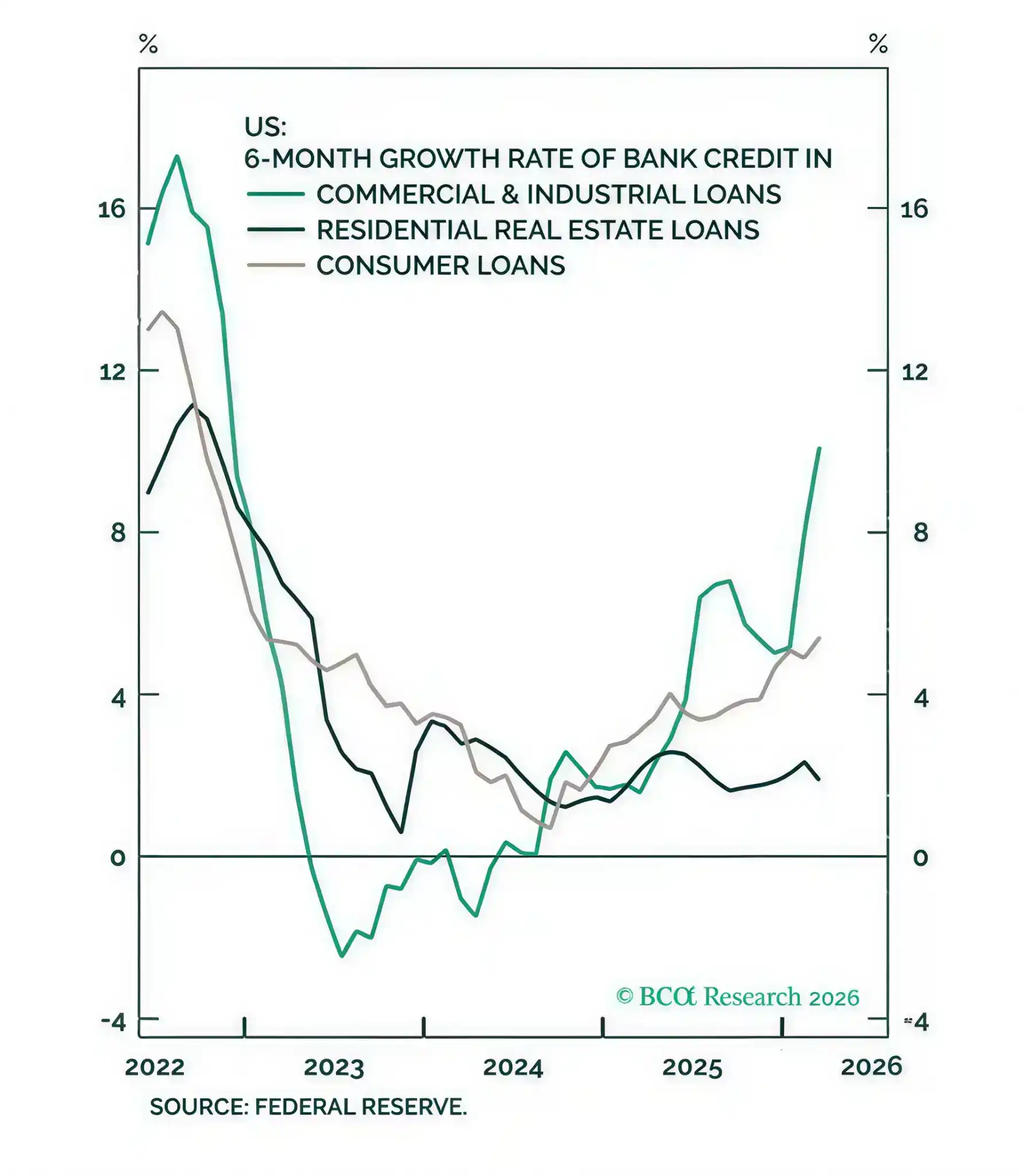
In the United States, most AI CAPEX to date has come from the operating cash flow of the most profitable software companies. But considering the scale of current and future expenditures, additional financing through credit channels will be needed.
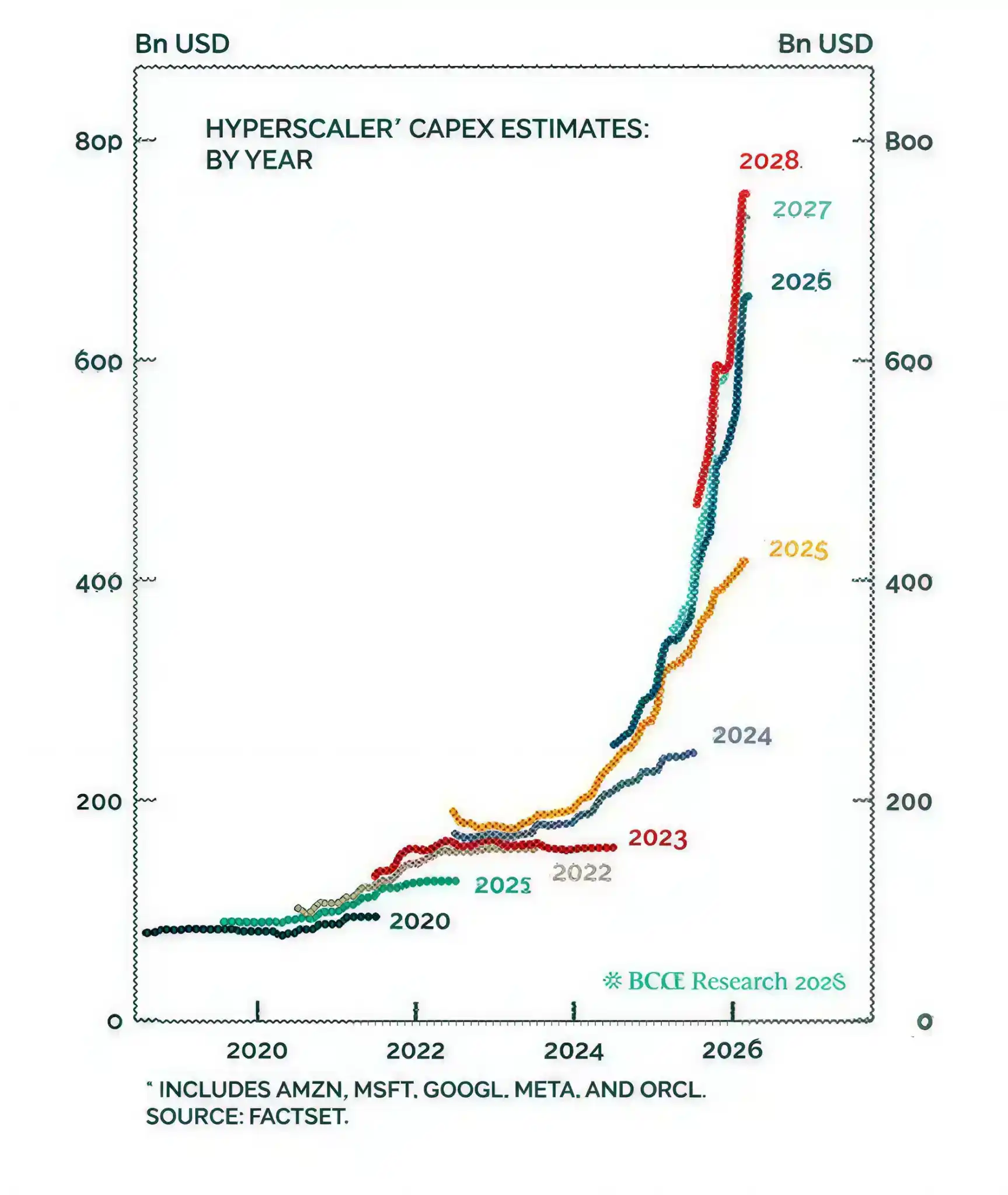
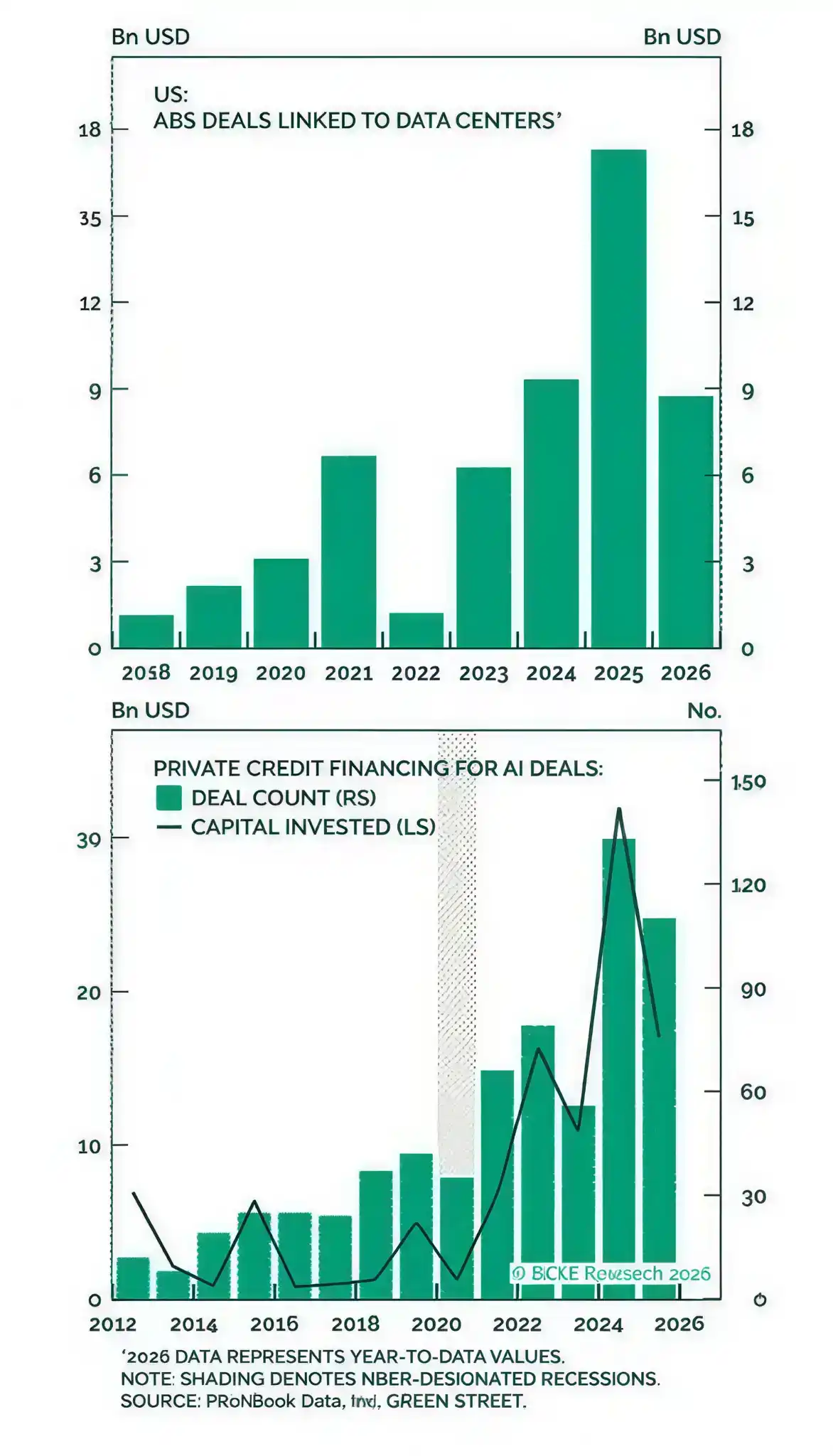
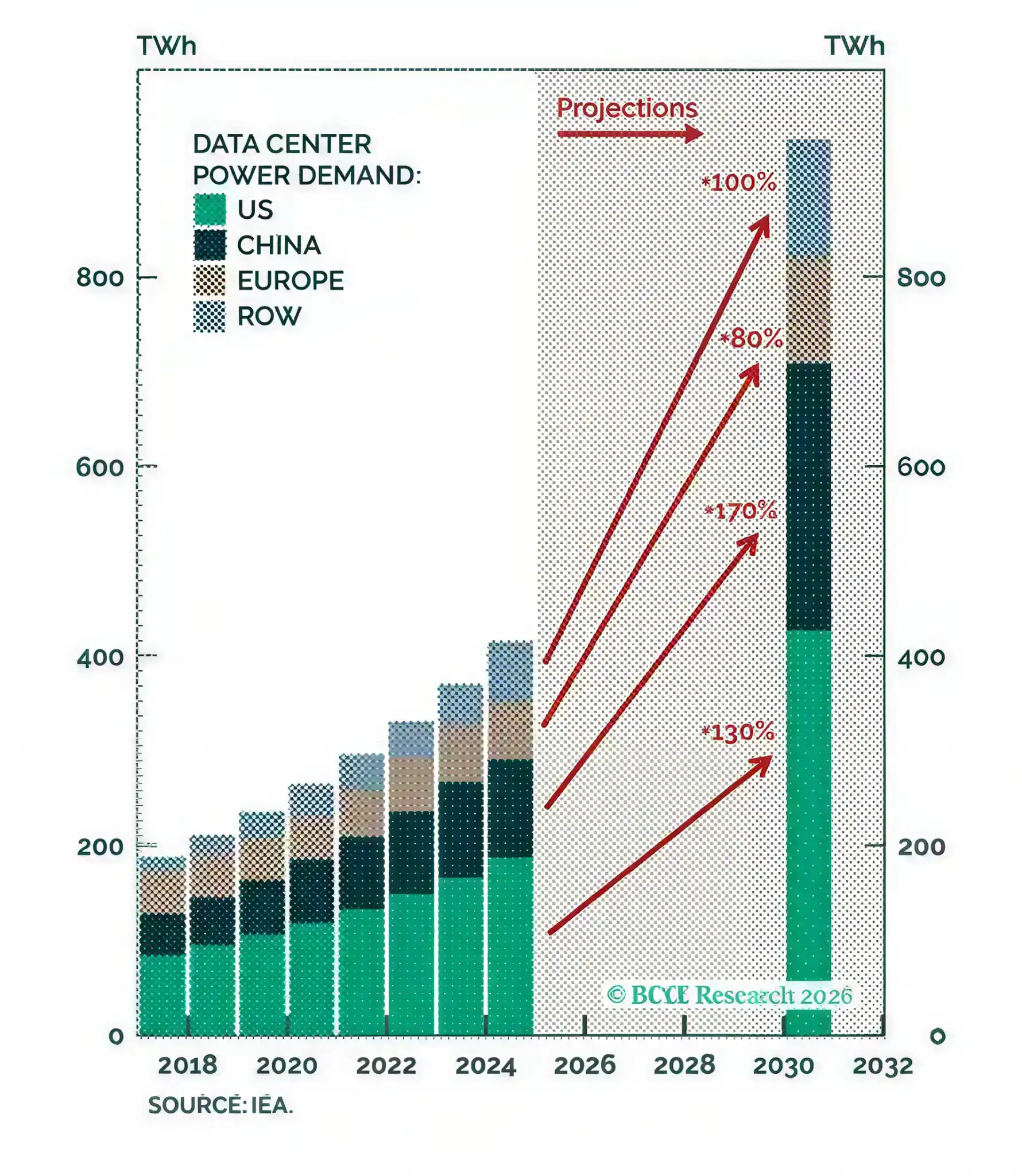
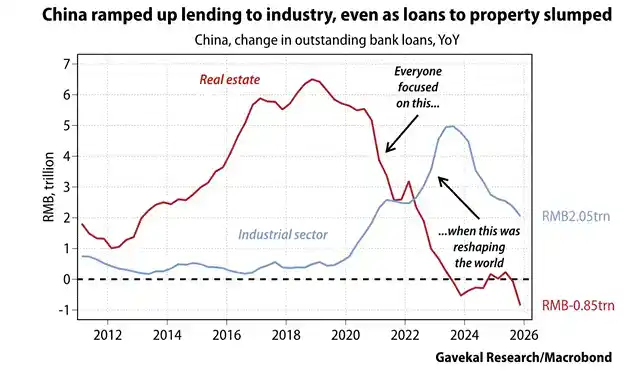
In China, banks are slowing down funding for real estate and instead funding the technology sector. In addition to data center-related expenditures, both the US and China are continuously investing funds to increase power supply.
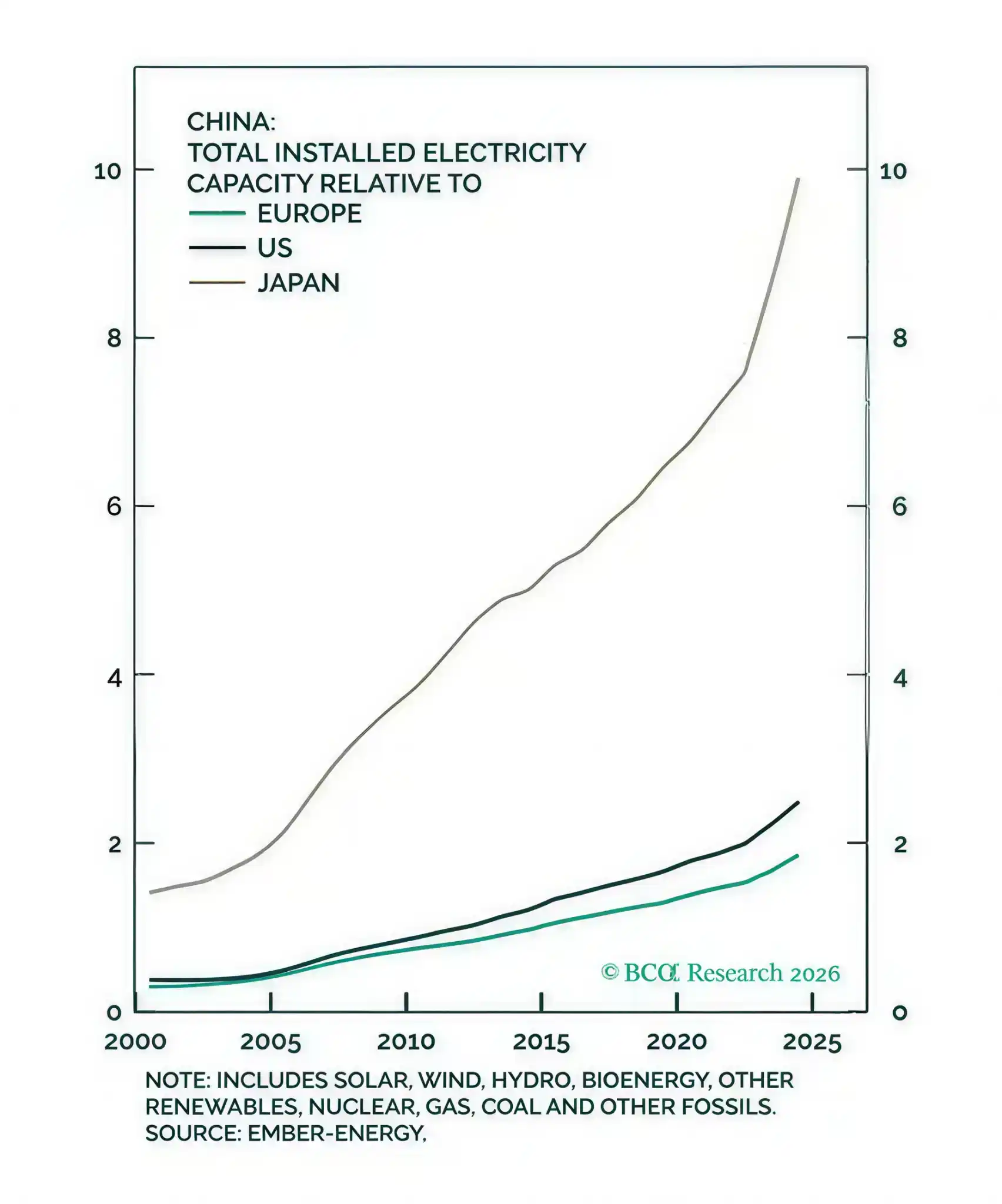
That is to say, central banks are all creating more fiat currency and easing financial conditions.
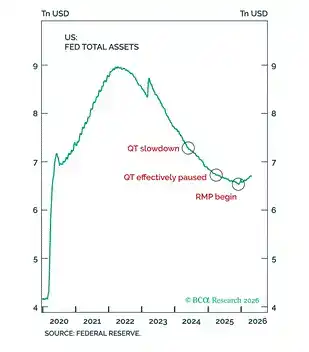
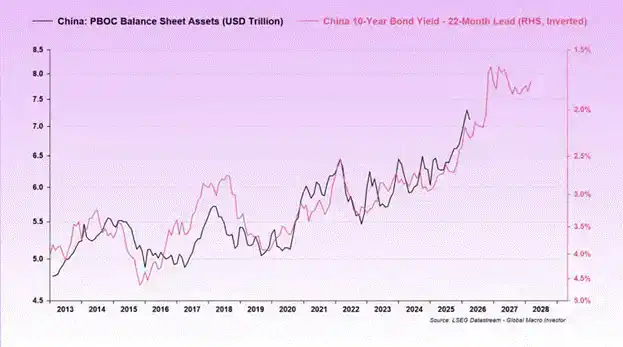
The combination of political will (to win the AI race) and financial will (to fund construction through printing money and lending) creates a perfect environment for cryptocurrency. There will be far more fiat currency units tomorrow than today, and due to the surge in AI and electrification expenditures, the rate of change is accelerating. As the cost per unit of intelligence decreases and the complexity of tasks performed by AI increases, this means computational power consumption grows exponentially; this is the essence of "Jevons' Paradox."

Additionally, there is the "Red Queen Effect": as competitors improve model efficiency, a company's invested AI CAPEX quickly depreciates. This leads to a race to increase spending further to create better models to defeat opponents, while also making the hundreds of billions (soon trillions) invested by opponents obsolete. Therefore, unless hindered by exogenous market events, AI CAPEX spending will expand indefinitely.

When Will This Frenzy End?

I believe two events will occur almost simultaneously, changing people's perception of the necessity of spending trillions on building AI.

Market Indigestion: The occurrence of a massive and financially irresponsible AI-related IPO or mega-merger that the market cannot stomach. This will sober the market from its manic phase, and people will start questioning whether machine intelligence is truly worth this much money.

Shift in Political Winds: The 2028 US election. The increase in prices of raw materials, labor, and especially electricity due to massive AI construction is not popular in many regions. Furthermore, 90% of Americans do not hold significant amounts of stock and cannot benefit from soaring stock prices. Politically, it is very easy to campaign by being anti-AI, focusing on the value of human labor, and suppressing inflation.

But at this moment, US dollar and Renminbi liquidity will continue to rise. Bitcoin and cryptocurrencies will benefit from this.

Every Nation Sweeps Its Own Doorstep

Trump bombs Iran, fundamentally unconcerned about the war's impact on the global economy. Or perhaps he cares, but the assumption that this year's "special military operation" would lead to a quick victory has proven overly optimistic. The US possesses God-given cheap energy (fossil fuels) and fertile farmland. Things might get expensive, but Americans will not starve even if the Strait of Hormuz is partially closed—unless politicians decide to spend money on Fallujah instead of food stamps.

But the people of Europe, Africa, and much of Asia are less fortunate. Unfortunately, the political elites of these countries mistakenly believe that US politicians will consider their lack of food and energy when deciding whether to launch another war threatening the flow of basic commodities. Trusting the US, these countries stored their surpluses in US dollar financial assets instead of building pipelines, trade routes, or stockpiling necessities.

Marco Papic of BCA Research puts it best:

"The entire globe—literally—is wired for US hegemony... Why is German defense insufficient against Russia? Because... the US. Why do most Gulf states have little energy transport infrastructure bypassing the Strait of Hormuz? Because... the US. Why is global manufacturing concentrated in China? Because... the US."

Due to an inability to access fertilizer or fuel, investment decisions in these countries will undergo dramatic changes. Holding US Treasuries or S&P 500 ETFs is meaningless when you cannot obtain food and energy because of a war you did not participate in. To remedy these deficiencies, sovereign nations will, in the future, marginally liquidate US dollar assets and instead invest in infrastructure, defense, and physical goods.
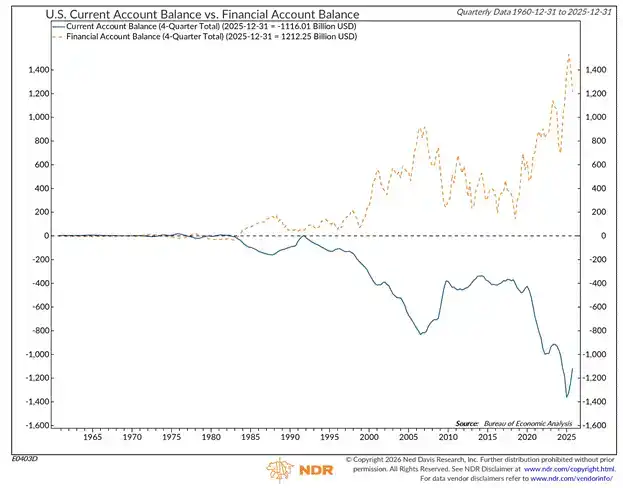
This is a problem for US financial markets due to the huge foreign ownership share. If left unchecked, the slow liquidation of US dollar assets will lead to market declines. US Treasury Secretary Bessent and other policymakers understand this. They have two options: encourage the use of US dollar swap lines or modify banking regulations.

"Bad" Australia: Sells US Treasuries to buy jet fuel.
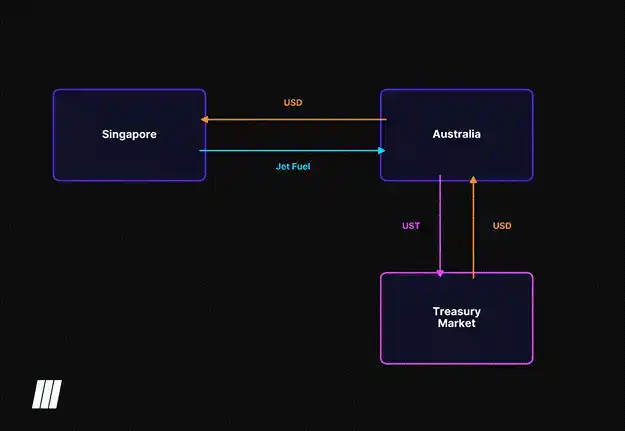
"Good" Australia: Borrows US dollars from the Fed to buy jet fuel.
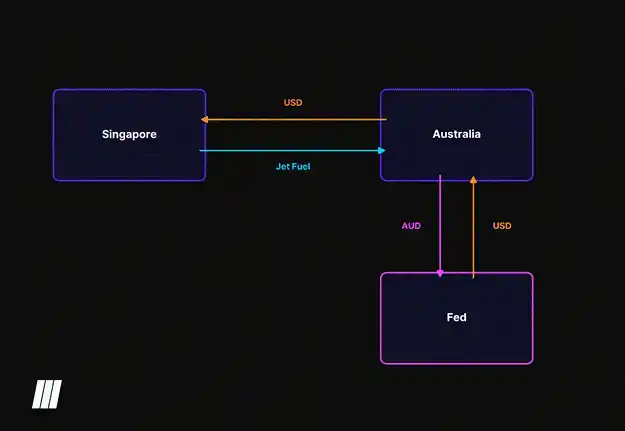
If US markets need more momentum to offset sovereign selling, regulations can be eased to allow banks to hold more US Treasuries and stocks. The relaxation of eSLR (Enhanced Supplementary Leverage Ratio) related capital requirements is a step in this direction.
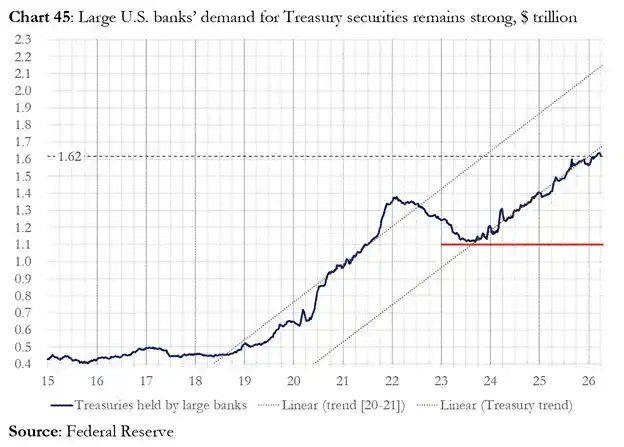
Since the establishment of the Petrodollar system in the 1970s, saving surplus in US dollar assets has been "best practice." But today, holding US dollar assets no longer guarantees you a ship of fertilizer or oil. "Just-in-time" logistics is dead; "just-in-case" is here to stay. This is a structural trend that will last for decades. This means monetary policymakers must maintain loose financial conditions to fill the void left by foreigners investing their savings in physical infrastructure rather than "phantom US dollar financial assets."

Higher + Longer

War is inflationary, and the US-Iran conflict is no exception. AI CAPEX and infrastructure construction are excuses for increasing lending. Politicians support money printing due to real and perceived necessity. This is why Bitcoin has outperformed other major risk assets like gold and US tech stocks since February 28th.
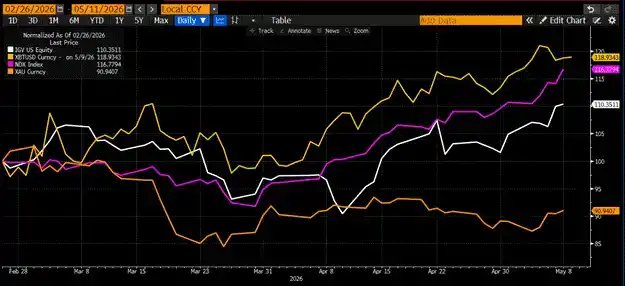
Bitcoin bottomed at $60,000 earlier this year, backed by trillions of US dollars and Renminbi yet to be created, and a return to $126,000 is a certainty. Many naysayers refuse to participate in this rally because Bitcoin's performance over the past 24 months has lagged behind tech stocks and gold. They don't understand why Bitcoin remains effective as a hedge against money printing. But it will demonstrate extreme sensitivity to fiat liquidity expansion. I expect the rally to intensify, becoming explosive once it breaks through $90,000 and many call option sellers are forced to cover.

I don't know how high Bitcoin can go, but I will set Maelstrom's portfolio risk to maximum unless a major change occurs. By the November midterm elections, US political sentiment towards AI and inflation could become very hostile, which might be a small hurdle in the ascent.

But remember: High oil prices don't hurt Trump as much as people think. MAGA is destined to lose in California (where energy policy leads to the highest gas prices in the US), but $100 crude and infrastructure reconstruction in Venezuela and the Middle East will benefit the oil and gas industries in states where Trump supporters reside. As long as money can be put in the pockets of ordinary Americans, Trump still has time to win re-election. So, let's go, baby, S&P 500 to 10,000!

It's time to play with Shitcoins. Besides Hyperliquid ($HYPE) and Zcash ($ZEC), which we are already heavily invested in, my next favorite is $NEAR. My next article will explain our thesis: why the "privacy narrative" combined with "Near Intents" will create positive cash flow for the protocol. This will completely reverse the token's sluggish price performance and create a massive catch-up opportunity, rapidly propelling it towards its all-time high from years ago.

It's a bull market; close your eyes and hit the buy button. There will be a time to sell, but it's not now. Don't mess it up, let's get crazy together.


Related Questions

QWhat is the main argument Arthur Hayes presents regarding the AI bubble and cryptocurrency?

AArthur Hayes argues that the massive capital expenditure (CAPEX) in AI, driven by US-China competition and funded by increased fiat liquidity (printing money), creates a perfect environment for cryptocurrencies like Bitcoin to rise. He believes this AI-driven money creation is the biggest opportunity, overshadowing concerns about war and inflation.

QAccording to Hayes, what are the two events that could potentially end the AI spending frenzy?

AHe identifies two potential events: 1) A market indigestion event, such as a massive, financially irresponsible AI-related IPO or merger that the market cannot absorb, causing a reality check. 2) A political shift, particularly the 2028 US election, where rising costs (materials, labor, electricity) due to AI build-out could make an anti-AI, pro-human labor, anti-inflation platform politically attractive.

QHow does the 'Jevons Paradox' relate to AI spending according to the article?

AThe 'Jevons Paradox' is mentioned to explain that as the cost per unit of intelligence falls and AI performs more complex tasks, the total computational power (and thus energy/capital) consumption grows exponentially. This, combined with the 'Red Queen Effect' (needing to spend more to keep up with competitors), leads to potentially infinite expansion of AI CAPEX.

QWhy does Hayes suggest that countries outside the US might start selling dollar assets?

AHe argues that wars (like the US-Iran conflict) threaten the flow of essential commodities (food, energy) to countries in Europe, Africa, and Asia. Since holding US financial assets (like Treasuries) doesn't guarantee access to these physical goods, sovereign nations will be forced to liquidate dollar assets to invest in physical infrastructure, defense, and commodity stockpiles for security, moving from 'just-in-time' to 'just-in-case' logistics.

QWhat specific cryptocurrency altcoins does Arthur Hayes mention being bullish on, besides Bitcoin?

AHe mentions being heavily invested in Hyperliquid ($HYPE) and Zcash ($ZEC). He also states that his next favorite is $NEAR, citing an upcoming article that will argue the 'privacy narrative' combined with 'Near Intents' will generate positive cash flow for the protocol and create a significant catch-up rally.

Related Reads

From 'Old Guys' to 'New Favorites': How AI Is Revaluing Old Infrastructure from Dell to Nokia?

From "Vintage Tech" to "New AI Darlings": How AI Revalues Old Infrastructure One year ago, tech giants like Dell, Nokia, Cisco, and Western Data were seen as slow-growth, low-valuation stories, far from the AI spotlight dominated by players like Nvidia. Now, these legacy tech stocks are gaining market attention, sparking debate on whether this is genuine industry revaluation or a temporary narrative. As AI moves from model parameters to real-world data centers, the market is recognizing companies with proven delivery and infrastructure capabilities. This shift marks a change in the AI investment thesis: from pure model and GPU focus to the complex systems engineering required for deployment. Companies like Dell, HPE, and Corning are being revalued not for being "sexy" AI innovators, but for their decades of accumulated expertise in supply chains, enterprise delivery, and infrastructure—assets that have become critical in the AI buildout phase. The revaluation is unfolding across three key infrastructure lines: 1. **Servers & System Integration:** Dell and HPE are emerging as crucial system integrators or "general contractors" for AI data centers, translating GPU orders into complete, deployable server racks integrated with power, cooling, and networking. 2. **Networking & Connectivity:** AI's scale demands robust high-speed connections. Corning (fiber optics), Nokia (AI-RAN, 6G), and Cisco (data center switches) are gaining importance for enabling efficient data transfer within and between AI clusters. 3. **Storage:** Beyond high-speed memory (HBM/DRAM), the AI data explosion is driving demand for high-capacity hard drives (HDDs) from companies like Western Digital and Seagate to handle training data, logs, and cold storage cost-effectively. For this revaluation to be substantive and not just a narrative, three criteria are key: 1) Concrete AI-related order and revenue growth (e.g., Dell's AI server sales), 2) Upward revisions to company financial guidance, and 3) Sustainable improvements in profit quality, not just top-line revenue spikes. In essence, AI's transition to a real construction phase is re-pricing "old assets" against "new demand." The opportunity, however, is selective. Only those legacy firms that are demonstrably integrated into the capital expenditure chains of data center and enterprise AI deployment are likely to experience a true "logic re-rating" rather than just a temporary valuation bounce.

marsbit4m ago

From 'Old Guys' to 'New Favorites': How AI Is Revaluing Old Infrastructure from Dell to Nokia?

marsbit4m ago

The Merger of Codex and ChatGPT Marks the Beginning of a Major Reshuffle in Programming Tools

OpenAI is shifting its strategic focus from ChatGPT to Codex, merging them along with the browser tool Atlas into a unified desktop super-app. This move signals an internal belief that Codex, originally a programming tool, represents the next evolution of AI more than conversational models like ChatGPT. Over the past year, Codex's weekly active users have surged past 5 million. The key distinction is that while ChatGPT answers questions, Codex executes tasks. Enterprises increasingly value this ability to get work done over simply receiving advice. Consequently, Codex is attracting professionals beyond developers, including analysts, bankers, marketers, and product managers. OpenAI's reorganization and increased investment in Codex stem from recognizing that the future of AI competition lies in execution capabilities, not just conversation. The company is launching role-specific plugins (e.g., for data analysis, sales, design) to transform Codex into a broad knowledge work platform that automates and redefines white-collar workflows. Beyond being a tool, Codex reflects OpenAI's ambition to redefine software. New features like "Sites"—which generates interactive websites from documents—and collaborative "Annotations" aim to create a paradigm where the AI understands the goal and handles the tools and steps, functioning more like a digital colleague than traditional software. The ultimate goal is a unified experience where the user cares only about the completed task.

marsbit13m ago

The Merger of Codex and ChatGPT Marks the Beginning of a Major Reshuffle in Programming Tools

marsbit13m ago

Interpreting Investment Opportunities in the Age of Great Navigation, Invesco Great Wall Fund Releases '2026 Report on Chinese Enterprises Going Global'

Invesco Great Wall Fund has released its "2026 China Corporate Globalization Report," titled "The 'Great Navigation Era' of Chinese Enterprises." The report analyzes the new trends and investment opportunities as Chinese companies expand globally, moving from simple product exports to comprehensive overseas operations involving services, branding, and local production. Driven by factors like trade friction, the pursuit of higher profit margins abroad, and policy support, globalization is becoming essential for Chinese companies. The report outlines an evolution: from early product export ("Globalization 1.0") to the current "Globalization 2.0," characterized by overseas capacity, capital goods investment, consumer brand expansion, and service exports. Chinese firms' competitive advantages are highlighted, including a vast engineer talent pool, low-cost and robust infrastructure, and complete industrial clusters. Specific sectors with significant出海 potential are identified: * **Capital Goods** (e.g., engineering machinery, power equipment): Benefiting from global demand, especially in Belt & Road markets and the AI-driven power grid upgrade cycle. * **Consumer Brands**: Transitioning from cost to brand advantage, leveraging供应链 efficiency. * **Technology & Innovation**: Including AI applications, optical modules within global tech supply chains, and new energy vehicles focusing on local production. * **Pharmaceuticals**: Chinese biotech firms are becoming preferred partners for global pharma, with potential for breakthrough drugs in areas like oncology and weight loss. The report concludes that corporate globalization represents a sustained, core theme for China's capital markets, though companies must navigate challenges like geopolitics and localization.

marsbit25m ago

Interpreting Investment Opportunities in the Age of Great Navigation, Invesco Great Wall Fund Releases '2026 Report on Chinese Enterprises Going Global'

marsbit25m ago

GitHub, Transfixed by AI

On the night of February 9th, GitHub suffered a major outage caused by a simple configuration change—reducing a cache refresh interval from 12 to 2 hours—that triggered a cascade of failures. This was not an isolated event, but part of a broader pattern. In early 2026, GitHub experienced at least 8 major incidents, failing to meet its promised 99.9% availability. These outages stemmed from structural issues: explosive growth in load, tight service coupling, and insufficient protection against abnormal traffic. This unprecedented load is driven by AI Agents. In 2025, GitHub handled ~1 billion commits. By 2026, weekly commits reached 275 million, projecting to ~14 billion for the year—a 14x increase. AI tools like Claude Code now contribute 4.5% of all public repository commits, with weekly submissions surging 25x in just three months. AI-generated pull requests jumped from 4 million to 17 million per month in half a year. Unlike human developers, AI Agents work continuously, generating commits at a scale that overwhelms infrastructure designed for human rhythms. The surge also shattered GitHub's business model. Copilot's flat-rate pricing, based on assisting human developers, became unsustainable as Agentic AI sessions consumed resources worth hundreds of dollars for a few dollars in fees. In response, GitHub imposed usage limits and, by June 1st, shifted to a pay-per-use "AI Credits" system. Facing this new reality, GitHub realized a 10x scaling plan was insufficient. It announced a need to *redesign* its architecture for 30x current scale—decoupling services, adding fault isolation, and improving change management to prevent cascading failures. Other platforms like Stripe and AWS are facing similar challenges with AI Agents. Fundamentally, GitHub is transitioning from a human collaboration platform to an "exhaust pipe" for automated AI workflows. Its detailed post-mortem reports aim to maintain trust during this turbulent rebuild. The February outage was not just a technical glitch, but a signal of the software industry's entry into a new, AI-driven era.

marsbit1h ago

GitHub, Transfixed by AI

marsbit1h ago

Trading

Spot
Futures

Hot Articles

Discussions

Welcome to the HTX Community. Here, you can stay informed about the latest platform developments and gain access to professional market insights. Users' opinions on the price of AI (AI) are presented below.

活动图片