Arthur Hayes' Latest In-Depth Article: Forget Wars and Inflation, the AI Bubble Is the Biggest Opportunity

marsbitPublished on 2026-05-12Last updated on 2026-05-12

Abstract

In his latest article "The Butterfly Touch," Arthur Hayes argues that the massive capital expenditure (CAPEX) fueling the global AI race, driven by US-China technological competition and nationalism, is creating unprecedented dollar and renminbi liquidity. This monetary expansion, combined with inflationary pressures from geopolitical conflicts like the US-Iran war, is creating a perfect environment for Bitcoin and cryptocurrencies. Hayes believes foreign nations, threatened by supply chain disruptions, will increasingly shift savings from dollar assets to real infrastructure and commodities, forcing the US to maintain loose financial conditions to support its markets. He predicts Bitcoin, backed by "trillions of dollars and yuan that have yet to be printed," is poised for a significant rally, potentially back to $126,000, with the bullish trend accelerating past $90,000. While acknowledging a potential shift in US political sentiment against AI and inflation around the 2028 election, Hayes remains aggressively bullish for now. He advocates investing in cryptocurrencies, specifically mentioning his allocations to Hyperliquid ($HYPE), Zcash ($ZEC), and an upcoming focus on $NEAR due to its "privacy narrative" and potential for a major rally.

Original Author: Arthur Hayes, Co-founder of BitMEX

Original Translation: BitpushNews

Editor's Note: In Arthur Hayes' latest article "The Butterfly Touch," it is anticipated that US dollar and Renminbi liquidity will continue to rise, benefiting Bitcoin and cryptocurrencies.

AI Optimism
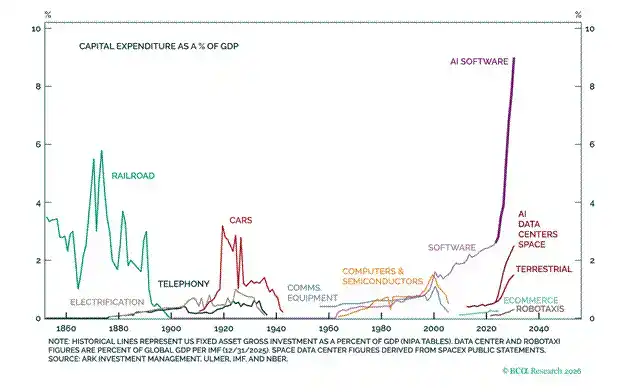
The capital expenditure (CAPEX) supporting AI model training and inference is unprecedented in human civilization. Many believe that this investment in intelligence will create value for humanity unlike any previous technological construction. I agree; however, as humans, we always tend to overdo things. In this universe, positive infinity and perfection are unattainable. Therefore, in anticipating a machine intelligence-driven future, we are likely to overbuild.

AI advocates cite nationalism as a reason for lavish spending, but patriotism should not have a price tag... Both the US and China believe that AI and technological hegemony are crucial to the survival of their domains.

Tech giants are also very happy to sell them horror stories: what will happen to this country if the other side gains hegemony in machine intelligence first. Objectively speaking, both leaders have witnessed firsthand how the proliferation of AI and drones can lead to victory and are convinced of it. Therefore, they will ensure that the primary economic and military objective is to further build the most efficient machine intelligence within their borders.
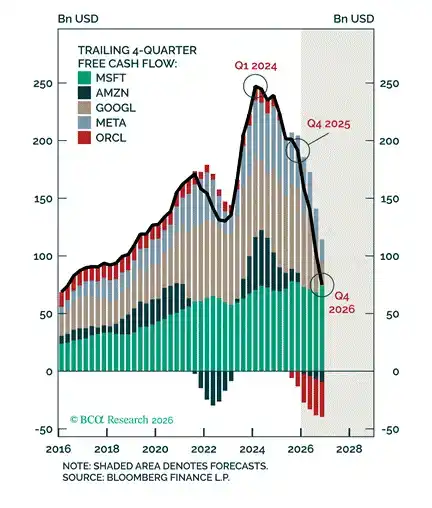
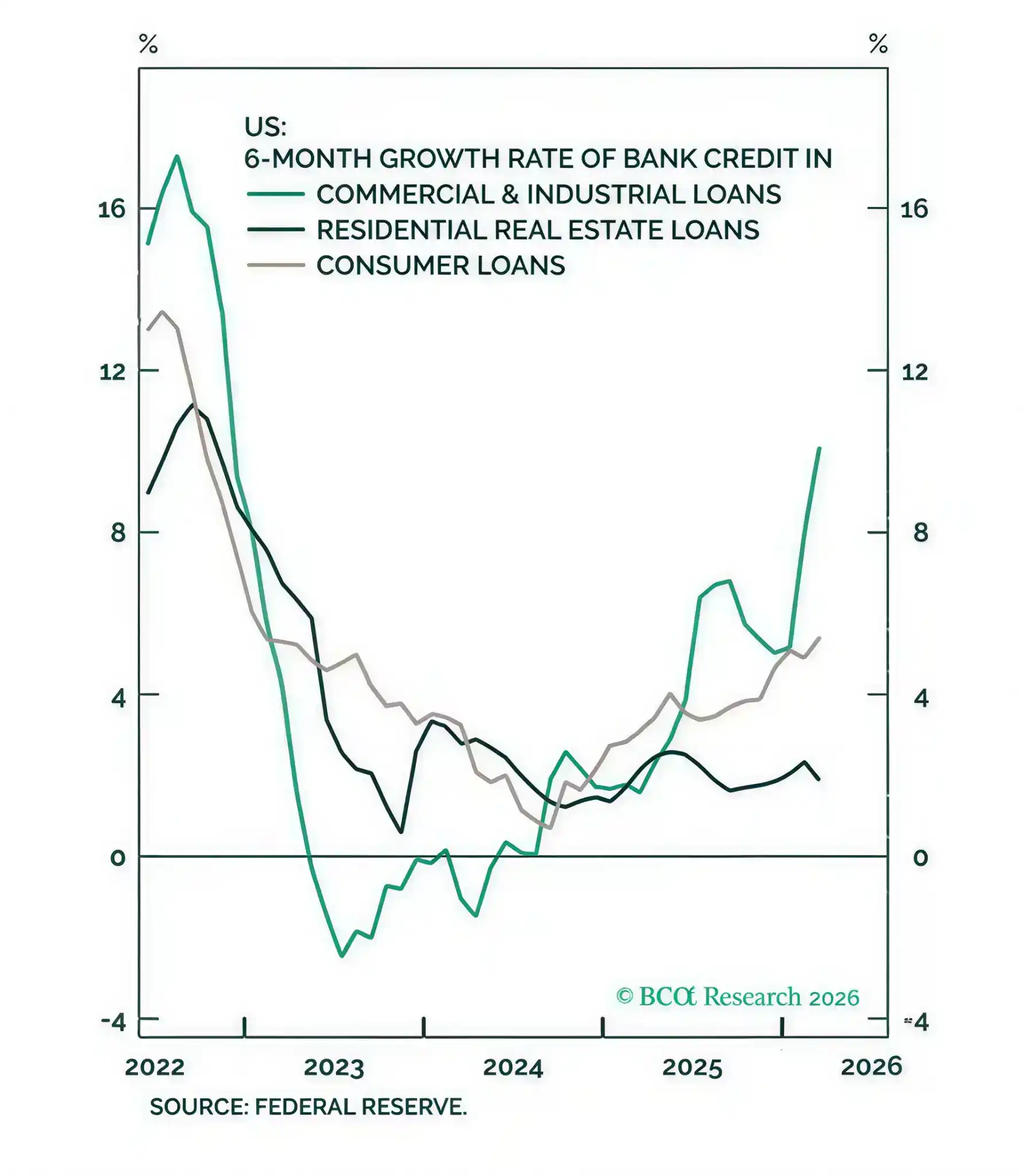
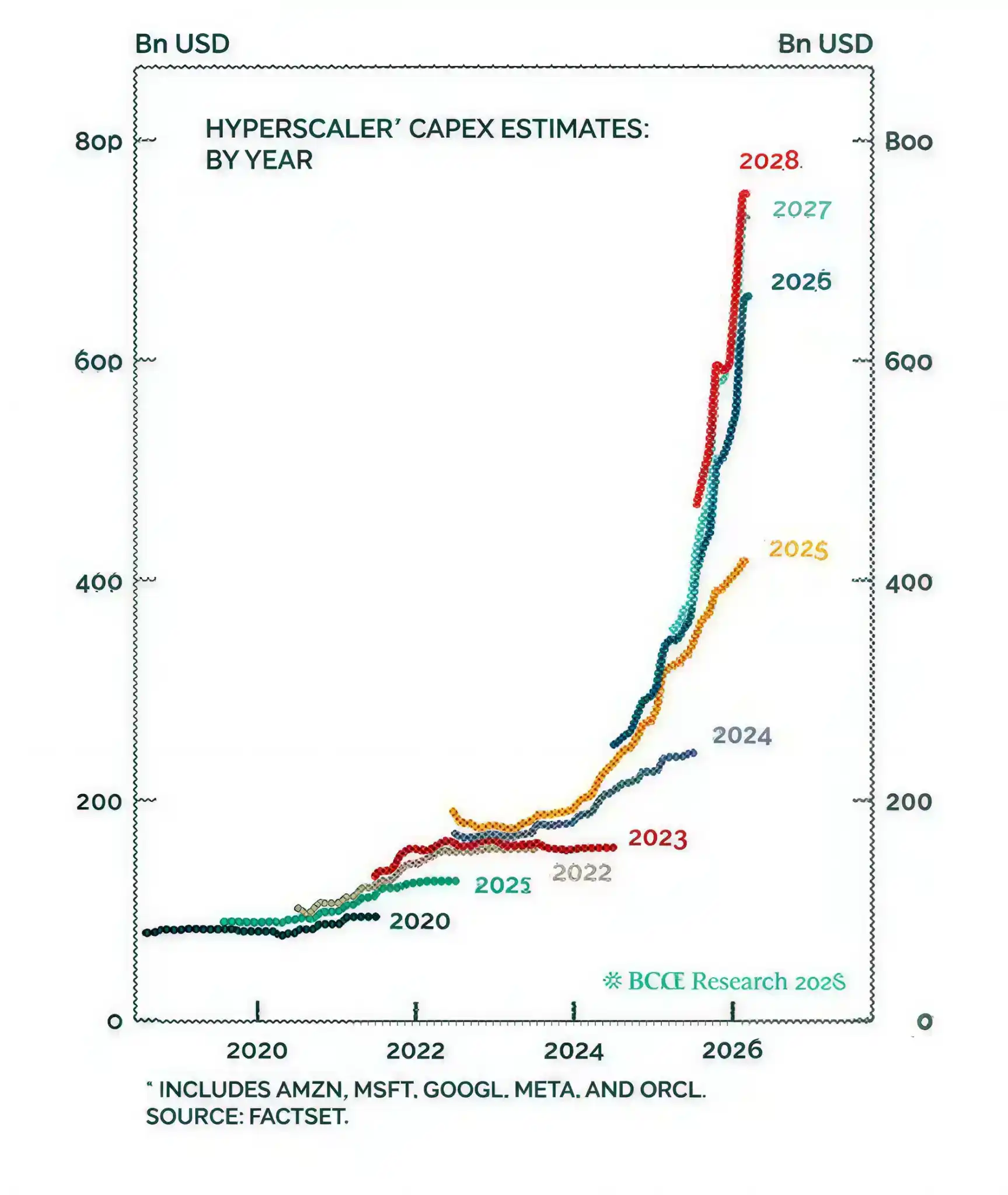
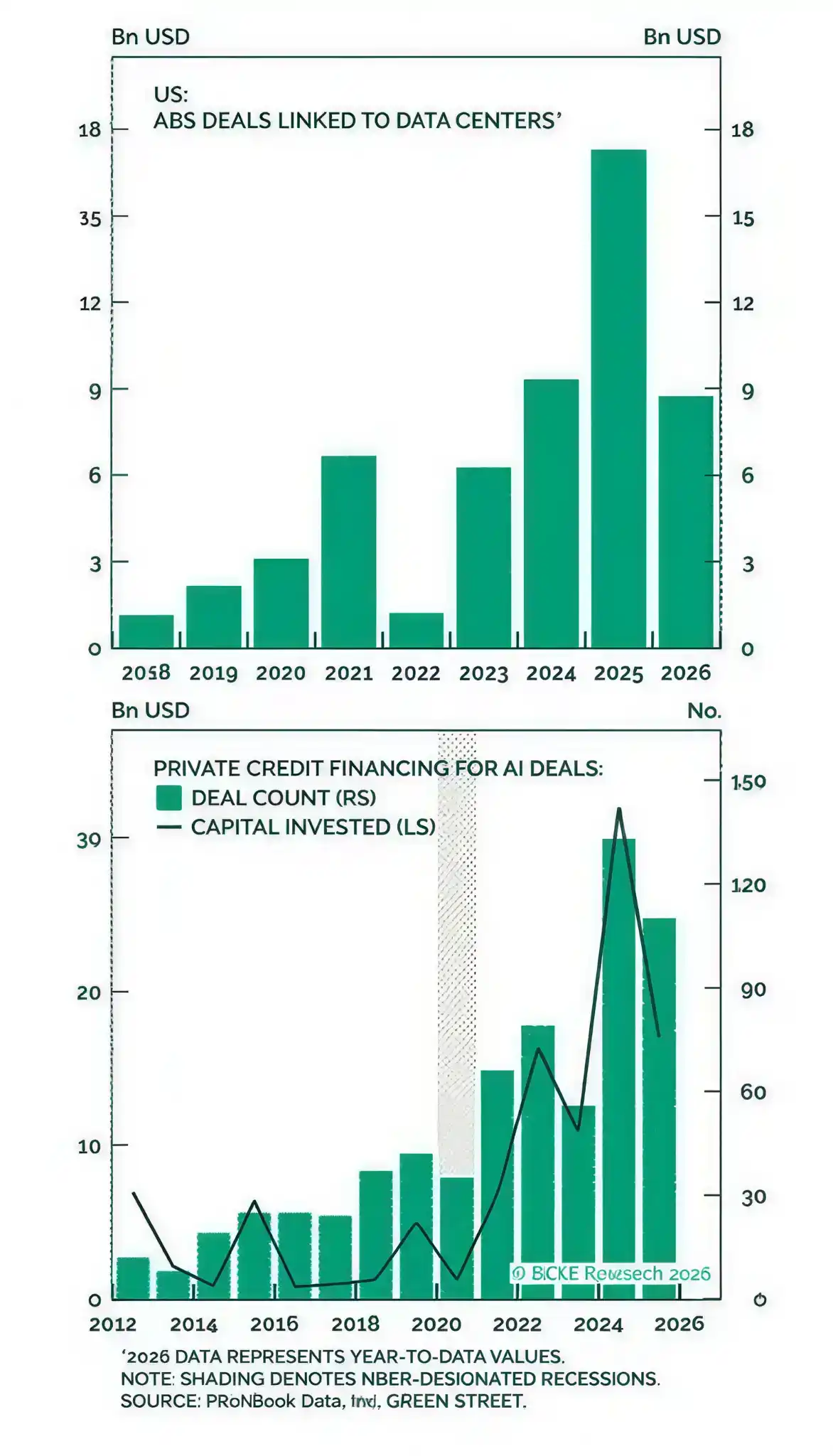
In the United States, most AI CAPEX to date has come from the operating cash flow of the most profitable software companies. But considering the scale of current and future expenditures, additional financing through credit channels will be needed.
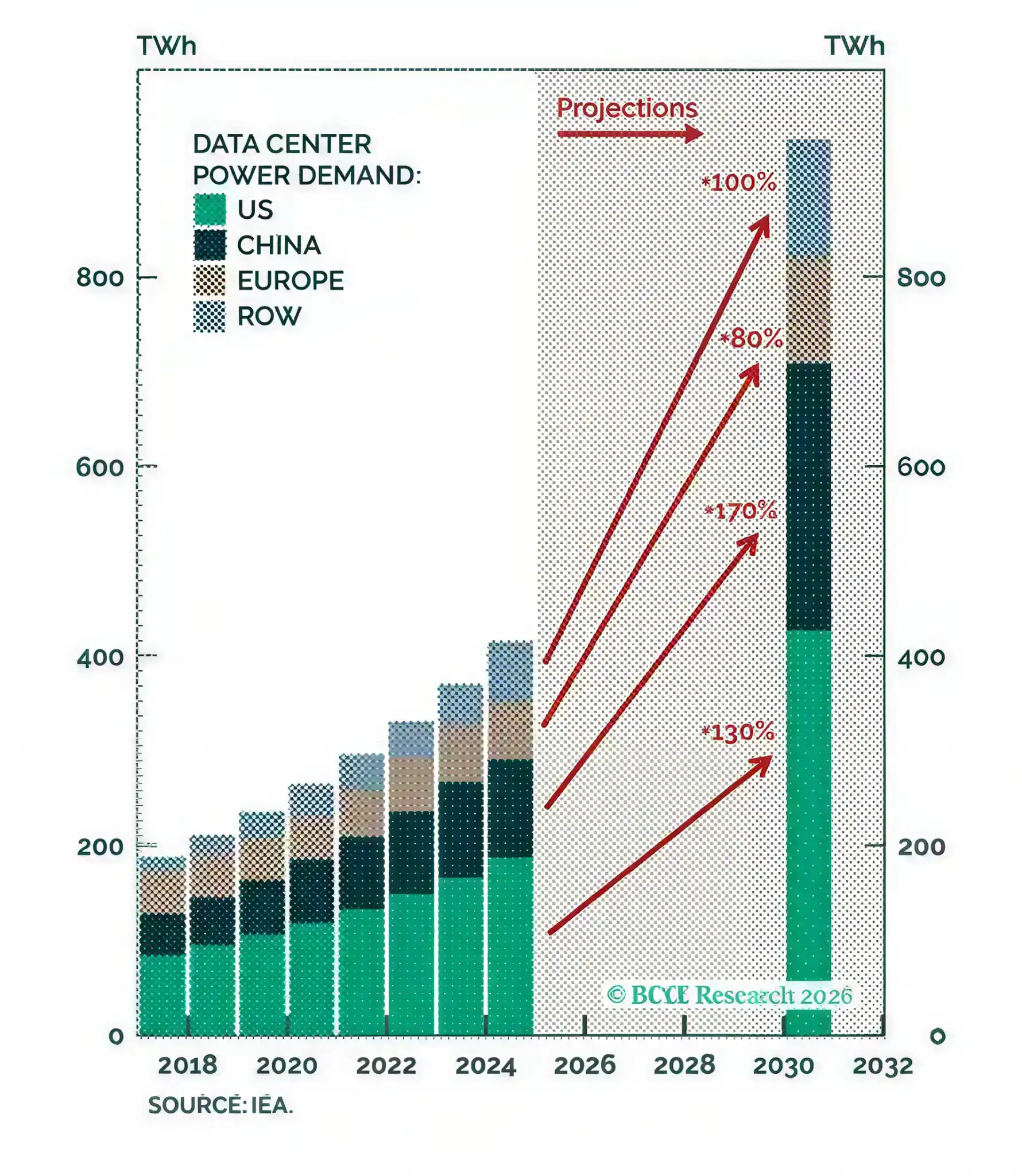
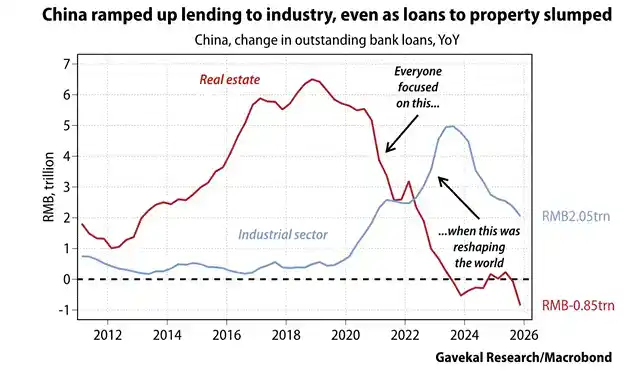
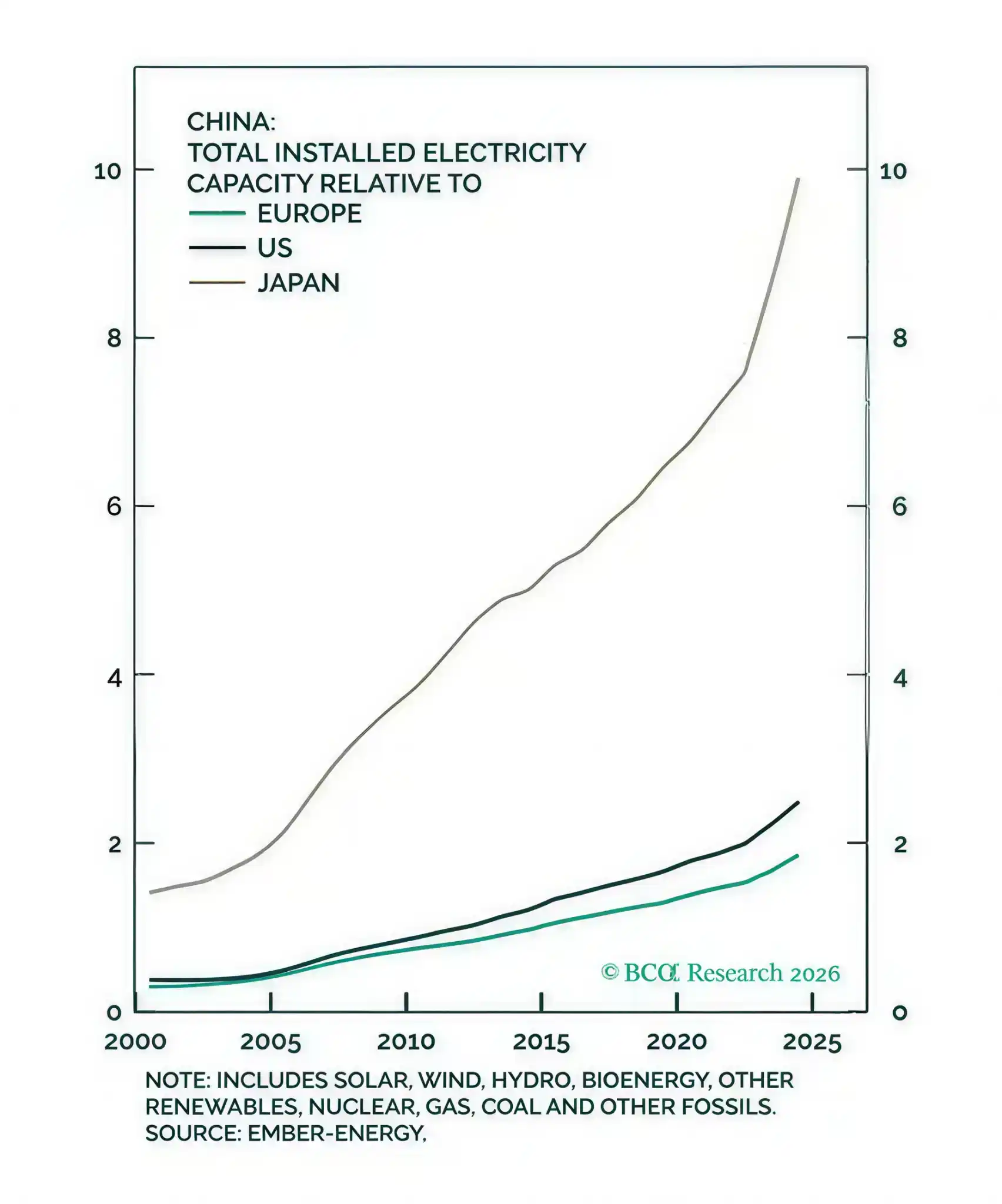
In China, banks are slowing down funding for real estate and instead funding the technology sector. In addition to data center-related expenditures, both the US and China are continuously investing funds to increase power supply.
That is to say, central banks are all creating more fiat currency and easing financial conditions.
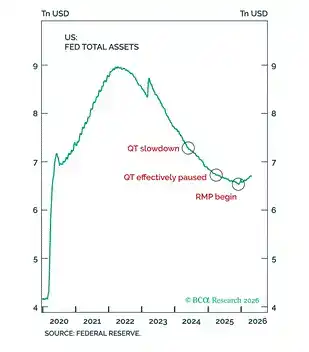
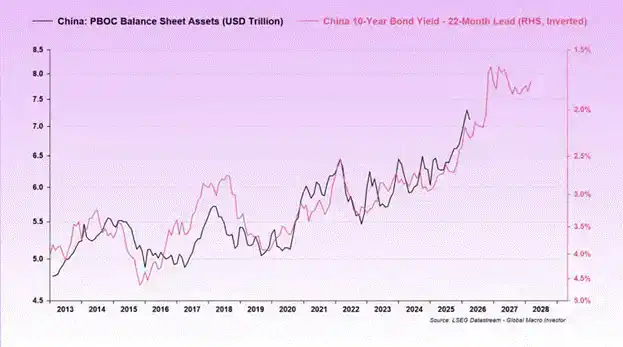
The combination of political will (to win the AI race) and financial will (to fund construction through printing money and lending) creates a perfect environment for cryptocurrency. There will be far more fiat currency units tomorrow than today, and due to the surge in AI and electrification expenditures, the rate of change is accelerating. As the cost per unit of intelligence decreases and the complexity of tasks performed by AI increases, this means computational power consumption grows exponentially; this is the essence of "Jevons' Paradox."

Additionally, there is the "Red Queen Effect": as competitors improve model efficiency, a company's invested AI CAPEX quickly depreciates. This leads to a race to increase spending further to create better models to defeat opponents, while also making the hundreds of billions (soon trillions) invested by opponents obsolete. Therefore, unless hindered by exogenous market events, AI CAPEX spending will expand indefinitely.

When Will This Frenzy End?

I believe two events will occur almost simultaneously, changing people's perception of the necessity of spending trillions on building AI.

Market Indigestion: The occurrence of a massive and financially irresponsible AI-related IPO or mega-merger that the market cannot stomach. This will sober the market from its manic phase, and people will start questioning whether machine intelligence is truly worth this much money.

Shift in Political Winds: The 2028 US election. The increase in prices of raw materials, labor, and especially electricity due to massive AI construction is not popular in many regions. Furthermore, 90% of Americans do not hold significant amounts of stock and cannot benefit from soaring stock prices. Politically, it is very easy to campaign by being anti-AI, focusing on the value of human labor, and suppressing inflation.

But at this moment, US dollar and Renminbi liquidity will continue to rise. Bitcoin and cryptocurrencies will benefit from this.

Every Nation Sweeps Its Own Doorstep

Trump bombs Iran, fundamentally unconcerned about the war's impact on the global economy. Or perhaps he cares, but the assumption that this year's "special military operation" would lead to a quick victory has proven overly optimistic. The US possesses God-given cheap energy (fossil fuels) and fertile farmland. Things might get expensive, but Americans will not starve even if the Strait of Hormuz is partially closed—unless politicians decide to spend money on Fallujah instead of food stamps.

But the people of Europe, Africa, and much of Asia are less fortunate. Unfortunately, the political elites of these countries mistakenly believe that US politicians will consider their lack of food and energy when deciding whether to launch another war threatening the flow of basic commodities. Trusting the US, these countries stored their surpluses in US dollar financial assets instead of building pipelines, trade routes, or stockpiling necessities.

Marco Papic of BCA Research puts it best:

"The entire globe—literally—is wired for US hegemony... Why is German defense insufficient against Russia? Because... the US. Why do most Gulf states have little energy transport infrastructure bypassing the Strait of Hormuz? Because... the US. Why is global manufacturing concentrated in China? Because... the US."

Due to an inability to access fertilizer or fuel, investment decisions in these countries will undergo dramatic changes. Holding US Treasuries or S&P 500 ETFs is meaningless when you cannot obtain food and energy because of a war you did not participate in. To remedy these deficiencies, sovereign nations will, in the future, marginally liquidate US dollar assets and instead invest in infrastructure, defense, and physical goods.
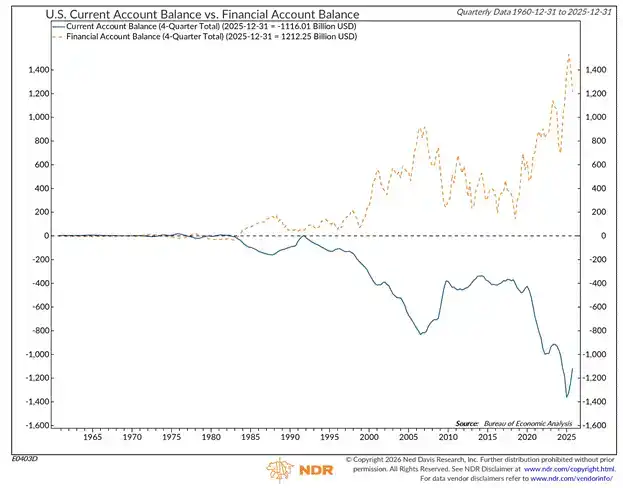
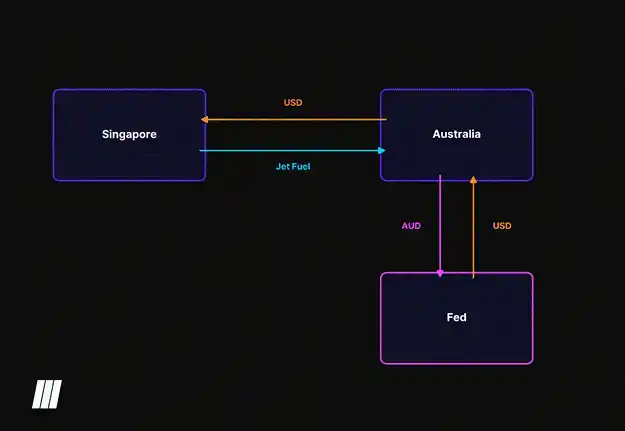
This is a problem for US financial markets due to the huge foreign ownership share. If left unchecked, the slow liquidation of US dollar assets will lead to market declines. US Treasury Secretary Bessent and other policymakers understand this. They have two options: encourage the use of US dollar swap lines or modify banking regulations.

"Bad" Australia: Sells US Treasuries to buy jet fuel.
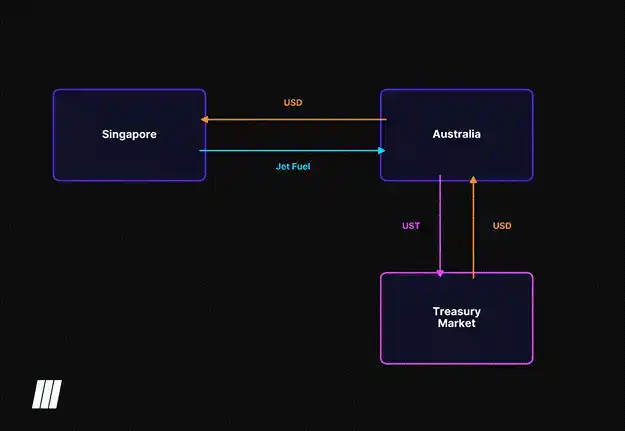
"Good" Australia: Borrows US dollars from the Fed to buy jet fuel.
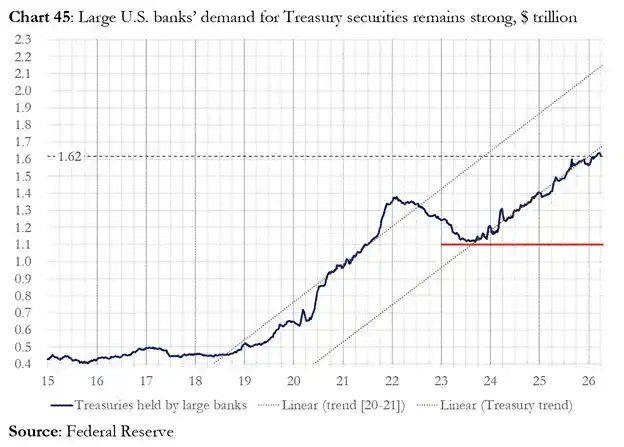
If US markets need more momentum to offset sovereign selling, regulations can be eased to allow banks to hold more US Treasuries and stocks. The relaxation of eSLR (Enhanced Supplementary Leverage Ratio) related capital requirements is a step in this direction.
Since the establishment of the Petrodollar system in the 1970s, saving surplus in US dollar assets has been "best practice." But today, holding US dollar assets no longer guarantees you a ship of fertilizer or oil. "Just-in-time" logistics is dead; "just-in-case" is here to stay. This is a structural trend that will last for decades. This means monetary policymakers must maintain loose financial conditions to fill the void left by foreigners investing their savings in physical infrastructure rather than "phantom US dollar financial assets."

Higher + Longer

War is inflationary, and the US-Iran conflict is no exception. AI CAPEX and infrastructure construction are excuses for increasing lending. Politicians support money printing due to real and perceived necessity. This is why Bitcoin has outperformed other major risk assets like gold and US tech stocks since February 28th.
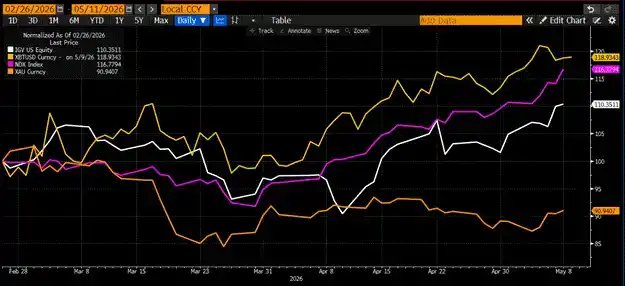
Bitcoin bottomed at $60,000 earlier this year, backed by trillions of US dollars and Renminbi yet to be created, and a return to $126,000 is a certainty. Many naysayers refuse to participate in this rally because Bitcoin's performance over the past 24 months has lagged behind tech stocks and gold. They don't understand why Bitcoin remains effective as a hedge against money printing. But it will demonstrate extreme sensitivity to fiat liquidity expansion. I expect the rally to intensify, becoming explosive once it breaks through $90,000 and many call option sellers are forced to cover.

I don't know how high Bitcoin can go, but I will set Maelstrom's portfolio risk to maximum unless a major change occurs. By the November midterm elections, US political sentiment towards AI and inflation could become very hostile, which might be a small hurdle in the ascent.

But remember: High oil prices don't hurt Trump as much as people think. MAGA is destined to lose in California (where energy policy leads to the highest gas prices in the US), but $100 crude and infrastructure reconstruction in Venezuela and the Middle East will benefit the oil and gas industries in states where Trump supporters reside. As long as money can be put in the pockets of ordinary Americans, Trump still has time to win re-election. So, let's go, baby, S&P 500 to 10,000!

It's time to play with Shitcoins. Besides Hyperliquid ($HYPE) and Zcash ($ZEC), which we are already heavily invested in, my next favorite is $NEAR. My next article will explain our thesis: why the "privacy narrative" combined with "Near Intents" will create positive cash flow for the protocol. This will completely reverse the token's sluggish price performance and create a massive catch-up opportunity, rapidly propelling it towards its all-time high from years ago.

It's a bull market; close your eyes and hit the buy button. There will be a time to sell, but it's not now. Don't mess it up, let's get crazy together.


Trending Cryptos

Related Questions

QWhat is the main argument Arthur Hayes presents regarding the AI bubble and cryptocurrency?

AArthur Hayes argues that the massive capital expenditure (CAPEX) in AI, driven by US-China competition and funded by increased fiat liquidity (printing money), creates a perfect environment for cryptocurrencies like Bitcoin to rise. He believes this AI-driven money creation is the biggest opportunity, overshadowing concerns about war and inflation.

QAccording to Hayes, what are the two events that could potentially end the AI spending frenzy?

AHe identifies two potential events: 1) A market indigestion event, such as a massive, financially irresponsible AI-related IPO or merger that the market cannot absorb, causing a reality check. 2) A political shift, particularly the 2028 US election, where rising costs (materials, labor, electricity) due to AI build-out could make an anti-AI, pro-human labor, anti-inflation platform politically attractive.

QHow does the 'Jevons Paradox' relate to AI spending according to the article?

AThe 'Jevons Paradox' is mentioned to explain that as the cost per unit of intelligence falls and AI performs more complex tasks, the total computational power (and thus energy/capital) consumption grows exponentially. This, combined with the 'Red Queen Effect' (needing to spend more to keep up with competitors), leads to potentially infinite expansion of AI CAPEX.

QWhy does Hayes suggest that countries outside the US might start selling dollar assets?

AHe argues that wars (like the US-Iran conflict) threaten the flow of essential commodities (food, energy) to countries in Europe, Africa, and Asia. Since holding US financial assets (like Treasuries) doesn't guarantee access to these physical goods, sovereign nations will be forced to liquidate dollar assets to invest in physical infrastructure, defense, and commodity stockpiles for security, moving from 'just-in-time' to 'just-in-case' logistics.

QWhat specific cryptocurrency altcoins does Arthur Hayes mention being bullish on, besides Bitcoin?

AHe mentions being heavily invested in Hyperliquid ($HYPE) and Zcash ($ZEC). He also states that his next favorite is $NEAR, citing an upcoming article that will argue the 'privacy narrative' combined with 'Near Intents' will generate positive cash flow for the protocol and create a significant catch-up rally.

Related Reads

After Three Consecutive Quarters of Decline, Can the Crypto Market Find a Window for Stabilization in Q3?

The cryptocurrency market has just concluded its worst-performing quarter since 2022, with total capitalization dropping 12.6% to $2.1 trillion. All core metrics indicate capital is leaving the sector, not just rotating within it. Bitcoin fell 14.2% and Ethereum dropped 25.4% in Q2, breaking their previous correlation with US tech stocks. A key driver is the reversal in US spot Bitcoin ETF flows, which saw a net outflow of approximately $4.67 billion in Q2, including a record monthly outflow near $4.5 billion in June. While recent data suggests long-term holders are accumulating again, sustained ETF outflows mean continued selling pressure. Market focus is now singularly on the Federal Reserve. The upcoming July FOMC meeting is seen as the most critical event for Q3. A dovish signal could support Bitcoin reclaiming a $68,000-$84,000 range, while a hawkish stance might establish a new trading band around $50,000-$56,000. Additionally, regulatory uncertainty persists, with the progress of the crucial *CLARITY Act* stalling in the Senate, reducing its perceived 2026 passage probability to 40-45%. Despite the broad downturn, a few sectors showed growth. Prediction markets saw nominal volume surge 48.7% year-over-year to $113.8 billion, and tokenized collectibles transaction volume rose 143% quarterly to $1.4 billion. The Real-World Asset (RWA) tokenization sector also continued steady growth, now representing ~$28.1 billion in on-chain value. The market's foundation for an extreme crash appears limited, with Bitcoin price hovering near its 200-week moving average. However, the trading paradigm has shifted from narrative-driven speculation to decisions based on price action, policy developments, and interest rate expectations, making a broad sentiment-driven rally unlikely in the near term.

marsbit10h ago

After Three Consecutive Quarters of Decline, Can the Crypto Market Find a Window for Stabilization in Q3?

marsbit10h ago

BIT Trading Moment: BTC Still Suppressed by Weekly 200 EMA, Rejection May Restart Decline; Storage and Semiconductors that Surged Last Night Begin Falling in Evening Trading

**Crypto & Stock Market Wrap: Bitcoin Tests Resistance, Stocks Retreat After AI Surge** Bitcoin consolidates around $66,000, facing key resistance near $68,000—an area seen as a major psychological and technical hurdle where previous rallies have failed. Analysts note the cryptocurrency is caught between its 200-week moving average (~$63,333) and 200-week EMA (~$68,328). A clear break above $68k is needed to signal a stronger bullish trend, while a rejection could lead to a retest of $63k support. Market sentiment remains cautious, with low futures open interest pointing to a low-liquidity rebound rather than a full bull market. Bitcoin spot ETFs saw another $203 million inflow. US stock futures pointed lower after a strong Tuesday session led by a massive rebound in semiconductors and memory stocks. The rally was fueled by renewed optimism about AI-driven hardware demand, with Micron, SanDisk, and SK Hynix surging. However, those gains reversed in pre-market trading. Super Micro Computer (SMCI) soared over 20% after hours on strong guidance and a record backlog. Other standouts included Rocket Lab and nuclear energy plays Oklo and X-Energy. Rising oil prices (Brent above $91) and climbing Treasury yields (10-year near 4.64%), however, are reigniting inflation concerns and acting as a headwind for equities. In Asia, markets were mixed. South Korea's KOSPI pared early gains to close slightly higher as semiconductor stocks like SK Hynix gave back initial surges. Japan's Nikkei edged lower as the yen hit a fresh 38-year low against the dollar, raising fears of potential market intervention. Key events to watch include the Samsung Galaxy launch, AMD's AI event, and a slew of major tech earnings from Alphabet, Tesla, and IBM after the close on Wednesday, followed by the ECB meeting and Intel's earnings on Thursday.

marsbit10h ago

BIT Trading Moment: BTC Still Suppressed by Weekly 200 EMA, Rejection May Restart Decline; Storage and Semiconductors that Surged Last Night Begin Falling in Evening Trading

marsbit10h ago

Former CFTC Chairman, Circle President Tarbert: Preaching Long-Termism While Cashing Out $30 Million Himself

Former CFTC Chairman and Circle President Heath Tarbert has consistently advocated for a long-term vision in public, urging patience from investors as Circle’s stock price has fallen significantly from its peak. However, it has been revealed that since Circle’s IPO, Tarbert has continuously sold his CRCL shares through pre-arranged trading plans, cashing out approximately $30 million, without making any public market purchases. This contrast between his public messaging and personal actions has drawn criticism. Tarbert joined Circle in July 2023 as Chief Legal Officer, leveraging his regulatory experience to help guide the company through its IPO and expansion. Despite promoting stablecoins as long-term infrastructure, he established a 10b5-1 trading plan just before Circle went public, leading to substantial stock sales over the following year. In March 2026, he initiated another plan to sell more shares. His career trajectory highlights a pattern of moving between high-level regulatory roles and influential positions in the financial sector. After resigning as CFTC Chairman in early 2021, he joined Citadel Securities as Chief Legal Officer just 27 days later, during a period of intense regulatory scrutiny for the firm. He later joined Circle, aiding its efforts to navigate regulatory challenges for its public listing. While Tarbert's expertise in policy and compliance is valuable to companies like Circle, his actions—advocating long-term confidence while personally divesting—raise questions about the alignment between his public statements and his private financial decisions, leaving investors who followed his advice to bear the market risks.

marsbit11h ago

Former CFTC Chairman, Circle President Tarbert: Preaching Long-Termism While Cashing Out $30 Million Himself

marsbit11h ago

Gate Research Institute: The 'Wall Street-ization' Wave of Crypto Financial Products – Competition or Integration?

The article titled "Gate Research Institute: Are Crypto Financial Products Sparking a 'Wall Street' Wave—Competition or Convergence?" explores the evolving relationship between the crypto ecosystem and traditional finance (TradFi). The piece begins by reflecting on Bitcoin's original 2009 vision of decentralization, disintermediation, and moving away from banks. It then contrasts this with the 2024 landscape, where key crypto assets like Bitcoin are increasingly held through Wall Street products like ETFs issued by giants like BlackRock. The article questions whether this signifies that TradFi is systematically taking over the rights to issue, price, custody, and distribute crypto financial assets. The core argument is that this is not a zero-sum takeover but rather a bidirectional convergence where each side addresses the other's weaknesses. Crypto offers 24/7 global markets, programmable settlement, and open access but lacks compliant channels, institutional-grade custody, deep fiat liquidity, and mainstream distribution. TradFi possesses these but is constrained by legacy systems, limited operating hours, and slow settlement. Two primary convergence paths are highlighted: * **Path A (CEX to TradFi):** Exemplified by Gate, which has progressed from offering tokenized stocks and CFDs to providing direct, real stock trading (US, Hong Kong, South Korea) within its platform, using USDT. * **Path B (TradFi to Crypto):** Exemplified by Robinhood, which has integrated crypto trading, acquired exchanges like Bitstamp, and is moving traditional assets like stocks onto the blockchain via tokenization and its own Layer 2. Both paths are ultimately competing to become the next-generation, unified financial account—a "super account" where users can seamlessly trade cryptocurrencies, stocks, ETFs, RWA (Real World Assets), and tokenized treasury products in one interface. The growth of RWA and tokenized treasuries (e.g., BlackRock's BUIDL) is presented as the asset-layer fusion, providing stable, yield-bearing assets on-chain and acting as a bridge between the two worlds. In conclusion, the "Wall Street-ization" of crypto is framed as a mutual transformation. Decentralized ideals persist in the protocol layer, while at the application layer, a more efficient, global, and accessible unified capital market is emerging from this convergence. The future competition lies not between crypto exchanges and stockbrokers, but between platforms vying to offer the most comprehensive asset coverage, liquidity, and user experience within a single account.

marsbit11h ago

Gate Research Institute: The 'Wall Street-ization' Wave of Crypto Financial Products – Competition or Integration?

marsbit11h ago

Trading

Spot

Hot Articles

Discussions

Welcome to the HTX Community. Here, you can stay informed about the latest platform developments and gain access to professional market insights. Users' opinions on the price of AI (AI) are presented below.

活动图片