For the past two years, PC manufacturers have repeatedly mentioned one parameter when promoting "AI PCs": NPU performance. Whether it's Intel Lunar Lake's 45 TOPS or AMD Strix Point's 50 TOPS, these numbers have consistently remained at a relatively modest level. They can handle background blur, voice noise reduction, and run some small-scale on-device models—but that's about it.
On May 31st, at the GTC 2026 conference, NVIDIA unveiled the RTX Spark superchip, raising this figure to 1 petaflop, or 1000 TOPS. This isn't a 30% or 50% improvement—it's an entire order of magnitude leap.
Announced alongside were several other key developments: Microsoft upgraded Windows' native security mechanisms in coordination with RTX Spark and integrated NVIDIA's open-source sandbox runtime, OpenShell, into the Windows platform; Adobe announced a fundamental redesign of Photoshop and Premiere from the ground up to specifically adapt to RTX Spark's Unified Memory Architecture; Six initial OEMs confirmed they will launch thin-and-light laptops and compact desktops featuring this chip in the fall of this year.
What NVIDIA is doing at this GTC isn't just releasing a new chip. It is attempting to set a new hardware standard for the "Personal AI Computer" category.
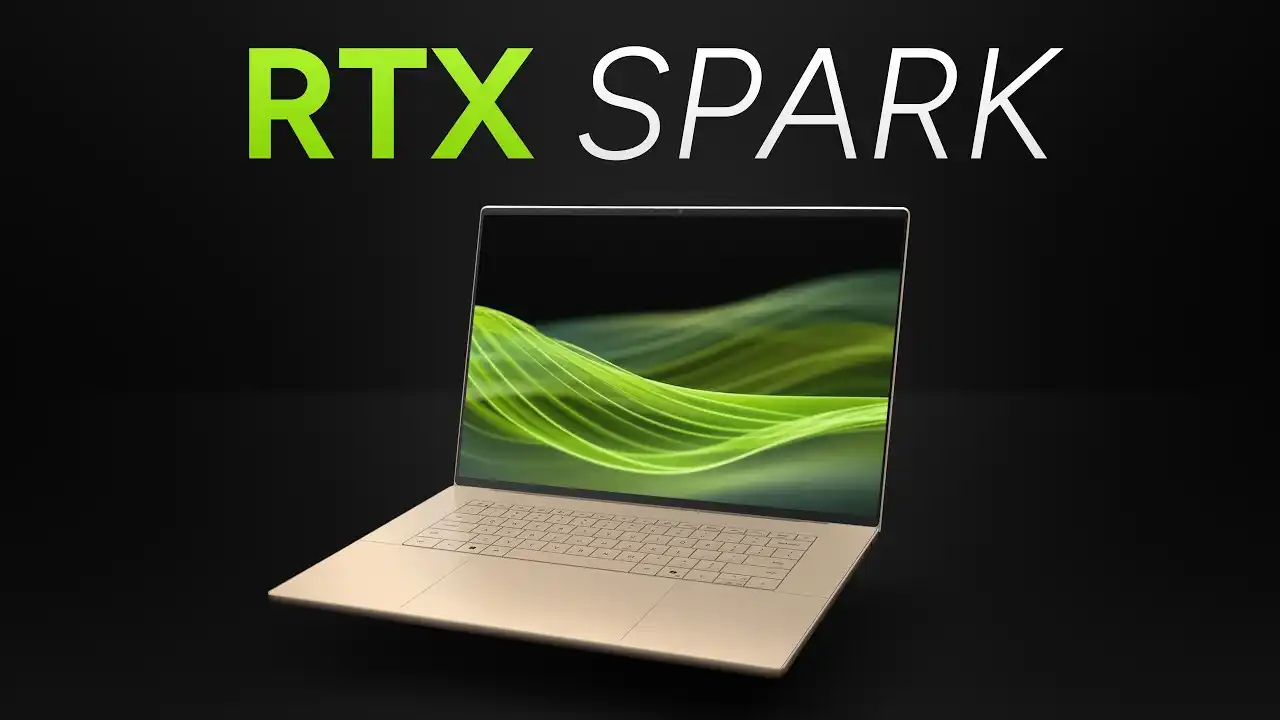
When GPU Becomes the Star of the PC
First, let's examine the chip itself. According to data NVIDIA revealed at GTC, RTX Spark integrates a Blackwell architecture GPU with 6144 CUDA cores, paired with a 20-core Arm architecture Grace CPU jointly designed with MediaTek, manufactured using TSMC's 3nm process. The key change lies in the memory architecture: up to 128GB of unified memory, where the CPU and GPU share a single memory pool, eliminating the need to move data back and forth between the two.
This is the opposite of traditional PC architecture logic.
The fundamental structure of a traditional PC is "x86 CPU as the main processor, with a discrete GPU as an optional component." Even with the rise of the AI PC concept in recent years, the approach by Intel and AMD has been to embed an NPU within the CPU as an add-on module for AI acceleration, typically offering performance in the range of 40-50 TOPS. The GPU remains "external."
RTX Spark reassigns dominance. This SoC makes the GPU the protagonist, relegating the CPU to a supporting role. NVIDIA claims AI performance of 1 petaflop at FP4 precision, equivalent to 1000 TOPS—more than 20 times the performance of the built-in NPUs in the previous generation of AI PCs. This isn't just speeding up on the same track; it's starting the race on an entirely different one.
The rapid response from OEMs confirms this assessment. According to NVIDIA's official announcement and subsequent reports from DIGITIMES, Asus, Dell, HP, Lenovo, Microsoft Surface, and MSI will launch thin-and-light laptops and compact desktops powered by RTX Spark this fall, with models from Acer and Gigabyte to follow. Virtually all major Windows PC brands have joined the fray.
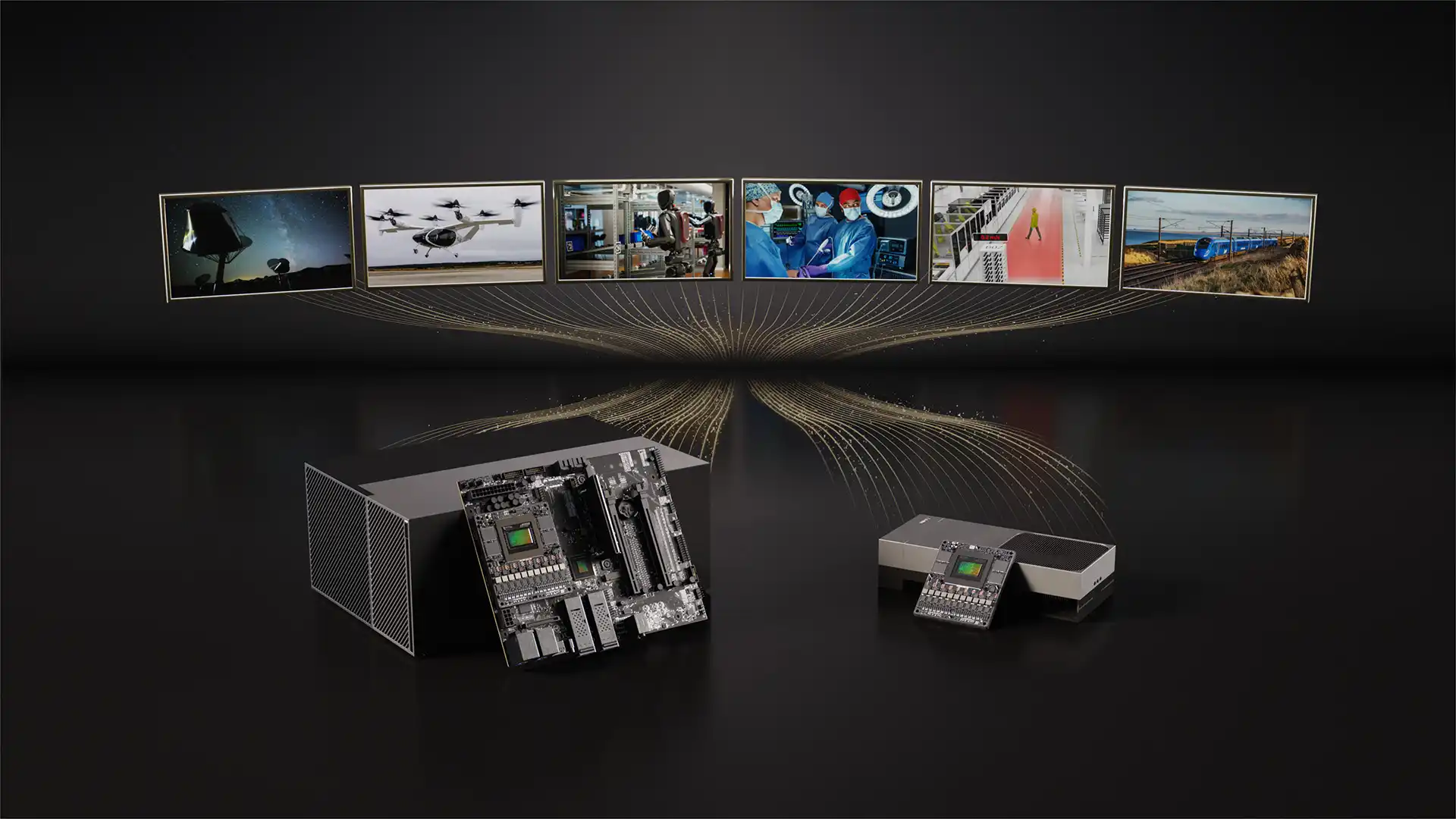
RTX Spark isn't a product born from nothing. In early 2025, the same core Blackwell + Grace chip was introduced as Project DIGITS and DGX Spark, but it was positioned then as a Linux desktop supercomputer for developers, roughly the size of a small desktop PC. A year later, this architecture has been squeezed into the thermal envelope of a thin-and-light laptop, the operating system switched from Linux to Windows, and the target audience expanded from AI developers to general consumers and enterprise users. This is the most noteworthy change in the consumer-facing announcements at GTC 2026: NVIDIA isn't releasing a developer toy; it's pushing open the door to the consumer market.
Running a 120B Model Locally—Is It Enough?
The numbers for performance and memory ultimately need to answer one question: What can you do with it?
The answer NVIDIA gave at the launch is that RTX Spark supports running a 120B parameter large language model locally, with a context window potentially reaching up to 1 million tokens. What does 120B mean? For reference, the current mainstream practice for running local models on consumer hardware involves using a quantized and compressed 30B to 40B parameter model on an RTX 4090 with 24GB of VRAM. Smaller models that run quickly on consumer GPUs are in the 9B range. Jumping from 9B to 120B redefines the "sufficient" standard for on-device AI.
The 128GB unified memory is the prerequisite for all this. In traditional PC architectures, the CPU has its own system memory, and the GPU has its own VRAM, with a physical boundary between them. A large model exceeding the VRAM capacity either won't run at all or requires complex model partitioning and memory swapping, causing a drastic slowdown. The unified memory architecture eliminates this bottleneck, allowing model data to reside directly in the shared 128GB pool accessible to both the CPU and GPU. Apple first demonstrated the consumer viability of this technical path with Apple Silicon; now NVIDIA is bringing it to the Windows camp.
Beyond large model inference, NVIDIA listed use cases including 12K video editing, 3D scene rendering exceeding 90GB, and ray-traced gaming at 1440p resolution with over 100 fps. The common characteristic of these scenarios is the extremely large volume of data processed in a single operation, where traditional PCs either require wait times many times longer than the processing time itself or simply cannot handle the task at all.
There remains a gap between "supports running" and "runs fluidly." NVIDIA did not disclose the actual inference speed for a 120B model on RTX Spark, nor did it provide first-token latency data for scenarios involving million-token contexts. A key metric determining long-context inference speed is memory bandwidth. For reference, the DGX Spark, which uses the same GB10 core, achieved a measured memory bandwidth of approximately 301 GB/s. This bandwidth level is adequate for running a 120B model, but when handling context windows in the million-token range, users might need to wait several seconds to see the first output token. The notebook version of RTX Spark might see this bandwidth adjusted due to power limitations.
Adding a Safety Cage for AI Agents
Another core announcement beyond raw performance is the collaboration between NVIDIA and Microsoft at the system level. This part might be the most easily overlooked but potentially most impactful content for the industry from the GTC 2026 consumer launch.
A computer capable of running a 120B model, if placed in the hands of an AI agent that can autonomously operate the desktop, click buttons, and read/write files, elevates the security risk beyond the level of "could data be lost" to "could the agent do something you don't want it to do." Without solving this problem, enterprises cannot deploy such devices to their employees.
The solution from Microsoft and NVIDIA is a two-layer defense. First, Microsoft upgraded Windows' native security mechanisms to provide monitoring and constraints for AI agent behavior at the operating system level. Second, NVIDIA formally introduced the OpenShell runtime to the Windows platform. According to NVIDIA's official documentation, OpenShell is an open-source sandbox runtime offering kernel-level isolation. It creates a controlled operational boundary for an AI agent, within which the agent can autonomously execute tasks, but its permissions are strictly limited, preventing unauthorized access to core system files, network connections, or user-sensitive data.
This combination has clear significance for enterprise procurement. Prior to this, the concept of "local AI agents" remained at the stage of technical demos. The hardware might be capable, but the security framework was non-existent. No enterprise IT department would dare to include devices in that state on their procurement list. By inserting a standardized isolation layer between hardware and application, NVIDIA and Microsoft are transforming "usable" into "manageable."
The performance overhead of OpenShell itself is a variable to be observed. Sandbox isolation typically incurs some degree of performance penalty. How much it affects inference speed or system responsiveness hasn't been publicly quantified by NVIDIA yet. Practical implementation challenges like deployment complexity for enterprise IT management and compatibility with existing security policies will need to be validated once OEM devices hit the market.
Why Adobe Is Willing to "Redesign from the Ground Up"
The level of cooperation from software vendors is often a key indicator of whether a new hardware platform can gain a foothold.
Adobe's announcement during GTC is the most significant signal from the software side of this launch. According to confirmations from NVIDIA's official blog and Adobe executives, Adobe has initiated a ground-up redesign of Photoshop and Premiere to specifically adapt to RTX Spark's Unified Memory Architecture, claiming potential performance improvements of up to 2x for AI and graphics processing.
"Redesign from the ground up" isn't about adding a plugin or an adaptation layer. On traditional PCs, where the CPU and GPU have separate memory spaces, processing a massive PSD file or an 8K video timeline involves repeatedly moving data between the two memory pools—a major source of performance waste. RTX Spark's unified memory allows the CPU and GPU to directly share the same 128GB space. This structural change holds real value for professional creators' workflows. Adobe's willingness to alter its foundational code for this indicates it views this architectural direction as more than a one-off marketing gimmick.
However, NVIDIA and Adobe have not disclosed the baseline for this "2x acceleration" claim. Is it compared to a current-generation x86 processor paired with a discrete GPU, or to the NPU solutions in the previous generation of AI PCs? The implications are vastly different. Until the benchmark testing conditions are made public, the true value of this number remains an open question.
Other announced supporters include Blackmagic Design, ComfyUI, llama.cpp, OTOY, and several game developers. The follow-up from ComfyUI and llama.cpp is noteworthy because they are among the most active open-source tools in current local AI workflows. Early support from the developer community often provides a more genuine reflection of a platform's ecosystem potential than promises from large corporations.
NVIDIA is leveraging the CUDA ecosystem and unified memory architecture to build an experience akin to Apple's tight software-hardware integration within the Windows camp. The difference is that Apple built its own walled garden, while NVIDIA needs to persuade Microsoft and ISVs to build it together. Adobe's willingness to undertake a foundational redesign suggests that at least the first brick of that wall has been laid.
Beyond the Paper Specs
Returning to the most practical question: Can you actually buy these devices, and what will the experience be like in hand?
According to information released by NVIDIA, the first RTX Spark devices are scheduled to launch in the fall of this year, spanning thin-and-light laptops and compact desktops from Asus, Dell, HP, Lenovo, Microsoft Surface, and MSI. Models from Acer and Gigabyte will follow. Specific pricing and exact launch dates for all OEMs have not been announced.
More critical than pricing are several physical unknowns. How will power consumption and thermal management be balanced when squeezing a 1 petaflop chip into a thin-and-light laptop? How does RTX Spark perform in non-AI scenarios like everyday office tasks and battery life? Will the actual memory bandwidth of the 128GB unified memory in a notebook form factor be significantly reduced due to power constraints?
These questions represent the real test of industrial implementation. The peak performance of a chip in an engineering prototype and its actual performance in a consumer's hands over 8 hours a day are often two different things. NVIDIA emphasized RTX Spark's energy efficiency during the launch but did not provide specific TDP values or battery life data.
From the perspective of the PC industry landscape, the emergence of RTX Spark signals the formation of a new division of labor model. Over the past three decades, the authority over core PC chips has resided with x86 processor manufacturers. GPU makers, while increasingly important, have always been "components plugged into the motherboard." What NVIDIA is offering this time is a complete SoC, integrating everything from the CPU and GPU to the memory controller, with the Arm-based CPU portion designed in partnership with MediaTek. The power structure of the PC industry chain is shifting from "x86 CPU plus optional GPU" towards "GPU-centric SoC platforms."
This shift won't happen overnight. The OEMs' pricing strategies, the actual energy efficiency performance of the products, the adaptation progress of ISV software, and the validation cycles for enterprise customer procurement—each link will determine whether RTX Spark becomes a new benchmark for the PC industry or merely another high-profile technical demo that fails to meet expectations. The answer will have to wait at least until this fall.




















