AI Industry Welcomes a Cash-Rich Tether

marsbitPublished on 2026-01-05Last updated on 2026-01-05

Abstract

Tether, the company behind the stablecoin USDT, reported a staggering $13 billion profit in 2024, significantly outperforming major AI companies like OpenAI and Anthropic, both of which incurred substantial losses. With only 150 employees, Tether achieved a per capita output 60 times greater than OpenAI’s. Its business model is simple: for every USDT issued, Tether holds one US dollar, primarily investing these reserves in U.S. Treasury bonds. It earns the interest income without paying any to USDT holders. In 2024, interest alone contributed $7 billion to its profits. Now, Tether is aggressively investing in AI. It loaned over $600 million to Northern Data, Europe’s largest GPU cloud provider, acquiring what is effectively an AI training base. It also released QVAC Genesis, a massive open-source AI training dataset. Furthermore, Tether invested $200 million in Blackrock Neurotech, a pioneering brain-computer interface company. Additional investments in robotics could bring its total AI-related spending to nearly $2 billion. Tether’s move into AI may be driven by both anxiety over declining Treasury yields and ambition to establish itself as a tech leader. Ironically, it promotes "decentralized AI" despite being a highly centralized company itself. While OpenAI and Anthropic struggle with profitability and continuous fundraising, Tether leverages its highly profitable stablecoin business to fund its AI ambitions risk-free, making a paradoxical case that the best business m...

Written by: Curry, Deep Tide TechFlow

Tether earned $13 billion in 2024.

You might not have a clear idea of this number. Let me put it another way: OpenAI had a revenue of $3.7 billion in 2024 but lost $5 billion. Anthropic had a revenue of $1 billion and also lost $5 billion.

The combined losses of these two legitimate AI companies still fall short of what Tether made in a year.

Tether has 150 employees, while OpenAI has over 3,000. The per capita output difference is roughly:

60 times.

How does Tether make money? When you buy 1 USDT, they take $1 and use it to buy U.S. Treasury bonds. The interest from the bonds goes to them, not you.

The essence of this is that Tether doesn't pay interest. Banks pay interest on savings, but Tether doesn't. You hold your money as USDT and get zero interest. They use your money to buy U.S. Treasury bonds, earning $7 billion in interest in 2024 alone.

150 people managing over $130 billion in Treasury bonds, doing nothing, and the interest just rolls in.

Who wouldn't want to lie back with a business like this?

But with so much money, it has to be spent. Tether has chosen a direction:

AI.

And they’re not just casually investing in a few projects.

First, computing power.

Running AI requires GPUs—the more, the better, and the more expensive, the better. Tether lent over $600 million to a German company called Northern Data.

What does this company do?

It’s Europe’s largest GPU cloud service provider. They have over 10,000 Nvidia H100 GPUs—the same ones OpenAI used to train GPT, each costing $20,000 to $30,000.

The cluster formed by these GPUs ranks 26th in the global TOP500 supercomputer list. Tether’s $600 million investment essentially buys an AI training base in Europe.

Next, data.

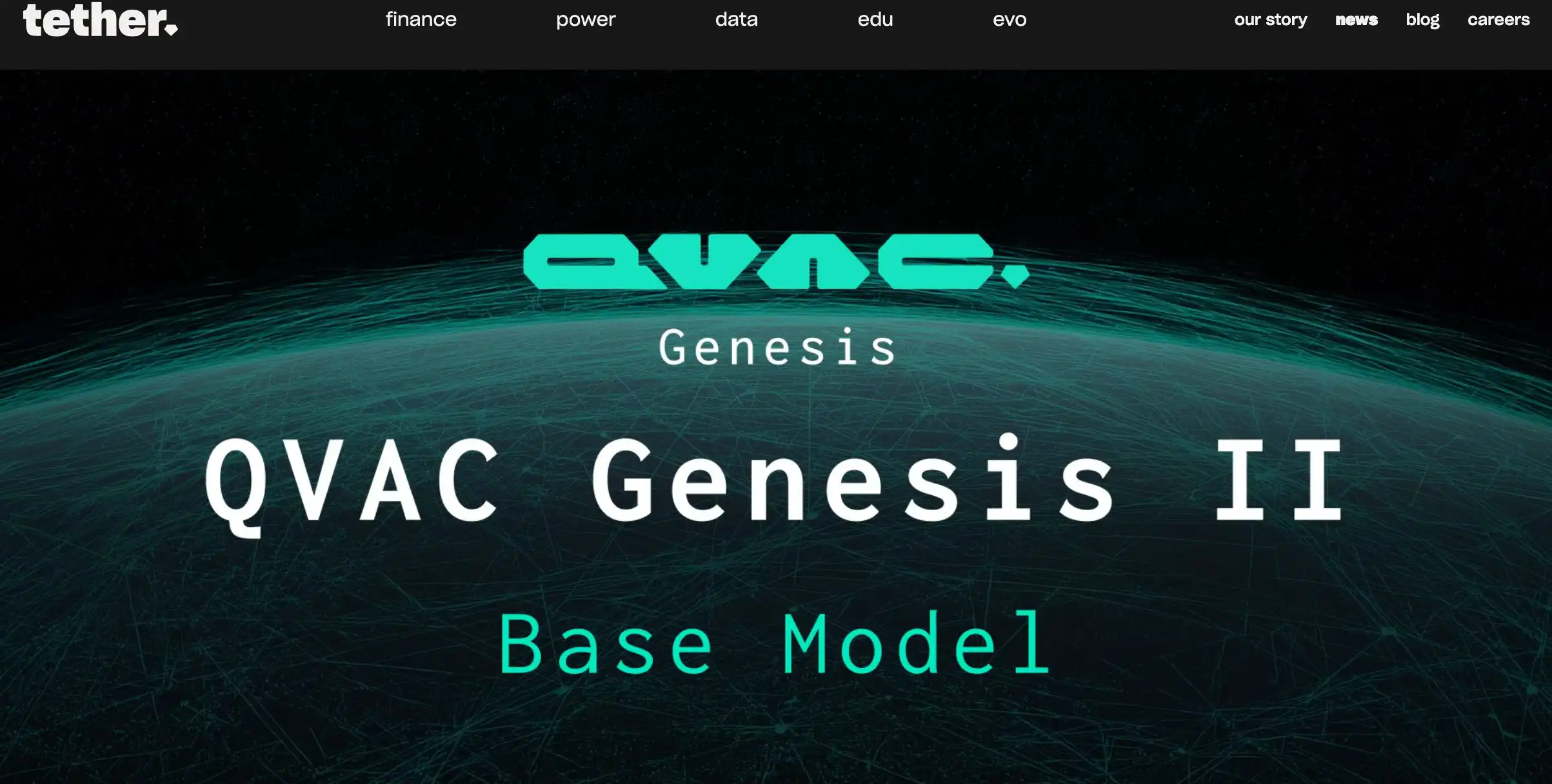
Training AI requires feeding it data. Last week, Tether released a dataset called QVAC Genesis, covering 19 disciplines including mathematics, physics, chemistry, and computer science. They claim it’s the world’s largest open-source AI training dataset.

Keep in mind that OpenAI and Anthropic’s training data are not public. Tether is releasing it for free, available to anyone.
Then comes the more sci-fi part.

In April 2024, Tether spent $200 million to acquire a company called Blackrock Neurotech. The name includes "Blackrock," but it has no relation to the asset management firm BlackRock.

This company works on brain-computer interfaces. They implant chips in people’s brains, allowing paralyzed individuals to type with their thoughts, control wheelchairs, and operate robotic arms. It sounds like science fiction, but they started in 2008—eight years before Musk’s Neuralink.

How impressive is this company?

Globally, 35 people have brain-computer interface chips implanted, and 31 of them use Blackrock’s technology. In 2016, a fully paralyzed patient used their device to control a robotic arm and fist-bump Obama. The chip implanted in the sensory cortex allowed him to "feel" the president’s hand.

Last year, this brain-computer interface company enabled an ALS patient to "speak" again. The chip in his brain translated his thoughts into speech at a rate of 62 words per minute.

Tether spent $200 million to become the majority shareholder of this company.

Combined, Tether has invested nearly $1 billion in AI-related fields. Rumor has it they’re also negotiating with a German robotics company, offering $1.2 billion. If that goes through, the total investment could reach $2 billion.

What does this mean?

Anthropic raised $3.5 billion in funding throughout 2024. Tether’s investment alone is almost half of what a top-tier AI company raised in a year.

OpenAI spent $6.7 billion on R&D in the first half of 2025. Tether, with just a fraction of its profits, can play the role of a big spender in the AI world.

Why is a stablecoin company diving into AI?

We think there are two possibilities.

The first is anxiety. The Fed is cutting interest rates, and Treasury yields are falling. In 2024, they made $7 billion in interest just by lying back. From 2025 onward, things might not be as rosy. Even money-printing machines need new stories.

The second is ambition. The whole world is talking about AI—investors, media, politicians. If you say you’re a stablecoin company, no one bats an eye. But if you say you’re working on AI, brain-computer interfaces, and humanoid robots, you become:

A tech leader.

The most amusing part?

Tether’s AI efforts come with slogans like "decentralization," "local operation," and "returning intelligence to individuals."
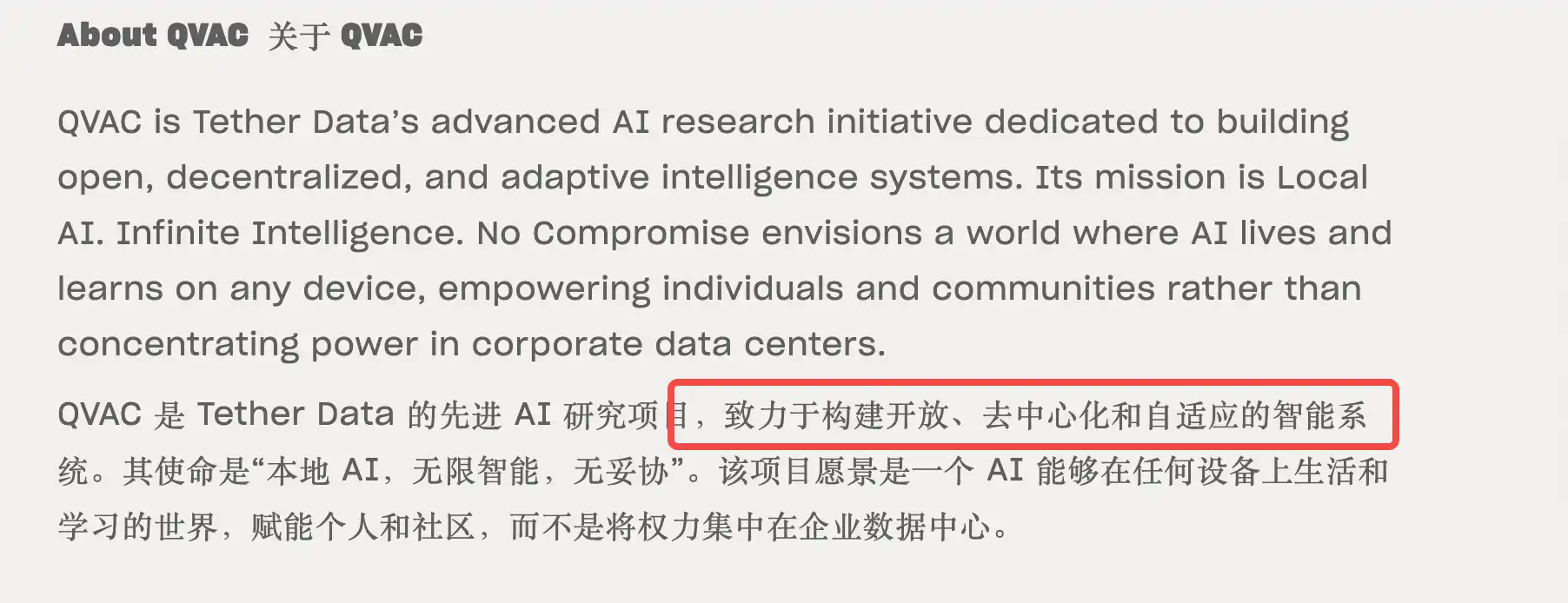
But Tether itself is the most centralized company in the crypto world.

They decide how many coins to issue, how much reserve to hold. In ten years of operation, they’ve never been audited. Only they know where users’ money is.

Now, this company wants to teach the world what "decentralized AI" means.

It’s a bit like a casino owner teaching people how to quit gambling.

Not that it’s impossible.

After all, OpenAI is still losing money and isn’t expected to break even until 2029. Anthropic is in a similar boat, targeting 2028. Sam Altman is fundraising everywhere, and Dario Amodei is doing the same. The two companies have burned through $10 billion combined and are still telling stories to investors.

Tether doesn’t need to tell stories. The money is already in their pocket.

What’s the biggest challenge in the entire AI industry? The business model.

How to make money? No one knows. When will it make money? No one knows. Can it make money? No one knows.

Tether doesn’t have this problem. Their business model is:

Not doing AI.

They use the profits from stablecoins to invest in AI. If it works out, it’s foresight. If it fails, it’s a learning expense. Either way, it doesn’t affect their core business.

Those doing AI are losing money; those not doing AI are making money. Those doing AI are fundraising; those not doing AI are investing.

In 2026, the best AI business model might just be not doing AI.

First, get your money-printing machine in order.

Trending Cryptos

Related Questions

QHow much profit did Tether make in 2024, and how does it compare to major AI companies like OpenAI and Anthropic?

ATether made a profit of $13 billion in 2024. In comparison, OpenAI had revenue of $3.7 billion but lost $5 billion, while Anthropic had revenue of $1 billion and also lost $5 billion. Combined, the losses of these two major AI companies were less than Tether's profit.

QWhat is Tether's core business model that generates such significant profits?

ATether's core business model involves issuing the USDT stablecoin. When users buy 1 USDT, Tether receives 1 US dollar and uses it to purchase U.S. Treasury bonds. Tether earns the interest from these bonds but does not pay any interest to USDT holders, allowing it to profit significantly from the interest income.

QWhat are some key AI-related investments Tether has made, and how much has it invested?

ATether has invested nearly $1 billion in AI-related areas. Key investments include over $600 million in loans to Northern Data, Europe's largest GPU cloud service provider with over 10,000 Nvidia H100 GPUs; $200 million to acquire brain-computer interface company Blackrock Neurotech; and the release of the QVAC Genesis dataset. It is also reportedly negotiating a $1.2 billion deal with a German robotics company, which would bring total investments to around $2 billion.

QWhy is Tether, a stablecoin company, investing heavily in AI technologies?

ATether is investing in AI due to two main reasons: anxiety over declining U.S. Treasury bond yields, which threaten its primary revenue source, and ambition to position itself as a tech leader in the rapidly growing AI field, enhancing its reputation beyond being just a stablecoin issuer.

QWhat ironic contrast does the article highlight between Tether's actions and its stated AI goals?

AThe article highlights the irony that Tether, which is promoting 'decentralized AI,' 'local operation,' and 'returning intelligence to individuals,' is itself one of the most centralized companies in the crypto space. It has full control over USDT issuance, reserve management, and has never undergone an audit, making its advocacy for decentralization seem contradictory.

Related Reads

Report Interpretation: J.P. Morgan Details Micron's Pre-Earnings Sentiment, Current Hardware Sector Dynamics

Morgan Stanley analyst Joshua Meyers' report (June 21, 2026) highlights key trends in the hardware and semiconductor sector ahead of Micron's earnings. The core takeaways are: 1. **Micron & Memory:** Memory remains a high-conviction long theme, driven by strong AI demand and rising ASPs. However, investor focus is shifting to the sustainability of Micron's >80% gross margins and the specifics of potential new long-term supply agreements (SCAs). 2. **Hardware Supply Chain:** AI-related demand for servers, networking, and storage remains robust, but company performance is diverging. Celestica (CLS) shows improved margin confidence, Western Digital and Seagate benefit from pricing, Fabrinet (FN) sees predictable AI optics growth, and Teradyne (TER) anticipates a new Google customer. 3. **AI Capex & WFE Forecasts:** JPMorgan increased its Wafer Fab Equipment (WFE) market growth forecasts to 28% in 2026 and 29% in 2027. AI infrastructure financing is evolving, with higher project-level debt reducing constraints on capex expansion. The report signals that while the AI-driven hardware cycle is strong, the market is entering a phase focused on execution verification (e.g., Micron's SCA details, Fabrinet's ramp with Amazon) and valuation sustainability. Key near-term signals include Micron's guidance, Arista Networks' outlook, and the pace of demand normalization post potential tariff-related pull-ins.

marsbit7h ago

Report Interpretation: J.P. Morgan Details Micron's Pre-Earnings Sentiment, Current Hardware Sector Dynamics

marsbit7h ago

Research Report Analysis: The Fed's New Chair's Debut – New Leader, But Same Script?

Report Analysis: Federal Reserve's New Chair Debut – A New Captain, But the Same Script? Morgan Stanley's chief global economist Seth B. Carpenter analyzes the first FOMC meeting under new Fed Chair Kevin Warsh in a June 21 report. Warsh deliberately avoided providing forward guidance on interest rates, aligning with his philosophy. However, market expectations for a rate hike this year were reinforced. Key signals lie elsewhere: inflation may fall more than expected, and quantitative tightening (QT) could be more aggressive than anticipated. The FOMC's "dot plot" suggests only one rate hike in 2026. Carpenter argues that if inflation undershoots forecasts, the logic for even a single hike weakens, especially as projections indicate potential rate cuts in 2027. On QT, Warsh's stance is clear. Carpenter notes that measures like halving the Treasury's account balance could shrink the Fed's balance sheet by around $500 billion with minimal market impact. Combined with adjustments to reserve interest and liquidity rules, the ultimate QT scale may exceed expectations, though its market effect might be less disruptive unless the Fed actively sells Mortgage-Backed Securities (MBS). While Warsh initiated a review of the Fed's policy framework, the 2% inflation target remains intact for now. The report concludes that the market may be overestimating the significance of reduced forward guidance and the near-term rate hike risk, while potentially underestimating the scope and manageable nature of the coming balance sheet reduction. The key debates will hinge on upcoming core PCE data, the specifics of the QT path, and the framework review's findings.

marsbit7h ago

Research Report Analysis: The Fed's New Chair's Debut – New Leader, But Same Script?

marsbit7h ago

Critical Game Week: BTC Retracement Confirmation vs. HYPE Support Battle | Guest Analysis

This weekly analysis outlines a critical juncture for BTC and HYPE markets, focusing on key price level confirmations. **BTC Analysis:** BTC is at a pivotal point after a five-wave rally from the June 5th low of $59,100. The price has broken below a short-term rising channel's lower boundary, with the current move seen as a pullback to test this breakdown. Failure to reclaim this level could lead to a retest of the $59,000-$60,000 support zone. The core scenario hinges on this channel retest outcome. * **Key Levels:** Resistance at $64,500-$65,000 (channel boundary) and $69,500-$70,500. Support at $59,000-$60,000 and $55,000. * **Strategy:** A core bearish stance is maintained (20% short from last week), with short-term plans for tactical trades. Three detailed contingency plans (A/B/C) are provided for short positions on resistance tests or breakdowns, emphasizing strict stop-loss discipline. **HYPE Analysis:** HYPE shows strong momentum but is currently in a corrective phase after hitting a new high of $76.94. The price is retesting the crucial $64-$66 support area. * **Key Levels:** Resistance near $77 and $80-$82. Support at $64-$66 and $52-$54. * **Strategy:** The short-term approach is "buy on dips, avoid chasing rallies." A long position is considered only if clear stabilization signals appear at the $64-$66 or deeper $52-$54 support zones, with tight risk controls. **General Risk Management:** A standardized trailing stop-loss protocol is emphasized: set initial stop, breakeven at +1% profit, then trail stops upward to lock in gains. *Disclaimer: All analysis is presented as a personal trading framework, not investment advice. Market conditions are complex and require dynamic adjustment.*

marsbit7h ago

Critical Game Week: BTC Retracement Confirmation vs. HYPE Support Battle | Guest Analysis

marsbit7h ago

Trading

Spot
Futures

Hot Articles

Discussions

Welcome to the HTX Community. Here, you can stay informed about the latest platform developments and gain access to professional market insights. Users' opinions on the price of AI (AI) are presented below.

活动图片