After Storage, Are Copper and Fiber Optic Cables Facing an AI "Great Famine"?

marsbitPublished on 2026-05-14Last updated on 2026-05-14

Abstract

Following the storage sector, copper and fiber optics are emerging as potentially the next major markets to experience explosive growth due to AI. Demand for copper, described by Goldman Sachs as "the oil of the AI era," is surging. Prices are near record highs, with LME copper up 41% over the past 12 months. This is driven by AI's immense and unique requirements: copper is the essential material for the massive electrical distribution (e.g., a 1GW AI data center requires ~27,000 tons) and advanced liquid cooling systems needed for high-power AI clusters like NVIDIA's GB200. Meanwhile, new large-scale copper mine discoveries have been scarce for a decade, tightening supply. Concurrently, a "fiber famine" is unfolding. AI's need for ultra-high-speed, long-distance interconnects between thousands of GPUs is pushing data transmission beyond the physical limits of copper cables. Demand for fiber optics is experiencing a step-change, with a single AI data center requiring up to 36 times more fiber than a traditional CPU rack. This has caused prices for standard G.652D fiber in China to nearly double in just three months. Supply is critically constrained due to the long (18-24 month) lead times required to expand production of the core preform material. In summary, AI's infrastructure demands are cascading down from semiconductors to foundational materials. Copper faces a structural supply-demand imbalance, while fiber optics is entering a period of severe shortage, positioning ...

Following the storage sector, copper and fiber optics may be the next markets to experience a major boom due to AI.

A trade that Charlie, a metal strategist at Citigroup, has been eager to execute in recent weeks: buying a digital call option on LME copper with a strike price of $15,250, expiring in August.

He believes that almost all demand growth for copper since 2022 has come from sources related to the energy transition and AI.

As of May 14, 2026, LME three-month copper is approaching $14,000 per ton, and COMEX copper opened at $6.63 per pound. Over the past 12 months, copper has risen 41%. Over the past 4 weeks, copper has risen 10%. This is a price near its historical high.

Over the past two years, the entire market has framed the AI narrative as a chip story—Nvidia's market capitalization, TSMC's capacity, HBM yield rates, CoWoS packaging bottlenecks. Almost all discussions about "AI infrastructure" have focused on those few square centimeters of silicon.

But from a perspective many are unaware of, AI demand is cascading outward from the silicon chip, down to copper mines, down to glass.
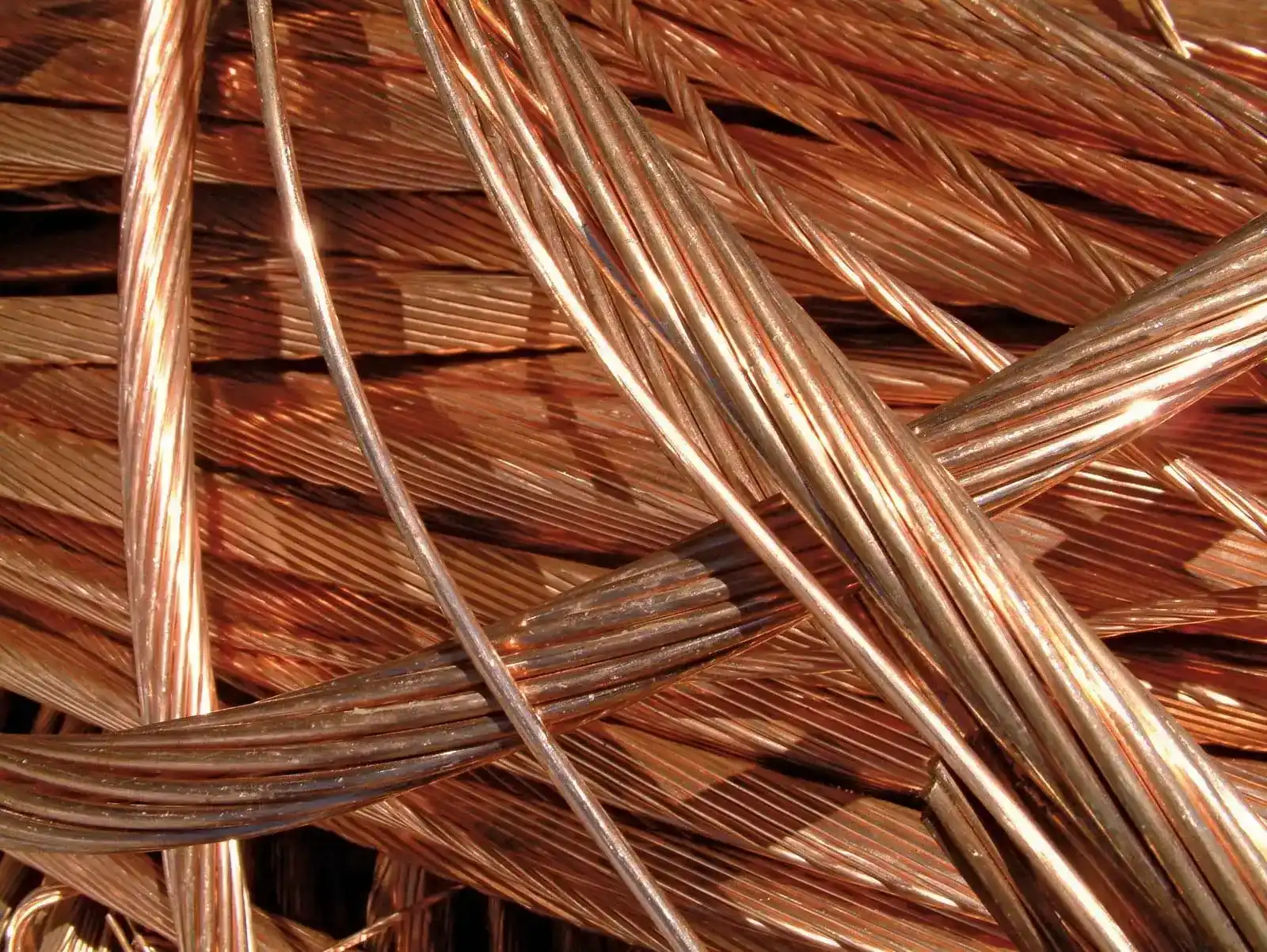
Copper is the Oil of the AI Era

Supply and demand determine price. The view that "copper demand is strong" is more directly visible in the market.

LME three-month copper closed at $13,943 per ton on May 11, 2026, an all-time LME closing high, rising 2.7% for the day. COMEX copper hit an intraday high of $6.58 per pound on May 12. Over the past 12 months, copper has risen 41%. Over the past four weeks, it has risen 10%.

At the beginning of 2025, copper was around $9,000. It broke through $12,000 mid-year, finishing the year up 43%, its best year since 2009. In January 2026, copper broke $13,000 intraday for the first time. Four months later, it's approaching $14,000. The shape of this curve resembles a rediscovered asset being priced by new logic.

Trafigura is the world's second-largest metal trader. Its head of metals analysis, Graeme Train, provided a very concise breakdown of demand: of the additional 10 million tons of copper consumption over the next decade, one-third will come from electric vehicles, one-third from power generation and transmission/distribution, and the remaining third from automation, manufacturing capital expenditure, and data center cooling systems.

In a report titled "AI and Defense Place the Power Grid at the Center of Energy Security," Goldman Sachs offered a sharper verdict: Copper will become the oil of the AI era. Goldman Sachs calculates that by 2030, global power grid and electricity infrastructure construction will account for over 60% of incremental copper demand growth.

This might sound somewhat exaggerated, but it's reasonable upon closer thought.

Copper's conductivity is 100% IACS, second only to silver among all metals. But silver is too expensive. Copper is the only practical answer for almost all large-scale conductive scenarios in industry. The closest substitute is aluminum, but aluminum's conductivity is only 61% that of copper, meaning to transmit the same megawatt of electricity, aluminum wire requires a larger cross-section—it's heavier, occupies more space, and has greater thermal losses. In the centimeter-scale space of a data center rack, this difference is almost unacceptable.

Thermal conductivity is even more so. Copper's thermal conductivity is 401 W/(m·K), five times that of iron and eight times that of stainless steel. A single NVIDIA GB200 card consumes 1,200W. A standard 72-card rack consumes over 130kW. At this level of thermal density, air cooling is insufficient; liquid cooling is mandatory. And almost every component dealing with "heat" in a liquid cooling system—cold plates, pipes, water blocks—is made of copper.

In other words, copper is not the "preferred material" for AI data centers; it is the "only physically viable choice."

AI's power consumption is disruptive, and delivering that power to data centers is very copper-intensive.

A 1GW AI data center requires roughly 27,000 tons of copper just for power distribution and wiring. Meta's Hyperion data center in Louisiana has a scale of 5GW. Calculating based on this, the copper demand for this single project alone approaches 135,000 tons. This doesn't even account for the high-voltage transmission lines, substations, and grid upgrades needed to deliver power to the data center's doorstep.

In our past impression, copper was an easily accessible metal, but recent data suggests this impression may need adjusting.

Starting in March 2026, the US-Iran conflict cut off Middle Eastern sulfur and sulfuric acid exports. Sulfuric acid is a key input for heap leaching copper refining, forcing Chilean refineries to reduce production. This was also the trigger for the current wave of price increases in 2026.

A more structural and macro issue is that globally, no super-large copper mine has been discovered in the past decade. John Meyer, an analyst at UK broker SP Angel, believes the breakeven price for developing the next generation of new copper mines is $13,000 per ton, already exceeding copper's current price. The team led by Wang Jiechao at CITIC Securities estimates a global refined copper deficit of over 100,000 tons in 2026; Citi's forecast is more aggressive at 308,000 tons.

The 2026 Fiber Optic "Great Famine"

Up to this point, the copper story is a clear bullish narrative. But if you zoom into the interior of an AI data center, you'll find something very subtle: part of the demand for copper is being replaced.

"Next-generation AI infrastructure will require massive optical connections because computational demand is growing so rapidly that copper wires can no longer keep up." This is the view expressed by Jensen Huang in an interview this month.

As Huang said, the data transmission needs of AI clusters are pushing beyond the physical limits of copper cables.

Copper cable transmission of high-speed signals has two fundamental constraints: first, signal loss increases dramatically with frequency; second, the size and weight of copper cables become unacceptable at high frequencies. The interconnect bandwidth between GPU clusters is advancing from 200G, 400G towards 800G, 1.6T. The distance copper cables can reliably sustain shrinks from several meters to tens of centimeters. But AI clusters are at a scale of tens of thousands of cards, spanning racks, sometimes even spanning data centers—copper physically cannot do it.

But fiber optics can.
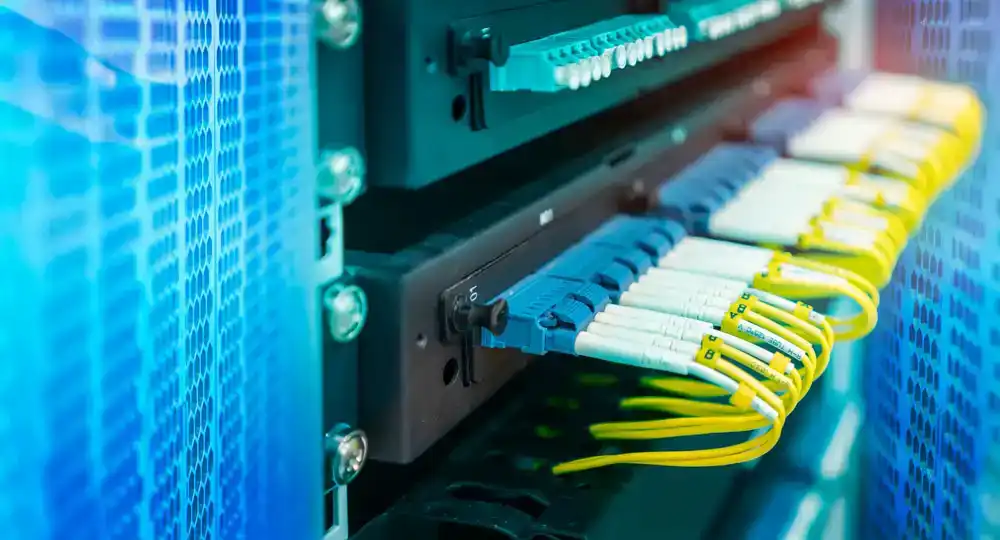
This is why the current surge in fiber optics is more intense, more pure, and more irreversible than copper's. How exaggerated is this spike in fiber optics?

According to CRU data: The price of Chinese G.652D bare fiber surged over 80% between November 2025 and January 2026. The January average price was 31.5 RMB per fiber-core-kilometer, with some actual transactions in the 40 to 50 RMB range, representing a cumulative increase of 94% to 144%.

Fiber optics, an industrial product whose price had been relatively stable for years, more than doubled in three months.

By February 2026, higher-end categories of fiber saw even sharper increases. For example, G.657.A bend-insensitive fiber rose from above 30 RMB per fiber-core-kilometer to above 50 RMB within a month. Sun Telecom directly coined the term "2026 Fiber Optic Great Famine." Its G.652D price per kilometer was $2.20 in 2024, rose to $3.00 in December 2025, and rose again to $4.10 a month later. Overall Asian fiber prices increased 75%, hitting a 7-year high.

AI data center demand for fiber optics represents an order-of-magnitude disruption.

Rahul Puri, CEO of STL's Optical Networking Business, mentioned a figure that gave us pause the first time we saw it: An AI data center requires 36 times the amount of fiber optics of a traditional CPU rack—this is a cliff-like leap.

GPU clusters operate fundamentally differently from CPU ones. A training cluster with tens of thousands of cards requires non-blocking, high-speed interconnections between all GPUs. This network architecture, called a Scale-out architecture, demands bandwidth unimaginable in the CPU era. Additionally, Data Center Interconnect (DCI) links are needed between data centers to stitch together computing clusters in different geographical locations into a supercomputer. For Meta's Hyperion data center project alone, fiber demand reaches 8 million miles.

Returning to the economic principle that price is determined by supply and demand, what about the supply side given this state of demand?

Light Reading reported that at least one leading fiber manufacturer has sold out its entire 2026 inventory. Data Center Dynamics reported that lead times for large customers have extended to 20 weeks, and for small customers, close to a year.

Why can't capacity be expanded quickly? Because the expansion cycle for optical fiber preforms—the core raw material—is 18 to 24 months, with an extremely complex manufacturing process. Even if all manufacturers decided to expand capacity today, the earliest new capacity would only come online in the second half of 2027. Meanwhile, demand will only continue to rise.

Anis Khemakhem, Chief Commercial Officer of Clearfield, provided a more macro number: By 2029, the United States alone will need to add 213.3 million miles of new fiber, doubling the existing 159.6 million miles to 372.9 million miles. In six years, the national fiber inventory doubles.

The biggest winner in this story is Corning.
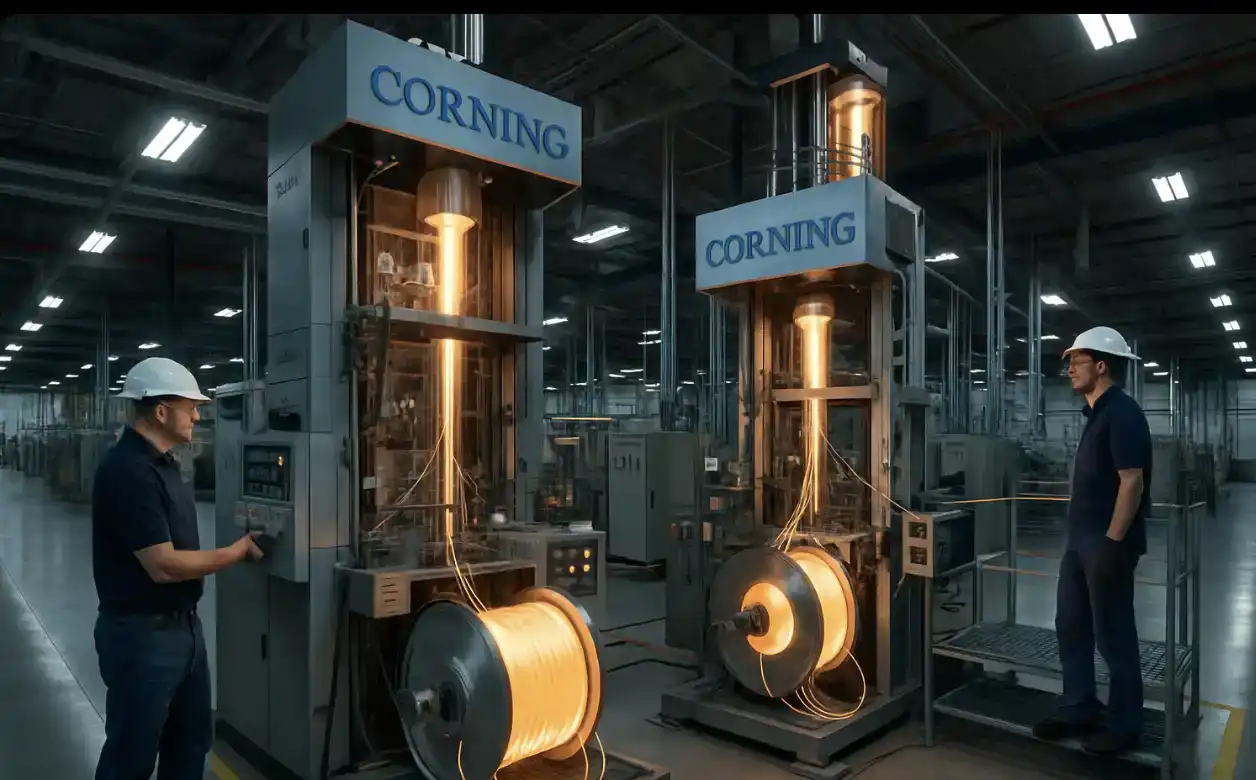
This is a glass company founded in 1851. It made glass bulbs for Edison's light bulbs, glass for TV picture tubes, and Gorilla Glass for the iPhone. Many people don't even know this company still exists. But it is now a core fiber supplier for Meta, Nvidia, OpenAI, Google, AWS, and Microsoft. Its stock price has risen over 75% in the past year. We might explore the story of Corning in a new article later, so we won't delve into it further here.

The story of copper and fiber optics seems to have only just begun to capture mainstream market attention, but we believe this might be the next explosive sector following the storage track.


Related Questions

QAccording to the article, what is the main reason for the sharp rise in copper prices since 2022, and why is copper considered essential for AI data centers?

AThe main reason for the sharp rise in copper prices since 2022 is the surge in demand driven by energy transition and AI-related sources. Copper is considered essential for AI data centers because it is the 'physical only choice' for high-performance electrical conductivity and heat dissipation. Its high electrical conductivity (100% IACS) is crucial for power delivery, and its excellent thermal conductivity (401 W/(m·K)) is vital for cooling systems, especially liquid cooling required for high-power AI chips like the NVIDIA GB200.

QWhat specific AI infrastructure demand is driving the dramatic price increase for fiber optics, and what is a key statistic illustrating this demand surge?

AThe demand for high-bandwidth, low-latency interconnections within and between AI GPU clusters is driving the dramatic price increase for fiber optics. A key statistic illustrating this surge is that an AI data center requires 36 times more fiber than a traditional CPU server rack, representing a cliff-like leap in demand. This is due to the scale-out architecture of GPU clusters requiring non-blocking, high-speed interconnects across thousands of GPUs.

QWhat are the two main physical constraints of copper cables that are leading to their replacement by fiber optics in advanced AI infrastructure?

AThe two main physical constraints of copper cables are: 1. Signal loss increases dramatically with higher frequencies, limiting the effective transmission distance for high-speed data. 2. At high frequencies, copper cables become excessively bulky and heavy, making them impractical for large-scale, distributed AI clusters that require connections over meters or between data centers.

QWhy is the supply of fiber optics struggling to meet the current demand surge, and what is a leading company benefiting from this situation?

AThe supply of fiber optics is struggling to meet demand because expanding production capacity is a slow process. The core raw material, the preform or 'light rod,' has an expansion cycle of 18 to 24 months due to its complex manufacturing process. Even if manufacturers decide to expand now, new capacity won't be available until the second half of 2027 at the earliest. A leading company benefiting immensely from this situation is Corning, a key fiber supplier to major tech firms like Meta, Nvidia, and Google, whose stock price rose over 75% in the past year.

QBased on the article's analysis, what are the primary sectors contributing to the projected additional copper demand over the next decade?

AAccording to the analysis by Trafigura's Graeme Train, the primary sectors contributing to the projected additional 10 million tonnes of copper demand over the next decade are: one-third from electric vehicles (EVs), one-third from power generation and transmission/distribution (the power grid), and the remaining one-third from automation, manufacturing capital expenditure, and data center cooling systems. Goldman Sachs also highlights that over 60% of incremental copper demand by 2030 will come from global grid and power infrastructure construction.

Related Reads

After Marvell's 32% Surge, the Chinese Chip Family Behind It Emerges

The stock price of Marvell Technology surged 32.5% on June 2nd, driven by NVIDIA CEO Jensen Huang highlighting its custom ASICs and optical interconnects as core to AI data center architecture. This event brought attention to the Chinese semiconductor family behind Marvell: the Dai siblings. The story centers on three siblings, all UC Berkeley graduates, whose three-decade entrepreneurial journey aligns with major semiconductor industry shifts. In 1995, youngest sister Dai Wei Li co-founded Marvell with her husband Sehat Sutardja and his brother, focusing on storage controllers. Eldest brother Dai Wei Min founded EDA company Ultima, later sold to Cadence, and later founded VeriSilicon (芯原) in China, becoming a leading semiconductor IP provider. Second brother Dai Wei Jin co-founded EDA firm Silicon Perspective (sold to Cadence) and GPU IP company Vivante, later acquired by VeriSilicon. The combined "Dai-Sutardja" family network extends beyond Marvell. Their ventures and investments form a comprehensive ecosystem for the post-Moore's Law, chiplet era. Key holdings include: Dream Big Semiconductor (AI SuperNICs, acquired by Arm), Alphawave (high-speed SerDes IP, acquired by Qualcomm), and Silicon Box (a chiplet advanced packaging foundry). VeriSilicon itself thrives on the AI ASIC and IP boom in China. Collectively, the family's AI infrastructure-related portfolio is estimated at over $22 billion. Their strategy represents a distinct path: building critical components for open standards and key manufacturing capacity in the chiplet era, rather than pursuing standalone AI chip dominance. While this path may not create the next NVIDIA, it has enabled repeated successful exits and sustained influence within the global semiconductor industry.

marsbit48m ago

After Marvell's 32% Surge, the Chinese Chip Family Behind It Emerges

marsbit48m ago

Microsoft is Afraid of Being Marginalized by AI Giants

Microsoft, once the defining force of the PC era, now faces a familiar challenge in the AI age: the risk of being relegated to a profitable but invisible infrastructure provider. This anxiety was laid bare at Build 2026, where CEO Satya Nadella unveiled a major strategic pivot. The catalyst was a quiet April agreement that dissolved Microsoft's exclusive licensing and cloud-hosting deal with OpenAI, its once-vital partner. This erased Microsoft's key AI moat. With OpenAI and Anthropic defining AI applications and gaining enterprise traction—even within Microsoft's own ranks—Nadella had to answer: without exclusivity, what is Microsoft's role? The answer was a suite of seven in-house AI models, a developer-focused AI workstation (Surface RTX Spark Dev Box), and, most crucially, the Agent 365 platform for enterprise AI governance. The models, notably targeting Anthropic's strengths in coding and enterprise, signal a defensive move. However, the broader strategy is to make the models themselves less decisive. Financially, Microsoft's AI revenue is strong, driven largely by Azure running others' models. Yet its user-facing products like Copilot show weak penetration and engagement. Microsoft earns infrastructure money but lacks direct user mindshare. Nadella's core fear is being "hollowed out." As OpenAI and Anthropic prepare for IPOs and gain financial independence, they may build their own infrastructure, threatening Azure's lucrative AI revenue stream. Microsoft's window is to entrench itself deeper: not as the model creator, but as the indispensable platform for securely deploying, managing, and governing all AI models within the enterprise through Agent 365. Build 2026 revealed Microsoft's bet: in the AI era, the ultimate power lies not in any single model, but in the enterprise "operating system" that controls them. Nadella is determined to ensure Microsoft is the driver of this new era, not just a passenger.

marsbit1h ago

Microsoft is Afraid of Being Marginalized by AI Giants

marsbit1h ago

CPU, Quietly Returning to the Center of the AI Computing Power Stage

Over the past three years, AI computing power narratives have been dominated by GPUs. However, starting in 2026, this story began to shift. While training large models remains GPU-intensive, the rapid growth of inference and AI agent workloads, which require high levels of task orchestration, concurrency, and data flow management, has highlighted a renewed critical role for CPUs. These are tasks GPUs are not designed to handle. Intel's recent launch of the Xeon 6+ processor, built on its Intel 18A process and featuring up to 288 efficiency cores (E-cores), exemplifies this strategic pivot. It is positioned not as a mere companion to GPUs but as the essential "control plane" for AI infrastructure, optimized for high-density, energy-efficient, and high-throughput workloads characteristic of AI agents and inference. This "CPU resurgence" is not about CPUs outperforming GPUs in raw computation. It reflects a systemic bottleneck: as AI scales from training single models to deploying countless intelligent agents, the demand for coordination and data handling surges. Major cloud providers are also developing their own high-density ARM-based server CPUs for similar workloads. However, Intel's success with this strategy faces significant challenges. Competition includes NVIDIA's integrated CPU-GPU solutions, the expanding adoption of cloud vendors' in-house ARM CPUs, and the crucial market test of Intel's 18A manufacturing process against rivals like TSMC's N2. In conclusion, CPUs are indeed reclaiming a central, though redefined, role in AI compute—managing the complex orchestration that enables massive-scale AI deployment. While the trend is clear, which company will ultimately lead this CPU resurgence remains an open question to be decided in the data centers of 2027 and beyond.

marsbit1h ago

CPU, Quietly Returning to the Center of the AI Computing Power Stage

marsbit1h ago

Trading

Spot
Futures

Hot Articles

Discussions

Welcome to the HTX Community. Here, you can stay informed about the latest platform developments and gain access to professional market insights. Users' opinions on the price of AI (AI) are presented below.

活动图片














