Author: a16z crypto
Compiled by: Shenchao TechFlow
Deep Tide Introduction: Stablecoins are no longer just on-chain numbers; they can now be used to swipe a card to buy coffee. Crypto payment cards have exceeded a monthly transaction volume of $750 million, growing 2.5 times in a year. Behind nearly 9 million transactions, USDC and USDT account for 84% of the share, with Visa becoming the biggest winner. This card allows people without bank accounts to spend dollars, and stablecoins are infiltrating the payment system in the most traditional way.
The scale of spending stablecoins via card swipes is growing rapidly.
Crypto payment cards have evolved from a novelty to a business with a monthly transaction volume exceeding $750 million. These cards allow people to pay with cryptocurrency anywhere that accepts traditional card networks. The underlying mechanism is that cryptocurrency (overwhelmingly stablecoins) is instantly converted to local currency at the time of payment, so for merchants, the transaction is indistinguishable from an ordinary card swipe.
Holders of crypto cards do not need a traditional bank account. Depending on the project, users either deposit stablecoins with the card issuer or hold them directly in self-custody on-chain. Crypto cards expand global access to dollar-denominated accounts and provide a convenient way for stablecoin holders to transact.
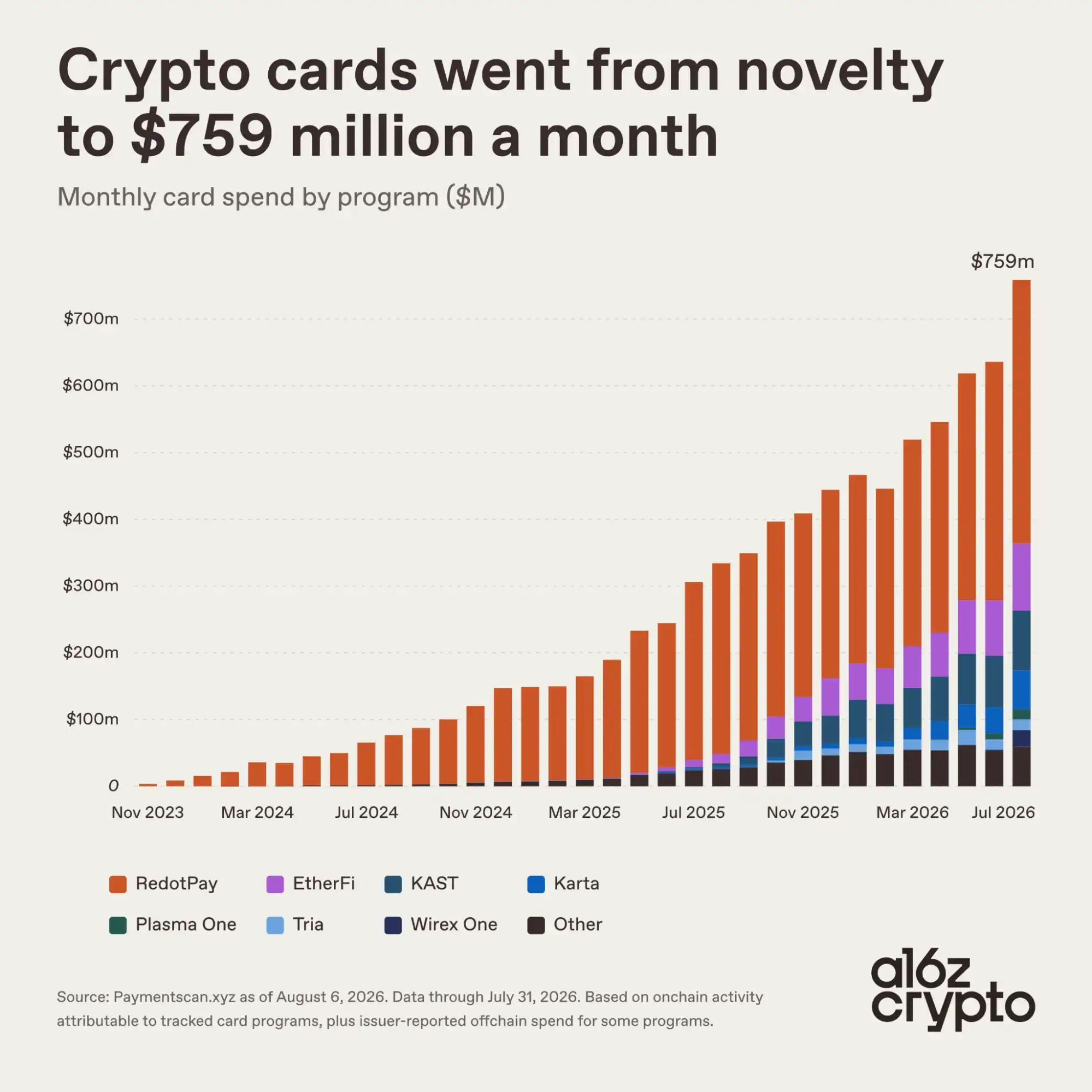
July Single Month Swipe: $759 Million, a 2.5x Increase in One Year
The monthly transaction volume of crypto payment cards reached $759 million in July, an increase of about 2.5 times from $306 million a year earlier, and was less than $1 million when tracking began in October 2023. These figures reflect the on-chain activity of card projects tracked by Paymentscan. (For the highest-volume project, RedotPay, spending data is self-reported by the issuer, not from on-chain observations.)
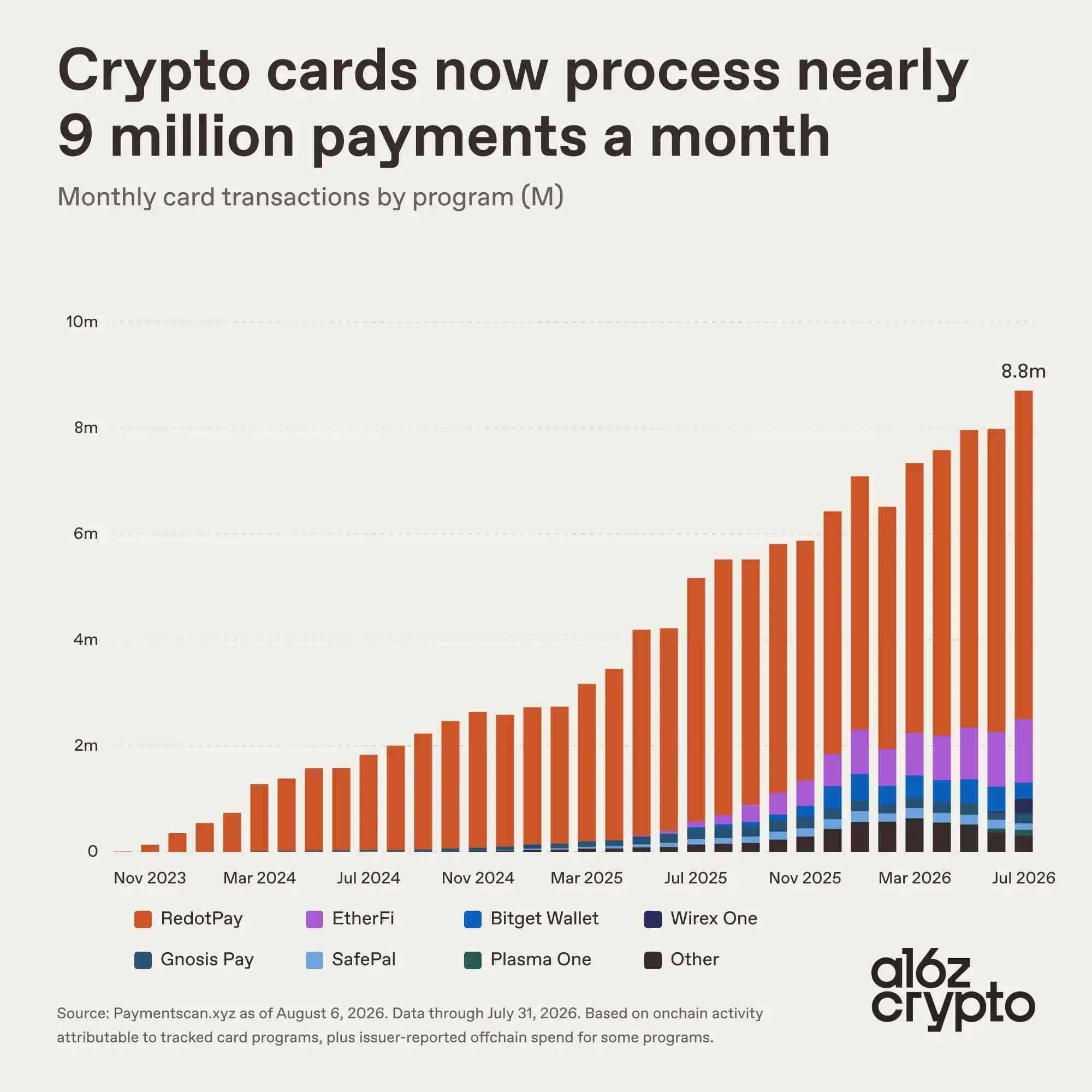
The growth trend in purchase frequency for crypto payment cards is similar to the transaction volume growth. Purchase frequency using crypto payment cards approached 9 million times in July, up from about 5.2 million times a year ago.
This indicates an average transaction amount of about $86.
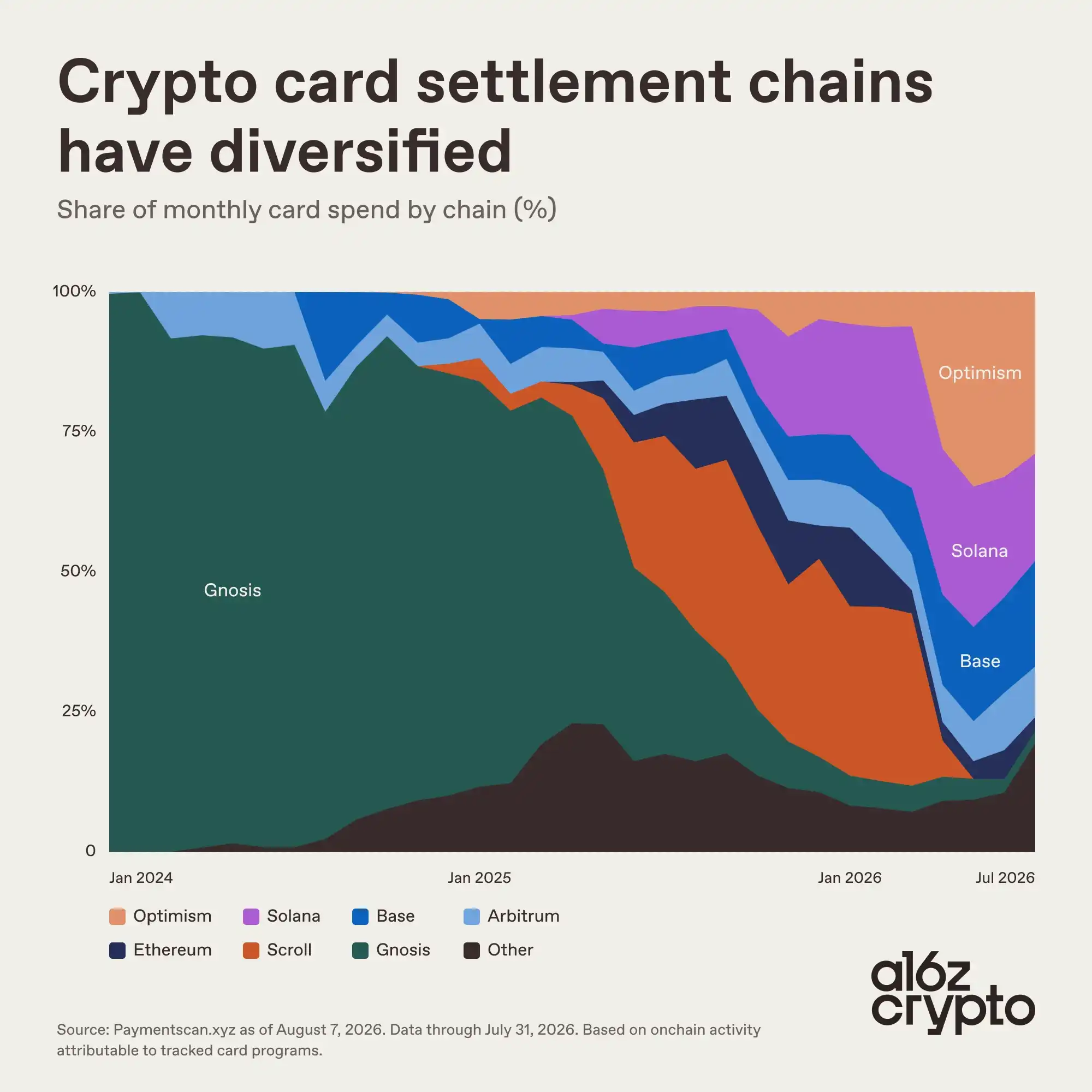
Optimism, Solana, and Base Form a Tripartite Division
At the beginning of 2024, crypto card spending was concentrated on a single chain: Gnosis, the home of Gnosis Pay (the first Visa card directly connected to a self-custody wallet). As new card projects launched, the number of chains used for card settlement has expanded.
According to Paymentscan data, as of July, Optimism handled about 29% of crypto card spending volume, Solana about 19%, and Base about 19%. Gnosis has declined to about 2%.
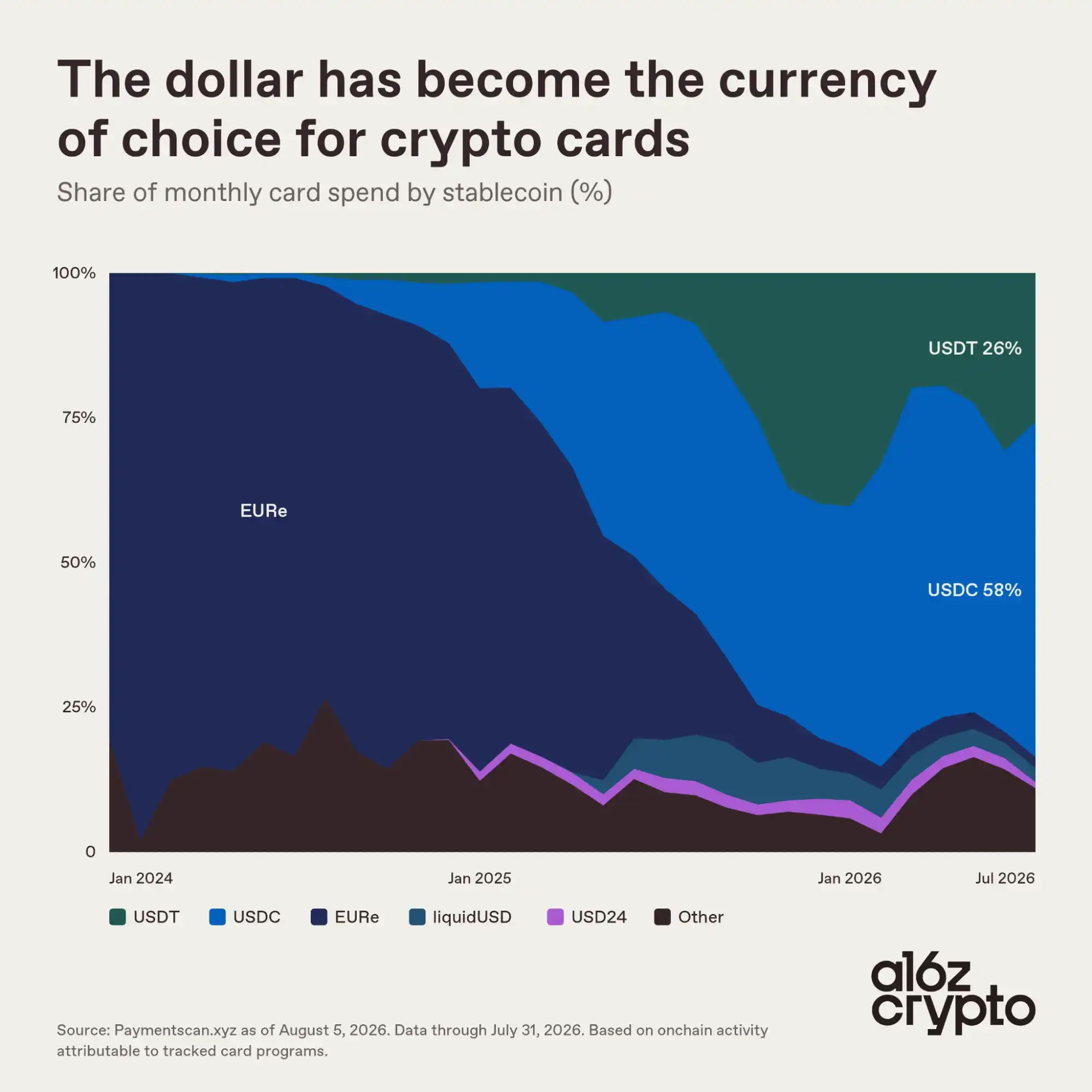
Dollar Stablecoins Fully Dominate, USDC + USDT Account for 84%
Euro-backed stablecoins once dominated spending: in early 2024, about 88% of crypto card transactions were settled in EURe, mostly on Gnosis. By July, EURe's share had dropped to about 2%.
U.S. dollar-backed stablecoins have now taken the lead. USDC handles about 58% of card spending, and USDT about 26%, up from about 48% and 7% a year ago, respectively. Crypto payment card spending is now almost entirely conducted in digital dollars.
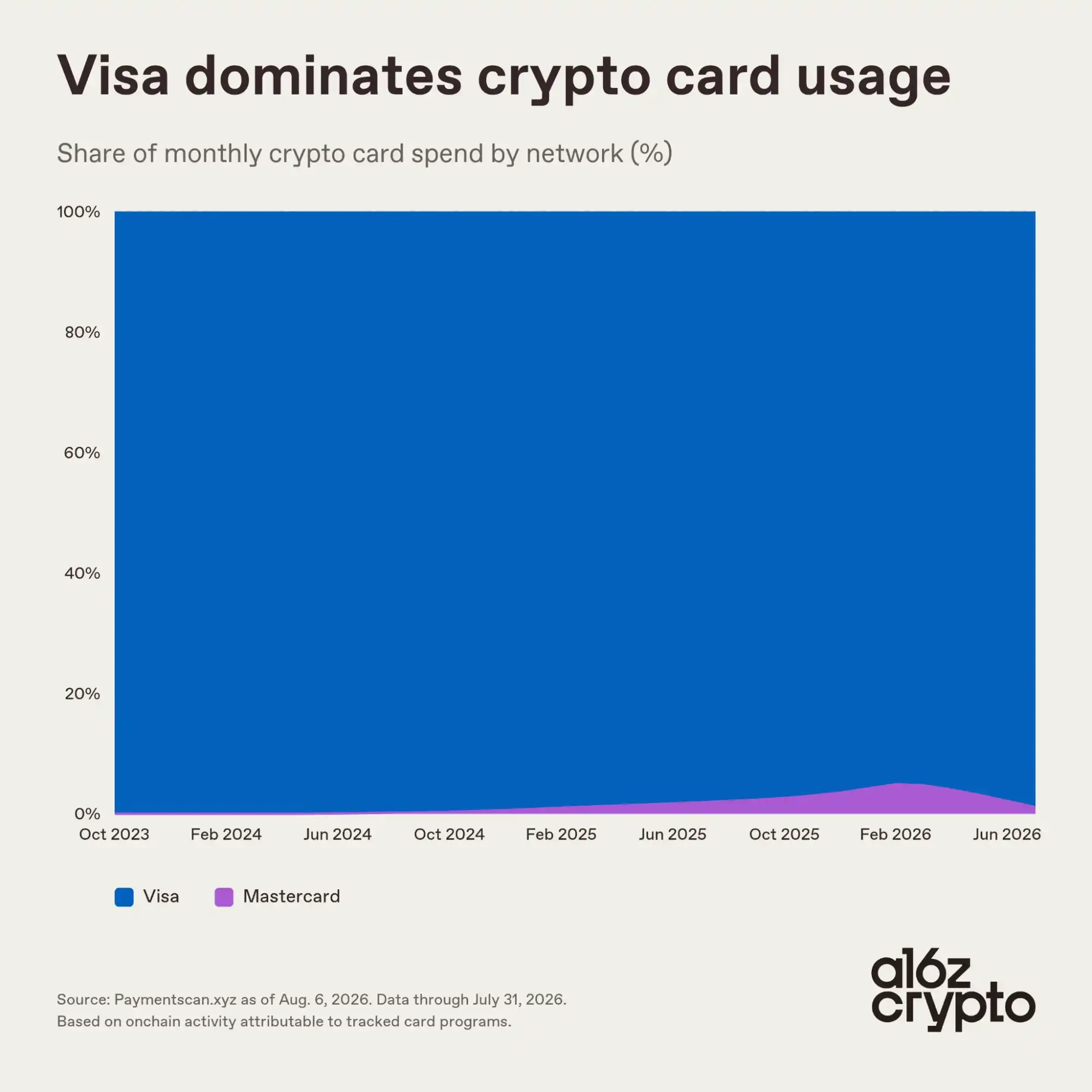
Visa Grabs Almost All Share
Compared to traditional card networks that process trillions of dollars monthly, crypto payment cards remain a small market.
But as stablecoins gain more ground in the global financial system, including via the rails of existing major card networks. For the tracked projects, this is happening almost entirely through Visa.
Crypto payment cards are part of the broader crypto acceleration following GENIUS, which we have been tracking here. This includes the rapid adoption of stablecoins and tokenized assets.