No Bull Market for BTC Without STRC Re-pegging

Odaily星球日报Published on 2026-06-26Last updated on 2026-06-26

Abstract

Summary: The sustained de-pegging of MicroStrategy's (MSTR) Strategy Preferred Shares (STRC) poses a severe threat to Bitcoin (BTC) and could prevent a bull market. STRC, designed to trade near a $100 target, has plunged to around $75, effectively shutting down MicroStrategy's cheapest and most efficient funding channel. This channel was critical for its "raise funds, buy BTC" business model. More critically, MicroStrategy now faces a massive cash outflow from these preferred shares. With approximately $10.49 billion of STRC outstanding at an 11.5% dividend yield, the annual cash obligation exceeds $1.2 billion. Combined with other preferred shares, the total annual payout nears $1.7 billion, depleting its current ~$1.4 billion cash reserve within a year. To address this, MicroStrategy is increasingly relying on common stock (MSTR) offerings via its ATM program. However, recent sales show most raised capital is now used to bolster cash reserves rather than buy more Bitcoin. This dilutes the key metric of BTC per share for common stockholders, eroding the foundation of its premium valuation. If STRC cannot re-peg, this costly dilution may continue. Worse, if cash pressure intensifies, selling Bitcoin becomes a real risk. As the largest corporate BTC holder (~847,363 BTC), any significant sales could crash the market. Thus, MicroStrategy is transforming from BTC's most reliable institutional buyer into a major potential seller, casting a significant shadow over Bitcoin's pri...

Original | Odaily Planet Daily(@OdailyChina)

Author|Azuma(@azuma_eth)

The "de-pegging" situation of MicroStrategy's preferred stock STRC continues to intensify.

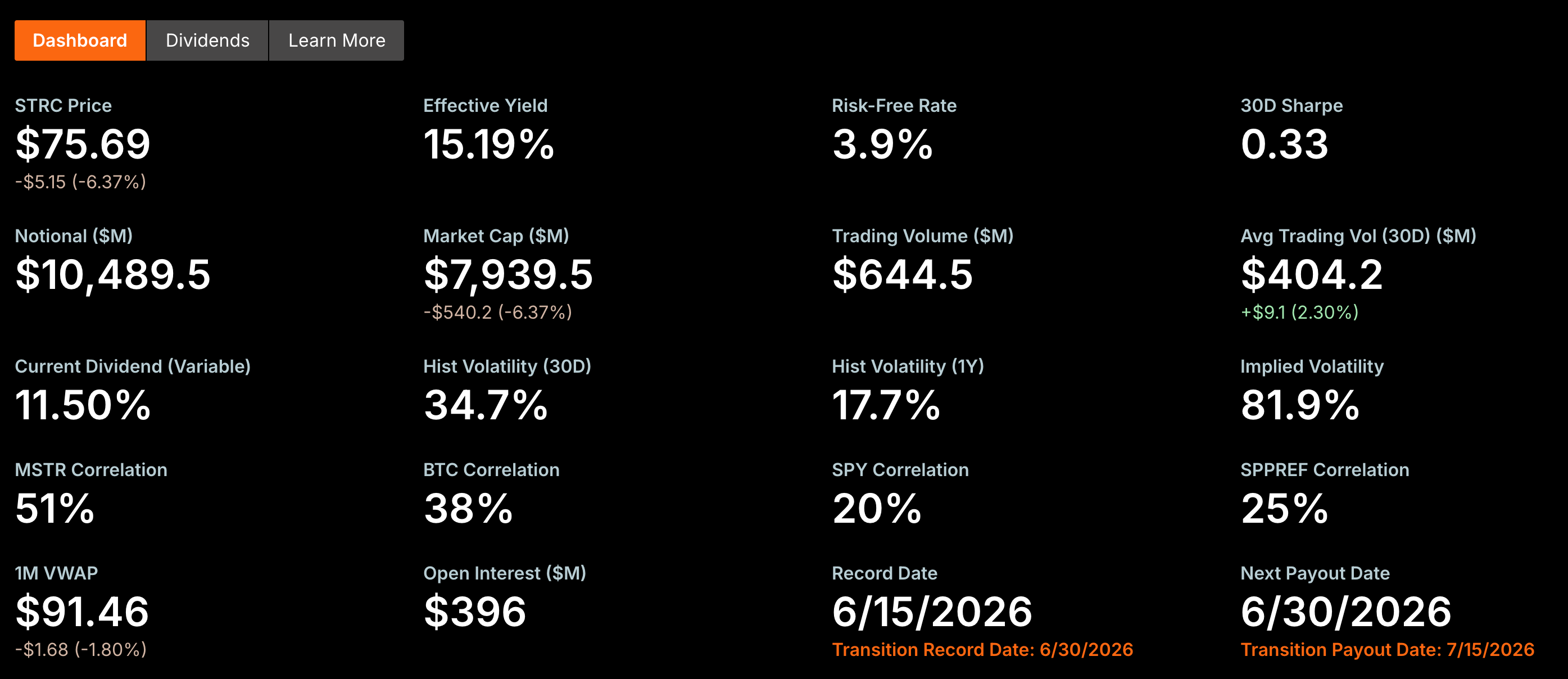
During yesterday's U.S. stock market session, STRC broke below the 80 mark for the first time, hitting a low of $73.62 at one point. Although it rebounded slightly at the close, the price was still only $75.69, nearly 25% "de-pegged" from the target par value of $100.

Last week, we wrote an article about STRC's de-pegging titled "STRC De-pegged by 11%, Can MicroStrategy's Perpetual Motion Machine Keep Running?", focusing on the reasons for STRC's de-pegging and briefly describing the potential future impacts.

However, based on community discussions, it seems many readers still don't fully understand just how dire the consequences of STRC's continued de-pegging are, so we decided to write another article to break down this issue.

MicroStrategy's Most Important Funding Channel Has Failed

What exactly is STRC? In a nutshell, this is MicroStrategy's cheapest and most efficient funding channel.

The essence of MicroStrategy's business model is to continuously raise funds from the market to accumulate more BTC, then raise more funds, and accumulate more BTC. This is a cycle that must keep running. MicroStrategy's high valuation, to a large extent, stems from the market's belief in its ability to continuously raise funds and buy BTC. As long as its fundraising ability exists, it can keep expanding its BTC holdings; and the growing BTC holdings, in turn, further support market expectations for its future fundraising capabilities.

Over the past few years, MicroStrategy has tried almost all fundraising methods—issuing common stock, convertible bonds, various types of preferred stock—and continuously invested the raised funds into BTC. Among all these fundraising instruments, STRC was once considered by the market to be the closest to "perfect," and Michael Saylor's proudest creation. Saylor once boasted that "STRC is a product designed by AI, humans couldn't have designed this."

As preferred stock, STRC's advantages are very clear. Issuing common stock could dilute existing shareholders' equity; issuing convertible bonds would burden the company with future debt repayment obligations; but STRC, as perpetual preferred stock, has no maturity date, does not dilute common shareholders, and only requires fixed dividend payments. For MicroStrategy and Saylor, this was almost the lowest-cost, most efficient way to raise funds.

From its inception, STRC was designed as a product pegged to $100. MicroStrategy's idea was to keep STRC trading around $100 long-term by dynamically adjusting the dividend rate (sounds a bit like an algorithmic stablecoin, doesn't it?). As long as the secondary market could maintain this price, the company could continuously issue new STRC close to par value, raising new funds to keep buying Bitcoin.

That is to say, STRC's core value lies in its continuous, never-ending fundraising capability, but this capability is premised on its price staying near the target par value. As STRC continues to de-peg, this funding channel has essentially been blocked. Because for any investor, if they can buy the same STRC in the secondary market for only $75, they would not participate in the company's new preferred stock issuance at a price close to $100.

For MicroStrategy, it must either keep increasing the dividend rate to attract funds (proven to have limited appeal), or accept the lower fundraising efficiency of discounted issuance (which actively breaks the original target par value). Either way, it means this funding machine is starting to experience increasing friction.

The Funding Tool Has Turned into a Cash Flow Burden

If it were just a temporary failure of fundraising ability, that might be one thing. The bigger problem is that STRC requires MicroStrategy to pay out substantial cash dividends continuously.

According to the latest official data disclosed by MicroStrategy, the current issuance size of STRC has reached approximately $10.49 billion, with a current dividend rate of 11.5%. This means that STRC alone corresponds to a cash dividend payment obligation of over $1.2 billion per year. Adding other preferred stocks like STRD, STRK, STRF issued by MicroStrategy, this number climbs further to about $1.7 billion.
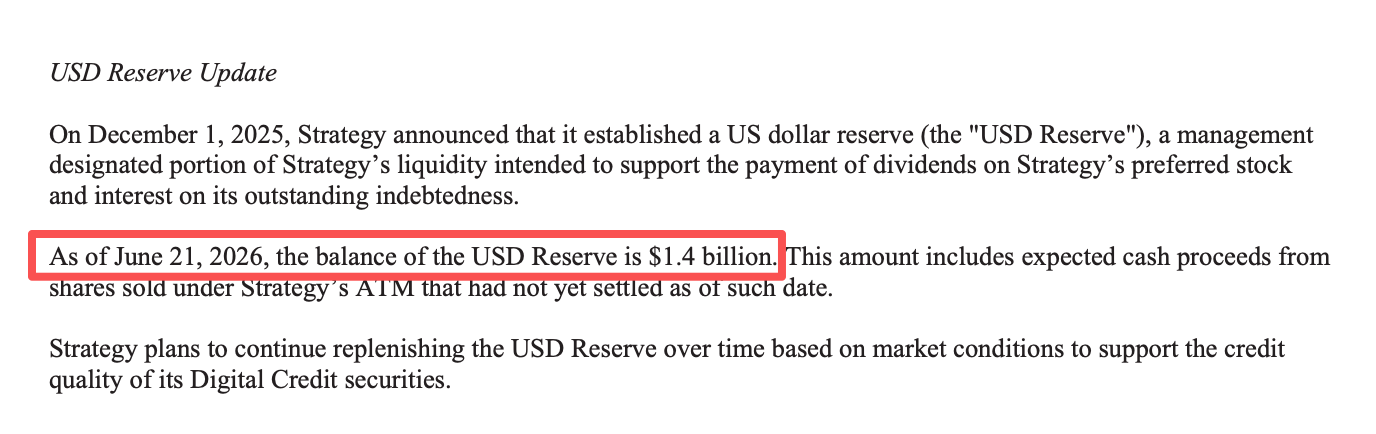
In the common stock issuance filing on June 21 (note, it's common stock, we'll discuss this in detail later), MicroStrategy disclosed that the company's cash reserves are approximately $1.4 billion. Based on this cash reserve level, MicroStrategy's book cash can cover less than a year of preferred stock dividend payments.
Breaking the Deadlock Requires Money, But Where Does the Money Come From?

Whether to sustain its own business model or to escape the current severe cash flow situation and avoid dividend payment default (more urgent now), MicroStrategy needs more funds. Theoretically, only three main "money-making" paths remain before MicroStrategy.

First, issuing common stock.

This is currently the most direct and mature method of financing. Through the ATM (At-the-Market Offering) program, MicroStrategy can continuously sell MSTR common stock to the market to raise funds.

However, common stock financing is not without cost. Continuous issuance means the number of outstanding shares keeps increasing. If the growth rate of BTC purchased with newly raised funds cannot outpace the share expansion rate, the growth of BTC per share will slow down, and common shareholders will face continuous dilution — note this point, it's important later.

Second, issuing more debt.

Over the past few years, MicroStrategy has repeatedly raised funds through debt instruments like convertible bonds, which were also an important funding source for its early large-scale BTC accumulation.

However, as preferred stock issuance expands and fixed cash outflows continue to increase, the market has started paying more attention to MicroStrategy's liquidity and debt repayment ability. In the current funding environment, if the company issues bonds again, investors will likely demand higher risk premiums, meaning financing costs will be significantly higher than in the past.

More importantly, bonds are different from preferred or common stock; their interest payments and principal repayments are rigid obligations. Against the backdrop of continuously declining cash reserves and increasing dividend payouts, further expanding debt will undoubtedly加重 the company's financial burden and also compress future fundraising space.

Third, selling BTC.

From a financial perspective, this is the fastest way to replenish cash reserves. MicroStrategy must have considered this path. The company stated on its official X account regarding dividend payment pressure: "When considering its massive Bitcoin reserves, it is sufficient to cover 32 years of dividend payments."

But for MicroStrategy, this is also an extremely risky choice. Earlier this month, MicroStrategy sold some of its Bitcoin holdings for the first time. Although the sale was only 32 BTC, and the official statement packaged it as an "active market desensitization test," mentioning that "more will be bought back later," it still caused a short-term market dip.

As the largest single holder of Bitcoin in the market, MicroStrategy's moves can easily trigger chain reactions. If it increases sales volume in the future, it will undoubtedly have a huge impact on the already fragile BTC price. If BTC declines further, MicroStrategy's so-called "reserves" would also shrink rapidly.

In summary, under the current circumstances, every feasible funding channel for MicroStrategy comes at a higher cost than before.

Has MicroStrategy Made Its Choice?

Based on MicroStrategy's latest moves, aside from hinting at possibly selling BTC, the company seems to have already chosen which path to take.

Since June, MicroStrategy has relied on its common stock ATM (At-the-Market Offering) program for three consecutive weeks to raise funds. The latest round (June 22) is particularly typical.
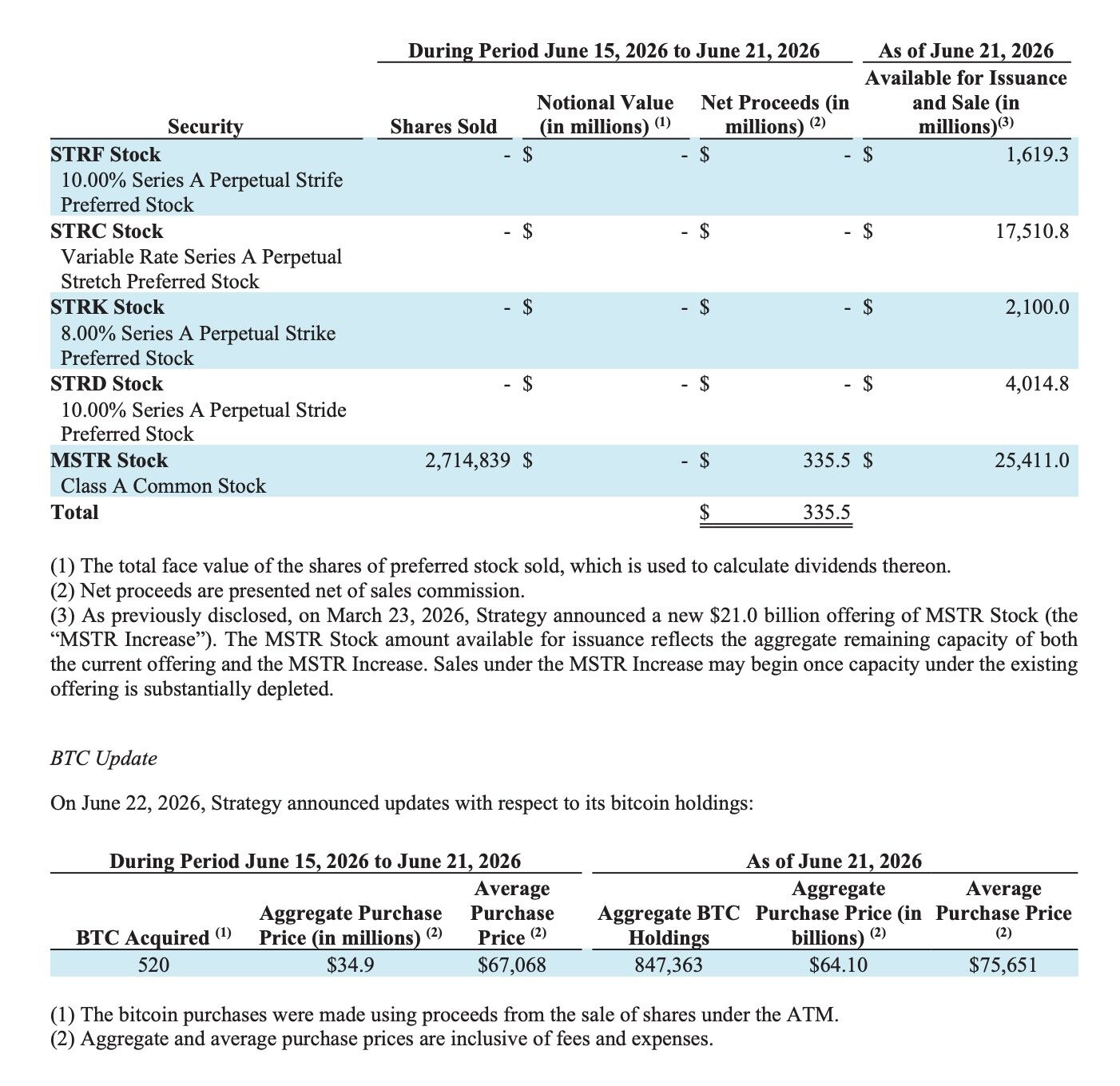
According to MicroStrategy's latest 8-K filing, the company sold a total of 2,714,839 shares of MSTR common stock within a week, raising $335.5 million in total. However, that same week, MicroStrategy only bought 520 BTC, spending a total of $34.9 million, with an average purchase price of about $67,068. In other words, out of the $335.5 million raised, only about one-tenth was actually used to continue accumulating BTC. The remaining funds were mainly used to replenish the company's cash flow reserves, increasing cash from about $1.1 billion to the current approximately $1.4 billion.

That seems somewhat effective? But there's another trap here.

For MSTR common shareholders, the most critical information to monitor is: for every new common share issued, how much BTC can ultimately be bought back with the funds raised, and is it enough to cover the BTC equity corresponding to this share? If the new fundraising can buy back more BTC than the amount originally corresponding to this share, then common shareholders' equity is actually increased; conversely, if the funds raised buy back less BTC than the amount corresponding to the new shares' BTC equity, then common shareholders experience dilution.

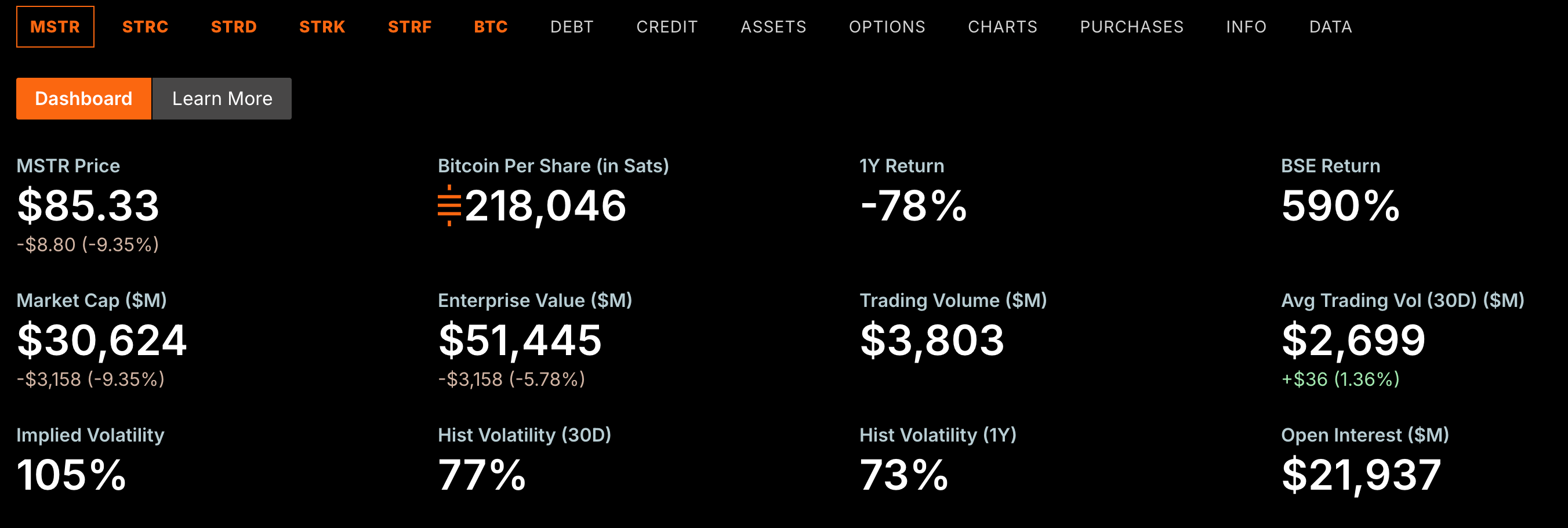
Clearly, MicroStrategy's recent common stock issuance has come at the cost of diluting common shareholder equity. MicroStrategy's official data also shows that the BTC per MSTR share has dropped from a peak of 220,900 Sats to 218,046 Sats.
This is the biggest limitation of common stock financing. For most listed companies, issuing common stock is just one of many financing methods; but for MicroStrategy, common stock is part of its business model itself.

Over the past few years, the reason MicroStrategy has been able to grow continuously is essentially by relying on the continuous operation of the "Raise Funds ➡️ Buy BTC ➡️ Consolidate Market Expectations ➡️ Raise Funds Again ➡️ Buy More BTC..." flywheel. The market's core expectation for MicroStrategy is its ability to continuously create more BTC equity for common shareholders, not dilution.

However, when MicroStrategy has to rely increasingly on common stock financing to replenish cash reserves rather than continue accumulating BTC, the operating logic of this flywheel changes. While in the short term, common stock financing can indeed alleviate MicroStrategy's cash pressure, it can hardly become a long-term solution to replace STRC.

Once common stock financing continuously erodes BTC per share equity, the foundation upon which MSTR's high premium relies may also be challenged, and this is precisely the core competitive advantage of MicroStrategy's entire business model.

What Will Happen to BTC?

Over the past few years, MicroStrategy has become the most important marginal buyer in the BTC market (arguably without the "one of"). To date, MicroStrategy has accumulated holdings of 847,363 BTC, accounting for about 4% of BTC's current circulating supply, worth over $50.7 billion. The market had long grown accustomed to Saylor's massive, unwavering weekly purchases.

But now, this situation is changing. MicroStrategy can still raise funds through common stock issuance, but most of the funds no longer flow into BTC; instead, they are prioritized for replenishing cash reserves. This means that under the same fundraising scale, the new buying pressure actually entering the BTC market is decreasing.

More disadvantageously, this situation may persist. If STRC cannot re-peg long-term, preferred stock financing remains blocked, MicroStrategy will have to rely long-term on common stock financing to maintain cash flow, possibly even further compressing the proportion of funds used for BTC accumulation. For the BTC market, this means the past's most stable and certain institutional buying pressure will no longer grow as consistently as it did in previous years.

But more alarmingly, if common stock issuance excessively dilutes MSTR shareholder equity, MicroStrategy may have to consider the other funding channel — selling BTC.

From weakened new buying pressure to the emergence of potential selling pressure, today's MicroStrategy is no longer BTC's biggest marginal buyer, but a giant sword hanging over BTC.


Trending Cryptos

Related Questions

QWhat is STRC, and why is it considered the most important financing channel for MicroStrategy?

ASTRC is a series of preferred stock issued by MicroStrategy. It is considered the company's cheapest and most efficient financing channel because, as a perpetual preferred stock, it has no maturity date, does not dilute common shareholders, and only requires payment of fixed dividends. This structure allows MicroStrategy to raise capital at a low cost to continuously purchase Bitcoin, which is central to its business model.

QWhat are the main consequences of STRC's persistent de-pegging from its $100 target?

AThe persistent de-pegging of STRC from its $100 target severely impairs MicroStrategy's ability to issue new preferred shares at or near par value, effectively blocking this crucial financing channel. More critically, it turns STRC from a financing tool into a significant cash flow burden, as the company is obligated to pay over $1.2 billion annually in cash dividends on STRC alone, straining its liquidity.

QWhat three main options does MicroStrategy have to raise funds in the current situation, and what are their drawbacks?

A1. Issue common stock (MSTR): This dilutes common shareholders and erodes the key metric of Bitcoin per share if the new capital doesn't buy enough BTC to offset the dilution. 2. Issue more debt: Likely requires higher risk premiums (higher cost) and adds rigid interest payment obligations, further straining cash flow. 3. Sell Bitcoin: This directly contradicts the company's core investment thesis, risks triggering negative market sentiment and price declines for BTC, and depletes its primary asset.

QHow has the purpose of MicroStrategy's recent common stock (MSTR) issuance changed, and what negative side effect has this caused?

ARecently, the purpose of MicroStrategy's common stock issuances has shifted. Instead of primarily using the raised funds to buy more Bitcoin, a large portion (around 90% in the latest example) is now being used to replenish the company's cash reserves to cover its dividend obligations. This has caused the dilution of common shareholder equity, as evidenced by the decline in the key metric of Bitcoin per MSTR share from 220,900 satoshis to 218,046 satoshis.

QAccording to the article, how has MicroStrategy's role in the Bitcoin market changed, and what potential future risk does it pose?

AMicroStrategy has transitioned from being the most stable and significant marginal buyer in the Bitcoin market to becoming a potential source of selling pressure or 'a giant sword hanging over BTC.' Its new common stock issuances contribute less fresh buying pressure for BTC, and if its financial situation worsens, the company might be forced to sell its Bitcoin holdings to raise cash, which could negatively impact the market.

Related Reads

South Korean Institutions' Crypto Race: Dual Explosion of Stablecoins and RWA

**Summary: South Korea's Institutional Crypto Race: Stablecoins and RWA Take Off** South Korea is undergoing a structural shift in its crypto ecosystem, moving beyond its historical role as a major retail trading hub. Major financial institutions and internet platforms are now building institutional-grade blockchain infrastructure, with stablecoins and Real-World Asset (RWA) tokenization as the primary drivers. The push for a regulated Korean won stablecoin market is a major policy and corporate focus. This is driven partly by an estimated $115 billion outflow into dollar stablecoins like USDC, threatening the domestic financial system. Banks (e.g., KB Financial, Hana), payment giants (e.g., Shinhan Card, BC Card), and internet super-apps (KakaoPay, NAVER Pay) are all conducting pilots. The goal is to anchor future digital finance to the Korean won and local regulations. In RWA, South Korea is advancing rapidly within regulatory sandboxes, focusing on unique domestic assets beyond typical global templates like US Treasuries. Projects involve tokenizing ships (with Hyundai Heavy Industries), defense supply chain assets, and K-pop intellectual property, alongside more conventional assets. A legal framework is set for 2027, and platforms like NXT are preparing for regulated trading. Key opportunities for crypto-native projects lie in providing the underlying technology these traditional institutions lack: global distribution channels for tokenized assets, cross-chain liquidity solutions, and enabling infrastructure tools (e.g., for asset packaging and management). Partnerships, such as Solana with Shinhan Card or LayerZero with the Korea Gold Exchange, exemplify this proactive approach. Crucially, user access is being shaped by consumer platforms. NAVER's planned acquisition of Upbit's operator Dunamu and Kakao's development of a unified wallet aim to seamlessly integrate crypto with everyday payments for tens of millions of users. The race is now about which protocols and projects will become the foundational standards as regulation solidifies and institutional adoption accelerates.

Foresight News39m ago

South Korean Institutions' Crypto Race: Dual Explosion of Stablecoins and RWA

Foresight News39m ago

How to Detect AI-Generated Videos? A Review of Dynamic, Traceable, and Explainable Detection Systems

**How to Detect AI-Generated Videos: A Survey on Dynamic, Traceable, and Explainable Detection Systems** With rapid advances in AI video generation (e.g., Sora, Veo), creating highly realistic, multi-minute videos is now possible, widening the gap with detection research. Current AI video detection, often limited to unreliable binary classifications, is insufficient. This survey, accepted at ACL 2026, reframes the goal as **"factual fidelity verification"**—checking if a video's content (who, when, where, what) aligns with the real world perceptually and cognitively. It categorizes AI-generated videos into three paradigms: **Local Manipulation Videos (LMV**, e.g., face swaps), **Audio-Visual Editing (AVE**, e.g., lip-syncing), and **Generative Video Synthesis (GVS**, fully synthetic videos like Sora's). Detection challenges evolve from visual artifacts in LMV to multi-modal inconsistencies in AVE and higher-level world knowledge violations in GVS. The core proposal is a **Vision-Language Dual-View framework** with four hierarchical layers: 1. **Layer 1 (Intrinsic Visual Cues):** Analyzes low-level signal statistics, noise patterns, and physiological signals. 2. **Layer 2 (Spatiotemporal Consistency):** Checks for temporal coherence in object motion and scene dynamics. 3. **Layer 3 (Cross-Modal Consistency):** Verifies alignment between video, audio, and text within the video. 4. **Layer 4 (Language-Guided World-Level Reasoning):** Uses external knowledge, facts, and physical laws to judge semantic plausibility and factual correctness. The survey traces a shift in detection focus from lower layers (1 & 2) toward higher, language-involved layers (3 & 4). It also reviews evolving evaluation metrics and datasets tailored for each video paradigm. The conclusion advocates for a **dynamic, evidence-first detection system** that moves beyond simple classification. Future trustworthy detection requires combining visual evidence (from CV) with semantic reasoning and explanation (from NLP & multimodal AI), ultimately creating traceable and explainable judgments about a video's adherence to real-world constraints.

marsbit1h ago

How to Detect AI-Generated Videos? A Review of Dynamic, Traceable, and Explainable Detection Systems

marsbit1h ago

It Turns Out the First Real-World Application of AI x Crypto is in Security Auditing

The article explores the surprising trend where AI's first major impact on crypto has been in security auditing, not in areas like trading or analytics. It details how AI-powered tools are dramatically lowering the barrier to finding smart contract vulnerabilities, enabling attackers to scan thousands of contracts and execute exploits within minutes. This has rendered traditional, manually-produced audit reports with their month-long validity periods increasingly obsolete, creating a critical "structural crack" in the old security model. Cases like Drift Protocol and KelpDAO show that even extensively audited protocols can be hacked through social engineering, operational flaws, or infrastructure misconfigurations beyond pure code review. Attackers are also using AI to find and exploit vulnerabilities in years-old, deployed contracts. Notably, OpenZeppelin's co-founder has expressed a grim view that "all DeFi is insecure" due to AI's asymmetric advantage. In response, the audit industry is undergoing a fundamental shift. While there's a short-term spike in defensive re-audits, the long-term business model is changing. Firms are developing AI-assisted systems and moving from one-time report deliveries towards embedded, continuous services like real-time monitoring and formal verification. Examples include AI tools uncovering critical, previously missed vulnerabilities in heavily audited protocols like Curve Finance and Zcash. The conclusion is that security must become a continuous investment, not a one-time checkbox, and audit firms must rapidly evolve their tools and service models to survive.

marsbit1h ago

It Turns Out the First Real-World Application of AI x Crypto is in Security Auditing

marsbit1h ago

Trading

Spot

Hot Articles

What is $BITCOIN

DIGITAL GOLD ($BITCOIN): A Comprehensive Analysis Introduction to DIGITAL GOLD ($BITCOIN) DIGITAL GOLD ($BITCOIN) is a blockchain-based project operating on the Solana network, which aims to combine the characteristics of traditional precious metals with the innovation of decentralized technologies. While it shares a name with Bitcoin, often referred to as “digital gold” due to its perception as a store of value, DIGITAL GOLD is a separate token designed to create a unique ecosystem within the Web3 landscape. Its goal is to position itself as a viable alternative digital asset, although specifics regarding its applications and functionalities are still developing. What is DIGITAL GOLD ($BITCOIN)? DIGITAL GOLD ($BITCOIN) is a cryptocurrency token explicitly designed for use on the Solana blockchain. In contrast to Bitcoin, which provides a widely recognized value storage role, this token appears to focus on broader applications and characteristics. Notable aspects include: Blockchain Infrastructure: The token is built on the Solana blockchain, known for its capacity to handle high-speed and low-cost transactions. Supply Dynamics: DIGITAL GOLD has a maximum supply capped at 100 quadrillion tokens (100P $BITCOIN), although details regarding its circulating supply are currently undisclosed. Utility: While precise functionalities are not explicitly outlined, there are indications that the token could be utilized for various applications, potentially involving decentralized applications (dApps) or asset tokenization strategies. Who is the Creator of DIGITAL GOLD ($BITCOIN)? At present, the identity of the creators and development team behind DIGITAL GOLD ($BITCOIN) remains unknown. This situation is typical among many innovative projects within the blockchain space, particularly those aligning with decentralized finance and meme coin phenomena. While such anonymity may foster a community-driven culture, it intensifies concerns about governance and accountability. Who are the Investors of DIGITAL GOLD ($BITCOIN)? The available information indicates that DIGITAL GOLD ($BITCOIN) does not have any known institutional backers or prominent venture capital investments. The project seems to operate on a peer-to-peer model focused on community support and adoption rather than traditional funding routes. Its activity and liquidity are primarily situated on decentralized exchanges (DEXs), such as PumpSwap, rather than established centralized trading platforms, further highlighting its grassroots approach. How DIGITAL GOLD ($BITCOIN) Works The operational mechanics of DIGITAL GOLD ($BITCOIN) can be elaborated on based on its blockchain design and network attributes: Consensus Mechanism: By leveraging Solana’s unique proof-of-history (PoH) combined with a proof-of-stake (PoS) model, the project ensures efficient transaction validation contributing to the network's high performance. Tokenomics: While specific deflationary mechanisms have not been extensively detailed, the vast maximum token supply implies that it may cater to microtransactions or niche use cases that are still to be defined. Interoperability: There exists the potential for integration with Solana’s broader ecosystem, including various decentralized finance (DeFi) platforms. However, the details regarding specific integrations remain unspecified. Timeline of Key Events Here is a timeline that highlights significant milestones concerning DIGITAL GOLD ($BITCOIN): 2023: The initial deployment of the token occurs on the Solana blockchain, marked by its contract address. 2024: DIGITAL GOLD gains visibility as it becomes available for trading on decentralized exchanges like PumpSwap, allowing users to trade it against SOL. 2025: The project witnesses sporadic trading activity and potential interest in community-led engagements, although no noteworthy partnerships or technical advancements have been documented as of yet. Critical Analysis Strengths Scalability: The underlying Solana infrastructure supports high transaction volumes, which could enhance the utility of $BITCOIN in various transaction scenarios. Accessibility: The potential low trading price per token could attract retail investors, facilitating wider participation due to fractional ownership opportunities. Risks Lack of Transparency: The absence of publicly known backers, developers, or an audit process may yield skepticism regarding the project's sustainability and trustworthiness. Market Volatility: The trading activity is heavily reliant on speculative behavior, which can result in significant price volatility and uncertainty for investors. Conclusion DIGITAL GOLD ($BITCOIN) emerges as an intriguing yet ambiguous project within the rapidly evolving Solana ecosystem. While it attempts to leverage the “digital gold” narrative, its departure from Bitcoin's established role as a store of value underscores the need for a clearer differentiation of its intended utility and governance structure. Future acceptance and adoption will likely depend on addressing the current opacity and defining its operational and economic strategies more explicitly. Note: This report encompasses synthesised information available as of October 2023, and developments may have transpired beyond the research period.

463 Total ViewsPublished 2025.05.13Updated 2025.05.13

What is $BITCOIN

Discussions

Welcome to the HTX Community. Here, you can stay informed about the latest platform developments and gain access to professional market insights. Users' opinions on the price of BTC (BTC) are presented below.

活动图片