Germany's Decades-Long Lead Lost as China's Machine Tools Quietly Rise to Global No.1

marsbitPublished on 2026-08-05Last updated on 2026-08-05

Abstract

For decades, Germany held the top spot in global machine tool exports, but in 2025, China officially surpassed it for the first time, with its export value reaching 21% of the global market share. This article explores how China transformed from a heavily import-dependent nation to an export leader in this foundational industry for modern manufacturing. It begins by explaining the immense technical challenges in building high-end machine tools. Precision machining faces persistent physical obstacles like thermal expansion, vibration, and component wear, demanding top-tier core components like spindles, ball screws, and CNC systems. Historically, China relied on imports for over 90% of these critical components, and domestic machine tools suffered from short lifespans between failures (MTBF), making them unreliable for industrial use. The article credits the state-backed "04 Special Project" (2009-2020) for laying a crucial foundation. It boosted the market share of domestic high-end CNC systems from below 1% to nearly 32% and significantly improved overall machine reliability. However, the primary driver for China's rise was the massive and fast-evolving domestic market, particularly in the new-energy vehicle (NEV) sector. This created unique, high-demand applications like machining large integrated die-castings and complex battery housings. Domestic manufacturers, being close to the world's largest NEV market, rapidly iterated products to meet these new needs, gaining an e...

The story of China's manufacturing rise has become almost cliché in recent years: leading the world in EV production, solar panels blanketing half the planet, high-speed rail reaching Indonesia, with Chinese appliances and toys found across the globe.

But if you ask, what areas in manufacturing is China still catching up in?

Many people would immediately think of a few names: lithography machines, chips, and machine tools.

Machine tools are probably the least noticed among them. Lithography machines frequently top hot searches, chips regularly stir international geopolitics, but machine tools?

They mostly stay quietly in factories, not even deserving a hot search.

Yet, they are the most fundamental equipment underlying modern manufacturing. How precisely a country can machine parts is largely capped by the level of its machine tools.

In most people's impression, Chinese machine tools are the kind of equipment bought at great expense from Germany or Japan, with a heap of restrictive rules attached.
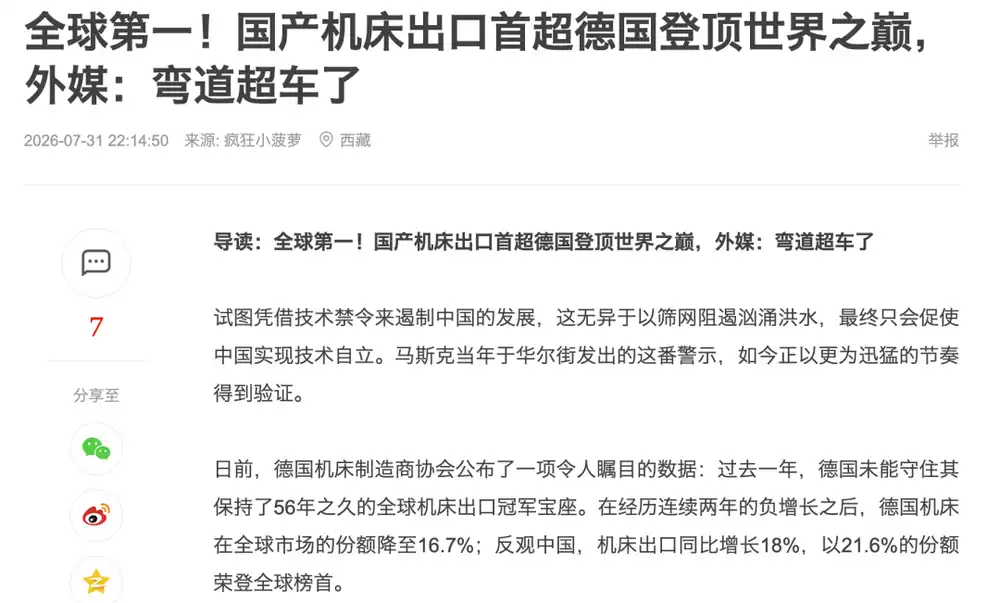
International machine tool giant DMG MORI equips its globally exported machines with unified GPS displacement detection. The installation location is registered upon leaving the factory; moving it without authorization locks and disables the machine.

Although this is a global export compliance mechanism (to prevent resale for weapon manufacturing), the frustration of needing to file a report just to relocate a machine worth tens of millions sitting in your own factory requires little explanation.

Expensive, import-dependent, few choices, and heavy restrictions—this is the memory many have of Chinese machine tools.

But a startling figure emerged in 2025:

According to the German Machine Tool Builders' Association (VDW), China's machine tool export value reached €8.6 billion, capturing about 21% of the global share, surpassing Germany's €7.1 billion for the first time—a position Germany had long held.
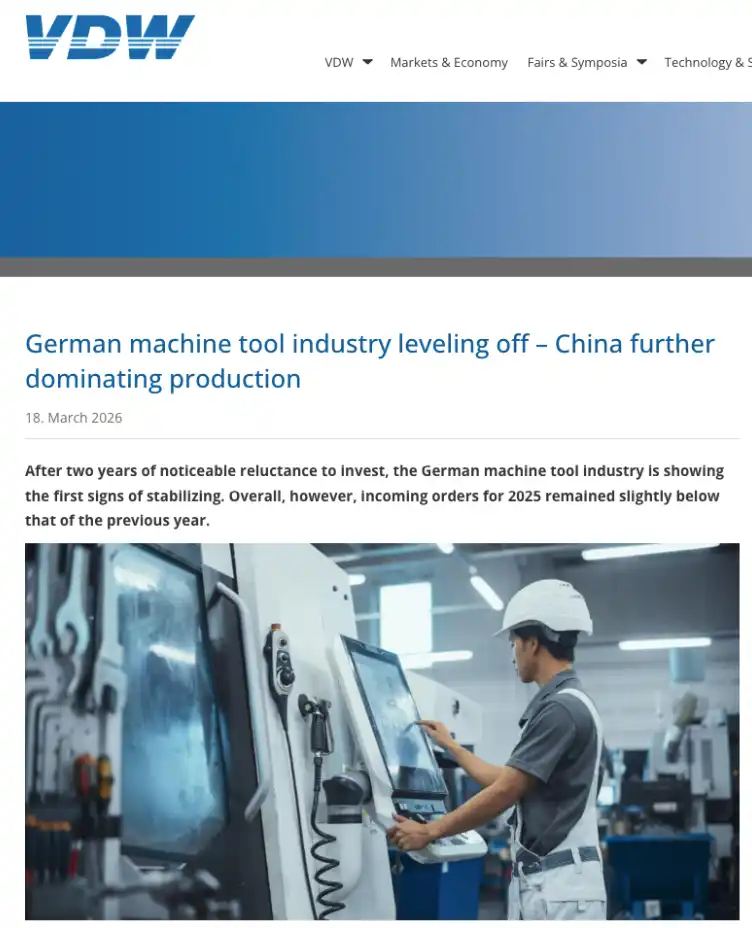
This marks the first time Chinese machine tools have topped the list, inevitably raising the question:

From spending tens of millions to buy a single machine from others, to exporting €8.6 billion a year and claiming the global top spot—what exactly happened in between?

01: Building a Good Machine Tool is Far Harder Than You Think

The job of a machine tool sounds simple: use a processing device (like a cutter) to cut, grind, or press metal into the desired shape.

A high-end machine tool needs to cut with micron-level precision—one micron is one-sixtieth the diameter of a human hair.

It might seem that with sufficiently hard material for the cutting tool and modern advanced sensors and control algorithms, this wouldn't be too difficult.

But in reality, building a usable machine tool and building a *good* one are completely different challenges.

The main issue lies in sustainability:

You need to maintain this precision while shaving metal under massive cutting forces, high-speed rotation, and impact, for tens of thousands of hours, without degradation.

This involves three fundamental physical challenges.

The first is heat: During operation, motors, bearings, and cutting areas all generate heat. Metal expands and contracts with temperature; even a few degrees' difference can cause parts to expand by several microns, ruining machining accuracy. Uneven heating across different areas also gradually shifts originally aligned axes.

High-end machine tools require complex thermal compensation systems for real-time correction. This isn't a simple sensor fix; it involves systematic optimization of the entire machine structure, material selection, and control algorithms. Imagine someone performing microsurgery while running a marathon, with their body heating up and shaking, yet needing to make that micron-precise cut.

The second is vibration: During high-speed cutting, the tool impacting metal creates significant reaction forces, inducing self-excited vibration between tool and workpiece, known as "chatter" in engineering. Once chatter occurs, the machined surface is covered in ripples and burrs; severe cases can scrap the part entirely. Vibration suppression involves structural rigidity, damping design to absorb vibrational energy, cutting parameters, and dynamic compensation by the CNC system. Weakness in any link causes problems.

The third is wear: After spinning at high speed for hundreds of millions of cycles, spindle bearings wear down, guides wear down, and ball screws wear down. Good precision at delivery is one thing; maintaining it after one or two years of operation is the real test.

Domestic machine tools often don't lack in initial accuracy, but start to drift after some use. The industry calls this "accuracy retention."

Simply put, a new car is fine when you get it. The real test is whether it still performs well after three years of driving.

And these three adversaries don't come alone; they occur simultaneously and compound each other.

These physical problems ultimately manifest in several core components: The spindle is the heart, determining cutting power and rotational accuracy; ball screws and guides are the skeleton, determining motion precision and smoothness; the CNC system is the brain, coordinating multiple axes and performing compensation and calculations.
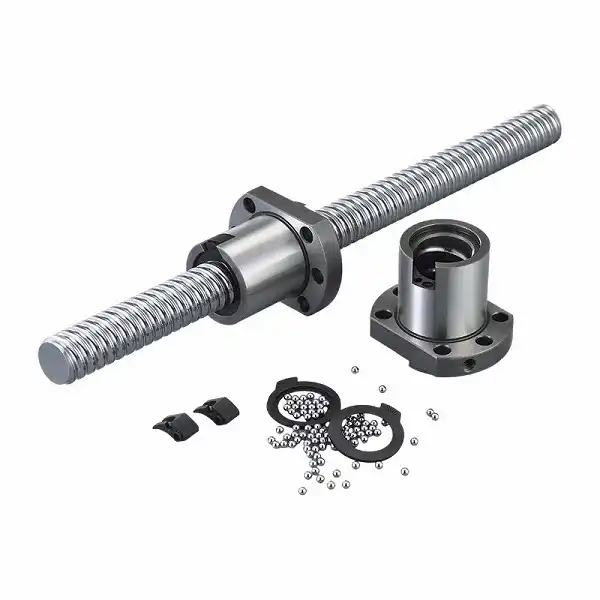
Each must be top-tier for the whole machine to be top-tier. More critically, to manufacture precise ball screws and spindles, you first need a precise grinding machine to process them. This is the classic chicken-and-egg problem in the machine tool industry: You need a good machine tool to build a good machine tool.

Where was China stuck? Precisely on these core components. As of a 2020 assessment, about 90% of high-end CNC systems and servo systems responsible for precise motion execution relied on imports; over 90% of high-end functional components like spindles, ball screws, and guides were also purchased from others. Heart, brain, skeleton—nine out of ten were not their own.

Another 2025 professional review indicated that the Mean Time Between Failures (MTBF) for foreign high-end CNC systems exceeded 50,000 hours, while domestic ones were around 30,000 hours. This metric measures the average runtime between system failures, indicating there's still room for improvement.

02: From No One Daring to Use, to Export Leader

So how was this situation gradually turned around?

First, look at how low the starting point was:

The Chinese government's largest concentrated effort in machine tools was a national major project called "High-End CNC Machine Tools and Basic Manufacturing Equipment," commonly known as the 04 Special Project.
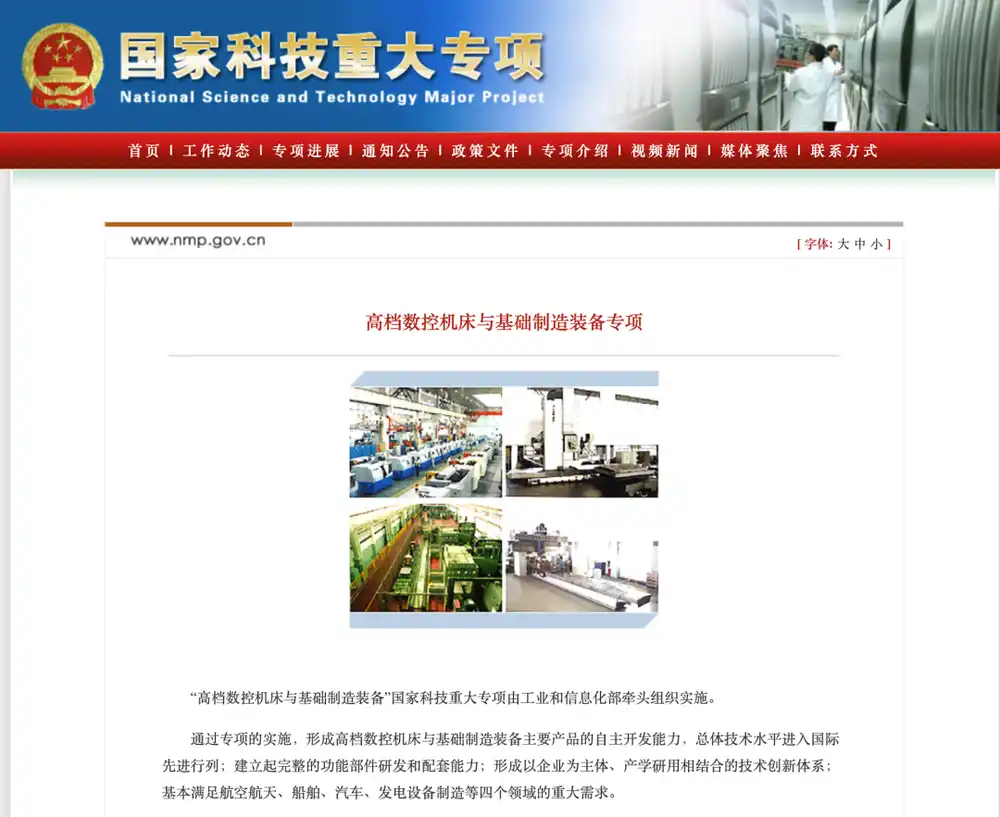
Before this project launched, domestic high-end CNC systems held less than 1% market share in domestic machine tools. The MTBF for high-end CNC machine tools as a whole was only about 600 hours. 600 hours sounds okay? Based on a 20-hour daily operation for an automotive production line, that's an average failure-free interval of about one month.

Who would dare use that?

The 04 Special Project started in 2009 and ran until 2020. Over eleven years, it achieved several concrete things:

The localization rate of high-end CNC systems increased from less than 1% to 31.9%;

The MTBF for high-end CNC machine tools as a whole improved from 600 hours to over 2,000 hours.
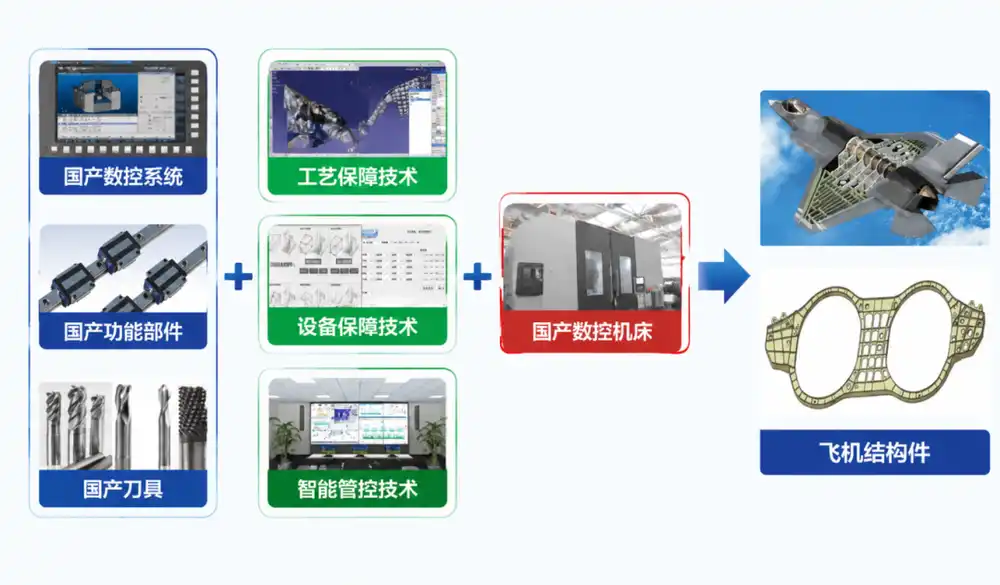
From 1% to 31.9%, from 600 to over 2,000 hours—not spectacular, but enough to get a seat at the table.

But getting a seat doesn't mean winning the game.

The overall MTBF improved significantly, but a gap remained with world leaders. Localization rates for core components like precision grinding machines and high-end ball screws were still very low.

The 04 Special Project addressed the "have or have not" question. The matter of "good or not good" needed another driving force.

That force is the market—the world's largest and fastest-iterating one. Enter the industrial Cthulhu.

Take new energy vehicles (NEVs) as an example. This industry's explosion impacted the machine tool sector not just by "increasing orders," but by changing the very nature of what needed machining: Traditional engine blocks and multi-gear transmission housings for internal combustion vehicles are no longer needed in pure EVs. They are replaced by integrated die-cast bodies (casting multiple parts into one), battery casings, and electric drive system housings. The work changed entirely, and old machining methods became obsolete.
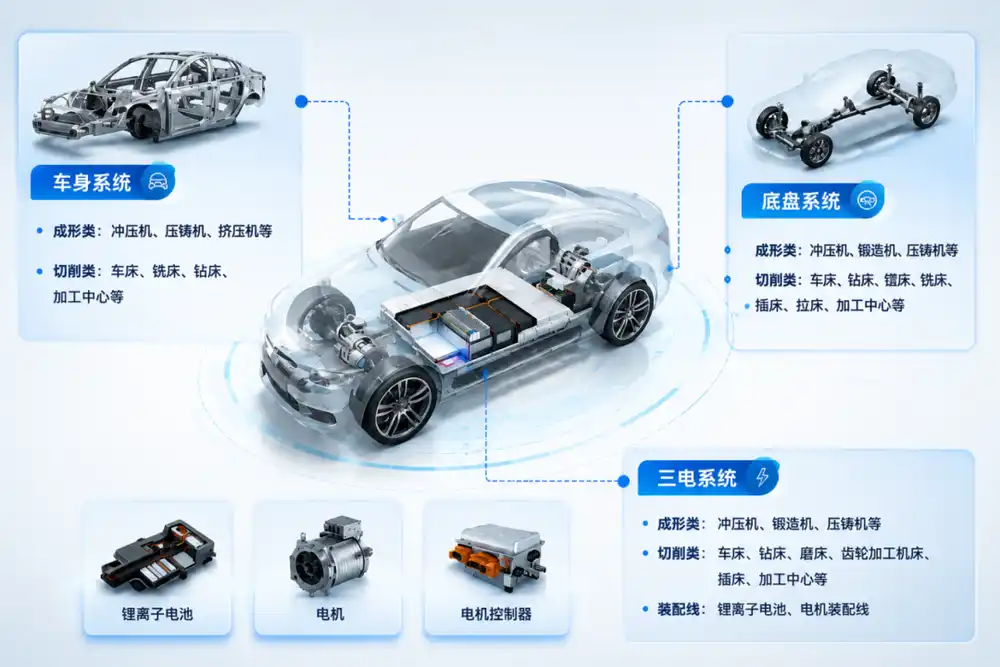
Figure | NEV body, chassis, and three-electric systems correspond to demands for large forming, cutting, die-casting, and assembly equipment.

These new demands spawned a batch of domestic equipment and turnkey solutions specifically for NEVs. Integrated die-cast parts are much larger, requiring gantry machining centers with超大行程. Battery casings have thin walls, are prone to vibration, and demand high sealing, making generic solutions difficult to apply directly, necessitating targeted fixture and machining plan development.
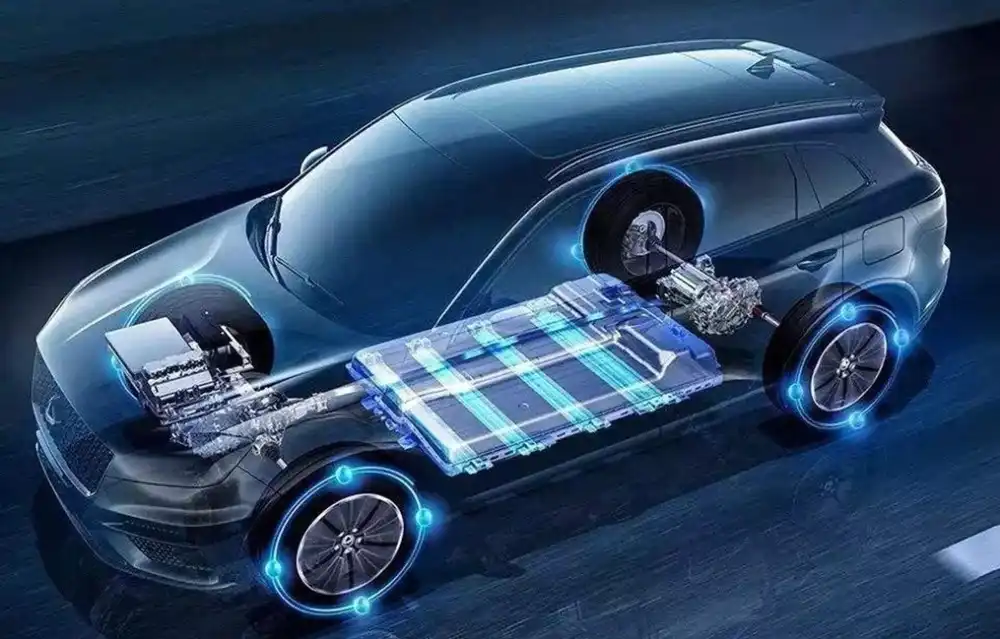
Figure | NEV battery, electric drive, and chassis systems have changed the parts and process combinations machine tool makers need to cover.

The story of integrated die-casting itself best illustrates the point.

When Tesla wanted to turn the Model Y's rear underbody from over 70 stamped and welded parts into a single cast piece, it needed an ultra-large die-casting machine in the 6,000-ton class. Few companies worldwide could build such equipment.

What does 16,000 tons of clamping force—the force holding the two mold halves together during casting—mean? It's equivalent to stacking over ten thousand compact cars and pressing down, all to form an entire body part in seconds. Integrated die-casting started with Tesla and rapidly spread to NIO, XPeng, and more Chinese automakers. A brand-new manufacturing process, from definition to mass production to diffusion, had its主场 in China.

This isn't an isolated case. In entirely new machining areas like integrated die-casting, battery casings, and electric drive housings, Chinese companies had a more level starting line with German and Japanese firms, as these were new challenges for everyone.

And domestic Chinese manufacturers had a natural locational advantage: the world's largest NEV market was right on their doorstep. With customers next door, local manufacturers, benefiting from proximity, faster response, and supply chain synergy, were better positioned to rapidly incorporate feedback into product iteration.

However, even with such a massive market pushing progress, the localization rate for high-end machine tools in the automotive sector remained below 10%. High-precision internal/external cylindrical grinders for shaft/gear parts, high-speed precision gear grinding machines, etc., had localization rates below 5%. The large market accelerated the catch-up but didn't eliminate the gap.

Technology and market are pushing forward, but manufacturing equipment follows an iron law: slow selection, even slower switching. An automotive production line runs for a decade or more after launch. Changing equipment suppliers midstream is extremely costly—not just the equipment cost, but also redoing process validation, re-verifying product yield, and retraining workers.

Therefore, automakers' logic for choosing equipment suppliers is completely different from consumer purchases: taking several years to evaluate is normal, but once chosen and validated, they rarely switch.

No matter how impressive your spec sheet looks, ultimately, you need customers willing to stake their real production line on you.

Here's a story spanning from 2004 to 2016—a twelve-year journey.

It shows that China's catch-up in machine tools wasn't a single flip of a switch. It was a process of climbing step by step, with technology, market, and user validation strands intertwined.

03: Export Value Exceeds Germany, But This Is Just the Beginning

China surpassing Germany in machine tool export value wasn't an overnight reversal: first trade surplus in the industry in 2019, surplus across all categories in 2023, export value officially surpassing in 2025—a step-by-step journey to today.

Overseas markets have transformed from supplementary channels to primary growth drivers, contributing 63.6% to the industry's revenue growth in 2025.

But this number one victory is in scale and coverage, not yet comprehensive technological leadership.

The largest export category is special processing machine tools, primarily using electrical discharge, laser, etc., rather than traditional direct-cutting tools.

The top five export destinations are Vietnam, Russia, India, Thailand, and the US. The current export focus clearly leans towards Asian manufacturing markets.

VDW also specifically noted: this total figure includes exports from the Chinese factories of international firms from Germany, Japan, Switzerland, etc., though the specific proportion wasn't disclosed. In essence, part of "Chinese exports" are actually made on their turf.

Nevertheless, the identity of Chinese machine tools has indeed changed: from being the restricted buyer, whose usable equipment precision was dictated by others' export control lists, to the reverse.

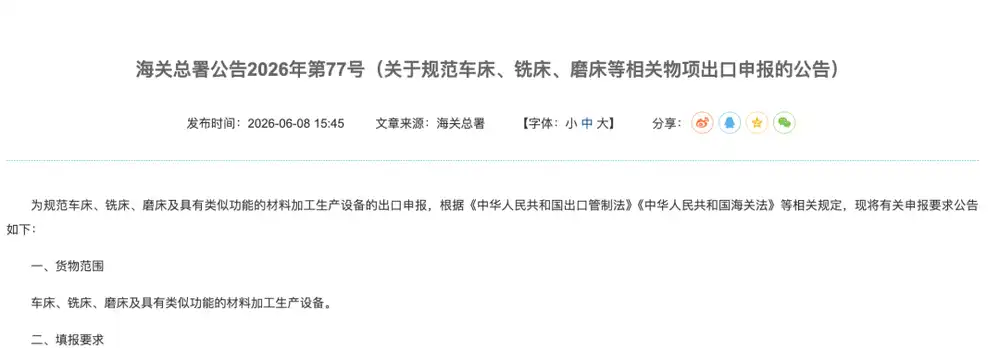
On June 30, 2026, Chinese Customs further required declaring technical parameters and indicating whether items belong to controlled categories upon export of relevant equipment.

From being restricted on purchase to beginning more精细 management of sales—the export ranking is just a number. The more significant change is that China's machine tool industry has entered a new stage where it must identify and manage exports of sensitive equipment.
And to speak冷静ly, reaching global number one isn't the same as securing it.

For equipment like machine tools, selling is just the beginning. What follows are ten or twenty years of installation, debugging,故障响应, spare parts supply, and accuracy guarantees. Export value can flip in a year or two, but overseas service networks can't grow that fast.
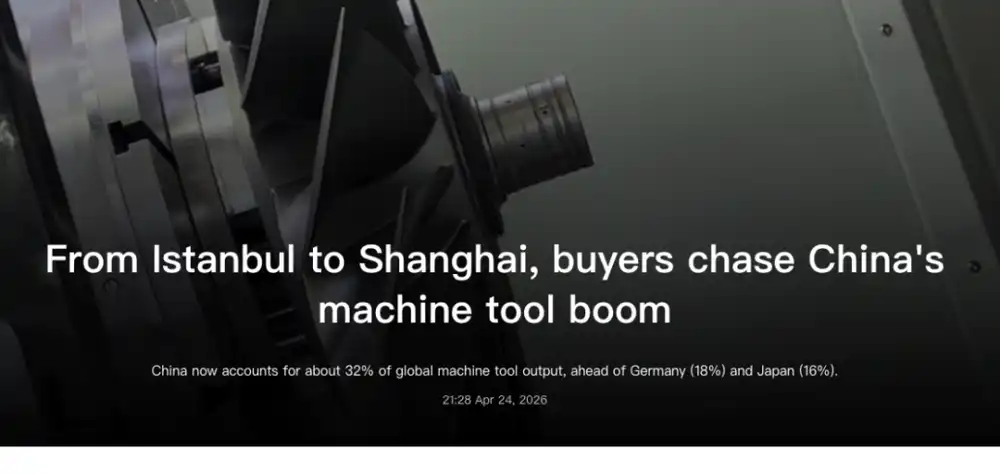
A scene at the 2026 China CNC Machine Tool Exhibition highlighted this: a Turkish buyer flew nearly 9,000 kilometers specifically to look for Chinese equipment, repeatedly asking just one thing: after purchase, will there be local support? How fast can you respond if it breaks?
Over a decade ago, Chinese companies buying German machine tools worried about long-term stable operation and GPS displacement detection restrictions.

Today, overseas buyers care more about after-sales response. The specific concerns may differ, but they point to the same thing: after purchasing such high-value equipment, can they use it with confidence over the long term?

Selling equipment abroad is just passing the first gate. Installing it well overseas, calibrating it accurately, being able to fix faults when they occur, and maintaining precision over a decade—that's when you truly secure the global number one position.

Whether this逆袭can complete its course doesn't depend on ranking tables. It depends on whether factory owners worldwide, walking into their workshops and standing before a new machine, are willing to stake their next decade's livelihood on a piece of equipment.

The kind that says "Made in China."

Compiled and edited by Cool Play Lab

First published on WeChat Official Account: Cool Play Lab (ID: coollabs)

This article is from the WeChat Official Account: Cool Play Lab , author: Cool Play Lab

Trending Cryptos

Related Questions

QWhat key milestone did China achieve in the machine tool industry by 2025, according to the German VDMA?

AIn 2025, for the first time, China's machine tool export value reached 8.6 billion euros, with a global share of about 21%, surpassing Germany's 7.1 billion euros to become the world's largest machine tool exporter.

QWhat are the three main physical challenges in building a high-end, precision machine tool?

AThe three main physical challenges are: 1) Heat: Thermal expansion from motors, bearings, and cutting can cause micron-level distortions, requiring complex thermal compensation systems. 2) Vibration: 'Chatter' or self-excited vibration during high-speed cutting can ruin surface finish and accuracy, requiring rigid structures and dynamic compensation. 3) Wear: Critical components like spindles, guideways, and ball screws wear down over billions of cycles, challenging long-term 'accuracy retention'.

QWhat was the '04 Major Project', and what were its key outcomes for China's high-end machine tools?

AThe '04 Major Project', officially the 'High-end CNC Machine Tools and Basic Manufacturing Equipment' national special project launched in 2009, aimed to close technological gaps. Key outcomes by 2020 included increasing the domestic market share of high-end CNC systems from less than 1% to 31.9%, and improving the Mean Time Between Failures (MTBF) of high-end CNC machine tools from about 600 hours to over 2000 hours.

QHow did the rise of the new energy vehicle (NEV) industry in China impact the domestic machine tool sector?

AThe booming NEV industry created entirely new machining demands (e.g., large-scale integrated die-casting bodies, battery housings, e-drive casings) that leveled the playing field. Chinese machine tool builders had a proximity advantage to the world's largest NEV market, allowing for faster iteration and customized solutions. However, the localization rate for high-end machine tools in the automotive sector remains below 10%, showing gaps persist.

QWhat does the article suggest is the next major challenge for Chinese machine tool exports after achieving the #1 spot in export value?

AThe next major challenge is building a robust, global after-sales service network. Selling equipment is just the start; long-term success depends on the ability to provide reliable installation, calibration, rapid fault response, spare parts supply, and precision maintenance over a machine's 10-20 year lifespan, which builds the trust necessary for global customers to commit.

Related Reads

Robinhood's Bigger Basket

"Robinhood's Bigger Basket" A few weeks ago, the author described Robinhood as a financial supermarket, bundling services from stocks to crypto. After watching the Q2 2026 earnings call, this view was seen as an understatement. The real power is not just attracting new customers, but making existing users engage more deeply. Key performance highlights: * Revenue surpassed $5B annualized, faster than legacy brokers like Charles Schwab. * Paying users grew 7% YoY to 28.4M, but Average Revenue Per User (ARPU) surged 24% to $187. * User activity intensified: per-user stock notional volume rose 56% and options contracts rose 43%, while the number of users trading these assets grew much slower (13% and 3% respectively). The Robinhood Gold subscription is a critical engine. Nearly half of new users sign up for Gold, which then acts as a gateway. Gold users hold 4.2x more assets and are 3.1x more likely to use retirement products than regular users. This creates a powerful cross-sell flywheel where using one product (e.g., prediction markets) increases adoption of others (e.g., IRAs). The future catalysts are Robinhood Chain and the upcoming Robinhood Social feed. * **Robinhood Chain** integrates services (tokenized stocks, lending, perpetuals) into a single, composable platform, reducing friction for cross-product usage. * **Robinhood Social** will internalize the trading idea generation process. Verified portfolios within the app could build trust and move the entire "idea-to-execution" loop inside Robinhood. Together, these act as neutral layers that drive engagement and value accumulation across Robinhood's ecosystem, similar to how Costco's store layout drives membership sales. Despite cyclical concerns in areas like crypto trading, Robinhood's diversified portfolio of 13 business lines each with over $100M in Annual Recurring Revenue (ARR) creates stability. Different product cycles offset each other within a single user's account. The company's unique advantage is transforming a single customer relationship into a compounding, self-diversifying revenue node spanning traditional and crypto finance, amplified by its native blockchain.

marsbit39m ago

Robinhood's Bigger Basket

marsbit39m ago

Trading

Spot

Hot Articles

What is SONIC

Sonic: Pioneering the Future of Gaming in Web3 Introduction to Sonic In the ever-evolving landscape of Web3, the gaming industry stands out as one of the most dynamic and promising sectors. At the forefront of this revolution is Sonic, a project designed to amplify the gaming ecosystem on the Solana blockchain. Leveraging cutting-edge technology, Sonic aims to deliver an unparalleled gaming experience by efficiently processing millions of requests per second, ensuring that players enjoy seamless gameplay while maintaining low transaction costs. This article delves into the intricate details of Sonic, exploring its creators, funding sources, operational mechanics, and the timeline of significant events that have shaped its journey. What is Sonic? Sonic is an innovative layer-2 network that operates atop the Solana blockchain, specifically tailored to enhance the existing Solana gaming ecosystem. It accomplishes this through a customised, VM-agnostic game engine paired with a HyperGrid interpreter, facilitating sovereign game economies that roll up back to the Solana platform. The primary goals of Sonic include: Enhanced Gaming Experiences: Sonic is committed to offering lightning-fast on-chain gameplay, allowing players and developers to engage with games at previously unattainable speeds. Atomic Interoperability: This feature enables transactions to be executed within Sonic without the need to redeploy Solana programmes and accounts. This makes the process more efficient and directly benefits from Solana Layer1 services and liquidity. Seamless Deployment: Sonic allows developers to write for Ethereum Virtual Machine (EVM) based systems and execute them on Solana’s SVM infrastructure. This interoperability is crucial for attracting a broader range of dApps and decentralised applications to the platform. Support for Developers: By offering native composable gaming primitives and extensible data types - dining within the Entity-Component-System (ECS) framework - game creators can craft intricate business logic with ease. Overall, Sonic's unique approach not only caters to players but also provides an accessible and low-cost environment for developers to innovate and thrive. Creator of Sonic The information regarding the creator of Sonic is somewhat ambiguous. However, it is known that Sonic's SVM is owned by the company Mirror World. The absence of detailed information about the individuals behind Sonic reflects a common trend in several Web3 projects, where collective efforts and partnerships often overshadow individual contributions. Investors of Sonic Sonic has garnered considerable attention and support from various investors within the crypto and gaming sectors. Notably, the project raised an impressive $12 million during its Series A funding round. The round was led by BITKRAFT Ventures, with other notable investors including Galaxy, Okx Ventures, Interactive, Big Brain Holdings, and Mirana. This financial backing signifies the confidence that investment foundations have in Sonic’s potential to revolutionise the Web3 gaming landscape, further validating its innovative approaches and technologies. How Does Sonic Work? Sonic utilises the HyperGrid framework, a sophisticated parallel processing mechanism that enhances its scalability and customisability. Here are the core features that set Sonic apart: Lightning Speed at Low Costs: Sonic offers one of the fastest on-chain gaming experiences compared to other Layer-1 solutions, powered by the scalability of Solana’s virtual machine (SVM). Atomic Interoperability: Sonic enables transaction execution without redeployment of Solana programmes and accounts, effectively streamlining the interaction between users and the blockchain. EVM Compatibility: Developers can effortlessly migrate decentralised applications from EVM chains to the Solana environment using Sonic’s HyperGrid interpreter, increasing the accessibility and integration of various dApps. Ecosystem Support for Developers: By exposing native composable gaming primitives, Sonic facilitates a sandbox-like environment where developers can experiment and implement business logic, greatly enhancing the overall development experience. Monetisation Infrastructure: Sonic natively supports growth and monetisation efforts, providing frameworks for traffic generation, payments, and settlements, thereby ensuring that gaming projects are not only viable but also sustainable financially. Timeline of Sonic The evolution of Sonic has been marked by several key milestones. Below is a brief timeline highlighting critical events in the project's history: 2022: The Sonic cryptocurrency was officially launched, marking the beginning of its journey in the Web3 gaming arena. 2024: June: Sonic SVM successfully raised $12 million in a Series A funding round. This investment allowed Sonic to further develop its platform and expand its offerings. August: The launch of the Sonic Odyssey testnet provided users with the first opportunity to engage with the platform, offering interactive activities such as collecting rings—a nod to gaming nostalgia. October: SonicX, an innovative crypto game integrated with Solana, made its debut on TikTok, capturing the attention of over 120,000 users within a short span. This integration illustrated Sonic’s commitment to reaching a broader, global audience and showcased the potential of blockchain gaming. Key Points Sonic SVM is a revolutionary layer-2 network on Solana explicitly designed to enhance the GameFi landscape, demonstrating great potential for future development. HyperGrid Framework empowers Sonic by introducing horizontal scaling capabilities, ensuring that the network can handle the demands of Web3 gaming. Integration with Social Platforms: The successful launch of SonicX on TikTok displays Sonic’s strategy to leverage social media platforms to engage users, exponentially increasing the exposure and reach of its projects. Investment Confidence: The substantial funding from BITKRAFT Ventures, among others, emphasizes the robust backing Sonic has, paving the way for its ambitious future. In conclusion, Sonic encapsulates the essence of Web3 gaming innovation, striking a balance between cutting-edge technology, developer-centric tools, and community engagement. As the project continues to evolve, it is poised to redefine the gaming landscape, making it a notable entity for gamers and developers alike. As Sonic moves forward, it will undoubtedly attract greater interest and participation, solidifying its place within the broader narrative of blockchain gaming.

2.2k Total ViewsPublished 2024.04.04Updated 2024.12.03

What is SONIC

What is $S$

Understanding SPERO: A Comprehensive Overview Introduction to SPERO As the landscape of innovation continues to evolve, the emergence of web3 technologies and cryptocurrency projects plays a pivotal role in shaping the digital future. One project that has garnered attention in this dynamic field is SPERO, denoted as SPERO,$$s$. This article aims to gather and present detailed information about SPERO, to help enthusiasts and investors understand its foundations, objectives, and innovations within the web3 and crypto domains. What is SPERO,$$s$? SPERO,$$s$ is a unique project within the crypto space that seeks to leverage the principles of decentralisation and blockchain technology to create an ecosystem that promotes engagement, utility, and financial inclusion. The project is tailored to facilitate peer-to-peer interactions in new ways, providing users with innovative financial solutions and services. At its core, SPERO,$$s$ aims to empower individuals by providing tools and platforms that enhance user experience in the cryptocurrency space. This includes enabling more flexible transaction methods, fostering community-driven initiatives, and creating pathways for financial opportunities through decentralised applications (dApps). The underlying vision of SPERO,$$s$ revolves around inclusiveness, aiming to bridge gaps within traditional finance while harnessing the benefits of blockchain technology. Who is the Creator of SPERO,$$s$? The identity of the creator of SPERO,$$s$ remains somewhat obscure, as there are limited publicly available resources providing detailed background information on its founder(s). This lack of transparency can stem from the project's commitment to decentralisation—an ethos that many web3 projects share, prioritising collective contributions over individual recognition. By centring discussions around the community and its collective goals, SPERO,$$s$ embodies the essence of empowerment without singling out specific individuals. As such, understanding the ethos and mission of SPERO remains more important than identifying a singular creator. Who are the Investors of SPERO,$$s$? SPERO,$$s$ is supported by a diverse array of investors ranging from venture capitalists to angel investors dedicated to fostering innovation in the crypto sector. The focus of these investors generally aligns with SPERO's mission—prioritising projects that promise societal technological advancement, financial inclusivity, and decentralised governance. These investor foundations are typically interested in projects that not only offer innovative products but also contribute positively to the blockchain community and its ecosystems. The backing from these investors reinforces SPERO,$$s$ as a noteworthy contender in the rapidly evolving domain of crypto projects. How Does SPERO,$$s$ Work? SPERO,$$s$ employs a multi-faceted framework that distinguishes it from conventional cryptocurrency projects. Here are some of the key features that underline its uniqueness and innovation: Decentralised Governance: SPERO,$$s$ integrates decentralised governance models, empowering users to participate actively in decision-making processes regarding the project’s future. This approach fosters a sense of ownership and accountability among community members. Token Utility: SPERO,$$s$ utilises its own cryptocurrency token, designed to serve various functions within the ecosystem. These tokens enable transactions, rewards, and the facilitation of services offered on the platform, enhancing overall engagement and utility. Layered Architecture: The technical architecture of SPERO,$$s$ supports modularity and scalability, allowing for seamless integration of additional features and applications as the project evolves. This adaptability is paramount for sustaining relevance in the ever-changing crypto landscape. Community Engagement: The project emphasises community-driven initiatives, employing mechanisms that incentivise collaboration and feedback. By nurturing a strong community, SPERO,$$s$ can better address user needs and adapt to market trends. Focus on Inclusion: By offering low transaction fees and user-friendly interfaces, SPERO,$$s$ aims to attract a diverse user base, including individuals who may not previously have engaged in the crypto space. This commitment to inclusion aligns with its overarching mission of empowerment through accessibility. Timeline of SPERO,$$s$ Understanding a project's history provides crucial insights into its development trajectory and milestones. Below is a suggested timeline mapping significant events in the evolution of SPERO,$$s$: Conceptualisation and Ideation Phase: The initial ideas forming the basis of SPERO,$$s$ were conceived, aligning closely with the principles of decentralisation and community focus within the blockchain industry. Launch of Project Whitepaper: Following the conceptual phase, a comprehensive whitepaper detailing the vision, goals, and technological infrastructure of SPERO,$$s$ was released to garner community interest and feedback. Community Building and Early Engagements: Active outreach efforts were made to build a community of early adopters and potential investors, facilitating discussions around the project’s goals and garnering support. Token Generation Event: SPERO,$$s$ conducted a token generation event (TGE) to distribute its native tokens to early supporters and establish initial liquidity within the ecosystem. Launch of Initial dApp: The first decentralised application (dApp) associated with SPERO,$$s$ went live, allowing users to engage with the platform's core functionalities. Ongoing Development and Partnerships: Continuous updates and enhancements to the project's offerings, including strategic partnerships with other players in the blockchain space, have shaped SPERO,$$s$ into a competitive and evolving player in the crypto market. Conclusion SPERO,$$s$ stands as a testament to the potential of web3 and cryptocurrency to revolutionise financial systems and empower individuals. With a commitment to decentralised governance, community engagement, and innovatively designed functionalities, it paves the way toward a more inclusive financial landscape. As with any investment in the rapidly evolving crypto space, potential investors and users are encouraged to research thoroughly and engage thoughtfully with the ongoing developments within SPERO,$$s$. The project showcases the innovative spirit of the crypto industry, inviting further exploration into its myriad possibilities. While the journey of SPERO,$$s$ is still unfolding, its foundational principles may indeed influence the future of how we interact with technology, finance, and each other in interconnected digital ecosystems.

308 Total ViewsPublished 2024.12.17Updated 2024.12.17

What is $S$

What is AGENT S

Agent S: The Future of Autonomous Interaction in Web3 Introduction In the ever-evolving landscape of Web3 and cryptocurrency, innovations are constantly redefining how individuals interact with digital platforms. One such pioneering project, Agent S, promises to revolutionise human-computer interaction through its open agentic framework. By paving the way for autonomous interactions, Agent S aims to simplify complex tasks, offering transformative applications in artificial intelligence (AI). This detailed exploration will delve into the project's intricacies, its unique features, and the implications for the cryptocurrency domain. What is Agent S? Agent S stands as a groundbreaking open agentic framework, specifically designed to tackle three fundamental challenges in the automation of computer tasks: Acquiring Domain-Specific Knowledge: The framework intelligently learns from various external knowledge sources and internal experiences. This dual approach empowers it to build a rich repository of domain-specific knowledge, enhancing its performance in task execution. Planning Over Long Task Horizons: Agent S employs experience-augmented hierarchical planning, a strategic approach that facilitates efficient breakdown and execution of intricate tasks. This feature significantly enhances its ability to manage multiple subtasks efficiently and effectively. Handling Dynamic, Non-Uniform Interfaces: The project introduces the Agent-Computer Interface (ACI), an innovative solution that enhances the interaction between agents and users. Utilizing Multimodal Large Language Models (MLLMs), Agent S can navigate and manipulate diverse graphical user interfaces seamlessly. Through these pioneering features, Agent S provides a robust framework that addresses the complexities involved in automating human interaction with machines, setting the stage for myriad applications in AI and beyond. Who is the Creator of Agent S? While the concept of Agent S is fundamentally innovative, specific information about its creator remains elusive. The creator is currently unknown, which highlights either the nascent stage of the project or the strategic choice to keep founding members under wraps. Regardless of anonymity, the focus remains on the framework's capabilities and potential. Who are the Investors of Agent S? As Agent S is relatively new in the cryptographic ecosystem, detailed information regarding its investors and financial backers is not explicitly documented. The lack of publicly available insights into the investment foundations or organisations supporting the project raises questions about its funding structure and development roadmap. Understanding the backing is crucial for gauging the project's sustainability and potential market impact. How Does Agent S Work? At the core of Agent S lies cutting-edge technology that enables it to function effectively in diverse settings. Its operational model is built around several key features: Human-like Computer Interaction: The framework offers advanced AI planning, striving to make interactions with computers more intuitive. By mimicking human behaviour in tasks execution, it promises to elevate user experiences. Narrative Memory: Employed to leverage high-level experiences, Agent S utilises narrative memory to keep track of task histories, thereby enhancing its decision-making processes. Episodic Memory: This feature provides users with step-by-step guidance, allowing the framework to offer contextual support as tasks unfold. Support for OpenACI: With the ability to run locally, Agent S allows users to maintain control over their interactions and workflows, aligning with the decentralised ethos of Web3. Easy Integration with External APIs: Its versatility and compatibility with various AI platforms ensure that Agent S can fit seamlessly into existing technological ecosystems, making it an appealing choice for developers and organisations. These functionalities collectively contribute to Agent S's unique position within the crypto space, as it automates complex, multi-step tasks with minimal human intervention. As the project evolves, its potential applications in Web3 could redefine how digital interactions unfold. Timeline of Agent S The development and milestones of Agent S can be encapsulated in a timeline that highlights its significant events: September 27, 2024: The concept of Agent S was launched in a comprehensive research paper titled “An Open Agentic Framework that Uses Computers Like a Human,” showcasing the groundwork for the project. October 10, 2024: The research paper was made publicly available on arXiv, offering an in-depth exploration of the framework and its performance evaluation based on the OSWorld benchmark. October 12, 2024: A video presentation was released, providing a visual insight into the capabilities and features of Agent S, further engaging potential users and investors. These markers in the timeline not only illustrate the progress of Agent S but also indicate its commitment to transparency and community engagement. Key Points About Agent S As the Agent S framework continues to evolve, several key attributes stand out, underscoring its innovative nature and potential: Innovative Framework: Designed to provide an intuitive use of computers akin to human interaction, Agent S brings a novel approach to task automation. Autonomous Interaction: The ability to interact autonomously with computers through GUI signifies a leap towards more intelligent and efficient computing solutions. Complex Task Automation: With its robust methodology, it can automate complex, multi-step tasks, making processes faster and less error-prone. Continuous Improvement: The learning mechanisms enable Agent S to improve from past experiences, continually enhancing its performance and efficacy. Versatility: Its adaptability across different operating environments like OSWorld and WindowsAgentArena ensures that it can serve a broad range of applications. As Agent S positions itself in the Web3 and crypto landscape, its potential to enhance interaction capabilities and automate processes signifies a significant advancement in AI technologies. Through its innovative framework, Agent S exemplifies the future of digital interactions, promising a more seamless and efficient experience for users across various industries. Conclusion Agent S represents a bold leap forward in the marriage of AI and Web3, with the capacity to redefine how we interact with technology. While still in its early stages, the possibilities for its application are vast and compelling. Through its comprehensive framework addressing critical challenges, Agent S aims to bring autonomous interactions to the forefront of the digital experience. As we move deeper into the realms of cryptocurrency and decentralisation, projects like Agent S will undoubtedly play a crucial role in shaping the future of technology and human-computer collaboration.

973 Total ViewsPublished 2025.01.14Updated 2025.01.14

What is AGENT S

Discussions

Welcome to the HTX Community. Here, you can stay informed about the latest platform developments and gain access to professional market insights. Users' opinions on the price of S (S) are presented below.

活动图片