Community-led Terra Classic (LUNC) now worth 12x more than Do Kwon-led Terra LUNA

cryptoslatePublished on 2022-09-08Last updated on 2022-09-08

Abstract

Terra Classic (LUNC) has a current market cap of $3.3 billion, roughly 12x higher than Terra LUNA’s $258 million.

Terra Classic (LUNC) has a current market cap of $3.3 billion, roughly 12x higher than Terra LUNA’s $258 million.

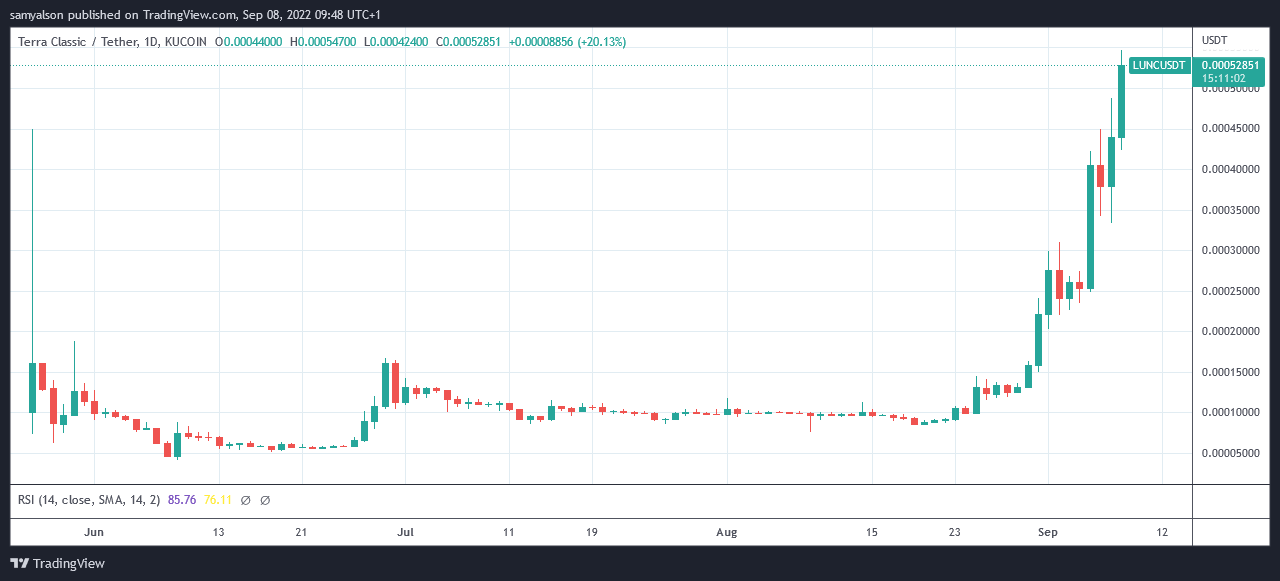
Plans to revive the previously “dead” Terra Classic chain have taken effect, leading to near 1,900% gains since bottoming at $0.00004885 on June 8. The community-led project has implemented several initiatives to boost demand, including token burning and attractive staking opportunities.
Terra LUNA
Terra LUNA

Source: LUNCUSDT on TradingView.com

According to LuncStaking_Bot, 8.8% of the LUNC supply is currently staked. This ratio has steadily increased since staking went live on August 27 — when only 2.6% of LUNC’s supply was staked.

Do Kwon misfires

The Terra ecosystem implosion was triggered when the UST stablecoin lost its dollar peg in May. UST operated under an algorithmic pegging mechanism to moderate supply and demand, hence its price, in conjunction with the LUNA token.

Falling below $1 incentivizes users to mint LUNA and burn UST. By dropping significantly below the peg price, vast quantities of LUNA were minted, increasing supply and tanking the token price.

The upshot was the mass exodus of capital leaving the ecosystem and the subsequent liquidity squeeze impacting the rest of the market. Since then, numerous fraud allegations have been leveled at Terra founder Do Kwon and his senior team. This included money laundering through shell companies and the siphoning of users’ funds. But most damning of all, Terra was a scam from the get-go.

The community accepted Do Kwon’s proposal to fork the chain and create Terra LUNA. The original chain was rebranded Terra Classic (LUNC) and left to the community for development and governance.

Many assumed LUNC would tail off and vanish, yet recent initiatives have seen its token price explode to climb the market cap rankings. LUNC is now ranked the 26th biggest chain, whereas Do Kwon-led LUNA ranks 116th.

FatManTerra slams Terra LUNA project

Terraform Labs associate Maslin Edwin posted a community update on September 7 detailing the latest developments in the Terra LUNA ecosystem.

It mentioned numerous updates, including new staking pools, wallet integrations, exchange listings, and information on recent governance proposals.

However, in response, FatManTerra tweeted that he finds it “amusing and sickening” that it’s business as usual with no acknowledgment of the harm caused by the Terra implosion.

He signed off, saying “we” will never forget what happened.

Trending Cryptos

Related Reads

How Does Codex Use a Computer? Three Entry Points and Permission Boundaries

This article explains the three primary methods for Codex to interact with a computer, each with distinct use cases, permission boundaries, and trust levels. **1. Computer Use:** This offers the broadest access, allowing Codex to visually control and interact with the graphical user interface of authorized macOS/Windows apps, system settings, and even iOS simulators. It's ideal for tasks lacking APIs or structured tools, such as operating legacy software or multi-app workflows. However, it's the slowest method and has the widest permission scope, requiring careful supervision for sensitive actions. **2. Chrome Extension:** This grants Codex access to the user's logged-in Chrome browser state, including cookies, profiles, and open tabs. It's best for tasks requiring user identity across websites like Gmail, LinkedIn, Salesforce, or internal dashboards. Its key advantage is multi-tab control for complex workflows. While more powerful for browser-based tasks than Computer Use, it carries higher sensitivity as actions are performed under the user's identity. **3. In-App Browser:** This is a browser isolated within the Codex thread, separate from the user's personal browsing data. It excels in web development and debugging scenarios—previewing local servers, testing responsive layouts, or annotating designs directly on the page. Its isolation is a strength for development but a limitation for tasks requiring login sessions. The core principle is to choose the narrowest, safest, and most structured interface for the task. Use plugins or MCPs first, resort to visual control (Computer Use) only for GUI-dependent tasks, employ the Chrome extension for identity-reliant browser work, and prefer the In-App Browser for isolated development. **Appshots** are clarified as a fourth, complementary tool for *inputting* context—capturing a screenshot of a window to point Codex to something—rather than a method for Codex to *act*. Together, this layered approach highlights a key to AI agent productization: not granting unlimited permissions, but constraining them within clear boundaries for specific tasks while preserving user oversight.

marsbit1h ago

How Does Codex Use a Computer? Three Entry Points and Permission Boundaries

marsbit1h ago

The "Iron Rule" of Chip Equipment Is Being Broken

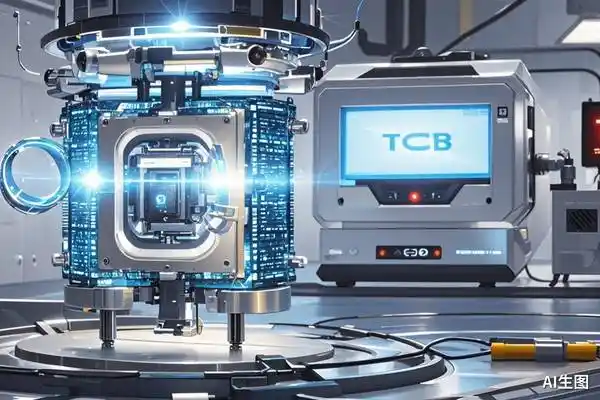
For years, the semiconductor equipment industry followed an unwritten "iron rule": suppliers offered steep discounts for new tool introductions (Design-in) and faced consistent price pressure during repeat orders, especially during market downturns. This long-standing buyer's market dynamic is now being upended. Recently, SK Hynix's primary equipment suppliers have reportedly requested a 3-4% price *increase*, a nearly unprecedented move. This shift is driven by a severe supply-demand imbalance fueled by the AI compute boom. Securing equipment has become an urgent arms race as chipmakers' expansion speed dictates their ability to fulfill massive AI chip orders. Key areas feeling the strain include: **TCB (Thermal Compression Bonding) Equipment:** Demand is exploding, driven by the simultaneous needs of HBM4 memory stacking, AI chip Chip-on-Substrate (C2S), and logic Chiplet Chip-on-Wafer (C2W) packaging. Players like Hanmi Semiconductor, Hanwha Semitech, and ASMPT are receiving major orders. While hybrid bonding is seen as the future, TCB remains the pragmatic choice for HBM4 mass production, with its lifecycle extended by relaxed specifications and ongoing technological upgrades. **Test Equipment Bottlenecks:** Ironically, AI-driven shortages are now crippling test equipment manufacturing. Critical components like FPGAs, Driver ICs, and CPUs face severe shortages and extended lead times (up to 52 weeks for FPGAs), as AI data center and server vendors prioritize supply. This creates a paradoxical cycle: AI chip shortages drive fab expansion, which requires more test equipment, whose production is delayed because its key parts are diverted to make AI chips. The industry is entering a broad, AI-powered upcycle. SEMI forecasts global semiconductor equipment sales to hit a record $156 billion by 2027, fueled by investment in advanced logic/foundry, HBM-driven DRAM, and advanced packaging (like CoWoS). Major players like TSMC, SK Hynix, and Micron are aggressively ramping capital expenditure. In conclusion, leading equipment vendors are no longer just selling tools; they are selling the critical capability to deliver AI-era capacity. Pricing power is shifting decisively to those with indispensable technology in key process nodes like advanced logic, HBM, and advanced packaging, rewriting the industry's traditional power structure.

marsbit1h ago

The "Iron Rule" of Chip Equipment Is Being Broken

marsbit1h ago

Trading

Spot
Futures

Hot Articles

How to Buy LUNC

Welcome to HTX.com! We've made purchasing Terra Classic (LUNC) simple and convenient. Follow our step-by-step guide to embark on your crypto journey.Step 1: Create Your HTX AccountUse your email or phone number to sign up for a free account on HTX. Experience a hassle-free registration journey and unlock all features.Get My AccountStep 2: Go to Buy Crypto and Choose Your Payment MethodCredit/Debit Card: Use your Visa or Mastercard to buy Terra Classic (LUNC) instantly.Balance: Use funds from your HTX account balance to trade seamlessly.Third Parties: We've added popular payment methods such as Google Pay and Apple Pay to enhance convenience.P2P: Trade directly with other users on HTX.Over-the-Counter (OTC): We offer tailor-made services and competitive exchange rates for traders.Step 3: Store Your Terra Classic (LUNC)After purchasing your Terra Classic (LUNC), store it in your HTX account. Alternatively, you can send it elsewhere via blockchain transfer or use it to trade other cryptocurrencies.Step 4: Trade Terra Classic (LUNC)Easily trade Terra Classic (LUNC) on HTX's spot market. Simply access your account, select your trading pair, execute your trades, and monitor in real-time. We offer a user-friendly experience for both beginners and seasoned traders.

2.4k Total ViewsPublished 2024.03.29Updated 2026.06.02

How to Buy LUNC

Discussions

Welcome to the HTX Community. Here, you can stay informed about the latest platform developments and gain access to professional market insights. Users' opinions on the price of LUNC (LUNC) are presented below.

活动图片