Weekly Token Unlock: XPL to Release Millions in Token Value

marsbitPublished on 2026-06-21Last updated on 2026-06-21

Abstract

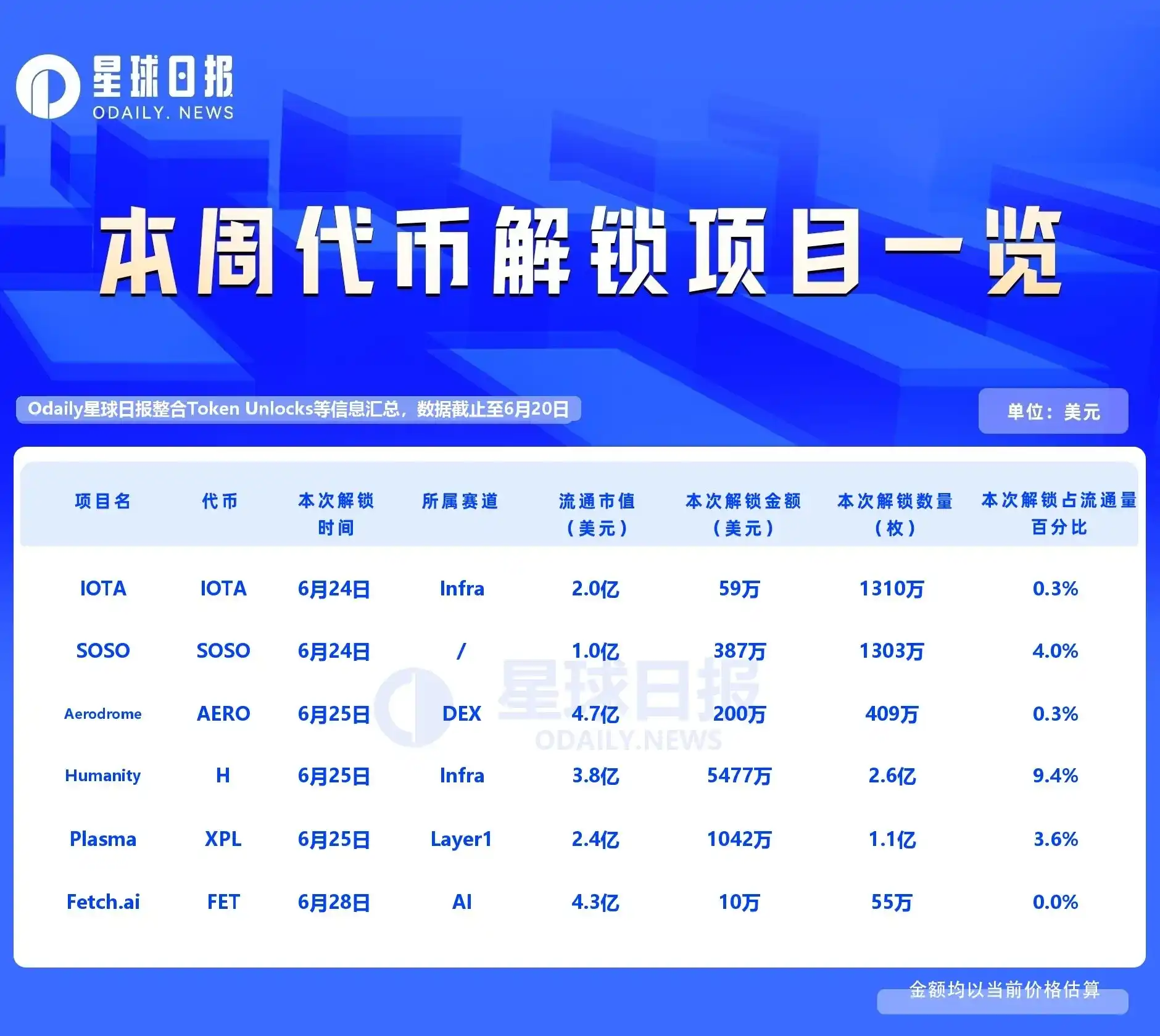
Weekly Token Unlocks: XPL and SoSoValue Tokens Worth Over $10 Million Set for Release This week sees significant token unlocks for two projects. SoSoValue, an AI-powered crypto investment research platform, will unlock 13.03 million tokens, valued at approximately $3.87 million. The project aims to merge CeFi efficiency with DeFi transparency. Separately, Plasma, a Layer 1 blockchain designed for global stablecoin payments, will unlock 110 million tokens worth about $10.42 million. The network focuses on high throughput, stablecoin-native features, and full EVM compatibility. Both projects have provided their detailed token release schedules.

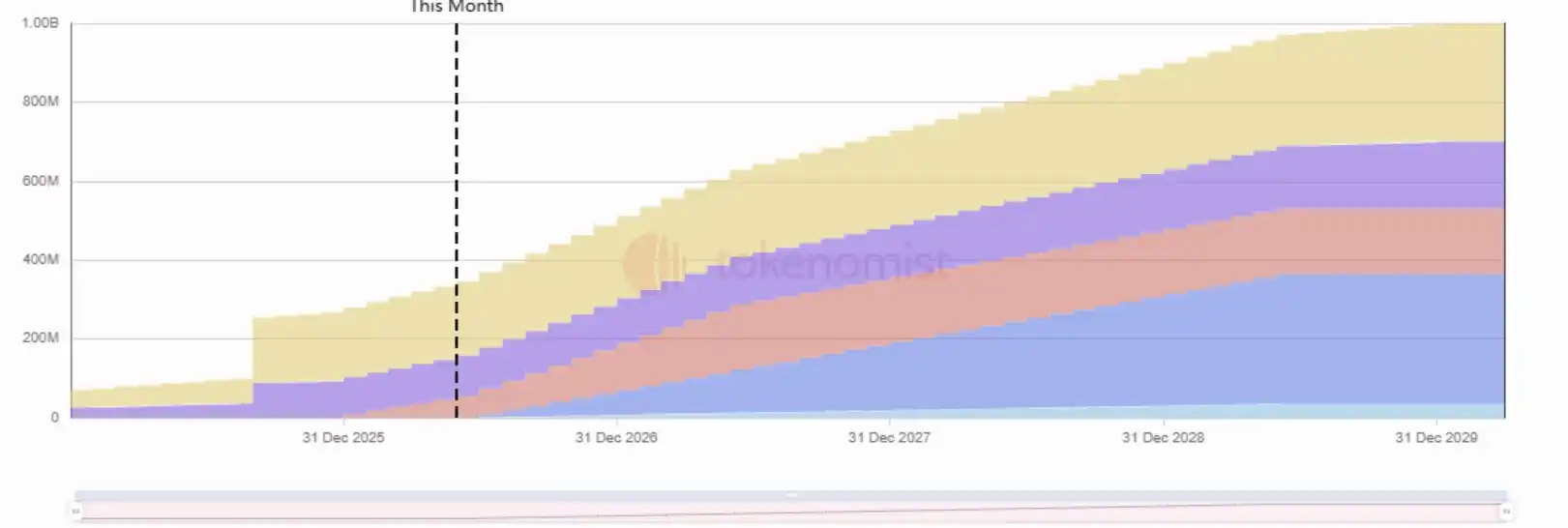
SoSoValue

Project Twitter: https://x.com/SoSoValueCrypto

Project Website: https://sosovalue.com/

This Unlock Amount: 13.03 million tokens

This Unlock Value: ~$3.87 million

SoSoValue is an AI-powered investment research platform that combines the efficiency of CeFi with the transparency of DeFi, dedicated to addressing challenges such as information overload and cross-chain asset management in the cryptocurrency market.

The specific release schedule is as follows:

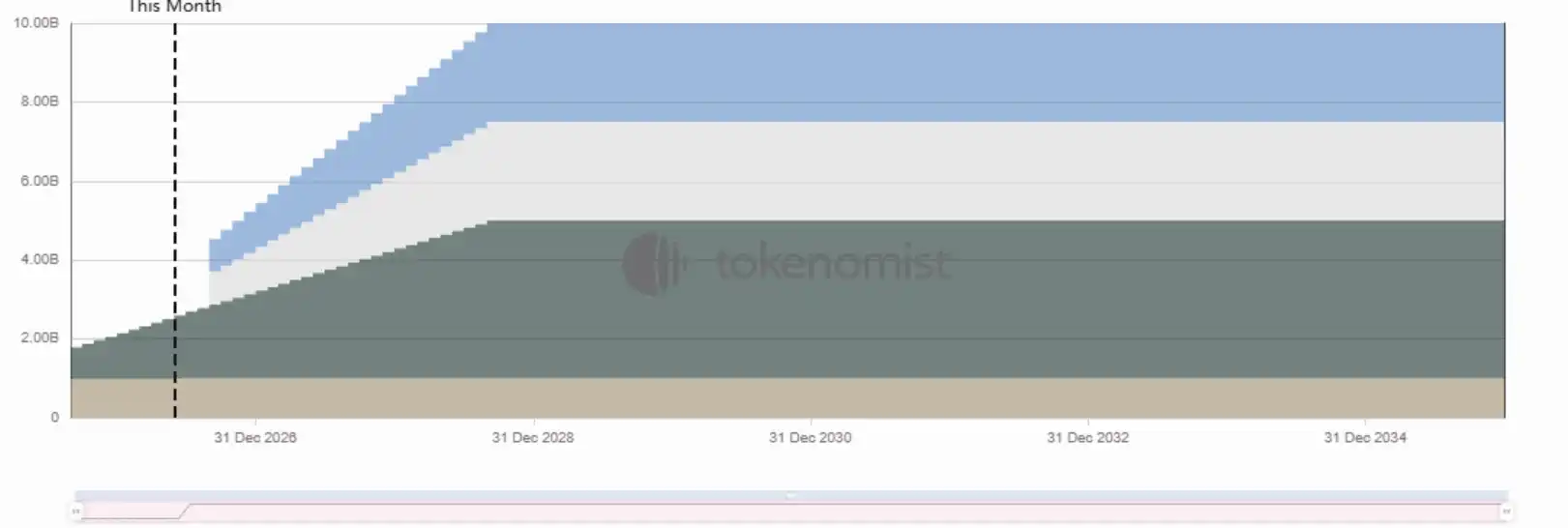
Plasma

Project Twitter: https://x.com/Plasma

Project Website: https://www.plasma.to/

This Unlock Amount: 110 million tokens

This Unlock Value: ~$10.42 million

Plasma is a Layer 1 blockchain specifically built for global stablecoin payments. It integrates high throughput, stablecoin-native functionality, and full EVM compatibility, providing developers with the foundational infrastructure to build next-generation payment and financial applications. It also supports customizable gas tokens, zero-fee USDT transfers, and private payments.

The specific release schedule is as follows:

Trending Cryptos

Related Questions

QWhat are the two projects mentioned in the article that are undergoing token unlocks this week?

AThe two projects are SoSoValue and Plasma (XPL).

QAccording to the article, how much is the Plasma (XPL) token unlock worth in USD?

AThe Plasma (XPL) token unlock is worth approximately $10.42 million.

QWhat is the primary focus or purpose of the Plasma blockchain as described in the article?

APlasma is a Layer 1 blockchain specifically built for global stablecoin payments, offering high throughput, stablecoin-native features, and full EVM compatibility for next-generation payment and financial applications.

QWhat is the stated goal of the SoSoValue platform?

ASoSoValue is an AI-driven investment research platform that aims to combine the efficiency of CeFi with the transparency of DeFi to address challenges like information overload and cross-chain asset management in the cryptocurrency market.

QHow many SoSoValue tokens are being unlocked this week according to the data provided?

A13.03 million SoSoValue tokens are being unlocked this week.

Related Reads

a16z Crypto: Marc Andreessen and Chris Dixon Explain Why the 'CLARITY Act' Is Urgently Needed

The CLARITY Act proposes a critical federal regulatory framework for the U.S. crypto market. Currently, a lack of clear rules creates uncertainty, hinders innovation, and leaves consumers exposed. The Act would clearly divide regulatory jurisdiction between the SEC and CFTC, mandate disclosures and insider restrictions for projects, and bring exchanges and other intermediaries under a comprehensive oversight system akin to traditional finance. This clarity is urgently needed as crypto has evolved from a niche interest into a major industry with institutional involvement. Clear, lasting rules would protect consumers by requiring proper audits, custody of client assets, and anti-fraud measures for registered platforms, helping prevent failures like FTX. Regulatory ambiguity currently punishes compliant U.S. firms with high costs while rewarding offshore competitors who bypass rules, creating a race to the bottom. The Act addresses national security by applying existing anti-money laundering rules to crypto intermediaries and distinguishes between legitimate privacy and illicit concealment. It also resolves banking sector concerns by prohibiting interest payments on stablecoin balances while permitting transaction-based rewards. For developers, it establishes liability based on intent and direct assistance to crime, not for unforeseeable downstream misuse of open-source software. Regarding securities law, the Act introduces a risk-based framework. Assets begin under SEC oversight when a network is centralized, transitioning to CFTC commodity regulation if it becomes sufficiently decentralized, with clear definitions to avoid constant litigation. Without the Act, regulatory uncertainty driven by shifting agency interpretations will persist, discouraging long-term investment in the U.S. and pushing development offshore, reducing American oversight and economic leadership. Support for the bipartisan bill comes from lawmakers, law enforcement (like the Fraternal Order of Police), and major financial institutions. Ultimately, the CLARITY Act is essential to establish a stable, sensible regulatory environment that fosters responsible innovation, enhances consumer protection, and ensures U.S. leadership in shaping the future of financial technology.

marsbit50m ago

a16z Crypto: Marc Andreessen and Chris Dixon Explain Why the 'CLARITY Act' Is Urgently Needed

marsbit50m ago

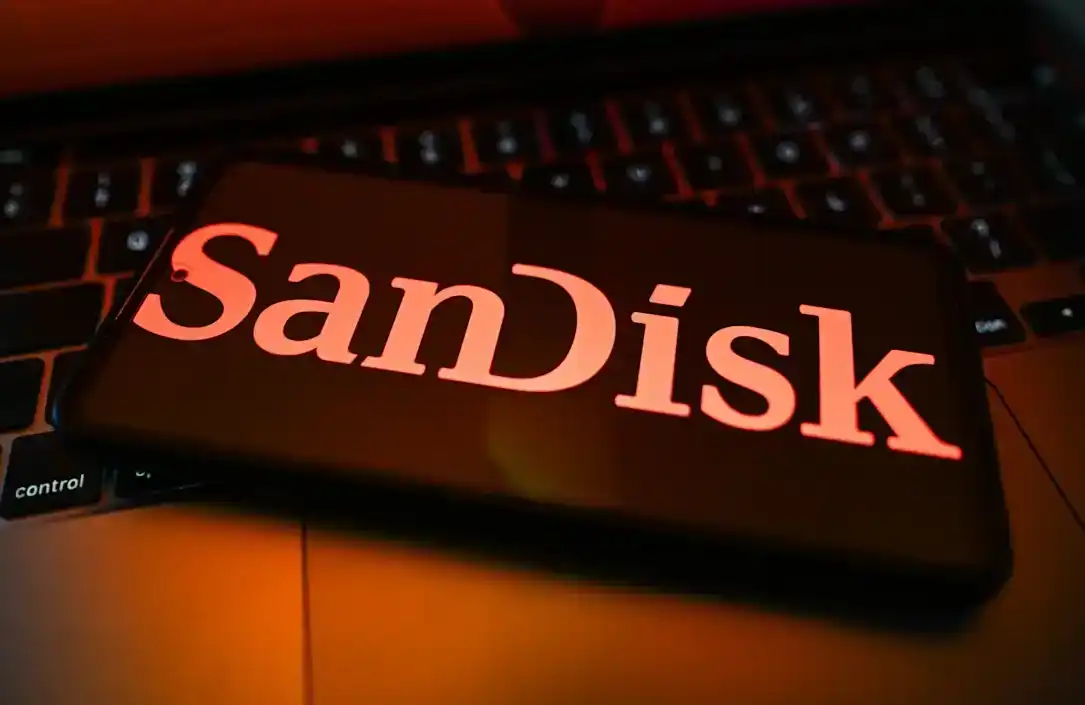
Citi's Interpretation: Why Does Citi Still Give SanDisk a Target Price of $2500 After Earnings Report Despite a Significant Stock Price Drop?

Citi maintains a "Buy" rating on SanDisk with a $2500 price target despite a post-earnings stock drop. This target, implying an 85.1% upside from the August 5th close of $1350.50, hinges on the firm's view that SanDisk merits a higher valuation than traditional NAND cyclical stocks. Although SanDisk reported strong Q4 FY26 results with revenue up 51% sequentially and robust full-year data center growth (+437%), its stock fell sharply on August 6th. Investors are concerned about potential NAND price growth moderation and guidance that failed to meet elevated market expectations. Citi's bullish thesis centers on SanDisk's new long-term "New Business Model" (NBM) agreements. These contracts, covering a significant portion of its NAND bit output for FY27 and FY28, represent minimum revenue commitments of approximately $94 billion backed by financial guarantees. This structure aims to increase revenue and cash flow predictability. The report links this visibility to AI data center demand, driven by the expansion of inference workloads requiring more storage. Citi estimates data center storage capacity demand will grow about 35% in CY27. However, the analysis notes long-term contracts cannot eliminate the NAND cycle. Risks include potential oversupply from industry capacity expansion, competition, and macroeconomic headwinds. The $2500 target essentially bets that AI demand and these contracts can reduce earnings volatility enough to support a premium valuation (~11x CY27E EPS). Key factors to watch are the execution of the $94B commitments, pricing mechanisms, actual data center demand, and industry supply dynamics.

marsbit1h ago

Citi's Interpretation: Why Does Citi Still Give SanDisk a Target Price of $2500 After Earnings Report Despite a Significant Stock Price Drop?

marsbit1h ago

Dark Pools Prevail, Whales Vanish: How Credible Are Public Market Signals?

Institutional cryptocurrency trading is increasingly shifting towards dark pools and over-the-counter (OTC) desks, with data from sFOX showing such venues accounted for 15% of total monthly volume by June, up from negligible levels in April. In July, 77.7% of institutional capital on sFOX's platform was routed through OTC desks, while only 18.4% went to public exchanges. A key driver is institutions' need to conceal large orders to avoid revealing trading patterns, preventing front-running and minimizing price impact. Firms like Jane Street and Citadel use dark pools and order-splitting across multiple venues to execute trades discreetly. This structural shift mirrors earlier developments in equities and forex markets. As a result, public order books now reflect only a fraction of actual market activity, eroding the once-significant advantage retail traders had in tracking large wallets and exchange flows. The proliferation of prime brokers and aggregation platforms is also rapidly closing simple arbitrage opportunities. The market may evolve toward a brokerage model for retail, similar to traditional stocks. Two scenarios emerge: an optimistic one where retail gains from narrower spreads and better order routing, and a pessimistic one where transparency declines faster than benefits trickle down, leaving smaller investors in the dark. Regardless, traders must adapt by not relying solely on exchange volume, comparing total execution costs, and using limit orders in thin markets. While reduced volatility from hidden large trades may seem positive, it comes at the cost of obscured market signals and institutional intent.

marsbit1h ago

Dark Pools Prevail, Whales Vanish: How Credible Are Public Market Signals?

marsbit1h ago

Trading

Spot

Hot Articles

What is PLASMA

Plasma: A Cutting-Edge Solution for Blockchain Scalability Introduction to Plasma As the cryptocurrency landscape evolves, there is an increasing need for enhanced efficiency within blockchain networks. Plasma, a Layer 2 scaling solution, emerges as a pioneering player in this area, particularly in the sphere of Web3 development. By strategically shifting a significant portion of tasks from the main chain to a series of smaller chains, Plasma aims to significantly enhance the scalability and performance of Ethereum—a widely-used blockchain platform that is at the forefront of decentralised applications. What is Plasma? Plasma is an innovative off-chain scaling solution specifically designed for the Ethereum blockchain. It was introduced in August 2017 by Vitalik Buterin, co-founder of Ethereum, and Joseph Poon, a prominent advocate of scaling solutions like the Lightning Network. Plasma serves as a framework that enables the creation of scalable applications by establishing a hierarchical structure of child chains that sit above the main Ethereum chain. At its core, Plasma facilitates the development of potentially unlimited side chains that can operate independently while still relying on the Ethereum network for security and consensus. This architecture is supported by smart contracts and Merkle Trees, which efficiently manage transactions and data storage. Core Objectives of Plasma The primary goal of Plasma is to increase the throughput of the Ethereum network. By diverting a significant volume of transactions away from the congested main chain, Plasma's architecture offers higher transaction speeds, more efficient data processing, and lower transaction costs. This is particularly crucial in an age where the demand for decentralised applications—especially in finance, gaming, and supply chain management—is reaching unprecedented levels. Creator of Plasma Plasma is the brainchild of two renowned figures in the blockchain community: Vitalik Buterin and Joseph Poon. Buterin is celebrated primarily for co-founding Ethereum and pushing the boundaries of what blockchain technology can achieve. Poon, on the other hand, is known for advocating scalable solutions that enable faster and more cost-effective transactions on blockchain networks. Their collaboration on the Plasma framework has significantly contributed to its innovative nature, merging advanced technical insights with practical applications. Investors of Plasma While the specific investment foundations or organisations supporting Plasma remain undisclosed, the project has attracted interest from various prominent figures and players in the blockchain and cryptocurrency space. With its potential for enhancing scalability within Ethereum, it has captured the attention of various entities aiming to push the boundaries of blockchain technology. How Does Plasma Work? Plasma's unique functionality stems from its architectural framework that relies on child chains and their interaction with the main Ethereum network. Below are some key factors that contribute to Plasma's innovative approach: Child Chains: Plasma establishes numerous child chains that can execute transactions independently of the main Ethereum chain. Each child chain operates as a separate smart contract with unique features, allowing developers to create tailored solutions based on their specific requirements. Smart Contracts and Merkle Trees: The framework utilises smart contracts, which are self-executing agreements with predefined conditions, combined with Merkle Trees that enable efficient verification of data. This technology allows Plasma to achieve both high scalability and security. Transaction Compression: By batching transactions on the child chains, Plasma reduces the data load on the Ethereum network. This implies that fewer transactions need to be recorded on the main chain—thereby freeing up space and alleviating congestion. Enhanced Security: Despite being off-chain, Plasma leverages the security measures of the main Ethereum network, ensuring that all transactions on child chains maintain a high level of integrity and security. Timeline of Plasma Understanding the development of Plasma involves tracing its significant milestones: August 2017: Plasma was first introduced by Vitalik Buterin and Joseph Poon as a scalable solution to address Ethereum's performance challenges. 2018: The Plasma framework was officially developed and made available on GitHub, marking a crucial step towards its implementation in practical applications. 2019: As awareness about Plasma grew, it began to attract developers interested in scaling Ethereum applications, thus increasing its adoption. 2020: Plasma continued evolving, with substantial enhancements made to its architecture and functionality—making it even more appealing to developers. Key Features of Plasma Plasma boasts several characteristics that position it as a transformative solution in the blockchain space: Scalability: By creating multiple child chains, Plasma can handle a higher volume of transactions without placing further strain on the main Ethereum chain. Speed: Each child chain can process transactions more rapidly, providing users with a better experience and service. Lower Transaction Costs: Plasma's structure effectively reduces the costs associated with transactions by minimising the burden on the main chain. Interoperability: The architecture allows Plasma to seamlessly interact with multiple blockchains, enhancing cross-network functionality. Security: By harnessing the security of Ethereum’s main chain, Plasma ensures the integrity of its operations while using its child chains. Use Cases for Plasma The innovative architecture of Plasma opens the door for various practical applications across different sectors: Decentralised Finance (DeFi): Plasma has the capacity to enhance the scalability and efficiency of DeFi applications, creating smoother and more effective trading processes. Gaming: The framework facilitates the development of quick and cost-efficient gaming experiences, making it appealing to developers in the gaming industry. Supply Chain Management: With the ability to achieve efficient transaction processing, Plasma can promote the development of decentralised supply chain management solutions. Conclusion Plasma stands at the forefront of blockchain technology, positioned as a pivotal Layer 2 scaling solution aimed at enhancing the efficiency of the Ethereum network and beyond. Through its unique structure of child chains, smart contracts, and Merkle Trees, Plasma presents a compelling solution to the scalability crisis that has long plagued blockchain networks. As blockchain technology continues to advance, solutions like Plasma promise to reshape how developers approach scalability challenges, potentially revolutionising how decentralised applications function. The ongoing efforts by its creators and the interest of various stakeholders indicate a bright future for Plasma as it seeks to elevate blockchain capabilities to new heights in the digital realm.

255 Total ViewsPublished 2024.12.03Updated 2024.12.03
What is PLASMA

Discussions

Welcome to the HTX Community. Here, you can stay informed about the latest platform developments and gain access to professional market insights. Users' opinions on the price of XPL (XPL) are presented below.

活动图片