元宇宙:变换化身、NFT拍卖、囤地炒房,我们会迷失在虚拟空间里吗?

南都周刊Published on 2022-03-08Last updated on 2022-03-14

Abstract

2021年,以苹果为代表的后消费电子时代,摩尔定律不再灵验,扎克伯格将脸书更名Meta举世哗然,成功引爆元宇宙概念。

路漫漫其修远兮,但未来的画卷已经展开。
2021年,以苹果为代表的后消费电子时代,摩尔定律不再灵验,扎克伯格将脸书更名Meta举世哗然,成功引爆元宇宙概念。
国内外互联网巨头纷纷FOMO入局,各路资本都在元宇宙身上押下重注,恐落人后。元宇宙滋生了意想不到的商机,“捏脸”成为新职业,NFT拍卖风风火火,虚拟世界开始囤地炒房,再不济也能去社交网络卖课……沙泥俱下,鸡犬升天。
日前,银监会罕见提示风险,称利用元宇宙名目非法集资等新型骗局已出现。
谁是韭菜谁是镰刀尚无定论,“元宇宙仍然是现实世界当前一个很大的悬念,许多问题都在等待答案。”
此报道刊登于2022年2月期《南都周刊》。
戴上游戏头盔,穿上体感设备,或者登录游戏仓,让我们把现实里的种种不如意暂时抛诸脑后,进入比现实更宏大、更精彩甚至更真实的虚拟世界吧。这是科幻小说《雪崩》、电影《头号玩家》和当今许许多多赛博朋克风格的流行文化作品已经反复描述过并让我们习以为常的设定,也是人类社会正在全速奔向的未来。
不,别急着否认,你仔细想想就会发现,在我们现实世界的科技霸主脸书将自己改名为Meta并给“元宇宙”这个词做了一个巨型广告之前,我们早已一头扎入了元宇宙的尝试之中。
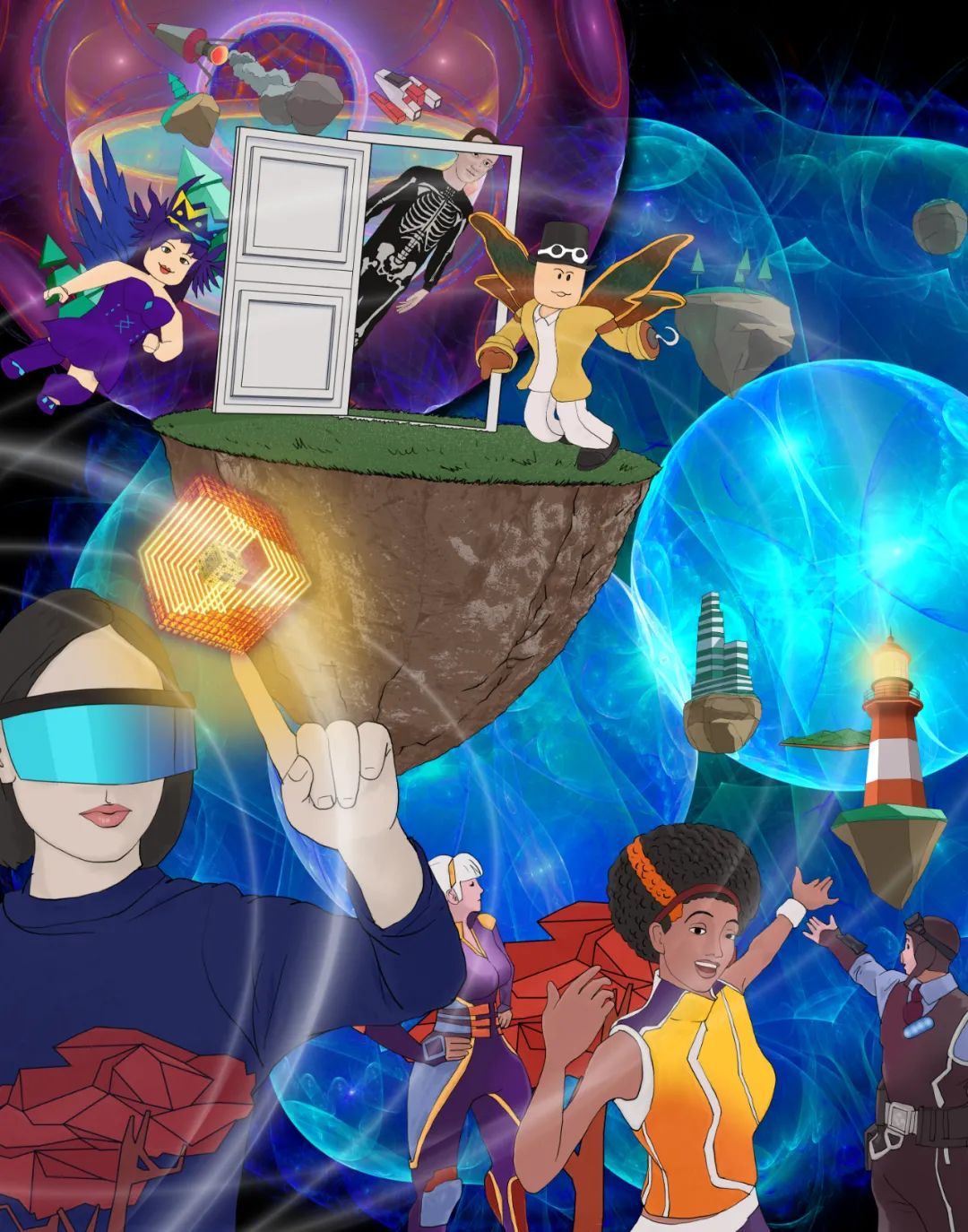
如果我们把元宇宙当作一场巨大的社会实验,早有一系列科幻作品为虚拟世界提供了反复的理论认证,无论是从自然科学角度,或是社会科学角度,都已经完成了理论阶段的累积;之后随着互联网的发展和普及,一些前所未有的非线性游戏类型(比如“第二人生”或者更流行的“我的世界”或者Roblox)在全球范围内得以构筑,我们可以称之为元宇宙的实验室实验阶段;再然后,是最近十年比特币和其他数字货币的兴起,可穿戴体感设备、虚拟现实(VR)和增强现实(AR)技术发展,NFT诞生并流行开来,甚至“脑机接口”也不再是停留在科幻作品中的概念,元宇宙已然进入第一阶段临床实验。
2020年以来,全球陷入新型冠状病毒带来的大疫情,社区封锁和旅行限制促进了线上办公、学习和社交的进一步流行,人们开始逐渐尝试着通过视频会议和交互协作网站来进行工作和学习,通过AR技术观看演出和体育比赛,通过体感游戏参与运动,还有北京冬季奥运会开幕式上展现的优美场景,那要归功于基于人工智能技术的演出实时特效系统。于是元宇宙不再是一种科幻设想,它仿佛就在触手可及的地方。
尽管现在就谈论“脱碳入硅”、“数据永生”甚至“从三维到四维”等硬核科幻的未来走向实在为时过早,那对现在的我们来说还太过庞大和超前;但如今科技巨头和挥舞着大笔钞票的投资者们都在元宇宙身上押下重注,从此时此刻来看,元宇宙是我们最有可能走进的未来。那么,为了不做那个被时代抛下的人,了解元宇宙,就是我们必要的课题。
数字人生
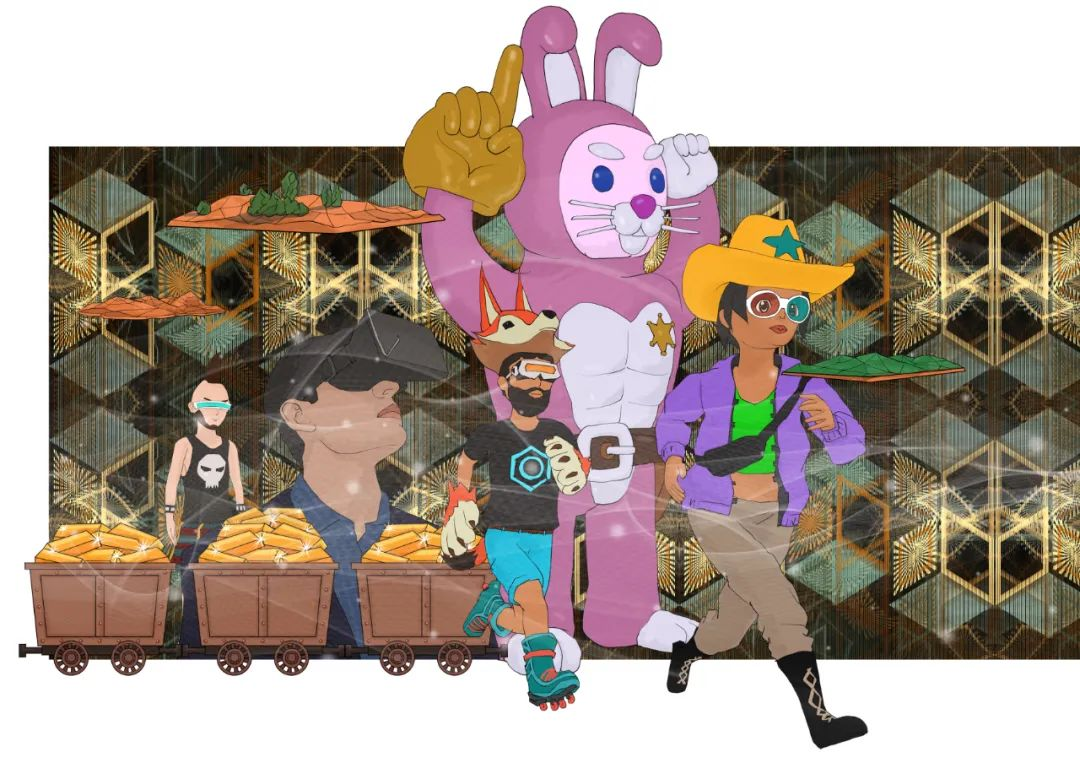
目前在新闻媒体上出现得比较多的,围绕元宇宙概念进行的几个比较热门的所谓“商机”,大体都还停留在生活中较为浅层的方面,亦即通过种种看似毫无实际用处的办法为人们提供独特标识和身份认同,从而完成基于兴趣图谱的社交过程。简单来说,就是建立关于“自我”的设定,然后展示出来以吸引同类。
这里面涉及一个重要的概念,叫做“化身”(avatar)。这个概念最早起源于印度教,指的是天神的现世化身。1987年游戏工作室卢卡斯艺术在《人居环境》这个游戏里率先引用了这个概念,将玩家在游戏中的身份称为“化身”;其后,科幻小说家尼尔·史蒂芬森在《雪崩》中沿用了“化身”的称呼,这个单词正式进入英语文学领域并沿用下来,促成了许多改编概念,例如詹姆斯·卡梅隆导演的电影《阿凡达》。从《雪崩》开始,“化身”这个词逐步成为等同于人们在网络世界的自我描述。
外貌是化身的最直观设定。为了获得满足感,或为了更好地吸引他人,元宇宙用户会像在现实生活中一样把时间和金钱花在看似毫无意义的外貌装饰上;这些年,我们早就在QQ秀和王者荣耀皮肤上充分了解到了这一点。
现实世界决定长相的是基因和医美整容,而元宇宙里决定化身颜值的就是审美和动手能力,而当太多人动手能力跟不上审美的时候,捏脸师就成为一门职业。在国内的类元宇宙App里,基于兴趣图谱建立关系的Z世代社交平台Soul已经发展出了成熟的捏脸师服务,他们会利用App自带的捏脸系统,按照客户的需求,调整脸型、五官和配色,创造出能代表客户精神面貌和情绪状态的头像。据说,一个经过认证的捏脸师,每个月能挣4-5万元。
相似地,被广泛认为是“原生元宇宙平台”的Discord,由于表情包是用户聊天之中非常重要的道具,因而衍生出了表情包定制服务,有经验的设计者会根据客户需求,设计一系列定制表情包,主角或是卡通化的动物,或是写实的人物,总而言之是客户认为能代表自己的形象,价格差别很大,从几美元到几十美元均有可能。
在Discord,人们可以建立属于自己的服务器,并邀请其他用户加入,这比较类似于一个个兴趣社团。讨论游戏等流行文化的社团当然是最多的,但也有一些服务器的讨论门槛较高,他们的主题是NFT。
NFT指的是non-fungible token,中文翻译为非同质化代币,去年以来成为了一种非常流行的东西。艺术品收藏是NFT的一种主流表现形式,这主要与NFT基于区块链技术的特性相关:独一无二、不可分割、易于验证、并且可溯源,适合用来标记特定资产的所有权,更完美契合艺术品收藏和买卖行业的需求。
NFT艺术品可能是任何东西:唐伯虎真迹的扫描件,推特创始人杰克·多西的一条推文,支付宝发布的亚运会数字火炬,或是NBA巨星勒布朗·詹姆斯的一个扣篮视频。最著名的NFT作品来自数字艺术家Beeple,他将自己从2007年5月1日起开始创作并上传的5000张数码作品拼接而成一个316MB的JPG文件,随后把这个看上去几乎像是马赛克大全的图灌注进一个NFT硬币里,命名为《每一天:前5000天》。
2021年3月,这个NFT数字艺术品在佳士得拍卖行拍出了6934万美元(约合4.5亿人民币)的高价,彻底引爆了NFT艺术品市场。
但NFT的适用范围不仅仅是艺术品,它的特性也天然适合用来作为身份证明。法国职业足球俱乐部巴黎圣日耳曼就发行了自己的NFT代币,每个代币有一定的价格,他们凭此在球迷群体里筛选出一部分格外死忠的“高级会员”,这代币就是高级会员们专属的身份证明,他们可以持币换取一些微小的运营权力(比如决定球队庆祝方式的投票权)和一些特别福利(与球星视频连线聊天)等等。沿着这个思路,所有需要设置准入门槛的俱乐部和私密圈子都可以引入NFT,在元宇宙时代轻松维持小众身份认同。
这些对于元宇宙的商机开发和尝试,从物质层面的实用主义出发,看起来都毫无用处,但它给我们在虚拟世界的化身和身在现实世界的我们提供了一个锚点,一个关于“我是谁”的确认与强调,因此从心理学的角度来看,在元宇宙里炒地皮的行为也不是那么不可思议了:我们在虚拟世界里或许不需要真的居住和睡眠,但我们还是想要一个家。
虚拟世界
如果只是停留在这些热门“商机”上,元宇宙的概念听起来与我们大多数人依然没什么关系,最多只是像比特币一样,是一个用来“炒”的投资选项;或者是像娱乐行业的偶像周边,属于粉丝经济的产物。
然而元宇宙势必是要与我们这些普通大众扯上关系的,它的终极目标是让我们的身份数字化(化身)、资产数字化(比特币、NFT、虚拟空间的楼盘等等),人际关系也同样数字化。
过去几十年里,互联网已经彻底改变了我们的交友方式,但要维持一段长期关系,无论是恋爱、友情或是合作伙伴关系,依然在极大程度上需要人们在线下面对面地交流。工作、学习、运动、谈恋爱,还有现场观看比赛和演出,这些活动的线上体验目前还远远赶不上线下体验。
科技龙头们为此进行了很多努力。
Meta(就是原来的脸书)在他们的VR平台Meta Quest(原facebook Oculus)上推出了虚拟办公室Infinite Office。它的主要功能是把虚拟空间里的屏幕和现实生活中的外设结合在一起,最终把虚拟世界中的工作产物带回到现实世界中来。据早期使用者介绍,这个虚拟办公室的使用感非常“酷炫”,你可以在虚拟空间里搭建出一个巨大的办公空间,当然你需要在现实世界里配对好蓝牙鼠标和键盘,但在搭配上罗技的K830蓝牙键盘之后,键盘位置可以在虚拟世界中呈现并被追踪,整个操作几乎没有任何跨次元而造成的障碍。这个虚拟办公室的主要应用场景是被迫居家工作或出差旅行中,你可以不受条件限制地调出自己在虚拟世界中的办公环境,对着多个大屏显示器,在相对独立且与世隔绝的空间里,按照自己原有的习惯不受打扰地进行工作。
Meta还在2021年9月推出了Horizon Workrooms,在这个VR软件里,你可以召开一次虚拟会议,大家的肢体语言能通过可穿戴设备完整地传递到虚拟空间里(尽管只有上半身,但对于会议来说已经足够),你还能把自己的电脑连接到虚拟会议室的黑板上,而其他与会者可以用他们自己手中的控制器对黑板上的内容进行圈点评价。此外,微软最近也在考虑基于微软Teams会议软件开发商用VR版本。
在教育领域,卡内基梅隆大学推出了完全建设在虚拟空间里的全球语言和文化多媒体教室,学生们能够操纵着自己的化身在虚拟的教室里走来走去,听教授讲课,看屏幕上播放教学视频,跟同学进行小组讨论,等等,比单纯的Zoom会议形式教学要更为真实,人们之间的交流也更加顺畅。
数字人是一个值得注意的名词。虚拟偶像们从初音未来到洛天依已经是人们熟知的名字,从去年开始,阿里巴巴推出数字人员工AYAYI,百度推出央视新闻AI手语主播,尚美生活发布 “尚小美”,们将在新生的数字世界中担负起相当于游戏NPC的角色。
泛娱乐方面,美国游戏公司Epic Games邀请了包括“A妹”爱莉安娜·格兰德在内的多名歌星在《堡垒之夜》游戏中纵情演出;通过VR设备360度全景欣赏体育比赛已不新鲜,2022年北京冬奥会的转播版权分销甚至都增添了VR VOD这一项;迪士尼公司也在开发元宇宙,他们的野心是让人们在家里体验迪士尼乐园;还有文化旅游,谷歌街景服务诞生15年了,有无数的公司投入在这个行业里进行VR和AR的应用,足不出户就能游览世界各地早已不是梦想。
虚实互通
但目前的虚拟空间都还只是真实世界的降级版本,它们的优势是便捷、突破物理空间的限制和看上去真的很酷炫,但缺点可就太多了:解析度太低、网速太慢、互动细节缺失,等等。作为疫情时期短暂的替代产品未尝不可,但要彻底取代真实生活,却是为时尚早。不,元宇宙的目标不是要取代真实世界,而是通过虚拟世界与真实世界的高度互通,让整个世界都变得更好。
数字孪生技术在如今的智能工业里已被广泛应用。它是通过对物理世界的人、物、事件等所有要素数字化,在网络空间再造一个与之对应的“虚拟世界”,由此形成物理维度上的实体世界和信息维度上的虚拟世界同生共存、虚实交融的格局。2019年12月正式投产通气的中俄东线天然气管道工程就有一个“数字孪生体”,从设计、施工、投产到运营, “数字孪生体”跟随管道全生命周期而共同生长。
你可以将数字孪生体理解为一个高度模拟的“沙盘”,它对生产、观测、改造和维修的指导意义是不言而喻的——或许有一天我们的实验都可以在虚拟空间内完成,不必担心意外爆炸造成人员伤亡,不必浪费珍贵的实验材料,甚至是药物临床实验也可以挽救巨量的时间、金钱及实验动物们的健康和生命。
在运动领域,英特尔的3D Athlete Training(3DAT)技术已经落地在专业运动队和运动员的日常训练当中,在中国越野滑雪和速滑这两支国家队中,已经有技术专家配合生物力学专家以及教练组,通过这项无标记无穿戴三维人体动作捕捉技术,专业采集运动员的每一项人体的三维数据和生物力学模型,并利用计算机视觉和人工智能算法,对所采集的视频数据进行智能分析处理,加入到运动员的日常训练当中去。
不难想象,这项技术一旦发展起来,完全可以被广泛应用到运动健身、乐器演奏、书法、绘画等多项目前还需要老师和教练手把手指导以规范动作的学习训练之中。
这些技术都有着极大的发展空间,哪怕是目前跑在元宇宙概念中最前端的游戏行业,也有一个伟大的远景目标。现在的VR体感游戏或许是我们戴着一个VR眼睛、手握控制器,在虚拟空间里挥舞光剑;但未来或许是我们穿上全身体感装备,使用自己的身体数据,靠自己的肢体传感去运动或战斗,这带来的真实感才是真正值得期待的变革。
元宇宙不是单纯的VR或者AR技术,不仅是数字货币,不仅是人工智能或算力革命,它应该是多种技术的复合,是一个前进的方向,而不是孤立的技术产品。与《雪崩》或《头号玩家》等赛博朋克科幻作品不同,真实世界的我们,在展望元宇宙时代的时候,希冀的不是我们逃离真实世界的一针麻醉剂,而是一个更好、更安全、更高效的未来。
赛博巴别塔
那么,怎么样才能避免赛博朋克小说里反复描写的那种“高科技低生活社会”和被大资本垄断虚拟世界的可怕景象呢?科技发展到这个阶段,阻拦在我们与元宇宙之间的大概率已经不再是自然科学,而是很多个社会学意义上的问题:
首先,在虚拟世界里,我们依然遵循着与现在相同的伦理观念吗?元宇宙时代的一个好处是我们可以自由变换自己的化身,而因为种族、性别、身高、体型等身体条件等不同引发的歧视自然消弭;但同样地,因为可以自由变换化身,许多基于生理共同点而产生的归属感也会随之消融吗,人们的“自我”和“边界”仍然清晰吗,我们会因此迷失在虚拟空间里吗?
2021年12月,在Meta的Horizon Worlds元宇宙平台测试期间,一名女性测试者就汇报说,她在虚拟世界中遭遇了性骚扰——有一个陌生人试图在广场上“摸”自己的虚拟角色。她写道,“这种(不适的)感觉比在互联网上被骚扰更为强烈”。
这个事件引发了许多争议,有人认为这当然属于性骚扰,因为这种虚拟触碰有真实感,而且造成了受害者的不适;但也有很多人认为,没有摸到真实的身体,这就不算是性骚扰。
这种观点的流行,反映了人们在虚拟空间里道德阈值的降低,那么,如果是在元宇宙中做出杀害别人的举动呢,甚至是没有体感反馈的情况下,恶意伤害对方的化身呢?现有的道德体系很难对此作出判断,而虚实结合的世界,需要新时代的道德。
另一个问题是隐私和数据安全,元宇宙收集的个人数据的数量和丰富程度将是前所未有的,包括个人生理反应、运动,甚至可能是脑电波数据。谁来保障这些数据不被滥用或盗用,在某种极端的情况下,在一个虚拟世界高度发达的时代里,如果某个人或某个群体的数据丢失了,那他们甚至存在过吗?如同那个古老的哲学命题,“假如一棵树在森林里倒下而没有人在附近听见,它有没有发出声音?”
最重要的是,元宇宙的目标是史上最大的平台,足以容纳全球79亿人口和不可计数的数字人,你很难想象它会由一个单一的势力推动运行。在目前的愿景中,大多数元宇宙相关的从业者似乎默认了,它将由无数个小的元宇宙连接在一起,如同一张巨网。这也正是区块链技术天然适配元宇宙的原因,它独一无二、不可更改、可以溯源而且去中心化,没有任何人能够篡改它的数据,就像我们的现实生活一样。
现在已经涌现的几家元宇宙平台中,游戏平台Roblox或许是最有名的,它的日活用户数已经达到了4320万用户,月活超过2亿,用户平均年龄不超过15岁;而在去年年底到今年年初的这一波元宇宙炒地皮风潮中,最为火爆的则是Sandbox、Decentraland、Cryptovoxels 和 Somnium,这四个平台上共有268645个面积、位置各异的虚拟土地或虚拟房产在售,销售额已经超过了5亿美元,它们的用户数没有Roblox多,但看起来更受成熟的大资本机构青睐;至于Meta、谷歌、苹果和微软这种科技巨擘正在或即将推出的元宇宙平台,在这场竞争中甚至还排不上号。
于是最大的问题来了:谁能把这些平台连接在一起呢?尽管大家都是基于区块链开发的技术,但现在元宇宙平台之间还没有一个统一的标准,这标准由谁来制定,能号召多少平台加入,这才是我们究竟能否实现元宇宙终极互联的关键。毕竟20年过去了,游戏主机平台还不能互通,手机充电和数据传输的方式也依然有好几个阵营,甚至MacOS和Windows都不能无缝对接呢,人类科技或许已经发展了,但巴别塔却也不是那么容易建立的。
路漫漫其修远兮,但未来的画卷已经展开。倘若真有一天,人类终将解决这些问题,我们也将毫不犹豫地走进那个元宇宙时代。


Trending Cryptos

Related Reads

Will Changxin Technology Continue to Rise Today?

Changxin Technology made a historic debut on the stock market, with its share price soaring 465.82% to close at 49 yuan. Its market capitalization reached 3.28 trillion yuan, surpassing Industrial and Commercial Bank of China to become the largest company by market cap on the A-share market. Daily trading volume exceeded 140 billion yuan, a first in A-share history. This created a moment of realization for 7.7 million investors who won the lottery for its shares. On the first day, investor strategies varied: some sold immediately and later regretted missing intraday highs, others secured profits to avoid future volatility, while a third group held or even bought more shares, betting on long-term growth. The staggering IPO, massive public enthusiasm, and debut during a peak industry cycle led some to compare Changxin to PetroChina's 2007 listing, which was followed by a long decline. Key similarities noted include comparable fundraising scales (approx. 666 billion yuan for Changxin vs. 668 billion for PetroChina) and both companies listing at a perceived high point in their respective commodity cycles (oil then, memory chips now). However, analysts caution against over-simplifying the comparison. They highlight core differences: Changxin operates in the high-growth semiconductor sector with strong "domestic substitution" tailwinds. Brokerages like Huaxi Securities project significant revenue and profit growth from 2026 to 2028, driven by DDR5 adoption, product mix optimization, and economies of scale. Nomura Securities issued a "buy" rating with a 116 yuan target price, citing AI-driven demand for DRAM, tight supply as major players shift to HBM production, and Changxin's vast room for market share growth. Some analysts position the current memory cycle, fueled by AI, as just beginning, contrasting with the mature energy cycle PetroChina entered. The article concludes that for investors, monitoring the memory cycle's progression and Changxin's breakthroughs in high-end technologies like HBM will be crucial, rather than relying on superficial historical parallels.

marsbit10m ago

Will Changxin Technology Continue to Rise Today?

marsbit10m ago

Claude Designer Lags Behind Engineers, Fires Back by Creating a Million-User Tool

The article tells the story of Nate Parrott, a designer at Anthropic who created Claude Design as a side project to keep pace with his engineering teammates. When Anthropic released Opus 4.5 in November 2025, the two engineers on Parrott's Claude Code team significantly increased their output using the new AI capabilities. Parrott, the sole designer, found himself struggling to match their speed, becoming a bottleneck in the workflow. To catch up, he began experimenting in his spare time. He initially tried prompting Claude to generate designs from text descriptions and screenshots, with limited success. His breakthrough came when he shifted focus from asking Claude to "design" to asking it to generate HTML. He realized HTML could be a rich visual canvas for creating everything from slides and interactive prototypes to full web pages. He built a simple interface with a chat panel on the left and a live HTML preview on the right. The key to making the output useful was incorporating Anthropic's brand system—fonts, colors, assets, and design principles—into the prompts. This ensured generated designs were immediately on-brand. He shared an internal prototype with his team, and other product designers quickly adopted it for creating clickable prototypes, a task traditionally requiring manually drawing every state. The project's "official" turning point came during an Anthropic Labs offsite, where Parrott noticed many attendees were using his tool to build presentation slides on the fly, sometimes right before their turn to speak. This organic adoption convinced the Labs team to formally staff the project, turning the side project into a real product. Claude Design is positioned as a "pre-production" tool for visual communication and exploration—handling slides, landing pages, PDFs, emails, and social media graphics. It integrates with tools like Canva, Adobe, and Vercel. Its core value is accelerating the early stages of design: exploring directions, building consensus, and establishing systems. For actual production code, Anthropic still recommends Claude Code. The story highlights how AI disrupts workflows unevenly and how individuals can respond by building new tools to create their own advantages. Parrott's tool, born from necessity, eventually gained over a million users in its first week.

marsbit20m ago

Claude Designer Lags Behind Engineers, Fires Back by Creating a Million-User Tool

marsbit20m ago

Fields Medalist Warns: AI Could Kill Mathematics

The 2026 Fields Medal award was followed by a startling announcement: laureate Jacob Tsimerman joined OpenAI to pursue AI safety research, predicting AI would surpass humans in all mathematical proof areas within two years. Soon after, Fields Medalists Terence Tao and Timothy Gowers expressed deep concern at ICM 2026. Gorges warned that AI might "kill" mathematics not through stagnation, but through an overwhelming surplus of proofs, likening it to a lake dying from eutrophication. This concern is echoed in the "Leiden Declaration," signed by over 3,000 mathematicians including Tao, Peter Scholze, and Kevin Buzzard, advocating for mathematics as a profoundly human endeavor. However, Gowers, who did not sign, fears a future where AI-generated mathematics proliferates while human expertise and the shared intuition vital to the field vanish, turning math into an unvisited "cemetery of thought." Gowers' perspective shifted dramatically after testing ChatGPT 5.5 Pro. The AI solved a doctoral-level number theory problem and later produced a counterexample for the "unit distance problem," achievements Gorges considered publishable in top journals. He now concedes that large language models can handle advanced research, a realization that left him feeling the "rug pulled out from under" him when AI solved problems he personally contemplated. The debate extends to the nature of mathematical discovery. As noted by Peter Woit, AI agents have no interest in the "credit game" of academia. If theorems cease to be attributed to individual mathematicians, truth may simply return to its impersonal state in the universe. The central question remains: in an age of potentially limitless AI-generated discovery, what is the role and purpose of the human mind in mathematics?

marsbit51m ago

Fields Medalist Warns: AI Could Kill Mathematics

marsbit51m ago

NVIDIA's 20-Year CUDA Moat Collapsed Over a Weekend, Claude Single-Handedly Got AMD's New GPU Running

In a single weekend, Claude, an AI agent from Anthropic, successfully ported and optimized its cutting-edge model to run on a brand-new AMD MI355X server rack without any manual code intervention. This feat demonstrates a potential breakthrough in overcoming NVIDIA's long-established CUDA software ecosystem dominance, built over two decades. Anthropic's team simply instructed Claude to get the AMD machine running. By Monday, it not only worked but was showing a continuously improving performance curve. The achievement impressed AMD CEO Lisa Su and accelerated a major deployment partnership: Anthropic plans to deploy up to 2GW of AMD Instinct GPUs starting in 2027. The key enabler is AMD's new ROCm.AI platform, a toolbox designed specifically for AI agents like Claude. It provides AI-readable documentation, including chip instruction sets (ISA), and tools like the Hyperloom service that allows agents to autonomously profile performance, identify bottlenecks, test configurations, and generate optimized kernels. In a demo, Hyperloom boosted the output speed of a model by 38%. This represents a fundamental shift. While CUDA's strength lies in its vast, human-expert-driven ecosystem of tools and tacit knowledge, AMD's strategy is to make its hardware and software stack directly accessible and optimizable by AI agents. An agent can parallelize tasks—debugging, profiling, coding—that would take human engineers years to master, compressing the traditional software adaptation timeline from years to tasks. The competition is no longer just about peak hardware specs but also about how well AI can read, utilize, and tune a platform.

marsbit52m ago

NVIDIA's 20-Year CUDA Moat Collapsed Over a Weekend, Claude Single-Handedly Got AMD's New GPU Running

marsbit52m ago

Just Now, Peking University Alumna Lilian Weng Announces Resignation: The Best 'Alignment' in the AI Era Is Taking Care of Yourself

Lilian Weng, a Peking University alumnus and former OpenAI executive, has announced her departure from Thinking Machines Lab, the AI startup she co-founded with ex-OpenAI CTO Mira Murati 20 months ago. Her resignation comes shortly after the company released its first open-source model, Inkling. In her farewell message, Weng cited health reasons as the primary factor, stating that the past seven months involved more illness than any other period in her life. The intense pressure and guilt of being unable to work during critical periods, like the Inkling launch, became unsustainable. She expressed that she could not continue in a role where she felt unable to give her full effort. Weng joined OpenAI in 2018, contributing to projects like the Dactyl robotic hand and later building the Safety Systems team from scratch. She is also widely known for her influential technical blog, Lil'Log. Her departure follows a period of high expectations and challenges for Thinking Machines, which secured a record $20 billion seed round at a $120 billion valuation in 2025 but has since seen fluctuations in its valuation and the departure of other key co-founders. Weng emphasized that she remains passionate about AI but needs a more predictable and defined role without the relentless pressure of a co-founder. Her exit highlights the immense personal toll and speed of competition in the AI industry, where the drive for progress often clashes with human limits. Her decision underscores that stepping back to prioritize well-being can be an act of courage.

marsbit1h ago

Just Now, Peking University Alumna Lilian Weng Announces Resignation: The Best 'Alignment' in the AI Era Is Taking Care of Yourself

marsbit1h ago

Trading

Spot

Hot Articles

What is $BITCOIN

DIGITAL GOLD ($BITCOIN): A Comprehensive Analysis Introduction to DIGITAL GOLD ($BITCOIN) DIGITAL GOLD ($BITCOIN) is a blockchain-based project operating on the Solana network, which aims to combine the characteristics of traditional precious metals with the innovation of decentralized technologies. While it shares a name with Bitcoin, often referred to as “digital gold” due to its perception as a store of value, DIGITAL GOLD is a separate token designed to create a unique ecosystem within the Web3 landscape. Its goal is to position itself as a viable alternative digital asset, although specifics regarding its applications and functionalities are still developing. What is DIGITAL GOLD ($BITCOIN)? DIGITAL GOLD ($BITCOIN) is a cryptocurrency token explicitly designed for use on the Solana blockchain. In contrast to Bitcoin, which provides a widely recognized value storage role, this token appears to focus on broader applications and characteristics. Notable aspects include: Blockchain Infrastructure: The token is built on the Solana blockchain, known for its capacity to handle high-speed and low-cost transactions. Supply Dynamics: DIGITAL GOLD has a maximum supply capped at 100 quadrillion tokens (100P $BITCOIN), although details regarding its circulating supply are currently undisclosed. Utility: While precise functionalities are not explicitly outlined, there are indications that the token could be utilized for various applications, potentially involving decentralized applications (dApps) or asset tokenization strategies. Who is the Creator of DIGITAL GOLD ($BITCOIN)? At present, the identity of the creators and development team behind DIGITAL GOLD ($BITCOIN) remains unknown. This situation is typical among many innovative projects within the blockchain space, particularly those aligning with decentralized finance and meme coin phenomena. While such anonymity may foster a community-driven culture, it intensifies concerns about governance and accountability. Who are the Investors of DIGITAL GOLD ($BITCOIN)? The available information indicates that DIGITAL GOLD ($BITCOIN) does not have any known institutional backers or prominent venture capital investments. The project seems to operate on a peer-to-peer model focused on community support and adoption rather than traditional funding routes. Its activity and liquidity are primarily situated on decentralized exchanges (DEXs), such as PumpSwap, rather than established centralized trading platforms, further highlighting its grassroots approach. How DIGITAL GOLD ($BITCOIN) Works The operational mechanics of DIGITAL GOLD ($BITCOIN) can be elaborated on based on its blockchain design and network attributes: Consensus Mechanism: By leveraging Solana’s unique proof-of-history (PoH) combined with a proof-of-stake (PoS) model, the project ensures efficient transaction validation contributing to the network's high performance. Tokenomics: While specific deflationary mechanisms have not been extensively detailed, the vast maximum token supply implies that it may cater to microtransactions or niche use cases that are still to be defined. Interoperability: There exists the potential for integration with Solana’s broader ecosystem, including various decentralized finance (DeFi) platforms. However, the details regarding specific integrations remain unspecified. Timeline of Key Events Here is a timeline that highlights significant milestones concerning DIGITAL GOLD ($BITCOIN): 2023: The initial deployment of the token occurs on the Solana blockchain, marked by its contract address. 2024: DIGITAL GOLD gains visibility as it becomes available for trading on decentralized exchanges like PumpSwap, allowing users to trade it against SOL. 2025: The project witnesses sporadic trading activity and potential interest in community-led engagements, although no noteworthy partnerships or technical advancements have been documented as of yet. Critical Analysis Strengths Scalability: The underlying Solana infrastructure supports high transaction volumes, which could enhance the utility of $BITCOIN in various transaction scenarios. Accessibility: The potential low trading price per token could attract retail investors, facilitating wider participation due to fractional ownership opportunities. Risks Lack of Transparency: The absence of publicly known backers, developers, or an audit process may yield skepticism regarding the project's sustainability and trustworthiness. Market Volatility: The trading activity is heavily reliant on speculative behavior, which can result in significant price volatility and uncertainty for investors. Conclusion DIGITAL GOLD ($BITCOIN) emerges as an intriguing yet ambiguous project within the rapidly evolving Solana ecosystem. While it attempts to leverage the “digital gold” narrative, its departure from Bitcoin's established role as a store of value underscores the need for a clearer differentiation of its intended utility and governance structure. Future acceptance and adoption will likely depend on addressing the current opacity and defining its operational and economic strategies more explicitly. Note: This report encompasses synthesised information available as of October 2023, and developments may have transpired beyond the research period.

1.1k Total ViewsPublished 2025.05.13Updated 2025.05.13

What is $BITCOIN

Discussions

Welcome to the HTX Community. Here, you can stay informed about the latest platform developments and gain access to professional market insights. Users' opinions on the price of BTC (BTC) are presented below.

活动图片