Une licorne de dix milliards de yuans de Shanghai est sur le point d'entrer en bourse

marsbitPublished on 2026-08-22Last updated on 2026-08-22

Abstract

La licorne chinoise Calterah (加特兰微电子), spécialisée dans les puces radar millimétriques pour l'automobile, a déposé un dossier pour une introduction en Bourse sur le marché Star de Shanghai, visant à lever 34,89 milliards de yuans. Fondée en 2014 par Chen Jiashu, un docteur de Berkeley, et son professeur Ali Niknejad, l'entreprise a parié sur la technologie CMOS pour ses puces, une approche différente de la voie traditionnelle au germanium-silicium. Ce choix s'est avéré payant, permettant de réduire significativement les coûts et de démocratiser les radars dans les véhicules grand public. Calterah a réalisé plusieurs premières mondiales, comme la première puce entièrement intégrée 77GHz en 2015. En 2025, elle détenait 31,1% de part de marché en Chine et se classait quatrième mondiale, avec plus de 30 millions de puces expédiées. Ses clients incluent BYD, Geely, Nio et Volvo. La société a réalisé onze tours de table, attirant des investisseurs prestigieux comme le fonds public "Big Fund II", Huadeng International et GAC Capital. Son估值 (valorisation) dépasse désormais les 10 milliards de yuans. Malgré une croissance rapide des revenus (6,32 milliards de yuans en 2025), Calterah reste non rentable, accumulant des pertes nettes de plus de 9 milliards de yuans sur les trois dernières années, principalement en raison d'investissements R&D massifs (plus de 10,39 milliards de yuans cumulés). L'entreprise fait face à des défis, notamment une forte dépendance à son premier client, BY...

Une autre licorne de puces automobile s'apprête à frapper à la porte du marché boursier A.

Récemment, Calterah Microelectronics (Shanghai) Co., Ltd. (ci-après « Calterah ») a officiellement déposé son prospectus auprès de la Bourse de Shanghai, secteur STAR. Cette entreprise de puces radar à ondes millimétriques pour l'automobile, issue des laboratoires de Berkeley, est sur le point d'entrer sur le marché des capitaux, cherchant à lever 3,489 milliards de yuans.

En tant qu'entreprise modèle de substitution aux importations, Calterah a brisé le monopole de plusieurs décennies des géants internationaux grâce à la technologie CMOS, atteignant une part de marché de 31,1 % sur le marché chinois des puces radar à ondes millimétriques automobiles en 2025, se classant deuxième en Chine et quatrième au niveau mondial ; ses expéditions cumulées dépassent les 30 millions d'unités, avec des clients tels que BYD, Geely, NIO et Volvo.

Douze ans après sa création, la société a également réalisé 11 tours de financement successifs, avec la participation de Big Fund II, Walden International, Gopher Asset, GAC Capital, Pudong Venture Capital, Silergy, Zhangjiang Hi-Tech, Greater Bay Area Science and Technology Innovation Fund, etc., atteignant une valorisation de plus de dix milliards de yuans.

L'« audace » du mentor et de l'élève de Berkeley a payé

L'histoire de Calterah commence en 2014.

À 30 ans, Jiashu Chen, après avoir obtenu son doctorat en génie électrique de l'Université de Californie à Berkeley, est rentré en Chine, déterminé à créer son entreprise à Shanghai, se concentrant sur les radars à ondes millimétriques. Aux États-Unis, Chen avait déjà dirigé une équipe pour développer la première puce SoC CMOS WiGig 60 GHz au monde, remportant le prix Fulbright en sciences et technologies décerné par le département d'État américain, étant le seul étudiant de nationalité chinoise parmi les 27 lauréats cette année-là.

À l'époque, l'industrie automobile chinoise était à la veille de l'explosion de l'intelligence, mais les puces de radar à ondes millimétriques, ce composant clé, étaient entièrement contrôlées par des géants internationaux comme Texas Instruments, NXP et Infineon, avec un taux de localisation proche de zéro.

Il a également convaincu son mentor, le professeur Ali Niknejad, directeur du Berkeley Wireless Research Center (BWRC), de se lancer dans l'aventure avec lui. L'entreprise a été nommée « Calterah », « CAL » en hommage à Berkeley, et « TERAH » tiré de térahertz.

Ce duo mentor-élève a choisi une voie différente de la pratique courante. L'approche habituelle du secteur utilisait des technologies à l'arséniure de gallium ou au silicium-germanium avec des assemblages multi-puces, stables mais coûteux et peu intégrés. Calterah a parié dès le début sur le procédé CMOS, moins cher et plus intégré, mais dont les performances en haute fréquence étaient remises en question pour les applications automobiles.

Beaucoup pensaient que les docteurs de Berkeley étaient peut-être trop idéalistes. Mais les faits ont prouvé que son pari était gagnant.

En 2015, seulement un an après sa création, Calterah a produit le premier prototype mondial de puce émetteur-récepteur radar 77 GHz entièrement intégrée. En 2017, la première puce frontale radiofréquence 77 GHz pour radar à ondes millimétriques automobile en technologie CMOS, Yosemite, est entrée en production de masse, marquant la première brèche pour les puces radar à ondes millimétriques locales. En 2019, ils ont intégré l'antenne dans le boîtier, lançant la puce SoC AiP radar à ondes millimétriques 77/60 GHz, abaissant encore le seuil de conception des modules radar. En 2024, ils ont lancé la plateforme Kunlun, principalement basée sur la chaîne d'approvisionnement locale.

Le véritable atout de l'approche CMOS réside dans les coûts. Les modules radar traditionnels à l'arséniure de gallium coûtaient facilement des centaines de dollars, réservés aux voitures de luxe haut de gamme. La solution monolithique CMOS a réduit le coût à une fraction, faisant passer le radar à ondes millimétriques d'un équipement exclusif aux voitures de luxe à un équipement standard pour les voitures familiales à 100 000 yuans. En d'autres termes, Calterah n'a pas seulement réalisé une substitution aux importations, elle a également élargi le marché.

En 2025, la part de marché de Calterah en Chine atteint 31,1 %, quatrième au niveau mondial, avec plus de 30 millions d'unités cumulées expédiées, plus de 30 constructeurs automobiles partenaires, couvrant plus de 300 modèles. La liste des clients chinois est longue : BYD, Geely, Changan, Chery, NIO, Leapmotor. Fait intéressant, elle a également percé en Europe, devenant le premier fournisseur chinois de puces radar à ondes millimétriques pour deux grands équipementiers mondiaux de rang 1, avec des produits intégrés dans les modèles de Volvo et Rivian. Il était auparavant presque inimaginable qu'une puce automobile chinoise intègre la chaîne d'approvisionnement avant-projet de constructeurs étrangers.

Valorisation à 10 milliards de yuans après 11 tours de financement

Depuis sa création, Calterah a levé un total de 11 tours de financement, avec une liste d'investisseurs prestigieuse, regroupant pratiquement toutes les grandes institutions du secteur des semi-conducteurs : Big Fund II, CICC Capital, Walden International, Gopher Asset, GAC Capital, Pudong Venture Capital, Silergy, Zhangjiang Hi-Tech, Greater Bay Area Science and Technology Innovation Fund.

Le premier à entrer au capital fut Silergy, investissant dès le tour d'amorçage en novembre 2015. À l'époque, Calterah venait de finaliser le prototype de sa première puce 77 GHz, et le capital social de l'entreprise n'était que de 50 000 yuans. À la date de signature du prospectus, Silergy reste un actionnaire important. De 50 000 yuans de capital à une valorisation de dix milliards, douze ans ont marqué un long parcours capitalistique.

Par la suite, le rythme des financements s'est accéléré d'année en année :

En 2017, tour de série A, avec l'entrée de FreeS Fund et Zhongguancun Xingye Investment ;

En 2019, réalisation du tour de série B, suivi par CICC Capital, Shaanxi Hongchuang, China Renaissance, China Mobile Innovation Industry Fund, Gaolishengzhu, etc. ;

En juillet 2020, tour stratégique, avec l'entrée de Shangqi Capital, GAC Capital, Nest.Bio Ventures ;

En septembre 2021, tour de série C, mené par SDIC Unity, avec la participation de Langmafeng Venture Capital, BOCOM International, China Renaissance New Economy Fund, pour un montant de plusieurs centaines de millions de yuans ;

En janvier 2022, tour C+, avec de nouveaux investissements de Fosun Capital, China Merchants Capital, Gopher Asset, Yinggang Capital, Juntong Capital.

En juillet 2024, tour de série D, mené par la National Integrated Circuit Industry Investment Fund Phase II, avec la participation de Guoxin Chuangtou, Fujian Venture Capital, SDIC Unity, Walden International, etc., pour un montant de plusieurs centaines de millions de yuans.

Le rythme des financements au cours de la période de référence a été particulièrement intense.

Lors de l'augmentation de capital en janvier 2025, Big Fund II a investi 50 millions de yuans, Shanghai Guoxin 49 millions de yuans, Advanced Manufacturing Fund II 30 millions de yuans, Innovation Chuangke 20 millions de yuans, Hong Kong Ziteng 1 million de dollars US, injectant au total environ 179 millions de yuans. En septembre 2025, tour E1, avec le Leading Area Fund, Zhangke Yaokun, Ruishi IX, Greater Bay Area Fund, etc., investissant ensemble 208 millions de yuans. En 2026, tour E2, Huaxin Dingxin a investi seul 300 millions de yuans, CCTV Media Convergence, Ruishi VII, Guofengtou Xinzhi ont chacun investi 100 millions de yuans, pour un montant total levé d'environ 955 millions de yuans en un seul tour. Ces trois tours totalisent environ 1,34 milliard de yuans.

Parmi ceux-ci, lors du tour E2, Huaxin Dingxin a obtenu 3,63 % des actions pour 300 millions de yuans, ce qui suggère une valorisation d'environ 8,26 milliards de yuans. Cette introduction en bourse vise à lever 3,489 milliards de yuans en émettant au moins 25 % du capital, ce qui impliquerait une valorisation à l'émission d'environ 14 milliards de yuans. Autrement dit, les institutions entrées au tour E2 il y a moins d'un an verraient déjà une plus-value latente d'environ 70 %.

Parallèlement à ces levées de fonds intensives, de nombreux transferts d'actions existantes ont également eu lieu.

Entre septembre 2025 et mars 2026, 23 nouveaux actionnaires, dont le Leading Area Fund, Huaxin Dingxin, CCTV Media Convergence, etc., sont entrés au capital par augmentation ou ont acquis des actions existantes. Le prix d'entrée par augmentation était uniformément de 292,25 yuans par action, tandis que le prix de transfert des actions existantes variait entre 176,99 yuans et 287,93 yuans par action.

Jiashu Chen détient directement 12,1376 % des actions et contrôle indirectement 20,8730 % via Nanchang Xichuang, contrôlant ainsi au total 33,0106 % des droits de vote, ce qui en fait le contrôleur effectif. La société n'a pas d'actionnaire unique détenant plus de 30 % des actions. Une répartition très dispersée du capital n'est pas rare parmi les sociétés de semi-conducteurs du STAR Market. Par ailleurs, Big Fund II détient 0,6266 %, une proportion faible. Mais le soutien de fonds nationaux a une portée symbolique bien plus grande que financière.

Pas encore rentable, tout est brûlé en R&D

En termes de chiffres, la croissance de Calterah est en effet rapide.

De 2023 à 2025, le chiffre d'affaires est passé de 206 millions de yuans à 303 millions de yuans, puis à 632 millions de yuans, avec un taux de croissance annuel composé de 75,28 % sur trois ans. En 2025, il a plus que doublé en un an, avec une augmentation annuelle de 108,44 %. Au premier trimestre 2026, le chiffre d'affaires trimestriel était de 154 millions de yuans, les puces radar à ondes millimétriques automobiles contribuant à plus de 99 % des revenus.

Mais l'envers de cette forte croissance, c'est des pertes continues.

De 2023 à 2025, le résultat net attribuable aux actionnaires de la société mère a affiché des pertes respectives de 323 millions de yuans, 334 millions de yuans et 193 millions de yuans ; au premier trimestre 2026, une nouvelle perte de 60,28 millions de yuans. En trois ans et demi, les pertes cumulées dépassent 900 millions de yuans. Fin mars 2026, les pertes cumulées non comblées s'élevaient à 172 millions de yuans.

Tout cet argent a été dépensé en recherche et développement.

Dans ce secteur des puces automobiles, les cycles de R&D sont longs, les normes de qualification strictes, l'introduction dans la chaîne d'approvisionnement des constructeurs prend souvent trois à quatre ans, et brûler des liquidités est la norme. Au cours de la période de référence, les investissements cumulés en R&D de Calterah ont dépassé 1,039 milliard de yuans. En 2023, les dépenses de R&D étaient de 304 millions de yuans, soit 1,5 fois le chiffre d'affaires de l'année. En 2025, cette proportion est tombée à 58,55 %, mais reste élevée. Fin mars 2026, l'entreprise comptait 275 employés en R&D, soit 65,63 % du personnel total, ce qui signifie que les deux tiers des effectifs sont consacrés à la R&D. Des investissements en R&D durablement supérieurs au chiffre d'affaires rendent les pertes temporaires presque inévitables.

Mais la marge brute n'est pas faible. Sur la période de référence, les marges brutes par activité principale étaient respectivement de 47,80 %, 43,81 %, 47,25 % et 48,97 %, restant constamment supérieures à la moyenne du secteur en Chine. Autrement dit, le produit lui-même est rentable, mais l'argent gagné est entièrement absorbé par les dépenses de R&D.

Objectivement, les pertes actuelles de l'entreprise se réduisent. En 2025, la perte était de 193 millions de yuans, soit une réduction de 42 % par rapport aux 334 millions de yuans de 2024. Le flux de trésorerie d'exploitation est également passé de -249 millions de yuans en 2024 à -18 millions de yuans en 2025, se rapprochant de l'équilibre. Le point d'inflexion vers la rentabilité semble se rapprocher.

Mais que ce point d'inflexion se réalise vraiment dépend de deux variables.

La première variable est la clientèle. Sur la période de référence, la part des revenus des cinq plus gros clients atteignait respectivement 99,77 %, 99,07 %, 99,90 % et 99,97 %. En 2025, les ventes au premier client final, BYD, représentaient plus de 50 % des revenus. Le prospectus reconnaît qu'à partir de 2026, sous l'effet des stratégies de diversification de la chaîne d'approvisionnement des constructeurs, notamment l'introduction de seconds fournisseurs, les revenus provenant de ce client montrent des signes de pression continue. Cela pourrait signifier que BYD commence à comparer les offres. Le cycle d'introduction d'un nouveau client pour des puces automobiles pouvant durer trois à quatre ans, si un client clé réduit ses achats, le chiffre d'affaires pourrait chuter considérablement.

La seconde variable est la chaîne d'approvisionnement. La part des achats auprès des cinq premiers fournisseurs est passée de 54,50 % en 2023 à 80,16 % au premier trimestre 2026, la part d'un grand fournisseur passant de 37,20 % à 58,68 %. La proportion des achats à l'étranger a été supérieure à 50 % à chaque période, et les outils EDA ainsi que certaines IP d'interface dépendent également de fournisseurs étrangers.

Concentration des clients, concentration de la chaîne d'approvisionnement, des risques existent aux deux extrémités. C'est aussi la raison pour laquelle Calterah doit entrer en bourse : elle a besoin de capitaux suffisants pour étendre sa production, élargir sa clientèle et réduire sa dépendance.

Cet article provient du compte WeChat « Dongsishitiao Capital » (ID : DsstCapital), auteur : Li Man


Trending Cryptos

Related Questions

QQu'est-ce que Calterah (加特兰微电子科技) et quel est son principal domaine d'activité ?

ACalterah (加特兰微电子科技) est une licorne spécialisée dans les puces de radar millimétrique pour l'automobile, fondée à Shanghai en 2014. Elle est en passe d'être cotée au STAR Market de la Bourse de Shanghai.

QQuelle a été la décision technologique clé de Calterah qui a contribué à son succès ?

ACalterah a choisi la voie CMOS plutôt que l'arséniure de gallium ou le silicium-germanium pour ses puces radar millimétrique. Ce choix a permis de réduire considérablement les coûts et d'augmenter l'intégration, démocratisant ainsi cette technologie dans les véhicules grand public.

QPourquoi Calterah n'est-elle pas rentable malgré une croissance rapide de ses revenus ?

ACalterah n'est pas rentable parce que ses investissements en recherche et développement sont très élevés, dépassant souvent ses revenus. De 2023 à 2025, ses dépenses de R&D ont atteint plus de 10,39 milliards de yuans, ce qui explique les pertes nettes.

QQuel est un des principaux risques pour Calterah identifié dans l'article ?

AUn des principaux risques est la forte dépendance à un seul client majeur. En 2025, plus de 50% de ses revenus provenaient de BYD. Une réduction des commandes de ce client pourrait donc impacter gravement sa performance financière.

QQui est le fondateur et PDG de Calterah et quel est son parcours ?

ALe fondateur et PDG de Calterah est Chen Jiashu (陈嘉澍). Il est titulaire d'un doctorat en génie électrique de l'Université de Californie à Berkeley, où il a déjà dirigé le développement de la première puce WiGig CMOS SoC 60 GHz. Il a cofondé l'entreprise avec son ancien professeur, Ali Niknejad.

Related Reads

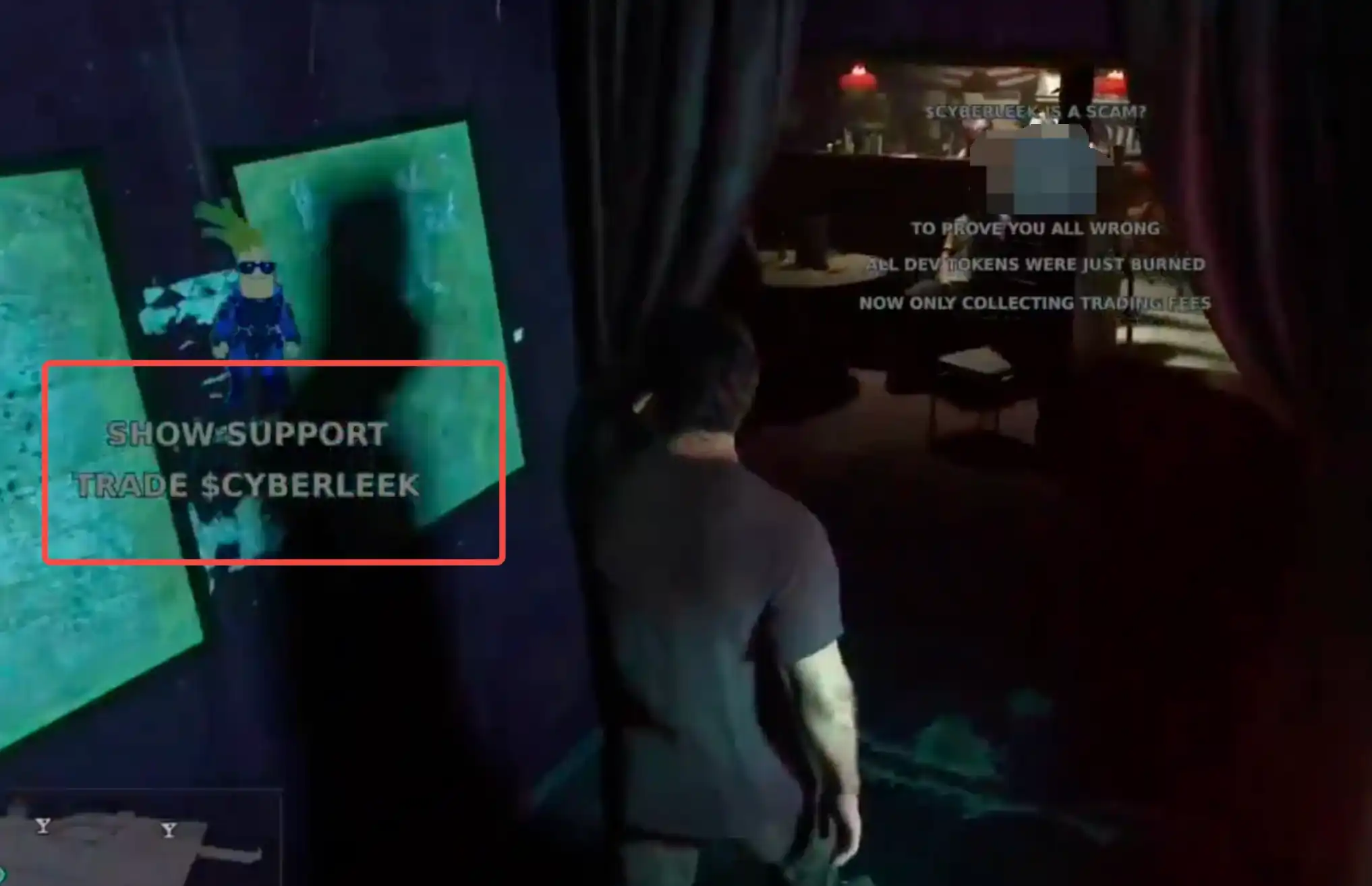
Hacker Leaks GTA6 and Launches a Token: Leaked Videos Become Ad Space for $CYBERLEEK, Must Buy Tokens to Vote for Next Clip

A hacker group called "CyberLeek" has leaked gameplay footage of the highly anticipated video game *GTA 6*, which is slated for release in 2026. Simultaneously, the group launched a meme token, $CYBERLEEK, on Solana. The leaks, which include maps and gameplay clips, are heavily watermarked with advertisements urging viewers to buy the token. Investigations of blockchain data reveal that the token was created and funded from a single wallet approximately eight hours before the first leak was released, suggesting a coordinated plan. The group has implemented a voting system where token holders can "vote" for the next type of content to be leaked by sending $CYBERLEEK tokens to a designated wallet—a process that permanently transfers the tokens to the hackers. This creates a self-sustaining cycle where interest in the leaks drives token purchases. Financially, the operation involved minimal upfront costs (less than $3,500 in out-of-pocket expenses) but generated significant revenue. On its first day, the token saw $15 million in trading volume, netting the creators an estimated $30,000 from transaction fees alone. While the group later burned a large portion of its developer-held tokens (worth over $1 million) to build trust, the fee-generating mechanism remains intact. The game's publisher, Take-Two Interactive, has initiated legal proceedings to identify the hackers. Despite this, the case demonstrates a new model where leaked intellectual property is used as leverage to promote and profit from a cryptocurrency, with meme token markets serving as an additional revenue stream.

marsbit57m ago

Hacker Leaks GTA6 and Launches a Token: Leaked Videos Become Ad Space for $CYBERLEEK, Must Buy Tokens to Vote for Next Clip

marsbit57m ago

Jensen Huang's Daughter: From Chef to an $8 Million Annual Salary

Madison Huang, daughter of NVIDIA founder Jensen Huang, recently made a rare public appearance in Beijing during the 2026 World Robot Conference. As the Senior Director of Product and Technology Marketing for NVIDIA's Physical AI Platform, with an annual salary of approximately $1.2 million, her visit focused on evaluating leading Chinese robotics companies like UBTech, Unitree, and others. This highlights NVIDIA's strategic interest in the burgeoning Chinese robotics ecosystem, a key battleground for the development of Physical AI—technology that enables machines to understand and interact with the physical world. Huang's career path is unconventional. Initially pursuing her passion, she studied culinary arts, worked as a chef, and later held a marketing role at LVMH. She joined NVIDIA as an intern in 2020 after completing an MBA, quickly rising through the ranks. Her brother, Spencer Huang, followed a similar path, closing a cocktail bar he co-founded to also join NVIDIA, where he now works on robotics software. Jensen Huang has publicly addressed nepotism concerns, humorously noting that some "second-generation" employees outperform their parents. The conference itself underscored China's vibrant robotics sector, marked by Unitree's recent blockbuster IPO and a pipeline of companies preparing to go public. While hardware development and manufacturing are advancing rapidly, industry leaders like Wang Xingxing of Unitree point to the next critical challenge: developing the "brain" or AI that allows robots to perform diverse, unseen tasks based on simple instructions. With massive manufacturing scale and diverse real-world testing scenarios, China is positioned as a central player in the global race to define the future of robotics.

marsbit3h ago

Jensen Huang's Daughter: From Chef to an $8 Million Annual Salary

marsbit3h ago

He Gave Wang Xingxing the First 2 Million, Now Serves as Chairman for the Next 'Unitree'

On August 19, 2024, Unitree Robotics, China's "first humanoid robotics stock," went public. Its founder, Wang Xingxing, started a decade ago with his self-developed XDog. In 2016, at a critical funding juncture, he received his first angel investment of 2 million RMB from Yin Fangming. This bet has since yielded a return of over 140 times. Yin Fangming is more than just a key investor. He was a co-founder of the AI robotics company ROOBO, whose own venture ultimately struggled. This firsthand experience with the hardware challenges in robotics gave him unique insight when backing Unitree, a company renowned for its hardware R&D and cost control. While his own company faltered, Yin continued investing shrewdly. He partially cashed out some Unitree shares early, reinvesting the proceeds into sectors like energy (e.g., solid-state battery firm TaiLan) and commercial aerospace (e.g., small launch vehicle developer XianDeng Aerospace). However, his most significant move after Unitree is his deep involvement with Galaxy General, a leading embodied AI unicorn. In July 2024, Yin stepped from behind the scenes to officially become its Chairman, indicating a role far beyond a typical investor. This comes as Galaxy General is viewed as preparing for future capital moves. Yin's career has consistently been ahead of the curve—from mobile internet to AI and robotics. Known for his foresight and low profile, he declined an interview for this story, offering only a statement encouraging support for visionary entrepreneurs like Wang Xingxing.

marsbit3h ago

He Gave Wang Xingxing the First 2 Million, Now Serves as Chairman for the Next 'Unitree'

marsbit3h ago

Trading

Spot

Hot Articles

What is LINON

Linde plc Tokenized Stock (Ondo): Revolutionizing Traditional Equity Access Through Blockchain Innovation The emergence of Linde plc Tokenized Stock (Ondo), represented by the ticker $LINON, signifies a monumental shift in the fusion of traditional financial structures and decentralized finance (DeFi). This innovative financial instrument showcases the tremendous potential of blockchain technology to democratize access to traditional equity markets while ensuring the security and regulatory compliance necessary for institutional-grade financial products. Through Ondo Finance's pioneering tokenization platform, $LINON provides a seamless pathway for global investors to engage with one of the world's leading industrial gas companies, Linde plc, creating a blockchain-native representation of the underlying equity. Introduction to Linde plc Tokenized Stock The landscape of financial markets is witnessing a groundbreaking transformation through the tokenization of real-world assets. Linde plc Tokenized Stock (Ondo) epitomizes this revolutionary approach by bridging the gap between conventional stock ownership and blockchain-enabled financial infrastructure. The $LINON token allows investors to gain exposure to one of the prominent industrial companies worldwide through decentralized technology. Operating within Ondo Finance's comprehensive ecosystem, $LINON symbolizes a practical application of tokenization technology that enhances accessibility, efficiency, and global connectivity in traditional financial markets. By leveraging blockchain infrastructure, this tokenized stock enables international investors to participate in U.S. equity markets, overcoming traditional barriers associated with cross-border investing. The significance of $LINON goes beyond technological innovation; it represents a fundamental shift in asset structuring, distribution, and trading in the digital age. This tokenized stock maintains all the economic benefits associated with traditional Linde plc shares while offering improved liquidity, programmable compliance features, and seamless integration with decentralized finance protocols. The development of $LINON indicates a growing acceptance of blockchain technology as a viable means for traditional finance, exemplifying how even well-established assets like Linde plc can integrate into blockchain systems. This approach preserves the core attributes that appeal to investors while introducing advanced capabilities that enhance the overall investment proposition. Project Overview and Objectives Linde plc Tokenized Stock (Ondo) encapsulates a strategic effort to democratize access to traditional equity markets through advanced blockchain technologies. The primary objective of $LINON is to provide approved global investors seamless access to the economic exposure associated with Linde plc shares, furthering an effort to create a more inclusive financial ecosystem. Beyond the digital representation of traditional assets, $LINON endeavors to eliminate barriers of geography and time zones that limit investor participation. Its design ensures that blockchain technology can elevate traditional investment vehicles without undermining the security or compliance requirements expected by investors. Key goals of the project include enhanced liquidity provision, programmable compliance mechanisms, and interoperability with other blockchain networks. Each $LINON token is fortified by actual Linde plc securities housed at U.S.-registered broker-dealers, allowing holders to reap economic advantages akin to traditional stockholders, such as dividend reinvestment. Furthermore, $LINON aims to establish new industry standards for institutional-grade tokenized securities, paving the way for traditional assets to embrace blockchain technology while remaining compliant with regulatory frameworks. By associating itself with a company as reputable as Linde plc, the project opens avenues for exploring tokenized equities catering to both conservative institutional players and daring retail investors. Project Creator and Development Team The vision for Linde plc Tokenized Stock (Ondo) comes from Nathan Allman, founder and CEO of Ondo Finance. His background in traditional finance coupled with expertise in blockchain technology positions him uniquely to navigate the complexities of asset tokenization. Allman's academic journey began at Brown University, focusing on Economics and Biology, equipping him with valuable analytical skills. His time at Goldman Sachs in the Digital Assets division strengthened his understanding of the interplay between financial institutions and emerging technologies, laying the groundwork for his later endeavors in alternative investment strategies. Under Allman's guidance, Ondo Finance has emerged as a leader in asset tokenization, launching $LINON as a flagship example of the company's larger mission towards revolutionizing traditional financial systems using blockchain technology. His commitment to leveraging blockchain for creating institutional-grade financial products has shaped the landscape of real-world asset tokenization. Investment and Funding Structure The growth of Ondo Finance, the platform powering Linde plc Tokenized Stock (Ondo), is bolstered by robust financial backing from prestigious venture capital firms and strategic investors. This strong investment foundation underpins the development of the key infrastructure essential for compliant tokenized securities like $LINON. In August 2021, Ondo Finance secured $4 million in seed funding led by a major venture capital firm, which enabled the company to commence platform development and establish the necessary regulatory processes for tokenizing real-world assets. This early investment cemented Ondo Finance's credibility within the industry. The Series A funding round followed, garnering $20 million with participation from renowned firms committed to transformative technology companies. This backing demonstrated substantial institutional confidence in Ondo Finance's vision, allowing it to hone its approach to asset tokenization through mechanisms that ensure compliance and accessibility. Noteworthy contributors, including institutional investors and experienced partners, have added significant value to Ondo Finance’s development efforts. Their involvement underscores the confidence across sectors in Ondo Finance's approach to bridging traditional finance with blockchain innovations. Technical Infrastructure and Innovation The technical architecture that underpins Linde plc Tokenized Stock (Ondo) represents a sophisticated melding of traditional finance systems and cutting-edge blockchain technology. The architecture's foundation is built on the Ethereum network, renowned for its security and programmability—both critical for intricate financial instruments. The $LINON tokenization process comprises creating a blockchain-native representation of Linde plc shares that preserves economic benefits while augmenting investor capabilities. Each token corresponds to actual shares held at U.S.-registered broker-dealers, creating a compliant custody structure that legitimizes the asset's existence and value. Automated compliance systems are integrated into the tokenization process, managing critical components such as know-your-customer (KYC) verification and anti-money laundering (AML) protocols. This incorporation of programmable compliance empowers $LINON to uphold regulatory standards essential for institutional proliferation. Cross-chain interoperability characterizes the advanced technical features of $LINON. While initially deployed on Ethereum, the framework is designed for expansion to other networks such as Solana and BNB Chain. This adaptability enhances liquidity and accessibility, allowing investors to select their preferred blockchain ecosystems. Historical Timeline and Development Crafting the history of Linde plc Tokenized Stock (Ondo) unfolds in parallel with the evolution of Ondo Finance's tokenization platform. The timeline's inception dates back to March 2021 when Nathan Allman laid the foundations for creating institutional-grade financial products on blockchain infrastructure. The initial funding round in August 2021 provided crucial resources for developing the platform and establishing partnerships necessary for effective tokenization. By January 2023, Ondo Finance launched its tokenized treasury products, establishing mechanisms that would facilitate future tokenized equities such as $LINON. A pivotal milestone arose in February 2025 when Ondo Chain—a Layer 1 blockchain designed specifically for asset tokenization—was introduced. This infrastructure enhances capabilities vital for institutional markets, demonstrating Ondo Finance's long-term commitment to tokenization. Subsequently, the launch of Ondo Global Markets in September 2025 marked the official debut of $LINON. This milestone showcased the successful transition from development to active trading, enabling investors around the world to access American financial markets seamlessly. Ongoing development plans include a targeted expansion of available tokenized assets to over 1,000 by the end of 2025, pointing to a bright future for Ondo Finance's ecosystem and its mission to broaden tokenized equity accessibility. Regulatory Compliance and Legal Framework The legal architecture governing Linde plc Tokenized Stock (Ondo) emphasizes a sophisticated approach to regulatory compliance, allowing tokenized securities to be implemented within a blockchain-based framework. The legal structure governing $LINON spans multiple jurisdictions while maintaining a robust legal footing. Compliance systems ensure that only eligible investors can access the token, enforced through automated verification that aligns with international regulations. This innovative regulatory technology promises real-time enforcement of complex requirements, considerably enhancing efficiency in operating within the regulatory landscape. The custody framework undergirding $LINON ensures that the underlying shares are securely held at U.S.-registered broker-dealers, complying with necessary regulations while delivering blockchain-driven access to investors. The token maintains its economic equivalency and security through this carefully structured custody arrangement. KYC and AML compliance systems are embedded within the smart contract architecture, ensuring integrity and adherence to regulatory practices while fostering transparency for investors. The jurisdictional restrictions mark a commitment to navigating the evolving landscape of international securities laws. Market Impact and Industry Significance The advent of Linde plc Tokenized Stock (Ondo) holds profound implications for the broader financial landscape, symbolizing a clear shift towards blockchain-enabled markets. $LINON serves as a proof-of-concept for integrating traditional companies into blockchain ecosystems, showcasing the potential benefits such as broader accessibility and improved efficiency. The market's response to $LINON indicates a growing acceptance of tokenization among institutional investors, contributing to the emergence of an expanding sector wherein traditional assets can be interconnected with blockchain innovations. The success of $LINON further solidifies market confidence, indicating an overarching shift towards recognizing asset tokenization as a transformative force in finance. Future Development and Expansion Plans The future trajectory for Linde plc Tokenized Stock (Ondo) centers around the expansion of the tokenization ecosystem and enhanced infrastructure supporting blockchain-enabled financial services. Plans for cross-chain integration usher in new opportunities for liquidity and flexibility within the investment framework, with existing capabilities poised for continuous enhancement. With the introduction of Ondo Chain, Ondo Finance aims to transition $LINON to an optimized blockchain environment specifically designed for asset tokenization. This new infrastructure heralds exciting prospects for the development of institutional-grade financial products, ensuring ongoing compatibility with contemporary investment strategies. Further integration with decentralized finance protocols signifies a commitment to empowering $LINON holders through advanced financial strategies. The anticipated expansion of available tokenized assets promises to broaden investor access, enhancing the utility and appeal of the platform. In alignment with ambitions for regulatory expansion, ongoing efforts to secure approvals for new jurisdictions will enhance investor access, further positioning $LINON at the forefront of the burgeoning tokenization market. Conclusion Linde plc Tokenized Stock (Ondo), as represented by the $LINON token, stands at the intersection of traditional finance and blockchain innovation. It embodies a transformative milestone in how financial assets are structured, distributed, and engaged within modern investment ecosystems. The technical sophistication behind $LINON, combined with its regulatory compliance framework, illustrates that asset tokenization can improve financial infrastructure rather than simply digitizing existing products. This pioneering effort not only enhances investor access to U.S. equity markets but also signifies an evolution of how traditional financial services can integrate blockchain technology. As the asset tokenization market grows exponentially, with prospects suggesting significant valuation increases, $LINON paves the way for a future where tokenized securities become standard fixtures in the financial landscape. The trajectory of $LINON will undoubtedly influence how traditional finance adapts to a transformed, blockchain-powered world.

4.7k Total ViewsPublished 2025.12.05Updated 2025.12.05

What is LINON

What is CRMON

Salesforce Tokenized Stock (Ondo): Revolutionising Traditional Equity Access Through Blockchain Innovation The emergence of Salesforce Tokenized Stock (CRMON) marks a pivotal advancement in integrating traditional financial markets with blockchain technology. This innovative approach offers investors unprecedented access to equity exposure through tokenisation. Developed by Ondo Finance, CRMON provides tokenholders with economic exposure equivalent to holding Salesforce stock (CRM) while automatically reinvesting dividends. This effectively bridges the gap between conventional equity markets and decentralised finance (DeFi). Introduction and Comprehensive Overview of Salesforce Tokenized Stock In recent years, the financial landscape has dramatically transformed due to blockchain technology, fundamentally altering how investors access and interact with traditional assets. The development of Salesforce Tokenized Stock (CRMON) is a prime example of this evolution, representing a sophisticated fusion of conventional equity markets with cutting-edge distributed ledger technology. CRMON is a tokenised version of Salesforce stock, emerging from the innovative work of Ondo Finance, a leading platform in the real-world asset tokenisation sector that positions itself as a bridge between traditional finance and decentralised systems. Designed to provide tokenholders with economic exposure that mirrors the performance of the underlying Salesforce stock, CRMON incorporates automatic dividend reinvestment mechanisms. This eliminates many traditional barriers associated with international equity investment, such as complex brokerage relationships, currency conversion challenges, and restricted trading hours. The tokenisation process reimagines stock ownership as a blockchain-native asset while maintaining its economic equivalence with the underlying security, offering enhanced portability and integration capabilities within decentralised finance ecosystems. CRMON transcends its individual utility as an investment instrument to represent a fundamental shift in how financial markets can operate in an increasingly digital world. By maintaining full backing through U.S.-registered broker-dealers and implementing robust compliance frameworks, CRMON demonstrates that tokenised securities can achieve the regulatory standards necessary for institutional adoption while delivering the technological advantages of blockchain infrastructure. Understanding Tokenized Real-World Assets and CRMON's Strategic Position Tokenised real-world assets signify one of the most significant innovations in modern finance, fundamentally reimagining how traditional securities are represented, traded, and utilised within digital ecosystems. CRMON operates as a tokenised equity instrument correlating directly with Salesforce stock while optimising accessibility and efficiency. This aligns with Ondo Finance's broader mission to democratise access to institutional-grade financial products through innovative tokenisation strategies. The tokenisation process guarantees complete economic equivalence with the underlying Salesforce equity. Each CRMON token represents a proportional claim on Salesforce stock held by qualified custodians, with dividend payments automatically reinvested to maintain continuous exposure to total return performance. This structure simplifies dividend management and ensures that tokenholders receive the full economic benefit of their equity exposure, encompassing both capital appreciation and income generation. Ondo Finance's strategy in tokenising Salesforce stock demonstrates its expertise in creating compliant, institutional-grade products that meet traditional financial markets' stringent requirements. The platform’s focus on merging regulatory compliance with blockchain benefits positions it at the forefront of decentralised finance, captivating both institutional and retail investors seeking blockchain-native solutions. The Technology and Innovation Framework Behind CRMON The technological infrastructure supporting CRMON integrates blockchain technology with traditional financial mechanisms, delivering institutional-grade security and compliance while maintaining the operational advantages of decentralised systems. Built on the Ethereum blockchain, CRMON utilises robust smart contract capabilities to ensure transparent, secure operations. The smart contract architecture incorporates layered security and compliance mechanisms, enabling automated compliance checks and real-time asset backing verification. Integration with oracle services maintains accurate pricing and dividend information, ensuring CRMON reflects the underlying Salesforce stock's accurate performance. This architecture delivers automated dividend reinvestments and other corporate actions, eliminating manual processing requirements and directly enhancing tokenholder benefits. Ondo Finance ensures CRMON's security structure includes daily third-party verification of holdings, independent collateral agents, and a multiple-layer custody system through partnerships with established financial institutions. This framework safeguards tokenholder interests against operational risks while providing robust asset backing. The user interface enhances integration capabilities, allowing seamless interaction between CRMON and various decentralised finance protocols, as well as cryptocurrency exchanges. This interoperability enables users to leverage their tokenised equity across multiple platforms, creating sophisticated investment strategies that marry traditional equity characteristics with blockchain-native innovation. Leadership and Corporate Structure of Ondo Finance The leadership team behind CRMON and Ondo Finance blends expertise from traditional finance and blockchain technology, presenting a robust combination of skills essential for successfully bridging conventional markets with decentralised finance. Nathan Allman, the founder and CEO, emerged from a distinguished financial background before establishing Ondo Finance in 2021. Allman's experience includes notable roles at major financial institutions, including significant contributions to developing cryptocurrency market services. His insights into regulatory compliance were paramount in developing products like CRMON that successfully unify traditional securities with blockchain technology. With a team of professionals boasting substantial experience in both conventional finance and blockchain sectors, Ondo Finance's leadership comprises diverse expertise that covers every aspect of tokenised asset development. Justin Schmidt serves as President and COO, contributing unique operational expertise, while Chris Tyrell brings essential compliance knowledge. Investment Landscape and Funding History The investment landscape surrounding Ondo Finance reflects significant institutional confidence in its mission to tokenise real-world assets. The company has raised substantial funds through various investment rounds, attracting leading venture capital firms and strategic investors that recognise the transformative potential of tokenised securities like CRMON. Notably, Ondo Finance completed a successful Series A funding round in 2022, led by well-known venture capital firms. This funding success validates Ondo Finance's innovative approach to creating compliant, institutional-grade tokenised products. In total, Ondo Finance has successfully secured substantial funding, raising significant capital for product development and market expansion, including a noteworthy token sale that reinforced its governance structure through the establishment of the ONDO token. The diverse composition of investors reflects broad market confidence in Ondo Finance's business model, demonstrating support from both traditional and blockchain-native organisations. Operational Mechanics and Technical Implementation The operational framework supporting CRMON exemplifies sophisticated integration of traditional financial mechanisms with blockchain technology. The technical implementation introduces multiple layers of security, compliance, and operational efficiency to meet institutional standards while enhancing accessibility. The tokenisation process begins by acquiring actual Salesforce stock through U.S.-registered broker-dealers, ensuring each CRMON token maintains direct correlation with the underlying equity performance. Smart contracts automate operational processes, including dividend reinvestment and corporate action processing, facilitating a streamlined user experience. The Minting and redemption processes allow authorised participants to manage CRMON tokens effectively. During U.S. trading hours, institutions can mint new tokens by depositing stablecoins that are used to purchase corresponding Salesforce equity. This structure maintains a tight correlation with underlying assets, enhancing liquidity and price discovery. Additionally, the infrastructure supports twenty-four-hour token transfer capabilities, providing CRMON holders with operations outside traditional market hours. This represents a significant advantage over conventional securities ownership, thus promoting integration with decentralised finance applications. Plans for cross-chain compatibility through partnerships signal further ambitions for CRMON's market reach. By expanding to other blockchain networks, Ondo Finance aims to enhance accessibility and user engagement with tokenised equity products. Timeline and Historical Development of Tokenized Equity Innovation The timeline of CRMON's development and Ondo Finance's broader tokenised capabilities demonstrates a systematic innovation process beginning with the company's founding in 2021. 2021: Ondo Finance is founded by Nathan Allman and co-founders, launching initial products focused on structured vault offerings on the Ethereum blockchain. 2022: The company completes substantial funding rounds—both equity and token sales—totaling significant capital and launching initial tokenised U.S. Treasury products. 2023-2024: Ondo Finance experiences substantial growth, establishing partnerships with major financial institutions while expanding its product offerings beyond fixed-income securities. February 2025: Ondo Global Markets is announced, marking the transition into equity tokenisation with plans for accessing over one hundred U.S. stocks and ETFs. September 2025: The official launch of Ondo Global Markets includes CRMON alongside other tokenised equity offerings, marking a significant evolution in Ondo Finance's product ecosystem. This timeline highlights the organisation's rapid growth and its capability to adapt its technological and compliance frameworks to accommodate different asset classes effectively while maintaining security and regulatory integrity. Regulatory Framework and Compliance Approach Ondo Finance's regulatory framework showcases a sophisticated compliance strategy, essential for achieving institutional adoption in the tokenised securities market. The company's strong partnerships with U.S.-registered broker-dealers promote adherence to Securities and Exchange Commission regulations and apply robust investor protections. Acquisitions, such as Oasis Pro—a registered broker-dealer—significantly enhance Ondo Finance's compliance capabilities, ensuring thorough alignment with existing regulatory structures. The company employs independent verification procedures that foster transparency, aiming for a solid performance standards reputation. Furthermore, Ondo Finance's commitment extends to international regulatory compliance, ensuring token access remains restricted to eligible investors while adhering to pertinent cross-border securities regulations. Comprehensive attention to tax implications and reporting requirements fortifies the security and compliance landscape of CRMON, ensuring that investor obligations remain manageable. Future Prospects and Market Positioning The forward-looking landscape for CRMON and Ondo Finance illustrates substantial growth opportunities driven by institutional adoption of blockchain technology and escalating demand for efficient alternatives to conventional securities ownership. Market projections indicate the tokenised asset sector could value multiple trillion dollars by 2030. With plans to scale CRMON offerings significantly and integrate it with a dedicated blockchain infrastructure—Ondo Chain—Ondo Finance aims to elevate its institutional-grade tokenised asset operations. Additionally, the development of strategic partnerships enhances distribution capabilities while establishing the company's credibility in the financial market. Furthermore, the integration of tokenised equity with decentralised finance protocols offers new potential for innovative financial products and strategies previously impossible with traditional securities. These factors underscore CRMON's positioning to effectively capture increased market share and deliver innovative solutions for international investment exposure. Conclusion Salesforce Tokenized Stock (CRMON) symbolises a transformative development within financial markets, successfully bridging traditional equity ownership with blockchain technology to create unprecedented accessibility for global investors. Through Ondo Finance's sophisticated tokenisation framework, CRMON provides complete economic exposure to Salesforce equity performance while enhancing operational advantages that exceed traditional ownership. The launch of CRMON reflects the broader evolution of financial markets towards blockchain infrastructures that maintain regulatory compliance while delivering increased efficiency. Ondo Finance's extensive approach to regulatory adherence, institutional-grade security, and technological innovation solidifies CRMON as a model for future tokenised securities, delivering access previously unattainable in conventional brokerage structures. As the tokenised asset sector continues to develop, CRMON is well-positioned to address historical inefficiencies in capital markets while providing investors with innovative solutions for accessing traditional securities. The outlook for CRMON looks exceptionally promising, supported by ambitious expansion plans, technological innovations, and strategic partnerships, thereby representing a pioneering model of modern financial infrastructure evolving through blockchain integration.

4.8k Total ViewsPublished 2025.12.05Updated 2025.12.05

What is CRMON

What is SHOPON

Shopify Tokenized Stock (Ondo): A Comprehensive Analysis of Real-World Asset Tokenization in Web3 This article delves into the Shopify Tokenized Stock (Ondo), recognised by its ticker symbol $SHOPON, exploring its implications at the intersection of traditional finance and blockchain technology. As a part of Ondo Finance's tokenized securities platform, Shopify’s tokenized stock exemplifies advancements in democratizing access to global capital markets through innovative digital assets. Introduction and Overview of Shopify Tokenized Stock (Ondo) Shopify Tokenized Stock (Ondo), or $SHOPON, portrays a pivotal innovation in the realm of tokenized securities, allowing investors to gain economic exposure akin to directly owning shares of Shopify Inc. This token, developed under the umbrella of Ondo Finance, not only provides investors with the ability to hold digital representations of the company’s stock but also integrates features such as automatic reinvestment of dividends. This advancement represents a substantial shift in the landscape of decentralized finance (DeFi), linking conventional equity markets with blockchain solutions designed to enhance accessibility, transparency, and liquidity. By eliminating geographical barriers and enabling 24/7 trading capabilities, $SHOPON is positioned as a bridge connecting traditional financial instruments and the emerging Web3 ecosystem. What is Shopify Tokenized Stock (Ondo), $SHOPON? The $SHOPON token serves as a digital manifestation of Shopify Inc.'s shares, engineered to provide a direct correlation to the underlying asset's performance. Through the utilization of blockchain technology, the token gives holders a mechanism to participate in the economic benefits associated with equity ownership, including capital appreciation and dividend distribution. The unique aspect of $SHOPON lies in its automatic dividend reinvestment mechanism, which allows returns to compound without necessitating active management by the investor. This feature inherently enhances its attractiveness as an investment vehicle, particularly for individuals seeking passive income growth alongside exposure to high-performing equities. The tokenization process is facilitated by the custody of actual Shopify shares through regulated intermediaries, ensuring that every $SHOPON token is verifiably backed by real equity. This structure empowers investors with the dual advantages of both traditional financial characteristics and the innovative benefits tied to blockchain technology. Who is the Creator of Shopify Tokenized Stock (Ondo)? The creator of Shopify Tokenized Stock (Ondo), Nathan Allman, is an experienced figure in the finance sector, formerly associated with Goldman Sachs. His rich background includes significant expertise in digital asset development, bridging the gap between traditional finance and cryptocurrencies. Allman’s educational journey, marked by studies at Brown University, provided him with a deep understanding of economics and biology, equipping him with analytical skills that inform his strategic vision. In 2021, he founded Ondo Finance, committing to developing tokenized securities that meet institutional-grade standards while leveraging blockchain's transformative capabilities. Under Allman's leadership, Ondo Finance has focused on creating compliant and innovative financial products that empower a diverse investor base. Who are the Investors of Shopify Tokenized Stock (Ondo)? The investment landscape surrounding Shopify Tokenized Stock (Ondo) is notably robust, underpinned by significant institutional support. Primarily, Pantera Capital stands out as a strategic partner through the Ondo Catalyst initiative, a $250 million commitment aimed at accelerating the development of on-chain capital markets. This partnership not only signifies institutional confidence in the potential of tokenized assets but also reinforces Ondo Finance's operational capabilities and market positioning. The funding pathways have included earlier rounds that amassed millions in seed funding and further structural investments, solidifying relationships with both venture capital firms and private investors. Moreover, the financial framework is complemented by strategic partnerships with established financial institutions and technology companies, enhancing Ondo’s infrastructure and operational expertise. How Does Shopify Tokenized Stock (Ondo), $SHOPON Work? At the core of $SHOPON's operational framework is a sophisticated system integrating traditional finance mechanisms with blockchain technology. The custody of actual Shopify shares ensures that token holders retain authentic economic exposure, safeguarding their investments in line with recognized legal structures. The smart contracts employed in managing $SHOPON handle various functions, including automatic dividend reinvestment and ownership transfer, offering instant settlement and increased liquidity, marking a significant departure from conventional trading systems plagued by multi-day settlement delays. By providing interoperability with other decentralized finance applications, $SHOPON empowers holders with potentially lucrative opportunities for advanced investment strategies, including lending and automated market making. This complex integration presents a unique value proposition, catering to both traditional and crypto-native investors. The innovative structure of $SHOPON also allows for real-time settlements and transactions documented on the blockchain, delivering unparalleled transparency and security—a major advancement over standard equity trading practices. Timeline of Shopify Tokenized Stock (Ondo) March 2021: Nathan Allman establishes Ondo Finance, initially focusing on decentralized finance yield optimization. August 2021: Completion of a $4 million seed funding round led by Pantera Capital. January 2023: Launch of initial tokenized treasury security products, laying the groundwork for future equity tokenization. July 2025: Announcement of the Ondo Catalyst initiative, a strategic investment program valued at $250 million, aimed at propelling the development of tokenization in capital markets. September 3, 2025: Launch of Ondo Global Markets featuring over 100 tokenized U.S. stocks and ETFs, including $SHOPON. Technical Implementation and Blockchain Infrastructure Shopify Tokenized Stock (Ondo) operates on a technical architectural framework that marries blockchain protocols with traditional financial custody arrangements. The ecosystem leverages Ethereum's smart contract capabilities, providing seamless transaction management while ensuring compliance with regulatory standards through established financial custodians. Central to this architecture are security measures and transparent transaction records that affirm the legitimacy of each tokenholder's economic stake. With automated features managed by intricate smart contracts, $SHOPON not only streamlines ownership transfers but also allows for the tactical reinvestment of dividends—a hallmark of modern investment strategies. Moreover, the incorporation of LayerZero technology facilitates cross-chain interoperability, making $SHOPON accessible across multiple blockchain environments while preserving its functional robustness. This forward-thinking technical design positions $SHOPON as an adaptable asset within the larger DeFi milieu. Regulatory Framework and Compliance Architecture $SHOPON's regulatory framework is built upon the meticulous navigation of existing financial regulations that govern securities. The custody arrangements for the underlying Shopify shares are managed by U.S.-regulated broker-dealers, ensuring compliance and protection for investors. By maintaining a separation between the blockchain tokenization process and traditional custody, $SHOPON adheres to legal requirements while offering innovative functionalities that challenge conventional constraints. This dual-layered compliance approach enhances investor confidence and underscores Ondo Finance's commitment to regulatory integrity. Notably, the availability of $SHOPON is tailored to international investors from regions such as Asia-Pacific, Europe, and Africa, as regulatory parameters in the U.S. and U.K. present challenges in accessing tokenized securities. Market Access and Global Distribution Strategy The distribution strategy of $SHOPON is keenly designed to optimize global access while conforming to regulatory standards. The platform aims to establish comprehensive coverage for eligible investors across multiple regions, effectively dismantling traditional barriers through the implementation of blockchain technology. Integration with various cryptocurrency wallets and exchanges also promotes user-friendliness and accessibility, establishing a streamlined experience for investors to manage their holdings. Moreover, the 24/7 trading capabilities afforded by the tokenized model allow participants to react promptly to market shifts, fundamentally transforming how global equities are accessed and traded. Technology Integration and Cross-Chain Functionality The remarkable technological underpinnings of $SHOPON propagate its multi-chain functionality, set to expand its reach beyond Ethereum to networks such as Solana and BNB Chain. Such cross-chain capabilities allow users flexibility when navigating between blockchains, concurrently leveraging distinct network attributes to optimize their trading experience. LayerZero serves as the backbone for ensuring decentralized transfers between networks while providing the requisite security and speed, quintessential for maintaining investor trust. This comprehensive interoperability illustrates $SHOPON's commitment to being a versatile, user-centric asset in the evolving investment landscape. Ecosystem Integration and DeFi Compatibility Incorporating $SHOPON into broader DeFi protocols signifies its potential beyond traditional stock ownership. Token holders can leverage their holdings for various sophisticated strategies and applications, enhancing investment returns and liquidity management. By establishing a presence in lending protocols and automated trading systems, $SHOPON effectively democratizes access to advanced financial strategies previously limited to institutional investors. Such integration contributes to a more competitive and dynamic financial landscape, where individual investors can capitalize on tools typically reserved for larger entities. Risk Management and Security Framework Security remains paramount in the operational infrastructure of $SHOPON. The tokenization framework employs multiple layers of protection—beginning with regulated custody of the underlying Shopify shares. The operational protocols establish rigorous auditing, key management, and transaction monitoring standards, thus safeguarding against potential vulnerabilities. Moreover, meticulous adherence to evolving regulatory requirements provides an extra layer of security, fortifying investor protections and institutional compliance. Market Impact and Industry Implications The introduction of Shopify Tokenized Stock (Ondo) heralds a transformative shift in how financial markets operate, emphasizing the potential of tokenized securities to reshape traditional investment paradigms. The successful integration of $SHOPON encapsulates the efficiencies inherent in blockchain technology and opens avenues for new user demographics previously barred from extensive market participation. The impact extends beyond the immediate benefits to token holders, indicating broader trends that may challenge the status quo of investment services, particularly in addressing geographic restrictions and operational costs typically associated with traditional brokerage platforms. Undeniably, $SHOPON encapsulates the potential for traditional institutions to innovate further, leveraging the increasing demand for seamless blockchain access to complement existing financial infrastructure. Future Development Roadmap and Strategic Vision As Ondo Finance looks forward, the trajectory of $SHOPON rests on ambitious goals aimed at broadening the spectrum of available tokenized assets significantly. Over the next few years, plans are in place to expand to more than 1,000 tokenized securities, further enhancing market participation and investment options for individuals worldwide. Continued integration with traditional financial actors, development of specialized institutional products, and enhancements in automated trading capabilities will ensure that $SHOPON maintains its position at the forefront of financial innovation. Regulatory collaboration will also remain a focal point, establishing a framework that not only supports the compliance requirements but also promotes a healthy environment for tokenized asset proliferation. Conclusion and Market Significance In summary, Shopify Tokenized Stock (Ondo), represented by the ticker $SHOPON, is more than merely a tokenized equity offering; it embodies the innovation possible when traditional finance collides with modern blockchain applications. With a robust technical architecture, a commitment to compliance, and a clear strategic vision, $SHOPON exemplifies the potential for tokenized assets to enhance liquidity, accessibility, and functionality in capital markets. As the global investment landscape evolves, the transformative implications of $SHOPON extend beyond individual investors to revolutionize how financial instruments are perceived, traded, and utilized within both traditional and decentralized frameworks.

4.8k Total ViewsPublished 2025.12.05Updated 2025.12.05

What is SHOPON

Discussions

Welcome to the HTX Community. Here, you can stay informed about the latest platform developments and gain access to professional market insights. Users' opinions on the price of CHIP (CHIP) are presented below.

活动图片