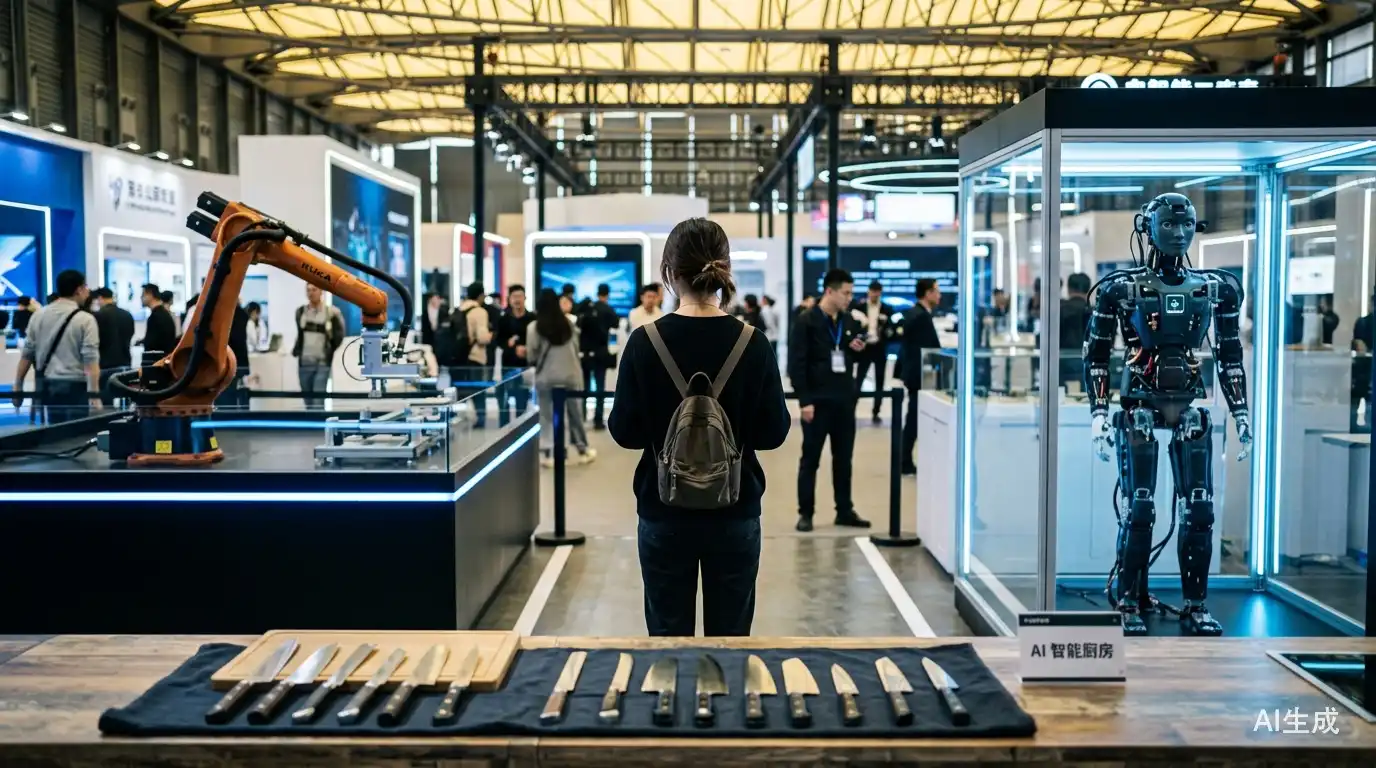
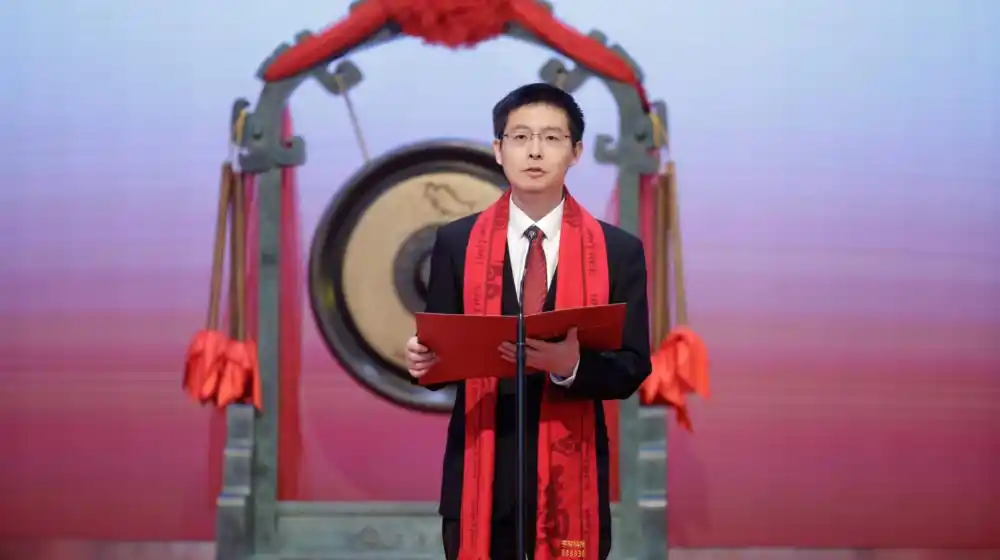
On August 19th, Unitree Robotics, dubbed as the first A-share listed 'humanoid robot' company, officially rang the bell!
Ten years ago, Wang Xingxing, holding a robotic dog, took a train for over ten hours to attend roadshows. Today, dressed in a black suit and a red scarf, he stands under the most dazzling spotlight in China's capital market.
△
Various investment institutions that invested in Unitree have published congratulatory messages, expressions of gratitude, or performance reports, both to share the joy with Unitree and to showcase their successful investment proof.
However, the first person to invest in Unitree remains characteristically quiet.
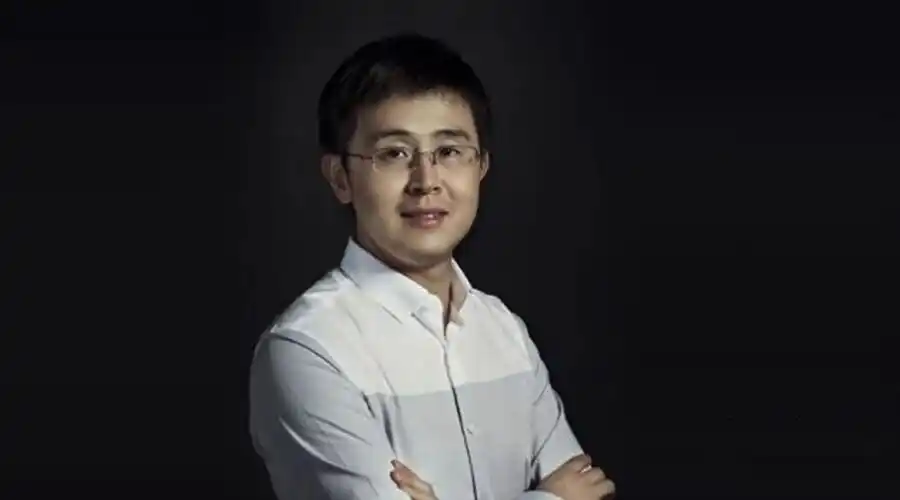
This person is Yin Fangming. In 2016, when Wang Xingxing encountered fundraising difficulties, Yin provided Unitree with the most crucial first angel investment, exchanging 2 million yuan for a 15% stake. After several subsequent equity transfers, calculated at the IPO price, his total return from this investment is approximately 280 million yuan, achieving a return of over 140 times.
Yin Fangming is not only one of the most critical figures for Unitree; he holds similar significance for another embodied AI company, Galaxy General. His latest identity is: Chairman of Galaxy General.
One person backed two generations of leading embodied AI companies and was once a co-founder of a high-profile startup.
Logically, he is most qualified to be in the spotlight in this era, yet he has long maintained a deliberate low profile, having disappeared from public view for many years.
Investment Success, Startup Failure
In the exhibition hall of Unitree's headquarters, a somewhat rough-looking robotic dog is placed at the very front.
It's the XDog, independently developed by Wang Xingxing during his postgraduate studies at Shanghai University. It also marks the starting point of Unitree's legendary entrepreneurial journey.
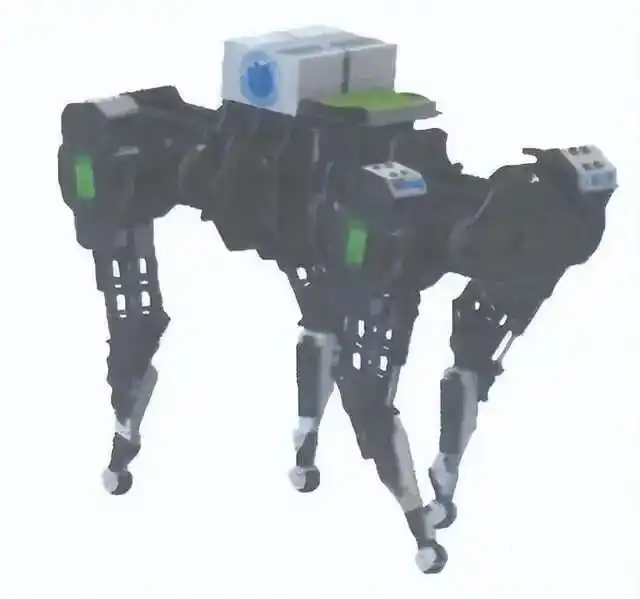
In 2015, Wang Xingxing entered XDog in a startup competition and won an award. Later, the product gained some popularity on overseas platforms.
Wang Xingxing was eager to start a company, but after contacting several investment institutions, the response was lukewarm. At that time, quadruped robots were still a very niche sector in China, with most investors not optimistic about its prospects.
It was then that Yin Fangming appeared. He proactively reached out to Wang Xingxing, providing Unitree with its first angel investment, which became the crucial startup capital.
Wang Xingxing once told LatePost in an interview that Yin Fangming offered very lenient terms and even transferred the money without signing an agreement.
Not only did he make a contrarian decision, but he also gave the founder immense freedom. Looking back now, as an investor, Yin Fangming deserves flowers and applause.
Besides being an investor, Yin Fangming has another identity: an entrepreneur.
In 2014, Yin Fangming co-founded ROOBO, positioning it as an "AI robot system company," both developing robots and investing in/incubating other smart hardware.
In the same year Yin invested in Unitree, ROOBO secured a $100 million Series A funding round, breaking the domestic AI sector's Series A funding record at the time, making waves for a while. Some media headlines read: "Slapping the face of the capital winter."
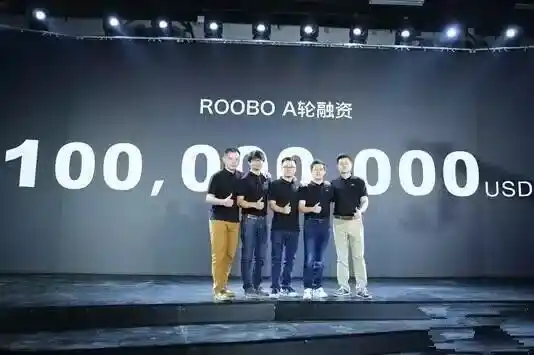
Yin Fangming's ability to become Wang Xingxing's "伯乐" (discoverer of talent) is closely related to his own entrepreneurial experience.
Establishing an industrial fund to incubate smart hardware was one of ROOBO's main businesses. By 2017, ROOBO had invested in over ten domestic and international companies skilled in robot mechanical movement.
Among them was Domgy, a robotic dog created by a South Korean startup team, designed as a family companion pet robot dog.
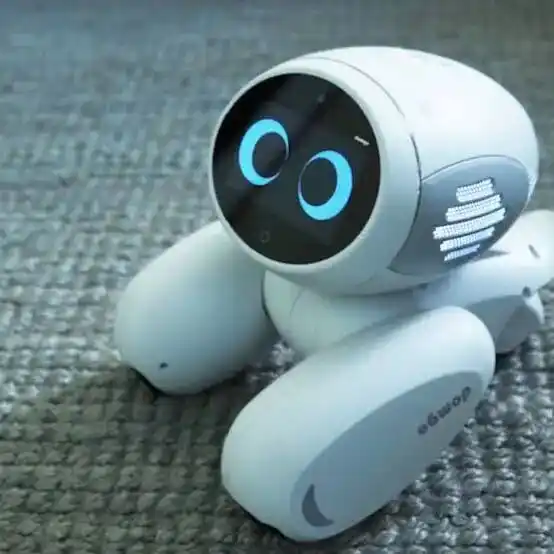
The ROOBO team invested in Domgy while it was still a lab prototype. Wang Xingxing's XDog was also an early-stage product he developed in his university lab.
Besides incubation, ROOBO also developed its own robots.
The company's first product, the Pudding robot, featured a cute, small, and irregular double-curved surface structure. Although it looked adorable, the mold had to be remade four times before success, with each failure meaning millions in funds were wasted.
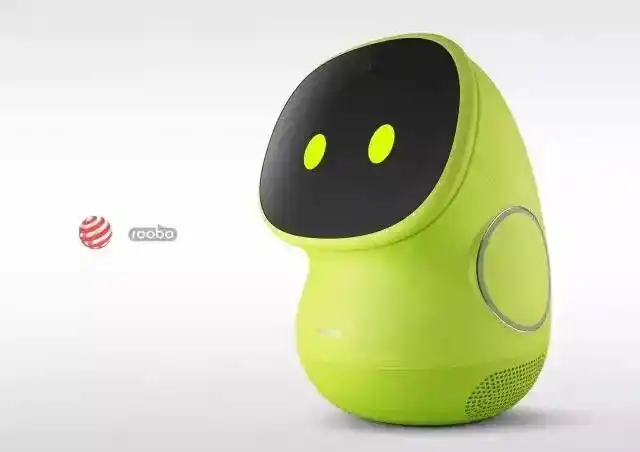
Later, in a media interview, Yin Fangming reflected that hardware work is heavy, cycles are long, and capital consumption is high; many startups died on this path.
ROOBO stepped into "big traps" regarding hardware and cost control, but these were precisely Unitree's strengths.
The early XDog was already known for its high cost-performance and high performance. Later, Unitree insisted on independent R&D for critical hardware like motors, reducers, and controllers, with an in-house R&D rate for core components exceeding 95%.
Today, powerful hardware self-development and cost-control capabilities have become one of Unitree's hallmarks.
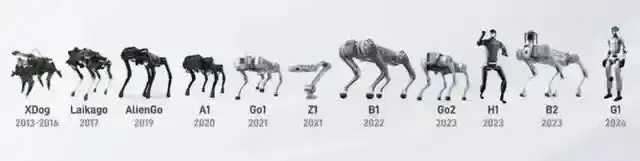
Having experience as an entrepreneur, investor, understanding robotic dogs, and stumbling on hardware... With these experiences, it was no coincidence that Yin Fangming became Unitree's first investor.
However, Yin Fangming was a good investor but not a successful entrepreneur.
ROOBO's focus on educational companion robots, pet robotic dogs, and various robot products did not gain market traction. The incubated VR glasses, bone conduction headphones, and drone products also failed to make waves.
By the end of 2018, ROOBO began narrowing its business focus, concentrating on children's education. From 2019 to 2020, the company started encountering disputes over contracts, labor, intellectual property, and sales contracts.
In October 2020, Yin Fangming published a statement in China Business News, declaring he was no longer serving as the legal representative, manager, etc., of Beijing ROOBO Technology Co., Ltd. and asserted that any legal responsibilities arising from the company's external contracts and debts thereafter were unrelated to him personally.
However, public business registration information shows that Yin Fangming was still registered as the company's legal representative afterward.
ROOBO later became involved in enforcement cases. In April 2024, the Beijing Haidian District People's Court issued a consumption restriction order against Beijing ROOBO Technology Co., Ltd., with Yin Fangming, as the legal representative, being restricted from high consumption. The enforcement target amount was 36,729 yuan.
According to China's Enforcement Information Disclosure Website, in November 2025, Beijing ROOBO Technology Co., Ltd. was listed as a person subject to enforcement. The Beijing First Intermediate People's Court initiated enforcement against it, with an enforcement target amount of 83.655658 million yuan.
This somewhat dramatic ending fully illustrates that AI and robotics entrepreneurship is not an easy path.
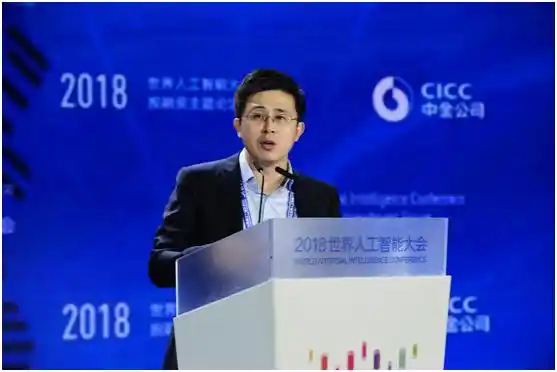
Early Cash-out "Missed" Nearly 1.6 Billion Yuan
As his startup ROOBO declined, Yin Fangming反而 accelerated his investment pace.
First, he cashed out part of his Unitree equity worth over 10 million yuan.
In 2018, Yin Fangming made his first partial cash-out of Unitree shares, reducing his stake from 15.0% to 11.4%, earning 1.3106 million yuan.
In 2020, Yin Fangming transferred all his registered capital in Unitree to Tianjin Junwan Hongyi Enterprise Management Consulting Partnership (Limited Partnership) for a mere 14,300 yuan consideration, exiting Unitree's shareholder list.
Yin Fangming is a partner in Junwan Hongyi, holding approximately a 16.6% stake. This means Yin transformed from Unitree's angel investor into an LP indirectly holding shares through an institution.
In May 2025, Junwan Hongyi transferred 22.6% of its Unitree shares to another institution for a total consideration of 58 million yuan. Based on Yin Fangming's持股比例, he could have received 9.6405 million yuan.
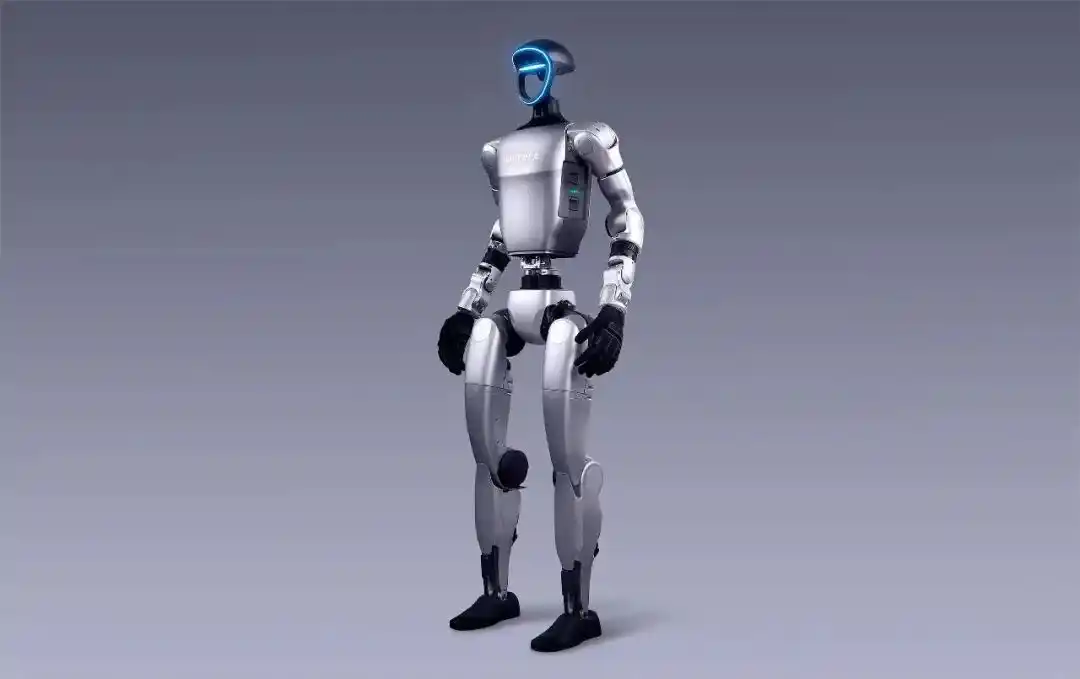
If Yin Fangming had held Unitree's equity throughout, the 2 million yuan initial investment would correspond to a valuation of approximately 1.848 billion yuan, nearly 1.6 billion yuan more than the 280 million yuan benefit he received now.
But returns on angel investments are never limited to the "hold all the way" strategy; cashing out is also normal behavior. Yin Fangming has been using the cashed-out funds for new investments.
His investment触角 also extended into the energy sector.
In 2021, Yin Fangming invested 1.5 million yuan in Beijing Yujian Power Technology Co., Ltd., acquiring a 3.9% stake and becoming the company's third-largest shareholder.
Yujian Power's business applies aerospace technology to the development of underground resources like oil, natural gas, shale gas, coalbed methane, and geothermal energy.
In 2023, Yin Fangming became the third-largest shareholder in Beijing Yuanchen Keyao Management Consulting Partnership (Limited Partnership), indirectly investing in Chongqing Tailan New Energy Co., Ltd.
Chongqing Tailan New Energy, founded in 2018, is a solid-state battery company. In December 2025, it completed a B+ round of financing exceeding 400 million yuan.
Commercial aerospace also entered Yin Fangming's investment portfolio.
In 2025, Yin Fangming invested in Shenzhen Xiandeng Aerospace Technology Co., Ltd., the only domestic private commercial aerospace enterprise dedicated to customizing small liquid-fueled launch vehicles for networking and replenishment launches of 100-500 kg级 remote sensing and communication small satellites.
In March 2026, Xiandeng Aerospace announced it had累计 completed nearly 100 million yuan in financing.
Business registration information shows that in September 2025, Yin Fangming's持股比例 in Xiandeng Aerospace dropped from 5% to 4.1026%, further decreasing to 3.69% in March 2026.
Latest Identity: Chairman of Galaxy General
But neither the energy company nor the commercial aerospace company represents Yin Fangming's most important investment after Unitree.
Yin Fangming has been searching for the next "Unitree," and he may have found it.
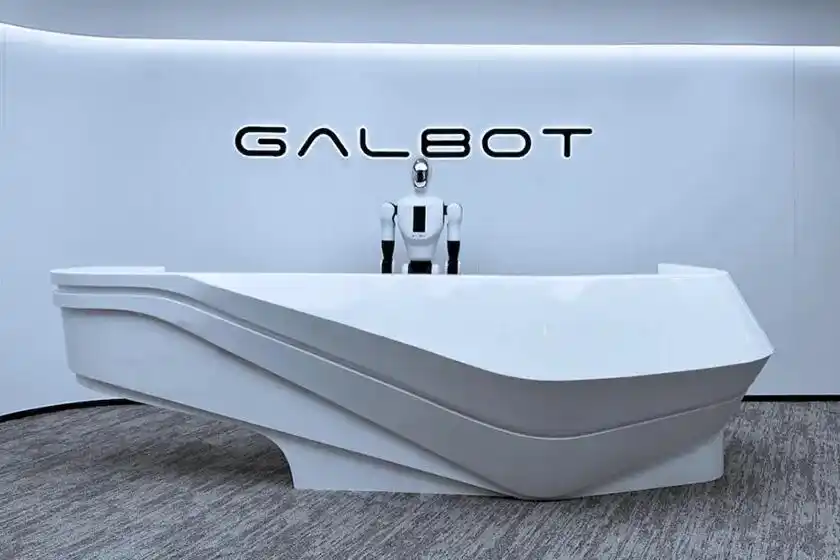
On July 21, 2026, the embodied AI unicorn Galaxy General updated its senior management filing information: Yin Fangming assumed the role of Chairman of Galaxy General, replacing the former chairman Guo Xiaoliang.
Galaxy General was founded in May 2023. Over the past three years, it has累计 raised over 6.96 billion yuan, with a valuation exceeding 20 billion yuan, making it one of the highest-valued unlisted companies in China's embodied AI field.
In 2025, when "embodied AI" wasn't as火热 as it is now, someone brought Wang Xingxing and Galaxy General's founder & CTO, Wang He, together, sitting them on either side at the same table.
Sitting beside the table, wearing a black leather jacket, was that man—Jensen Huang.
But even earlier, the one who first brought these two star entrepreneurs together was Yin Fangming.
If Unitree represents the first-generation robot company, then Galaxy General represents the new generation of embodied AI enterprises. This generation of companies not only builds the "body" but also emphasizes the "brain."
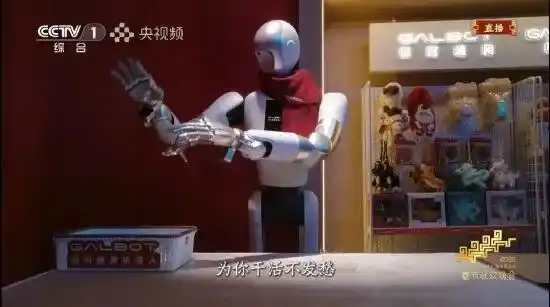
Yin Fangming keeps a low profile. Previously, his role at Galaxy General was never officially disclosed. The outside world could only piece together his relationship with Galaxy General from informed sources. For example, Southern Metropolis Daily once reported that Yin Fangming was an investor behind Galaxy General.
This time, Yin Fangming finally steps from behind the scenes to the forefront.
The Chairman role involves deep involvement in the company's strategic decisions. This at least indicates that Yin Fangming's relationship with Galaxy General far exceeds that of a typical investor.
Along with the news of Yin Fangming becoming Chairman, it was disclosed that Galaxy General's management underwent a significant reshuffle described as "ten out, nine in."
The timing of this disclosure is very微妙, with外界 believing that Galaxy General might be preparing for the next stage of capital operations.
Prior to this, in November 2025, Galaxy General had already completed its股份制改造 (shareholding system reform).
"I Have a Restless Heart, Always Wanting to See Further"
In 2002, Yin Fangming was admitted to the Computer Science Department of Northwestern Polytechnical University. It was the internet era, but after graduation, he chose to work for a mobile phone manufacturer.
He told媒体 in an interview that he was thinking about "What is the next"—after PCs, the era of mobile phones was必然.
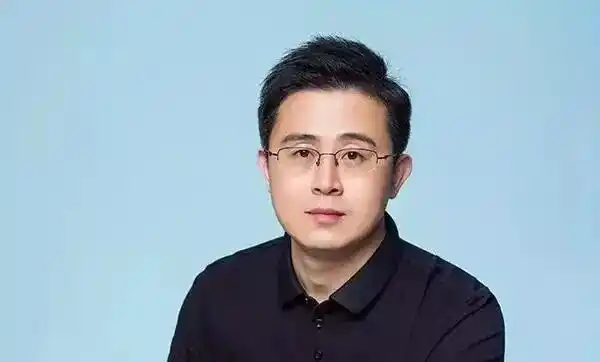
He indeed made a name for himself in the mobile phone industry.
During his time at MediaTek, he was among the first developers of Android system ROMs in China.
Later, at Sogou, he served as the product负责人 for the mobile phone input method, leading the team to make it the industry's number one国民级 product.
After joining Qihoo 360, he founded 360 Mobile Assistant. Within just a year and a half, its users exceeded hundreds of millions, with annual流水 reaching billions of yuan, becoming a cash cow for the company.
Subsequently, he led the team to develop the 360 Portable WiFi, another phenomenal product.
Yet, when mobile internet was at its peak, he主动 left to start a venture in the AI field.
He made two contrarian choices consecutively, based on far-sighted judgments.
He once said that the challenge of smartphones to PCs began around 2009; he saw the opportunity of the era and developed mobile software at Sogou. While working on the mobile app store at Qihoo 360, he observed that the industry was pursuing metrics like activations, user volume, and活跃量, while people's demand for searching and downloading长尾 applications was gradually decreasing.
From that point, he was convinced that the prospects for mobile internet were unlikely to see major breakthroughs, and the opportunity for the next decade would emerge in the AI field.
From mobile phones and mobile internet to AI and robotics, Yin Fangming has consistently stood at the forefront of technology.
He said he has a restless heart, always wanting to see further, ever since his student days.
We reached out to Yin Fangming, hoping he could discuss his early investment in Unitree. However, he declined the interview, leaving only one sentence:
Please give more support to outstanding embodied robotics entrepreneurs like Wang Xingxing.
This article is from the WeChat public account "QbitAI" (ID: QbitAI), author: 关注前沿科技 (Focusing on Frontier Technology)