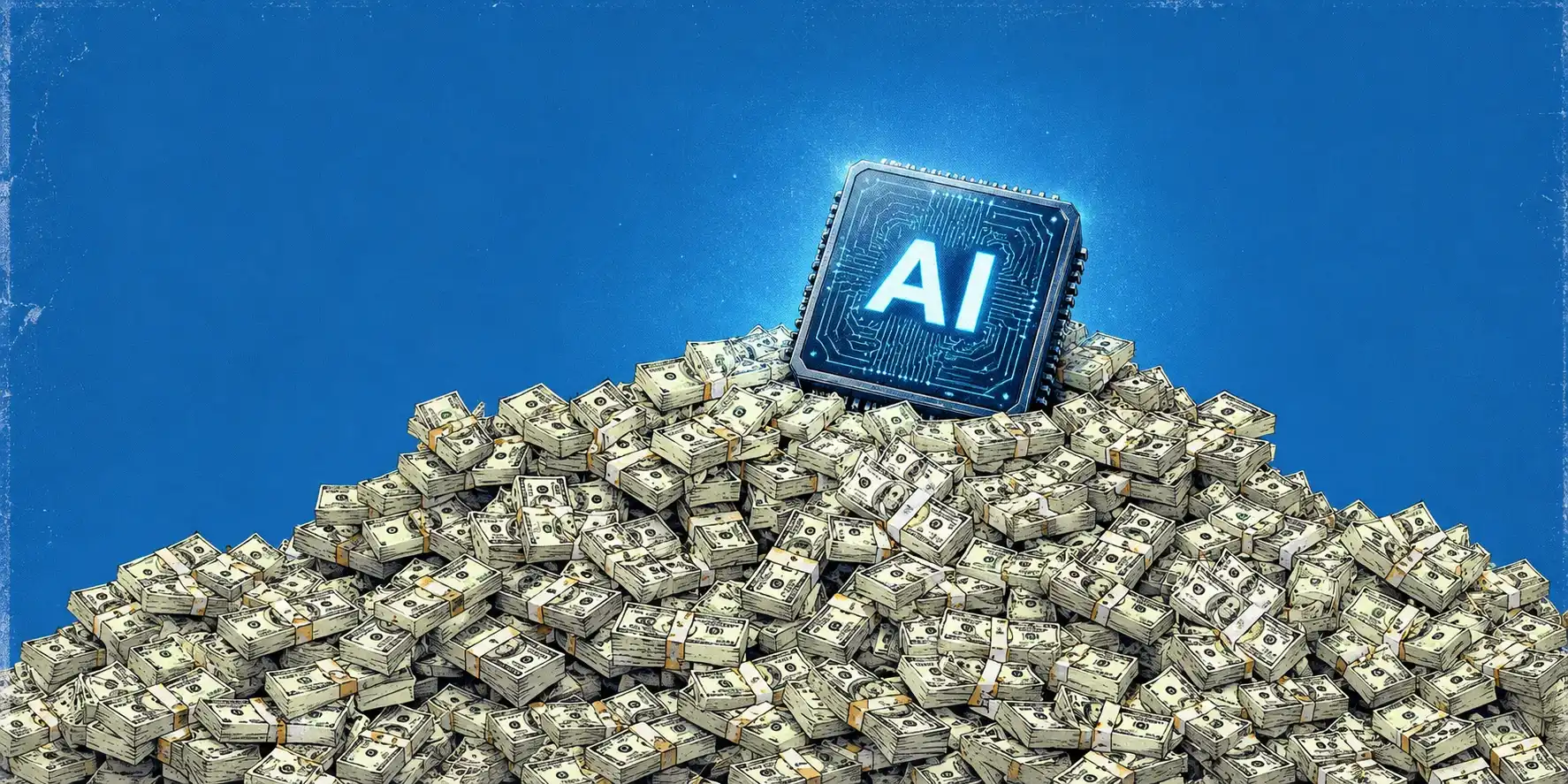
Robert Kiyosaki a parlé de la prédiction de son mentor concernant l'émergence du Bitcoin et de l'IA

cryptonews.ruPublished on 2026-08-15Last updated on 2026-08-15

Abstract

L'entrepreneur américain et auteur de "Rich Dad Poor Dad", Robert Kiyosaki, a évoqué l'influence du futurologue Richard Buckminster Fuller sur sa vision du monde, reliant les prédictions technologiques de ce dernier à l'émergence du Bitcoin et au développement de l'intelligence artificielle. Dans un post sur X, Kiyosaki a également partagé son propre parcours, du monde de la musique (où il travaillait avec des groupes comme The Police et Iron Maiden) à la création de son jeu financier Cashflow, expliquant avoir trouvé sa véritable vocation après une rencontre déterminante avec Fuller. Kiyosaki a décrit Fuller comme un "génie bienveillant" qui aurait prédit des changements mondiaux majeurs comme le Bitcoin et l'IA. Il a surtout retenu une leçon de vie de son mentor : que notre véritable but est de se consacrer au plus grand bien des autres. L'article rappelle que Kiyosaki reste un fervent partisan des cryptomonnaies. Il cite régulièrement le Bitcoin et l'Ethereum comme des actifs de protection face aux vulnérabilités du système financier traditionnel, et a déjà prédit une forte hausse de leur valeur à long terme, ainsi que celle de l'or et de l'argent.

L'entrepreneur américain et auteur du livre "Père riche, père pauvre", Robert Kiyosaki, a expliqué l'influence du futurologue Richard Buckminster Fuller sur sa vision du monde et a lié ses anciennes prédictions technologiques à l'émergence du Bitcoin et au développement de l'intelligence artificielle.

Dans une publication sur X, Kiyosaki a également soulevé la question de la vocation personnelle de l'être humain et s'est souvenu de son propre parcours, de son travail dans l'industrie musicale à la création du jeu de société financier Cashflow et à l'écriture de "Père riche, père pauvre".

Kiyosaki s'est souvenu qu'il gagnait auparavant sa vie dans l'industrie musicale, en développant des produits pour des groupes tels que The Police, Van Halen et Iron Maiden. Malgré le succès financier et la possibilité de passer du temps dans les coulisses avec les musiciens, l'entrepreneur a noté qu'il avait progressivement ressenti un vide intérieur.

Selon lui, le moment décisif a été la rencontre avec Fuller, que Kiyosaki a décrit comme l'un de ses héros. L'entrepreneur a étudié auprès de lui pendant trois étés consécutifs.

Fuller avait prédit l'émergence du Bitcoin et de l'IA

Kiyosaki a décrit Fuller comme un "génie affable" et un futurologue qui avait prédit un certain nombre de changements majeurs dans le monde. Parmi ceux-ci, l'entrepreneur a particulièrement souligné l'émergence du Bitcoin et le développement de l'IA.

"Bucky [Fuller] a prédit des changements transformateurs comme le Bitcoin aujourd'hui et l'avènement imminent de l'IA", a écrit Kiyosaki.

Cependant, la publication portait moins sur les prédictions technologiques que sur la manière dont les paroles du mentor avaient influencé Kiyosaki lui-même. L'entrepreneur s'est souvenu d'une phrase de Fuller, entendue lors d'une de ses conférences :

"Vous ne vous appartenez pas. Vous appartenez à l'Univers. Votre véritable raison d'être peut vous rester à jamais incompréhensible [...] mais soyez assuré que vous accomplissez votre raison de vivre si vous dédiez votre vie à être le plus utile possible aux autres".

Kiyosaki a noté qu'il lui avait fallu un certain temps pour saisir la signification de ces mots.

Kiyosaki continue de miser sur les cryptomonnaies

Le thème du Bitcoin et des autres actifs numériques apparaît régulièrement dans les prévisions financières de Kiyosaki. Il avait précédemment déclaré qu'il achetait du Bitcoin lorsque les autres investisseurs paniquaient et vendaient leurs actifs, et a à plusieurs reprises associé la cryptomonnaie à la protection du capital face aux problèmes du système financier traditionnel.

Il a également qualifié Ethereum d'"actif le meilleur" pour l'investissement.

Notamment, en 2026, Kiyosaki continuait de prédire un effondrement majeur des marchés financiers et le décrivait comme une opportunité potentielle pour les investisseurs préparés. Parmi les actifs qu'il a mis en avant figuraient le Bitcoin, l'Ethereum, l'or et l'argent.

Auparavant, l'entrepreneur avait également prédit qu'après un effondrement massif des marchés, le Bitcoin pourrait atteindre 750 000 dollars, l'Ethereum environ 95 000 dollars, l'or 35 000 dollars l'once et l'argent 200 dollars.

end-content

Trending Cryptos

Related Questions

QQuel est le lien que Robert Kiyosaki établit entre les prédictions de son mentor et les technologies actuelles ?

ARobert Kiyosaki relie les prédictions du futuriste Richard Buckminster Fuller à l'émergence du Bitcoin et au développement de l'intelligence artificielle, affirmant que Fuller les avait anticipés.

QQuelle leçon de vie Robert Kiyosaki a-t-il retenue de son mentor, Richard Buckminster Fuller ?

AKiyosaki a retenu de Fuller que notre véritable but dans la vie peut rester mystérieux, mais qu'il se réalise en dédiant sa vie à être le plus utile possible aux autres.

QQuels sont les actifs que Robert Kiyosaki recommande comme investissements dans le contexte de ses prédictions financières ?

ADans ses prédictions, Robert Kiyosaki recommande le Bitcoin, l'Ethereum, l'or et l'argent comme actifs clés pour les investisseurs.

QQuelle était la profession de Robert Kiyosaki avant de devenir célèbre pour son livre sur la finance ?

AAvant son succès littéraire, Robert Kiyosaki travaillait dans l'industrie musicale, développant des produits pour des groupes comme The Police, Van Halen et Iron Maiden.

QQuelles sont les prévisions de prix de Robert Kiyosaki pour le Bitcoin et l'Ethereum après un éventuel krach des marchés ?

AKiyosaki a prédit que, suite à un éventuel krach majeur, le Bitcoin pourrait atteindre 750 000 dollars et l'Ethereum environ 95 000 dollars.

Related Reads

AI Boosting Efficiency and Cutting Costs Makes VC Increasingly Expensive

"AI for Cost Reduction Makes VC Funding More Expensive" Despite the "cost-reduction and efficiency" narrative of AI, venture capital (VC) investment in the AI sector is becoming increasingly costly. While AI tools lower the initial costs for many startups—with team sizes shrinking across funding stages—the market is polarizing. For top-tier AI teams, especially those from leading companies like Google and OpenAI, funding rounds are now larger and valuations are higher than ever at the seed and early stages. For example, new ventures by prominent researchers are securing billions in funding with valuations reaching tens of billions before having a mature product. This creates a "barbell" market: lightweight startups need less capital, while elite AI firms attract massive investments early on. This dynamic raises the cost for VCs to acquire and maintain meaningful ownership stakes. As valuations soar early, securing the same equity percentage requires significantly larger capital commitments. VCs must now invest more upfront and reserve substantial funds for follow-on rounds to avoid dilution, prompting large firms like Accel and a16z to raise massive new funds. Consequently, capital is concentrating intensely in a few perceived winners like OpenAI and Anthropic, widening the gap between large and small VC funds. While high valuations bake in future growth expectations, they also compress potential returns, demanding that portfolio companies achieve unprecedented scale. For major VCs, the core strategy is clear: secure early positions in potential winners and maintain the capital to keep investing as valuations rapidly escalate.

marsbit21m ago

AI Boosting Efficiency and Cutting Costs Makes VC Increasingly Expensive

marsbit21m ago

An Eight-Year Investment Takes a Sharp Turn: Why Did Ethereum Suddenly Abandon Poseidon?

On August 13, Ethereum researcher Justin Drake announced a significant shift in Ethereum's Layer-1 cryptographic roadmap: abandoning the SNARK-friendly hash function Poseidon in favor of traditional functions like SHA2 or BLAKE2. This decision ends eight years of research and investment, marking a major revision to the post-quantum security strategy. Poseidon, introduced in 2019, was highly efficient for zkRollups and zkVMs within SNARK circuits. However, its need for prolonged cryptanalysis and the pressing timeline for quantum resistance revealed limitations. Recent breakthroughs in SNARK design, specifically using binary fields, now enable traditional, battle-tested hash functions to perform as efficiently as Poseidon within SNARKs. Benchmarks show modern laptops can now verify over a million traditional hash calls per second. This change is partly driven by accelerated concerns over quantum computing threats. Reports warn that "Cryptographically Relevant Quantum Computers" could break current blockchain signatures like ECDSA by the early 2030s, risking trillions in assets. Ethereum's response focuses on hash-based post-quantum signature schemes, deemed more quantum-resistant than some lattice-based alternatives under pressure from AI cryptanalysis. Ethereum's updated post-quantum roadmap targets a production-ready "leanVM" for signature aggregation by 2027, with full deployment across consensus, execution, and data layers by 2028. The shift to mature hash functions like SHA2 reduces reliance on newer algorithms and aligns with the goal of using widely analyzed cryptographic primitives. Other major blockchains are also preparing. Solana's core teams have independently chosen the NIST-standardized Falcon signature scheme for its compact size. Starknet plans a phased migration, starting with replacing its Pedersen hash with BLAKE2. Ethereum's move signifies a strategic pivot towards proven security foundations for the quantum era.

marsbit1h ago

An Eight-Year Investment Takes a Sharp Turn: Why Did Ethereum Suddenly Abandon Poseidon?

marsbit1h ago

Programmers Worldwide Are Wasting Money on Anthropic! The Company Can't Stand It Anymore

Anthropic recently published guidelines to help developers using Claude Code reduce unnecessary token costs. The key recommendations include: 1) Clear (/clear) conversations after completing a task to avoid carrying irrelevant file reads and command outputs into the next task. 2) Set the model and reasoning effort level at the start of a session, as switching mid-session invalidates the prompt cache, requiring a full-price recalculation of the entire dialog history. 3) Attach files using @ references instead of typing paths manually to avoid extra tool calls and searches that bloat the context. 4) Add quiet flags to verbose commands (e.g., in CLAUDE.md) to minimize lengthy output in the dialog history. 5) Use /compact while the session cache is still warm (before breaks) to compress the dialog at one-tenth the cost. 6) Offload large-output tasks to a sub-agent, which runs in an isolated context and only returns conclusions, preventing intermediate outputs from polluting the main dialog. The article explains token pricing: input tokens (prefill) are processed in parallel, while output tokens (decode) are generated serially, making output tokens five times more expensive. Caching is crucial for savings—if a request's prefix (system prompt, CLAUDE.md, dialog history) matches the previous one byte-for-byte, reading it costs only 10% of the standard input price. However, cache invalidation occurs when changing models, effort levels, fast mode, compressing dialogs, after cache expiration, or when resuming old sessions. Dialog history also grows quadratically (O(n²)) as file contents and command outputs accumulate, increasing costs per round. Proactive context management—like isolating noisy tasks, using /rewind to trim unproductive turns, and task-based session clearing—is becoming an essential skill for cost-effective AI-assisted development.

marsbit3h ago

Programmers Worldwide Are Wasting Money on Anthropic! The Company Can't Stand It Anymore

marsbit3h ago

Pax Silica vs. WAICO: The US Wants to Prohibit Europe from Using Chinese Artificial Intelligence

The United States is preparing to demand that European and other partners abandon Chinese artificial intelligence initiatives, threatening exclusion from the American-led "Pax Silica" coalition, according to a leaked U.S. State Department document. This ultimatum forces signatories of the "AI Opportunity Statement" to choose between the Western technological ecosystem and alternative frameworks, with China not explicitly named but clearly targeted. Pax Silica is a U.S. strategy for AI and semiconductor hegemony, launched in late 2025. Its European presence expanded significantly in mid-2026. Concurrently, China, Russia, and 27 other nations established the World AI Cooperation Organization (WAICO) in July 2026 as an independent intergovernmental platform promoting AI governance based on UN principles. This situation creates a difficult choice, especially for European nations balancing strategic autonomy with dependence on U.S. tech and security. It also pressures Global South countries with pragmatic ties to both Washington and Beijing. The formation of competing blocks risks fragmenting the global tech landscape, forcing companies to split supply chains, increasing costs, and potentially leading to incompatible standards and protocols. The era of open globalization in AI may be ending, replaced by geopolitical confrontation where technological sovereignty trumps economic efficiency. The decisions made will shape the global digital economy for decades.

cryptonews.ru5h ago

Pax Silica vs. WAICO: The US Wants to Prohibit Europe from Using Chinese Artificial Intelligence

cryptonews.ru5h ago

Trading

Spot

Hot Articles

What is $BITCOIN

DIGITAL GOLD ($BITCOIN): A Comprehensive Analysis Introduction to DIGITAL GOLD ($BITCOIN) DIGITAL GOLD ($BITCOIN) is a blockchain-based project operating on the Solana network, which aims to combine the characteristics of traditional precious metals with the innovation of decentralized technologies. While it shares a name with Bitcoin, often referred to as “digital gold” due to its perception as a store of value, DIGITAL GOLD is a separate token designed to create a unique ecosystem within the Web3 landscape. Its goal is to position itself as a viable alternative digital asset, although specifics regarding its applications and functionalities are still developing. What is DIGITAL GOLD ($BITCOIN)? DIGITAL GOLD ($BITCOIN) is a cryptocurrency token explicitly designed for use on the Solana blockchain. In contrast to Bitcoin, which provides a widely recognized value storage role, this token appears to focus on broader applications and characteristics. Notable aspects include: Blockchain Infrastructure: The token is built on the Solana blockchain, known for its capacity to handle high-speed and low-cost transactions. Supply Dynamics: DIGITAL GOLD has a maximum supply capped at 100 quadrillion tokens (100P $BITCOIN), although details regarding its circulating supply are currently undisclosed. Utility: While precise functionalities are not explicitly outlined, there are indications that the token could be utilized for various applications, potentially involving decentralized applications (dApps) or asset tokenization strategies. Who is the Creator of DIGITAL GOLD ($BITCOIN)? At present, the identity of the creators and development team behind DIGITAL GOLD ($BITCOIN) remains unknown. This situation is typical among many innovative projects within the blockchain space, particularly those aligning with decentralized finance and meme coin phenomena. While such anonymity may foster a community-driven culture, it intensifies concerns about governance and accountability. Who are the Investors of DIGITAL GOLD ($BITCOIN)? The available information indicates that DIGITAL GOLD ($BITCOIN) does not have any known institutional backers or prominent venture capital investments. The project seems to operate on a peer-to-peer model focused on community support and adoption rather than traditional funding routes. Its activity and liquidity are primarily situated on decentralized exchanges (DEXs), such as PumpSwap, rather than established centralized trading platforms, further highlighting its grassroots approach. How DIGITAL GOLD ($BITCOIN) Works The operational mechanics of DIGITAL GOLD ($BITCOIN) can be elaborated on based on its blockchain design and network attributes: Consensus Mechanism: By leveraging Solana’s unique proof-of-history (PoH) combined with a proof-of-stake (PoS) model, the project ensures efficient transaction validation contributing to the network's high performance. Tokenomics: While specific deflationary mechanisms have not been extensively detailed, the vast maximum token supply implies that it may cater to microtransactions or niche use cases that are still to be defined. Interoperability: There exists the potential for integration with Solana’s broader ecosystem, including various decentralized finance (DeFi) platforms. However, the details regarding specific integrations remain unspecified. Timeline of Key Events Here is a timeline that highlights significant milestones concerning DIGITAL GOLD ($BITCOIN): 2023: The initial deployment of the token occurs on the Solana blockchain, marked by its contract address. 2024: DIGITAL GOLD gains visibility as it becomes available for trading on decentralized exchanges like PumpSwap, allowing users to trade it against SOL. 2025: The project witnesses sporadic trading activity and potential interest in community-led engagements, although no noteworthy partnerships or technical advancements have been documented as of yet. Critical Analysis Strengths Scalability: The underlying Solana infrastructure supports high transaction volumes, which could enhance the utility of $BITCOIN in various transaction scenarios. Accessibility: The potential low trading price per token could attract retail investors, facilitating wider participation due to fractional ownership opportunities. Risks Lack of Transparency: The absence of publicly known backers, developers, or an audit process may yield skepticism regarding the project's sustainability and trustworthiness. Market Volatility: The trading activity is heavily reliant on speculative behavior, which can result in significant price volatility and uncertainty for investors. Conclusion DIGITAL GOLD ($BITCOIN) emerges as an intriguing yet ambiguous project within the rapidly evolving Solana ecosystem. While it attempts to leverage the “digital gold” narrative, its departure from Bitcoin's established role as a store of value underscores the need for a clearer differentiation of its intended utility and governance structure. Future acceptance and adoption will likely depend on addressing the current opacity and defining its operational and economic strategies more explicitly. Note: This report encompasses synthesised information available as of October 2023, and developments may have transpired beyond the research period.

1.9k Total ViewsPublished 2025.05.13Updated 2025.05.13

What is $BITCOIN

Discussions

Welcome to the HTX Community. Here, you can stay informed about the latest platform developments and gain access to professional market insights. Users' opinions on the price of BTC (BTC) are presented below.

活动图片