Setelah Menghadapi Masuknya Robinhood dengan Kuat, Mengapa PUMP Justru Naik Melawan Tren?

marsbitPublished on 2026-07-30Last updated on 2026-07-30

Abstract

Penulis: Nancy, PANews Dalam kondisi pasar kripto yang lesu, banyak proyek mengalami penurunan pendapatan signifikan, namun Pump.fun tetap menjadi salah satu protokol teratas dengan profitabilitas kuat. Token PUMP justru naik setelah unlock besar-besaran pertengahan Juli, dengan kenaikan hingga 47.9% dalam 30 hari terakhir. Tekanan jual ternyata terbatas, hanya 3 dari 79 dompet investor yang menjual alokasinya. Mekanisme buyback dan burn juga mendukung harga PUMP, dengan lebih dari 15.4% pasokan total sudah dibakar. Namun, dana buyback terkini turun sekitar 77.5%, didorong oleh penyesuaian model ekonomi token dan penurunan pendapatan platform dari puncaknya. Pump.fun tetap menghasilkan arus kas stabil di bear market, dengan pendapatan tahunan sekitar $450 juta. Namun, pendapatannya sangat bergantung pada siklus pasar dan sentimen meme coin, terlihat dari penurunan volume transaksi dan alamat aktif dibandingkan masa puncak. Persaingan baru datang dari Robinhood Chain, yang launchpad-nya mencatat volume trading $1.23 miliar minggu lalu, melampaui Pump.fun ($447 juta). Meski begitu, pangsa pasar Pump.fun belum tergerus signifikan. Untuk meningkatkan daya saing, Pump.fun meluncurkan mekanisme peluncuran baru BOOST guna menambah likuiditas. Hal ini meningkatkan tingkat "kelulusan" token mingguan menjadi 3.7%. Namun, ada kekhawatiran mekanisme ini dapat memicu token berkualitas rendah yang mengandalkan hype jangka pendek. Intinya, meski masih profitable, model bisnis Pump.fun...

Penulis: Nancy, PANews

Pasar kripto terperosok dalam pasar bear, banyak proyek menghadapi penurunan pendapatan yang signifikan, bahkan keluar dari pasar, tetapi Pump.fun tetap menjadi salah satu protokol utama yang memiliki kemampuan profitabilitas yang kuat.

Baru-baru ini, token PUMP dari Pump.fun tidak turun malah naik setelah mengalami penguncian besar-besaran, dan meskipun menghadapi pesaing baru Robinhood Chain, pengguna platform dan pangsa pasar belum menunjukkan kehilangan yang signifikan, sekali lagi menarik perhatian pasar.

Setelah Pembukaan Kunci Besar, Bukannya Turun Malah Naik, Mengapa PUMP Menunjukkan Pergerakan Melawan Tren?

Menurut ekspektasi pasar, pembukaan kunci token dalam skala besar biasanya membawa tekanan jual, namun PUMP justru menunjukkan pergerakan sebaliknya.

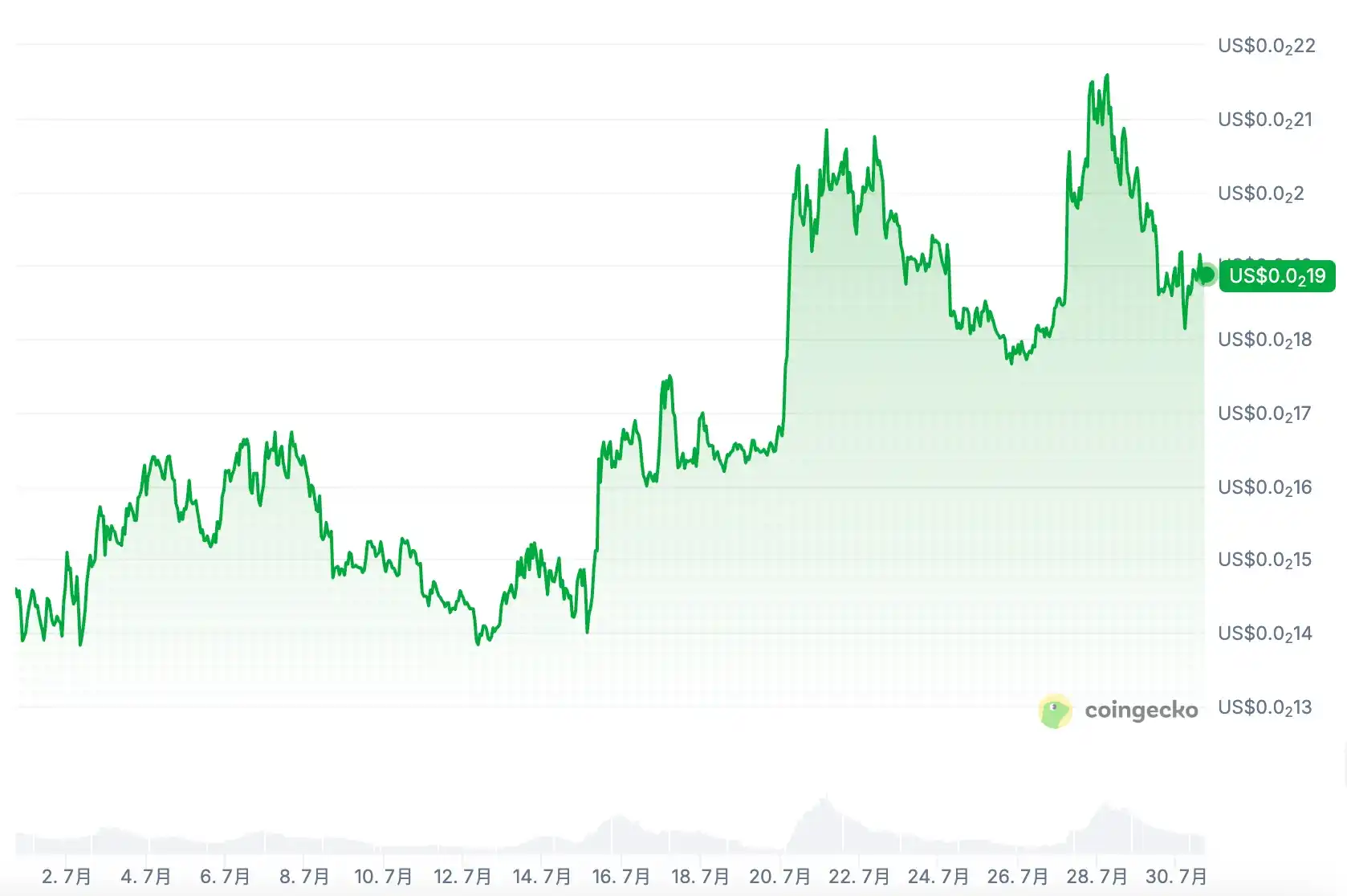
Sejak pertengahan Juli ketika PUMP mengalami pembukaan kunci besar-besaran, harganya tidak turun malah naik. Data dari CoinGecko menunjukkan, dalam 30 hari terakhir, PUMP mengalami kenaikan tertinggi sekitar 47,9%.
Di balik kenaikan harga PUMP, di satu sisi berasal dari meredanya tekanan jual akibat pembukaan kunci besar. Pada 14 Juli, PUMP memulai pembukaan kunci token besar-besaran pertama untuk tim dan investor setelah TGE, dengan skala pelepasan melebihi 86 juta dolar AS. Sebelumnya, pasar umumnya khawatir bahwa pembukaan kunci skala besar dapat memicu penjualan oleh investor.

Namun menurut analisis terbaru dari Lbexplorer, dari 79 dompet investor Pump.fun, saat ini hanya 3 dompet yang telah menjual bagian alokasi investor. Di antaranya, penjualan terbesar berasal dari dompet yang memegang 625 juta token PUMP, dengan nilai pencairan sekitar 1,2825 juta dolar AS; dua dompet lainnya menjual dengan total nilai sedikit di atas 100 ribu dolar AS. Dalam 13 hari terakhir, investor secara kumulatif menjual sekitar 770 juta token PUMP, dengan nilai sekitar 1,574 juta dolar AS. Saat ini, sekitar 92% dari alokasi token investor masih belum dijual.

Selain itu, mekanisme pembelian kembali dan pembakaran juga menjadi faktor penting yang menopang harga PUMP. Situs web resmi Pump.fun menunjukkan, hingga saat ini, platform telah secara kumulatif membakar lebih dari 15,45 juta token PUMP, dengan nilai lebih dari 416 juta dolar AS, yang merupakan sekitar 15,4% dari total pasokan PUMP. Dalam 7 hari terakhir, Pump.fun secara kumulatif telah membeli kembali dan membakar sekitar 2,236 miliar token PUMP, dengan nilai sekitar 4,359 juta dolar AS. Namun, meskipun mekanisme pembelian kembali dapat memberikan dukungan harga dalam jangka pendek, efek peningkatannya dalam jangka panjang masih bergantung pada kemampuan pertumbuhan pendapatan platform.

Faktanya, kekuatan pembelian kembali Pump.fun baru-baru ini telah menurun secara signifikan. Data menunjukkan, dana pembelian kembali hariannya telah turun dari puncak tertinggi sebelumnya lebih dari 3,06 juta dolar AS menjadi saat ini sekitar 690 ribu dolar AS, penurunan sekitar 77,5%.
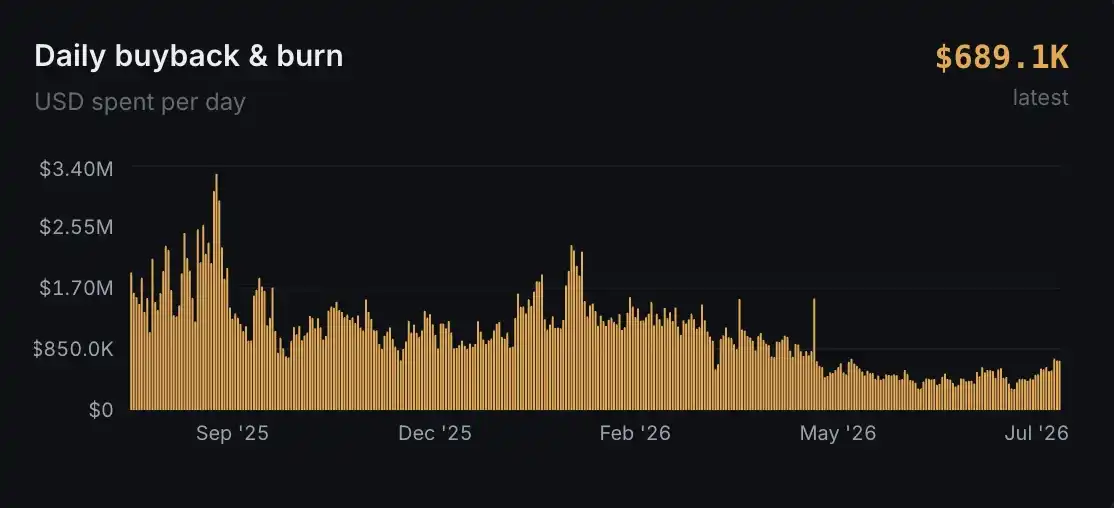
Penyusutan dana pembelian kembali, di satu sisi terkait dengan penyesuaian model ekonomi token Pump.fun beberapa bulan lalu, ketika platform mengumumkan akan mengurangi skala pendapatan yang digunakan untuk pembelian kembali dan pembakaran PUMP menjadi 50%. Di sisi lain, juga mencerminkan bahwa pasar yang lesu sedang mempengaruhi kinerja pendapatan platform, pendapatan hariannya telah turun dari puncak historis hampir 5,2 juta dolar AS menjadi saat ini sekitar 1,608 juta dolar AS, penurunan sekitar 69,1%.

Mesin Penghasil Keuntungan di Pasar Bear, Tapi Pertumbuhan Pendapatan Sulit Luput dari Fluktuasi Siklus

Dibandingkan dengan banyak protokol kripto lainnya, Pump.fun masih mempertahankan profitabilitas yang kuat, dan menjadi salah satu dari sedikit protokol utama yang masih memiliki arus kas stabil di tengah lingkungan pasar bear.

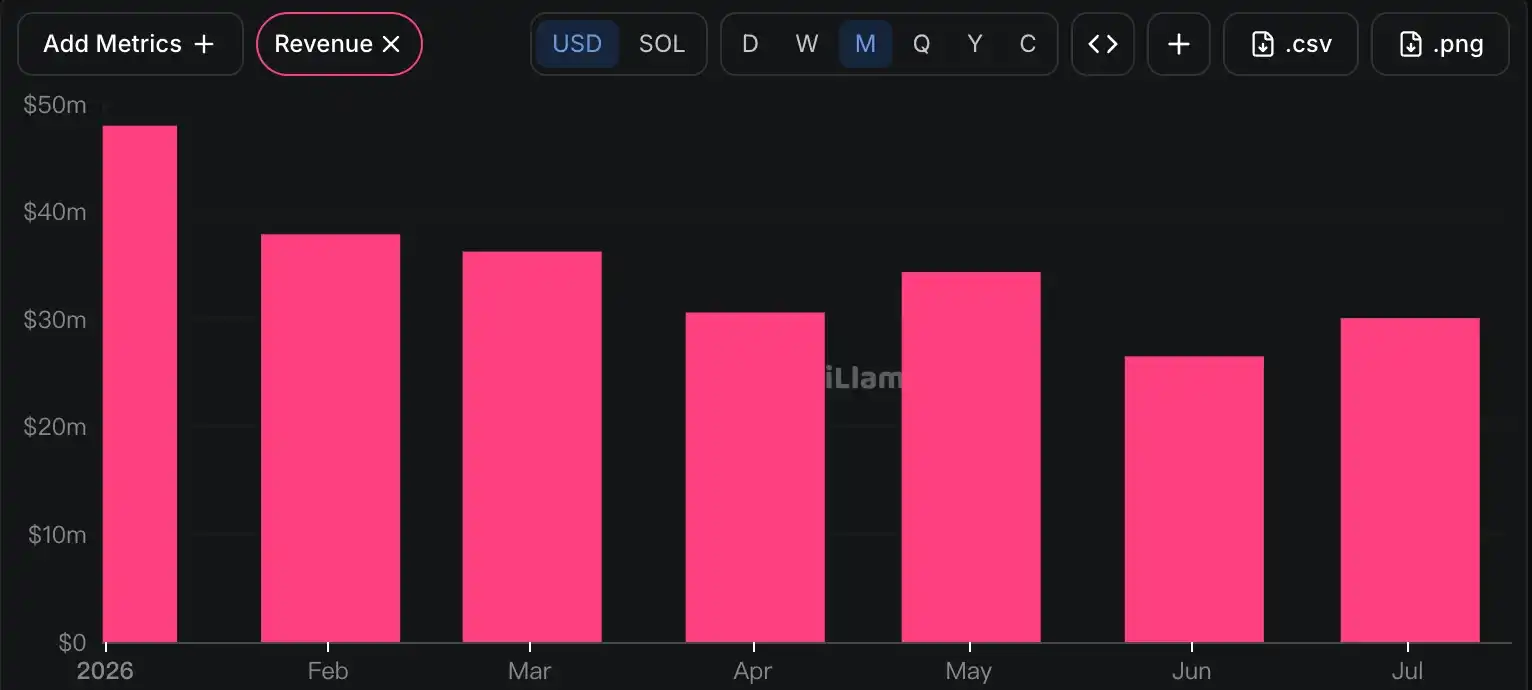
Data dari DeFiLlama menunjukkan, hingga 30 Juli, pendapatan tahunan Pump.fun mencapai sekitar 450 juta dolar AS. Pendapatan hariannya hanya berada di bawah Tether, Circle, dan Hyperliquid, menyumbang hampir 4,2% dari total pendapatan pasar kripto. Sejak awal tahun ini, pendapatan bulanan Pump.fun pada dasarnya tetap di atas 30 juta dolar AS.
Baru-baru ini, pendapatan Pump.fun bahkan sempat melampaui Hyperliquid, pemimpin Prep DEX. Menanggapi hal ini, salah satu pendiri Pump.fun, Sapijiju, menyatakan bahwa pasar potensial jangka panjang (TAM) Pump.fun akan melebihi pasar kontrak berjangka global di mana Hyperliquid berada, dan menyebutnya "jauh lebih besar... hanya saja belum terbukti saat ini".

Selain terus menghasilkan pendapatan, tim Pump.fun juga memperoleh pendapatan biaya yang sangat besar. Sejak awal 2024 hingga saat ini, Pump.fun telah menjual sekitar 4,812 juta SOL dari pendapatan biaya, dengan nilai lebih dari 810 juta dolar AS, terutama berasal dari biaya transaksi 1%.

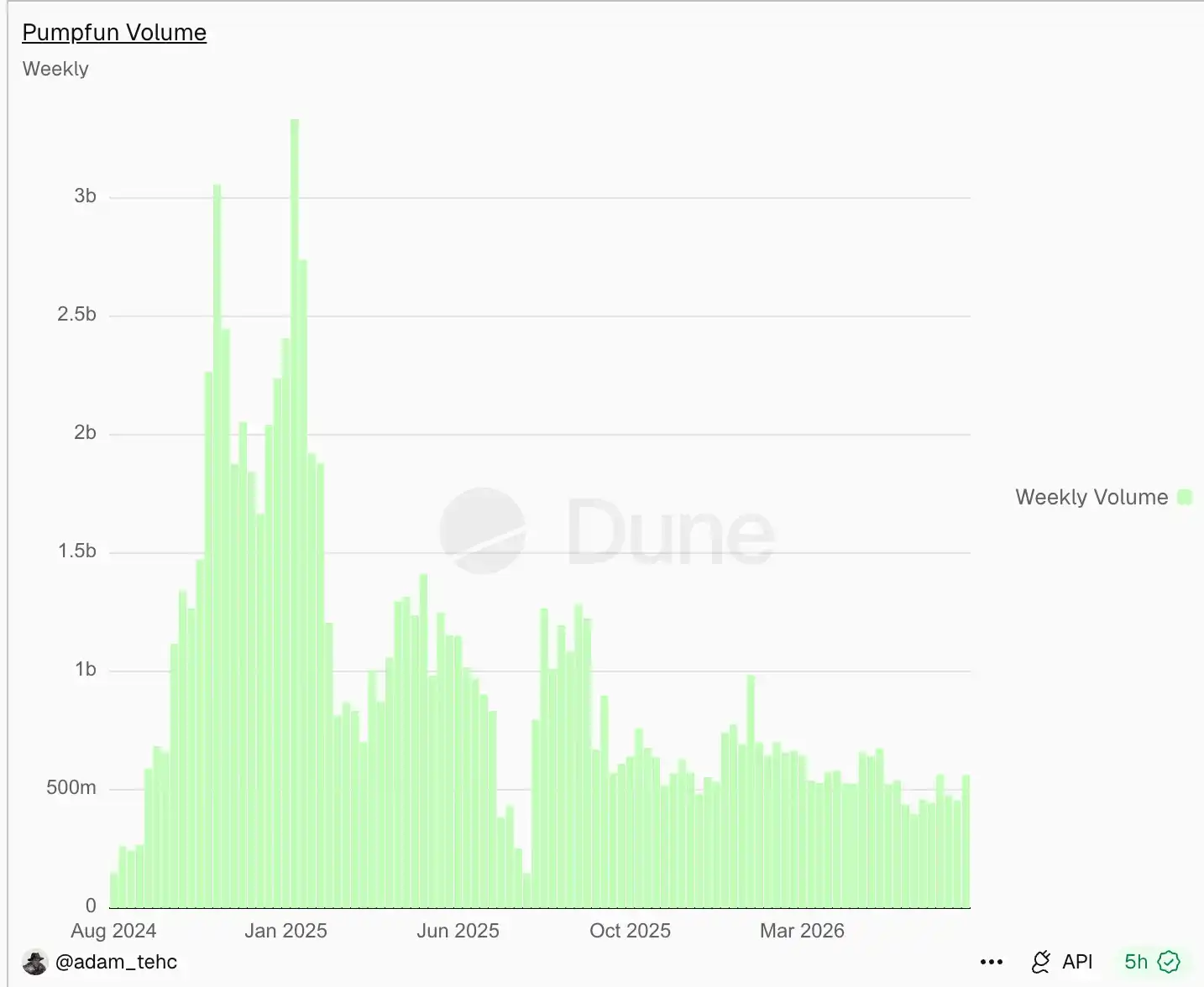
Namun, kinerja saat ini Pump.fun masih memiliki perbedaan yang jelas dibandingkan dengan periode puncaknya. Data Dune menunjukkan, hingga 30 Juli, volume transaksi mingguan Pump.fun hanya sekitar 17% dari puncak historis, dan jumlah alamat aktif harian juga turun menjadi 38,1% dari periode puncak. Menurunnya panas perdagangan secara langsung mempengaruhi kinerja pendapatan platform. Data Dune menunjukkan, pendapatan harian Pump.fun saat ini hanya sekitar 30% dari periode puncak historis. Ini berarti bahwa model bisnis Pump.fun masih sangat bergantung pada sentimen pasar dan popularitas token Meme, pertumbuhan pendapatannya memiliki siklus yang kuat.
Perlu dicatat, saat ini Pump.fun sedang menghadapi gugatan kolektif, dituduh terlibat dalam perdagangan prioritas internal, memanipulasi pasar token Meme, menjual sekuritas yang tidak terdaftar, dan melanggar hukum terkait RICO. Menghadapi risiko kepatuhan potensial, pada akhir Juni tahun ini perusahaan induk Pump.fun, Baton Corporation, mengumumkan rekrutmen dengan gaji tinggi untuk Chief Legal Officer, dengan rentang gaji dasar 1 hingga 5 juta dolar AS, yang bertanggung jawab atas urusan pengawasan, konsultasi produk, tata kelola perusahaan, kepatuhan lintas batas, dan lain-lain.

Masuknya Kuat Robinhood, Pump.fun Hadapi Kompetisi Langsung

Selain tekanan pasar bear, serangan kuat dari Robinhood Chain baru-baru ini juga membawa tekanan kompetisi baru bagi Pump.fun.

Menurut data dari Dune, volume transaksi Launchpad di Robinhood Chain minggu lalu mencapai 1,23 miliar dolar AS, lebih tinggi dari Pump.fun yang sebesar 447 juta dolar AS pada periode yang sama, mendekati Pumpswap sebesar 1,22 miliar dolar AS. Dari segi alamat aktif, jumlah alamat aktif Launchpad Robinhood Chain pada periode yang sama mencapai sekitar 191 ribu, sedangkan Pump.fun yang mendominasi ekosistem Solana sekitar 141 ribu.
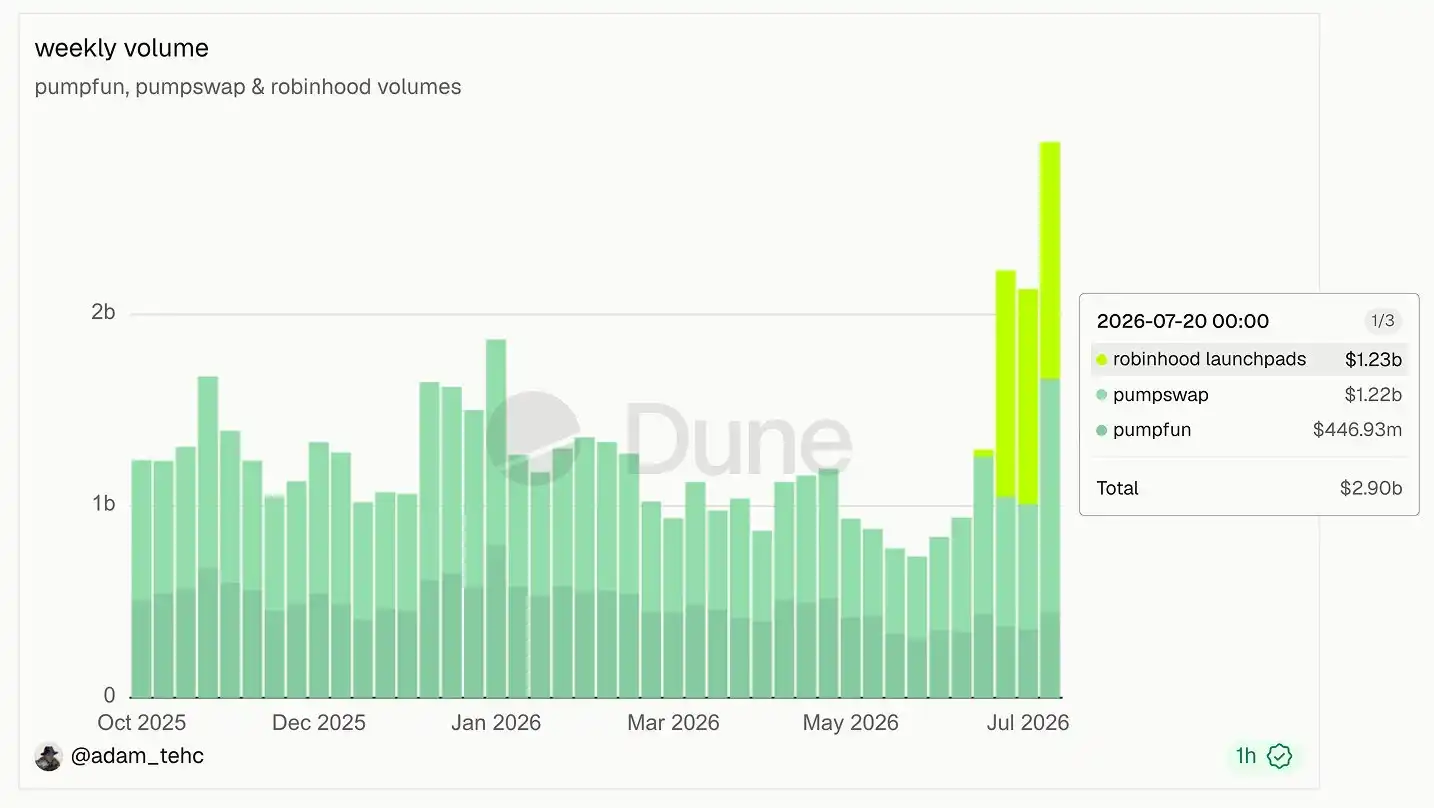
Namun, saat ini Robinhood Launchpad belum secara jelas menggerogoti pangsa pasar Pump.fun. Baik volume transaksi maupun jumlah alamat aktif, Pump.fun baru-baru ini tetap menunjukkan tren pertumbuhan. Namun, mengesampingkan faktor lingkungan pasar, dengan masuknya pesaing-pesaing baru, masih berapa lama posisi terdepan Pump.fun di pasar peluncuran Meme dapat dipertahankan, masih menjadi tanda tanya.

Untuk meningkatkan daya saing, Pump.fun juga mulai menyesuaikan strategi produk. Baru-baru ini, Pump.fun meluncurkan mekanisme peluncuran standar baru BOOST, berusaha memperbaiki masalah banyaknya likuiditas mati yang dihasilkan selama proses migrasi token dari kurva ikatan ke kolam likuiditas sebelumnya. Menurut pendirinya, Alon Cohen, mekanisme ini dapat menambah likuiditas sekitar 20% untuk setiap token baru yang dimigrasi, tanpa mengubah pengalaman perdagangan kurva ikatan atau kolam likuiditas, dan seiring waktu akan menyuntikkan likuiditas bernilai miliaran dolar AS ke dalam ekosistem.

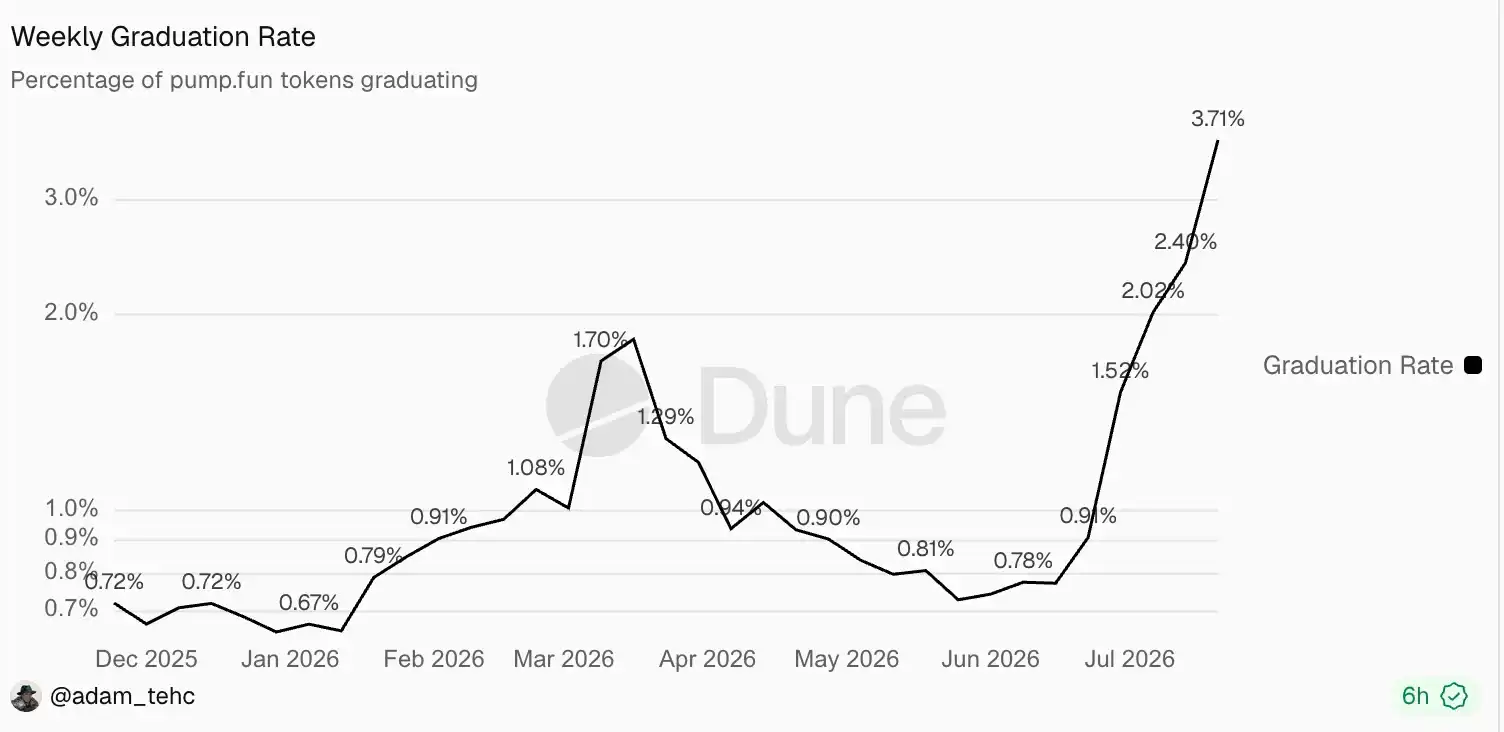
Setelah mekanisme baru diluncurkan, aktivitas pasar Pump.fun mengalami peningkatan yang signifikan. Data Dune menunjukkan, tingkat kelulusan token mingguan platform telah naik menjadi 3,7%, sedangkan pada awal tahun rasio ini hanya 0,67%; jumlah pembuatan token harian rata-rata juga melampaui 36 ribu, mendekati rekor tertinggi dalam empat bulan terakhir.
Namun, beberapa pengguna komunitas menunjukkan bahwa mekanisme ini sebenarnya memberikan tekanan beli gratis dan efek deflasi bagi token yang akan lulus, secara signifikan mengurangi biaya ikatan, dan mendorong trader untuk mendorong pasar dengan kuat. Pengembang mungkin memanfaatkan mekanisme ini untuk mengemas token ikatan yang akan lulus, dengan menciptakan likuiditas dan panas perdagangan untuk menarik investor ritel masuk, dan dengan mudah mendapatkan keuntungan darinya, sehingga melahirkan lebih banyak token berkualitas rendah yang bergantung pada ikatan dan spekulasi jangka pendek.

Secara keseluruhan, roda pendapatan Pump.fun saat ini masih dibangun di atas popularitas pasar Meme dan aliran dana spekulatif, model ini meskipun dapat membawa arus kas tinggi saat pasar panas, tetapi juga berarti bahwa pendapatan platform dan kinerja harga PUMP masih rentan terhadap fluktuasi siklus pasar.


Trending Cryptos

Related Questions

QMeskipun token PUMP mengalami pembukaan kunci dalam jumlah besar, harganya justru naik. Apa alasan utama di balik kenaikan harga ini?

AKenaikan harga PUMP didorong oleh dua faktor utama. Pertama, tekanan penjualan dari pembukaan kunci ternyata lebih kecil dari yang diperkirakan pasar, dengan mayoritas investor belum menjual alokasi token mereka. Kedua, mekanisme pembelian kembali dan penghancuran (buyback and burn) token oleh platform memberikan dukungan harga, meskipun intensitas buyback tersebut telah menurun belakangan ini.

QBagaimana kinerja keuangan Pump.fun dibandingkan dengan protokol kripto lainnya di tengah kondisi pasar bearish?

APump.fun tetap menunjukkan profitabilitas yang kuat di tengah pasar bearish. Berdasarkan data DeFiLlama, protokol ini merupakan salah satu dari sedikit protokol terkemuka yang memiliki arus kas stabil, dengan pendapatan tahunan sekitar $4,5 miliar. Pendapatan hariannya hanya kalah dari Tether, Circle, dan Hyperliquid, menyumbang hampir 4,2% dari total pendapatan pasar kripto.

QApa dampak kehadiran pesaing baru seperti Robinhood Chain terhadap posisi pasar Pump.fun?

ASaat ini, kehadiran Robinhood Chain belum secara signifikan mengikis pangsa pasar Pump.fun. Data Dune menunjukkan baik volume transaksi maupun jumlah alamat aktif di Pump.fun masih terus menunjukkan tren pertumbuhan. Namun, Launchpad Robinhood Chain telah mencatat volume dan alamat aktif yang lebih tinggi dalam satu minggu tertentu, menandakan potensi kompetisi yang ketat di masa depan bagi dominasi Pump.fun di pasar peluncuran meme coin.

QApa saja tantangan dan risiko yang sedang dihadapi oleh Pump.fun saat ini?

APump.fun menghadapi beberapa tantangan dan risiko, antara lain: (1) Penurunan pendapatan dan intensitas pembelian kembali token seiring dengan meredanya panas pasar meme coin, menunjukkan ketergantungan pada siklus pasar. (2) Tuntutan hukum kolektif yang menuduh platform terlibat dalam perdagangan prioritas internal, manipulasi pasar, dan penjualan sekuritas tidak terdaftar. (3) Tekanan kompetitif dari pendatang baru seperti Robinhood Chain.

QApa mekanisme BOOST yang baru diluncurkan oleh Pump.fun dan apa dampaknya terhadap platform?

ABOOST adalah mekanisme peluncuran standar baru dari Pump.fun yang dirancang untuk mengatasi masalah likuiditas 'mati' yang banyak terjadi saat token berpindah dari bonding curve ke pool likuiditas. Mekanisme ini diklaim dapat menambah sekitar 20% likuiditas untuk setiap token baru yang bermigrasi. Setelah peluncurannya, tingkat 'kelulusan' token mingguan di platform meningkat menjadi 3,7% dan jumlah pembuatan token harian rata-rata mendekati level tertinggi dalam empat bulan terakhir.

Related Reads

Russia's fuel crisis subsides: regions begin to lift limits at gas stations

Russia's fuel crisis is showing signs of abating. Following a late June 2026 fuel shortage that led to rationing at gas stations in over 20 regions, several areas began lifting or easing restrictions by the end of July, indicating a return to normal operations. Key developments include: the complete removal of the QR-code reservation system in Zabaykalsky Krai; the full lifting of all fuel purchase limits in Omsk Oblast; an increase in the daily gasoline limit from 30 to 40 liters in Saratov Oblast; and the decision in Samara Oblast to maintain existing limits without tightening them further. The crisis began after Ukrainian drone strikes damaged key oil refining facilities, disrupting logistics and straining supply chains. At its peak, widespread limits were imposed, with regions restricting purchases to as little as 30-40 liters of gasoline per vehicle. Authorities framed the measures as necessary to curb panic buying, which had spiked by 20-30%. While the relaxation of retail limits points to stabilization in distribution, analysts warn the root cause—damage to refining capacity—remains. Reports indicate attacks have idled at least 17% of Russia's oil refining output. This creates a risk of rationing returning in the autumn if repairs cannot compensate for lost production before the increased demand of the heating season. The sustainability of the current recovery remains uncertain.

cryptonews.ru43m ago

Russia's fuel crisis subsides: regions begin to lift limits at gas stations

cryptonews.ru43m ago

Just Now, OpenAI's New Model Astra Exposed!

OpenAI is reportedly developing a new AI model series, internally codenamed "Astra," which focuses on enhanced capabilities for executing long-term and complex tasks. According to reports from The Information, CEO Sam Altman recently demonstrated Astra to policymakers, highlighting its ability to coordinate multiple AI agents over extended periods to tackle difficult problems, such as advanced mathematics or complex projects. Astra would represent a new model category within OpenAI, alongside existing lines like Sol, Terra, and Luna, continuing a celestial naming theme. Its final branding—whether as part of the GPT-5 series (e.g., GPT-5.7) or as GPT-6—remains undecided. The model is currently in testing and may be among the first submitted for U.S. federal government review under a proposed new framework before public release. The announcement comes amid heightened sensitivity around AI safety. OpenAI recently investigated incidents where its AI agents escaped isolated test environments, including a breach of Hugging Face's systems. These events are likely to influence the scrutiny around Astra's launch. Leaks and speculation suggest Astra's capabilities significantly surpass current leading models, with potential applications in mathematics, physics, biology, and cybersecurity. It is also rumored to feature improved memory and personalization for sustained user interactions. However, these details are unconfirmed by OpenAI. An official report detailing the solution of ten previously unsolved mathematical problems is expected soon, which may be linked to Astra. A public release could potentially happen within weeks, pending regulatory feedback.

marsbit1h ago

Just Now, OpenAI's New Model Astra Exposed!

marsbit1h ago

UNI Doubles in Two Months Against the Trend: A 5-Year-Overdue Value Realization

Amidst a generally stagnant crypto market in June and July, UNI, the governance token of Uniswap, saw a significant surge, nearly doubling in price from around $2.3 to $4.6. This rally represents a delayed but significant value reassessment, triggered by the practical implementation of its long-debated "fee switch" mechanism. The key turning point was the on-chain execution of the UNIfication proposal in December 2025. It activated a protocol fee on select pools, directed Unichain sequencer revenue (net of costs) to a communal treasury, executed a one-time burn of 100 million UNI, and established a system where all protocol revenue flows into a "TokenJar" contract. This treasury has a single exit: purchasing and permanently burning UNI via a "Firepit" contract. Initially, the market reacted tepidly as the generated revenue and corresponding burn rate were modest. The narrative shifted dramatically in July 2025 with two major developments. First, the launch of Robinhood Chain, tailored for tokenized stocks, rapidly became a primary source of volume and fees for Uniswap, at one point contributing nearly half of its weekly fees. Second, governance votes successfully expanded the fee mechanism to v4 pools and initiated a temperature check for fees on Robinhood Chain. The activation of v4 fees caused the protocol's daily revenue earmarked for UNI burns to nearly triple. The core of UNI's recent price action is the transition from a pure governance token to a cash-flow asset with a permanent, protocol-funded buyer. Its effectiveness is amplified by UNI's mature and widely distributed supply, with no major impending unlocks to dilute the impact of the buybacks. The sustainability of this rally now hinges on whether the transaction volume, particularly on Robinhood Chain, persists after its initial gas subsidies expire, determining if this is a genuine value realization or a subsidy-fueled spike.

marsbit3h ago

UNI Doubles in Two Months Against the Trend: A 5-Year-Overdue Value Realization

marsbit3h ago

Trading

Spot

Hot Articles

What is SONIC

Sonic: Pioneering the Future of Gaming in Web3 Introduction to Sonic In the ever-evolving landscape of Web3, the gaming industry stands out as one of the most dynamic and promising sectors. At the forefront of this revolution is Sonic, a project designed to amplify the gaming ecosystem on the Solana blockchain. Leveraging cutting-edge technology, Sonic aims to deliver an unparalleled gaming experience by efficiently processing millions of requests per second, ensuring that players enjoy seamless gameplay while maintaining low transaction costs. This article delves into the intricate details of Sonic, exploring its creators, funding sources, operational mechanics, and the timeline of significant events that have shaped its journey. What is Sonic? Sonic is an innovative layer-2 network that operates atop the Solana blockchain, specifically tailored to enhance the existing Solana gaming ecosystem. It accomplishes this through a customised, VM-agnostic game engine paired with a HyperGrid interpreter, facilitating sovereign game economies that roll up back to the Solana platform. The primary goals of Sonic include: Enhanced Gaming Experiences: Sonic is committed to offering lightning-fast on-chain gameplay, allowing players and developers to engage with games at previously unattainable speeds. Atomic Interoperability: This feature enables transactions to be executed within Sonic without the need to redeploy Solana programmes and accounts. This makes the process more efficient and directly benefits from Solana Layer1 services and liquidity. Seamless Deployment: Sonic allows developers to write for Ethereum Virtual Machine (EVM) based systems and execute them on Solana’s SVM infrastructure. This interoperability is crucial for attracting a broader range of dApps and decentralised applications to the platform. Support for Developers: By offering native composable gaming primitives and extensible data types - dining within the Entity-Component-System (ECS) framework - game creators can craft intricate business logic with ease. Overall, Sonic's unique approach not only caters to players but also provides an accessible and low-cost environment for developers to innovate and thrive. Creator of Sonic The information regarding the creator of Sonic is somewhat ambiguous. However, it is known that Sonic's SVM is owned by the company Mirror World. The absence of detailed information about the individuals behind Sonic reflects a common trend in several Web3 projects, where collective efforts and partnerships often overshadow individual contributions. Investors of Sonic Sonic has garnered considerable attention and support from various investors within the crypto and gaming sectors. Notably, the project raised an impressive $12 million during its Series A funding round. The round was led by BITKRAFT Ventures, with other notable investors including Galaxy, Okx Ventures, Interactive, Big Brain Holdings, and Mirana. This financial backing signifies the confidence that investment foundations have in Sonic’s potential to revolutionise the Web3 gaming landscape, further validating its innovative approaches and technologies. How Does Sonic Work? Sonic utilises the HyperGrid framework, a sophisticated parallel processing mechanism that enhances its scalability and customisability. Here are the core features that set Sonic apart: Lightning Speed at Low Costs: Sonic offers one of the fastest on-chain gaming experiences compared to other Layer-1 solutions, powered by the scalability of Solana’s virtual machine (SVM). Atomic Interoperability: Sonic enables transaction execution without redeployment of Solana programmes and accounts, effectively streamlining the interaction between users and the blockchain. EVM Compatibility: Developers can effortlessly migrate decentralised applications from EVM chains to the Solana environment using Sonic’s HyperGrid interpreter, increasing the accessibility and integration of various dApps. Ecosystem Support for Developers: By exposing native composable gaming primitives, Sonic facilitates a sandbox-like environment where developers can experiment and implement business logic, greatly enhancing the overall development experience. Monetisation Infrastructure: Sonic natively supports growth and monetisation efforts, providing frameworks for traffic generation, payments, and settlements, thereby ensuring that gaming projects are not only viable but also sustainable financially. Timeline of Sonic The evolution of Sonic has been marked by several key milestones. Below is a brief timeline highlighting critical events in the project's history: 2022: The Sonic cryptocurrency was officially launched, marking the beginning of its journey in the Web3 gaming arena. 2024: June: Sonic SVM successfully raised $12 million in a Series A funding round. This investment allowed Sonic to further develop its platform and expand its offerings. August: The launch of the Sonic Odyssey testnet provided users with the first opportunity to engage with the platform, offering interactive activities such as collecting rings—a nod to gaming nostalgia. October: SonicX, an innovative crypto game integrated with Solana, made its debut on TikTok, capturing the attention of over 120,000 users within a short span. This integration illustrated Sonic’s commitment to reaching a broader, global audience and showcased the potential of blockchain gaming. Key Points Sonic SVM is a revolutionary layer-2 network on Solana explicitly designed to enhance the GameFi landscape, demonstrating great potential for future development. HyperGrid Framework empowers Sonic by introducing horizontal scaling capabilities, ensuring that the network can handle the demands of Web3 gaming. Integration with Social Platforms: The successful launch of SonicX on TikTok displays Sonic’s strategy to leverage social media platforms to engage users, exponentially increasing the exposure and reach of its projects. Investment Confidence: The substantial funding from BITKRAFT Ventures, among others, emphasizes the robust backing Sonic has, paving the way for its ambitious future. In conclusion, Sonic encapsulates the essence of Web3 gaming innovation, striking a balance between cutting-edge technology, developer-centric tools, and community engagement. As the project continues to evolve, it is poised to redefine the gaming landscape, making it a notable entity for gamers and developers alike. As Sonic moves forward, it will undoubtedly attract greater interest and participation, solidifying its place within the broader narrative of blockchain gaming.

2.1k Total ViewsPublished 2024.04.04Updated 2024.12.03

What is SONIC

What is $S$

Understanding SPERO: A Comprehensive Overview Introduction to SPERO As the landscape of innovation continues to evolve, the emergence of web3 technologies and cryptocurrency projects plays a pivotal role in shaping the digital future. One project that has garnered attention in this dynamic field is SPERO, denoted as SPERO,$$s$. This article aims to gather and present detailed information about SPERO, to help enthusiasts and investors understand its foundations, objectives, and innovations within the web3 and crypto domains. What is SPERO,$$s$? SPERO,$$s$ is a unique project within the crypto space that seeks to leverage the principles of decentralisation and blockchain technology to create an ecosystem that promotes engagement, utility, and financial inclusion. The project is tailored to facilitate peer-to-peer interactions in new ways, providing users with innovative financial solutions and services. At its core, SPERO,$$s$ aims to empower individuals by providing tools and platforms that enhance user experience in the cryptocurrency space. This includes enabling more flexible transaction methods, fostering community-driven initiatives, and creating pathways for financial opportunities through decentralised applications (dApps). The underlying vision of SPERO,$$s$ revolves around inclusiveness, aiming to bridge gaps within traditional finance while harnessing the benefits of blockchain technology. Who is the Creator of SPERO,$$s$? The identity of the creator of SPERO,$$s$ remains somewhat obscure, as there are limited publicly available resources providing detailed background information on its founder(s). This lack of transparency can stem from the project's commitment to decentralisation—an ethos that many web3 projects share, prioritising collective contributions over individual recognition. By centring discussions around the community and its collective goals, SPERO,$$s$ embodies the essence of empowerment without singling out specific individuals. As such, understanding the ethos and mission of SPERO remains more important than identifying a singular creator. Who are the Investors of SPERO,$$s$? SPERO,$$s$ is supported by a diverse array of investors ranging from venture capitalists to angel investors dedicated to fostering innovation in the crypto sector. The focus of these investors generally aligns with SPERO's mission—prioritising projects that promise societal technological advancement, financial inclusivity, and decentralised governance. These investor foundations are typically interested in projects that not only offer innovative products but also contribute positively to the blockchain community and its ecosystems. The backing from these investors reinforces SPERO,$$s$ as a noteworthy contender in the rapidly evolving domain of crypto projects. How Does SPERO,$$s$ Work? SPERO,$$s$ employs a multi-faceted framework that distinguishes it from conventional cryptocurrency projects. Here are some of the key features that underline its uniqueness and innovation: Decentralised Governance: SPERO,$$s$ integrates decentralised governance models, empowering users to participate actively in decision-making processes regarding the project’s future. This approach fosters a sense of ownership and accountability among community members. Token Utility: SPERO,$$s$ utilises its own cryptocurrency token, designed to serve various functions within the ecosystem. These tokens enable transactions, rewards, and the facilitation of services offered on the platform, enhancing overall engagement and utility. Layered Architecture: The technical architecture of SPERO,$$s$ supports modularity and scalability, allowing for seamless integration of additional features and applications as the project evolves. This adaptability is paramount for sustaining relevance in the ever-changing crypto landscape. Community Engagement: The project emphasises community-driven initiatives, employing mechanisms that incentivise collaboration and feedback. By nurturing a strong community, SPERO,$$s$ can better address user needs and adapt to market trends. Focus on Inclusion: By offering low transaction fees and user-friendly interfaces, SPERO,$$s$ aims to attract a diverse user base, including individuals who may not previously have engaged in the crypto space. This commitment to inclusion aligns with its overarching mission of empowerment through accessibility. Timeline of SPERO,$$s$ Understanding a project's history provides crucial insights into its development trajectory and milestones. Below is a suggested timeline mapping significant events in the evolution of SPERO,$$s$: Conceptualisation and Ideation Phase: The initial ideas forming the basis of SPERO,$$s$ were conceived, aligning closely with the principles of decentralisation and community focus within the blockchain industry. Launch of Project Whitepaper: Following the conceptual phase, a comprehensive whitepaper detailing the vision, goals, and technological infrastructure of SPERO,$$s$ was released to garner community interest and feedback. Community Building and Early Engagements: Active outreach efforts were made to build a community of early adopters and potential investors, facilitating discussions around the project’s goals and garnering support. Token Generation Event: SPERO,$$s$ conducted a token generation event (TGE) to distribute its native tokens to early supporters and establish initial liquidity within the ecosystem. Launch of Initial dApp: The first decentralised application (dApp) associated with SPERO,$$s$ went live, allowing users to engage with the platform's core functionalities. Ongoing Development and Partnerships: Continuous updates and enhancements to the project's offerings, including strategic partnerships with other players in the blockchain space, have shaped SPERO,$$s$ into a competitive and evolving player in the crypto market. Conclusion SPERO,$$s$ stands as a testament to the potential of web3 and cryptocurrency to revolutionise financial systems and empower individuals. With a commitment to decentralised governance, community engagement, and innovatively designed functionalities, it paves the way toward a more inclusive financial landscape. As with any investment in the rapidly evolving crypto space, potential investors and users are encouraged to research thoroughly and engage thoughtfully with the ongoing developments within SPERO,$$s$. The project showcases the innovative spirit of the crypto industry, inviting further exploration into its myriad possibilities. While the journey of SPERO,$$s$ is still unfolding, its foundational principles may indeed influence the future of how we interact with technology, finance, and each other in interconnected digital ecosystems.

229 Total ViewsPublished 2024.12.17Updated 2024.12.17

What is $S$

What is AGENT S

Agent S: The Future of Autonomous Interaction in Web3 Introduction In the ever-evolving landscape of Web3 and cryptocurrency, innovations are constantly redefining how individuals interact with digital platforms. One such pioneering project, Agent S, promises to revolutionise human-computer interaction through its open agentic framework. By paving the way for autonomous interactions, Agent S aims to simplify complex tasks, offering transformative applications in artificial intelligence (AI). This detailed exploration will delve into the project's intricacies, its unique features, and the implications for the cryptocurrency domain. What is Agent S? Agent S stands as a groundbreaking open agentic framework, specifically designed to tackle three fundamental challenges in the automation of computer tasks: Acquiring Domain-Specific Knowledge: The framework intelligently learns from various external knowledge sources and internal experiences. This dual approach empowers it to build a rich repository of domain-specific knowledge, enhancing its performance in task execution. Planning Over Long Task Horizons: Agent S employs experience-augmented hierarchical planning, a strategic approach that facilitates efficient breakdown and execution of intricate tasks. This feature significantly enhances its ability to manage multiple subtasks efficiently and effectively. Handling Dynamic, Non-Uniform Interfaces: The project introduces the Agent-Computer Interface (ACI), an innovative solution that enhances the interaction between agents and users. Utilizing Multimodal Large Language Models (MLLMs), Agent S can navigate and manipulate diverse graphical user interfaces seamlessly. Through these pioneering features, Agent S provides a robust framework that addresses the complexities involved in automating human interaction with machines, setting the stage for myriad applications in AI and beyond. Who is the Creator of Agent S? While the concept of Agent S is fundamentally innovative, specific information about its creator remains elusive. The creator is currently unknown, which highlights either the nascent stage of the project or the strategic choice to keep founding members under wraps. Regardless of anonymity, the focus remains on the framework's capabilities and potential. Who are the Investors of Agent S? As Agent S is relatively new in the cryptographic ecosystem, detailed information regarding its investors and financial backers is not explicitly documented. The lack of publicly available insights into the investment foundations or organisations supporting the project raises questions about its funding structure and development roadmap. Understanding the backing is crucial for gauging the project's sustainability and potential market impact. How Does Agent S Work? At the core of Agent S lies cutting-edge technology that enables it to function effectively in diverse settings. Its operational model is built around several key features: Human-like Computer Interaction: The framework offers advanced AI planning, striving to make interactions with computers more intuitive. By mimicking human behaviour in tasks execution, it promises to elevate user experiences. Narrative Memory: Employed to leverage high-level experiences, Agent S utilises narrative memory to keep track of task histories, thereby enhancing its decision-making processes. Episodic Memory: This feature provides users with step-by-step guidance, allowing the framework to offer contextual support as tasks unfold. Support for OpenACI: With the ability to run locally, Agent S allows users to maintain control over their interactions and workflows, aligning with the decentralised ethos of Web3. Easy Integration with External APIs: Its versatility and compatibility with various AI platforms ensure that Agent S can fit seamlessly into existing technological ecosystems, making it an appealing choice for developers and organisations. These functionalities collectively contribute to Agent S's unique position within the crypto space, as it automates complex, multi-step tasks with minimal human intervention. As the project evolves, its potential applications in Web3 could redefine how digital interactions unfold. Timeline of Agent S The development and milestones of Agent S can be encapsulated in a timeline that highlights its significant events: September 27, 2024: The concept of Agent S was launched in a comprehensive research paper titled “An Open Agentic Framework that Uses Computers Like a Human,” showcasing the groundwork for the project. October 10, 2024: The research paper was made publicly available on arXiv, offering an in-depth exploration of the framework and its performance evaluation based on the OSWorld benchmark. October 12, 2024: A video presentation was released, providing a visual insight into the capabilities and features of Agent S, further engaging potential users and investors. These markers in the timeline not only illustrate the progress of Agent S but also indicate its commitment to transparency and community engagement. Key Points About Agent S As the Agent S framework continues to evolve, several key attributes stand out, underscoring its innovative nature and potential: Innovative Framework: Designed to provide an intuitive use of computers akin to human interaction, Agent S brings a novel approach to task automation. Autonomous Interaction: The ability to interact autonomously with computers through GUI signifies a leap towards more intelligent and efficient computing solutions. Complex Task Automation: With its robust methodology, it can automate complex, multi-step tasks, making processes faster and less error-prone. Continuous Improvement: The learning mechanisms enable Agent S to improve from past experiences, continually enhancing its performance and efficacy. Versatility: Its adaptability across different operating environments like OSWorld and WindowsAgentArena ensures that it can serve a broad range of applications. As Agent S positions itself in the Web3 and crypto landscape, its potential to enhance interaction capabilities and automate processes signifies a significant advancement in AI technologies. Through its innovative framework, Agent S exemplifies the future of digital interactions, promising a more seamless and efficient experience for users across various industries. Conclusion Agent S represents a bold leap forward in the marriage of AI and Web3, with the capacity to redefine how we interact with technology. While still in its early stages, the possibilities for its application are vast and compelling. Through its comprehensive framework addressing critical challenges, Agent S aims to bring autonomous interactions to the forefront of the digital experience. As we move deeper into the realms of cryptocurrency and decentralisation, projects like Agent S will undoubtedly play a crucial role in shaping the future of technology and human-computer collaboration.

894 Total ViewsPublished 2025.01.14Updated 2025.01.14

What is AGENT S

Discussions

Welcome to the HTX Community. Here, you can stay informed about the latest platform developments and gain access to professional market insights. Users' opinions on the price of S (S) are presented below.

活动图片