AI is Killing 'Poor People's Entertainment'

marsbitPublished on 2026-07-30Last updated on 2026-07-30

Abstract

AI Is Eliminating 'Entertainment for the Poor' This article discusses the rising cost of video gaming, arguing that AI is making digital entertainment increasingly expensive. It follows the example of a frugal gamer who, accustomed to waiting for discounts and buying second-hand games, now faces a new reality. Video game consoles like the PS5 Pro and Switch 2 are increasing in price post-launch, breaking the traditional pattern of降价 over time. Game prices are also rising, with major titles like GTA 6 launching at $80. Furthermore, the industry is moving towards eliminating physical media, exemplified by Sony's plan to stop PS disc production by 2028. This shift blocks the二手 market, a key cost-saving avenue for players. Even Valve's anticipated affordable Steam Machine launched with a high price and disappointing specs. Manufacturers cite inflation, supply chain issues, and rising development costs, but a core driver is the AI boom. AI data centers now consume semiconductor and memory resources once prioritized for consumer electronics like game consoles. This competition from a more profitable sector drives up hardware costs. Additionally, developing modern AAA games with massive teams over many years is astronomically expensive, pushing publishers towards digital-only distribution and subscription models to secure recurring revenue. The article suggests this trend extends beyond gaming. Video streaming, music platforms, cloud storage, and AI tools are increasingly locked...

Lao G, the famous A-share stock trader and gamer in the office, is experiencing the worst summer of his life.

As a veteran "wait-and-see" player, his stock trading philosophy is to buy low and sell high, and he never buys games without discounts. This "frugal-gaming" strategy worked well for years, but this year, everything changed.

The stocks he couldn't bear to sell keep hitting new lows;

The gaming console he couldn't bear to buy is becoming increasingly unaffordable.

The PS5 Pro, which launched at 5600 yuan, now costs over 7000; the Switch 2 he had been eyeing for a long time has also joined the price hike brigade; and the much-anticipated Steam Machine turned out to be a complete disappointment.

Even the monthly fees for PS Plus and Xbox Game Pass have been raised repeatedly.

The world has changed.

The trajectory of the A-share market has become unpredictable, and the rule in the gaming world of "buy early to enjoy early, buy late to get discounts" seems to have vanished overnight.

The Gaming Console, the Annual Financial Product

At the end of "The Count of Monte Cristo," Alexandre Dumas wrote:

All human wisdom is summed up in these two words: Wait and Hope.

For gamers, both are now gone.

"Waiters shall never be slaves" is the ancestral teaching of the gaming circle. For the past twenty or thirty years, waiting was a guaranteed profitable endeavor.

Every generation of consoles followed roughly the same script: launch at a relatively high price, paid for by core players with deep pockets. Then, as sales grew and production ramped up, unit costs were gradually reduced, and manufacturers were happy to cut prices to capture market share.

Thus, the price curve for each console generation resembled a gentle downward slope. The PS4 saw a price cut within a year and a half of launch, and the Xbox One developed a muscle memory for price reductions.
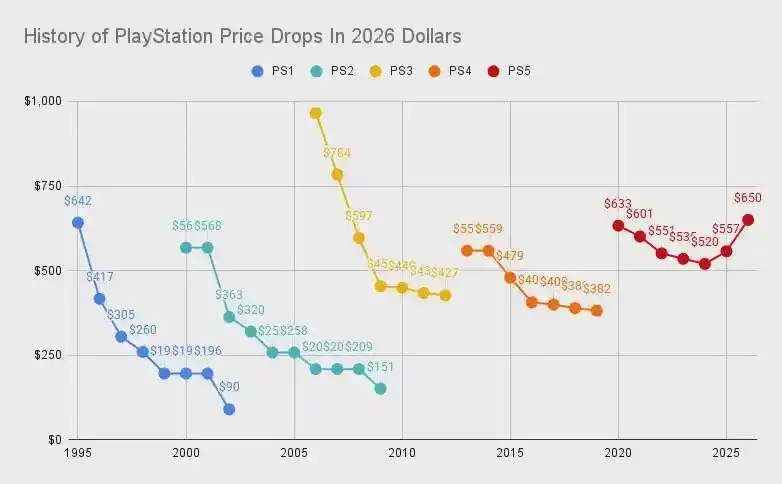
Price changes of previous PS consoles

No one understands waiting better than console players: it was the path to happiness.

But this rule is now outdated.

The PS5 Disc Edition launched at 3899 yuan and increased by 400 yuan the following year.

Many players, adhering to the ancestral teaching of "buying late for discounts," continued to wait, finally receiving their "reward" this year: in March, Sony announced another global price increase, with the Chinese digital version surging by 500 yuan. The PS5 Pro, not yet warmed up, immediately increased by 700 yuan, now "friendship priced" at 6299 yuan.
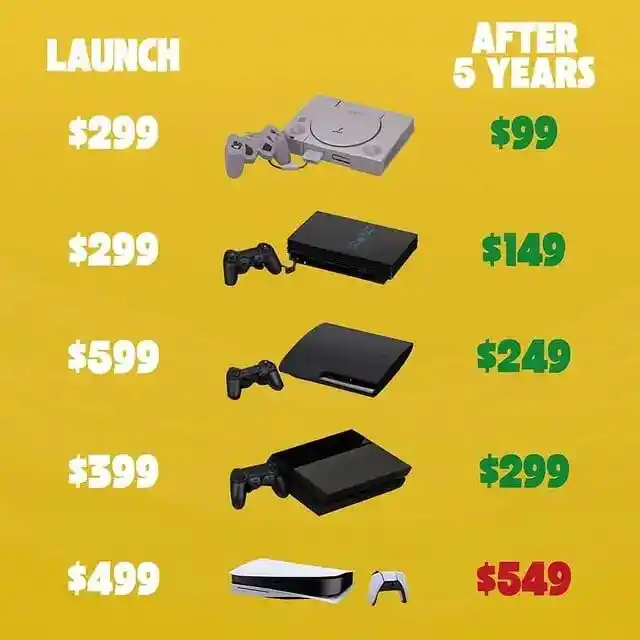
If you buy a PS5 Digital Edition today, you'll spend one-third more than the launch price (3099 yuan - 3999 yuan), while the PS5 Pro costs more than twice as much as its predecessor, the PS4 Pro.

And that's the ideal scenario, because you might not even get it in stock. Ask any reseller, and in-stock units are all 7000+.

Don't even be picky—look around, where can you find in-stock consoles nowadays? These are all "greenhouse-grown" gaming machines; you think they're expensive? I think they're expensive too.

Even Nintendo, known for being "affordable," couldn't hold out.

In May this year, less than a year after its launch, the Switch 2 announced a global price increase, with the Hong Kong version confirming a follow-up in September. It didn't even survive to the age where price cuts traditionally happen; it raised prices preemptively.

Even the nine-year-old original Switch lineup collectively increased in price. A 2017 machine became more expensive in 2026, solidifying its status as a financial product.
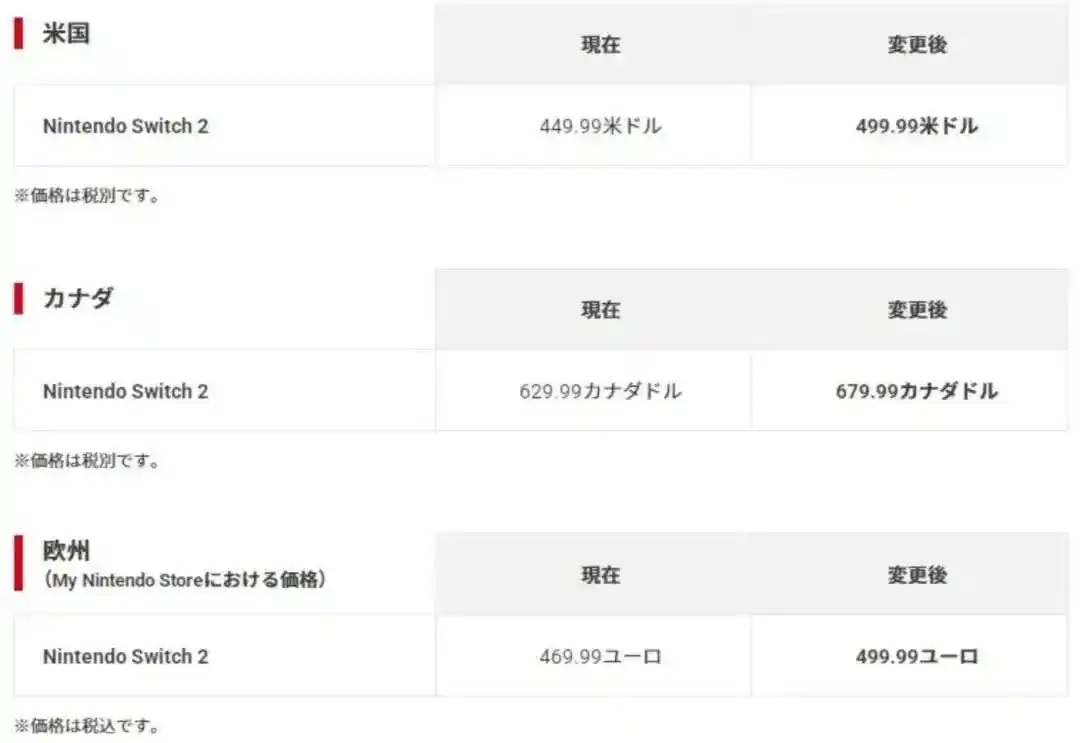
But that's not all. If you keep an eye on this industry, you'll find that all that was solid is melting into air.

It's not just consoles that are getting more expensive; the games themselves are too.

Last month, GTA6, the game everyone was waiting for, finally revealed its first suspense: the standard edition is $79.99, and the deluxe edition is $99.99 (568 HKD and 708 HKD respectively for the Hong Kong version).

The gaming industry spent over a decade, hesitantly paving the way to raise prices from $60 to $70, with players complaining for rounds before reluctantly accepting it. This time, before the $70 seat was even warm, $80 has arrived.

The more generous part from Rockstar is that they still offer some low-region pricing for domestic players.

But a sugar-coated date can't offset a slap in the face. Rockstar also announced that the physical launch version will ditch discs; the box will only contain a redemption code, effectively blocking the second-hand market.

In the past, physical discs were the poor gamer's Noah's Ark: buy a disc at full price on launch, finish the game, then sell it second-hand to recoup most of the cost.

For the wealthy, collecting beautifully crafted steelbook editions was also a joy.

But soon, all this will become old news.

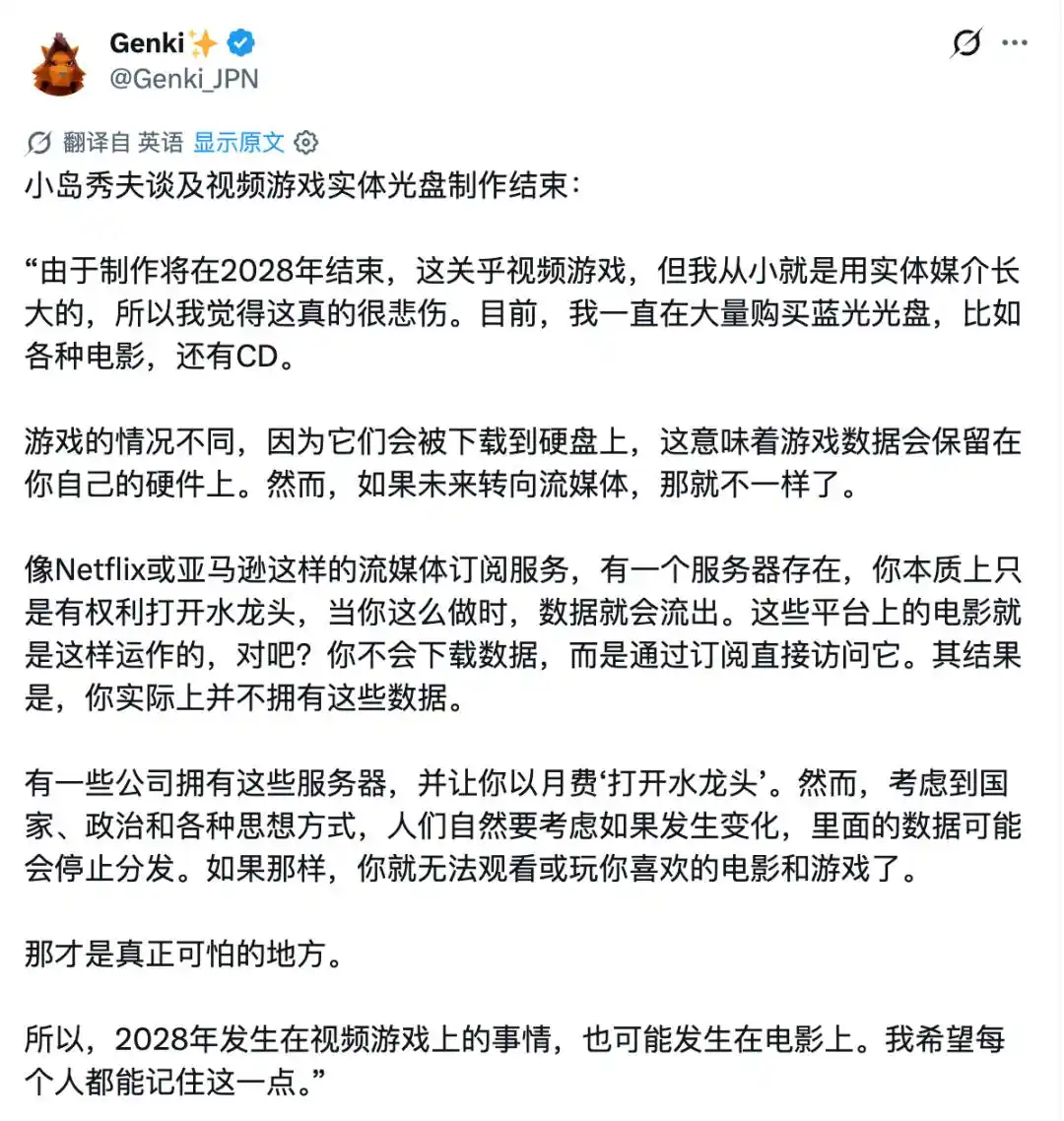
Because Sony just announced they will completely eliminate PS physical discs by 2028.

For players, you can never truly own a game anymore; you're merely renting it.
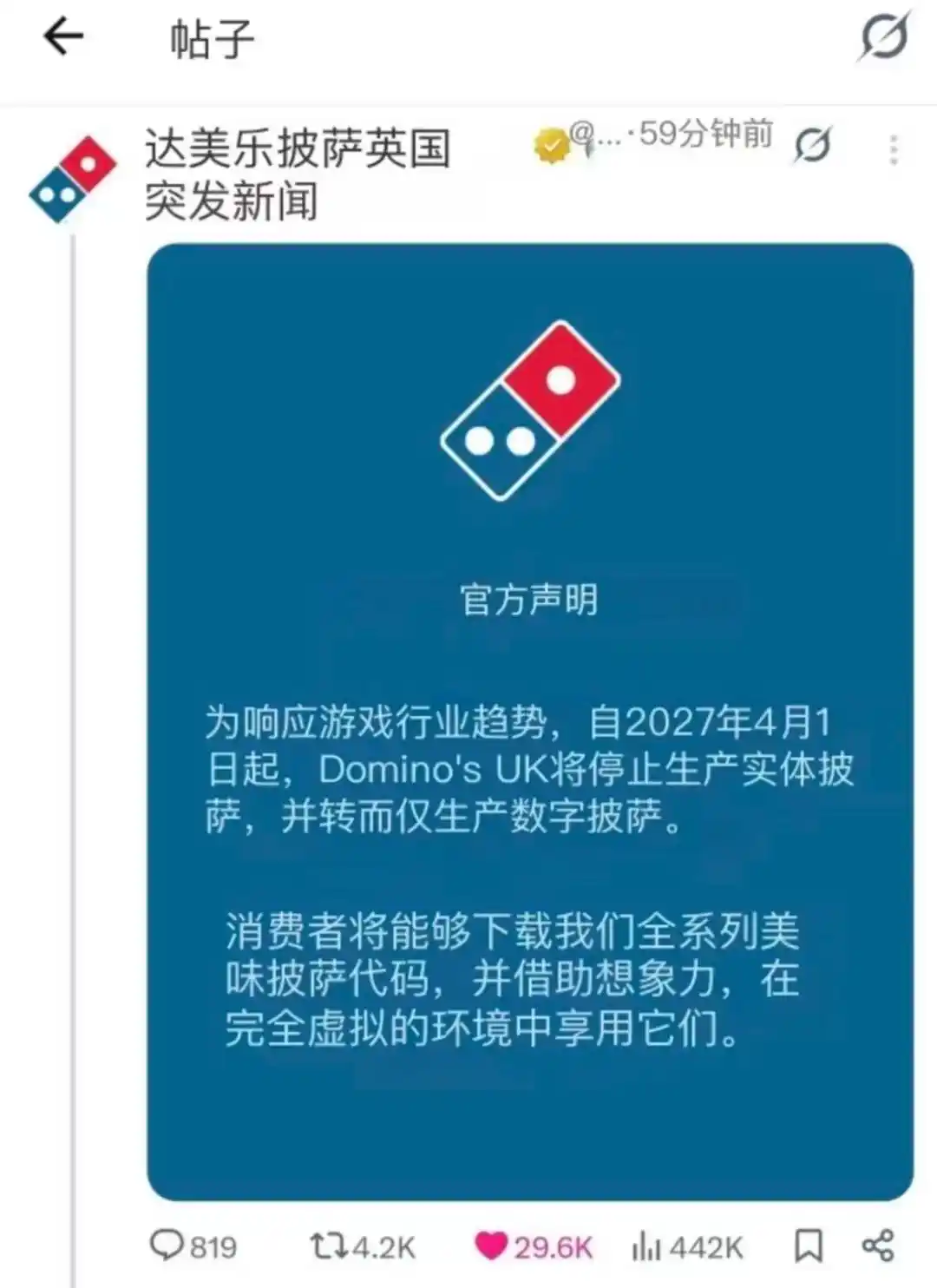
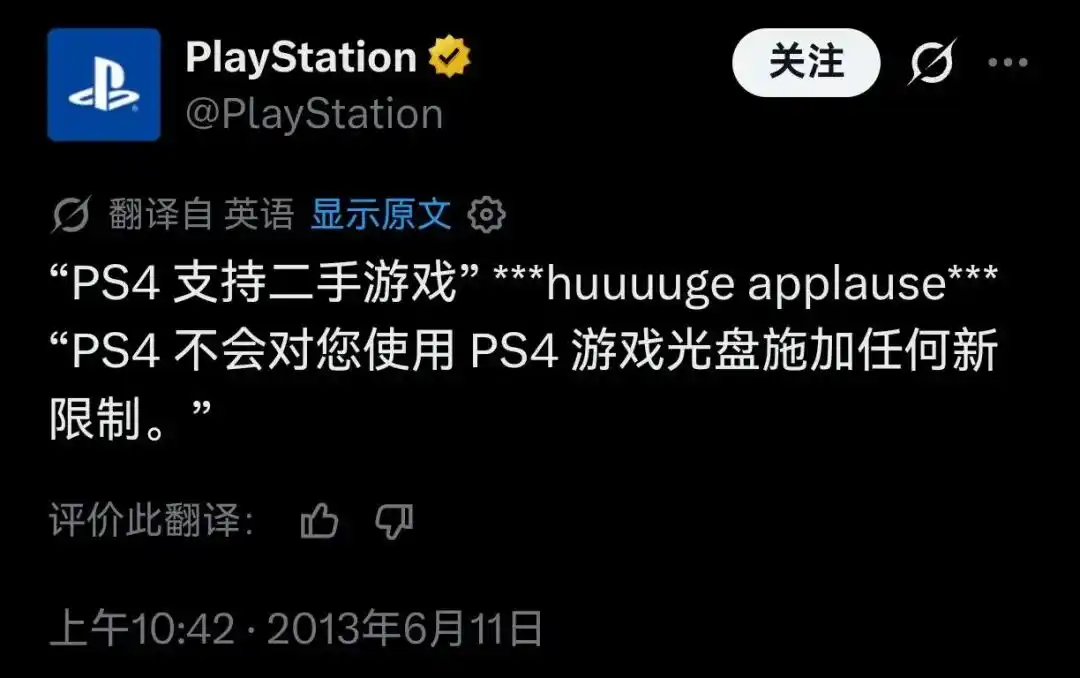
The internet has a memory. Players quickly dug up Sony's history from 13 years ago. Back then, at E3, Microsoft announced plans to restrict players from reselling used games. Sony immediately took the stage and announced:

Players, we will never do such a thing.
After this string of bad news, players pinned their last hope on Valve.

They believed this player-first company would kick those capitalists' butts. Their upcoming Steam Machine would "end the console wars."

Then, a table was indeed flipped—just not the capitalists'.

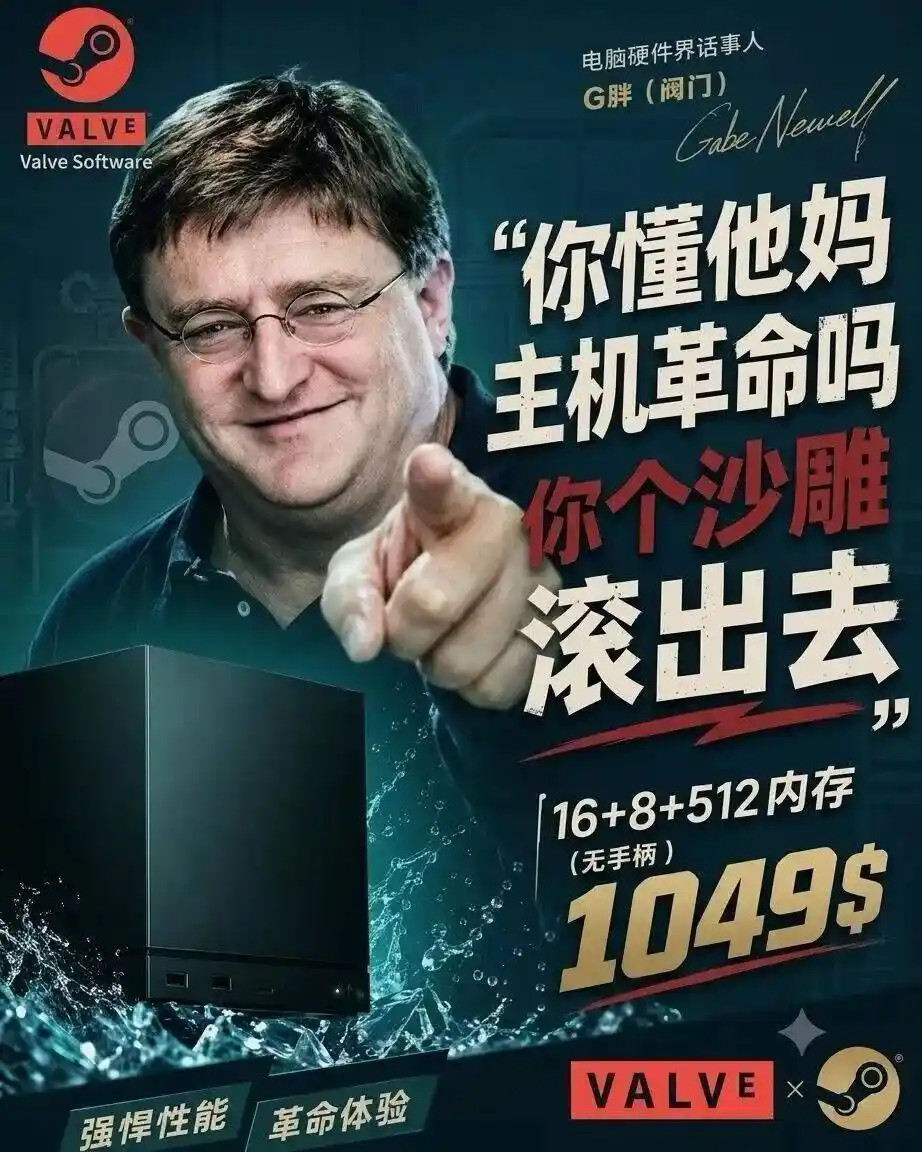
After the official reveal, players found the Steam Machine's value-for-money ratio shockingly low: 16+512GB memory, GPU performance equivalent to a GTX 3060, recommended resolution 1080p, playing "Black Myth: Wukong" at under 30 fps.

Even more shocking than the performance was the price: $1079, without a controller. With the same budget, you could assemble a PC from a forum guide that would crush it.
At this point, players looked around and found there was nowhere left to escape:

Consoles are rising, games are rising, storage is rising, even the ancestral cost-saving paths of "waiting for price drops" and "selling second-hand" have been blocked.

Thus, players have become tops, whipped by the entire gaming industry.

In the Name of AI, Welcoming the Era of Price Hikes

Faced with player skepticism, the explanations from various companies were actually quite similar.

In multiple price increase announcements, Sony attributed the reasons to "a challenging global economic environment," high inflation, exchange rate fluctuations, and rising supply chain costs;

Microsoft stated that hardware manufacturing costs continue to rise, and game consoles themselves have slim profit margins, making it difficult to maintain original prices.

It's all the same old lines.

Among all the manufacturers, Valve might be the most honest. Recently, a Valve engineer gave an interview, describing their experience procuring memory:

"They (the memory manufacturers) give us a quote every month and tell us, 'You can buy this much.' You only have two choices—buy or don't buy. If we say no, they never reply again."

To players, Valve is a giant in the gaming industry, but within the entire semiconductor sector, its bargaining power isn't as great as imagined.

To upstream memory manufacturers, Valve is about as significant as a melon seller in Huaqiangbei: 15 jin for 30 yuan, take it or leave it.

Not just Valve—the entire gaming industry has to take a back seat in the AI era.

For many years, consumer electronics was one of the biggest clients for chip and memory manufacturers. Gaming consoles, PCs, phones, laptops... these products collectively consumed the vast majority of the world's chips, memory, and flash storage.

But AI has changed all that.

What's most profitable today is no longer gaming consoles, but data centers.

A single high-end GPU can sell for tens of thousands or even hundreds of thousands of yuan. An AI server rack requires several terabytes of high-bandwidth memory, enterprise-grade SSDs, and a massive number of advanced chips. In comparison, a gaming console costing a few thousand yuan offers negligible profit.

Thus, more and more production capacity is flowing toward AI. Manufacturers wave checks, scrambling for limited resources. Chips, memory, hard drives... everything is rising.

Gamers used to sit at the main or secondary table; now they don't even qualify to sit, only able to pick up the leftovers from the large models.

Micron has already stopped playing in the consumer market. SanDisk is kinder; they recently launched a PS5-specific solid-state drive, with the 8TB version priced around 20,000 yuan—enough to buy three PS5 Pros.

Hardware is just the first cost. What really gives manufacturers headaches is the games themselves.

Twenty years ago, a game could be completed by a few dozen people developing for two or three years. Today, a top-tier AAA game often has a development cycle of five or six years, with team sizes reaching hundreds or even thousands. Art, motion capture, voice acting, open-world design—everything is constantly being upgraded.

Players expect games to be more realistic, so manufacturers must continuously increase investment. Games are becoming more like movies, even more expensive than movies.

Rumors suggest GTA6's development cost is around $1-1.5 billion. The previous game's $265 million was astronomical at the time, but now it's just a fraction of GTA6's budget.
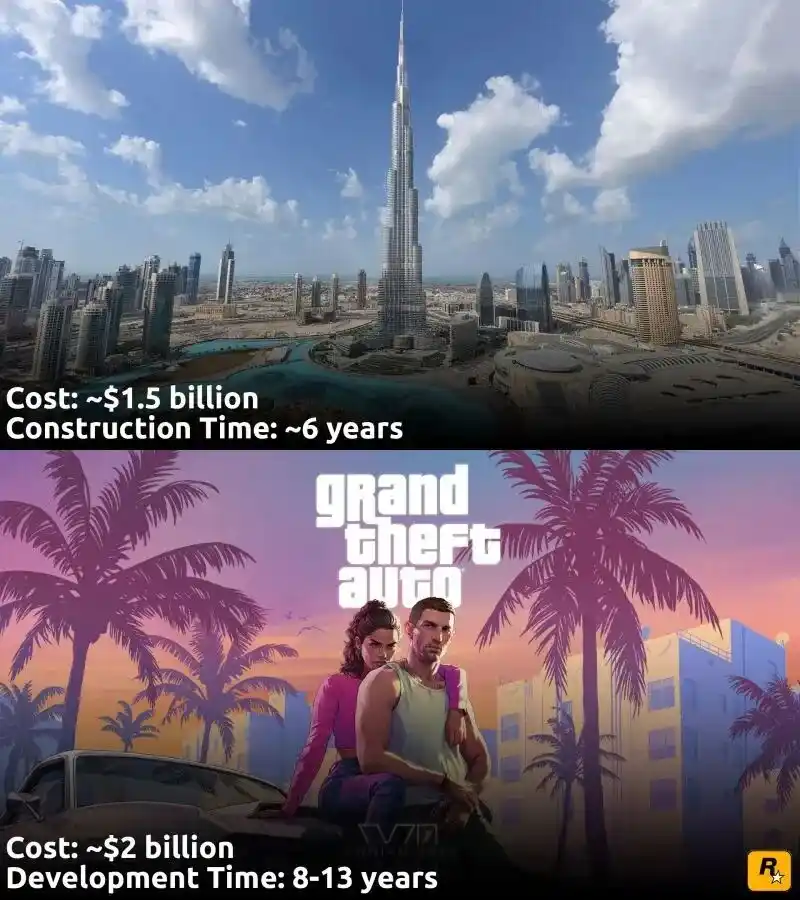
According to the most aggressive estimates, GTA 6's cost has surpassed that of the Burj Khalifa.

A movie ends upon release, but most AAA games today require ongoing operation for years, continuously releasing new content, maintaining servers, and updating versions.

Costs keep accumulating, making it increasingly difficult for traditional one-time purchases to cover all expenses.

This is why, in recent years, almost every platform has been pushing for the same things: digital editions replacing physical ones, subscription models replacing single purchases, long-term operation replacing one-off deals.

From the manufacturers' perspective, these changes bring more stable revenue and help cover rising development costs.

But from the players' perspective, when they're being harvested batch after batch, it's hard not to feel like a cash crop.

It's just that the AI era has altered the entire cost structure of the gaming industry. And ultimately, these costs are being passed down, layer by layer, onto players' wallets.

The Era of Increasingly Expensive Entertainment

Manufacturers can present a thousand and one reasons for price increases, but players only need one sentence to counter them all:

Your increasingly expensive games... aren't even that fun.

GPU performance has multiplied, yet new releases are increasingly poorly optimized, treating launch players like paid beta testers;

Maps get bigger, models get more detailed, but the gameplay feels more and more like assembly-line products, starting with clearing question marks, essentially working a second shift after work;

More and more "live service" games launch as half-finished products, then package the remaining content as DLC to harvest players again, following the base game with season passes and battle passes.

If price hikes brought better experiences, players might complain but eventually grit their teeth and accept it. The problem is they're not only getting more expensive but also worse.

And what hasn't gotten more expensive in recent years?

Video streaming memberships have become increasingly complex, with regular memberships topped by early access and VIP, SVIP, VVIP tiers;

Music platforms have fully entered the subscription era, with a few desired songs always grayed out;

Once freely available cloud storage is now locking down capacity;

AI chat, AI art, AI video generation—one after another turned into monthly subscription services.
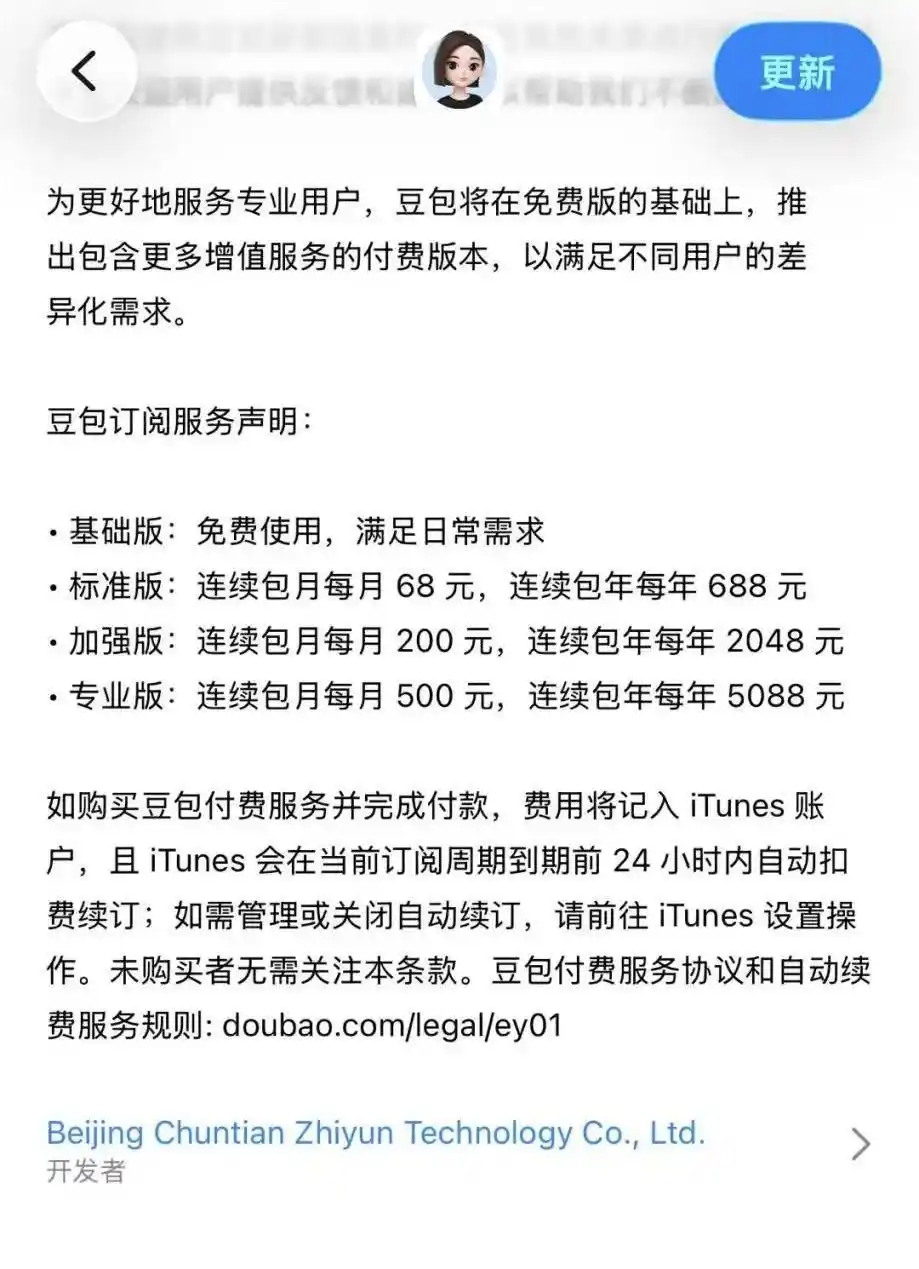
Gaming is just the earliest and most easily perceived industry.

For a long time, it was recognized as "the cheapest entertainment for the poor." A console could serve for several years, a single game could offer dozens or hundreds of hours. Steam Summer Sales, indie games, free-to-play online games firmly nailed electronic gaming to the throne of "king of cost-effectiveness."

Compared to a movie ticket, a concert, or a trip, gaming was almost the cheapest form of joy per unit of time. The cost of a two-hour movie ticket could allow a player to live an entire life in a game.

Precisely because of this, when games started getting more expensive, the player reaction was so intense.

What people truly fear isn't spending a few dozen extra yuan, but that the era of "happiness getting cheaper and cheaper" seems to be ending.

If the greatest characteristic of the internet over the past two decades was continuously lowering the barrier to entertainment, then the AI era is the era where that barrier is rising higher and higher.

To train a smarter large model requires tens of thousands of GPUs, massive amounts of high-bandwidth memory, and storage devices. To enable AI to generate video, images, and music requires continuous investment in computing power, electricity, and data centers.

Nvidia's latest AI platform has a single rack power consumption of 200kW.

Resources that once flowed to consumer electronics are increasingly flowing to AI infrastructure. Low-cost internet services once built on capital subsidies are now seeking business models to cover costs.

Thus, while people enjoy the conveniences AI brings, they also bear its costs.

From chips and semiconductors to hardware devices, to software subscriptions, price increases are being transmitted step by step.

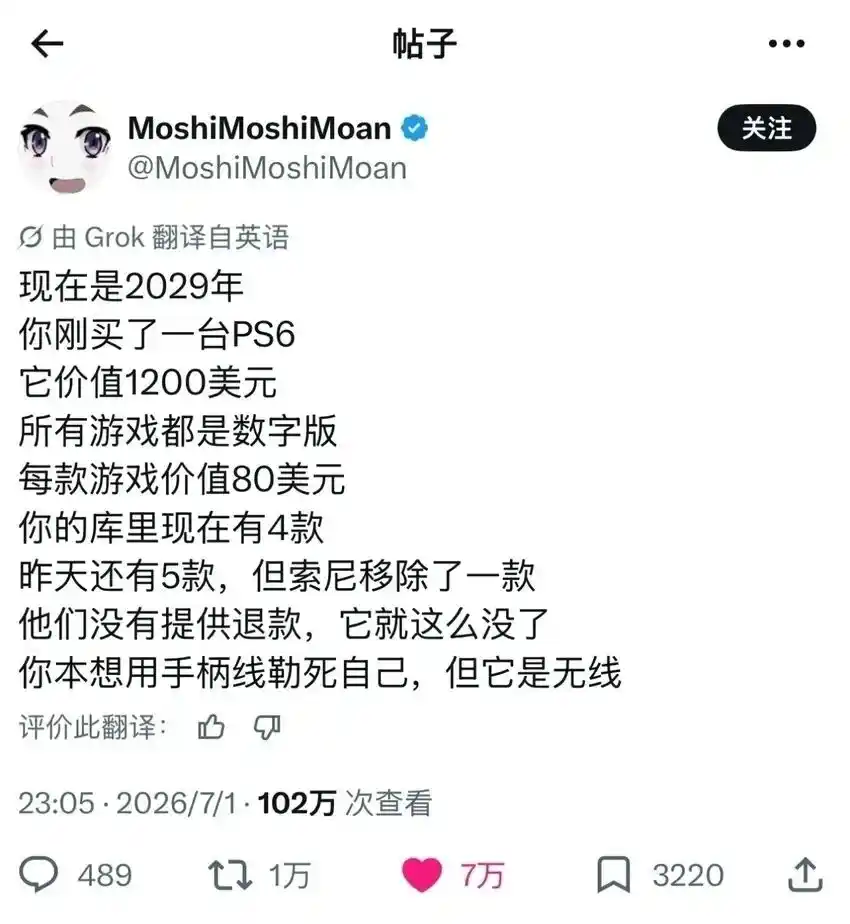
More and more things that were once one-time purchases are becoming monthly subscription services—including your games, your music, even the photos on your hard drive.
Objectively speaking, the emergence of AI isn't the sole cause of all this. But AI has undoubtedly stepped on the accelerator. It has redistributed upstream resources like chips and memory and redefined monetization methods in the software industry.

AI promises to liberate human productivity, making life more efficient and relaxed. Perhaps that promise will be fulfilled one day. But in the foreseeable future, it's bringing about the opposite change.

That era of relying on the internet and technological progress to continuously make happiness cheaper is slowly passing.

Perhaps in the future, we will indeed play more realistic games, use smarter AI, and have far richer digital entertainment experiences than today.

It's just that, before reaching that future, we still have to keep paying for it in advance.
This article is from the WeChat public account "Phoenix Weekly" (ID: phoenixweekly), author: Wang Dong, editor: Yan Ruyi


Trending Cryptos

Related Questions

QAccording to the article, what are the three main reasons for the rising cost of game consoles and games in the AI era?

AThe article cites three primary reasons: 1) **Competition for upstream resources**: AI demands vast amounts of high-end GPUs, memory, and storage, diverting production capacity and causing price inflation for consumer electronics components. 2) **Soaring game development costs**: Modern AAA games require larger teams, longer development cycles (5-6 years), and expensive tech like motion capture, pushing budgets to billions of dollars. 3) **Industry's shift in business models**: To cover costs and ensure stable revenue, platforms are aggressively moving from physical/digital ownership to subscription services and eliminating used game markets, which previously offered cost-saving options for players.

QHow has the traditional 'wait for a discount' strategy for buying games and consoles been disrupted, as described in the text?

AThe traditional 'wait for a discount' strategy has completely broken down. Consoles like the PS5 and Nintendo Switch 2 have seen official price *increases* post-launch, contradicting the historical trend of price drops over time. Game prices are also jumping, with GTA6 setting a new standard of $80 for a standard edition. Furthermore, the move towards all-digital distribution (e.g., Sony phasing out physical discs by 2028, GTA6 launching without a physical game disc) eliminates the secondary market, destroying the ability to resell games to recoup costs. Waiting no longer guarantees a lower price.

QWhat does the article imply is the broader societal trend signaled by the rising cost of video game entertainment?

AThe article implies that the rising cost of gaming is a symptom of a broader trend: **the end of the era of increasingly cheap digital entertainment**. For decades, the internet and technological progress lowered the cost of access to fun (games, music, video). However, the AI era is reversing this. The immense resource demands of AI infrastructure (computing power, energy) are raising costs across the tech stack. This, combined with a shift from one-time purchases to recurring subscriptions for software and services, means that the 'price of happiness' in the digital realm is increasing, potentially making many forms of entertainment less accessible.

QWhy does the article use Valve's (V社) experience with memory procurement as an example?

AThe article uses Valve's experience to illustrate the **diminished bargaining power of the gaming industry in the semiconductor supply chain**. Despite being a giant in gaming, Valve was treated like a small buyer by memory chip manufacturers, who offered non-negotiable, take-it-or-leave-it deals. This example underscores that the gaming hardware sector has become a lower priority for component suppliers compared to the lucrative and resource-hungry AI/data center market, which can pay premium prices, leaving gaming companies with little choice but to accept higher costs that are then passed on to consumers.

QBesides rising prices, what critique does the article level against modern AAA games regarding their quality or value proposition?

AThe article criticizes that modern AAA games, despite their higher prices and production costs, often **fail to deliver better or more enjoyable experiences**. Common complaints include: poor optimization at launch (treating players as 'paid beta testers'), vast but repetitive and soulless 'open-world' designs that feel like checklists ('playing feels like working a second job'), and a trend towards releasing incomplete 'live-service' games that rely on nickel-and-diming players through season passes, battle passes, and fragmented DLC content. The core argument is that the increased cost is not matched by a proportional increase in fun or artistic value.

Related Reads

Low Investment Isn't Apple's Immunity Pass

While Meta and Google face investor scrutiny over ballooning AI capital expenditures, Apple's minimal AI investment has paradoxically become a strength. Its market cap recently reclaimed the global top spot, surpassing $5 trillion. The irony is deep: Apple's own AI efforts have lagged, with "Apple Intelligence" delayed and core talent lost, forcing reliance on partners like Google Gemini and Alibaba's Qianwen. Its Q3 FY2026 (Q2 CY) earnings initially seemed stellar. Revenue hit $109.4B (up 16% YoY), with iPhone and Mac sales, growing 22% and 29% respectively, driving most of the growth. However, the stock fell over 8% post-earnings. The primary concern was a weaker Q4 revenue growth forecast of 9-11%, below expectations, due to looming supply chain constraints. Apple is feeling the indirect cost of the AI boom. Soaring memory and chip prices, fueled by massive data center investments from Microsoft, Amazon, and others, are forcing Apple to raise Mac and iPad prices significantly. The upcoming iPhone launch is also expected to see substantial price hikes. Despite avoiding heavy AI infrastructure spending—its capital expenditures are actually down 28%—Apple cannot escape the industry-wide supply and cost pressures. While Apple's operating cash flow remains robust, its substantial R&D spending (up 32% YoY) has yet to yield major AI breakthroughs. As Tim Cook prepares to step down as CEO, Apple faces a challenging transition: balancing its premium hardware success against the strategic and cost pressures of the AI era it has so far cautiously navigated.

marsbit42m ago

Low Investment Isn't Apple's Immunity Pass

marsbit42m ago

PA Graphics Explanation | One Chart to Understand the Major Web3 Events in August 2026

**PANews Crypto Calendar: Key Web3 Events in August 2026** PANews introduces its revamped crypto calendar, featuring comprehensive coverage, flexible filtering, and easy export options. The market in August will be shaped by multiple key events across macroeconomics, regulation, tokenomics, and project developments: * **Macro & Policy:** Key US economic data releases (July Non-Farm Payrolls, CPI), the Federal Reserve meeting minutes, and the Jackson Hole Economic Symposium will be in focus. On the regulatory front, the US Senate plans to release a new draft of the *CLARITY Act*, while the EU's expanded crypto ban against Belarus comes into effect. * **Token Unlocks:** Significant token unlocks are scheduled for assets including ENA, AVAX, CONX, ZRO, and KAITO, which may influence market volatility. * **Project Updates & Shutdowns:** Several services, including Exchange Art, Ctrl Wallet, Zapper, NFTfi, and Summer.fi, are set to cease operations or undergo major adjustments. Users are advised to manage their assets accordingly. * **Corporate Activity:** Q2 earnings reports from companies like SpaceX, Circle, and Nvidia are due. Unitree Robotics will initiate its IPO subscription on the STAR Market, and Moonshot AI plans to begin a Pre-IPO financing round. * **Industry Events:** Major conferences such as Bitcoin Asia 2026 and the 2026 Digital Expo will take place. The overarching market narrative for August will revolve around macroeconomic expectations, regulatory developments, token unlock schedules, and ongoing industry consolidation.

marsbit52m ago

PA Graphics Explanation | One Chart to Understand the Major Web3 Events in August 2026

marsbit52m ago

Wall Street's Most Famous 'Cassandra' Now Has His Sights Set on Nvidia

Michael Burry, the famed "Big Short" investor, has once again captured Wall Street's attention with a series of short positions against major tech and semiconductor stocks, most notably Nvidia. In late June and July, through his "Cassandra Unchained" newsletter, Burry disclosed short bets against Nvidia, Tesla, Applied Materials, Caterpillar, the SOXX semiconductor ETF, and later, Micron Technology. His core thesis revolves around potential distortions in the AI infrastructure boom, specifically questioning whether extended depreciation schedules (e.g., 6 years vs. a realistic 2-3 years for AI chips) by cloud giants like Microsoft and Google artificially inflate profits. He also raises concerns about possible "off-balance-sheet circular financing," where chip demand might be propped up by vendor-backed funding to clients. Nvidia's stock experienced volatility following these disclosures, briefly dipping but largely holding near Burry's reported entry points, leaving his positions roughly flat or slightly underwater as of late July. This move is part of a pattern for Burry, whose track record since his legendary 2008 bet is mixed. He has faced notable losses, such as on Tesla in 2021, while scoring on broader market turns like the 2020 pandemic crash. His methodology focuses intensely on free cash flow and scrutinizing original financial documents to spot overvaluation and structural risks, but it often struggles with timing the market. The article contrasts Burry's stance with other prominent investors. Steve Eisman, another "Big Short" figure, is not shorting Nvidia, citing strong fundamentals but expressing nervousness about sustainability. Jim Chanos agrees with the broad "accounting mismatch" concern—comparing it to the dot-com bubble—but targets financial leverage in private equity firms rather than the chip stocks themselves. While Nvidia's short interest remains relatively low at 1.3-1.4% of float, the massive stock size means absolute short losses have been significant, exceeding $5 billion earlier this year. The piece concludes that for ordinary investors, the key takeaway is not replicating specific short bets but learning from the critical frameworks these investors use: questioning rosy accounting, identifying structural vulnerabilities, and maintaining skepticism during market euphoria, even if pinpointing the exact catalyst for a downturn remains elusive.

marsbit1h ago

Wall Street's Most Famous 'Cassandra' Now Has His Sights Set on Nvidia

marsbit1h ago

Weekly Selection丨Epic Stock Market Volatility, Changxin Tech's IPO Reshapes Storage Landscape, Saylor Aims to Re-Anchor STRC Around September 8th

PANews Weekly Digest: Market Turmoil, Tech Breakthroughs, and Crypto Developments. The week saw significant volatility across global markets. South Korea's KOSPI index experienced extreme turbulence, including multiple trading halts, largely driven by sharp declines in AI hardware stocks like SK Hynix. In contrast, China's Changxin Xinqiao (CXC) achieved a landmark IPO with a market cap surpassing 4 trillion yuan, marking a major success for the domestic DRAM industry after a decade of losses. In the crypto and Web3 space, several key narratives emerged. AI is driving demand for new infrastructure, with projects like AI agent wallets and programmable payments gaining traction, attracting interest from firms like Coinbase. The Bitcoin mining sector is pivoting, with companies like MARA focusing on energy management as electricity becomes a core AI-era asset. Meanwhile, the RWA (Real World Assets) sector faces a "utilization puzzle," with hundreds of billions in on-chain assets remaining dormant. Notable market movements included a historic single-day surge of over 17% for the KOSPI index and a significant migration of $16.5 billion in staked ETH within the Lido ecosystem. Michael Saylor announced a target to re-peg the STRC stablecoin around September 8th. Other highlights include discussions on Ethereum's ambitious 2030 roadmap for scaling and privacy, analysis showing high protocol revenues not always translating to token price gains, and warnings from Citi about potential extreme commodity price shocks by late 2026.

marsbit1h ago

Weekly Selection丨Epic Stock Market Volatility, Changxin Tech's IPO Reshapes Storage Landscape, Saylor Aims to Re-Anchor STRC Around September 8th

marsbit1h ago

When the Market Begins to Question AI Capex: A Full Analysis of Q2 Earnings Reports from Five Tech Giants

In late July 2026, five major US tech giants—Alphabet, Intel, Microsoft, Meta, and Apple—released their Q2 earnings reports. While all companies exceeded revenue and profit expectations, driven by strong AI-related business growth, investor reactions diverged sharply due to concerns over escalating AI capital expenditures (capex) and their impact on free cash flow. Alphabet reported strong revenue growth and a surging cloud business, but its stock fell after announcing a doubled year-on-year capex and negative quarterly free cash flow for the first time. Intel posted its strongest revenue growth in over 15 years, but its stock experienced volatile trading after significantly raising its full-year capex guidance. Microsoft saw its stock surge after beating estimates and, crucially, lowering its capex forecast while projecting positive free cash flow. Meta faced the most severe sell-off as its profits declined despite revenue beats, with free cash flow plunging over 90% and its capex guidance raised. Apple reported record June-quarter results, but its stock plummeted after providing Q4 revenue guidance that fell short of expectations, citing supply chain constraints and forex headwinds. The overall takeaway is that the market's focus has shifted from validating AI demand to scrutinizing the timeline for returns on massive AI investments. Companies demonstrating a clearer path to managing capex and preserving free cash flow, like Microsoft, were rewarded, while those signaling continued aggressive spending faced investor skepticism.

Odaily星球日报1h ago

When the Market Begins to Question AI Capex: A Full Analysis of Q2 Earnings Reports from Five Tech Giants

Odaily星球日报1h ago

Trading

Spot

Hot Articles

How to Buy PEOPLE

Welcome to HTX.com! We've made purchasing ConstitutionDAO (PEOPLE) simple and convenient. Follow our step-by-step guide to embark on your crypto journey.Step 1: Create Your HTX AccountUse your email or phone number to sign up for a free account on HTX. Experience a hassle-free registration journey and unlock all features.Get My AccountStep 2: Go to Buy Crypto and Choose Your Payment MethodCredit/Debit Card: Use your Visa or Mastercard to buy ConstitutionDAO (PEOPLE) instantly.Balance: Use funds from your HTX account balance to trade seamlessly.Third Parties: We've added popular payment methods such as Google Pay and Apple Pay to enhance convenience.P2P: Trade directly with other users on HTX.Over-the-Counter (OTC): We offer tailor-made services and competitive exchange rates for traders.Step 3: Store Your ConstitutionDAO (PEOPLE)After purchasing your ConstitutionDAO (PEOPLE), store it in your HTX account. Alternatively, you can send it elsewhere via blockchain transfer or use it to trade other cryptocurrencies.Step 4: Trade ConstitutionDAO (PEOPLE)Easily trade ConstitutionDAO (PEOPLE) on HTX's spot market. Simply access your account, select your trading pair, execute your trades, and monitor in real-time. We offer a user-friendly experience for both beginners and seasoned traders.

7.8k Total ViewsPublished 2024.03.29Updated 2026.06.02

How to Buy PEOPLE

Discussions

Welcome to the HTX Community. Here, you can stay informed about the latest platform developments and gain access to professional market insights. Users' opinions on the price of PEOPLE (PEOPLE) are presented below.

活动图片