In a statement, CENTCOM reported that at 5:45 PM Eastern Time on July 28, Islamic Revolutionary Guard Corps forces launched several ballistic missiles from Iran as part of an "attempted surprise attack" against U.S. troops in the Middle East; the missiles were aimed at U.S. positions near Jordan's Muwaffaq Salti Air Base. The Command reported that Patriot air defense batteries intercepted all inbound missiles, and there were no casualties.

That previous pause had already been tested, given that an Iranian strike on Jordan's Al-Azraq air base on July 18 resulted in the deaths of two U.S. service members, with a third listed as missing—this was one of several flare-ups that have accompanied the five-month-long conflict. Jordanian military officials reported that this time, they also shot down some of the projectiles flying toward them, with no damage or casualties recorded on their territory.
Oil Futures and Stocks Surge Sharply
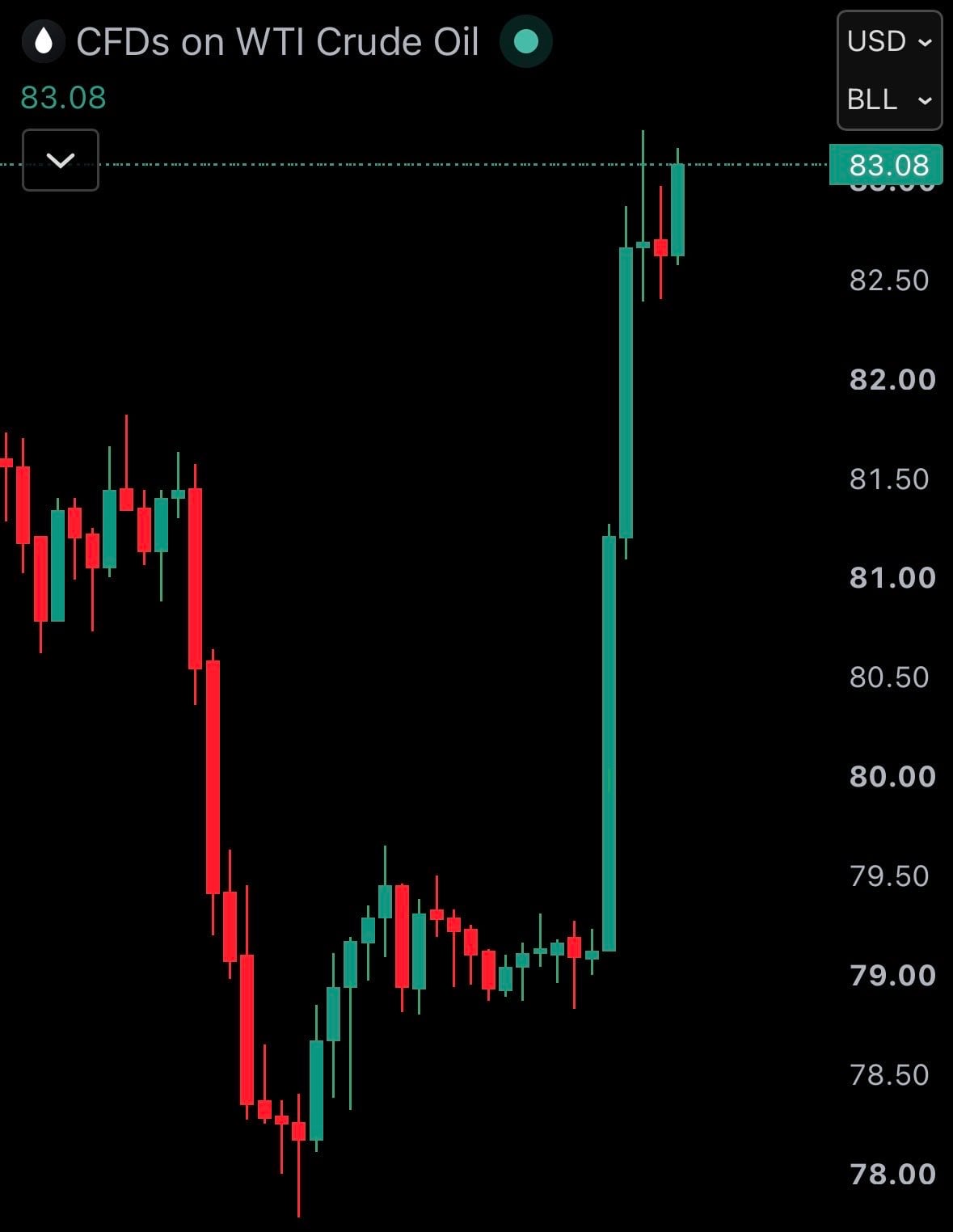
Financial markets reacted within hours: the price of WTI crude oil rose by 3.95% to $83.08 per barrel, while the price of Brent crude, the global benchmark, increased by 3.86% to $87.34. Dow Jones futures rose by 63 points, or 0.12%, to 53,007, while S&P 500 futures gained 26 points, and Nasdaq 100 futures rose by nearly 133 points, as traders priced in a resumption of Middle East risks.
Bitcoin Rally Amid 'Truce' Faces Next Test
Cryptocurrency markets have moved in step with this same cycle, as by July 27 (when Brent crude collapsed to $87), Bitcoin had recovered to around $65,200, briefly reaching $65,600 at the start of futures trading. This recovery gave way to a decline the next day: by July 28, Bitcoin dropped to around $64,000 even before the evening strike, then continued to fall into the $63,600 to $63,800 range once news of the missile strike spread.
Bitcoin.com News previously reported that Bitcoin held near $63,000 during a previous escalation of the conflict in July—part of a trend where the network repeatedly recouped losses within days of each escalation, only to lose some of those gains again at the next flare-up.
Nevertheless, throughout this year, BTC has at times shown signs of decoupling from purely risk-on asset behavior amid the conflict, maintaining support even amid sharp swings in oil and stock prices (unlike the sharper and more consistent sell-offs observed for assets like Ether during the same periods). However, the July 28 strike posed the most direct challenge yet to the 'truce' narrative that underpinned last week's calm.
end-content