La plateforme Backpack lance la cotation au comptant et en perpétuel de tokens TRX, élargissant l'accès à l'écosystème TRON

cryptonews.ruPublished on 2026-07-29Last updated on 2026-07-29

Abstract

Genève, Suisse, 29 juillet 2026 – TRON DAO a annoncé le lancement du trading au comptant et à terme perpétuel de son token natif $TRX sur Backpack Exchange. Ce nouveau listing élargit l'accès à l'écosystème TRON, l'un des plus actifs du secteur, sur une plateforme réglementée qui a traité plus de 400 milliards de dollars de volume. Ce partenariat intègre l'infrastructure à fort volume de TRON (plus de 14 milliards de transactions, 3,5 millions d'utilisateurs quotidiens) à l'échange Backpack, offrant aux utilisateurs de plus de 150 pays une passerelle sécurisée pour trader et gérer des actifs numériques. Ce mouvement renforce le rôle de TRON en tant qu'infrastructure fondamentale pour la propriété, le trading et le règlement d'actifs numériques, élargissant sa présence dans l'économie numérique mondiale. Le réseau TRON compte actuellement plus de 395 millions de comptes et détient une valeur totale verrouillée (TVL) dépassant 27 milliards de dollars.

Genève, Suisse, 29 juillet 2026 — TRON DAO, organisation autonome décentralisée (DAO) gérée par la communauté, qui vise à accélérer la décentralisation d'Internet grâce à la technologie blockchain et aux applications décentralisées (dApps), a annoncé aujourd'hui la cotation du trading au comptant de $TRX et des contrats perpétuels sur l'échange Backpack Exchange. Cette inscription élargit le soutien du marché et l'accès au jeton utilitaire natif de TRON, l'une des écosystèmes blockchain les plus activement utilisés dans l'industrie.

Cette cotation permet aux utilisateurs de Backpack dans les juridictions concernées de négocier $TRX sur les marchés au comptant et perpétuels sur la plateforme de trading innovante et conforme aux réglementations. L'échange régulé Backpack a traité un volume d'échanges cumulé de plus de 400 milliards de dollars, servant à la fois les traders expérimentés et les nouveaux utilisateurs de Web3.

« Avec plus de 14 milliards de transactions traitées et 3,5 millions d'utilisateurs quotidiens, TRON démontre qu'il s'agit d'une blockchain conçue pour les grands volumes d'opérations du monde réel », a déclaré Sam Elfarra, représentant de la communauté TRON DAO. « L'intégration de TRON sur Backpack intègre cette infrastructure éprouvée à un échange régulé, offrant aux utilisateurs du monde entier une passerelle sécurisée pour négocier et gérer des actifs numériques. »

La plateforme Backpack prend en charge les utilisateurs dans plus de 150 pays, réunissant les produits de trading au comptant, perpétuels et un plus large éventail de produits sous une seule place de marché conforme aux réglementations. La cotation de $TRX le place à côté des marchés existants de Backpack, offrant aux traders des régions développées comme émergentes un chemin simple pour accéder au jeton natif de TRON sans avoir besoin de multiples plates-formes ou solutions de stockage.

Ce partenariat renforce le rôle de TRON en tant qu'infrastructure fondamentale pour la possession, la négociation et le règlement d'actifs numériques, car le réseau continue d'élargir le nombre de places de marché par lesquelles les utilisateurs et les organisations peuvent accéder à $TRX. C'est une autre étape vers l'expansion continue de TRON et l'augmentation de sa présence dans l'économie numérique mondiale.

À propos de TRON DAO

TRON DAO est une organisation autonome décentralisée (DAO) gérée par la communauté, qui vise à accélérer la décentralisation d'Internet grâce à la technologie blockchain et aux applications décentralisées (dApps).

Fondé en septembre 2017, la blockchain TRON a connu une croissance significative depuis le lancement de son réseau principal en mai 2018. Jusqu'à récemment, TRON détenait le plus grand volume en circulation du stablecoin USD Tether (USDT), dépassant désormais 90 milliards de dollars. En juillet 2026, la blockchain TRON compte plus de 395 millions de comptes utilisateurs, plus de 14 milliards de transactions et plus de 27 milliards de dollars de valeur totale bloquée (TVL), selon TRONSCAN. Reconnu comme une couche de règlement mondiale pour les transactions en stablecoins et les achats quotidiens, avec une efficacité prouvée, TRON « Déplace des billions, habilite des milliards ».

Réseau TRON | TRONDAO | X | YouTube | Telegram | Discord | Reddit | GitHub | Medium | Forum

Contacts presse

Park Yevon

tron

end-content

Trending Cryptos

Related Questions

QQuelle est la signification du lancement du jeton $TRX sur Backpack Exchange ?

ALe lancement du jeton $TRX sur Backpack Exchange signifie l'élargissement de l'accès à l'écosystème TRON en permettant aux utilisateurs de la plateforme de négocier du $TRX sur les marchés au comptant et à terme (perpetual), au sein d'une plateforme réglementée.

QQuel est le volume de transactions traité par Backpack Exchange selon l'article ?

ASelon l'article, l'échange réglementé Backpack a traité un volume de transactions cumulé de plus de 400 milliards de dollars.

QQui est Sam Elfarra et quelle déclaration a-t-il faite concernant TRON ?

ASam Elfarra est un représentant de la communauté TRON DAO. Il a déclaré : 'Ayant traité plus de 14 milliards de transactions et comptant 3,5 millions d'utilisateurs quotidiens, TRON démontre une blockchain conçue pour un volume élevé d'opérations dans le monde réel.'

QQuelles sont les principales statistiques de la blockchain TRON mentionnées dans l'article ?

ALes principales statistiques de la blockchain TRON mentionnées sont : plus de 395 millions de comptes utilisateurs, plus de 14 milliards de transactions, et une valeur totale bloquée (TVL) de plus de 27 milliards de dollars. Il est également indiqué qu'elle détenait le plus grand volume en circulation de l'actif stable USDT, dépassant 90 milliards de dollars.

QQuel est l'objectif principal de TRON DAO selon l'article ?

ASelon l'article, l'objectif principal de TRON DAO est d'accélérer la décentralisation d'Internet grâce à la technologie blockchain et aux applications décentralisées (dApps).

Related Reads

Analyzing the Impact of AI on Economic Growth and Productivity

**Title: Analyzing AI's Impact on Economic Growth and Productivity** This article examines three contrasting views on AI's influence on economic growth and productivity. **The Optimistic View** posits that AI, especially through automating R&D ("recursive self-improvement"), could dramatically accelerate growth, even triggering a technological "singularity" with explosive, potentially infinite, economic expansion. **The Moderate/Mainstream View** acknowledges AI's productivity benefits but emphasizes significant real-world constraints that could limit its impact. These include: limited cost savings per task, structural ceilings on which jobs and industries are "exposed" to AI, adoption bottlenecks (e.g., compute, energy, regulatory hurdles), and the "weak link" effect where non-automatable tasks cap overall gains. Consequently, the realized AI dividend may be far lower than optimistic projections, with estimates typically ranging from 0.1% to 1.3% annual productivity growth. **The Pessimistic View** stems from two strands. The first aligns with the moderate view but applies extremely conservative assumptions about task exposure and efficiency gains, yielding minimal projected impact. The second introduces a demand-side critique: if AI primarily replaces rather than augments labor, it could depress labor's share of income, weaken consumer demand, and create a "demand trap" that ultimately stifles growth, unless offset by redistribution policies. **The authors' assessment** is nuanced: * **Short-term (1-2 years):** AI will support growth primarily through investment spending, not significant productivity gains. * **Medium-term (3-5 years):** Three potential paths emerge based on AI demand and bottleneck severity: 1. **"Optimistic Path":** High demand, few bottlenecks. Rapid productivity gains but risk of major job displacement and social conflict without redistribution. 2. **"Moderate Path" (most likely):** High demand but significant, surmountable bottlenecks. Leads to moderate productivity gains, financial market volatility (K-shaped returns), and sectoral job losses. 3. **"Pessimistic Path":** Low demand or severe bottlenecks. Minimal productivity and growth impact, triggering financial market corrections but allowing a smoother societal transition with less labor disruption. * **Long-term:** AI holds potential for a major productivity revolution and prosperity. The conclusion stresses that no path is smooth. Technologically "optimistic" outcomes could be socially detrimental, while "pessimistic" technological diffusion might be more socially stable. Policymakers must monitor developments and prepare balanced responses to manage economic, financial, and social sustainability.

marsbit8m ago

Analyzing the Impact of AI on Economic Growth and Productivity

marsbit8m ago

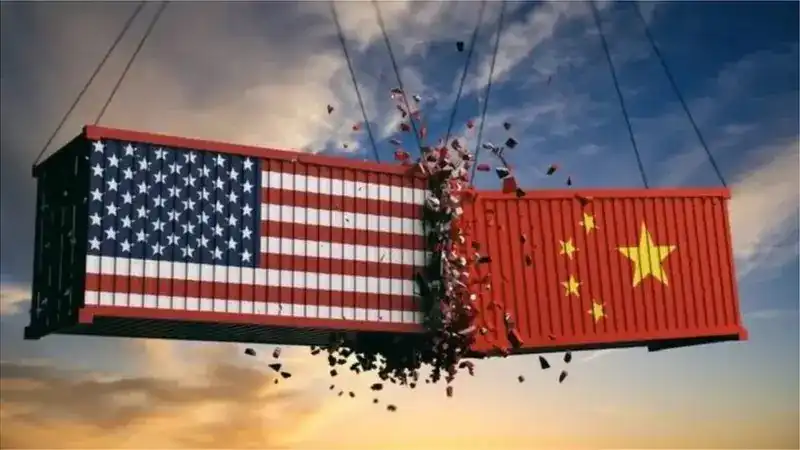
The New Cold War is a Tech Stock War

The New Cold War is a Tech Stock War The article argues that the contemporary geopolitical and economic rivalry between the US and China represents a "New Cold War," but one fundamentally fought through technology and financial markets, not physical barriers or conventional trade. Historically, US dominance was secured through financial systems. The Soviet Union, reliant on the rigid "Transferable Ruble," was ultimately undermined by its dependency on the US dollar for oil trade. Later, Japan's semiconductor challenge was countered not just by tariffs (e.g., Plaza Accord, 301 investigations) but by binding it to US Treasury bonds. China presents a more complex, "embedded" challenger. While it holds vast dollar reserves and US debt like Japan, its industrial base is stronger and more diversified than the Soviet Union's. Surviving the initial 2018 trade war phase, the conflict has evolved into a "tech-financial war." The core battlefield is now the stock market. US tech stocks (AI, semiconductors) are treated as sovereign assets, buoyed by bipartisan national will. China is pushing to strengthen its own financial markets to convert industrial strength into financial power and fund its tech ambitions. Companies like ChangXin (semiconductors), Moonshot AI, and DJI compete not just for market share but as financial proxies for their respective systems. The new paradigm is moving from globally efficient monopolies (Apple, Google) towards companies that achieve monopolistic profits within their respective geopolitical spheres. This competition over "pricing power" and financial valuation in segmented markets defines the current era, making the stock market the primary arena for this tech-centric struggle.

marsbit17m ago

The New Cold War is a Tech Stock War

marsbit17m ago

RWA Weekly: Ten European Financial Institutions Establish Tokenized Asset Cooperative; Ondo Launches New Execution Network Ondo Network

RWA Weekly: European Banks Form Tokenized Asset Cooperative; Ondo Launches New Execution Network Ondo Network Covering July 24-31, 2026, the RWA sector saw a steady on-chain total value locked (TVL) of $36.8 billion, with holder count hitting a record high. However, stablecoin transfer volumes fell sharply (~30%), indicating low on-chain settlement demand. Key regulatory moves include South Korea advancing stablecoin legislation and a push to scrap crypto taxes, Kenya lowering capital requirements for stablecoin issuers, and Zimbabwe approving seven projects for its crypto sandbox. In project developments, BIS-led Project Agorá successfully tested cross-border payments with tokenized funds across six currencies. Ten major European financial institutions formed the RL1 blockchain cooperative to build tokenized asset infrastructure. Other notable updates: Aviva launched a tokenized dollar liquidity fund on XRPL, POSCO International tokenized commercial invoices on Injective, and a Brazilian farmer used tokenized cattle as collateral for a loan. Additional progress includes BNY Mellon migrating its core transfer agent operations to blockchain, Securitize gaining SEC investment advisor registration, and Tether’s compliant stablecoin USA₮ launching on Celo. Ondo Finance introduced Ondo Network, a new execution layer focused on speed and privacy, moving away from its initial chain plans. An analysis highlights that despite the growing scale of on-chain RWAs (~$32B), approximately 90% remain underutilized in DeFi, pointing to a critical challenge in unlocking liquidity and fostering real-world application beyond mere issuance.

marsbit18m ago

RWA Weekly: Ten European Financial Institutions Establish Tokenized Asset Cooperative; Ondo Launches New Execution Network Ondo Network

marsbit18m ago

South Korean Stock Market Sees Sharp Rebound After Forceful De-leveraging, SK Hynix Rises 30%

On July 31, South Korean stocks staged a historic rebound. The benchmark KOSPI index surged 18.27%, with chipmaker SK Hynix hitting a 30% gain limit. This followed a brutal, near-40% decline in the KOSPI over the previous month, driven largely by a deleveraging spiral involving leveraged ETFs. Analysts attributed the sharp sell-off to structural liquidity issues rather than deteriorating corporate fundamentals. The rally was triggered by a confluence of positive catalysts. Firstly, strong earnings from U.S. cloud giants Microsoft and Amazon alleviated fears of an "AI bubble burst," boosting global tech sentiment. Secondly, SK Group Chairman Chey Tae-won made a rare personal purchase of SK Hynix shares, seen as a strong vote of confidence. Thirdly, the South Korean government announced a 20 trillion won ($139 billion) AI investment fund. In response to the market turmoil, South Korean regulators are tightening controls on leveraged ETFs, admitting oversight shortcomings. Measures include raising minimum cash保证金 requirements for散户 investors and suspending new product launches. While the rebound signals eased liquidity pressure, analysts note deep structural issues remain. The market's future stability is seen as dependent on global tech capital expenditure trends and memory chip price cycles, with some viewing the surge as a technical correction rather than a definitive trend reversal.

marsbit38m ago

South Korean Stock Market Sees Sharp Rebound After Forceful De-leveraging, SK Hynix Rises 30%

marsbit38m ago

Trading

Spot

Hot Articles

How to Buy TRX

Welcome to HTX.com! We've made purchasing TRON (TRX) simple and convenient. Follow our step-by-step guide to embark on your crypto journey.Step 1: Create Your HTX AccountUse your email or phone number to sign up for a free account on HTX. Experience a hassle-free registration journey and unlock all features.Get My AccountStep 2: Go to Buy Crypto and Choose Your Payment MethodCredit/Debit Card: Use your Visa or Mastercard to buy TRON (TRX) instantly.Balance: Use funds from your HTX account balance to trade seamlessly.Third Parties: We've added popular payment methods such as Google Pay and Apple Pay to enhance convenience.P2P: Trade directly with other users on HTX.Over-the-Counter (OTC): We offer tailor-made services and competitive exchange rates for traders.Step 3: Store Your TRON (TRX)After purchasing your TRON (TRX), store it in your HTX account. Alternatively, you can send it elsewhere via blockchain transfer or use it to trade other cryptocurrencies.Step 4: Trade TRON (TRX)Easily trade TRON (TRX) on HTX's spot market. Simply access your account, select your trading pair, execute your trades, and monitor in real-time. We offer a user-friendly experience for both beginners and seasoned traders.

26.8k Total ViewsPublished 2024.03.29Updated 2026.06.02

How to Buy TRX

Discussions

Welcome to the HTX Community. Here, you can stay informed about the latest platform developments and gain access to professional market insights. Users' opinions on the price of TRX (TRX) are presented below.

活动图片