Le présentateur « attitré » de la Maison Blanche a gagné plus de 100 000 dollars grâce à des informations privilégiées sur les marchés de prédiction

marsbitPublished on 2026-07-22Last updated on 2026-07-22

Abstract

La Maison Blanche est une fois de plus secouée par un scandale d'initié. Gabriel Perez, opérateur du téléprompteur pour les discours de Donald Trump et proche collaborateur depuis 2016, a utilisé des informations privilégiées pour parier sur les mots que le président mentionnerait lors de ses allocutions. Sur la plateforme de marché prédictif Kalshi, il a réalisé un profit de plus de 100 000 dollars en quelques mois. Perez, qui avait accès aux discours en avance, pariait sur des mots spécifiques. Cependant, les improvisations fréquentes de Trump l'ont parfois contraint à vendre ses positions pour limiter les pertes. Kalshi a détecté ces transactions suspectes, a gelé ses fonds et a signalé l'affaire à la CFTC (Commodity Futures Trading Commission). Bien qu'il ait été suspendu sans salaire par Trump, Perez a échappé à des poursuites pénales. Les procureurs n'ont pas retenu de crime, estimant que ses actes ne menaçaient pas la sécurité nationale. La CFTC devrait conclure un règlement lui demandant de rembourser les gains et de cesser ce type d'activité. Ce cas met en lumière la vulnérabilité des marchés prédictifs sur les "mots mentionnés", facilement manipulables par des initiés ou même les orateurs eux-mêmes, comme l'ont montré des exemples lors des Grammy Awards ou d'un appel aux résultats de Coinbase. Face à cela, Kalshi renforce sa conformité en exigeant que les utilisateurs divulguent leur employeur. Ce scandale s'inscrit dans une série de récentes affaires d'initiés s...

Original | Odaily Planet Daily (@OdailyChina)

Auteur | Golem (@web3_golem)
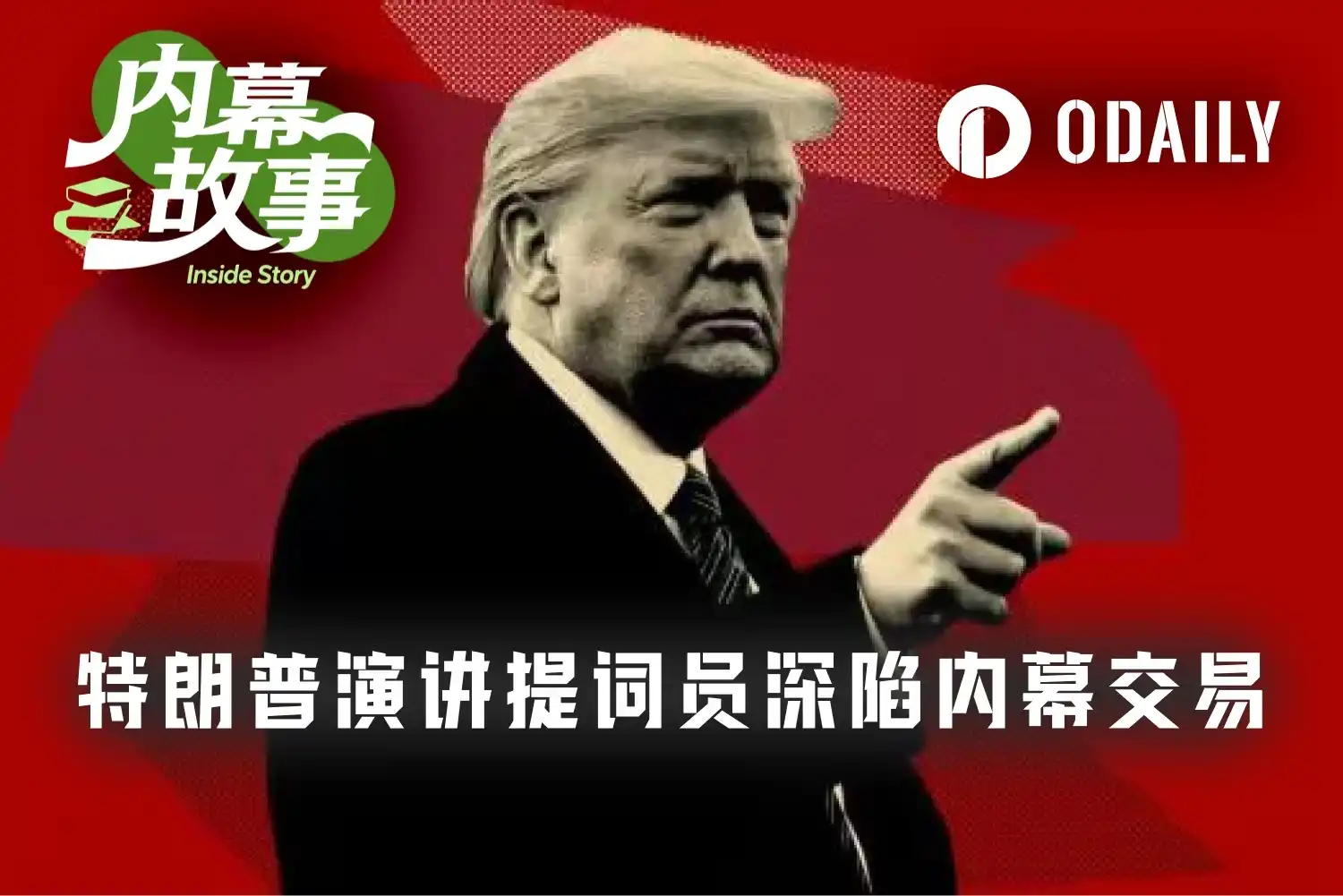
Récemment, un nouveau scandale de délit d'initié a éclaté à la Maison Blanche américaine.

Un membre du personnel de la Maison Blanche aurait réalisé des dizaines de milliers de dollars de profits en tradant sur des marchés de prédiction grâce à des informations privilégiées. L'initié en question n'était autre qu'un opérateur de téléprompteur de longue date responsable des discours de Trump. Cet employé a été suspendu et privé de salaire.

Cet opérateur de téléprompteur est ainsi devenu la troisième personne révélée par les autorités judiciaires américaines à avoir réalisé des profits substantiels sur des marchés de prédiction en utilisant des informations internes, après un soldat des forces spéciales impliqué dans l'opération de capture de Maduro et un ingénieur en sécurité de Google. (Lectures connexes : «Après 4 mois, Polymarket a aidé Trump à retrouver le divulgateur de l'opération militaire, mais à quel prix...» «Lire les réponses avant l'examen ? Un ingénieur de Google pris dans une affaire de délit d'initié sur Polymarket»)

Signalé par Kalshi, fonds gelés, mais aucune responsabilité pénale in fine

Le protagoniste s'appelle Gabriel Perez. Il est responsable de l'opération du téléprompteur lors des discours de Trump depuis 2016. Son recrutement pour ce poste est assez anecdotique : en 2016, l'équipe de campagne de Trump avait un besoin urgent d'un opérateur de téléprompteur. En cherchant « téléprompteur » sur Google, ils sont tombés sur l'entreprise de Perez, qui a ainsi été embauché par l'équipe de Trump.

Gabriel Perez

Bien qu'embauché par hasard, Perez est progressivement devenu l'un des assistants les plus proches de Trump au cours de cette décennie. Le média américain Politico est allé jusqu'à affirmer que « Perez est devenu la seule personne de confiance de Trump », recevant souvent les modifications de dernière minute de Trump lui-même sur ses discours publics.

Par conséquent, Perez faisait partie du petit nombre de personnes ayant accès aux discours complets de Trump à l'avance et avait pratiquement le dernier mot sur presque tous les textes préparés pour Trump. Ce pouvoir n'est pas négligeable. Son titre officiel à la Maison Blanche était Assistant adjoint du Président et Conseiller technique, avec un salaire annuel de 175 000 dollars, seulement 20 000 dollars de moins que des cadres supérieurs comme la Chef de cabinet Susie Wiles ou la Porte-parole Carolyn Leavitt.

Une telle rémunération le plaçait déjà dans la catégorie des hauts revenus aux États-Unis, mais l'avidité de Perez n'était pas assouvie.

Avec la popularité des marchés de prédiction, où d'innombrables joueurs parient sur les mots spécifiques que Trump « mentionnerait » lors d'un discours donné, Perez a réalisé que son « privilège » pouvait lui rapporter encore plus d'argent.

Les enquêteurs de la CFTC ont découvert que Perez avait parié sur plus d'une douzaine de discours de Trump sur une période d'environ trois mois, réalisant un profit total dépassant 100 000 dollars. Cela incluait le discours de Trump en prime time en décembre dernier, son discours en janvier au Forum économique mondial de Davos en Suisse, le discours sur l'état de l'Union en février et les remarques de Trump en mars lors de la cérémonie de remise de la Médaille d'honneur.

Le salaire annuel officiel du président américain est de 400 000 dollars, auxquels s'ajoutent diverses indemnités, portant le total à environ 569 000 dollars par an. Si Perez n'avait pas été pris, avec son rythme de 100 000 dollars en 3 mois, bien que moins puissant que le président, son revenu annuel aurait dépassé le salaire présidentiel.

Cependant, même en connaissant à l'avance le contenu des discours, Perez ne parvenait pas toujours à prédire avec succès quels mots Trump allait mentionner, car ce dernier s'écartait souvent du texte pour « improviser ». Lorsque Trump sautait un mot sur lequel Perez avait parié, ce dernier vendait immédiatement pour limiter ses pertes. Trump lui-même a reconnu lors d'un discours au Detroit Economic Club en janvier qu'il ne regardait pas le téléprompteur 80 % du temps.

Comme pour le soldat des forces spéciales et l'ingénieur de Google, l'exposition de Perez est également due à une dénonciation proactive de la plateforme de marché de prédiction. Perez utilisait souvent Kalshi pour ses délits d'initiés. À partir de mars de cette année, le système de surveillance de Kalshi a détecté des transactions anormales liées à la mention de mots spécifiques dans les discours de Trump, attirant ainsi l'attention sur Perez.

Après une enquête interne, Kalshi a rapidement gelé plus de 90 000 dollars sur le compte de Perez et a transmis l'affaire à la Commodity Futures Trading Commission (CFTC) américaine. Apprenant cela, Trump a qualifié l'acte de « méprisable » et a personnellement décidé de suspendre Perez, sans salaire pendant la suspension.

Par cupidité, Perez a finalement tout perdu. Non seulement il ne récupérera pas ses profits sur le marché de prédiction, mais il a également perdu son emploi d'origine. Cependant, comparé au soldat des forces spéciales et à l'ingénieur de Google, Perez a eu de la chance, car les autorités judiciaires américaines ne l'ont pas poursuivi pénalement ; il n'ira pas en prison.

Lors de l'enquête, la CFTC avait informé les procureurs fédéraux de Manhattan, mais ceux-ci ont refusé d'ouvrir une enquête pénale. Selon des sources informées, les régulateurs de la CFTC se sont dits prêts à conclure un règlement avec Perez et ont discuté des conditions avec lui, aboutissant à exiger que Perez restitue les profits et cesse ce type de transactions à l'avenir.

Perez n'est que le début de l'épuration des initiés sur le marché des « mentions »

La raison pour laquelle Perez n'ira pas en prison est que les procureurs estiment qu'il n'a pas commis de crime. Il n'a ni divulgué au préalable des informations gouvernementales importantes, ni porté atteinte à la sécurité nationale. Comme l'a dit Trump, « c'est juste méprisable », portant atteinte à l'image d'intégrité des fonctionnaires gouvernementaux.

En mars de cette année, la Maison Blanche avait mis en garde son personnel contre l'utilisation d'informations non publiques pour parier sur les marchés de prédiction. Le porte-parole de la Maison Blanche, Davis Ingle, a déclaré : « La Maison Blanche a des règles d'éthique strictes, et nous attendons de tous les membres du personnel et des responsables qu'ils les respectent. »

Mais Perez est loin d'être le seul membre du personnel de la Maison Blanche à profiter d'informations privilégiées. Trump, qui vend ouvertement l'accès à des groupes payants, n'est pas en position de critiquer cet opérateur de téléprompteur (lecture connexe :100 000 dollars par mois, Trump commence à vendre de « l'Alpha »).

On ne peut donc pas blâmer Perez d'avoir cédé à la tentation. Le marché des « mentions » dans les marchés de prédiction est effectivement la catégorie de prédiction la plus facile à manipuler. Lorsque le coût de participation pour un initié est extrêmement faible et que le rendement potentiel est très élevé, ce n'est plus une question de morale, mais de conception du mécanisme. Face au profit, même les politiciens à l'apparence respectable et aux positions justes ne peuvent garantir qu'ils ne franchiront jamais cette ligne.

Le fonctionnement du marché des « mentions » est que les utilisateurs parient sur des mots, phrases ou sujets spécifiques qui seront mentionnés dans un discours public. Par rapport à d'autres événements (comme les élections politiques, les événements sportifs, etc.), le coût de la triche sur le marché des « mentions » est extrêmement faible. Cela ne se limite pas aux personnes comme Perez qui connaissent le contenu du discours à l'avance. Pour l'orateur lui-même, tricher est l'affaire d'une phrase, matérialisant l'expression « un mot vaut mille pièces d'or ».

Lors de la cérémonie des Grammy Awards en février dernier, alors que l'animateur Trevor Noah venait de dire « Bienvenue aux Grammy », il s'est soudain exclamé « Potato » (pomme de terre). Alors que tout le monde était perplexe, Trevor Noah a poursuivi en disant « Si vous avez parié sur ce mot sur Polymarket, vous avez fait fortune », et a félicité l'utilisateur « Noah 22 ». En réalité, l'option « potato » n'existait même pas dans le marché de prédiction « Que sera-t-il mentionné lors des Grammy Awards ? » sur Polymarket, et l'utilisateur « noah-22 » était purement fictif.

L'animateur des Grammy prononce « potato » pendant la cérémonie

Certaines analyses ont ensuite suggéré qu'il s'agissait d'une opération marketing de Polymarket, mais cela illustre déjà la capacité de manipulation d'un intervenant sur le marché des « mentions ».

Un exemple plus direct : en octobre 2025, lors de la conférence téléphonique sur les résultats du troisième trimestre de Coinbase, alors que la réunion touchait à sa fin, le PDG Brian Armstrong a déclaré qu'il avait remarqué que beaucoup de gens pariaient sur les marchés de prédiction sur ce qu'il allait mentionner pendant cet appel. Il a alors ouvert Polymarket et a lu tous les mots de la liste, un par un, entraînant finalement une probabilité de résultat de 100 % pour toutes les options sur ce marché, qui s'est soldé par un match nul.

Les exemples ci-dessus ne sont que deux illustrations du contrôle qu'un intervenant peut exercer sur le marché des « mentions ». Bien sûr, il y a certainement de nombreuses autres personnes sous l'eau qui en profitent réellement. Cependant, avec le renforcement progressif de la régulation des marchés de prédiction, peut-être que tous les initiés du marché des « mentions » seront purgés à l'avenir, et Perez n'est qu'un début.

Le mois dernier, Kalshi venait de mettre à jour sa politique, exigeant que les utilisateurs divulguent leur employeur. Bobby DeNault, responsable de l'application de la réglementation chez Kalshi, a expliqué la raison de cette mesure : « Si, en raison de votre travail ou de votre relation d'emploi, vous avez accès à certaines informations, et que vous avez des obligations légales à leur égard, alors vous avez le devoir de ne pas vous les approprier ni de les utiliser à des fins personnelles. » Polymarket n'a pas encore imposé d'exigences de divulgation aussi strictes à ses utilisateurs, mais dans le secteur des marchés de prédiction de plus en plus concurrentiel et conforme, il est probable que des exigences de conformité plus strictes arriveront bientôt chez Polymarket.

Du soldat des forces spéciales à l'ingénieur de Google, en passant par l'opérateur de téléprompteur de la Maison Blanche, les marchés de prédiction purgent progressivement les délits d'initiés. Simultanément, le marché subit également un désenchantement à l'égard des marchés de prédiction : on pensait qu'ils reflétaient la sagesse des foules, mais en réalité, ils n'étaient que des distributeurs automatiques pour une minorité d'initiés.

Bien que l'épuration des délits d'initiés rende les marchés de prédiction plus conformes, elle les éloigne aussi de la vérité et les rapproche du pur casino.


Trending Cryptos

Related Questions

QQui est Gabriel Perez et quel était son rôle à la Maison Blanche ?

AGabriel Perez était un opérateur de téléprompteur pour les discours de Donald Trump à la Maison Blanche. Son titre officiel était assistant adjoint du président et conseiller technique.

QComment Gabriel Perez a-t-il réalisé des profits sur les marchés de prédiction, et quel était le montant approximatif ?

AIl a utilisé des informations privilégiées, ayant un accès anticipé aux discours de Trump, pour parier sur les mots spécifiques que le président mentionnerait. Il a réalisé un profit de plus de 100 000 dollars sur une période d'environ trois mois.

QPourquoi Gabriel Perez n'a-t-il pas été poursuivi pénalement pour ses activités ?

ALes procureurs fédéraux ont estimé que ses actions ne constituaient pas un crime, car il n'avait pas divulgué d'informations gouvernementales sensibles ni menacé la sécurité nationale. La CFTC a plutôt choisi de négocier un règlement civil.

QQuelle a été la conséquence professionnelle pour Gabriel Perez après la découverte de ses transactions ?

AIl a été suspendu de ses fonctions à la Maison Blanche par décision de Donald Trump lui-même, et il ne percevait plus de salaire pendant sa suspension.

QQuelles mesures les plateformes de marchés de prédiction comme Kalshi prennent-elles pour lutter contre les délits d'initiés ?

AKalshi a récemment mis à jour sa politique pour exiger que les utilisateurs divulguent leur employeur. Cette mesure vise à identifier plus facilement les personnes pouvant avoir accès à des informations privilégiées en raison de leur travail.

Related Reads

Has Bitcoin Bottomed, or Is a 'Shakeout' Approaching? What's the Situation with XRP?

Cryptocurrency analytics platform Santiment shared key insights on Bitcoin and altcoin markets, highlighting significant signals from on-chain data. Analysis shows Bitcoin's 365-day MVRV ratio has fallen to -26%, indicating substantial losses for long-term holders, a level historically associated with market bottom formations and long-term buying opportunities. While short-term MVRV is near breakeven, suggesting no clear directional signal, the annual perspective points to a bottom before bullish cycles. On-chain data reveals divergent behavior: large wallets (10-10,000 BTC) have been accumulating, adding ~18,500 BTC in 10 days, while smaller retail investors continue buying dips. Analysts caution that high retail demand can sometimes create a risk of a final market shakeout or correction. The altcoin market shows a mixed picture. Ethereum's 365-day MVRV is around -33%, but recent monthly gains combined with overly optimistic social sentiment pose a short-term correction risk. XRP is in oversold territory with 30-day and 365-day MVRVs at -57.5% and -45.5% respectively, signaling potential for a strong mid-to-long term rebound. Social activity and optimism are rising for Solana, while investor sentiment remains calmer towards Cardano. Future direction for Bitcoin and altcoins depends not only on on-chain metrics but also on macroeconomic and regulatory developments. The Federal Reserve's interest rate decision and upcoming policy rulings are increasing market volatility expectations, while uncertainty around the U.S. Congressional clarity process continues to pressure pricing. *This is not investment advice.

cryptonews.ru19m ago

Has Bitcoin Bottomed, or Is a 'Shakeout' Approaching? What's the Situation with XRP?

cryptonews.ru19m ago

Bank of Korea Reveals Results of Tokenized Deposit Testing

The Bank of Korea has announced the results of its pilot test for tokenized deposits. Involving 28 central banks and international financial organizations, the project saw participation from major South Korean banks including KB Kookmin Bank, NH NongHyup Bank, Shinhan Bank, Woori Bank, and Hana Bank. Transactions, from payment orders to final settlement, were completed in real time, averaging just 80 seconds. The test involved 30 transactions across 17 different scenarios—such as corporate and interbank transfers—and was conducted in six currencies, including the Korean won, US dollar, and euro, with a total transaction value reaching approximately $995,000. The central bank reported that the platform operated stably throughout, despite being only partially connected to the existing banking infrastructure. Settlements using tokenized deposits were executed seamlessly, quickly, and transparently. An internal transfer of 20 million won (about $13,890) between NH NongHyup Bank and Shinhan Bank was also successfully processed via the Project Agora platform, which involved connecting to the Bank of Korea's CBDC test platform, Project Hangang. Additionally, KB Kookmin Bank and Japan's MUFG Bank tested cross-border payments using these deposit tokens—digital certificates issued by commercial banks within the pilot, not directly by the central bank. The Bank of Korea plans to continue testing payments with tokenized deposits. This follows last year's pledge by South Korean authorities to tighten regulations for won-based stablecoins, which will require approval from both the central bank and the Financial Services Commission.

cryptonews.ru2h ago

Bank of Korea Reveals Results of Tokenized Deposit Testing

cryptonews.ru2h ago

Trading

Spot

Hot Articles

What is SONIC

Sonic: Pioneering the Future of Gaming in Web3 Introduction to Sonic In the ever-evolving landscape of Web3, the gaming industry stands out as one of the most dynamic and promising sectors. At the forefront of this revolution is Sonic, a project designed to amplify the gaming ecosystem on the Solana blockchain. Leveraging cutting-edge technology, Sonic aims to deliver an unparalleled gaming experience by efficiently processing millions of requests per second, ensuring that players enjoy seamless gameplay while maintaining low transaction costs. This article delves into the intricate details of Sonic, exploring its creators, funding sources, operational mechanics, and the timeline of significant events that have shaped its journey. What is Sonic? Sonic is an innovative layer-2 network that operates atop the Solana blockchain, specifically tailored to enhance the existing Solana gaming ecosystem. It accomplishes this through a customised, VM-agnostic game engine paired with a HyperGrid interpreter, facilitating sovereign game economies that roll up back to the Solana platform. The primary goals of Sonic include: Enhanced Gaming Experiences: Sonic is committed to offering lightning-fast on-chain gameplay, allowing players and developers to engage with games at previously unattainable speeds. Atomic Interoperability: This feature enables transactions to be executed within Sonic without the need to redeploy Solana programmes and accounts. This makes the process more efficient and directly benefits from Solana Layer1 services and liquidity. Seamless Deployment: Sonic allows developers to write for Ethereum Virtual Machine (EVM) based systems and execute them on Solana’s SVM infrastructure. This interoperability is crucial for attracting a broader range of dApps and decentralised applications to the platform. Support for Developers: By offering native composable gaming primitives and extensible data types - dining within the Entity-Component-System (ECS) framework - game creators can craft intricate business logic with ease. Overall, Sonic's unique approach not only caters to players but also provides an accessible and low-cost environment for developers to innovate and thrive. Creator of Sonic The information regarding the creator of Sonic is somewhat ambiguous. However, it is known that Sonic's SVM is owned by the company Mirror World. The absence of detailed information about the individuals behind Sonic reflects a common trend in several Web3 projects, where collective efforts and partnerships often overshadow individual contributions. Investors of Sonic Sonic has garnered considerable attention and support from various investors within the crypto and gaming sectors. Notably, the project raised an impressive $12 million during its Series A funding round. The round was led by BITKRAFT Ventures, with other notable investors including Galaxy, Okx Ventures, Interactive, Big Brain Holdings, and Mirana. This financial backing signifies the confidence that investment foundations have in Sonic’s potential to revolutionise the Web3 gaming landscape, further validating its innovative approaches and technologies. How Does Sonic Work? Sonic utilises the HyperGrid framework, a sophisticated parallel processing mechanism that enhances its scalability and customisability. Here are the core features that set Sonic apart: Lightning Speed at Low Costs: Sonic offers one of the fastest on-chain gaming experiences compared to other Layer-1 solutions, powered by the scalability of Solana’s virtual machine (SVM). Atomic Interoperability: Sonic enables transaction execution without redeployment of Solana programmes and accounts, effectively streamlining the interaction between users and the blockchain. EVM Compatibility: Developers can effortlessly migrate decentralised applications from EVM chains to the Solana environment using Sonic’s HyperGrid interpreter, increasing the accessibility and integration of various dApps. Ecosystem Support for Developers: By exposing native composable gaming primitives, Sonic facilitates a sandbox-like environment where developers can experiment and implement business logic, greatly enhancing the overall development experience. Monetisation Infrastructure: Sonic natively supports growth and monetisation efforts, providing frameworks for traffic generation, payments, and settlements, thereby ensuring that gaming projects are not only viable but also sustainable financially. Timeline of Sonic The evolution of Sonic has been marked by several key milestones. Below is a brief timeline highlighting critical events in the project's history: 2022: The Sonic cryptocurrency was officially launched, marking the beginning of its journey in the Web3 gaming arena. 2024: June: Sonic SVM successfully raised $12 million in a Series A funding round. This investment allowed Sonic to further develop its platform and expand its offerings. August: The launch of the Sonic Odyssey testnet provided users with the first opportunity to engage with the platform, offering interactive activities such as collecting rings—a nod to gaming nostalgia. October: SonicX, an innovative crypto game integrated with Solana, made its debut on TikTok, capturing the attention of over 120,000 users within a short span. This integration illustrated Sonic’s commitment to reaching a broader, global audience and showcased the potential of blockchain gaming. Key Points Sonic SVM is a revolutionary layer-2 network on Solana explicitly designed to enhance the GameFi landscape, demonstrating great potential for future development. HyperGrid Framework empowers Sonic by introducing horizontal scaling capabilities, ensuring that the network can handle the demands of Web3 gaming. Integration with Social Platforms: The successful launch of SonicX on TikTok displays Sonic’s strategy to leverage social media platforms to engage users, exponentially increasing the exposure and reach of its projects. Investment Confidence: The substantial funding from BITKRAFT Ventures, among others, emphasizes the robust backing Sonic has, paving the way for its ambitious future. In conclusion, Sonic encapsulates the essence of Web3 gaming innovation, striking a balance between cutting-edge technology, developer-centric tools, and community engagement. As the project continues to evolve, it is poised to redefine the gaming landscape, making it a notable entity for gamers and developers alike. As Sonic moves forward, it will undoubtedly attract greater interest and participation, solidifying its place within the broader narrative of blockchain gaming.

2.1k Total ViewsPublished 2024.04.04Updated 2024.12.03

What is SONIC

What is $S$

Understanding SPERO: A Comprehensive Overview Introduction to SPERO As the landscape of innovation continues to evolve, the emergence of web3 technologies and cryptocurrency projects plays a pivotal role in shaping the digital future. One project that has garnered attention in this dynamic field is SPERO, denoted as SPERO,$$s$. This article aims to gather and present detailed information about SPERO, to help enthusiasts and investors understand its foundations, objectives, and innovations within the web3 and crypto domains. What is SPERO,$$s$? SPERO,$$s$ is a unique project within the crypto space that seeks to leverage the principles of decentralisation and blockchain technology to create an ecosystem that promotes engagement, utility, and financial inclusion. The project is tailored to facilitate peer-to-peer interactions in new ways, providing users with innovative financial solutions and services. At its core, SPERO,$$s$ aims to empower individuals by providing tools and platforms that enhance user experience in the cryptocurrency space. This includes enabling more flexible transaction methods, fostering community-driven initiatives, and creating pathways for financial opportunities through decentralised applications (dApps). The underlying vision of SPERO,$$s$ revolves around inclusiveness, aiming to bridge gaps within traditional finance while harnessing the benefits of blockchain technology. Who is the Creator of SPERO,$$s$? The identity of the creator of SPERO,$$s$ remains somewhat obscure, as there are limited publicly available resources providing detailed background information on its founder(s). This lack of transparency can stem from the project's commitment to decentralisation—an ethos that many web3 projects share, prioritising collective contributions over individual recognition. By centring discussions around the community and its collective goals, SPERO,$$s$ embodies the essence of empowerment without singling out specific individuals. As such, understanding the ethos and mission of SPERO remains more important than identifying a singular creator. Who are the Investors of SPERO,$$s$? SPERO,$$s$ is supported by a diverse array of investors ranging from venture capitalists to angel investors dedicated to fostering innovation in the crypto sector. The focus of these investors generally aligns with SPERO's mission—prioritising projects that promise societal technological advancement, financial inclusivity, and decentralised governance. These investor foundations are typically interested in projects that not only offer innovative products but also contribute positively to the blockchain community and its ecosystems. The backing from these investors reinforces SPERO,$$s$ as a noteworthy contender in the rapidly evolving domain of crypto projects. How Does SPERO,$$s$ Work? SPERO,$$s$ employs a multi-faceted framework that distinguishes it from conventional cryptocurrency projects. Here are some of the key features that underline its uniqueness and innovation: Decentralised Governance: SPERO,$$s$ integrates decentralised governance models, empowering users to participate actively in decision-making processes regarding the project’s future. This approach fosters a sense of ownership and accountability among community members. Token Utility: SPERO,$$s$ utilises its own cryptocurrency token, designed to serve various functions within the ecosystem. These tokens enable transactions, rewards, and the facilitation of services offered on the platform, enhancing overall engagement and utility. Layered Architecture: The technical architecture of SPERO,$$s$ supports modularity and scalability, allowing for seamless integration of additional features and applications as the project evolves. This adaptability is paramount for sustaining relevance in the ever-changing crypto landscape. Community Engagement: The project emphasises community-driven initiatives, employing mechanisms that incentivise collaboration and feedback. By nurturing a strong community, SPERO,$$s$ can better address user needs and adapt to market trends. Focus on Inclusion: By offering low transaction fees and user-friendly interfaces, SPERO,$$s$ aims to attract a diverse user base, including individuals who may not previously have engaged in the crypto space. This commitment to inclusion aligns with its overarching mission of empowerment through accessibility. Timeline of SPERO,$$s$ Understanding a project's history provides crucial insights into its development trajectory and milestones. Below is a suggested timeline mapping significant events in the evolution of SPERO,$$s$: Conceptualisation and Ideation Phase: The initial ideas forming the basis of SPERO,$$s$ were conceived, aligning closely with the principles of decentralisation and community focus within the blockchain industry. Launch of Project Whitepaper: Following the conceptual phase, a comprehensive whitepaper detailing the vision, goals, and technological infrastructure of SPERO,$$s$ was released to garner community interest and feedback. Community Building and Early Engagements: Active outreach efforts were made to build a community of early adopters and potential investors, facilitating discussions around the project’s goals and garnering support. Token Generation Event: SPERO,$$s$ conducted a token generation event (TGE) to distribute its native tokens to early supporters and establish initial liquidity within the ecosystem. Launch of Initial dApp: The first decentralised application (dApp) associated with SPERO,$$s$ went live, allowing users to engage with the platform's core functionalities. Ongoing Development and Partnerships: Continuous updates and enhancements to the project's offerings, including strategic partnerships with other players in the blockchain space, have shaped SPERO,$$s$ into a competitive and evolving player in the crypto market. Conclusion SPERO,$$s$ stands as a testament to the potential of web3 and cryptocurrency to revolutionise financial systems and empower individuals. With a commitment to decentralised governance, community engagement, and innovatively designed functionalities, it paves the way toward a more inclusive financial landscape. As with any investment in the rapidly evolving crypto space, potential investors and users are encouraged to research thoroughly and engage thoughtfully with the ongoing developments within SPERO,$$s$. The project showcases the innovative spirit of the crypto industry, inviting further exploration into its myriad possibilities. While the journey of SPERO,$$s$ is still unfolding, its foundational principles may indeed influence the future of how we interact with technology, finance, and each other in interconnected digital ecosystems.

220 Total ViewsPublished 2024.12.17Updated 2024.12.17

What is $S$

What is AGENT S

Agent S: The Future of Autonomous Interaction in Web3 Introduction In the ever-evolving landscape of Web3 and cryptocurrency, innovations are constantly redefining how individuals interact with digital platforms. One such pioneering project, Agent S, promises to revolutionise human-computer interaction through its open agentic framework. By paving the way for autonomous interactions, Agent S aims to simplify complex tasks, offering transformative applications in artificial intelligence (AI). This detailed exploration will delve into the project's intricacies, its unique features, and the implications for the cryptocurrency domain. What is Agent S? Agent S stands as a groundbreaking open agentic framework, specifically designed to tackle three fundamental challenges in the automation of computer tasks: Acquiring Domain-Specific Knowledge: The framework intelligently learns from various external knowledge sources and internal experiences. This dual approach empowers it to build a rich repository of domain-specific knowledge, enhancing its performance in task execution. Planning Over Long Task Horizons: Agent S employs experience-augmented hierarchical planning, a strategic approach that facilitates efficient breakdown and execution of intricate tasks. This feature significantly enhances its ability to manage multiple subtasks efficiently and effectively. Handling Dynamic, Non-Uniform Interfaces: The project introduces the Agent-Computer Interface (ACI), an innovative solution that enhances the interaction between agents and users. Utilizing Multimodal Large Language Models (MLLMs), Agent S can navigate and manipulate diverse graphical user interfaces seamlessly. Through these pioneering features, Agent S provides a robust framework that addresses the complexities involved in automating human interaction with machines, setting the stage for myriad applications in AI and beyond. Who is the Creator of Agent S? While the concept of Agent S is fundamentally innovative, specific information about its creator remains elusive. The creator is currently unknown, which highlights either the nascent stage of the project or the strategic choice to keep founding members under wraps. Regardless of anonymity, the focus remains on the framework's capabilities and potential. Who are the Investors of Agent S? As Agent S is relatively new in the cryptographic ecosystem, detailed information regarding its investors and financial backers is not explicitly documented. The lack of publicly available insights into the investment foundations or organisations supporting the project raises questions about its funding structure and development roadmap. Understanding the backing is crucial for gauging the project's sustainability and potential market impact. How Does Agent S Work? At the core of Agent S lies cutting-edge technology that enables it to function effectively in diverse settings. Its operational model is built around several key features: Human-like Computer Interaction: The framework offers advanced AI planning, striving to make interactions with computers more intuitive. By mimicking human behaviour in tasks execution, it promises to elevate user experiences. Narrative Memory: Employed to leverage high-level experiences, Agent S utilises narrative memory to keep track of task histories, thereby enhancing its decision-making processes. Episodic Memory: This feature provides users with step-by-step guidance, allowing the framework to offer contextual support as tasks unfold. Support for OpenACI: With the ability to run locally, Agent S allows users to maintain control over their interactions and workflows, aligning with the decentralised ethos of Web3. Easy Integration with External APIs: Its versatility and compatibility with various AI platforms ensure that Agent S can fit seamlessly into existing technological ecosystems, making it an appealing choice for developers and organisations. These functionalities collectively contribute to Agent S's unique position within the crypto space, as it automates complex, multi-step tasks with minimal human intervention. As the project evolves, its potential applications in Web3 could redefine how digital interactions unfold. Timeline of Agent S The development and milestones of Agent S can be encapsulated in a timeline that highlights its significant events: September 27, 2024: The concept of Agent S was launched in a comprehensive research paper titled “An Open Agentic Framework that Uses Computers Like a Human,” showcasing the groundwork for the project. October 10, 2024: The research paper was made publicly available on arXiv, offering an in-depth exploration of the framework and its performance evaluation based on the OSWorld benchmark. October 12, 2024: A video presentation was released, providing a visual insight into the capabilities and features of Agent S, further engaging potential users and investors. These markers in the timeline not only illustrate the progress of Agent S but also indicate its commitment to transparency and community engagement. Key Points About Agent S As the Agent S framework continues to evolve, several key attributes stand out, underscoring its innovative nature and potential: Innovative Framework: Designed to provide an intuitive use of computers akin to human interaction, Agent S brings a novel approach to task automation. Autonomous Interaction: The ability to interact autonomously with computers through GUI signifies a leap towards more intelligent and efficient computing solutions. Complex Task Automation: With its robust methodology, it can automate complex, multi-step tasks, making processes faster and less error-prone. Continuous Improvement: The learning mechanisms enable Agent S to improve from past experiences, continually enhancing its performance and efficacy. Versatility: Its adaptability across different operating environments like OSWorld and WindowsAgentArena ensures that it can serve a broad range of applications. As Agent S positions itself in the Web3 and crypto landscape, its potential to enhance interaction capabilities and automate processes signifies a significant advancement in AI technologies. Through its innovative framework, Agent S exemplifies the future of digital interactions, promising a more seamless and efficient experience for users across various industries. Conclusion Agent S represents a bold leap forward in the marriage of AI and Web3, with the capacity to redefine how we interact with technology. While still in its early stages, the possibilities for its application are vast and compelling. Through its comprehensive framework addressing critical challenges, Agent S aims to bring autonomous interactions to the forefront of the digital experience. As we move deeper into the realms of cryptocurrency and decentralisation, projects like Agent S will undoubtedly play a crucial role in shaping the future of technology and human-computer collaboration.

888 Total ViewsPublished 2025.01.14Updated 2025.01.14

What is AGENT S

Discussions

Welcome to the HTX Community. Here, you can stay informed about the latest platform developments and gain access to professional market insights. Users' opinions on the price of S (S) are presented below.

活动图片