De la première action blockchain à la lisière de la radiation : Canaan plongé dans une « lutte de bêtes aux abois »

Foresight NewsPublished on 2026-07-16Last updated on 2026-07-16

Abstract

Canaan, autrefois saluée comme la "première action blockchain" mondiale, est au bord de la radiation de la cote. L'entreprise a reçu un délai de grâce de 180 jours de la part du Nasdaq, jusqu'au 11 janvier 2027, après que son cours ait passé plus de 30 jours consécutifs sous le seuil de 1 dollar. Le rapport financier du premier trimestre 2026 révèle une situation difficile : un chiffre d'affaires total en baisse de 24,3% à 62,7 millions de dollars et une perte nette de 88,7 millions de dollars. L'entreprise a dû déprécier massivement ses stocks de machines minières, signe d'un effondrement de la demande. Bien qu'elle détienne un trésor record de plus de 1900 bitcoins, sa trésorerie a fondu. Cet échec s'explique par un retour forcé sur son cœur de métier. Canaan a dû abandonner son coûteux projet de puces IA en 2025, après des années de pertes dans ce secteur. De retour sur le marché des mineurs Bitcoin, elle subit une pression concurrentielle intense et la baisse des marges du secteur minier après le dernier "halving". Pour survivre, Canaan tente de se transformer d'un simple fabricant en un "fournisseur d'infrastructure de calcul". Elle développe ses activités d'extraction en propre, avec une puissance totale en croissance, et explore des projets d'utilisation de la chaleur résiduelle des mines. Elle a également obtenu des investissements stratégiques de 72 millions de dollars fin 2025. Canaan incarne les défis de l'hiver actuel de l'industrie minière crypto, où les capi...


Rédaction : Ma He, Foresight News


Le 15 juillet, Canaan a annoncé avoir reçu un avis écrit du Nasdaq, obtenant un délai de grâce supplémentaire de 180 jours, reportant la date limite au 11 janvier 2027. Auparavant, le cours de ses ADS était resté inférieur à 1 dollar pendant 30 jours de bourse consécutifs, déclenchant l'alerte de conformité relative à l'exigence de prix minimum du Nasdaq.
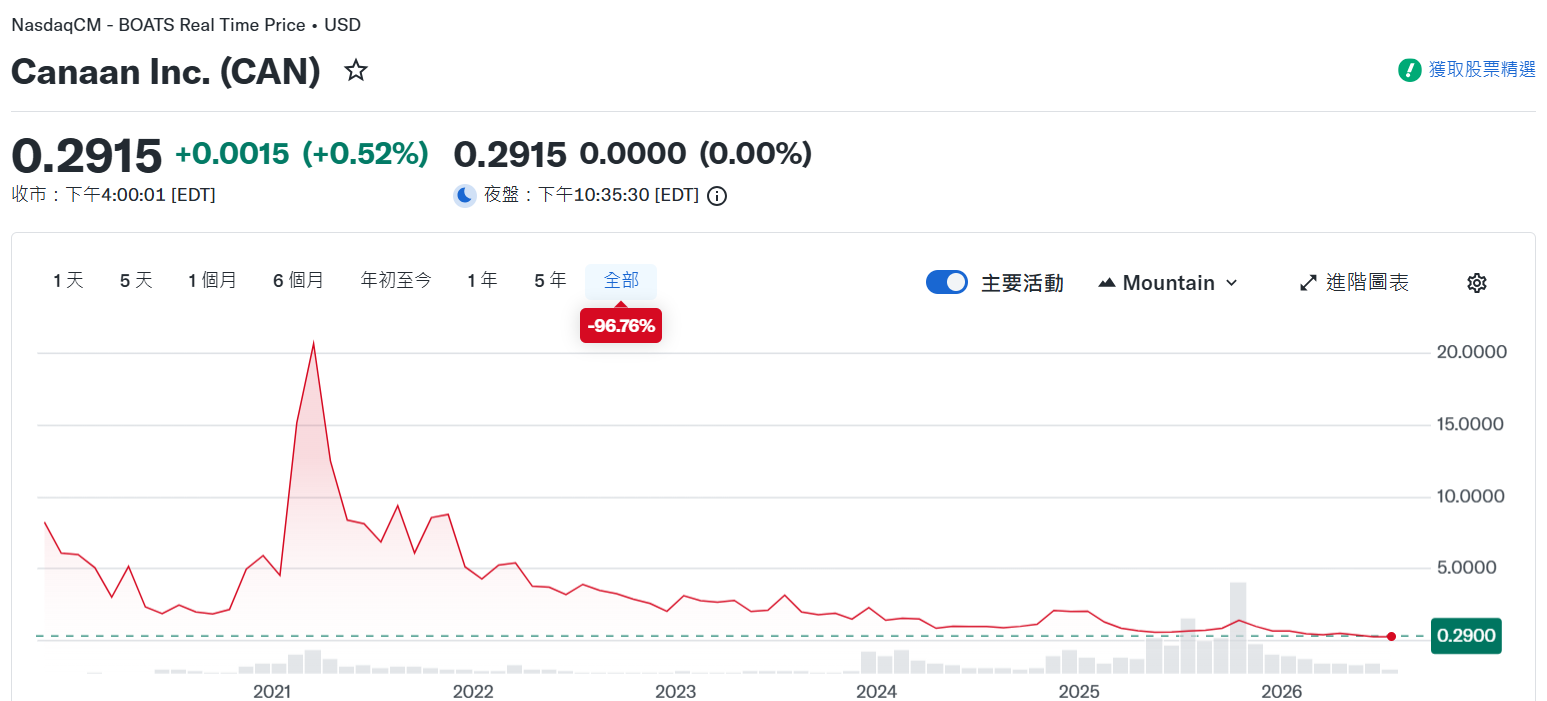


La réaction du marché a été mitigée. À la clôture, Canaan cotait 0,29 dollar, avec une capitalisation boursière d'environ 217 millions de dollars, ayant perdu plus de 90 % par rapport à son apogée lors de son introduction en bourse en novembre 2019. L'entreprise, qui portait autrefois l'auréole de « première action blockchain mondiale », se trouve aujourd'hui au bord du précipice de la radiation.


Le compte à rebours de 180 jours vers la radiation


Le bras de fer entre Canaan et les services de conformité du Nasdaq a commencé en mai 2025. À l'époque, l'entreprise avait reçu pour la première fois un avertissement de radiation en raison du maintien de son action en dessous de 1 dollar, avant de surmonter temporairement la crise grâce à un rebond du prix du Bitcoin. Cependant, cette accalmie fut de courte durée. Le 14 janvier 2026, le Nasdaq a de nouveau émis une notification : le cours de clôture des ADS de Canaan était resté inférieur à 1 dollar pendant 30 jours de bourse consécutifs. L'entreprise devait se mettre en conformité avant le 13 juillet, c'est-à-dire que le cours de clôture devait atteindre ou dépasser 1 dollar pendant 10 jours de bourse consécutifs.


Le 13 juillet, le délai de grâce initial est arrivé à échéance. Canaan n'avait pas atteint l'objectif. Le 1er juillet, l'entreprise a transféré en urgence sa cotation du marché mondial du Nasdaq vers le marché des capitaux du Nasdaq, aux critères relativement moins stricts, et a déposé une demande pour obtenir 180 jours supplémentaires.


Le 15 juillet, cette demande a été approuvée, fixant une nouvelle ligne rouge au 11 janvier 2027.


Selon les règles du Nasdaq, si la conformité n'est pas rétablie à cette date, Canaan pourrait faire face à une radiation définitive. La direction a indiqué qu'elle envisagerait, si nécessaire, une division inversée d'actions pour faire remonter le cours, une mesure généralement perçue par le marché comme un signe de faiblesse.


Comptes T1 2026 : Chiffre d'affaires total en baisse de 24,3 %, perte nette de 88,7 millions de dollars


La faiblesse de l'action de Canaan n'est pas sans raison. Ses derniers résultats financiers montrent que l'entreprise est dans une situation d'hémorragie financière grave.


Le 19 mai 2026, Canaan a publié ses résultats financiers non audités du premier trimestre : chiffre d'affaires total de 62,7 millions de dollars, en baisse de 24,3 % sur un an, et en chute brutale de 68 % par rapport au trimestre précédent ; perte nette de 88,7 millions de dollars, s'aggravant par rapport à l'année précédente (86,4 millions de dollars). L'entreprise a enregistré une perte brute de 22,9 millions de dollars, comprenant environ 25 millions de dollars de dépréciation non monétaire des stocks — ce qui signifie que Canaan a dû déprécier massivement la valeur de son stock de machines de minage, reflétant un effondrement brutal de la demande du marché.


Plus grave encore, les prévisions de chiffre d'affaires de l'entreprise pour le deuxième trimestre ne sont que de 35 à 45 millions de dollars, indiquant que les performances resteront sous pression à court terme. Au 31 mars 2026, la trésorerie de l'entreprise s'élevait à 43,5 millions de dollars, en nette contraction par rapport aux 80,8 millions de dollars de fin 2025 ; cependant, en avril, l'entreprise a récupéré environ 42 millions de dollars de créances clients, ce qui a quelque peu amélioré sa liquidité.


Il est à noter que, malgré les pertes de son activité principale, les réserves de cryptomonnaies de Canaan ont atteint un niveau record : fin du premier trimestre, l'entreprise détenait 1 807,60 bitcoins (d'une valeur de 142 millions de dollars). Ces actifs numériques fournissent une certaine couverture au bilan, mais lient également étroitement ses performances aux fluctuations du prix des cryptomonnaies.
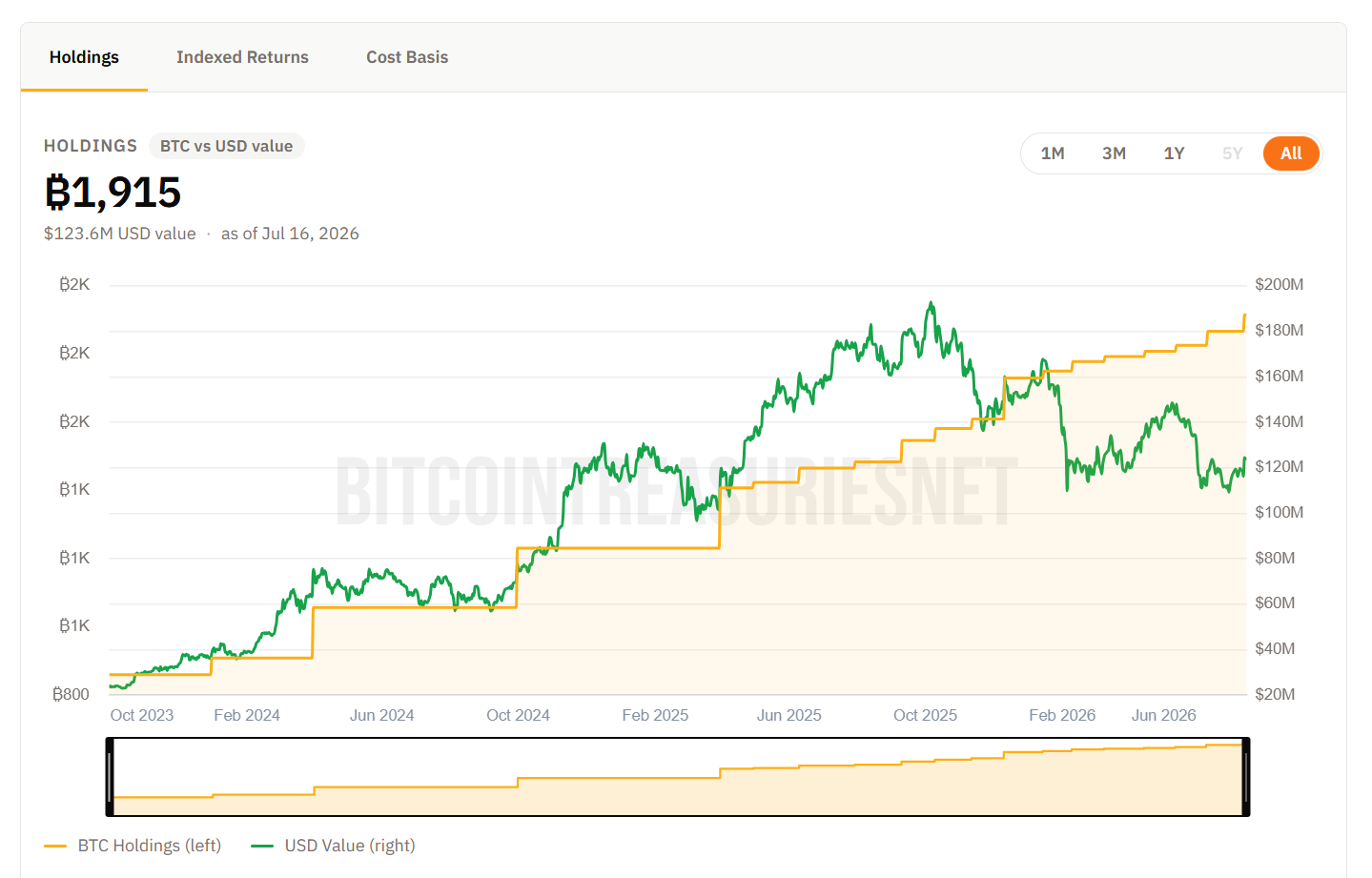


Selon les dernières données, les réserves de Bitcoin de Canaan sont passées à 1 915 unités, mais leur valeur totale est tombée à 120 millions de dollars.


Le rêve brisé des puces IA et le dilemme du « vendeur de pelles »


La situation difficile de Canaan découle en partie d'une erreur stratégique aux conséquences coûteuses.


Le 24 juin 2025, l'entreprise a annoncé la cessation de ses activités non essentielles dans les puces IA, pour revenir entièrement aux machines de minage Bitcoin et à l'exploitation minière en propre. Ses années d'exploration d'une « deuxième courbe » se sont soldées par un échec. D'après les informations publiques, Canaan n'a généré qu'environ 900 000 dollars de revenus provenant de produits de calcul périphérique pour l'exercice 2024, alors que les dépenses d'exploitation associées à ces activités atteignaient environ 21,42 millions de dollars, représentant 15 % des dépenses totales d'exploitation de l'entreprise pour l'année. Face à une perte nette de 249,8 millions de dollars pour l'exercice 2024, cette activité « consommatrice de trésorerie mais non rentable » a été brutalement abandonnée.


Cependant, le retour à son cœur de métier n'a pas beaucoup soulagé Canaan. L'industrie des machines de minage fait face à une pression concurrentielle sans précédent. Par rapport à des concurrents comme Bitmain, la part de marché de Canaan continue d'être grignotée. Au deuxième trimestre 2025, la puissance de calcul totale vendue par l'entreprise était de 6,4 millions de TH/s, n'augmentant que de 3 % sur un an ; et au premier trimestre 2026, les revenus produits étaient tombés à 42,9 millions de dollars, en chute vertigineuse par rapport aux 164,9 millions de dollars du quatrième trimestre 2024.


Zhang Nangeng, fondateur de Canaan


Le métier des fabricants de machines de minage est essentiellement celui de « vendeur de pelles » — leur destin est étroitement lié au cycle du Bitcoin. Lorsque le prix de la cryptomonnaie est élevé et que la rentabilité du minage est forte, les mineurs sont prêts à investir ; dès que le prix baisse et que la compétition sur la puissance de calcul globale du réseau s'intensifie, la demande en machines de minage se refroidit rapidement. Depuis 2025, bien que le prix du Bitcoin ait été robuste à certains moments, l'industrie minière dans son ensemble est entrée dans une phase post-réduction de moitié (« halving ») de faible rentabilité marginale, mettant à mal le modèle commercial traditionnel de Canaan.


Face à la double pression de la radiation et des pertes, la direction de Canaan tente de se transformer d'un simple vendeur de matériel en un « prestataire d'infrastructure de calcul », cherchant une issue via l'intégration verticale et la maîtrise de l'énergie.


L'exploitation minière en propre est devenue un levier clé. Fin du premier trimestre 2026, la puissance de calcul totale de Canaan dans 10 projets d'exploitation minière conjointe dans le monde atteignait environ 11 EH/s, soit une augmentation de 66 % sur un an et de 10,7 % par rapport au trimestre précédent. L'entreprise a acquis 49 % des parts des projets ABC au Texas appartenant à Cipher Mining. Par ailleurs, Canaan a lancé un projet pilote de minage de 3 mégawatts au Canada, explorant l'utilisation de la chaleur résiduelle des machines de minage pour l'agriculture en serre ; et a signé un contrat de 4,5 mégawatts avec un ingénieur électricien japonais pour participer à la régulation de la charge du réseau électrique.


Sur le plan financier, en novembre 2025, Canaan a obtenu un investissement stratégique total de 72 millions de dollars de la part d'institutions telles que BH Digital et Galaxy Digital, destiné à renforcer son bilan et à financer l'expansion de ses infrastructures. En décembre de la même année, le conseil d'administration a approuvé un plan de rachat d'actions de 30 millions de dollars, dans le but de redonner confiance au marché.


Cependant, l'évolution du cours de son action montre que le marché n'a pas adhéré à cette stratégie.


Conclusion


La situation difficile de Canaan est le reflet de l'hiver que traverse l'ensemble de l'industrie minière cryptographique.


Depuis 2025, le récit des marchés financiers mondiaux sur l'industrie des cryptomonnaies a significativement évolué. Avec l'explosion de la demande en puissance de calcul pour l'intelligence artificielle, une grande partie des capitaux initialement destinés aux machines de minage et à l'exploitation minière s'est tournée vers les centres de données IA et le calcul haute performance (HPC). Les mineurs ont commencé à migrer leur puissance de calcul vers des projets d'IA, réduisant directement l'espace de demande pour les machines de minage Bitcoin.


Le défi plus profond réside dans la durabilité du modèle commercial. En tant que concepteur de puces ASIC, Canaan doit investir continuellement en R&D pour maintenir la compétitivité de ses produits.


D'un point de vue plus macroéconomique, Canaan traverse une phase de purge brutale, éliminant la bulle spéculative. Lors de son introduction en bourse en 2019, l'entreprise bénéficiait d'une valorisation élevée grâce au concept de première action blockchain ; aujourd'hui, le marché ne paie plus pour des concepts, mais exige une véritable trésorerie et une rentabilité tangible.


Avant l'arrivée du prochain cycle haussier du Bitcoin, la rentabilité des entreprises minières restera sous pression. Canaan doit prouver, dans les six mois à venir, qu'elle possède la capacité de traverser les cycles.


Trending Cryptos

Related Questions

QQuelle est la date limite supplémentaire que Canaan Technology a obtenue de la part du Nasdaq pour se conformer aux exigences de prix minimum?

ACanaan Technology a obtenu une prolongation de 180 jours, avec une nouvelle date limite fixée au 11 janvier 2027 pour que le prix de ses actions atteigne ou dépasse 1 dollar pendant 10 jours consécutifs.

QQuels sont les principaux résultats financiers de Canaan Technology pour le premier trimestre 2026 qui illustrent ses difficultés ?

APour le premier trimestre 2026, Canaan a enregistré un chiffre d'affaires total de 62,7 millions de dollars, en baisse de 24,3% sur un an. La société a subi une perte nette de 88,7 millions de dollars, avec une perte brute de 22,9 millions de dollars incluant une dépréciation de stocks d'environ 25 millions de dollars.

QPourquoi l'activité de puces IA de Canaan Technology est-elle considérée comme un échec stratégique coûteux ?

ACanaan a dû arrêter son activité non centrale de puces IA en juin 2025 car elle générait seulement environ 900 000 dollars de revenus en 2024, alors que les dépenses opérationnelles de cette division s'élevaient à environ 21,42 millions de dollars, soit 15% des dépenses opérationnelles totales de la société, ce qui en faisait un fardeau financier majeur.

QQuelles stratégies Canaan Technology adopte-t-elle pour tenter de survivre à la crise actuelle ?

APour surmonter la crise, Canaan se transforme d'un simple vendeur de matériel en un fournisseur de services d'infrastructure de calcul. La société se concentre sur l'exploitation minière en propre, développe des projets d'intégration verticale et de mise en valeur de l'énergie (comme la réutilisation de la chaleur résiduelle), et a obtenu des investissements stratégiques de 72 millions de dollars en 2025 pour renforcer son bilan et son expansion.

QSelon l'article, quel est le défi fondamental auquel est confronté le modèle économique de Canaan en tant que fabricant de mineurs ASIC ?

ALe défi fondamental de Canaan est que son modèle économique est intrinsèquement lié au cycle du prix du Bitcoin. En tant que vendeur de 'pelles' pour le minage, la demande pour ses produits est volatile : forte lorsque le prix du Bitcoin est élevé et que la rentabilité du minage est bonne, mais elle s'effondre rapidement lorsque le prix baisse et que la concurrence sur le réseau augmente, mettant à rude épreuve la pérennité de l'entreprise.

Related Reads

After Three Consecutive Quarters of Decline, Can the Crypto Market Find a Window for Stabilization in Q3?

The cryptocurrency market has just concluded its worst-performing quarter since 2022, with total capitalization dropping 12.6% to $2.1 trillion. All core metrics indicate capital is leaving the sector, not just rotating within it. Bitcoin fell 14.2% and Ethereum dropped 25.4% in Q2, breaking their previous correlation with US tech stocks. A key driver is the reversal in US spot Bitcoin ETF flows, which saw a net outflow of approximately $4.67 billion in Q2, including a record monthly outflow near $4.5 billion in June. While recent data suggests long-term holders are accumulating again, sustained ETF outflows mean continued selling pressure. Market focus is now singularly on the Federal Reserve. The upcoming July FOMC meeting is seen as the most critical event for Q3. A dovish signal could support Bitcoin reclaiming a $68,000-$84,000 range, while a hawkish stance might establish a new trading band around $50,000-$56,000. Additionally, regulatory uncertainty persists, with the progress of the crucial *CLARITY Act* stalling in the Senate, reducing its perceived 2026 passage probability to 40-45%. Despite the broad downturn, a few sectors showed growth. Prediction markets saw nominal volume surge 48.7% year-over-year to $113.8 billion, and tokenized collectibles transaction volume rose 143% quarterly to $1.4 billion. The Real-World Asset (RWA) tokenization sector also continued steady growth, now representing ~$28.1 billion in on-chain value. The market's foundation for an extreme crash appears limited, with Bitcoin price hovering near its 200-week moving average. However, the trading paradigm has shifted from narrative-driven speculation to decisions based on price action, policy developments, and interest rate expectations, making a broad sentiment-driven rally unlikely in the near term.

marsbit3h ago

After Three Consecutive Quarters of Decline, Can the Crypto Market Find a Window for Stabilization in Q3?

marsbit3h ago

BIT Trading Moment: BTC Still Suppressed by Weekly 200 EMA, Rejection May Restart Decline; Storage and Semiconductors that Surged Last Night Begin Falling in Evening Trading

**Crypto & Stock Market Wrap: Bitcoin Tests Resistance, Stocks Retreat After AI Surge** Bitcoin consolidates around $66,000, facing key resistance near $68,000—an area seen as a major psychological and technical hurdle where previous rallies have failed. Analysts note the cryptocurrency is caught between its 200-week moving average (~$63,333) and 200-week EMA (~$68,328). A clear break above $68k is needed to signal a stronger bullish trend, while a rejection could lead to a retest of $63k support. Market sentiment remains cautious, with low futures open interest pointing to a low-liquidity rebound rather than a full bull market. Bitcoin spot ETFs saw another $203 million inflow. US stock futures pointed lower after a strong Tuesday session led by a massive rebound in semiconductors and memory stocks. The rally was fueled by renewed optimism about AI-driven hardware demand, with Micron, SanDisk, and SK Hynix surging. However, those gains reversed in pre-market trading. Super Micro Computer (SMCI) soared over 20% after hours on strong guidance and a record backlog. Other standouts included Rocket Lab and nuclear energy plays Oklo and X-Energy. Rising oil prices (Brent above $91) and climbing Treasury yields (10-year near 4.64%), however, are reigniting inflation concerns and acting as a headwind for equities. In Asia, markets were mixed. South Korea's KOSPI pared early gains to close slightly higher as semiconductor stocks like SK Hynix gave back initial surges. Japan's Nikkei edged lower as the yen hit a fresh 38-year low against the dollar, raising fears of potential market intervention. Key events to watch include the Samsung Galaxy launch, AMD's AI event, and a slew of major tech earnings from Alphabet, Tesla, and IBM after the close on Wednesday, followed by the ECB meeting and Intel's earnings on Thursday.

marsbit3h ago

BIT Trading Moment: BTC Still Suppressed by Weekly 200 EMA, Rejection May Restart Decline; Storage and Semiconductors that Surged Last Night Begin Falling in Evening Trading

marsbit3h ago

Former CFTC Chairman, Circle President Tarbert: Preaching Long-Termism While Cashing Out $30 Million Himself

Former CFTC Chairman and Circle President Heath Tarbert has consistently advocated for a long-term vision in public, urging patience from investors as Circle’s stock price has fallen significantly from its peak. However, it has been revealed that since Circle’s IPO, Tarbert has continuously sold his CRCL shares through pre-arranged trading plans, cashing out approximately $30 million, without making any public market purchases. This contrast between his public messaging and personal actions has drawn criticism. Tarbert joined Circle in July 2023 as Chief Legal Officer, leveraging his regulatory experience to help guide the company through its IPO and expansion. Despite promoting stablecoins as long-term infrastructure, he established a 10b5-1 trading plan just before Circle went public, leading to substantial stock sales over the following year. In March 2026, he initiated another plan to sell more shares. His career trajectory highlights a pattern of moving between high-level regulatory roles and influential positions in the financial sector. After resigning as CFTC Chairman in early 2021, he joined Citadel Securities as Chief Legal Officer just 27 days later, during a period of intense regulatory scrutiny for the firm. He later joined Circle, aiding its efforts to navigate regulatory challenges for its public listing. While Tarbert's expertise in policy and compliance is valuable to companies like Circle, his actions—advocating long-term confidence while personally divesting—raise questions about the alignment between his public statements and his private financial decisions, leaving investors who followed his advice to bear the market risks.

marsbit3h ago

Former CFTC Chairman, Circle President Tarbert: Preaching Long-Termism While Cashing Out $30 Million Himself

marsbit3h ago

Gate Research Institute: The 'Wall Street-ization' Wave of Crypto Financial Products – Competition or Integration?

The article titled "Gate Research Institute: Are Crypto Financial Products Sparking a 'Wall Street' Wave—Competition or Convergence?" explores the evolving relationship between the crypto ecosystem and traditional finance (TradFi). The piece begins by reflecting on Bitcoin's original 2009 vision of decentralization, disintermediation, and moving away from banks. It then contrasts this with the 2024 landscape, where key crypto assets like Bitcoin are increasingly held through Wall Street products like ETFs issued by giants like BlackRock. The article questions whether this signifies that TradFi is systematically taking over the rights to issue, price, custody, and distribute crypto financial assets. The core argument is that this is not a zero-sum takeover but rather a bidirectional convergence where each side addresses the other's weaknesses. Crypto offers 24/7 global markets, programmable settlement, and open access but lacks compliant channels, institutional-grade custody, deep fiat liquidity, and mainstream distribution. TradFi possesses these but is constrained by legacy systems, limited operating hours, and slow settlement. Two primary convergence paths are highlighted: * **Path A (CEX to TradFi):** Exemplified by Gate, which has progressed from offering tokenized stocks and CFDs to providing direct, real stock trading (US, Hong Kong, South Korea) within its platform, using USDT. * **Path B (TradFi to Crypto):** Exemplified by Robinhood, which has integrated crypto trading, acquired exchanges like Bitstamp, and is moving traditional assets like stocks onto the blockchain via tokenization and its own Layer 2. Both paths are ultimately competing to become the next-generation, unified financial account—a "super account" where users can seamlessly trade cryptocurrencies, stocks, ETFs, RWA (Real World Assets), and tokenized treasury products in one interface. The growth of RWA and tokenized treasuries (e.g., BlackRock's BUIDL) is presented as the asset-layer fusion, providing stable, yield-bearing assets on-chain and acting as a bridge between the two worlds. In conclusion, the "Wall Street-ization" of crypto is framed as a mutual transformation. Decentralized ideals persist in the protocol layer, while at the application layer, a more efficient, global, and accessible unified capital market is emerging from this convergence. The future competition lies not between crypto exchanges and stockbrokers, but between platforms vying to offer the most comprehensive asset coverage, liquidity, and user experience within a single account.

marsbit3h ago

Gate Research Institute: The 'Wall Street-ization' Wave of Crypto Financial Products – Competition or Integration?

marsbit3h ago

Trading

Spot

Hot Articles

What is SONIC

Sonic: Pioneering the Future of Gaming in Web3 Introduction to Sonic In the ever-evolving landscape of Web3, the gaming industry stands out as one of the most dynamic and promising sectors. At the forefront of this revolution is Sonic, a project designed to amplify the gaming ecosystem on the Solana blockchain. Leveraging cutting-edge technology, Sonic aims to deliver an unparalleled gaming experience by efficiently processing millions of requests per second, ensuring that players enjoy seamless gameplay while maintaining low transaction costs. This article delves into the intricate details of Sonic, exploring its creators, funding sources, operational mechanics, and the timeline of significant events that have shaped its journey. What is Sonic? Sonic is an innovative layer-2 network that operates atop the Solana blockchain, specifically tailored to enhance the existing Solana gaming ecosystem. It accomplishes this through a customised, VM-agnostic game engine paired with a HyperGrid interpreter, facilitating sovereign game economies that roll up back to the Solana platform. The primary goals of Sonic include: Enhanced Gaming Experiences: Sonic is committed to offering lightning-fast on-chain gameplay, allowing players and developers to engage with games at previously unattainable speeds. Atomic Interoperability: This feature enables transactions to be executed within Sonic without the need to redeploy Solana programmes and accounts. This makes the process more efficient and directly benefits from Solana Layer1 services and liquidity. Seamless Deployment: Sonic allows developers to write for Ethereum Virtual Machine (EVM) based systems and execute them on Solana’s SVM infrastructure. This interoperability is crucial for attracting a broader range of dApps and decentralised applications to the platform. Support for Developers: By offering native composable gaming primitives and extensible data types - dining within the Entity-Component-System (ECS) framework - game creators can craft intricate business logic with ease. Overall, Sonic's unique approach not only caters to players but also provides an accessible and low-cost environment for developers to innovate and thrive. Creator of Sonic The information regarding the creator of Sonic is somewhat ambiguous. However, it is known that Sonic's SVM is owned by the company Mirror World. The absence of detailed information about the individuals behind Sonic reflects a common trend in several Web3 projects, where collective efforts and partnerships often overshadow individual contributions. Investors of Sonic Sonic has garnered considerable attention and support from various investors within the crypto and gaming sectors. Notably, the project raised an impressive $12 million during its Series A funding round. The round was led by BITKRAFT Ventures, with other notable investors including Galaxy, Okx Ventures, Interactive, Big Brain Holdings, and Mirana. This financial backing signifies the confidence that investment foundations have in Sonic’s potential to revolutionise the Web3 gaming landscape, further validating its innovative approaches and technologies. How Does Sonic Work? Sonic utilises the HyperGrid framework, a sophisticated parallel processing mechanism that enhances its scalability and customisability. Here are the core features that set Sonic apart: Lightning Speed at Low Costs: Sonic offers one of the fastest on-chain gaming experiences compared to other Layer-1 solutions, powered by the scalability of Solana’s virtual machine (SVM). Atomic Interoperability: Sonic enables transaction execution without redeployment of Solana programmes and accounts, effectively streamlining the interaction between users and the blockchain. EVM Compatibility: Developers can effortlessly migrate decentralised applications from EVM chains to the Solana environment using Sonic’s HyperGrid interpreter, increasing the accessibility and integration of various dApps. Ecosystem Support for Developers: By exposing native composable gaming primitives, Sonic facilitates a sandbox-like environment where developers can experiment and implement business logic, greatly enhancing the overall development experience. Monetisation Infrastructure: Sonic natively supports growth and monetisation efforts, providing frameworks for traffic generation, payments, and settlements, thereby ensuring that gaming projects are not only viable but also sustainable financially. Timeline of Sonic The evolution of Sonic has been marked by several key milestones. Below is a brief timeline highlighting critical events in the project's history: 2022: The Sonic cryptocurrency was officially launched, marking the beginning of its journey in the Web3 gaming arena. 2024: June: Sonic SVM successfully raised $12 million in a Series A funding round. This investment allowed Sonic to further develop its platform and expand its offerings. August: The launch of the Sonic Odyssey testnet provided users with the first opportunity to engage with the platform, offering interactive activities such as collecting rings—a nod to gaming nostalgia. October: SonicX, an innovative crypto game integrated with Solana, made its debut on TikTok, capturing the attention of over 120,000 users within a short span. This integration illustrated Sonic’s commitment to reaching a broader, global audience and showcased the potential of blockchain gaming. Key Points Sonic SVM is a revolutionary layer-2 network on Solana explicitly designed to enhance the GameFi landscape, demonstrating great potential for future development. HyperGrid Framework empowers Sonic by introducing horizontal scaling capabilities, ensuring that the network can handle the demands of Web3 gaming. Integration with Social Platforms: The successful launch of SonicX on TikTok displays Sonic’s strategy to leverage social media platforms to engage users, exponentially increasing the exposure and reach of its projects. Investment Confidence: The substantial funding from BITKRAFT Ventures, among others, emphasizes the robust backing Sonic has, paving the way for its ambitious future. In conclusion, Sonic encapsulates the essence of Web3 gaming innovation, striking a balance between cutting-edge technology, developer-centric tools, and community engagement. As the project continues to evolve, it is poised to redefine the gaming landscape, making it a notable entity for gamers and developers alike. As Sonic moves forward, it will undoubtedly attract greater interest and participation, solidifying its place within the broader narrative of blockchain gaming.

1.9k Total ViewsPublished 2024.04.04Updated 2024.12.03

What is SONIC

What is $S$

Understanding SPERO: A Comprehensive Overview Introduction to SPERO As the landscape of innovation continues to evolve, the emergence of web3 technologies and cryptocurrency projects plays a pivotal role in shaping the digital future. One project that has garnered attention in this dynamic field is SPERO, denoted as SPERO,$$s$. This article aims to gather and present detailed information about SPERO, to help enthusiasts and investors understand its foundations, objectives, and innovations within the web3 and crypto domains. What is SPERO,$$s$? SPERO,$$s$ is a unique project within the crypto space that seeks to leverage the principles of decentralisation and blockchain technology to create an ecosystem that promotes engagement, utility, and financial inclusion. The project is tailored to facilitate peer-to-peer interactions in new ways, providing users with innovative financial solutions and services. At its core, SPERO,$$s$ aims to empower individuals by providing tools and platforms that enhance user experience in the cryptocurrency space. This includes enabling more flexible transaction methods, fostering community-driven initiatives, and creating pathways for financial opportunities through decentralised applications (dApps). The underlying vision of SPERO,$$s$ revolves around inclusiveness, aiming to bridge gaps within traditional finance while harnessing the benefits of blockchain technology. Who is the Creator of SPERO,$$s$? The identity of the creator of SPERO,$$s$ remains somewhat obscure, as there are limited publicly available resources providing detailed background information on its founder(s). This lack of transparency can stem from the project's commitment to decentralisation—an ethos that many web3 projects share, prioritising collective contributions over individual recognition. By centring discussions around the community and its collective goals, SPERO,$$s$ embodies the essence of empowerment without singling out specific individuals. As such, understanding the ethos and mission of SPERO remains more important than identifying a singular creator. Who are the Investors of SPERO,$$s$? SPERO,$$s$ is supported by a diverse array of investors ranging from venture capitalists to angel investors dedicated to fostering innovation in the crypto sector. The focus of these investors generally aligns with SPERO's mission—prioritising projects that promise societal technological advancement, financial inclusivity, and decentralised governance. These investor foundations are typically interested in projects that not only offer innovative products but also contribute positively to the blockchain community and its ecosystems. The backing from these investors reinforces SPERO,$$s$ as a noteworthy contender in the rapidly evolving domain of crypto projects. How Does SPERO,$$s$ Work? SPERO,$$s$ employs a multi-faceted framework that distinguishes it from conventional cryptocurrency projects. Here are some of the key features that underline its uniqueness and innovation: Decentralised Governance: SPERO,$$s$ integrates decentralised governance models, empowering users to participate actively in decision-making processes regarding the project’s future. This approach fosters a sense of ownership and accountability among community members. Token Utility: SPERO,$$s$ utilises its own cryptocurrency token, designed to serve various functions within the ecosystem. These tokens enable transactions, rewards, and the facilitation of services offered on the platform, enhancing overall engagement and utility. Layered Architecture: The technical architecture of SPERO,$$s$ supports modularity and scalability, allowing for seamless integration of additional features and applications as the project evolves. This adaptability is paramount for sustaining relevance in the ever-changing crypto landscape. Community Engagement: The project emphasises community-driven initiatives, employing mechanisms that incentivise collaboration and feedback. By nurturing a strong community, SPERO,$$s$ can better address user needs and adapt to market trends. Focus on Inclusion: By offering low transaction fees and user-friendly interfaces, SPERO,$$s$ aims to attract a diverse user base, including individuals who may not previously have engaged in the crypto space. This commitment to inclusion aligns with its overarching mission of empowerment through accessibility. Timeline of SPERO,$$s$ Understanding a project's history provides crucial insights into its development trajectory and milestones. Below is a suggested timeline mapping significant events in the evolution of SPERO,$$s$: Conceptualisation and Ideation Phase: The initial ideas forming the basis of SPERO,$$s$ were conceived, aligning closely with the principles of decentralisation and community focus within the blockchain industry. Launch of Project Whitepaper: Following the conceptual phase, a comprehensive whitepaper detailing the vision, goals, and technological infrastructure of SPERO,$$s$ was released to garner community interest and feedback. Community Building and Early Engagements: Active outreach efforts were made to build a community of early adopters and potential investors, facilitating discussions around the project’s goals and garnering support. Token Generation Event: SPERO,$$s$ conducted a token generation event (TGE) to distribute its native tokens to early supporters and establish initial liquidity within the ecosystem. Launch of Initial dApp: The first decentralised application (dApp) associated with SPERO,$$s$ went live, allowing users to engage with the platform's core functionalities. Ongoing Development and Partnerships: Continuous updates and enhancements to the project's offerings, including strategic partnerships with other players in the blockchain space, have shaped SPERO,$$s$ into a competitive and evolving player in the crypto market. Conclusion SPERO,$$s$ stands as a testament to the potential of web3 and cryptocurrency to revolutionise financial systems and empower individuals. With a commitment to decentralised governance, community engagement, and innovatively designed functionalities, it paves the way toward a more inclusive financial landscape. As with any investment in the rapidly evolving crypto space, potential investors and users are encouraged to research thoroughly and engage thoughtfully with the ongoing developments within SPERO,$$s$. The project showcases the innovative spirit of the crypto industry, inviting further exploration into its myriad possibilities. While the journey of SPERO,$$s$ is still unfolding, its foundational principles may indeed influence the future of how we interact with technology, finance, and each other in interconnected digital ecosystems.

156 Total ViewsPublished 2024.12.17Updated 2024.12.17

What is $S$

What is AGENT S

Agent S: The Future of Autonomous Interaction in Web3 Introduction In the ever-evolving landscape of Web3 and cryptocurrency, innovations are constantly redefining how individuals interact with digital platforms. One such pioneering project, Agent S, promises to revolutionise human-computer interaction through its open agentic framework. By paving the way for autonomous interactions, Agent S aims to simplify complex tasks, offering transformative applications in artificial intelligence (AI). This detailed exploration will delve into the project's intricacies, its unique features, and the implications for the cryptocurrency domain. What is Agent S? Agent S stands as a groundbreaking open agentic framework, specifically designed to tackle three fundamental challenges in the automation of computer tasks: Acquiring Domain-Specific Knowledge: The framework intelligently learns from various external knowledge sources and internal experiences. This dual approach empowers it to build a rich repository of domain-specific knowledge, enhancing its performance in task execution. Planning Over Long Task Horizons: Agent S employs experience-augmented hierarchical planning, a strategic approach that facilitates efficient breakdown and execution of intricate tasks. This feature significantly enhances its ability to manage multiple subtasks efficiently and effectively. Handling Dynamic, Non-Uniform Interfaces: The project introduces the Agent-Computer Interface (ACI), an innovative solution that enhances the interaction between agents and users. Utilizing Multimodal Large Language Models (MLLMs), Agent S can navigate and manipulate diverse graphical user interfaces seamlessly. Through these pioneering features, Agent S provides a robust framework that addresses the complexities involved in automating human interaction with machines, setting the stage for myriad applications in AI and beyond. Who is the Creator of Agent S? While the concept of Agent S is fundamentally innovative, specific information about its creator remains elusive. The creator is currently unknown, which highlights either the nascent stage of the project or the strategic choice to keep founding members under wraps. Regardless of anonymity, the focus remains on the framework's capabilities and potential. Who are the Investors of Agent S? As Agent S is relatively new in the cryptographic ecosystem, detailed information regarding its investors and financial backers is not explicitly documented. The lack of publicly available insights into the investment foundations or organisations supporting the project raises questions about its funding structure and development roadmap. Understanding the backing is crucial for gauging the project's sustainability and potential market impact. How Does Agent S Work? At the core of Agent S lies cutting-edge technology that enables it to function effectively in diverse settings. Its operational model is built around several key features: Human-like Computer Interaction: The framework offers advanced AI planning, striving to make interactions with computers more intuitive. By mimicking human behaviour in tasks execution, it promises to elevate user experiences. Narrative Memory: Employed to leverage high-level experiences, Agent S utilises narrative memory to keep track of task histories, thereby enhancing its decision-making processes. Episodic Memory: This feature provides users with step-by-step guidance, allowing the framework to offer contextual support as tasks unfold. Support for OpenACI: With the ability to run locally, Agent S allows users to maintain control over their interactions and workflows, aligning with the decentralised ethos of Web3. Easy Integration with External APIs: Its versatility and compatibility with various AI platforms ensure that Agent S can fit seamlessly into existing technological ecosystems, making it an appealing choice for developers and organisations. These functionalities collectively contribute to Agent S's unique position within the crypto space, as it automates complex, multi-step tasks with minimal human intervention. As the project evolves, its potential applications in Web3 could redefine how digital interactions unfold. Timeline of Agent S The development and milestones of Agent S can be encapsulated in a timeline that highlights its significant events: September 27, 2024: The concept of Agent S was launched in a comprehensive research paper titled “An Open Agentic Framework that Uses Computers Like a Human,” showcasing the groundwork for the project. October 10, 2024: The research paper was made publicly available on arXiv, offering an in-depth exploration of the framework and its performance evaluation based on the OSWorld benchmark. October 12, 2024: A video presentation was released, providing a visual insight into the capabilities and features of Agent S, further engaging potential users and investors. These markers in the timeline not only illustrate the progress of Agent S but also indicate its commitment to transparency and community engagement. Key Points About Agent S As the Agent S framework continues to evolve, several key attributes stand out, underscoring its innovative nature and potential: Innovative Framework: Designed to provide an intuitive use of computers akin to human interaction, Agent S brings a novel approach to task automation. Autonomous Interaction: The ability to interact autonomously with computers through GUI signifies a leap towards more intelligent and efficient computing solutions. Complex Task Automation: With its robust methodology, it can automate complex, multi-step tasks, making processes faster and less error-prone. Continuous Improvement: The learning mechanisms enable Agent S to improve from past experiences, continually enhancing its performance and efficacy. Versatility: Its adaptability across different operating environments like OSWorld and WindowsAgentArena ensures that it can serve a broad range of applications. As Agent S positions itself in the Web3 and crypto landscape, its potential to enhance interaction capabilities and automate processes signifies a significant advancement in AI technologies. Through its innovative framework, Agent S exemplifies the future of digital interactions, promising a more seamless and efficient experience for users across various industries. Conclusion Agent S represents a bold leap forward in the marriage of AI and Web3, with the capacity to redefine how we interact with technology. While still in its early stages, the possibilities for its application are vast and compelling. Through its comprehensive framework addressing critical challenges, Agent S aims to bring autonomous interactions to the forefront of the digital experience. As we move deeper into the realms of cryptocurrency and decentralisation, projects like Agent S will undoubtedly play a crucial role in shaping the future of technology and human-computer collaboration.

824 Total ViewsPublished 2025.01.14Updated 2025.01.14

What is AGENT S

Discussions

Welcome to the HTX Community. Here, you can stay informed about the latest platform developments and gain access to professional market insights. Users' opinions on the price of S (S) are presented below.

活动图片












