Bitmine Tăng Trữ Lên 5.7 Triệu ETH, Được Đưa Vào Chỉ Số Russell 1000, Tom Lee Nói Còn Cách 'Mục Tiêu 5%' Một Bước

marsbitPublished on 2026-06-30Last updated on 2026-06-30

Abstract

Bitmine Immersion Technologies (BMNR) đã mua thêm 27.084 ETH trong tuần trước, nâng tổng lượng nắm giữ lên 5,7 triệu ETH, tương đương 4,7% tổng nguồn cung. Điều này đưa công ty đến gần hơn mục tiêu sở hữu 5% nguồn cung ETH mà Chủ tịch Tom Lee đặt ra, hiện đã đạt 94%. Tổng tài sản của Bitmine, bao gồm tiền mã hóa, tiền mặt và chứng khoán, đạt 9,8 tỷ USD. Bất chấp việc ETH giảm 8% trong tuần và cổ phiếu BMNR giảm 13%, Lee cho rằng nguyên nhân là do điều chỉnh danh mục cuối quý. Ông khẳng định Bitmine sẽ duy trì tốc độ mua ổn định trong năm 2026. Một tin tức quan trọng khác là Bitmine đã được đưa vào chỉ số chứng khoán Russell 1000. Lee kỳ vọng điều này sẽ thu hút hàng trăm triệu USD từ các quỹ đầu tư thụ động. Hiện có gần 4,88 triệu ETH của Bitmine đang được stake, với thu nhập dự kiến hàng năm là 211 triệu USD, và có thể tăng lên 246 triệu USD khi toàn bộ ETH được stake. Bitmine hiện là kho bạc doanh nghiệp nắm giữ ETH lớn nhất thế giới và lớn thứ hai về tổng tài sản tiền mã hóa, sau Strategy (nắm giữ BTC).

Tác giả: Naga Avan-Nomayo

Biên dịch: Deep Tide TechFlow

Dẫn nhập Deep Tide: Kho bạc doanh nghiệp Ethereum lớn nhất thế giới, Bitmine, đã mua thêm 27,084 ETH vào tuần trước, nâng tổng nắm giữ lên 5.7 triệu ETH, chiếm 4.7% tổng nguồn cung ETH, chỉ còn cách mục tiêu 'nắm giữ 5% nguồn cung' mà Tom Lee đặt ra 6%. Cùng tuần đó, ETH giảm 8%, cổ phiếu BMNR giảm 13%, và đã giảm hơn 90% so với mức cao nhất. Bitmine cũng được đưa vào chỉ số cổ phiếu vốn hóa lớn Russell 1000, Lee cho rằng điều này sẽ thu hút hàng trăm hàng nghìn nguồn vốn thụ động từ các tổ chức. Liệu logic mua vào liên tục có thể chịu được áp lực giảm giá kéo dài hay không là điểm đáng chú ý trong bài đánh giá báo cáo tài chính này.

Bitmine Immersion Technologies (BMNR) đã tăng nắm giữ thêm 27,084 ETH trong tuần qua, nâng tổng nắm giữ lên 5,700,040 ETH, hoàn thành 94% mục tiêu 'sở hữu 5% nguồn cung lưu hành ETH'.

Tính đến ngày 28 tháng 6, 5.7 triệu ETH mà Bitmine nắm giữ, định giá ở mức 1,569 USD mỗi ETH, chiếm 4.7% tổng nguồn cung ETH. Tổng nguồn cung ETH hiện tại là 120.7 triệu. Công ty đã tiết lộ dữ liệu này vào thứ Hai.

Tổng giá trị tài sản mật mã, tiền mặt, chứng khoán có thể giao dịch và danh mục 'moonshot' đạt 9.8 tỷ USD. Trong đó bao gồm cổ phần trị giá 180 triệu USD tại Beast Industries, 74 triệu USD tại Eightco Holdings, và 555 triệu USD tiền mặt và chứng khoán có thể giao dịch.
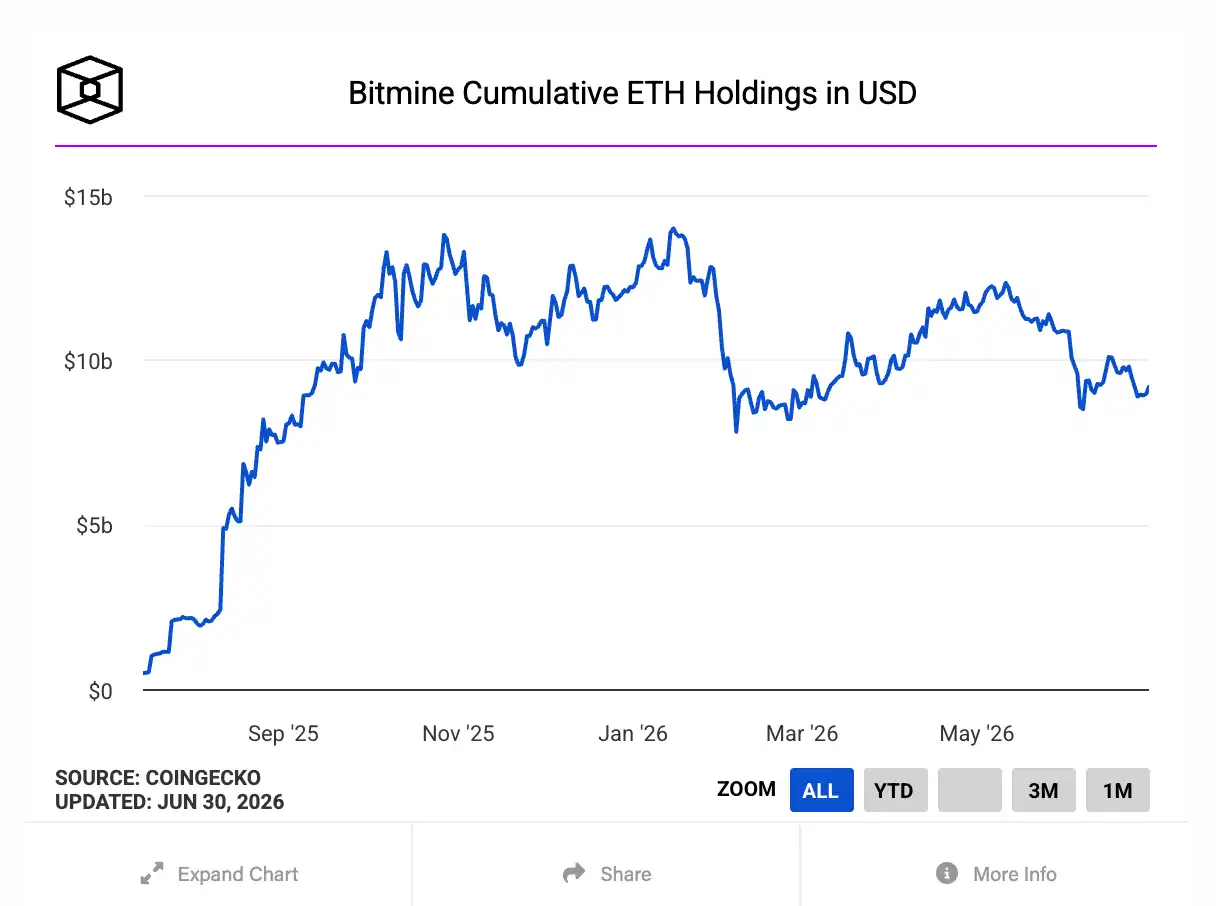
Chú thích: Tình hình tăng trữ ETH của Bitmine

Biểu đồ gốc, dữ liệu từ The Block

ETH Giảm 8% Trong Một Tuần, Lee Quy Do Việc Điều Chỉnh Danh Mục Cuối Quý

"Tuần qua không dễ dàng gì đối với nhà đầu tư tiền mã hóa, ETH đã giảm 8%. Ngay cả trong giai đoạn này, Ethereum có nhiều tin tốt, chẳng hạn như Ethlabs được thành lập, thậm chí Ngân hàng Anh cũng đã nới lỏng thái độ đối với stablecoin." Chủ tịch Tom Lee nói.

Lee quy việc giá yếu là do 'trang trí cửa sổ' (window dressing) cuối quý, tức là nhà đầu tư bán tài sản đã giảm trong ba tháng qua vào cuối quý để làm đẹp báo cáo. Nhịp độ mua vào của Bitmine trong tuần này đã chậm hơn so với tuần trước, khi họ đã mua một lúc 52,203 ETH.

"Trong suốt năm 2026, chúng tôi sẽ duy trì nhịp độ mua vào ổn định." Lee nói, "Chúng tôi tin rằng chúng ta vẫn đang ở giai đoạn đầu của mùa xuân tiền mã hóa. Bitmine dự kiến sẽ đạt được 'thuật giả kim 5%' vào năm 2026."

Được Đưa Vào Russell 1000, Lee Hướng Tới Sự Tái Cân Bằng Vốn Thụ Động

Ngày 26 tháng 6, trong đợt điều chỉnh hàng năm thành phần chỉ số của Russell, Bitmine đã được đưa vào chỉ số cổ phiếu vốn hóa lớn Russell 1000.

Lee nói rằng việc đưa vào này dự kiến sẽ thu hút hàng trăm hàng nghìn nhà đầu tư tổ chức vào cổ phiếu này. Lý do là các quỹ thụ động và ETF sẽ tái cân bằng theo biến động của chỉ số - theo ước tính của Hiệp hội Công ty Đầu tư (ICI), những nguồn vốn này thường nắm giữ 18% đến 20% cổ phiếu lưu hành của một công ty.

Trong số 5.7 triệu ETH, hiện có 4,879,157 ETH đang được stake, có giá trị khoảng 7.7 tỷ USD theo giá ngày 28 tháng 6. Lee cho biết, doanh thu hàng năm dự kiến từ phần stake này là 211 triệu USD.

Lee cũng đề cập rằng, khi tất cả ETH được stake hoàn toàn thông qua MAVAN (mạng lưới xác thực cấp tổ chức của Bitmine) và các đối tác stake của họ, với tỷ suất sinh lời hàng năm 7 ngày là 2.75%, phần thưởng stake hàng năm dự kiến sẽ tăng lên 246 triệu USD.

Bitmine vẫn là kho bạc doanh nghiệp Ethereum lớn nhất thế giới, và cũng là kho bạc tiền mã hóa doanh nghiệp lớn thứ hai xét về quy mô tổng thể. Đứng trước nó là Strategy, nắm giữ 847,363 BTC, trị giá khoảng 50 tỷ USD (dữ liệu từ The Block).
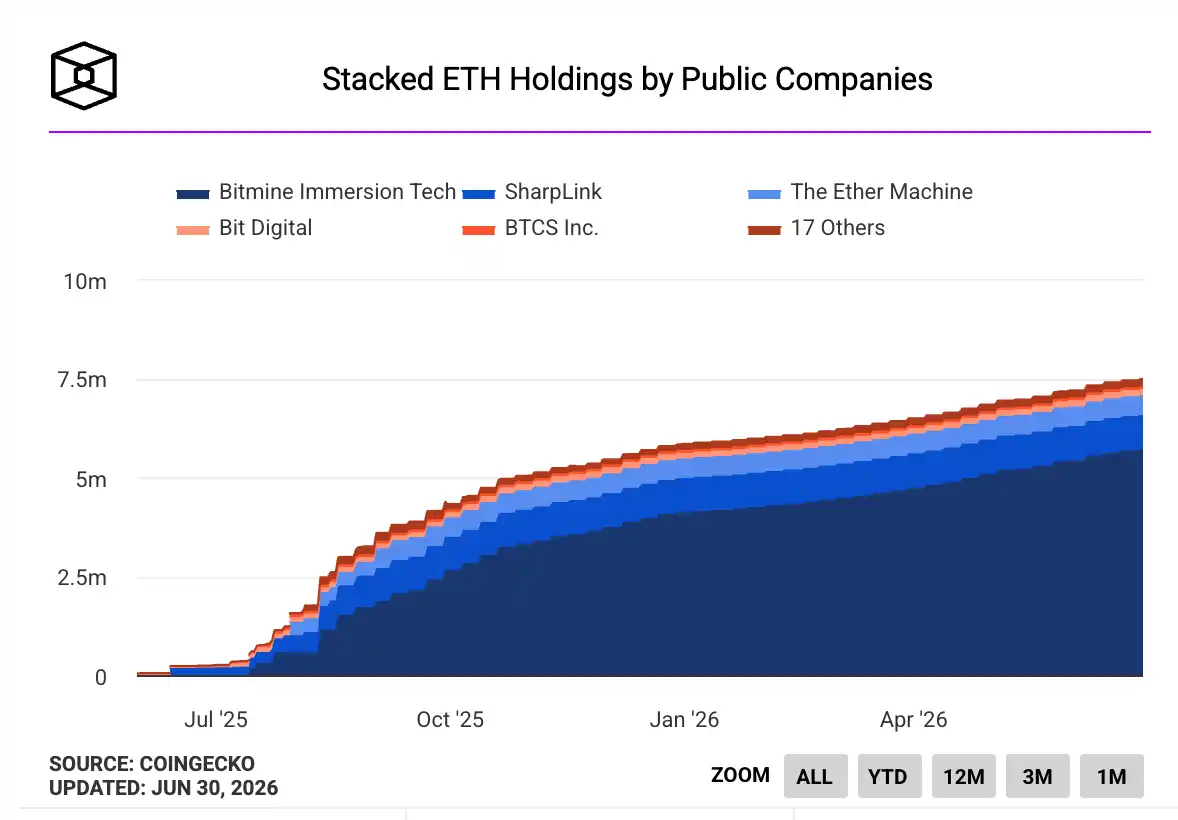
Chú thích: Xếp hạng quy mô kho bạc tiền mã hóa doanh nghiệp

Biểu đồ gốc, dữ liệu từ The Block

Vào thời điểm phát hành, giá ETH vào khoảng 1,565 USD (theo trang giá của The Block). Cổ phiếu BMNR được báo giá vào khoảng 13.56 USD vào thứ Hai, giảm khoảng 13% trong tuần qua và đã giảm hơn 90% so với mức cao nhất 52 tuần là 161.00 USD.


Trending Cryptos

Related Questions

QTuần qua, Bitmine đã mua thêm bao nhiêu ETH và tổng lượng nắm giữ hiện tại là bao nhiêu?

ATuần qua, Bitmine đã mua thêm 27.084 ETH. Tổng lượng nắm giữ hiện tại của họ là 5.700.040 ETH.

QMục tiêu 'thuật giả kim 5%' của Tom Lee cho Bitmine là gì và họ đã đạt được bao nhiêu phần trăm?

AMục tiêu 'thuật giả kim 5%' của Tom Lee là Bitmine sở hữu 5% tổng nguồn cung lưu thông của ETH. Hiện tại, với 5,7 triệu ETH, họ đã đạt 4,7% tổng nguồn cung, tức là hoàn thành 94% mục tiêu.

QTom Lee đã đưa ra lý do gì để giải thích cho việc giá ETH giảm 8% trong tuần qua?

ATom Lee cho rằng việc giá ETH giảm là do hiện tượng 'trang trí cửa sổ' (window dressing) vào cuối quý, khi các nhà đầu tư bán các tài sản đã giảm giá trong quý để làm đẹp báo cáo tài chính.

QViệc Bitmine được đưa vào chỉ số Russell 1000 được kỳ vọng sẽ mang lại điều gì cho công ty?

AViệc được đưa vào chỉ số Russell 1000 được kỳ vọng sẽ thu hút hàng trăm triệu đô la vốn đầu tư thụ động từ các quỹ chỉ số và ETF, do họ phải tái cân bằng danh mục theo chỉ số.

QBitmine hiện là kho bạc doanh nghiệp Ethereum lớn nhất thế giới. Kho bạc doanh nghiệp nắm giữ tiền điện tử lớn nhất thế giới là công ty nào và họ nắm giữ cái gì?

AKho bạc doanh nghiệp nắm giữ tiền điện tử lớn nhất thế giới là Strategy. Họ nắm giữ 847.363 BTC, trị giá khoảng 50 tỷ USD.

Related Reads

Chainlink Adds 6,100 Wallets In Two Days In Strongest Growth Burst Of 2026

Chainlink experienced its strongest wallet growth burst of 2026, adding approximately 6,100 new addresses in just two days. This notable increase in network participation occurred despite LINK's price trading in a difficult market environment alongside other altcoins. The surge in new wallets is seen as a positive signal for user and investor interest, suggesting the ecosystem continues to attract attention even when price action is weak. Wallet growth is considered a useful metric as it measures real participation rather than just price speculation. For an infrastructure project like Chainlink, whose value is tied to oracle services, data, and real-world assets, such growth indicates ongoing engagement with its core technology. However, the article notes that this data point, while constructive, is not conclusive on its own. The nature of the new wallets—whether they belong to small holders, new users, or exchange-related entities—remains unclear. The report maintains a balanced perspective, stating that while this wallet growth is a positive adoption signal for LINK bulls, it does not guarantee a price increase. Skeptics may question whether this user growth translates into value capture for the token. The key takeaway is that this burst of activity should be monitored alongside other factors like transaction volume, price structure, and broader market trends for a more complete picture. The signal requires follow-through in price and demand to be fully validated.

bitcoinist22m ago

Chainlink Adds 6,100 Wallets In Two Days In Strongest Growth Burst Of 2026

bitcoinist22m ago

In the AI Era, What's Left for Bitcoin?

As Bitcoin falls below $60,000, the author reflects on the relationship between AI and Bitcoin, seeing them as two sides of the same coin. In the AI era, the cost of generating content has plummeted, making fake text, images, and videos increasingly easy and cheap to produce. This has led to a fundamental shift: while AI dramatically lowers the cost of information production, it also undermines trust and authenticity online. What becomes truly valuable is not more content, but the ability to verify what is real—"verifiability." This perspective offers a new lens for Bitcoin. Its massive energy consumption, often criticized as wasteful, is reinterpreted. While AI burns energy to enhance "capability" and efficiency, Bitcoin burns energy to produce "verifiability." Its purpose is not to be trusted but to enable a system where no trust in intermediaries—banks, platforms, or developers—is needed. Every transaction and the entire ledger's history is secured by cryptography and a decentralized network of nodes, making it independently verifiable. AI cannot forge a transaction on the Bitcoin network because the system is designed for proof, not generation. The author draws a historical parallel to the Renaissance: the printing press drastically reduced the cost of copying knowledge, while double-entry bookkeeping reduced the cost of trust in commerce. Today, AI is the new printing press, reducing content creation costs to near zero. Blockchain, and Bitcoin as its pioneer, may be the modern equivalent of double-entry bookkeeping—a foundational technology for verifying digital asset ownership and historical records without centralized authorities. Thus, AI and blockchain are not competitors. AI lowers the cost of creation; blockchain lowers the cost of verification. In an age where AI can generate anything, true scarcity may lie not in more content, but in independently verifiable facts. Whether the market will reprice Bitcoin accordingly remains uncertain, but its core value proposition as a "machine for producing verifiability" becomes strikingly relevant.

marsbit1h ago

In the AI Era, What's Left for Bitcoin?

marsbit1h ago

In the Age of AI, What's Left for Bitcoin?

Author: Sevclub, Seven Research Amid Bitcoin's recent drop below $60k, the author reflects on a growing sense that AI and Bitcoin are two sides of the same coin. Today, encountering any content triggers a new default question: "Was this made by AI?" The cost of generating convincing text, images, and video is now negligible. While the internet lowered information *distribution* costs, AI is crashing information *production* costs to near zero. The consequence is a flood of content where truth and falsehood are increasingly indistinguishable. In this environment, what becomes truly valuable is not more information, but the ability to verify what is real—"verifiability." This reframes the common criticism that Bitcoin "wastes electricity." AI consumes power to produce "capability" (e.g., more powerful models). Bitcoin consumes power to produce something else: "verifiability." Bitcoin's core purpose isn't about belief or trust in any institution, developer, or even its creator. It's about enabling independent verification. Every bitcoin's origin, every transaction, and the integrity of the entire ledger are secured by mathematics, cryptography, and a global network of nodes. AI can fabricate convincing media, but it cannot falsify a transaction on the Bitcoin network. The expended energy makes篡改历史 (tampering with history) prohibitively expensive, purchasing a globally verifiable ledger. The author draws a historical parallel to the Renaissance. The printing press drastically reduced the cost of copying knowledge, while double-entry bookkeeping reduced the cost of trust in commerce—one enabled creation, the other verification. Today, AI is the new printing press, driving content production costs toward zero. The question becomes: what is this era's "double-entry bookkeeping"? Blockchain appears to be the leading candidate. It doesn't verify which news is true or which image is real, but it provides a foundational layer for independently verifying asset ownership and historical records in the digital realm without centralized authorities. Therefore, AI and blockchain are not in competition. AI lowers the cost of *generation*. Blockchain (and Bitcoin as a prime example) lowers the cost of *verification*. One creates, the other proves. Whether Bitcoin ultimately succeeds remains uncertain, facing potential challenges from quantum computing, regulation, and technical evolution. However, the author now sees it less as a "machine for making bitcoin" and more as a "machine for making verifiability." In an age where AI can generate anything, true scarcity may no longer be "more content," but "more independently verifiable facts." Whether the market will price this accordingly is a separate question.

链捕手1h ago

In the Age of AI, What's Left for Bitcoin?

链捕手1h ago

Trading

Spot

Hot Articles

Discussions

Welcome to the HTX Community. Here, you can stay informed about the latest platform developments and gain access to professional market insights. Users' opinions on the price of ETH (ETH) are presented below.

活动图片